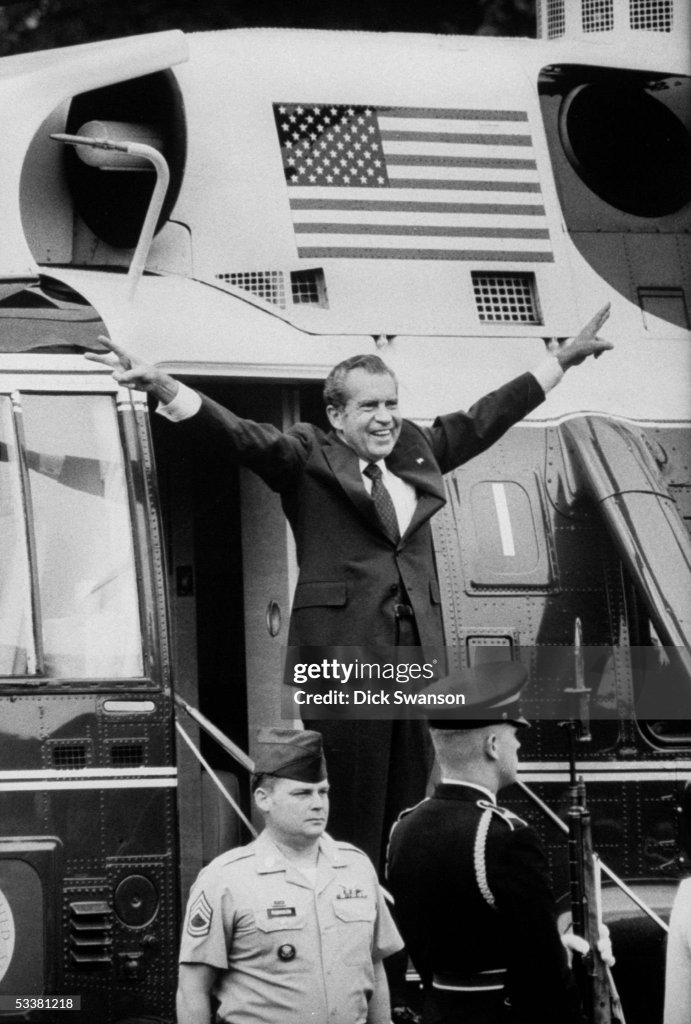
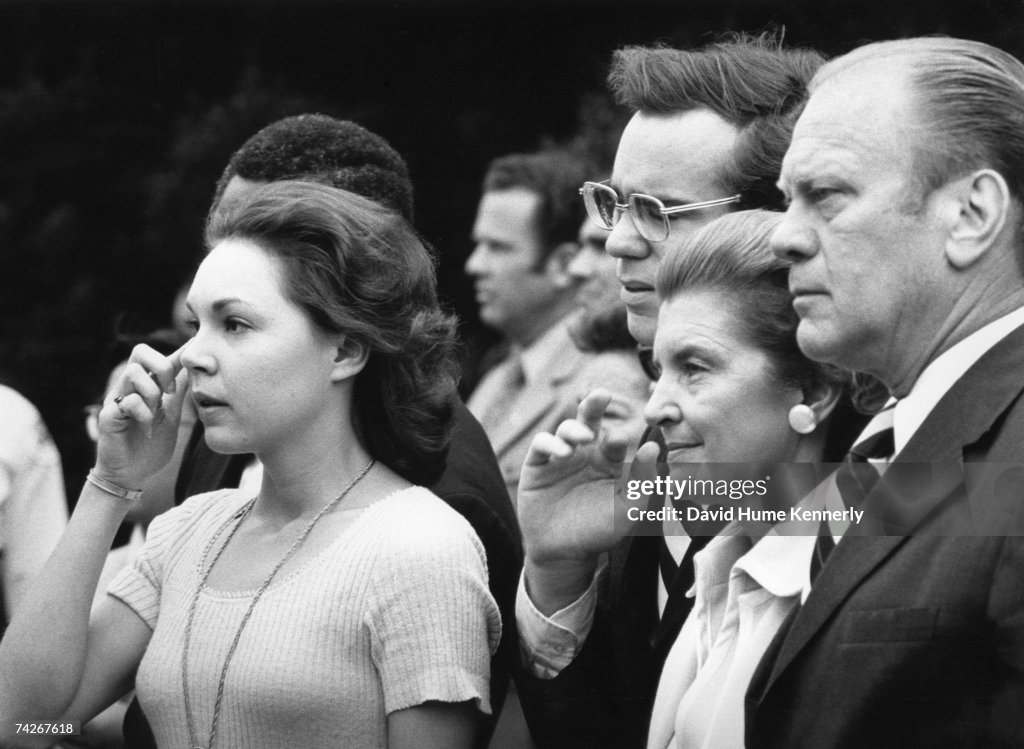
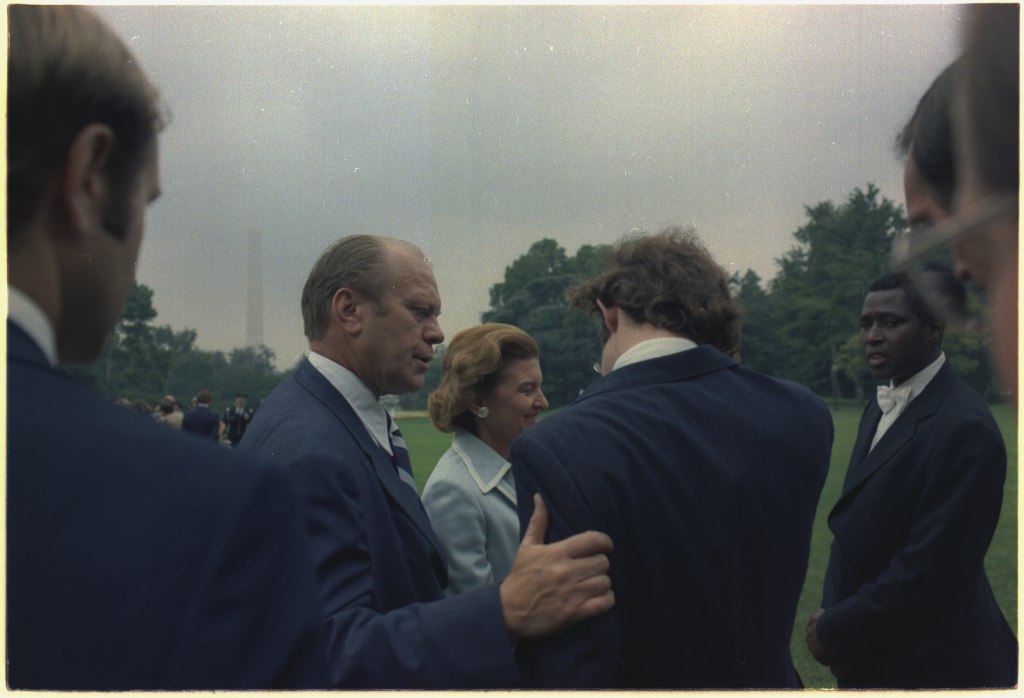
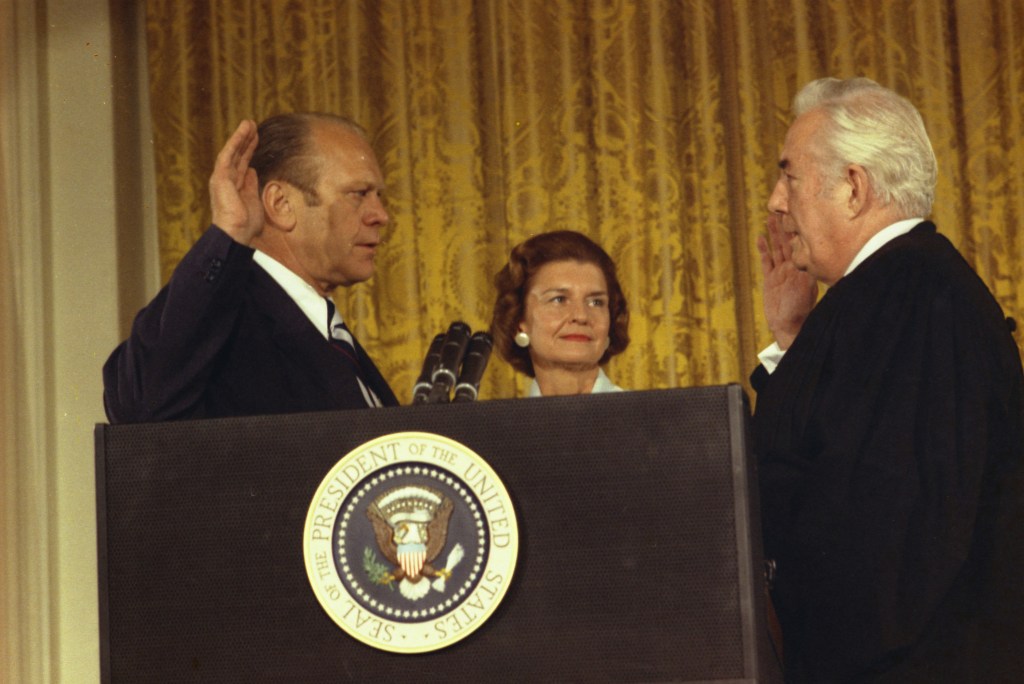
U.S. Vice President Gerald Ford was sworn in as the 38th President of the United States upon Richard Nixon’s resignation. In a speech after being sworn in, President Ford said, “My fellow Americans, our long national nightmare is over.”
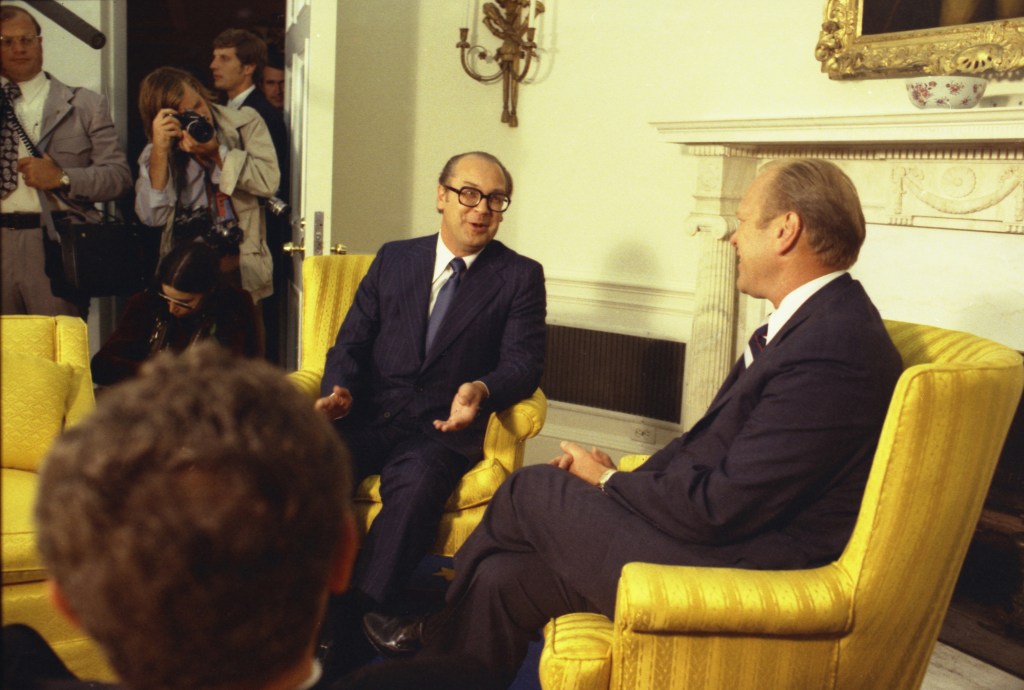
Two hours after he was sworn in as President, Mr. Ford, assisted by Secretary of State Kissinger, advised envoys of foreign governments that despite his inexperience in international affairs, he would pursue the same foreign policy objectives that brought worldwide respect to Mr. Nixon. He held brief meetings in the White House with about 60 envoys, either in groups or individually. The meetings went on into the early evening.
The change in United States leadership was greeted around the world with expressions of hope that American policies would be unchanged, and words of relief that the long turmoil in Washington was ending. President Ford’s announcement that he would keep Henry Kissinger as Secretary of State was taken as an indication that there would be continuity in American foreign policy.
The House of Representatives in Washington approved a $3 billion military construction bill containing funds for the U.S. naval base on the Indian Ocean island of Diego Garcia. The bill, which was passed by a 322–30 vote, allocates $29 million for expansion of U.S. naval facilities on the British-owned island. The Diego Garcia proposal had been opposed by several congressmen on the grounds that an increased U.S. naval presence in the Indian Ocean might eventually lead to a U.S. Soviet confrontation in the region. The House earlier rejected by 58 to 28 a proposal to eliminate the money for the base. The legislation, which provides for various military construction projects in the United States and abroad, now goes to the Senate for approval.
Assured by The Kremlin that détente would not collapse just because one American personality was gone, the Soviet people learned today of President Nixon’s resignation and seemed to react with equanimity. For the first time since the Watergate scandal came to light, President Nixon’s vain struggle to stay in office was accorded front‐page treatment in the Soviet press today. Soviet radio broadcast frequent bulletins from Tass, the official news agency, during the day. As expected, there was no official Soviet comment on the resignation. The impression here was that although Soviet leaders were following American political developments with great interest, they did not regard the situation as a crisis in Soviet terms. According to a Western diplomat, one Soviet official said privately: “It’s too bad this has happened. I regret this. At the same time, we must recognize that personalities are not all that important. Perhaps we can say that Nixon has made his contribution.”
With the Greeks wanting to draw a firm cease‐fire line on Cyprus, the Turks demanding that the island be made a confederation of Greek and Turkish Cypriot states, and the British trying to keep the two sides speaking to each other, the three‐power Cyprus peace talks here seem unlikely to reach fundamental agreement soon. After two days of talking, the Foreign Ministers of the three countries have not even begun to discuss the political problems that underlie the fighting that has continued on Cyprus beyond the agreement signed here July 30. They recessed until 10 AM tomorrow after the British Foreign Secretary, James Callaghan, had spent the early evening in separate talks with the Turkish and Greek representatives. Some progress was reported, however, on arranging an exchange of prisoners and from Cyprus, where a mixed military commission has drawn a ceasefire map. This shows the present positions of the Turkish force that invaded the island last month and captured the area around the northern port of Kyrenia. The force has since grown to 40,000 men.
For the last six days, while heavy fighting has taken place between the Turkish Army division that landed July 20 and the Greek Cypriot defenders, the delegates have been over all the fronts by helicopter and jeep to establish the positions of the forces. The talks have been marked by good working relationships between the Greek delegate, Major Evangelos Tsolais, and the Turkish delegate, Colonel Nezim Cakar. There are still some differences between the Turkish and Greek sides over where the cease‐fire line should be drawn on the northeastern side of the Turkish‐occupied area between Kyrenia and this Capital.
The Turkish forces have occupied villages such as Karavas and Lapithos that were in Greek hands when the Geneva conference agreed on a call for a cease‐fire July 30. A final determination on the cease‐fire line will require political agreement at Geneva. Meanwhile, this was the quietest day along the perimeter of the Turkish‐occupied sector since the landing. The United Nations spokesman said that no incidents had been reported by the military observers in the seven districts of this island of 650,000 people.
A wave of arson and riot spread over Northern Ireland today, a violent observance of the third anniversary of jail without trial of guerrilla suspects. A 24‐year‐old Protestant was shot dead in Belfast, apparently the 1,051st victim of five years of feuding between Protestants and Roman Catholics, Another Protestant was reported seriously wounded by bullets fired into his east Belfast home. Bombs attributed to the outlawed Irish Republican Army wrecked the main streets of Aughnacloy in County Tyrone and Kesh in County Fermanagh.
The British Army, brought, onto the streets five years ago in an unsuccessful effort to restore peace, said its troops shot two gunmen in the early hours in Belfast but that both were carried away by colleagues. Rioting spread across west Belfast during the morning, with cars and buses hijacked and burned to form barricades. A mob attacked the headquarters of Ulster Television, the province’s commercial network, with rocks and bottles. Policemen and troops fought them off.
All nine people on a United Nations peacekeeping force were killed when their Canadian Armed Forces airplane was shot down by missiles fired from a Syrian airbase. Buffalo 461, a de Havilland Canada DHC-5 Buffalo transport, was making a supply trip for UN forces enforcing the ceasefire to the war between Israel and Syria, and had been cleared for a landing by the control tower at the Damascus airport, but was hit by a surface-to-air missile as it passed over the Syrian town of Ad Dimas.
India is negotiating to buy an additional two million tons of wheat from the Soviet Union to help meet an expected six‐million‐ton grain shortage this year, a food ministry source said today. Last October the Soviet Union agreed to loan India two million tons of wheat and so far has delivered 1.8 million tons. The present negotiations are for two million additional tons. Since April, India has also purchased 1.8 million tons of wheat from other nations, mostly from the United States. A food ministry source said there was no proposal at present to ask the United States or any other food‐surplus nation to sell food grain to India at reduced rates. The source also declined to say, how much more grain India intends to buy from other nations.
Meanwhile, Prime Minister Indira Gandhi told a rally that may have been the largest ever held in New Delhi that her government will not beg for aid from other nations. The police said 60,000 persons — most of them young — gathered across from the presidential palace and Parliament for a rally organized by a youth organization in Mrs. Gandhi’s party.
With two mighty Himalayan rivers at flood stage for several weeks, much of India and nearly all of Bangladesh have been hit by severe floods described as the worst in 20 years. According to Bangladesh officials, 18 of the 19 districts of the country have been affected. At least 800 people are said to have died and five million displaced from their homes. Here in India, seven of the 20 states have been affected. The state of Meghalaya, through which the Brahmaputra River flows, is reported submerged. Six other states — Assam, Uttar Pradesh, Bihar, West Bengal, Karnataka and Kerala — have also been hit, and a total of 100 people have reportedly been killed.
The Việt Cộng shelled the big Biên Hòa air base 15 miles northeast of Saigon before dawn today, according to the South Vietnamese military command. A spokesman said 10 122‐mm rockets were fired at the base, and that three fell into villages on the outskirts, killing three civilians and wounding three. Other military sources said that the rockets landed in a war veterans’ village, killing four children. The Việt Cộng say that it was from Biên Hòa that South Vietnamese bombers attacked a series of Communist‐controlled towns Tuesday, including the Việt Cộng headquarters at Lộc Ninh, 75 miles north of Saigon. They assert that dozens of civilians were killed and that homes, hospitals, pagodas and schools were heavily damaged. Biên Hòa, South Vietnam’s largest tactical air base, has been shelled several times this year.
U.S. officials in Washington are sticking by their claims that some North Vietnamese troops have been put on alert amid signs of a possible Communist offensive in South Vietnam, even though sources in Saigon say they know of no such action. “There have been some indications of some increased readiness” of North Vietnam’s home-based military forces, Pentagon spokesman Jerry W. Friedheim said Friday. “It might indicate an intention to stage some additional offensive activities,” he said.
The Việt Cộng said today that a United States aircraft carrier, the USS Ranger, had been stationed near the coast of Bình Định Province in central South Vietnam, since Thursday, a day before Richard M. Nixon resigned the Presidency. At a weekly press conference, Colonel Võ Đông Giang said the carrier had “hovered in territorial waters,” but he had no information exactly how far from the coast it was or whether any aircraft had been launched from it.
The port city of Nagasaki marked the 29th anniversary of its atomic bombing by U.S. warplanes Friday with the tolling of church bells and a renewed appeal for a ban on nuclear arms. About 12,000 persons, some of them injured by the bomb that exploded on August 9, 1945, gathered for a memorial service at the city’s Peace Park near the spot over which the bomb went off. At 11:02 am, the church bells tolled, sirens wailed and the city’s 400,000 people paused for a silent prayer for those killed by the bomb.
Secret peace talks between the Mozambique Liberation Front and the Portuguese Government have broken down, military sources said today. Discussions in Rome and Dar es Salaam were broken off on Monday and are not likely to be resumed before next week. It is likely to be at least another week before any official ceasefire, and this will probably coincide with the appointment of a military junta to take control of the territory. Within a matter of days the junta is expected to appoint a civilian interim government that will contain elements of the front. The guerrilla organization is understood to be demanding a majority representation in any transitional government.
Gerald Ford assumed the presidency at 11:35 AM today, the moment that former President Nixon’s letter of resignation was handed to Secretary of State Kissinger. Twenty-eight minutes later, at 12:03 PM, the 38th President of the United States took the oath of office administered by Chief Justice Warren Burger in the East Room of the White House. Friends, cabinet members and congressional colleagues from both parties crowded the room, where barely two hours earlier Mr. Nixon bade an emotional goodbye to his cabinet and top aides.
Immediately after the swearing-in ceremony, Mr. Ford took control of the presidency and moved to give it a character and shape different from that of his predecessor. He named a four-member committee of former elected officials to oversee the transition from the Nixon administration and to make recommendations for staff changes. The four are William Scranton, Donald Rumsfeld, Rogers C. B. Morton and John Marsh. All four had served with Mr. Ford in the House.
President Ford told Congressional leaders today that he would nominate his successor in the Vice‐Presidency within 10 days. Awaiting his decision, Republican politicians pictured the Vice‐Presidential question as a key to the larger puzzle about the new President’s plans and turned it into a lively game of party infighting. Senator Hugh Scott of Pennsylvania, the Republican leader in the Senate, added his endorsement to others given to Nelson A. Rockefeller, the former Governor of New York. Senator Jesse A. Helms of North Carolina indicated that a score of conservative Republicans in the House and Senate would resist a Rockefeller selection in favor of Senator Barry Goldwater of Arizona.
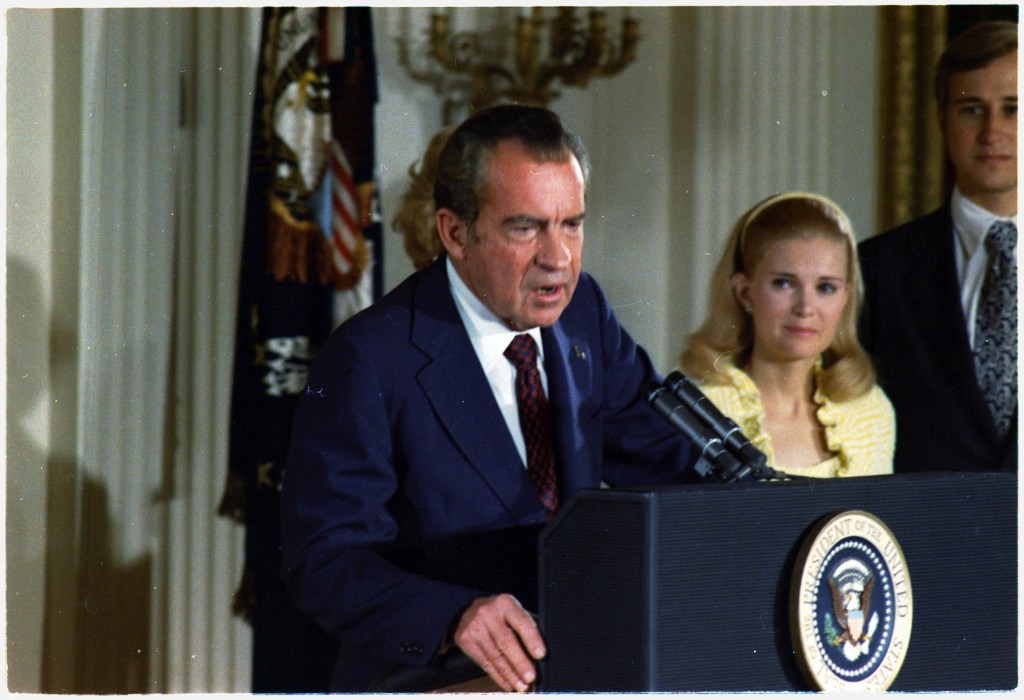
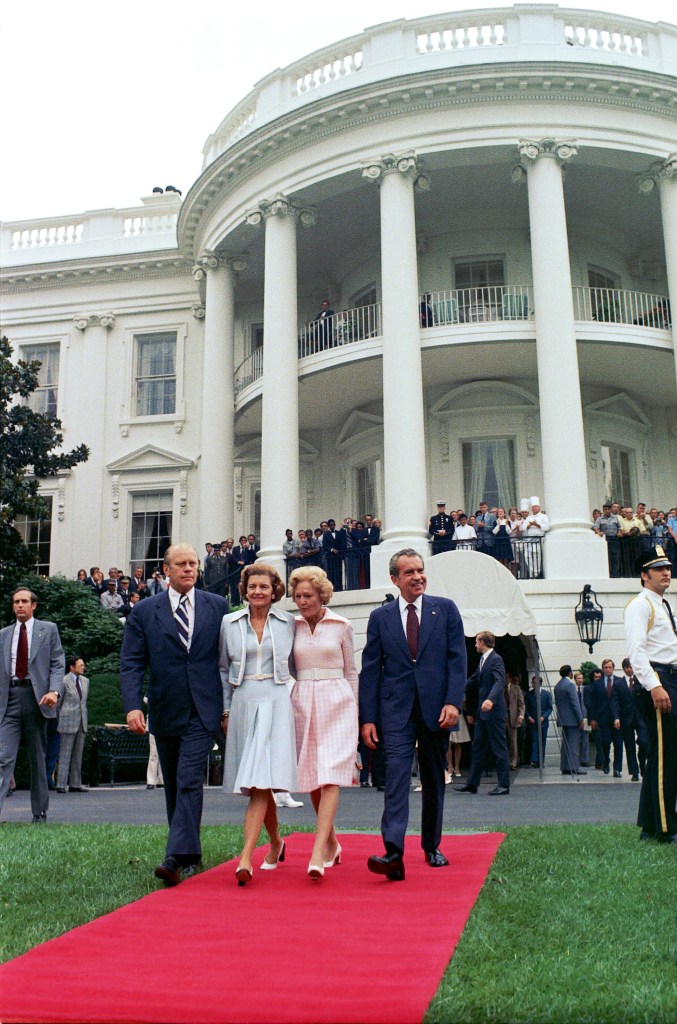
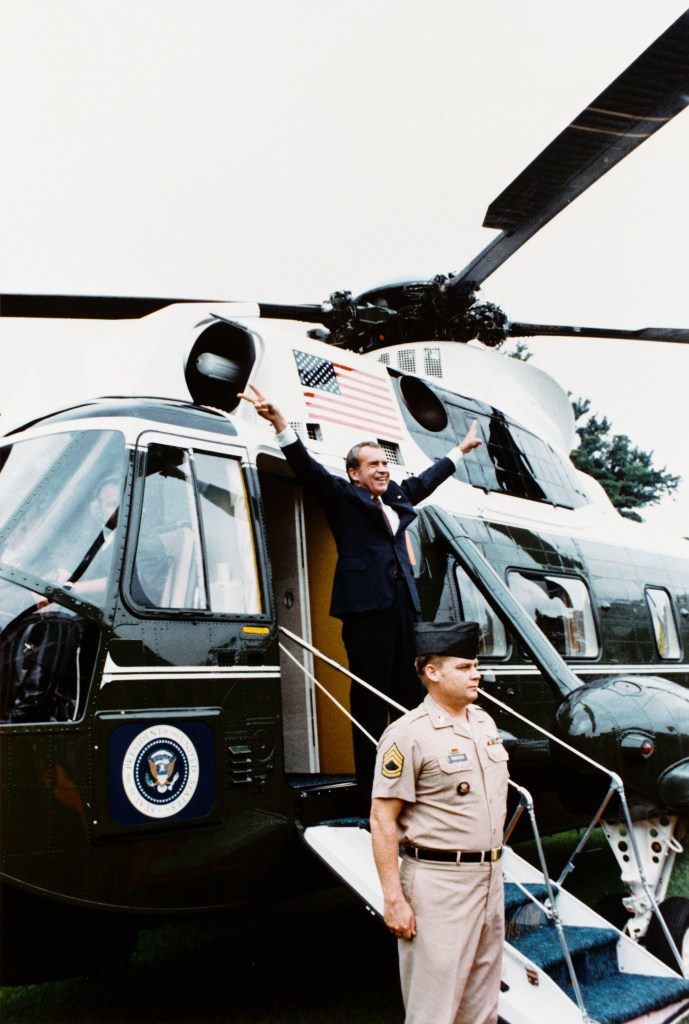
Mr. Nixon, with tears in his eyes, bade an emotional goodbye in the White House to the remaining members of his administration. He urged them to be proud of their record in government, and warned them against bitterness, self-pity and revenge. He and members of his family then flew to the Nixon estate in San Clemente, California. They were greeted by more than 5,000 people when the plane landed at El Toro Marine Air Base.
Mr. Nixon’s prospects for escaping prosecution in the Watergate case remained in doubt. He lost what immunity from prosecution that he may have had when he resigned, and the office of the special Watergate prosecutor said that a decision on whether to prosecute him had not been made. The new White House press secretary, Jerry terHorst, said that President Ford was not likely to grant a pardon to Mr. Nixon. He recalled that last fall Mr. Ford at his Senate confirmation hearings on his nomination as Vice President, said that the public probably would “not stand for” such a pardon.
The disposition and even ownership of the vast amount of presidential records left behind by Mr. Nixon in the White House and the National Archives, some of which could be used as evidence in the forthcoming Watergate trials, was a recurring question in Washington. Some members of Congress urged impoundment of the documents, and others demanded that the Watergate investigation be continued.
Alger Hiss, who former President Richard M. Nixon helped send to prison in a sensational spy case almost 25 years ago, said today that the Nixon resignation may open “a new era of justice in our country.” The case, which began in 1948, brought Mr. Nixon his first national publicity and also won him many bitter enemies for his rough tactics. Mr. Hiss, who lives in New York and is vacationing on the French Riviera, issued the following statement today: “I would hope that this resignation will not diminish our people’s search for the truth, which should continue without interruption. This can be the beginning of a new era of justice in our country which no one could welcome more than I.”
Mr. Nixon backed Whittaker Chambers, who charged Mr. Hiss with spying for the Soviet Union. Mr. Nixon pushed the case in the House Committee on Un‐American Activities until Mr. Hiss was convicted in 1950 for perjury. Mr. Hiss, 69 years old, who has been out of prison for 20 years, is still fighting, in the courts to clear his name. Mr. Nixon later conceded that his tactics in the Hiss case had left him with many enemies who, he said, contributed to his defeat in the 1960 Presidential election.
[Ed: This lying little bag of shit was guilty. We KNOW, beyond any doubt whatsoever, that he was guilty, both from the VENONA intercepts, and the (Soviet) Mitrokhin Archive. His protests of innocence were always lies, nothing more. This little asshole should have been hanged.]
The General Motors Corporation announced an average price increase of $480, or 9.5 percent, in the average price of its 1975 automobiles and trucks that will go on sale in September. The increase will include $130 for the cost of government-required pollution control equipment, and $350 for increased labor and material costs. The Ford Motor Company and the Chrysler Corporation also said that their 1975 models will be more expensive. Ford estimates a general increase of 8 percent over its 1974 prices and Chrysler indicted that its 1975 prices will be similar to those of Ford and General Motors.
A small plane crashed about 2.5 miles (4.0 km) northeast of Jackson, Minnesota, killing all six people on board, four members of the rock-jazz group Chase and the plane’s pilot and co-pilot.
United States District Judge Fred Nichol dismissed today two more charges each against two American Indian Movement leaders, Dennis Banks and Russell Means, in connection with the 1973 occupation of Wounded Knee, S. D. the two defendants thus face only five of the original 10 counts. The judge dropped three other counts on Wednesday. As a result of the court action, William M. Kunstler, defense attorney, said he would withdraw a request that J. Fred Buzhardt Jr., special counsel to former President Nixon, be subpoenaed to testify at the trial. Judge Nichol said earlier he would issue the subpoena.
With a chance to gain on most of their Eastern Division rivals, who were losing to other Western Division teams, the New York Yankees lost to the California Angels tonight, 7–1, in the opener of a six‐game California trip. George Medich, New York’s top pitcher, didn’t last three innings as he suffered his 10th defeat (against 13 victories), although he didn’t pitch that badly. Meanwhile, Frank Tanana, a left‐handed rookie whose 7–14 won‐lost record doesn’t reflect his promise, pitched a strong seven‐hitter and was never seriously threatened. The loss dropped the Yankees 7½ games behind the division‐leading Boston Red Sox, the only Eastern team to win a game tonight.
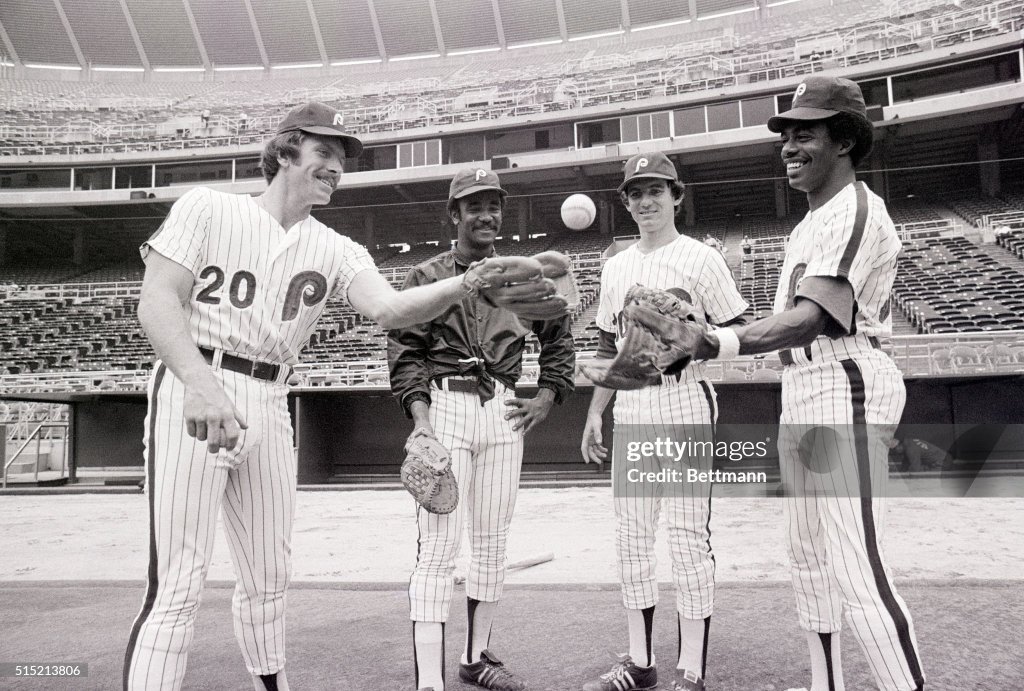
Would it be out of order to request a saliva test for Gaylord Perry? Last night in Cleveland’s Municipal Stadium the 1972 Cy Young Award winner went down to his sixth consecutive defeat, as the Indians bowed to the Chicago White Sox, 5–3. Phillies’ Larry Bowa rolling over Braves’ Mike Lum after Lum was ruled safe on a pickoff play at second base in the sixth inning last night in Philadelphia.
The Kansas City Royals routed the Milwaukee Brewers, 13–3. Orlando Cepeda, appearing in his fifth game since returning to the major leagues, drove in five runs with a pair of doubles, and Steve Busby, staked to a 12-1 lead in the first three innings, breezed to his 17th triumph. Busby left after seven innings. He permitted 10 hits, walked no one and struck out nine.
The New York Mets, who may not realize how badly off they really are, opened a six‐game home stand against the two best teams in baseball last night by upsetting the Cincinnati Reds, 4–1. The Reds, who will be followed into town by the Los Angeles Dodgers, made only two hits in seven innings off Bob Apodaca. Then they made two more at the close off Tug McGraw, including Johnny Bench’s 23rd home run of the season. But otherwise, it was a night for underdogs.
The San Francisco Giants shut out the Chicago Cubs, 3–0. Gary Matthews and Dave Kingman each hit his 12th homer in support of the six-hit pitching of Jim Barr, who won his sixth successive triumph. It was the right-handed Barr’s fourth shutout and 10th victory against 5 defeats.
At Busch Stadium, Ted Simmons celebrates his birthday with a 6th inning two-out grand slam off Geoff Zahn as the Cardinals trip the Dodgers, 5–3. Alan Foster, with seventh-inning relief from Al Hrabosky, won his sixth game in 13 decisions.
The Pittsburgh Pirates won their fifth straight game, beating the San Diego Padres, 7–3, and pulled to within one game of a 500 percent. age record, their best effort. of the season. Pittsburgh scored three unearned runs in the first with the aid of two San Diego errors by Enzo Hernandez at shortstop, then built a 5-0 lead on Rennie Stenett’s fourth homer in the second and three singles in the third. Jim Rooker won his eighth game in 17 decisions.
Dow Jones Industrial Average: 777.30 (-7.59, -0.97%).
Born:
Jackie Chan [as Chan Kong-sang], Hong Kong-born Chinese actor (“Drunken Master”, “Rumble in the Bronx”, “Rush Hour”), in Victoria Peak, British Hong Kong.
Nicola Stapleton, English actress (“Eastenders”), in London, England, United Kingdom.
Derek Fisher, American NBA point guard and shooting guard (NBA Champions-Lakers, 2000-2002, 2009, 2010; Los Angeles Lakers, Golden State Warriors, Utah Jazz, Oklahoma City Thunder, Dallas Mavericks) and manager (LA Sparks), in Little Rock, Arkansas.
Matt Morris, MLB pitcher (All-Star, 2001, 2002; St. Louis Cardinals, San Francisco Giants, Pittsburgh Pirates), in Middletown, New York.
Tremayne Allen, NFL tight end (Chicago Bears), in Nashville, Tennessee.
Died:
Bill Chase, 39, American musician, was killed in a plane crash along with three other members of his band and the pilot and co-pilot of the Piper Twin Comanche.
Edgar F. Luckenbach Jr., 49, president and board chairman of Luckenbach Steamship Company, son of Edgar F. Luckenbach.
 History Diaries