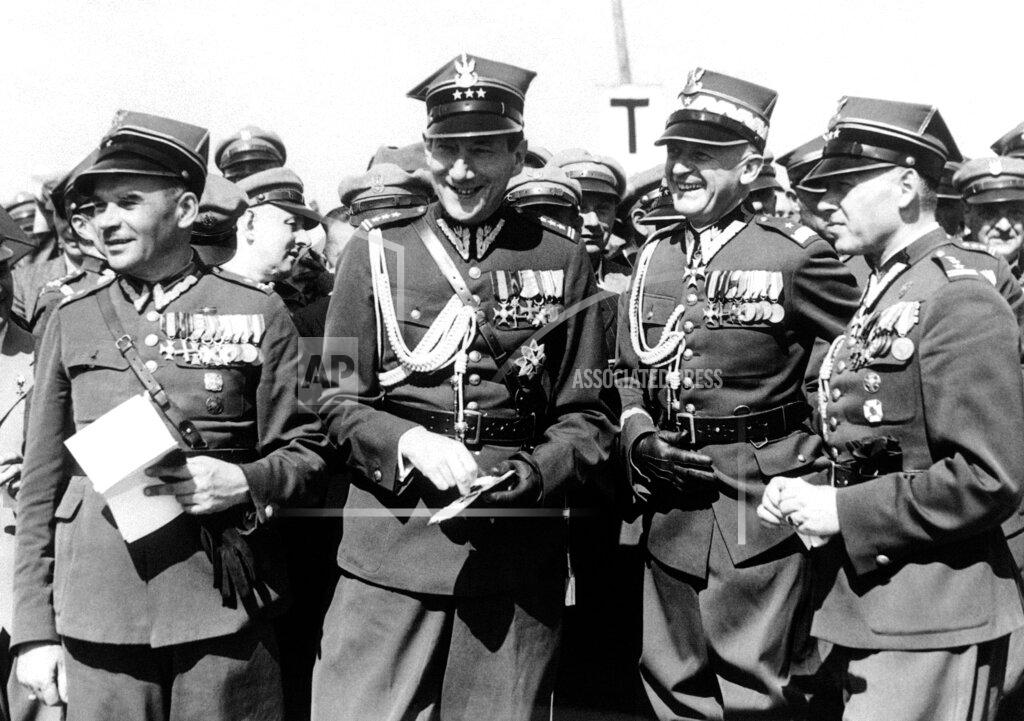
Poland celebrated the twenty-fifth anniversary of the Polish Legions’ entry into the World War. Marshal Edward Rydz-Śmigły told a cheering crowd of 100,000 in Kraków that “violence inflicted by force must be resisted by force” and that Poland’s conduct with regard to Danzig “will be adjusted to the conduct of the other side.” Marshal Rydz-Śmigły, Commander-in-Chief of the Polish armed forces, presents the keynote address at the beginning of a three day celebration of WWI military exploits in Krakow. Rydz-Śmigły assures his listeners that Poland is prepared to cope with any moves from the other side in the Danzig dispute. The audience responds with an enthusiastic cry: “We want Danzig!” The Marshal reminds the audience that each Polish individual is bound by a sacred oath to defend the country and its cause. He exclaims that the personal life of every citizen will be infamous if a stain is permitted to appear on the escutcheon of Polish honor. The Marshal claims that Poland respects peace, “but there is no force that could convince us that the word ‘peace’ means ‘take’ for some people and ‘give’ for others.”
The marshal declared that Poland would “resist with all her means without exception any attempt, direct or indirect, to violate the interests, rights or dignity of our State.” Without naming Britain France, with whom Poland has mutual assistance agreements, he said it was his “pleasant duty to record with the deep understanding and appreciation of a soldier that Poland has sincere friends among other nations, nations who understand the real meaning of things and who have defined their attitude toward us.”
Foreign circles in Warsaw expressed belief that Poland was prepared to take direct action on the customs situation if the Danzig Senate’s reply on the treatment of Polish customs inspectors proved unsatisfactory. Poland has demanded that a new Danzig regulation prohibiting Polish customs officials from exercising their functions in the Free City be withdrawn. Some thought it possible that Polish frontier guards would participate in customs control. Many customs officials have already been replaced by frontier policemen.
Danzig rejected the Polish demand of August 5, refusing to recognize untrained Polish officials as supervisors of Danzig customs.
Tensions are again dividing Europe as before World War I. Western allies fear that Hitler will try desperate measures to get Danzig. Germans see parallels to 1914, and put the blame on Britain, then and now. Continental Europe will have more than 8,000,000 men under arms by the end of this month for maneuvers that approach general mobilization in some countries and in others surpass it, military observers in various European capitals believe. However, their figures were based on estimates known in some cases to have been influenced by propaganda ministries, anxious to exaggerate the strength of their men in the field.
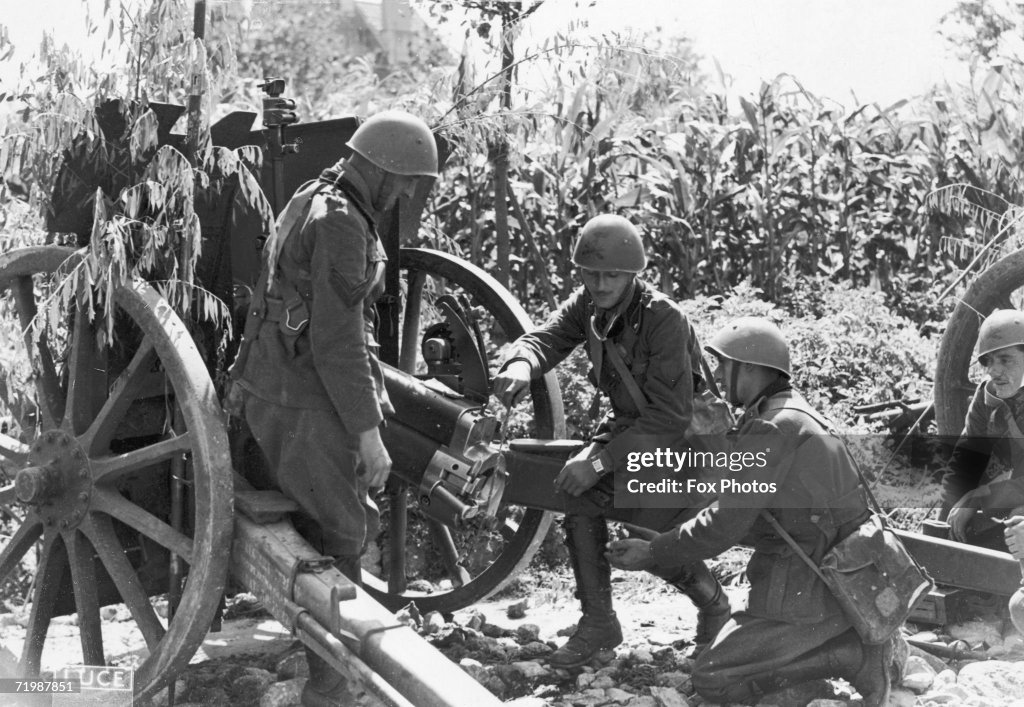
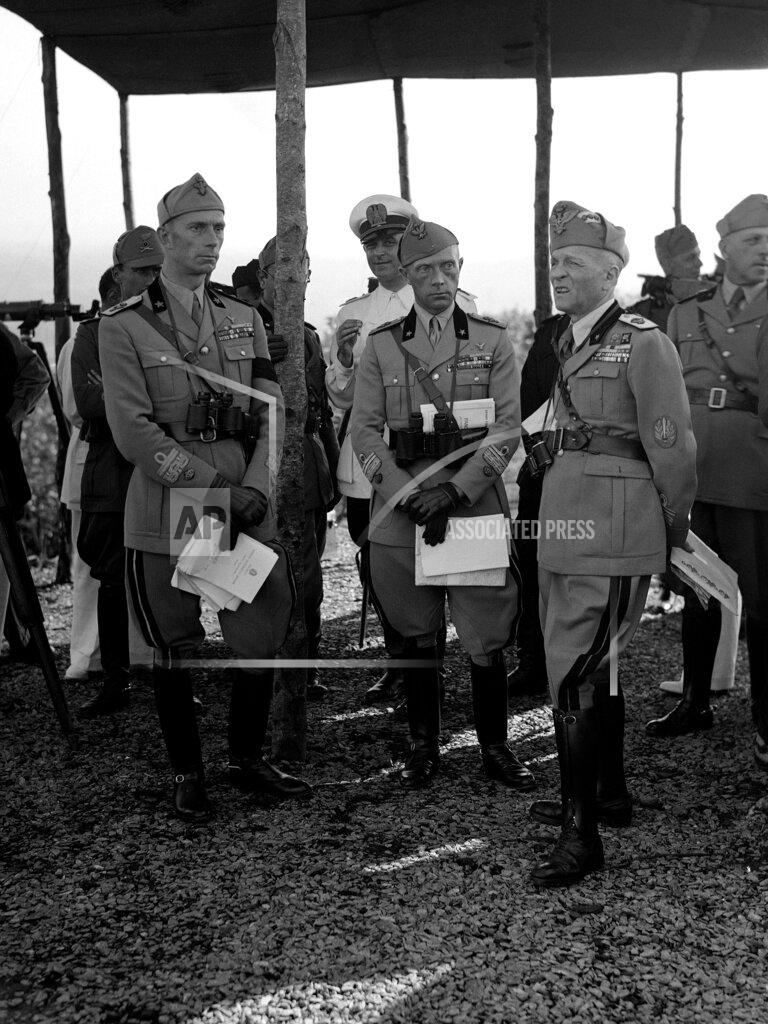
German maneuvers are expected to engage 2,500,000 men, including 1,000,000 members of the regular army and all possible reserves, about 1,500,000. Italy, disclosing that her maneuvers are engaging “the greatest peacetime force” but denying detailed data, is credited with the 560,000 men, exclusive of troops abroad and of militia, reported under arms last April. Bulgaria will have 200,000 men in the field, Hungary 300,000.
Great Britain will have 750,000 troops encamped, France and Poland each claim to have 1,000,000 under arms, Turkey is staging maneuvers to occupy 380,000 men, and Rumania says she has 550,000 ready in the field. Greece is reported to have 360,000 men engaged, and Yugoslavia is credited with 340,000 under arms. The total is exclusive of the standing army of Russia and those of the so-called “sideline” nations, Belgium, Switzerland, the Netherlands, Denmark, Norway and Sweden and others, several of which have taken part in the preparedness movement.
While “white war”-the var of diplomacy and economics, of nerves, threats and propaganda-is shaking the world with apprehension, the armies and navies of the big powers are now staging dress rehearsals for a second World War which still pass under the name of Fall maneuvers but which are more. nearly genuine mobilization.
All European powers are straining to the utmost to reach maximum military preparedness as rapidly as possible, and in this effort, much to the satisfaction of the totalitarian regimes, even the Western democracies are forced to modify the principles of democratic government and liberal economy in favor of incipient war regimes, just as the totalitarian powers built up from the beginning.
Having started earlier, the totalitarian powers apparently are still ahead, though the democracies are rapidly catching up, with the result that they, too, are beginning to approach that “full employment” which the totalitarian regimes heretofore extolled as the singular success of their own particular economic system. The totalitarian States are already mobilizing their last reserves of manpower and are curtailing civilian consumption to store supplies for a possible emergency.
A Czech boycott irks the Nazi leader. Further resistance to the Reich is revealed as two signs written in both Czech and German are torn down. Speaking yesterday in a Prague suburb. Konstantin Hoess, Prague’s. Nazi district leader. sharply attacked the Czechs who have boycotted German shops and threatened retaliations. Referring to the “Czech terror,” he declared that Germany was strong enough to protect the country’s Streudeutschen [scattered Germans].
In some districts the Czech boycott is very thorough. At the weekly market in the main square at Iglau, renamed Adolf Hitler Platz, the Czech market women refused to serve German housewives and an incident occurred requiring the intervention of the German police. who had replaced the local Czech force on March 15.
The insistence of local German authorities or Czechs under German pressure that Jews’ shops be branded is a cause of slight incidents. In the small town of Sternberg a notice “Jewish Shop” was defaced by Czechs three nights running with the words “Never mind, we will shop here anyway.”
Since the opening of the inquiry into foreign propaganda and espionage in France three weeks ago, which the French press, on the request of Edouard Daladier, has not often mentioned, there have been numerous arrests.
Spain executes 53 as plotters after the killing of a guard major. Fifty-three persons, found guilty of promoting or instigating the murder of Major Isaac Gabaldon, inspector of the Civil Guard in Madrid, his 17-year-old daughter Pila and his military chauffeur, José Luis Diez, on July 29 have been executed by firing squads in Madrid. Seven men charged with the actual murder are still being tried. The trials opened following the arrest of sixty persons near Tavalera after the murder.
A communiqué, issued here today, states that a few hours after the murder not only were all the actual murderers arrested but also a large group of instigators of the killings. The instigators were recruited, the communiqué adds, “from the most sinister Marxist underworld and social criminals encouraged by home hidden Communist and revolutionary sectors.”
“The new Spain,” the communiqué continues, “will not allow a single outrage against the State and any attempt designed to foster political crimes will be absolutely useless for it will be implacably crushed as soon as it occurs. Let nobody have the slightest doubt about that.”
Italy stresses its new race policies, and an anti-Semitism report is prepared for Premier Benito Mussolini.
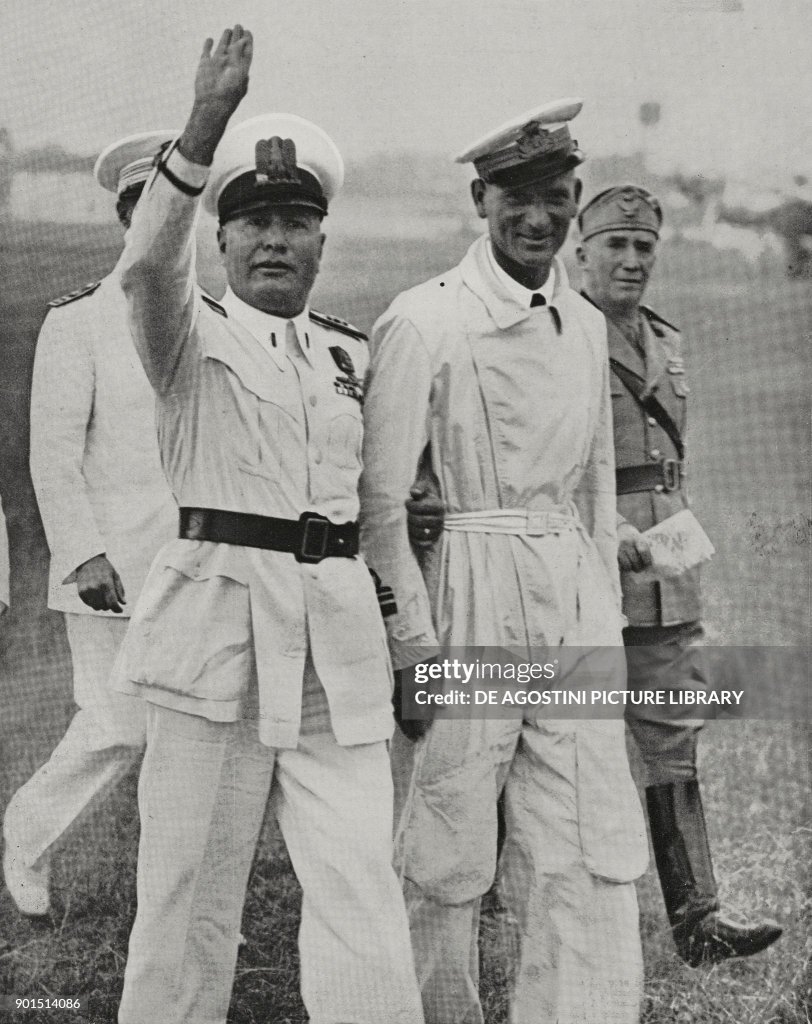
Mussolini, fearing Germany will go to war with Poland, discusses with Count Galeazzo Ciano, his son-in-law and Foreign Minister, possible ways to evade the terms of the Pact of Steel, which commits them to aiding Germany. Mussolini believes Italy is still 3 years short of readiness for war.
The French drop plans for a Syrian king. The whole idea of converting the Syrian Republic into a kingdom has been abandoned for the time being. Not until the war clouds hanging over the European skies have cleared or until after the war, if it comes, will the question of a throne for Syria be brought up again.
With Congress adjourned and many of its members already departed, President Roosevelt became the center of the legislative-political situation today pending his own departure tomorrow night for Hyde Park on the beginning of an extended leave from the capital. Mr. Roosevelt spent most of the day studying and signing bills passed in the last-week adjournment rush, but had time between these chores to say goodbye to various members who accepted his invitation to see him before leaving town.
Included in these callers was Senate Majority Leader Barkley, who said on leaving the White House that the President was confident that when the present Congress met again in January it would enact most of the Administration measures it defeated in its last few weeks of insurgency. Other visitors were Senators Thomas and Lee of Oklahoma, Senator Guffey of Pennsylvania and a number of House members.
The Congress, although it will be normally absent until next January, left orders for the performance of a number of jobs which will bring some of its members back after vacations.
The House ordered an investigation of the National Labor Relations Board by a special committee of five, which expects to begin hearings in October. Its chairman is Representative Howard W. Smith, hailing from a Congressional district just across the Potomac in Virginia, from which his earlier return to the capital will not be arduous. Other members must come from Utah, Massachusetts, Indiana, and Ohio.
The Senate’s La Follette Civil Liberties Committee received an additional $50,000, chiefly to investigate the Associated Farmers of California, said to be a large employers’ organization, and it is expected that much of its work will be done in the West Coast State. The Dies House committee investigating un-American activities likewise will function during the recess, probably both here and elsewhere.
Included in various statements on the work of the recent session and the problems of future ones was one from Representative Marvin Jones of Texas, chairman of the House Committee on Agriculture, on the farm program.
Representative Martin of Massachusetts, the House Republican leader, musing over the results of the Congressional session just ended, expressed the opinion today that the most important accomplishments were the killing of the President’s lending program and enactment of the Hatch law. Mr. Martin and his party colleagues had a great deal to do with both decisions. Every Republican in the House voted against considering the Lending Bill. Their votes, added to those of some Democrats, killed the measure.
Likewise, on the Hatch bill the Republicans voted solidly to put the measure through with a stringent provision against political campaigning by all except a few administrative officers of the Federal Government. With the exception of a few unavoidably absent, the Republicans were on the floor in full force, and all voted the same way. On the other side Representative Rayburn of Texas, the majority leader, laid much of his troubles, especially in the latter part of the session, to difficulty in getting Democratic attendance in the House. Mr. Rayburn asserted that members who had opposed Roosevelt measures would now find their votes unpopular with their constituents. He explained Administration defeats as due not to an anti-Administration majority in the House but to party voting by the Republicans aided by varied groups of Democrats.
Acting on instructions received by telegraph yesterday from Washington, the New York Work Projects Administration will resume this morning the laying off of 75,000 relief workers, except war veterans, who have been on WPA rolls continuously for eighteen months or longer.
Hollywood movie unions threaten a strike.
The National Labor Relations Board ruled today that national banks were not agencies of the Federal Government and therefore were subject to the Wagner Act.
The University of Chicago, through its vice president, Frederic Woodward, publicly apologized yesterday to former President Herbert Hoover for a statement made last Sunday over the university’s coast-to-coast round-table broadcast that Mr. Hoover was “buying” Southern delegates to the 1940 Republican National Convention.
Archbishop Francis J. Spellman of New York presided today at the thirtieth departure ceremony held by the Maryknoll Sisters to mark the setting out of twenty-one sisters to mission posts in various parts of the world.
A plea for a moratorium on farm debts was made today by the Rev. Charles E. Coughlin, who said in his weekly broadcast that “a drastic change in our method of finance must be accepted.”
The American cargo ship Depere struck rocks in the Wrangell Narrows, Alaska and was beached. She was refloated on 11 August.
First broadcast of “Dinah Shore Show” on NBC-radio.
With the Detroit Tigers ahead, 10–1, the Boston Red Sox put Jimmie Foxx on the mound for the 9th inning. The slugger retires all three batters, one via a strikeout.
The Cleveland Indians sweep a doubleheader from the New York Yankees, winning 5–4 and 7–1. In the first game, Bob Feller outduels Lefty Gomez to win his 16th game of the year. In the nitecap, Mel Harder hurls a four-hitter for the Indians.
Max West’s twelfth-inning home run gave the Boston Bees a 9-to-8 victory over the Chicago Cubs today, the towering smash being the only hit Claude Passeau, relief hurler, yielded in the four innings he pitched.
Sensing an opportunity to overhaul the Cincinnati Reds if they falter much more, the St. Louis Cardinals swept a doubleheader from the Philadelphia Phillies today, ran their consecutive victory string to nine and pared another game off the Reds’ lead. The scores were 11–0 and 8–3.
The Brooklyn Dodgers finished their Western tour today by splitting a double-header with the league-leading Reds before the season’s record crowd for Crosley Field, 30,653 paying patrons. Luke (Hot Potato) Hamlin hurled a gaudy four-hitter as the Durochers took the opener, 5–0, scoring all their runs off Paul Derringer. in the ninth. The Reds came from behind for the third time in the eighth inning to take the nightcap, 8–6, but that slam-bang, loosely played affair gave the already nervous Cincinnati rooters the worst case of jitters they have had in weeks. The even break reduced the Reds’ lead to 7½ games, the second-place Cardinals gaining one contest on them by winning twice from the Phillies.
In an unusually outspoken attack upon the policies of the present Mexican Government, the Institute of Economic and Social Studies contends that President Lazaro Cardenas’s dream of economic independence has made Mexico more dependent upon the United States than ever before. It is not the Mexican Government but the United States Secretary of the Treasury, Henry Morgenthau Jr., who determines the value of the peso by fixing the price for the purchase of Mexican silver, says this group of economists in a leng article printed by the Economista, the principal Mexican technical publication in this field. When the silver purchase price was lowered to 35 cents an ounce, the peso immediately dropped, they add, and the peso can be pushed down to seven, eight, or even ten to the dollar by the simple expedient of revising the silver purchase price.
Moscow derides Japanese prowess, saying that Japan’s air force is badly deficient. On the heels of last night’s announcement of new Soviet victories on the Mongolian frontier, the Soviet press devoted most of its space today to articles glorifying the heroism and effectiveness of the Red Army in the Far East and to derogatory analyses of Japanese fighting qualities. All articles stressed the conviction that the Soviet’s Far Eastern borders were secure against any Japanese attempts.
The occasion of this patriotic demonstration was the first anniversary of the Soviet attack upon the Japanese-held positions at Changkufeng. This was celebrated as a great Soviet victory. General Grigory Stern, who, as commander of the first independent Far Eastern Red Army, conducted the operations last year and is now the Red Army’s most publicized field commander, contributed a long description of the battle to the newspaper Pravda. He emphasized the perfect coordination and synchronization of all arms in the Soviet attack.
The infantry advance, he said, was preceded by two hours of heavy concentrated bombardment of the Japanese fortifications and their reserve areas by Soviet artillery and aviation. This, General Stern said, crushed the Japanese defense, silenced the Japanese artillery and prevented the reserves from coming up, thus isolating the Japanese front-line units long enough for the Red infantry to advance and seize the positions.
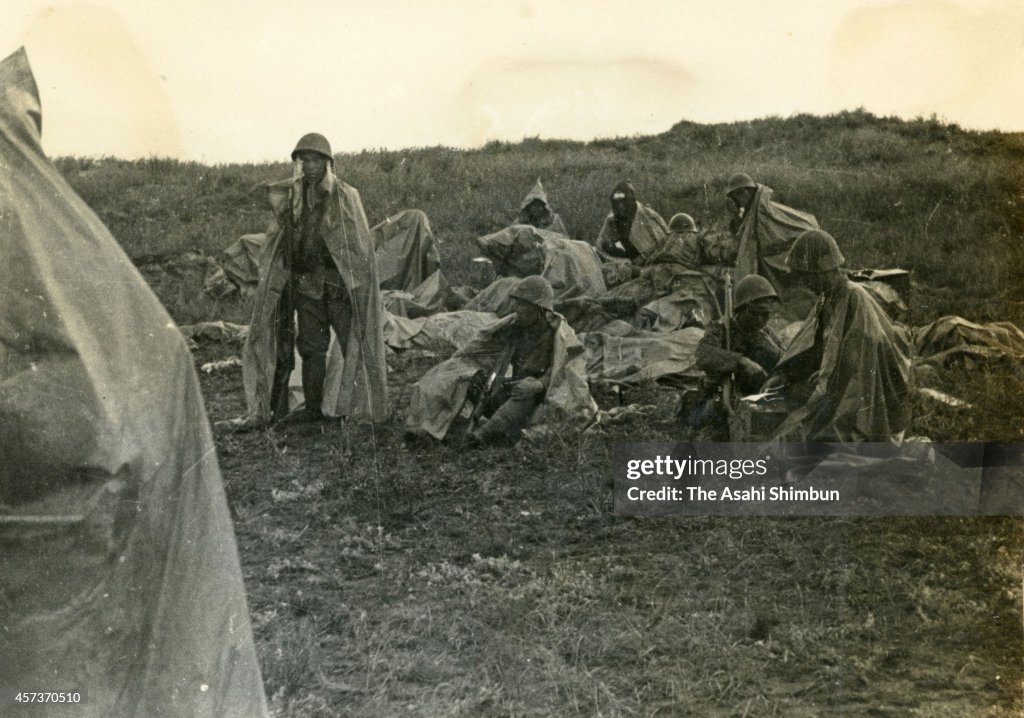
Flood waters in Southeastern Shansi Province were reported to have isolated three Japanese columns, made up of two army divisions, bringing the danger of starvation or defeat in the Chinese guerrilla-infested region. A Japanese mopping-up campaign in Shansi started last month and penetrated as far as Luan (Changchih] where it got bogged down by heavy Summer rains, which turned the highways into quagmires and Immobilized motor transport upon. which supplies and communications depended.
Thus far it has been impossible to relieve the columns or restore communications. Most inhabitants of the Luan region fled before the Japanese arrived and thus the invaders have been unable to obtain food while the surrounding hills are filled with guerrillas waiting a chance to attack. Travelers from Shansi said that the Summer rains were still continuing.
Two British Yangtze River steamers were destroyed by Japanese air raiders today and a fresh outbreak of antiAmerican agitation in North China was reported by an American missionary. British naval reports said that on the Yangtze three Chinese crew members were killed and two injured and one Canadian crew member injured. Property of the British Asiatic Petroleum Company was also damaged in the course of two air raids that destroyed the steamers near Ichang, about 485 miles upriver from Hankow. The injured employee was identified as H. J. Benyer. 36, a Canadian, formerly a member of the crew of p the Empress of Canada. He was hit in the arm by a bomb fragment. but his injury was said not to be serious.
The destroyed ships were the Kiawo and the Hsinchangwo. A bomb fell within thirty yards of a third ship, the Kiangwo, which was not damaged. Rear Admiral Reginal Vesey Holt, commander of Britain’s Yangtze River Patrol, immediately rushed a strong protest to Vice Admiral Koshiro Oikawa, commander of the Japanese Navy in China waters. Belonging to Jardine, Matheson & Co., the steamers normally operated between Hankow and Chungking but because of war conditions on the Yangtze River they were moored a few miles below Ichang at a spot that had become known as a foreign shipping refuge on the upper Yangtze.
The British gunboat HMS Gannet tonight was standing by the hulks and the damaged petroleum company property. The British protest to Admiral Oikawa declared that no military objectives to warrant attacks were in the vicinity where the raids occurred and that the spot was known as an anchorage of foreign ships. British reports said that the Japanese raiders dropped a few bombs. on Ichang but seemed to pay more. attention to the anchorage below Ichang and the British oil company property.
The gunboat Gannet started for the scene after the first raid but before it reached the spot a second attack of fifteen bombers occurred, inflicting more severe damage on the vessels and oil property. One steamer was said to have been set on fire by the second raid and the flames quickly spread to the other steamer. Skeleton crews aboard the ships were said to have escaped unharmed. Japanese newspapers in Shanghai reported air raids on Ichang but made no mention of damage to British interests. These press reports said that heavy damage was inflicted on Ichang which the Japanese declared was heavily fortified.
Dispatches from Domei, Japanese news agency, also reported extensive air raids on Chinese troop concentrations in Hupeh Province and on Kweilin, important Kwangsi Province city. The Japanese raiders were said to have flown as far as the frontier of French Indo-China and to have dropped bombs on towns along the route by which munitions and other supplies are brought into the Chinese interior. Foreign reports from Haiphong, French Indo-China, said that the port there was crowded with vessels, many of them American, waiting to unload and that it probably would take six months to transport into China all the supplies now piled on the waterfront.
New anti-American agitation was reported by an American missionary who reached Peiping from Japanese-controlled territory farther south. The missionary said that demonstrators paraded the streets of Shihkiachwang, 160 miles airline southwest of Peiping, a few days ago, shouting anti-American slogans in protest against the United States’ denunciation of her 1911 trade treaty with Japan. This was the first anti-American demonstration reported north of the Yellow River, though reports from Kaifeng, a short distance south of the river, have told of such demonstrations there.
Government circles in Tokyo said today that Mamoru Shigemitsu, Japanese Ambassador to London, might be instructed to ask the specific meaning of Prime Minister Neville Chamberlain’s Friday statement that Britain might find it necessary “in certain circumstances” to send a fleet to the Far East.
Born:
(William) “Sonny” Sanders, American soul vocalist, songwriter, arranger and producer (Jackie Wilson), in Chicago, Illinois (d. 2016).
Marv Marinovich, AFL guard (Oakland Raiders), father of quarterback bust Todd Marinovich, in Watsonville, California (d. 2020).
It’s all Fun and Games. But not for much longer.

 History Diaries