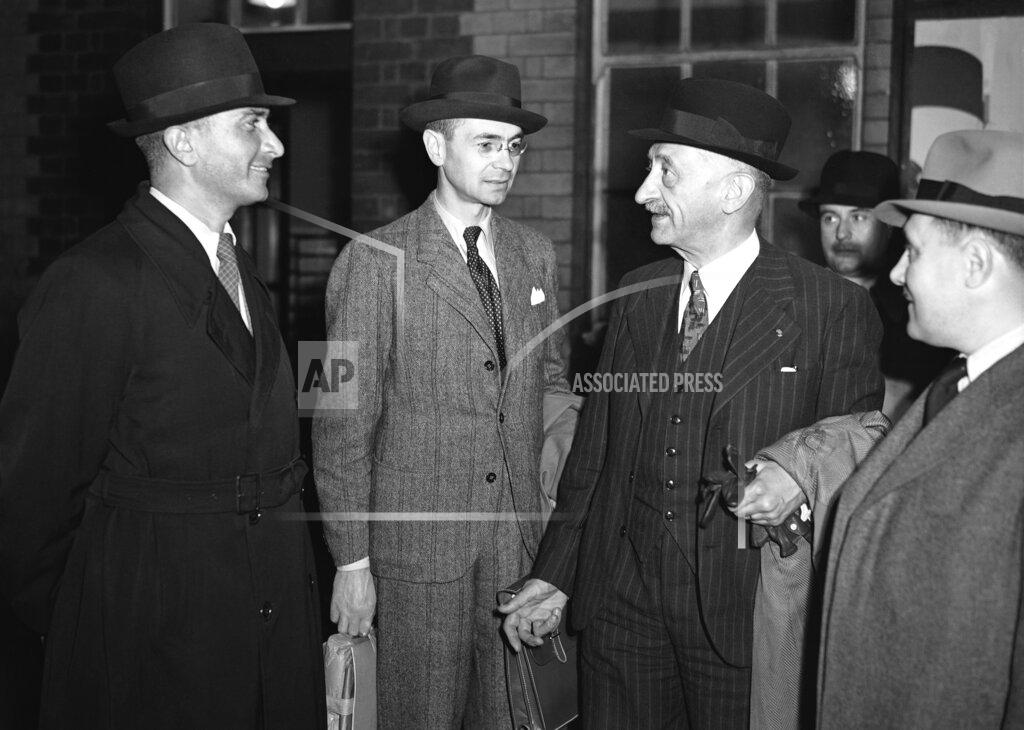
A British negotiator leaves Moscow without a political accord. William Strang, chief of the Central European Department of the Foreign Office, who has been occupied during the last three months in trying to negotiate a treaty between Russia, Britain and France, is coming home from Moscow, it was learned today. But at the same time the delegation of thirty or forty officers of the British and French Army, Navy and Air Force finished packing their bags in preparation for their sailing tomorrow on a chartered ship for the purpose of discussing with their “opposite numbers” in Moscow the ways and means of countering German aggression.
It was emphasized here that the return of Mr. Strang does not mean that political negotiations between the countries have been shelved indefinitely. But it is obvious that the news of Mr. Strang’s return will be universally interpreted in Europe as an attempt to shift the spotlight from the political to the purely military side of the ThreePower agreement for which Europe has been waiting so long. Mr. Strang, returning empty-handed, is being replaced by hardheaded admirals and soldiers asking how they can best fight a war if Germany wants one. The British, therefore, are bound to play off Mr. Strang’s return against the war leaders’ departure.
It will be argued that Mr. Strang’s return, which might not take place immediately, shows that the three powers cannot agree on any definition of aggression, direct or indirect, that will bring them into war together. It will be argued in return that if the three did not have a pretty good idea that they would cooperate in case of German aggression, they would not bother to have their high officers discuss methods of making that cooperation effective.
And finally it will be argued that the return of Mr. Strang — one of the most important professionals in the British diplomatic service and who is slated to be promoted to Assistant Secretary of State — soon is needed back in London. His return does not mean any more than that, many observers will say, adding that it is quite possible for Sir William Seeds, the British Ambassador in Moscow, to carry on the discussions alone and settle the vexing question of what constitutes indirect aggression.
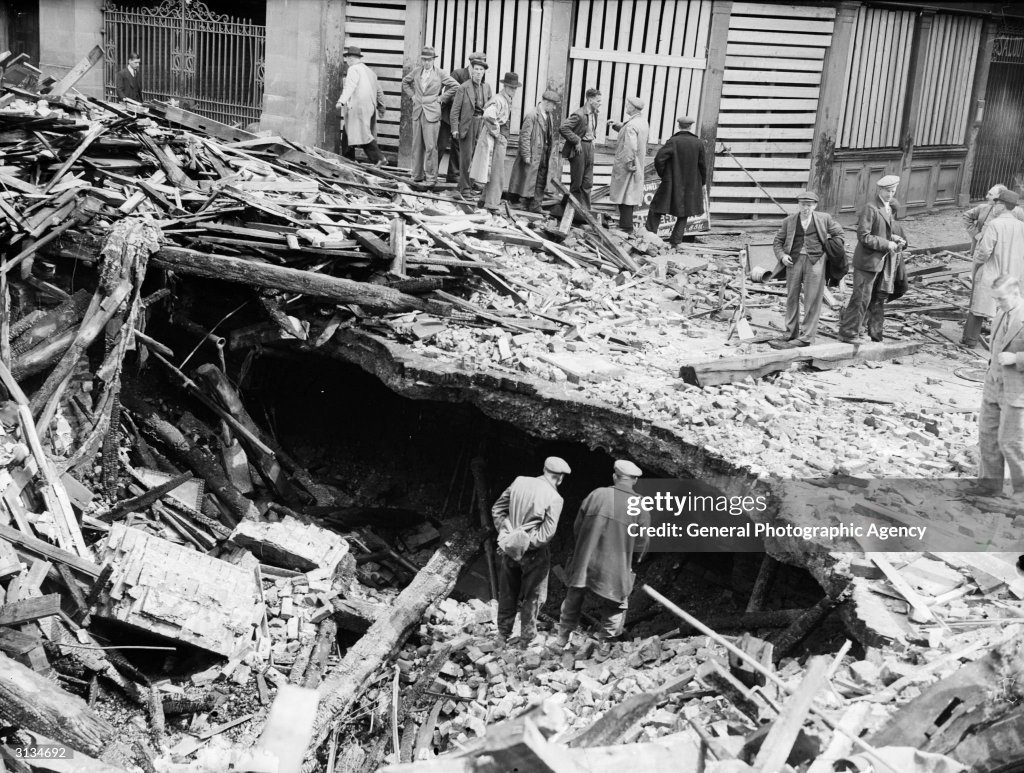
An estimated 150 are hurt in London’s gas-main blast; buildings and windows crash. The explosion in London of a leaking street gas main near St. Paul’s Cathedral this afternoon injured 150 persons as the road opened up with a deafening roar that was heard nine miles away and Doctors Commons, the building on Knight Rider Street famous in Charles Dickens’s day, came tumbling down. Flames leaped 100 feet high from the fifty-foot-wide crater blown in the roadway at the junction of Godliman and Knight Rider Streets and three hours elapsed before drillers could break through the concrete roadway some distance back and close the gas mains.
Automobiles crashed together with the shock of the explosion in Queen Victoria Street and people crouched, protecting their heads with their arms, as huge plate glass windows fell to the sidewalks. Scores of people lay bleeding where they had been struck down by the flying debris more than 100 yards from the scene of the explosion. Traffic in this densely populated area was suddenly stalled and the police for a long time were unable to get firetrucks and ambulances anywhere. near them.
The damage to St. Paul’s was confined to a number of plain leaded windows in the south side, one in the dean’s aisle and one in the crypt. All the stained glass escaped injury, though some of the windows were seen to be bulging outward. Workers crowding City offices first thought that the explosion was the result of another Irish Republican Army outrage when, looking through their shattered windows, they saw a huge column of smoke and dust rising above the International Telephone Exchange in Faraday House on Queen Victoria Street, which is the most important hub of communications in the world.
Early in the afternoon, however, a strong smell of gas gave warning that something was amiss with the mains, which, workmen discovered, had been undermined by floodwater from this morning’s cloudburst. They were endeavoring to plug the leak when an old unoccupied building containing the last portion of Doctors’ Commons, whose foundations also had been undermined, was seen to be cracking. As a part of this building fell the electric mains are believed to have fused, exploding the escaping gas in the cellar.
The news divulged last night that the Japanese Ambassadors to Rome and Berlin at Villa d’Este on Lake Como had discussed Japan’s possible adherence to the Rome-Berlin Axis was received with exultation in Italian circles but certainly without surprise.
The statement from the Japanese Ambassadors to Berlin and Rome, now meeting at Lake Como, that they had examined conditions for “Japan’s ampler adherence to the Rome-Berlin Axis” was received in German official quarters with considerable interest.
German Bishops defy a Nazi ban; the Vatican reveals that prelates will meet, as usual.
The Reich gets control of all idle Czechs. A transfer of skilled workers to Germany is feared. German authorities have taken control of the employment bureaus responsible for the placing of Czech workers. The bureaus were previously part of the local administration. Much of their work concerns the sending of Czech unemployed to Germany.
Reich plants recall married women for part-time work to help relieve the severe labor shortage.
The Kriegsmarine (German Navy) auxiliary submarine chaser UJ 175 Perseus was lost on this date.
Poles offer to end the Danzig trade war. Their note also demands respect for all agreements and warns of consequences. The government today sent to the Danzig Senate another note demanding loyal respect of all agreements with Poland but at the same time expressing willingness to cease the economic war and restore the customs officials withdrawn by several companies recently.
A Princess is born in the Netherlands. The country prepares to celebrate.
Far-reaching powers for the Falange Espanola are provided in a decree issued by Generalissimo Francisco Franco today, revising and modifying the party’s constitution.
Britain begins trans-Atlantic flights to the United States.
In Washington today, President Roosevelt approved several minor bills and told his press conference that he would hold an open house for members of Congress who came to say good-bye before he left for Hyde Park Monday night. He exchanged farewells for the Summer with members of his Cabinet at the Cabinet meeting.
The Senate adopted the final Deficiency Bill in a form adding about $131,000,000 to the total approved by the House. It rejected a motion to restore appropriations for the WPA’s Federal Theatre Project and refused to suspend its rules to consider an amendment to restore a Senate proviso for easing of farm mortgage foreclosure provisions. It appropriated $50,000 to continue. the investigation of the La Follette Civil Liberties Committee. and recessed at 10:51 PM, until noon tomorrow.
The House accepted a conference report on a bill amending the Social Security Act to liberalize benefits and freeze tax provisions at their present level and passed a bill for a census of housing and of utility equipment as a part of the 1940 census. It adjourned at 6 PM until noon tomorrow.
Congress was poised tonight for apparently certain adjournment tomorrow. The last great barrier between the weary legislators and the goal of a Summer vacation was removed early in the evening when the Senate passed and sent to conference the Third Deficiency Appropriation Bill, final major measure of the session. Administration leaders had already dropped all remaining measures on their slate, fearing to proceed further against the rebellion which began in Congress three weeks ago and reached a climax Thursday in the House’s refusal to consider President Roosevelt’s new spending-lending recovery program.
Although the Senate raised the Deficiency Bill’s total from $54,000,000, as it passed the House, to more than $185,000,000, leaders expected little trouble in ironing out the differences in conference tomorrow. The House prepared itself by a series of unanimous consent agreements to be ready to deal with the conference report immediately upon its reconvening tomorrow noon.
The greatest single advance for the day in the adjournment drive took place in the Senate when a minority of Republicans and conservative Democrats, fortified by a rule against adding new legislation to appropriation measures, prevented the Deficiency Bill from becoming a dragnet for various items refused by Congress earlier in the session. With the advantage of this rule, this coalition defeated successive attempts to restore the prevailing wage principle to relief projects, to soften the rule for the enforced furlough of WPA workers on the rolls for more than eighteen months, to revive the federal theatre project under the work relief program, and to grant further federal aid to farmers in refinancing their mostgages. Any one of these amendments, had it been successful, might have tied up the session for several days.
Another possible obstacle to the session’s early end was removed in the forenoon when conferees suddenly reached an agreement on the Social Security Act amendments which had been deadlocked in conference for more than four weeks. Although three Senate conferees — Senators Harrison, Connally and George — refused to sign the conference report because of deletion of the Connally amendment providing 2-to-1 Federal grants for old-age assistance up to $15 a month, the compromise was recommended by a majority of the conference as saving the better features of the amendments.
Among these was a provision freezing the Social Security payroll taxes at their present rates until 1943, calculated to save American industry and its employees approximately $1,000,000,000 over the next three years. The Social Security conference report was adopted by the House in short order in the afternoon, and then was sent to the Senate, where adoption is regarded as a certainty tomorrow.
Social Security gridlock ends. The House passes a bill to save $1 billion in taxes and widen the scope of the act. The House quickly adopted today a conference report on Social Security Act amendments which would bring tax savings to employees and employers of about $1,000,000,000 during the next three years and liberalize the program of benefits. The Senate is expected to act later on the report, which ended a month’s deadlock between the two branches.
U.S. President Roosevelt predicts a rise in taxes. He says the defeat of his housing bill will increase the need for relief.
Support for Thomas Dewey’s presidential candidacy grows. Friends deny he has formed a “brain trust,” but he does have a “research bureau.” District Attorney Thomas E. Dewey’s boom for the Republican Presidential nomination has been running so smoothly without headquarters, campaign manager or accredited field agents outside New York State that he will make no change in method at present, it was learned yesterday on good authority.
Harry Bridges said today at his deportation trial that if the advocates of “revolution” mean “a lot of bloodshed I am against it now and at all times.” After two and a half days of questioning by Thomas B. Shoemaker, chief government counsel, he was excused from the stand. But he also condemns rule by the “bourgeoisie.”
Terms of the agreement to end the monthold strike of 7,000 General Motors tool and die workers were ratified today by the C.I.O. United Automobile Workers strike committee and by the union’s general executive board.
The Third Federal Circuit Court of Appeals was asked in Philadelphia today to uphold a ruling of the National Labor Relations Board, issued Oct. 18, 1938, requiring the Republic Steel Corporation to reinstate 5,000 employes with back pay running into millions of dollars.
Grim and still apprehensive, men went back to work today on the Green Mountain Dam in Colorado, scene of a 48-hour labor disturbance marked by rifle fire in clashes which brought injury to seven persons.
The Hatch Act barring Federal officeholders from political activity was applied by Attorney General Murphy for the first time when he served notice by telegraph today on three United States prosecutors that while rolding present posts they could not run for other offices.
Jersey City Mayor Frank Hague made known today through a spokesman that he was in favor of a third term for President Roosevelt and would send delegates to the 1940 Democratic convention with instructions to support the President for another term, “if he wants it.”
The first smallpox case since 1932 shows up in New York. Many are ordered to be vaccinated.
USN carriers Yorktown and Enterprise make successful launchings of SBC-3 and O3U-3 aircraft from flight deck and hangar deck catapults in the first practical demonstration of launching aircraft from carriers by means of a hydraulic flush-deck catapult and in the first demonstrations of catapulting aircraft from the hangar deck.
Mike Kreevich of the Chicago White Sox equals the Major League record by grounding into four successive double plays against the Washington Senators. Chicago loses, 6–5.
The Norwegian cargo ship collided with Lydia M (Brazil Brazil) at Santos, Brazil. Both vessels were damaged at the bows and beached.
A Chinese mob in Tianjin attacked offices of the British International Export Corporation, smashing furniture and other equipment and throwing it into the Hai River. The British said the attack was instigated by the Australians.
Japanese bombs damage German and French consulates, killing 10 Chinese. The French and German Consulates were damaged early today as Japanese planes raided the city. Demolition bombs exploded in the compounds of the two consulates, shattering windows and splattering ceilings with fragments.
Prime Minister Neville Chamberlain says Britain may send its fleet to the Far East. He says Japanese insults to the British in China “make his blood boil.” However, he has problems closer to home to worry about. “Let us not forget,” said Mr. Chamberlain, “that there may be even graver and nearer problems to be considered in the course of the next few months. We must conserve our forces to meet any emergency which might arise.” To the House that had been so critical of the Prime Minister on Wednesday and so uneasy over the long adjournment this sounded like assurance that Mr. Chamberlain was well aware of the “danger period” in Europe this Summer and Autumn. Most of his speech. amounted to an endorsement of Winston Churchill’s advice of a few months ago that events in the Far East should not deflect Britain’s eyes from the main target across the North Sea.
Borrowing a trick or two from the Axis powers, Mr. Chamberlain warned that the British Navy, now concentrated overwhelmingly in European waters, might conceivably be sent to the Far East. In words obviously aimed at the Japanese Mr. Chamberlain said: “At the present moment we have not in the Far East a fleet superior to that of the Japanese. We have such a fleet here and in certain circumstances we may find it necessary to send that fleet out there. I hope no one will think it is absolutely out of the question for such circumstances to arise. At the same time I do not mean that as a threat — only as warning.”
This was enough to give the placard writers for London evening newspapers a glorious opportunity and they made the most of it. Within half an hour the streets were ablaze with handbills proclaiming in huge letters: “Fleet may go to Far East.” But in spite of Mr. Chamberlain’s warning and appeal few informed persons took it seriously. Diplomats and naval experts agreed that the sending of a powerful British battle fleet to Singapore was utterly “out of the question” this year and probably until 1941, when the first of Britain’s nine new battleships will go into commission. The warning was simply the latest attempt to scare Japan, and it was being judged as such in London tonight.
The Reich is skeptical of a Japanese alliance, while Italians are happy to have a potential new ally. Tokyo feels forced into an Axis alliance, as a Japanese official accuses the United States and Britain of joint pressure.
The cargo ship Junyoshi Maru ran aground at Shiokubisaki, Hokkaido. She was declared a total loss.
Dow Jones Industrial Average: 141.73 (-2.51).
Born:
Frank Vincent, American actor (“The Sopranos”), in North Adams, Massachusetts (d. 2017).
Frankie Ford, American singer (“Sea Cruise”); in Gretna, Louisiana (d. 2015).
Dennis Higgins, MLB pitcher (Chicago White Sox, Washington Senators, Cleveland Indians, St. Louis Cardinals), in Jefferson City, Missouri (d. 2023).
Bob Meyer, MLB pitcher (New York Yankees, Los Angeles Angels, Kansas City A’s, Seattle Pilots-Milwaukee Brewers), in Toledo, Ohio.
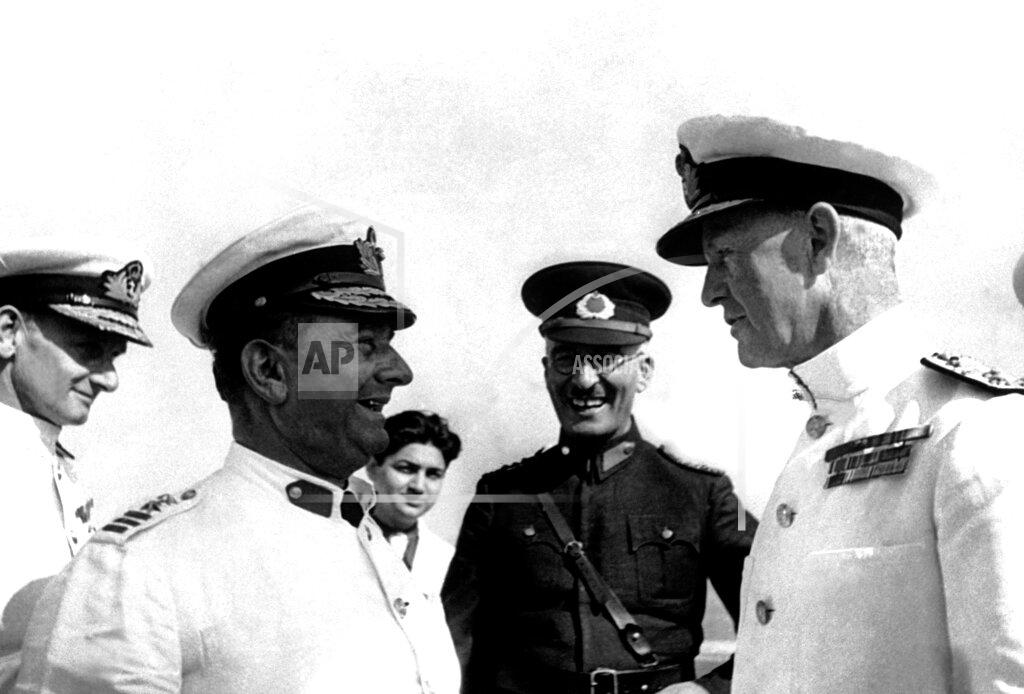
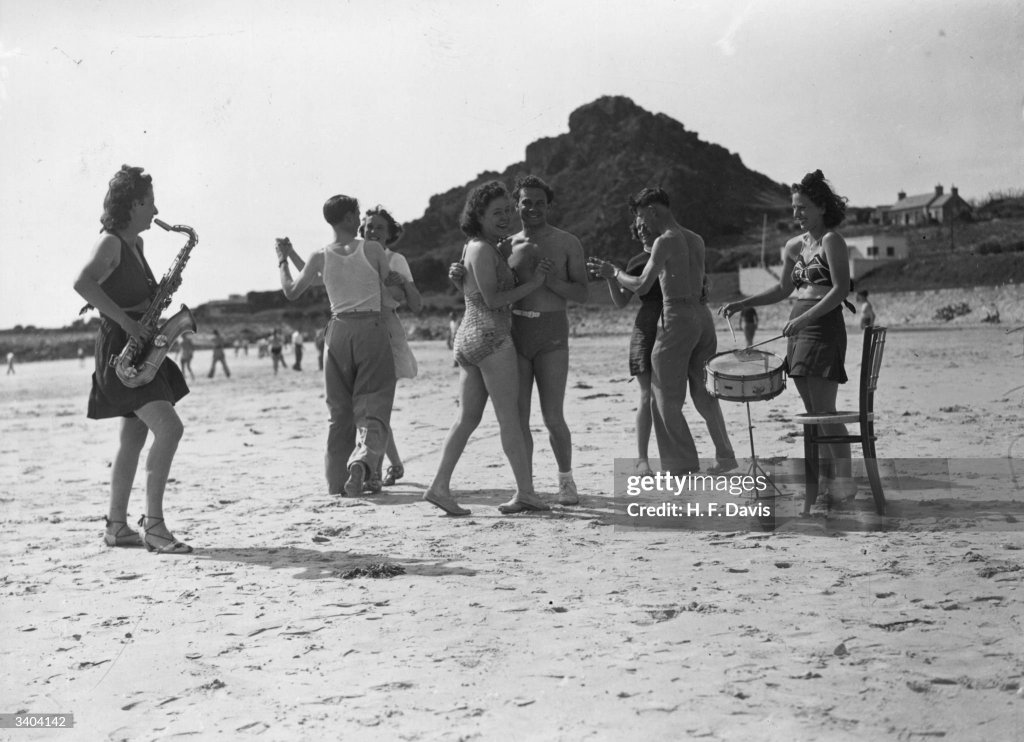
[I wonder which of these three young men will survive the next six years. For that matter, I wonder about the young women, too. Jersey will be invaded by the Germans on 1 July 1940, and will be occupied for five years.]

 History Diaries