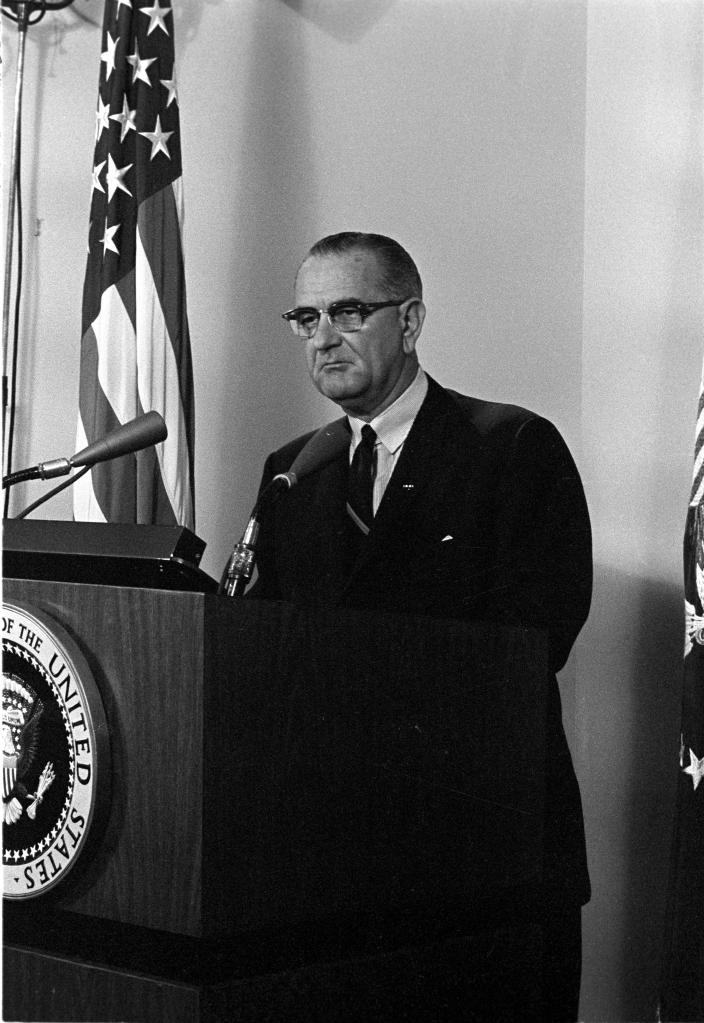
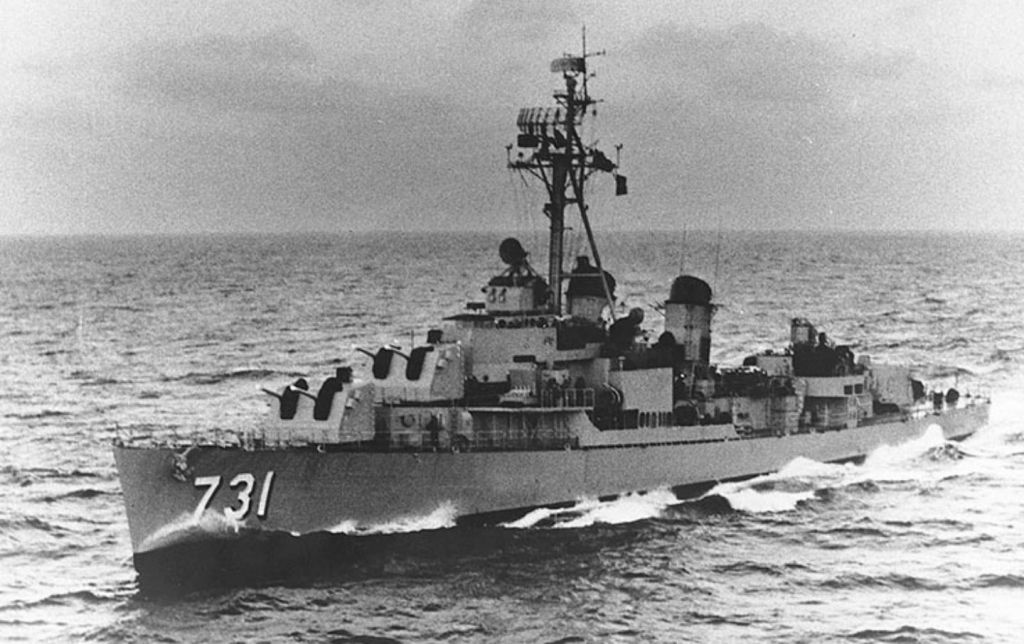
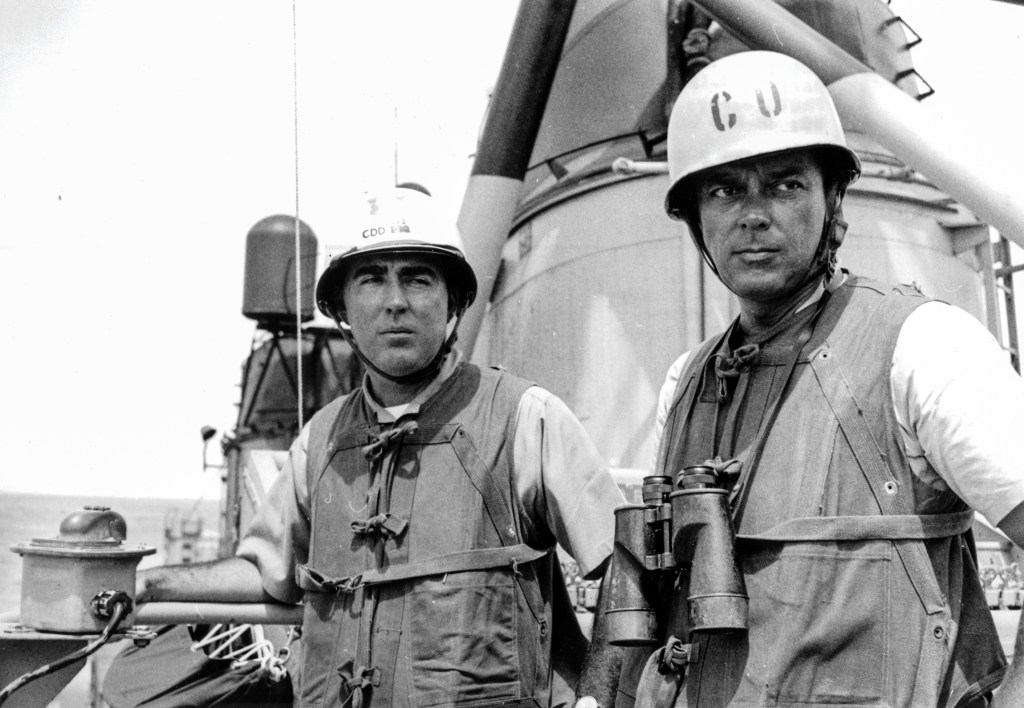
The second Gulf of Tonkin incident, which would propel the United States into a large-scale commitment to the Vietnam War, after the commanders of two U.S. Navy destroyers believed that they had been victims of, as intelligence expert Paul R. Pillar would write later, “probably never occurred”. The USS C. Turner Joy and the USS Maddox reported during the evening that they were being attacked by North Vietnamese gunboats. U.S. President Lyndon Johnson would authorize a retaliatory air strike from the carrier USS Ticonderoga, and deliver a late night televised address calling Congress to action. Three days later, Congress would overwhelmingly authorize American use of force to a war that would claim the lives of over 58,000 Americans and one million Vietnamese. Nearly 40 years later, declassified information would show that the President was skeptical about whether the second attack actually happened. Three years later, the National Security Agency concluded after analyzing 140 formerly secret documents that, although there was no doubt about the August 2 attack on the Maddox, there had never been a second attack and that NSA historian Robert J. Hanyok conlcuded that, “In truth, Hanoi’s navy was engaged in nothing that night but the salvage of two of the boats damaged on 2 August. The handful of SIGINT reports which suggested that an attack had occurred contained severe analytical errors, unexplained translation changes and the conjunction of two unrelated messages into one translation.” The overall consensus is that “there was no attack on the American ships on August 4, but… Johnson believed that there had been an attack when he ordered retaliation.”
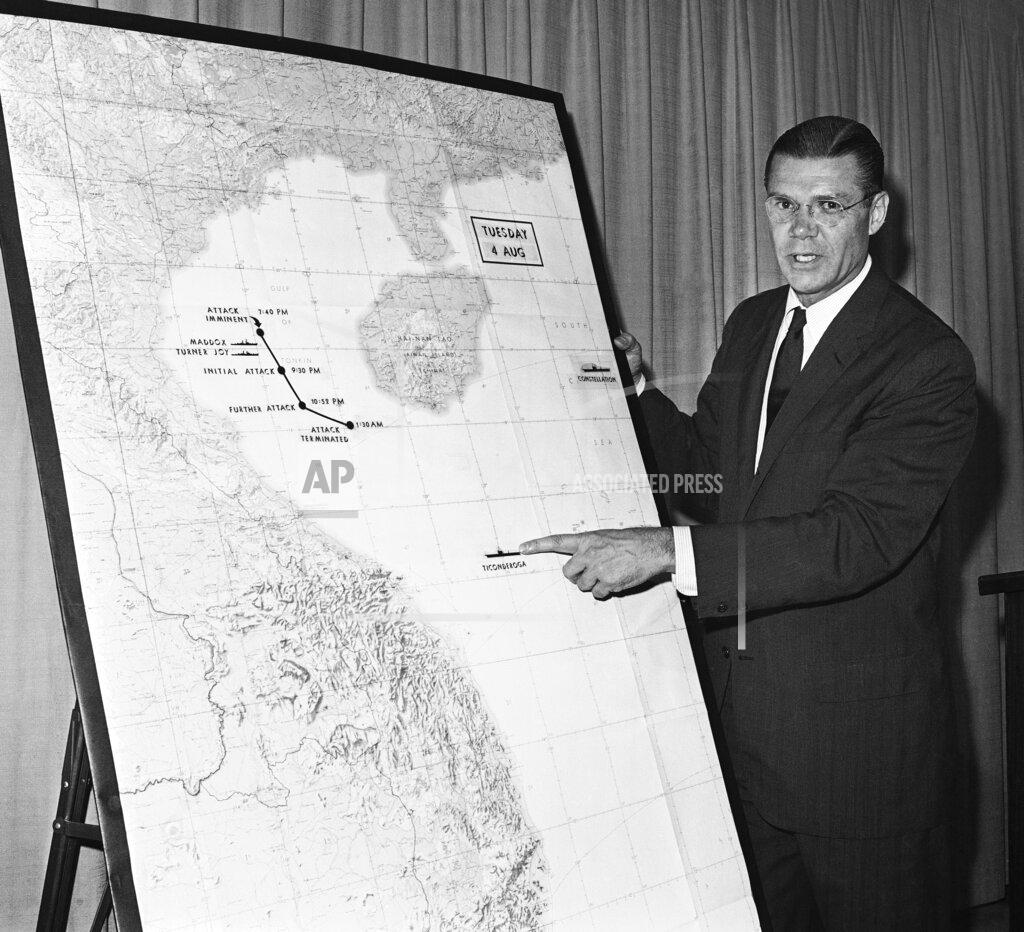
About eight o’clock in the evening, the Maddox intercepts radio messages from the North Vietnamese that give Captain Herrick ‘the impression’ that their patrol boats were planning an attack. Herrick calls for air support from the Ticonderoga again, and eight Crusader jets soon appear overhead. In the darkness, neither the pilots nor the ship crews can see any enemy craft, but about ten o’clock the sonar operators are reporting torpedoes approaching; the U.S. destroyers maneuver to avoid the torpedoes and begin to fire. When the action ends about two hours later, U.S. officers report sinking two, possibly three, North Vietnamese craft.
Commander James Stockdale was again in the action, this time alone. When his wingman’s aircraft developed trouble, Stockdale got permission to launch solo from the USS Ticonderoga. He arrived overhead at 2135. For more than 90 minutes, he made runs parallel to the ships’ course and at low altitude (below 2,000 feet) looking for the enemy vessels. He reported later, “I had the best seat in the house to watch that event and our destroyers were just shooting at phantom targets — there were no PT boats there… there was nothing there but black water and American firepower.”
In fact, no American will be sure of ever having seen any enemy boats nor any enemy gunfire. Captain Herrick will immediately communicate his doubts to his superiors and urges a ‘thorough reconnaissance in daylight.’ Shortly thereafter he will also inform Admiral Sharp that the radarscope blips were apparently ‘freak weather effects’ while the torpedoes were probably due to an ‘overeager’ sonar operator.
Because of the time difference, it is only 0920 hours in Washington when the Pentagon is alerted to a potential attack on the U.S. destroyers (based on disputed interpretations of North Vietnamese radio messages about their military operations). When word of the ‘engagement’ arrives at 1100 hours, President Johnson is immediately informed and the JCS begin to select targets for reprisal air strikes (from a list drawn up by the end of May).
At a meeting of the National Security Council about noon, McNamara, Rusk and McGeorge Bundy recommend such reprisal strikes to the president. Johnson is more cautious, but at a second session of the NSC that afternoon he orders that reprisal strikes be made, and discusses the deployment of U.S. air strike and other military forces as called for by Operation Plan 37-64 should a major bombing campaign bring a response from Communist China or other powers supporting North Vietnam. Details of the reprisal strikes code-named Pierce Arrow are prepared by the JCS by late afternoon.
Meanwhile Admiral Sharp in Honolulu is still trying to get absolute confirmation from the Maddox and C. Turner Joy that an attack took place. By 1723 hours. Admiral Sharp calls to say he is satisfied that there was such an attack, and by 1845 hours President Johnson meets with 16 leaders from both parties in Congress to inform them of the second unprovoked attack, the imminent reprisal strikes and his intention to ask for a Congressional resolution.
By 2320 hours Defense Secretary McNamara is informed by Admiral Sharp that the U.S. bombers are flying to their targets, so at 2336 hours President Johnson appears on national television and announces that the reprisal strikes are underway because of the unprovoked attack on U.S. ships. The President assures the world that, “We still seek no wider war.”
Which is, of course, Bullshit. As Colonel H. R. McMaster put it years later:
“To enhance his chances for election, [Johnson] and McNamara deceived the American people and Congress about events and the nature of the American commitment in Vietnam. They used a questionable report of a North Vietnamese attack on American naval vessels to justify the president’s policy to the electorate and to defuse Republican senator and presidential candidate Barry Goldwater’s charges that Lyndon Johnson was irresolute and “soft” in the foreign policy arena.”
Secretary of Defense Robert S. McNamara said at a postmidnight news conference that the United States planes that attacked North Vietnam yesterday and today had come from the carriers USS Constellation and USS Ticonderoga in the Gulf of Tonkin.
Premier Nguyễn Khánh struggled today to strengthen the political stability of his Government as his aides privately warned of plots to drive him from office. United States officials were concerned about the political deterioration in Saigon. The malaise in the capital was attributed more to a clash of rival political and military personalities than to pressure from the Việt Cộng insurgents. United States sources said reports from provinces indicated that conditions there were generally better than in Saigon.
Once again, rumors of a coup d’état were circulating in Saigon. There was no visible evidence that a coup against the Khánh Government was imminent, but the currency of the rumors tended to undermine the authority of the regime and confidence in it. General Maxwell D. Taylor, the United States Ambassador, was informed of the rumors, which emanated in part from responsible Government sources. United States officials believe another coup after that of January 30, which brought Premier Khánh to power, and that of last November 1, which brought down the regime of President Ngô Đình Diệm, would be seriously detrimental to the war against the Việt Cộng.
General Khánh scheduled a Cabinet meeting for tomorrow during which he may deal with some of the reported threats to his Administration. Vietnamese Government officials said General Khánh was considering a proposal to appoint military officers as deputy ministers to strengthen his authority. Associates of General Khánh were privately accusing Nguyễn Tôn Hoàn, leader of the nationalist Đại Việt party, of involvement in plans to force the Premier from office. General Khánh brought Dr. Nguyễn Tôn Hoàn to Saigon from Paris, where he had spent about a decade in exile, after the Premier seized power. The Đại Việt leader is said to have been disappointed when he was not appointed Premier as expected, but was made one of three Vice Premiers and put in charge of the pacification program. The Đại Việt, which has lacked a base of popular support, is reported to have been active recently in recruiting new members, especially army officers.
Some of Premier Khánh’s supporters accused Dr. Nguyễn Tôn Hoàn of having tried to recruit Major General Trần Thiện Khiêm, the Minister of National Defense, who was instrumental in bringing the Premier to power. Reports reaching Western embassies here and well-informed Vietnamese sources also linked the Đại Việt to General Nguyễn Văn Thiệu, the Chief of Staff, and Colonel Nguyễn Văn Tồn, commander of the Seventh Division.
Congolese rebels of the “Popular Army” and Government troops battled tonight in the streets of Stanleyville, the chief city in the northern Congo. Messages from the United States consul there said heavy fighting was going on early this evening in front of the consulate, about half a mile from the center of the city. At 6:15 PM Stanleyville time, the consul, Michael P. E. Hoyt, telegraphed that the army was “advancing across front lawn of consulate” and seemed to be “pushing rebels back.”
Eight minutes later he wired that the army troops were “advancing rapidly and in numbers beyond consulate on road to Wanie Rukula.” He said that if the advance was maintained he might not abandon the consulate, “due to the psychological effect.” At 6:30 he sent a message saying “pole shot and rope cut by gunfire, but consulate flag still flying.” Later reports from the beleaguered city, which is 775 miles northeast of here, gave a confused picture. A radio message from the Stanleyville airport control tower, received at the Leopoldville airport about 6:45 PM, told of “heavy gunfire” close to the airport, about two miles from the United States consulate. The message said officials were preparing to close the airport.
Greek Cypriote interference with movements of United Nations forces in Cyprus led today to consultations on the future of the peacekeeping operation. The Secretary General, U Thant, received the delegates of Canada, Denmark, Sweden, Norway, Greece and Britain. All the meetings were conceded to be connected with the Cyprus problem, though details of the talks were not available. A United Nations source said that the principal point discussed, was undoubtedly freedom of movement for the force. Denmark and Sweden, are reported to have threatened to withdraw their contingents of troops unless their safety is assured. Britain and Canada have also expressed dissatisfaction with restrictions on their movement.
Archbishop Makarios, the president of Cyprus, has taken the view that the phrase “freedom of movement” does not include freedom to enter areas considered “sensitive” by the Government, which is dominated by the Greek community.
India is prepared to back any diplomatic solution to halt hostilities in Laos that will not result in further political gains for Communist China, authoritative sources said here today. These sources said New Delhi felt that the best way India could contribute to a solution was through the use of her position as chairman of the Internation Control Commission for Laos. The other members of the commission are Canada and Poland. Two sharply different proposals have been made to halt the fighting in Laos, one by each of the nations that are supposed to control activities of the control commission in Laos. They are Britain and the Soviet Union in their capacity as co‐chairmen of the 1962 conference on Laos, held at Geneva.
Nine miners in a French limestone quarry were rescued alive after being trapped for eight days by a cave-in near Champagnole. Another five died beneath the surface. Nine French miners imprisoned deep in the collapsed chambers of a limestone mine for eight days were hauled safely up a rescue shaft today. Military ambulances took them to a Champagnole hospital for check-ups and any treatment they might need. The miners appeared to be in relatively good condition, though all but two had to be carried to the ambulances. André Martinet, the mine foreman, was among those who walked from the special aluminum capsule that hauled the men, one at a time, from the chambers 270 feet below.
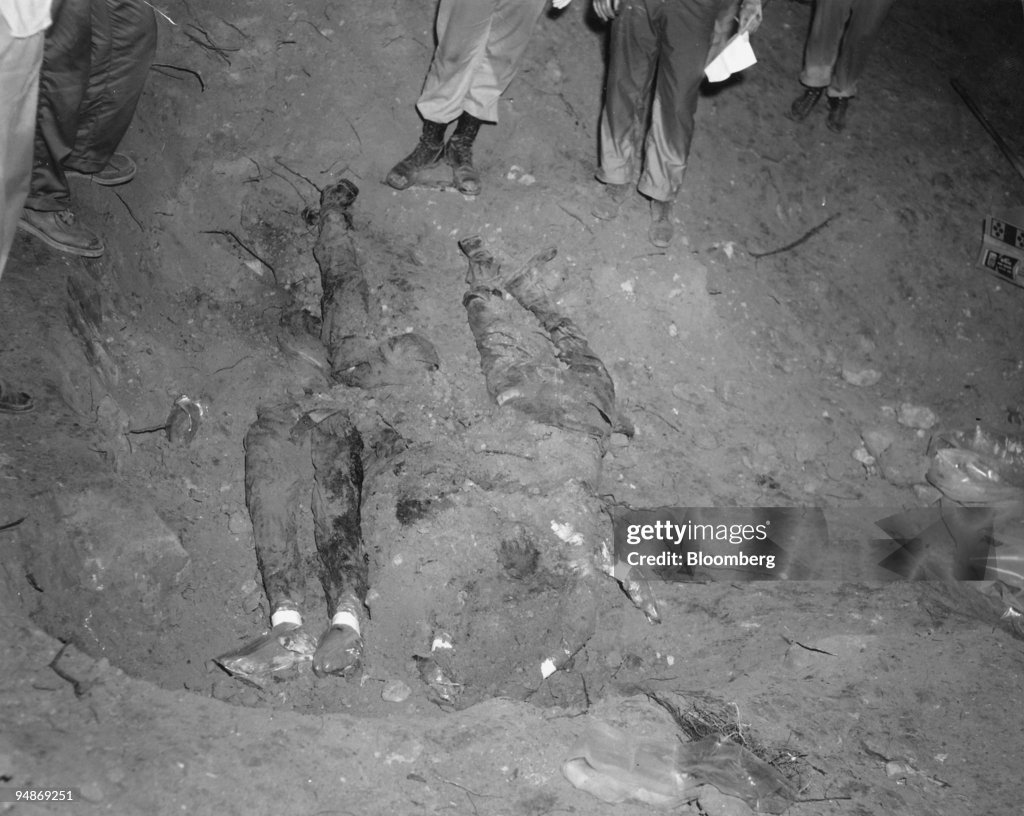
The bodies of murdered civil rights workers Michael Schwerner, Andrew Goodman and James Chaney were found at the site of an earthen dam on a farm near Philadelphia, Mississippi, where they had disappeared on June 21. Acting on a tip from an informer who was motivated by a $30,000 reward, FBI agents obtained a warrant to search the “Old Jolly Farm” with the assistance of road-grading equipment. After six hours, at 2:05 in the afternoon, the searchers “smelled decaying flesh” and began excavating with shovels. Schwerner’s body was found 73 minutes later, followed by those of Goodman and Chaney.
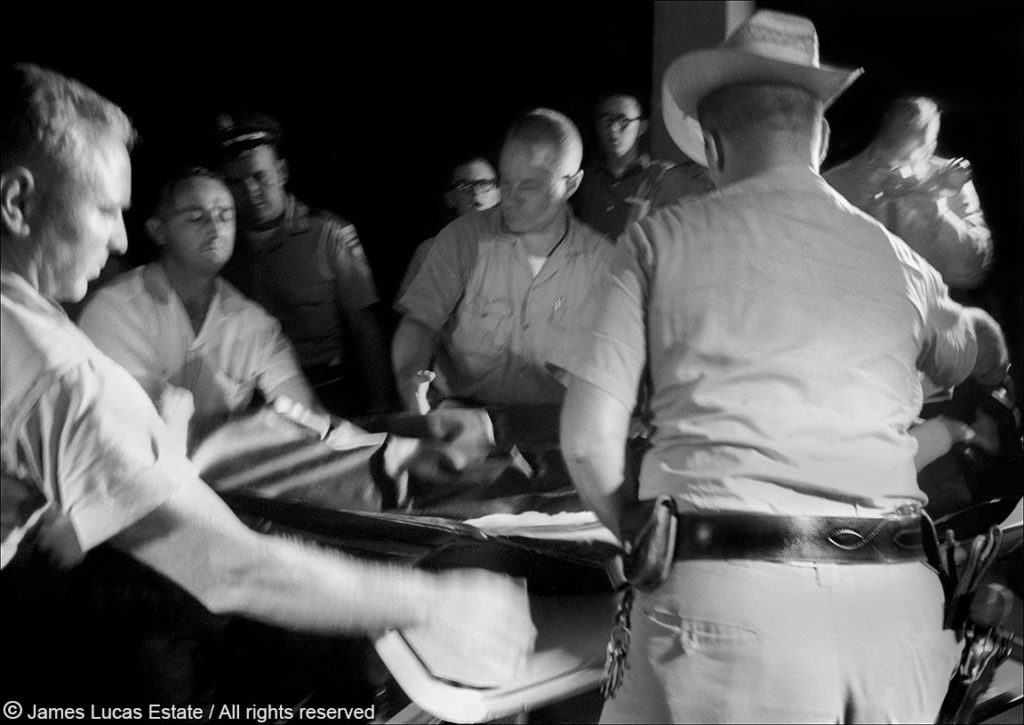
Federal Bureau of Investigation agents recovered the bodies from a newly erected earthen dam in a thickly wooded area about six miles southwest of Philadelphia, in east-central Mississippi. The dam is several hundred yards off State Highway 21, near the Neshoba County fairgrounds. Fulton Jackson, the county coroner, made a preliminary examination at the scene. The bodies were then sealed in plastic bags and brought by ambulance to the University of Mississippi Medical Center in Jackson, 70 miles to the southwest. Roy K. Moore, special agent in charge of the Jackson F.B.I. office, said physicians and fingerprint experts would seek to make positive identification and establish the cause of death.
“If these are the bodies of the three civil rights workers who have been missing several weeks, the investigative forces of the State of Mississippi will exert every effort to apprehend those who may have been responsible.” Mr. Johnson said he understood FBI agents had searched the area once before and had noticed the new dam. Later, when they saw that the dam had collected no water despite heavy showers, they returned for a further investigation. Excavation uncovered the bodies in the fill of the dam, the Governor said. Sheriff L. A. Rainey, who had just returned from a vacation, visited the scene a short while after the discovery.
The missing men were Michael H. Schwerner, 24 years old, and Andrew Goodman, 20, both white and both from New York City, and James E. Chaney, 21, a Black of Meridian, Mississippi. All three had been taking part in the Mississippi Summer Project, a state‐wide civil rights drive, which began on the week end of their disappearance. The drive is sponsored by the Council of Federated Organizations, a coalition of civil tights groups. Mr. Schwerner and Mr. Chaney were members of the Congress of Racial Equality. Mr. Goodman was one of more than 400 student volunteers in the campaign, which is seeking to get Blacks registered to vote.
The three men had left Meridian, their headquarters, on Sunday, June 21, to drive to the site of a burned Black church in the Longdale community, about 12 miles east of Philadelphia. After talking with Blacks there, they left to return to Meridian. Cecil Price, the Neshoba County deputy sheriff, said he had arrested Mr. Chaney late that afternoon for driving 65 miles an hour in a 35‐mile‐anhour zone and that he had held the two whites “for investigation.” The three were imprisoned at the Neshoba County Jail in Philadelphia until late Sunday night, according to Mr. Price, and were released after Mr. Chaney had posted a $20 bond.
County authorities at first denied that they had any knowledge of the whereabouts of the three, according to civil rights leaders who called them late that Sunday night. However, Mr. Price said later that he had escorted the late model Ford station wagon in which the three were riding to the Meridian highway, a short distance from the jail, and had not seen them since. The burned‐out station wagon was found the following Tuesday in the Bogue Chitto Swamp, some 30 feet off a highway, 10 miles north of Philadelphia.
Scattered violence broke out again in Jersey City tonight as roving groups of Blacks hurled crude Molotov cocktails in the streets. There was some gunfire but no injuries were reported. About 400 city policemen contained most of the young rioters to two predominantly Black neighborhoods. Although it was dangerous to be on the streets on this third night of violence, many people watched from sidewalks and front porches as police cars, their red lights flashing, sped from one pocket of violence to another. On Ocean Avenue the police trained spotlights on the roof of a three‐story block of apartments. A man had been seen on the roof, and it was feared that he was armed with a rifle, fire bombs, or both. Yet on the sidewalk below, a woman walked her dog, apparently without concern, through throngs of helmeted policemen. From a front porch across the street, a baby cried.
Since the rioting started Sunday night, more than 30 persons have been injured, two of them with gunshot wounds. None of the wounds was critical. More than three dozen persons have been arrested. Five hundred more Jersey City policemen stood ready to enter the battle if they were needed. There were reports that teams of agents from the Federal Bureau of Investigation had come to the scene, but an F.B.I. spokesman in the Newark office said he had “no comment.” It is standard practice for the FBI to observe racial and civil rights disturbances. The scattered outbreaks of violence today began in the morning. Two Molotov cocktails were tossed at patrol cars at about 10 AM, but they missed. Later, six rubbish fires broke out in a vacant, three‐story frame building, and two men were arrested for throwing rocks at policemen.
In one incident tonight, a city official, Robert Slade, deputy city registrar, and several clergymen were trying to calm a group of Black youths in the compound of the Booker T. Washington housing project at Prior and Grand Streets. About 20 policemen watched from across the street. As the group talked, a bottle smashed in the middle of the street. The policemen rushed across the street, swinging their clubs, and scattered the youths. When Mr. Slade, a Black, protested to the policemen that he was only trying to calm the youths, a police sergeant told him: “Shut your damn mouth.” When someone explained to the sergeant that Mr. Slade was a city official, the officer replied: “I don’t give a damn.”
A few minutes later, a Black youth being interviewed nearby by a radio reporter was pulled away from the microphone by the police. After he had been searched, the police put him into a radio car and drove him away. The Black was identified as Melvin Robinson of 585 Grand Street, a member of a youth committee that had met earlier with the Mayor. As the police car pulled away, Addison McLeon, a Black member of the Jersey City Board of Education, attempted to follow in a car owned by the city. As he did so, four police cars cut him off and one patrolman demanded to see his registration. After examining his credentials, they allowed him to drive on, but the police car containing the youth had vanished.
President Johnson wants the Democratic platform to take a stand against extremism of the right and the left, without naming any particular organization. Mr. Johnson, at the moment, plans to attend the party’s national convention in Atlantic City only on Thursday night, August 27, when he is scheduled to make his acceptance speech. But his wish on the platform is likely to be enough to make his views effective. As yet, however, he has had no detailed discussions with the platform drafters.
The President is also planning to follow a somewhat unusual procedure in having himself placed in nomination. This is to be done by “co‐nominators” — Governors Edmund G. Brown of California and John B. Connally Jr. of Texas. These and other fairly welladvanced plans of the President have been learned from high Democratic sources.
However, on the question of most current interest, Mr. Johnson’s choice for a Vice‐Presidential candidate, no decision has yet been made. Senator Hubert H. Humphrey of Minnesota is believed to be at the head of the President’s list, three weeks before the convention opens August 24. Mr. Johnson however, still is making a thorough canvass of all possibilities, apparently including some not heavily involved in public speculation. Meanwhile, the tenso situation between the White House and adherents of Attorney General Robert F. Kennedy continues to be unresolved. Mr. Kennedy and other members of the Cabinet were ruled out as Vice-Presidential possibilities by Mr. Johnson last Thursday.
Pierre Salinger was appointed to the U.S. Senate today by Governor Edmund G. Brown of California to fill the remaining five months of the term of the late Senator Clair Engle. Mr. Salinger is scheduled to be sworn in tomorrow about noon. He will be escorted to the rostrum by Senator Thomas H. Kuchel of California, the assistant Senate Republican leader. Governor Brown is to head a party of about 160 Democratic leaders who will be present in the Senate galleries when the new Senator takes his oath. Mr. Salinger, who was White House press secretary, throughout the Administration of President Kennedy and in the first few months of the Johnson Administration, won the Democratic senatorial nomination in California last June. He is 39 years old.
Jazz saxophonist and composer John Coltrane (35) weds jazz harpist and pianist Alice Macleod.
Kansas City A’s starter John O’Donoghue gives up his third homer to Mickey Mantle this year, but that’s all he allows, as Kansas City tops the visiting New York Yankees, 5–1.
Norm. Siebern dropped a two‐out foul fly in the fourth inning tonight and the Los Angeles Angels went on to score five unearned runs that brought them a 5–0 victory over the Baltimore Orioles. Two were out and the bases filled when Siebern dropped the pop‐up by the pitcher, Don Lee. Lee then singled home two runs and Bob Perry doubled home another. Dave Vineyard, Oriole rookie, was lifted after he walked Lennie Green, filling the bases again.
The Detroit Tigers, held to a bunt single for seven innings by Gary Peters, scored four runs in the eighth and defeated the Chicago White Sox, 4–3, tonight.
The Minnesota Twins smashed five home runs, including Harmon Killebrew’s 37th, and crushed the Boston Red Sox 12–4 tonight.
Deron Johnson’s three‐run homer powered Cincinnati to a 5–2 first‐game victory over the Milwaukee Braves tonight and the Reds completed a sweep by taking the second game, 4–2, when Johnny Edwards cracked a tie‐breaking single in the sixth inning. Fred Hutchinson, the Reds’ manager, rejoined the team, but did not stay for the entire first game. He was released from Christ Hospital yesterday after a week’s stay for tests after he had complained of back pains. Hutchinson has been receiving treatments for cancer.
Billy Williams’s two‐run home run in the sixth inning broke a scoreless tie and paced the Chicago Cubs to a 4–0 victory over the St. Louis Cards tonight. It was the Cubs’ first victory this season over Ray Sadecki, who had beaten them three times. Sadecki, whose career won-lost record against the Cubs is 12–4, had a one‐hitter for five innings, but Leo Burke led off the sixth with his second single to set the stage for Williams’s 25th homer.
José Pagan scored from first base on a hit‐and‐run single by Jim Davenport in the 14th inning at Shea Stadium last night and gave the San Francisco Giants a desperately needed 4–3 victory over the New York Mets. The remnants of a crowd of 53,498 watched Jim Duffalo, the fourth Giant pitcher, wrap up his second victory of the season by working the last two innings. The loser was Galen Cisco, who was also the loser in the 23‐inning game the Giants played the last time they were here, and in a 15‐inning game at San Francisco earlier in the season.
Sandy Koufax posted his 16th victory of the season — tops in the majors — as the Los Angeles Dodgers defeated the Pittsburgh Pirates, 5–1, in the first game of a doubleheader tonight and came back to win the second game, 10–7. Koufax was in trouble repeatedly as he walked five men and needed ninth‐inning help from Bob Miller before gaining his victory.
Dow Jones Industrial Average: 832.77 (-7.58).
Born:
Clyde Simmons, NFL defensive end (Pro Bowl, 1991, 1992; Philadelphia Eagles, Arizona Cardinals, Jacksonville Jaguars, Cincinnati Bengals, Chicago Bears), in Lanes, South Carolina.
B. J. Surhoff, MLB outfielder, catcher, and third baseman (All-Star, 1999; Milwaukee Brewers, Baltimore Orioles, Atlanta Braves), in The Bronx, New York, New York.
Rubén Rodríguez, Dominican MLB catcher (Pittsburgh Pirates), in Cabrera, Dominican Republic.
[Ed: This Lying bean-counting weasel Son of a Bitch.]
 History Diaries