Forebodings over the international outlook in the near future were expressed to the House of Lords tonight by Viscount Halifax, Foreign Secretary, on the eve of the eight weeks’ Parliamentary adjournment that raised such a storm of criticism in the House of Commons yesterday. “As we rise for our recess,” said Lord Halifax, “as much as I should like to do so I cannot encourage anyone to feel complacent about the situation in which the world finds itself. We cannot be complacent; that would not be in accordance with the facts and possibilities as we believe them to exist. It may well be that the next few weeks or months may prove critical.
“There can be no mistake as to where this country stands,” he went on. “We have taken our own precautions. We have done everything possible by organizing the forces of peace to strengthen the deterrents to war. It only remains for us-and this would be my special request as the House approaches the time of its rising-to keep calm and, so far as we may, keep united, to avoid exaggerated attention to rumor and to be neither overconfident nor over pessimistic. “I suggest a united nation which both knows exactly where it stands and knows itself to be strong, which can meet the future, whatever it may hold, with confidence.”
A contrast to Lord Halifax’s mood was shown tonight by the Dominions Secretary, Sir Thomas. Inskip, in a cheerful speech at Oban, Scotland. “War today is not only not inevitable but is unlikely, and the Government has good reasons for saying that,” Sir Thomas asserted, and he proceeded to cite the deterrent power of the peace front as the chief reason that war was improbable. “Britain’s readiness to resist tyrants and bullies is greater. than it ever has been,” he added.
But neither of the day’s speeches nor the news that Prime Minister Neville Chamberlain would go to Scotland early next week for at least three weeks on a fishing holiday lessened the uneasiness in the country over the dispersal of Parliament for two months at this particular time. Not even Parliament. itself felt happy over the angry proceedings of yesterday, when Mr. Chamberlain had to crack the whip of a vote of confidence in order to get an adjournment until October 3, as he desired. The episode left more bitterness behind it in the lobbies and smoke-filled rooms of Westminster than anything since Munich and perhaps for longer than that. Many of Mr. Chamberlain’s friends agreed with his political foes that he had made one of his worst tactical errors in not realizing the strength of the misgivings in all parties.
Following a secret meeting in London between German Ambassador Herbert von Dirksen and Sir Horace Wilson, head of Britain’s civil service and Chamberlain’s closest adviser, a message is sent to Hitler informing him that Britain is prepared to increase trade with Germany, talk constructively about Germany’s need for colonies, take a helpful view of Germany’s need for expansion in southeast Europe, announce jointly a cooperative program to help improve the world economic situation, look seriously at the possibility of limiting armaments (including a possible loan to Germany to offset the financial difficulties limitation would bring), and finally, not to intervene in matters concerning the Greater Reich, which would include Danzig. There was only one precondition: Germany and Britain should sign a treaty of nonaggression, in which both sides would renounce unilateral aggressive action as a policy method.
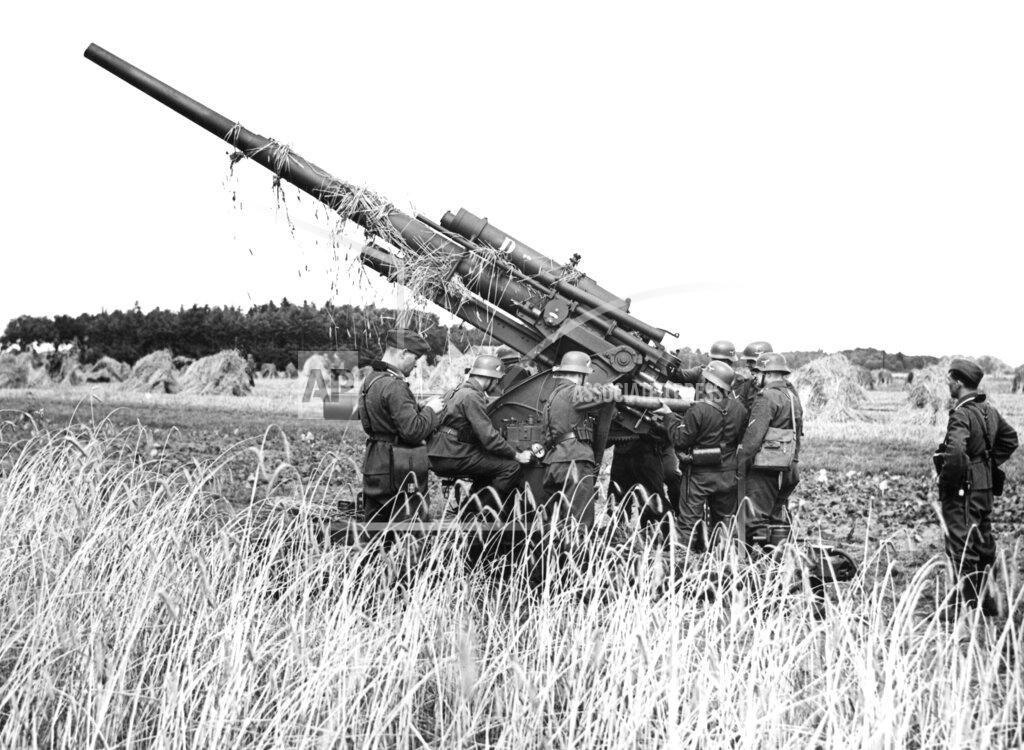
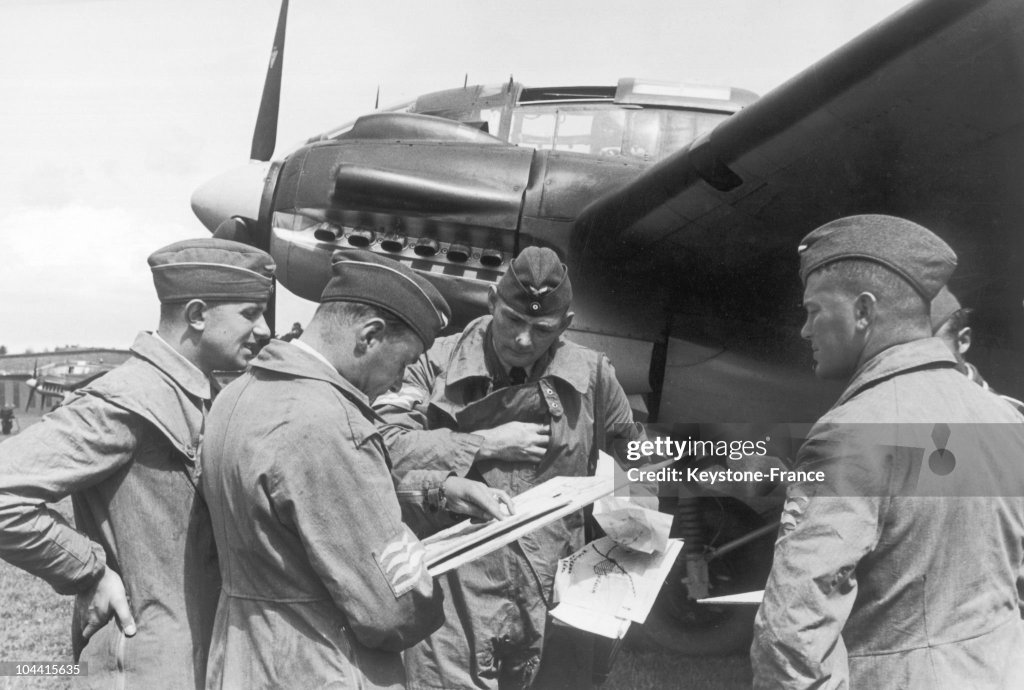
The Reich is considered safe from a sea invasion, as war games are said to back the claim. The German Army maneuvers — which, like those of last year, are called “maneuvers in small units” — and for which the army command is calling in additional reserves which are expected to bring the total manpower under arms to 2,500,000 by the end of August — are now under way. Elaborate war games on the part of the Second Air Fleet in Northwestern Germany, in which all the planes, anti-aircraft and artillery and information service of that section of the air arm participated, began Tuesday and ended today. According to the press, which prints elaborate accounts of them, the war games have proved, first, that any invasion of Germany from the sea is impossible and would collapse under the fire of German aerial defense, and, second, any intermediate countries between warring countries cannot hope to preserve their neutrality in case of war.
The medical licenses of all Jewish doctors in Nazi Germany were nullified.
The Polish High Commissioner in Danzig, Marian Chodacki, is reported to have protested strongly against Danzig’s boycott of Polish officials, who are unable to buy food and other necessities. The Polish government sends an ultimatum to the Danzig Senate warning it will arm its customs officers if the Senate does not stop interfering with Polish customs inspectors. Supposedly based on mistaken information, Poland’s action causes great consternation among the Nazis. And so the final crisis begins to build.
Italian fascists forbid classics as they purge books. Members of the party also absorb a Catholic aid association.
Bulgaria protests over trrop concentrations by Turkey near her border.
Spanish families must give the government their budgets. They are ordered to list income and classify expenditures with the “greatest honesty.”
With Prince Paul, the Yugoslavian Regent, on his way back from his English visit, Croat circles anticipate an early pronouncement on Serbo-Croat relations. Incidentally, Prince Paul is believed to be coming to his Summer residence near Bled.
Jean Genet’s play “Ondine” premieres in Paris.
Two victims of yesterday’s bomb explosion in the Jerusalem broadcasting station succumbed to their wounds early this morning in the Government Hospital. They were Mrs. Mae Weissenberg, an English announcer, and Adeeb Mansour, chief engineer.
In Washington, President Roosevelt today sent to the Senate the nominations of Ray Atherton to be Minister to Denmark and Arthur J. Altmeyer for reappointment to the Social Security Board for a six-year term and transacted other official business.
The Senate completed Congressional action on the Philippines Trade Bill, passed the bill extending the Municipal Bankruptcy Act to June 30, 1942, adopted the conference report on the bill approving the barter of cotton for British tin and rubber, received the Neely bill to extend to certain state employees the provisions of the Hatch act prohibiting pernicious political activities by rank and file employees of the federal government, confirmed the Altmeyer nomination and recessed at 5:15 PM until noon tomorrow. The Audit and Control Committee reported favorably a resolution appropriating $50,000 for the Civil Liberties Committee.
The House defeated by a vote of 191 to 170 the rule making consideration of the $800,000,000 Housing Bill in order, approved a resolution for investigation of the oil industry and completed Congressional action on a bill exempting certain telephone switchboard operators from the provisions of the Wages and Hours Law and on the bill regulating interstate shipment of seeds and adjourned at 4:15 PM until noon tomorrow.
President Roosevelt’s housing bill fails to pass, and an $800 million companion bill also faces rejection. The House completed today the wrecking of the new lending recovery program of the Roosevelt Administration, voting 191 to 170 to kill the $800,000,000 Housing Authority Expansion Bill. This measure met its fate in the same way by which the $1,950,000,000 lending bill perished two days ago. The House simply refused to consider it by defeating, after an hour’s debate, a rule which would have called it up for further debate and vote.
The defeat of the rule was attributable in large part to the coalition of Republicans and conservative Democrats which has ruled. Congress for three weeks. The margin by which it was beaten, however, was supplied in part by members from four States who were incensed by the action of the “city vote” in helping yesterday to strike the $119,000,000 crop loan item from the Third Deficiency Appropriation Bill. Seeing the House thus continuing at the mercy of shifting coalitions and fearing further damage to the Administration’s program, leaders took drastic steps to shut off further controversial measures and end the session quickly.
Representative Rayburn, majority leader, announced that he would not permit the Barden amendments to the Wages and Hours Act to be called up before adjournment. He joined simultaneously with Senate leaders in redoubling efforts to get Congress out of Washington by Saturday night at the latest, and tomorrow night if possible. The key to the adjournment situation was the Third Deficiency Appropriation Bill, which was passed by the House yesterday at a figure of around $54,000,000 and was under study today and tonight in a Senate subcommittee. Various Senators and departmental officials. were attempting to make it the vehicle for some appropriations disallowed in other bills this session, especially to vote more money for crop loans, and for softening some of the drastic administrative provisions of the 1940 relief act.Adjournment hinged on the question as to how long it would require the Senate and a conference committee to dispose of these prospective amendments. There was also the possibility, as always in such situations, that a sudden Senate filibuster might upset adjournment plans.
Senator Barkley, majority leader of the Senate, expressed the hope late this afternoon that the subcommittee might report the deficiency bill tomorrow noon and Congress complete its labors and quit by tomorrow midnight. He asked that a quorum be present tomorrow so that the Senate would not be embarrassed. A second “preferred” item on the session’s legislative slate is the bill. carrying amendments to the Social Security Act, providing for freezing the payroll levies at their present levels and broadening the benefits. This measure was still tied up in disagreement which some leaders thought meant its doom. The conference committee considering the differences between the House and Senate version met again this afternoon but could reach no common ground on the main points in the disagreement. Another meeting has been scheduled for tomorrow morning, heightening the opinion that a satisfactory compromise would be found in time to keep the amendments from dying or holding up adjournment.
A class war already exists and blood is being shed in it, Harry Bridges told the crowded court room on Angel Island today as the hearing on his deportation gave him full opportunity to state his political philosophy.
Settlement of the month-old strike of General Motors Corporation’s tool and die employes, subject to ratification by the twelve unions and the strike committee, was announced at 1 o’clock this morning by James F. Dewey, Federal Labor Department conciliator.
U.S. Government officials add lard to the list of approved food stamp products. Vegetable shortening is also put on the surplus program.
Ohio Senator Robert Taft is the first to declare his candidacy in the presidential race for the Republican Party. Senator Robert A. Taft. son of the former President and Chief Justice, through a letter released in Washington, announced today his candidacy for the Republican Presidential nomination in 1940.
National Guardsmen occupied the Green Mountain Dam project in Colorado today and disarmed about 200 special deputies. The militia acted after six were shot in battles, including labor sympathizers from Denver.
The U.S. fishing vessel Hertha was swamped by heavy seas breaking over her stern and sank 3 nautical miles (5.6 km; 3.5 mi) west of Cape Bartolome, Territory of Alaska (55°14′N 133°37′W). Her captain perished, but the fishing vessel Argus ( United States) rescued the other six members of her crew.
Veteran catcher Joe Sprinz of the San Francisco Seals (PCL) tries to break the altitude record for a catch as a stunt at the Treasure Island Exhibition. A ball is dropped 800 feet from a blimp and hits him in the face. He suffers a compound fracture of the jaw and loses several teeth.
The Boston Red Sox made it three out of four against the Cleveland Indians today, taking the series final, 17–6, by merely letting the Indians beat themselves. Cleveland committed six errors.
The New York Yankees banged out 16 hits and pummelled the Detroit Tigers, 12–3. Joe DiMaggio hit two home runs.
Playing on a wet field before a ladies’ day crowd of 9,887, the Dodgers today immersed the Pirates under a 4–1 score and left for Cincinnati tonight on the long end of their first series of the current trip.
Running their winning streak to five games in a row, the Cardinals beat the Bees in a double-header today and cut a game off the National League lead of the idle Reds. St. Louis won the first game, 5–1, and took the nitecap, 4–3.
30 Soviet-built I-16 fighters are delivered to the Chinese Air Force.
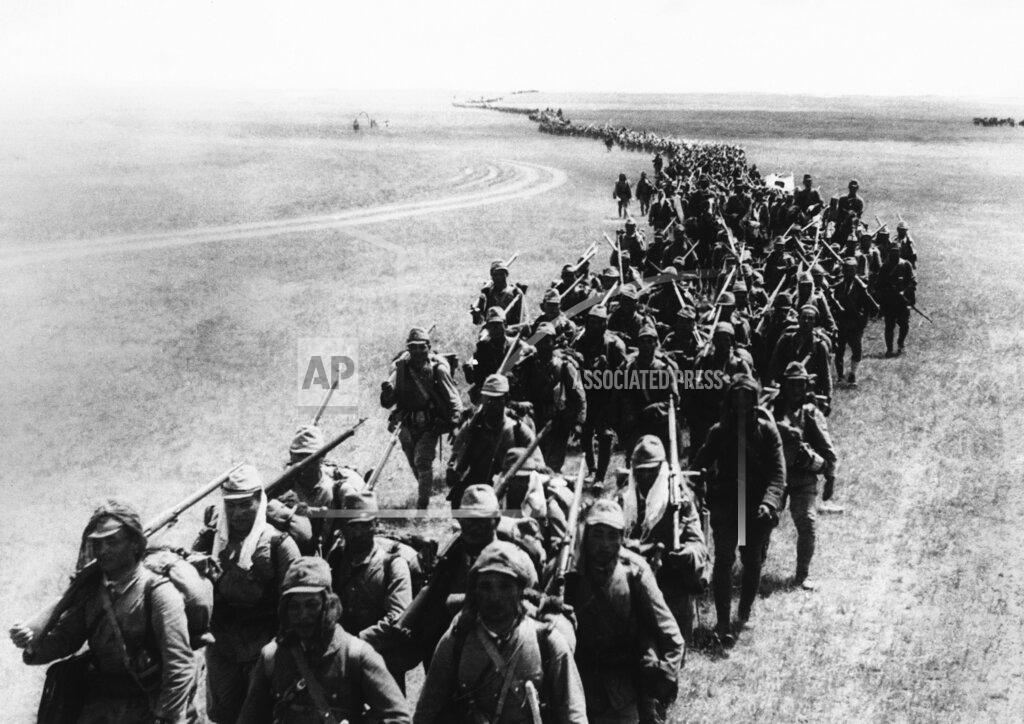
The Japanese discuss closer Axis ties. Japan’s Ambassadors to Italy and to Germany, Toshio Shiratori and Lieutenant General Hiroshi Oshima, met today at Villa d’Este, near Lake Como, and had a three-hour discussion, presumably about the possibility of closer ties between Japan and the Axis powers. After their conversation this afternoon, the Ambassadors issued the following statement: “Villa d’Este was not chosen by mere chance for this meeting of ours after those which we have already had in Rome and Berlin. It will be recalled that the Italian and German Foreign Ministers met here to conclude the agreements fruitful in prosperity and power for the two friendly nations. and Japan, all adherents to the anti-Comintern pact. This is a good augury for us who have now more fully examined the question of an eventually closer adherence of Tokyo to the two Axis powers.”
The preparatory document that the Japanese are now about to draw up may, it is thought here, be welded into a proper diplomatic instrument by the Japanese diplomatic mission that is now en route to Europe. This mission is due to land in Italy toward the end of this month and will first visit Nuremberg and Berlin and then return to Italy in time for the celebration, on October 28, of the anniversary of the Fascist march on Rome. That date, it is said here, may be chosen for the signature of a military alliance, binding Tokyo to Rome and Berlin.
What are described as “important conversations” are taking place between the Japanese Ambassadors to Rome. and Berlin at Villa d’Este, according to a German news agency message. The Ambassador to Italy arrived with a large staff including his military attaché. The Ambassador to Berlin has a reputation of being a strong partisan of the plan for a military alliance between Germany and Japan and has had several conversations this year with Foreign Minister Joachim von Ribbentrop on the subject.
Consultations now going on among the highest military leaders are interpreted by the Japanese press as the beginning of a renewed discussion of Japan’s policy regarding the European situation. They are understood to concern Japan’s relations with Germany, a subject that usually becomes active when Anglo-Soviet relations seem likely to develop definitely.
Dow Jones Industrial Average: 144.24 (-0.02).
Born:
Jimmie Nicol, English drummer and temporary member of The Beatles; in London.
Died:
August Enna, 80, Danish opera composer (“The Witch”; “Kleopatra”).
Naval Construction:
The Nihon Kaigun (Imperial Japanese Navy) Shimushu-class escort ship (Kaibōkan) HIJMS Hachijō (八丈) is laid down by the Sasebo Naval Arsenal (Sasebo, Nagasaki, Japan).
The Koninklijke Marine (Royal Netherlands Navy) O 21-class submarine HrMs (HNMS) O 27 is laid down by Rotterdamsche Droogdok Maatschappij, Rotterdam, Netherlands. Captured incomplete during the German invasion of 1940, she will eventually enter service as the The Kriegsmarine (German Navy) U-boat UD-5, before entering Dutch service postwar in 1945.


 History Diaries