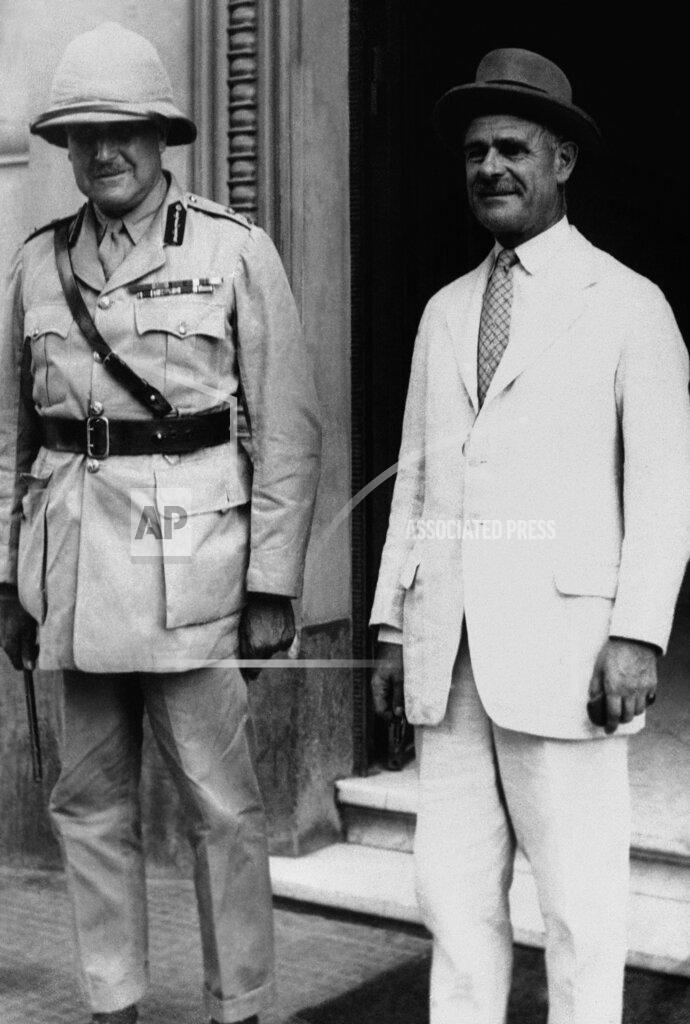
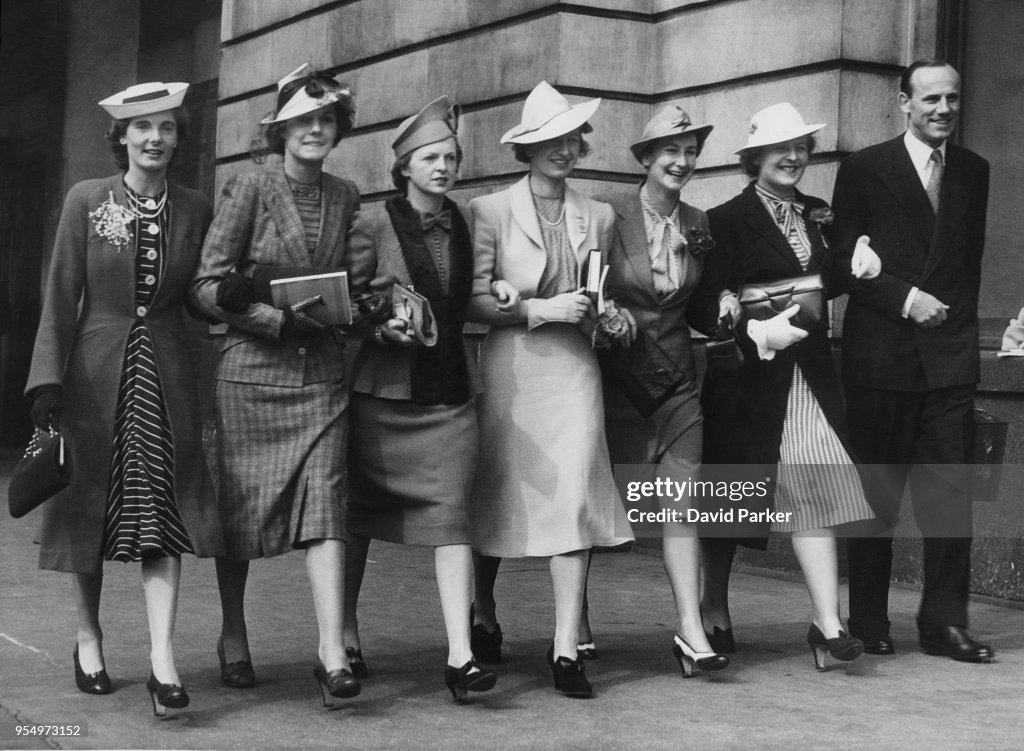
After a lengthy debate, the House of Commons votes itself a summer holiday. It is not scheduled to return until October 21. The two-month recess is voted by a reduced majority following attacks on Prime Minister Neville Chamberlain. British Prime Minister Neville Chamberlain introduced a motion to adjourn the House of Commons until October 3. The motion passed 250-132, and an attempted amendment by the opposition to shorten the length of adjournment to August 21 was defeated. More than 30 Conservatives supported the shorter recess and expressed their displeasure by abstaining from voting. One of them was Winston Churchill, and another was Ronald Cartland, who during a speech prophetically said, “We are in the situation that within a month we may be going to fight, and we may be going to die.”
In spite of a solemn warning by Winston Churchill that “there is going to be a supreme trial of will power if not of arms” in the near future, the House of Commons today voted by 245 to 129 to go on holiday Friday for an eight weeks’ recess in the midst of Europe’s so-called danger period. The tired House accepted Prime Minister Neville Chamberlain’s demand for adjournment until October 3, but only after a dramatic four and a half hour debate in which bitter things were said against the Prime Minister from the Conservative benches as well as from the Opposition parties.
Mr. Chamberlain was so stung by some of his critics that he announced that he would regard the vote as one of confidence in the government and he implied that he would resign if he could not have his way. Even after this crack of the whip the government vote fell 113 below the figure of a week ago and a number of prominent Conservatives, including Mr. Churchill, abstained from voting rather than approve what they regarded as encouragement to Chancellor Hitler at a critical time.
It was the sharpest duel this Parliament has known since the days of Munich, and although the Prime Minister achieved his wish of getting Parliament out of the way, he did so at the cost of angering many of his followers. One of his fellow Conservative members from Birmingham, Ronald Cartland, went so far as to attack Mr. Chamberlain for his “jeering and pettifogging” attitude and declared that the Prime Minister had made it harder for his friends to contradict the idea that he had “ideas of dictatorship” in his mind.
Mr. Chamberlain tried to assure the House at the opening of debate that he would reassemble it without hesitation if events made an earlier meeting necessary. He would do so, he promised, if there were a need of “new legislation not at this moment contemplated or not contemplated to be urgent” or “if the government desired to have the approval of the House for measures it had taken or was about to take to meet an unexpected situation.”
“In the present case,” said Mr. Chamberlain, “we have no information at the present time which leads. us to suppose it would be necessary to call the House together at any particular moment in the next fortnight or three weeks.” This referred to the Labor party’s demand for the reassembly of Commons on August 21 after a fortnight’s holiday instead of the eight weeks proposed by the government.
Three-power conversations on the proposed anti-aggression pact were resumed in the Kremlin this evening in a more favorable atmosphere, as far as one may judge from the Soviet attitude, than has been apparent in Moscow for some weeks. Sir William Seeds, the British. Ambassador; William Strang, special British negotiator, and Paul-Emile Naggiar, the French Ambassador, spent an hour and a quarter, with Vyacheslav M. Molotov, Premier and Foreign Commissar, and Vladimir Potemkin, Vice Commissar for Foreign Affairs.
Though they preserved the customary reticence regarding what was said, there is reason to believe they discussed the forthcoming visit of the British,and French military missions for talks with the Soviet army and navy leaders and the definition of indirect aggression. The definition now appears to be the one snag — though a formidable one — delaying a successful conclusion of the negotiations. No. date was set for the next conference. Though Soviet newspapers refrain from any editorial comment on the negotiations or on the staff talks, the prominence with which they published the news that French and British military experts were to come, as suggested by Premier Molotov, indicates how welcome their visit will be to Soviet authorities.
Last night’s Soviet communiqué on the progress of the negotiations, though ascribing the blame for protraction of the negotiations to Britain on the ground that the British formula for indirect aggression left a loophole to an aggressive power to undermine the independence of the Baltic States, indicated this was the only question remaining. That is considered by neutral observers to be a favorable sign. This communiqué was prominently published in the Soviet press today and so was a lengthy digest, with many direct quotations, of Prime Minister Neville Chamberlain’s speech in the House of Commons last Thursday. The Soviet press generally has been sympathetic in handling British and French news lately and has carried much news of German provocations in Danzig. Today, for instance, the navy newspaper carried articles describing the increase in British air power.
The tone of the Soviet press, which is strictly controlled by the government and the Communist party, is so definitely pro-French and pro-British and anti-German that neutral diplomats believe Moscow really will sign the pact if that, last gap — the definition of indirect aggression — can be bridged by a formula fully satisfying Moscow’s strict demands. It is felt here that the staff talks will be almost as important as the signing of the pact for it would be possible for Britain, France, and Russia to act together, even without a formal pact, should Germany attempt a coup in Danzig which would threaten all with the creation of a bigger and invincible Germany.
The British Government today delivered its answer to Germany’s increased submarine building by announcing the expenditure of 11,000,000 pounds for additions to the naval construction scheduled in the 1939 program. 180 new small ships are to be added, mostly to deal with the submarine threat to shipping.
Danzig expels nuns and seizes the Good Shepherd School for use by the Nazis.
Jews in Memel are allowed to liquidate their property without Nazi interference.
Nazis purge the Czech police force. The dismissal of about one-third of them is demanded by Germany.
The Czechs conscript workers for farms. Men between 15 and 60 are called up for three months of duty.
Italy publishes new curbs on Jews. Jews are no longer to be allowed to be journalists or notaries public. A number of other professions are to be segregated from non-Jewish people. Exceptions are made for war volunteers and early fascists.
Harold Saperstein, an American tourist, suffered a slight gunshot wound today when a bus in which he was a passenger was ambushed outside Haifa in the Mandate of Palestine. Arab rebels are suspected to be responsible.
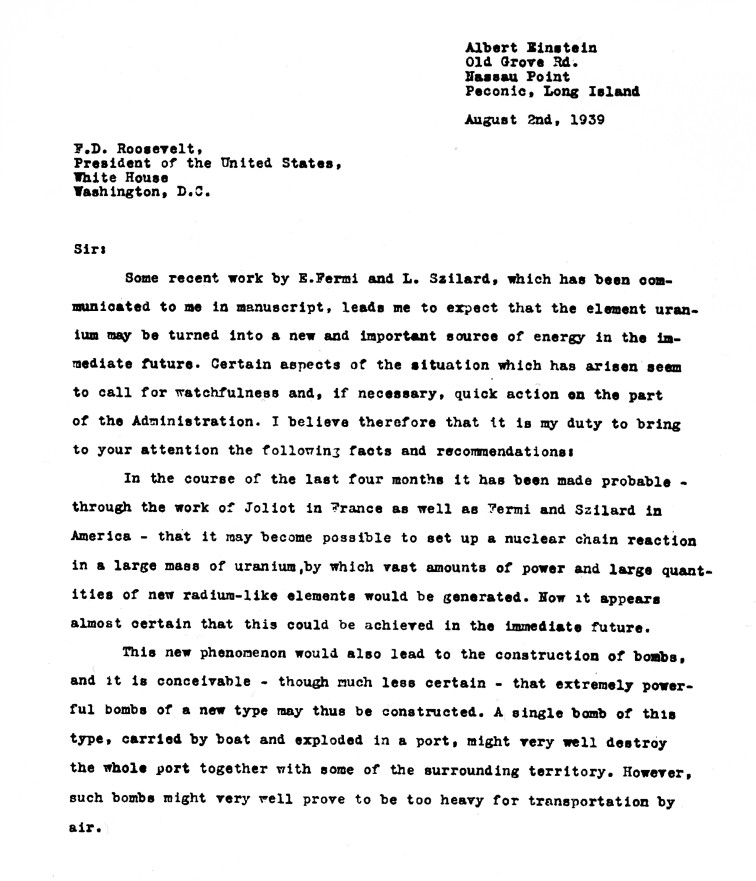
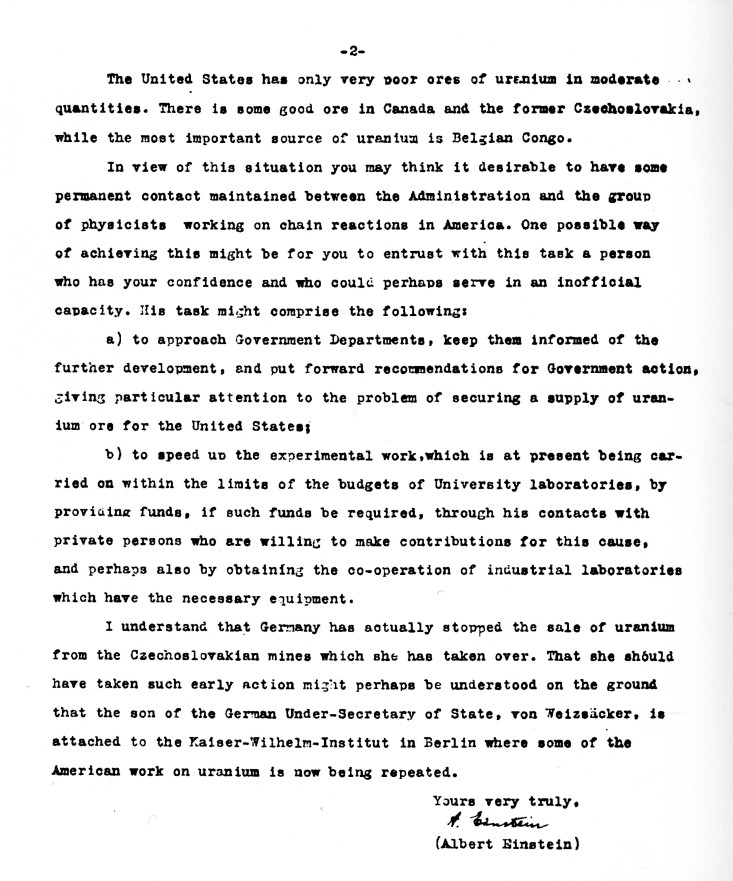
Albert Einstein signs a letter to President Roosevelt, written by Leo Szilard, warning him of the possibility that Nazi Germany might be attempting to build an atom bomb. “This new phenomena (atomic energy) would also lead to the construction of bombs. A single bomb of this type, carried by boat and exploded in a port, might very well destroy the whole port, together with some of the surrounding territory. However, such bombs might very well prove to be too heavy for transportation by air.” Roosevelt soon issues orders for a U.S. effort to investigate building an atomic bomb, and appointed an Advisory Committee on Uranium under the chairmanship of Dr. Lyman Briggs, Director of the National Bureau of Standards.. This will lead to the Manhattan Project to develop the atomic bomb.
Today in Washington, President Roosevelt signed the Hatch bill to prevent pernicious political activities by rank-and-file government employees and sent to Congress a message interpreting the bill’s provisions. He conferred with officials of the Good Neighbor League and with Jerome Frank, chairman of the Securities and Exchange Commission and sent to the Senate the nomination of Henry F. Grady to be Assistant Secretary of State.
The Senate heard Senator Schwellenbach urge discontinuance of American exports to Japan, indulged in desultory discussion of other matters and recessed at 5:46 PM until 11 AM tomorrow.
The House passed the $54,248,456 Final Deficiency Bill, received the Rules Committee report approving consideration of amendments to the Wages and Hours Law and recessed at 6:42 PM until noon tomorrow.
President Franklin Roosevelt signs the Hatch Act, a “gag” bill limiting the pernicious political activities of federal workers. The Hatch Act “to prevent pernicious political activities” and restrict the campaign efforts of rank-and-file federal employees became law with President Roosevelt’s signature today. He signed the measure a few minutes before sending a message to Congress at noon, calling it “a step in the right direction,” but warning against judicial interpretations that would make it “a gag act.” Carrying out the advice he once gave Congress on a bill of doubtful legality, the President said that he was resolving all constitutional questions in favor of the measure. He pointed out legal pitfalls to which it was vulnerable and warned that it should not be construed in such a way as to deny federal employees the right to express themselves on political issues or candidates who happened to be their superiors or subordinates.
Neither was the new law to be interpreted as denying to Federal officeholders, regardless of rank, the right to make voluntary contributions to political campaign funds provided they were unsolicited. The President said that hundreds of questions of policy had arisen regarding the application of the law and that hundreds more would crop up. Many of these he answered and others he asked Congress to clarify.
The President called the attention of Congress to the failure of the law to cover “the multitude of State and local employees who greatly outnumber federal employees and who may continue to take part in elections in which there are candidates for Federal office on the same ballot with candidates for State and local office.” He invited Congressional study of this situation at the next session in time to have a bearing on. the next elections. President Roosevelt said he was taking the unusual course of addressing Congress on the subject of an approved bill because there had been “so many misrepresentations, some unpremeditated, some deliberate,” regarding his attitude toward the measure.
Seeking to carry into effect the demand of President Roosevelt that full public responsibility be fixed for the wrecking of his spending-lending recovery program, New Deal leaders set the stage for a record vote in the House tomorrow on the $800,000,000 Housing Bill, an integral part of the plan. The test will come on a rule calling up the measure for consideration, and indications tonight were. that it was headed for the fate encountered yesterday by the rule on the $1,850,000,000 Lending Bill, which the House killed by a 193-to166 division after a single hour’s debate.
With this new vote in the offing, yet still under dominance of the conservative Democratic-Republican coalition which has ruled Congress for weeks, the House crashed through with an economy stroke, slashing the budget estimates for the third deficiency appropriation bill by virtually 75 percent before passing it at a figure of slightly more than $54,000,000. The chief item deleted was $119,000,000 for further farm aid.
Arrangements for tomorrow’s vote were announced late in the day by Representative Rayburn, majority leader, after he and Speaker Bankhead had failed to negotiate an agreement which would have quietly shelved for the session both the Housing Bill and the pending amendments to the Wages and Hours Act, on each of which the administration is threatened with further defeat. The leaders sounded out members on such an accord as they intensified their drive to adjourn the session before more damage should be done to the President’s remaining legislative program.
The negotiations collapsed because of the insistence of the more ardent New Dealers upon making a record of opponents to the Housing Bill, and the persistence of the Wage-Hour amendment backers in following up an advantage which they believed they had. The latter counted enough votes both to adopt their proposed amendments and to smother the Housing Bill rule.
The anti-New Dealers, as those favoring the Wage-Hour amendments and opposing the Housing program expansion were termed, appeared perfectly willing to be put on record, in keeping with the demand made by President Roosevelt yesterday and echoed by Secretary Wallace today that the country be informed clearly as to what members of Congress were responsible for halting the new spend-lend drive.
House economy advocates, aided by several New Dealers, defeated a farm group’s attempt today to more than double the $54,248,456 Third Deficiency Appropriation Bill, and the measure. trimmed drastically beforehand by the Appropriations Committee, was passed and sent to the Senate. The bill, increased $1,062,000 by the House over the figure reported by the Appropriations Committee, but still $119,638,682 less than the $203,887,138 recommended by the Budget Bureau, carries the last remaining items to be appropriated at this session.
The Appropriations Committee decided not to allow any part of a $2,000,000 deficiency item requested by the Wages and Hours Administration to enforce the Wages and Hours Act, but Representative Woodrum, Democrat, of Virginia, accepted on the House floor a $1,000,000 compromise “in the interests of peace and harmony.” The farm group move, characterized as a ninth-hour attempt to stampede the House into voting $119,000,000 to restore capital impairments of the Commodity Credit Corporation, was defeated by a teller vote, 116 to 110, after it had been adopted by a standing vote, 95 to 94.
Harry Bridges admitted freely today at the San Francisco hearing on his deportation that the unions which he represents had sought and accepted the support of the Communist Party. He also stated that he was not and never had been a member of that party although twenty years ago he was in the I.W.W. a short time until he found out what it stood for. Bridges testified before Dean James M. Landis, trial examiner, in a crowded courtroom at the Immigration Station on Angel Island, and among the spectators were Dr. Alexander Meiklejohn, Donald Ogden Stewart, and Mrs. Stewart, and Mrs. Stewart’s son, Peter Steffens, whose father was Lincoln Steffens. Although Bridges testified to accepting Communist support in matters of interest to trade unions, he asserted that the Communist Party could never take over the unions with which he is connected.
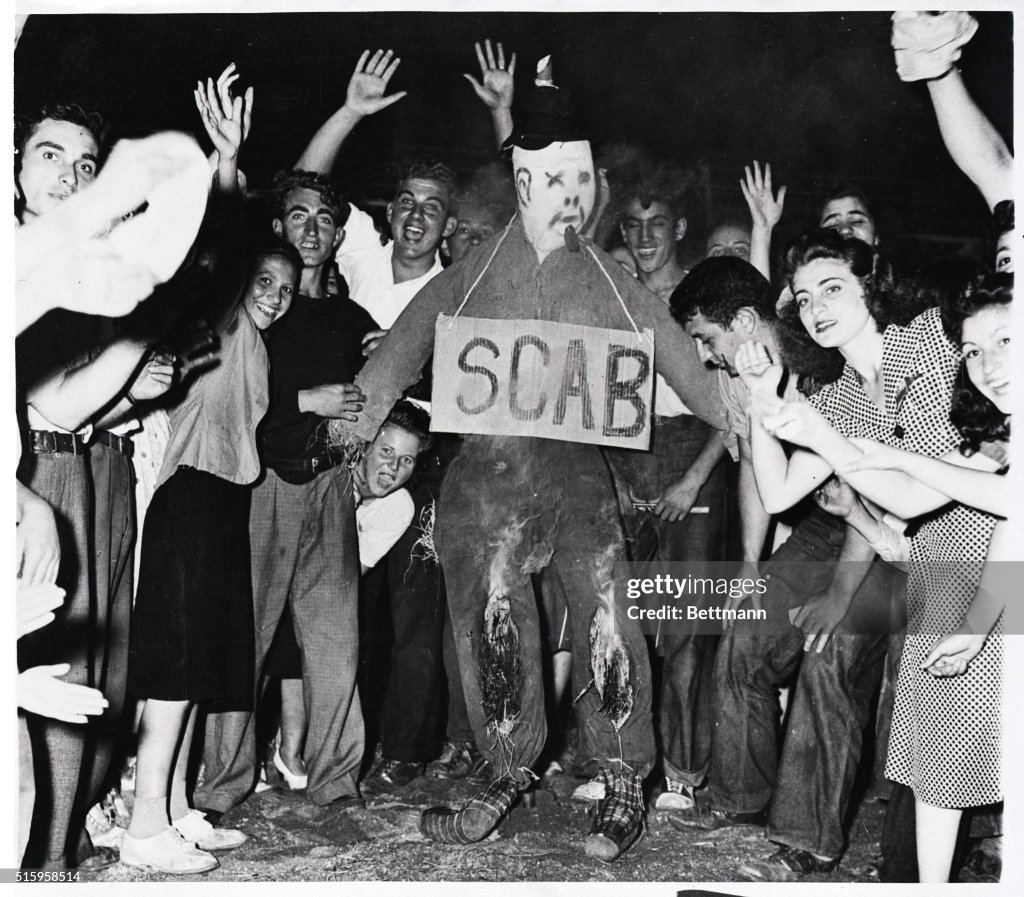
Settlement of the month-old strike of 7,000 tool and die workers in twelve General Motors Corporation plants was reported imminent tonight when spokesmen for the corporation and the C.I.O.-United Automobile Workers of America adjourned to reconvene tomorrow.
A committee of non-strikers at the Fisher body plant in Cleveland, Ohio urged the Dies Committee on un-American activities today to investigate a C.I.O.-United Auto Workers walkout at General Motors’ big East Side plant.
In the ninth inning of New York’s 7–2 loss to the Detroit Tigers, Joe DiMaggio makes one of the most memorable catches in Yankee Stadium history when he grabs a Hank Greenberg drive 455 feet from home plate. The 24-year-old Yankees centerfielder, who seldom displays emotion, is so thrilled with the amazing catch he enthusiastically heads toward the dugout, forgetting there is still a man on base with only two outs, a rare mental error for the ‘Yankee Clipper’.
The Boston Red Sox kept alive their flickering penant hopes today by pushing across two runs in the eighth for a 5–4 victory over Cleveland in the nightcap of a double-header after they had lost the first game, 8–2. Boston picked up half a game on the Yankees, whom they now trail by seven and a half games.
The Chicago White Sox and the Philadelphia Athletics divided a doubleheader today, the Sox striking back, 2–1, after being walloped, 13–4, in the first game.
The New York Giants routed the league-leading Cincinnati Reds, 12–2 at Crosley Field. The Reds still lead the Cardinals in the National League pennant race by 10½ games.
The United States protests assaults in China. The United States Government has lodged another protest with the Foreign Office at Tokyo against the mistreatment of United States nationals by the Japanese military in China, it was made known today by Sumner Welles, Acting Secretary of State. The latest communication was delivered verbally in the Japanese capital by Eugene H. Dooman, chargé d’affaires, in the absence of Ambassador Joseph C. Grew.
Mr. Welles, who made the announcement in answer to a question. concerning dispatches from Tokyo, emphasized that Mr. Dooman had made the latest protest under specific instructions from the State Department. Consular and diplomatic officers in the field have had standing instructions for two years, Mr. Welles pointed out, to take immediate action for the protection of United States nationals and their rights, but the authorities at Washington also send special instructions in certain cases.
There seemed to be some doubt in the minds of officials whether Mr. Dooman had been told to make his representations concerning the three “incidents” that Secretary of State Hull described a week ago as having been settled as satisfactorily as possible by the United States officials on the spot. These had to do with the slapping of an American woman and boy by a Japanese sentry at Wuhu on July 13, an attack by a Japanese consular policeman on two American missionaries at Hangchow on July 12, and the attack on a petty officer of a United States gunboat at Hankow on July 22.
The British warn Japan again, strongly protesting its continuing actions in China. Sir Robert Leslie Craigie, the British Ambassador, made emphatic representations to Foreign Minister Hachiro Arita today regarding recent demonstrations at the British Embassy.
Japanese officials threw out vague hopes that his action would set machinery in motion that would lead to stricter control, but it is not known whether steps have been taken. At Monday’s meeting the police interrupted several speakers. It appears this was the first occasion on which speeches at such meetings have been controlled.
At some meetings, where more extreme patriots were in charge, the utterances are said to have bordered on sedition. Officials excuse the government’s inactivity by saying the movement is not dangerous. At the present stage, they say, it is prompted mainly by local politicians who, muzzled for two years, are now cultivating publicity and popularity by exploiting the naïve sentiments of the masses. The audiences, the officials add, are simple enough to imagine the demonstrations will impress Sir Robert and further Japanese success at the Anglo-Japanese conference on Tientsin being held in Tokyo.
Japanese representatives in various parts of the United States have reported to the government that political motives aimed at obtaining results both at home and abroad were at the bottom of Washington’s action in abrogating the 1911 trade treaty with Japan. This was reported to the Cabinet yesterday by Foreign Minister Hachiro Arita, according to the Japanese press.
By serving the notice of abrogation to Japan, the Washington Administration has taken a position, it is held, where it can defend United States rights in the Orient against encroachment and at the same time it is expected that the gesture will help the Administration in the Fall elections. The excitement caused last week has disappeared from the press, and though the foregoing explanation was briefly reported last evening, this morning’s newspapers ignore the subject.
Japanese opinion works on a single track and is completely engrossed with the struggle against Britain. Despite the signing of the Craigie-Arita formula on Tientsin, anti-British agitation has been violently revived. The press gives a list of twenty-nine provincial cities where meetings have been held or arranged. This agitation and the flood of speculative news published daily regarding the Tokyo negotiations between Britain and Japan form a smoke screen temporarily concealing the United States development. Moreover, the fact that termination of the trade treaty cannot come for six months suffices to prevent the Japanese from worrying.
Dow Jones Industrial Average: 144.26 (+0.90).
Born:
Wes Craven, American filmmaker (“Nightmare on Elm Street”, “Scream”), in Cleveland, Ohio (d. 2015).
John W. Snow, American businessman and U.S. Secretary of the Treasury; in Toledo, Ohio.
Benjamin Barber, American political theorist (“Jihad vs. McWorld”), in Manhattan, New York, New York (d. 2017).
Died:
Harvey Spencer Lewis, 55, American Rosicrucian author and occultist.

 History Diaries