Silver Star
CITATION:
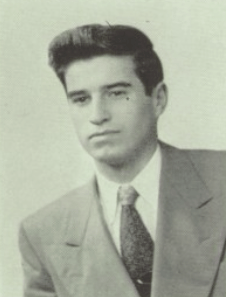
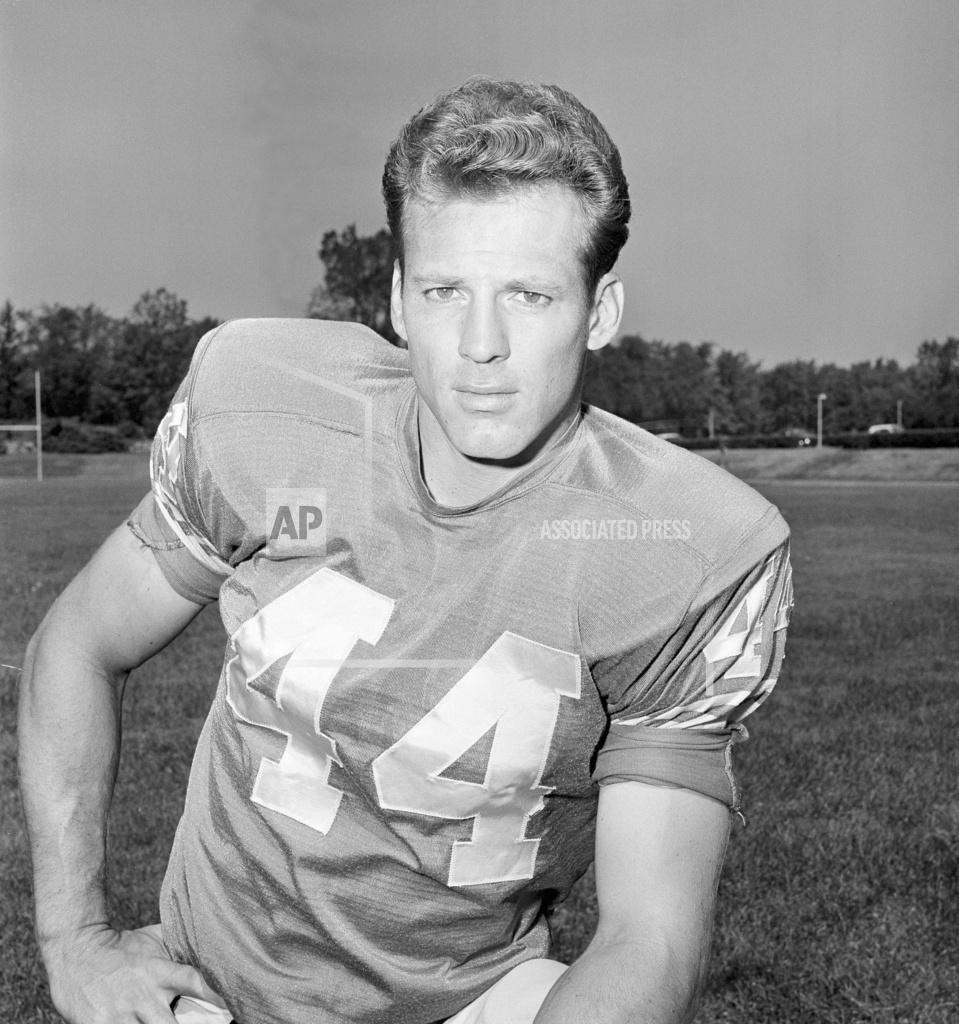
The President of the United States of America, authorized by Act of Congress, July 8, 1918 (amended by act of July 25, 1963), takes pride in presenting the Silver Star (Posthumously) to Captain (Infantry) Dale Daniel Thomas, United States Army, for gallantry in action while engaged in military operations in Vietnam, on 30 July 1964. As a Senior Advisor to a battalion of the armed forces of the Republic of Vietnam, Captain Thomas displayed fortitude, professional skill, and perseverance while accompanying the friendly units on a military mission. When the Vietnamese battalion was suddenly ambushed by two hostile battalions, Captain Thomas bravely exposed himself to the gunfire to reorganize the dispersed Vietnamese units. Then, with complete disregard for his own personal safety, he moved through open terrain under intense gunfire in an attempt to establish a perimeter defense, to rally the troops, and to encourage them to defend their homeland. Although the elements were subjected to an overwhelming onslaught, he tried to stabilize the defense actions of the units he was advising and continued his courageous efforts until mortally wounded. Captain Thomas’ conspicuous gallantry is in the highest traditions of the United States Army and reflects great credit upon himself and the military service.
(Photo from vvmf.org Wall of Faces)
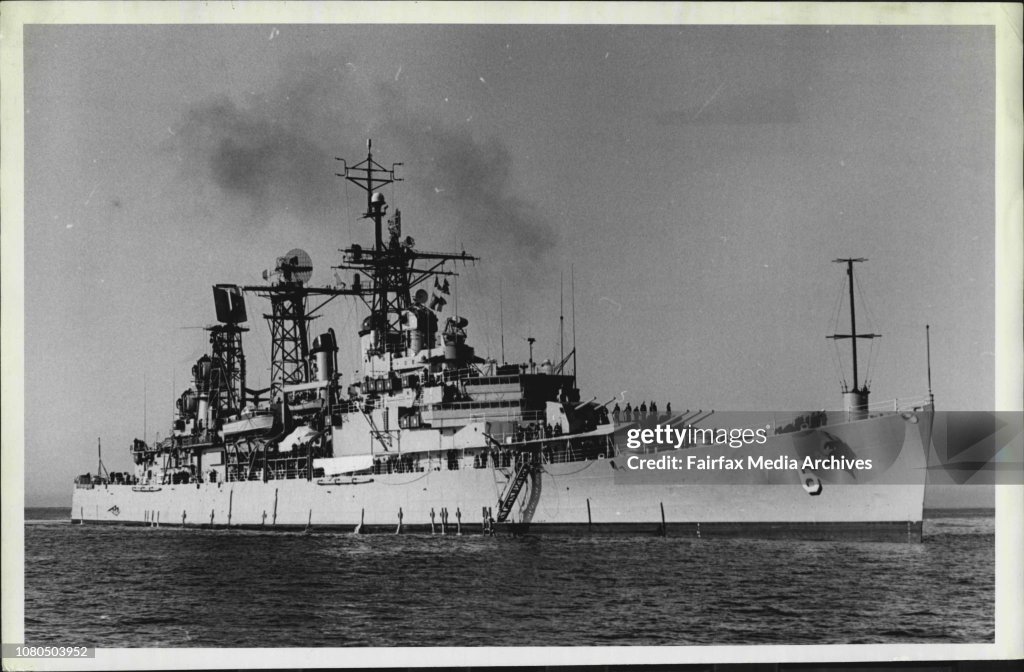
About midnight, six ‘Swifts,’ the special PT boats used by the South Vietnamese for their covert raids, attack two islands in the Tonkin Gulf, Hòn Mê and Hòn Ngư; although unable to land any commandos, the boats fire on island installations. Radar and radio transmissions are monitored by the USS Maddox, the DeSoto Mission ship about 120 miles away. The Maddox will report sighting patrol boats in the Gulf but will be told that these were the Swifts returning from their undercover raid. A retaliatory attack by the North Vietnamese on an American gunboat, on August 2, would become the basis for American escalation in the Vietnam War.
Communist machine‐gun fire raked forward elements of a Vietnamese Ranger battalion advancing through guerrilla‐infested jungle today, killing a United States Army captain and nine Vietnamese. The battalion had moved about eight miles in eight hours during the night, heading toward embattled Bến Cát, 30 miles north of Saigon. Just before down the Việt Cộng opened fire with automatic weapons from a jungle region across open paddy fields. The Rangers fought the entrenched Communist forces for several hours. An airborne battalion that had moved up to strengthen Bến Cát Wednesday headed west to relieve the ambushed battalion, but was held up by scattered fire. An addition to the fatalities, 25 of the Rangers were wounded. Casualties in the Việt Cộng force, estimated at 500 to 700 men, were not known.
Enemy bullets are hitting more American officers than enlisted men in the war in South Vietnam. The most vulnerable rank is that of captain. Roughly 60 percent of the 163 United States servicemen killed in combat here since December, 1961, have been officers. A comparable percentage applies to more than 1,000 wounded in action. Projected increases in American military strength here are not expected to change this situation. Of the 16,300 American servicemen here now, one out of four is an officer. There are a dozen generals. Brigadier General Joseph W. Stilwell was wounded on a helicopter mission before he returned home recently. Of the 3,000 United States servicemen in the field as advisers, the percentage of officers is even higher — one officer for every enlisted man.
The ranks of American war dead here have ranged from private first class to lieutenant colonel. Captains are most often casualties since Air Force captains fly combat planes, Army captains fly helicopters and infantry captains serve as battalion advisers and in other field positions. All of these are dangerous jobs. Casualties among enlisted men are relatively low, primarily because the United States has no infantry units in Vietnam. The enlisted men in Vietnam are mostly technicians, clerks and in other supporting functions.
[Ed: Sadly, that will soon change.]
In Vietnamese, Phước Chai means “Pretty Valley,” and that is just what this collection of hamlets is. It represents a success story in South Vietnam’s desperate struggle to defeat the Communist insurgency. Phước Chai is about 45 miles west of Tam Kỳ, in the northern part of South Vietnam. For more than two years, until six months ago, this valley, with its population of about 6,000, was virtually controlled by the Việt Cộng. The insurgents grew rice here to feed the guerrillas. They “taxed” farmers. They maintained rest stations and assembly points for fighters who blew up bridges and terrorized villages.
Two organized Việt Cộng battalions with a regimental headquarters operated without government interference. Then a 34‐year‐old major, Hoàng Thơ, appeared with his outfit, the Sixth Regiment of the Second Division, Army of the Republic of Vietnam. Major Thơ has been an officer since 1951, when he fought for the French against the Communist Việt Minh. He received training at the United States Army’s military government school at Fort Gordon, Georgia, and at the Fort Benning, Georgia, infantry training center. Articulate, English-speaking and self‐confident, Major Thơ has evidently won the complete confidence of his troops and of American advisers here. He lives in Danang with his wife and five children. He spoke matter‐of‐factly about having organized 10 defended hamlets after achieving military victories over the Việt Cộng.
Last February, the major recalled, he sent patrols into the valley. They located Việt Cộng units, ambushed some and drew others into stand‐up battles of company and battalion size. The Việt Cộng fought hard for the valley; it was important as a source of food as well as a military center for the countrywide guerrilla campaign. Yet in a month the Sixth Regiment drove the Việt Cộng into the jungle.
The Laotian Government announced today a major victory in which neutralist and right‐wing forces freed a key road of control by the pro‐Communist Pathet Lao. However, Western military sources saw tough fighting ahead to eliminate scattered guerrillas from the region. As a result of the victory, won yesterday, the royal capital of Laos, Luang Prabang, may now be accessible by road from Vientiane, the administrative capital, for the first time in three years. They are about 150 miles apart. The victory was on Route 13, which runs north and south. Government forces now also hold an important east‐west road, Route 7, from its junction with Route 13 east to the Plaine des Jarres.
Seesaw fighting has been going on in the area for some days. The Pathet Lao forces renewed last spring their recurrent attacks on Government forces after Prince Souvanna Phouma’s coalition Government, made up of right‐wing, neutralist and pro‐Communist elements, broke down. Recent efforts to end the fighting and restore the coalition regime have been stalemated, largely by the Pathet Lao’s demands. Western military observers noted that the war in Laos cannot be judged by European or American standards. In the current campaign, for example, 10 neutralist soldiers were killed and about 20 were wounded. Pathet Lao losses have not yet been estimated. “A British officer who received those losses in wartime might feel that he had had a quiet afternoon,” a spokesman said. “But to the Laotians, this was their Battle of the Marne.”
For foreign military observers, whose role is limited but whose concern is great, the most heartening feature of the offensive was the unity the commanders of the politically divergent forces displayed. Since the neutralist troops under General Kong Le broke with the Pathet Laos in the spring, they have had an uneasy alliance with the right‐wing, pro‐Western forces. Disparagement and distrust have lingered on both sides. In the prolonged and relatively complex maneuver that brought victory, the two armies and the small air force of United States‐built T‐28 fighter‐bombers worked together smoothly.
Western military sources gave the government troops full credit for the victory. They warned however, that the 2,000 Pathet Lao soldiers who were scattered by the offensive must be routed from the tangled brush that covers rugged hills on each side of Route 13. “The Pathet Lao are essentially guerrilla fighters,” one Western military expert commented. “They will undoubtedly embarrass the government forces that took the road. There’s a tough time ahead.” At government headquarters the mood was sheer elation. General Kouprasith Abhay, one of the right‐wing generals who engineered an inconclusive coup d’état last April, made the announcement for the government. He reported “a great military success.”
President Makarios of Cyprus asserted today that Greece had rejected what he called an “absolutely unacceptable” settlement of the Cyprus crisis proposed by Dean Acheson, President Johnson’s special envoy. Archbishop Makarios flew back to Cyprus tonight after three days of talks with the Greek Government. Before leaving Athens, he expressed satisfaction that “self‐appointed mediators” had failed to turn the Cyprus problem from its “international course.”
A Greek Government spokesman said Greece would not answer Mr. Acheson’s settlement proposal immediately. But Archbishop Makarios said he had been told the Greek Government had already told the former Secretary of State it could not accept his plan. Mr. Acheson’s proposal called for a Cyprus‐Greece union, with Turkish Cypriotes to retain and govern two cantons on the island. The plan also proposed that Greece cede the small Dodecanese island of Kastellorizo to Turkey and that Turkey have a military base on Cyprus. Turks who left the island would be compensated.
The United States said today that the Soviet Union was attempting to keep Western Europe “debilitated, divided and defenseless.” Clare H. Timberlake, the United States delegate, said at the 17‐nation Disarmament Conference that Moscow was following this policy when attacking the West’s projected allied nuclear force. The United States delegate was replying to the assertion of Semyon K. Tsarapkin of the Soviet Union that a mixed‐manned Western missile fleet would be incompatible with the projected accord to ban the spread of nuclear weapons. Denying the Soviet assertion, Mr. Timberlake described the fleet plan as a “fully controlled response to existing Soviet armaments.”
The Moscow visit of U Thant, the United Nations Secretary General, has failed to shake the Soviet Union in its refusal to contribute to the cost of United Nations operations in the Congo and the Middle East. “I did not get the impression that the Soviet Union is prepared to change its policy in this matter,” the Secretary General said at a news conference this morning. Tonight, in a television address reaching possibly 40 million viewers, Mr. Thant took his appeal directly to the Soviet people. He said that the United Nations faced a serious financial crisis and that he had discussed this problem with his Soviet hosts. “This world organization is the only hope for mankind in the second half of the 20th century, in the shadow of the hydrogen bomb,” Mr. Thant said.
The United Kingdom agreed to grant independence to The Gambia, its “first and last colonial possession in West Africa”, effective February 18, 1965. Sir Dawda Jawara, Prime Minister of the British protectorate, had led a delegation for an eight-day conference in London to ask for independence in February, while former Chief Minister Pierre N’Jie had asked for a December 1965 date so that new voters could be registered before elections could be held.
In the British protectorate of Northern Rhodesia, still three months away from becoming independent as the Republic of Zambia, government troops captured the stronghold of the 75,000-member Lumpa Church and brought a temporary halt to their attacks on rural villages in the Northern Province. In the previous week, more than 200 people had been killed by the sect’s members. When the heavily-armed government troops surrounded the headquarters at Sione, the sect’s leader, Alice Lenshina had escaped. Rather than surrender, the tribesmen charged at the government soldiers with spears; 65 of the sect members died in the gunfire, and two of the soldiers were slightly injured.
The Central Committee of the Soviet Union’s Communist Party addressed a letter on July 28 to the Chinese Communist Party and expressed concern over the differences that had arisen between the two parties in the previous four years. A proposal was advanced for Chinese representatives to come to Moscow on December 15.
The Chinese Communists reaffirmed today that they would not attend any world conference of Communist parties or any preparatory meeting called by Moscow. They said any decision on convening an international conference on the ideological rift in the Communist bloc must be taken unanimously by all Communist parties, including pro-Peking factions that have broken away from Communist parties in a number of countries. The Chinese stated that if the Soviet Communist party insisted on holding an international meeting at this time, the consequence would be an “open split.”
President Johnson eliminated Attorney General Robert F. Kennedy and five other Administration officials tonight from consideration for the Democratic Vice‐Presidential nomination. His action, catching the capital by surprise, appeared to leave Minnesota’s two Senators, Hubert H. Humphrey and Eugene J. McCarthy, as the leading possibilities to run with Mr. Johnson.
Mr. Johnson went before newsreel cameras and a hastily assembled group of reporters shortly after 6 o’clock. He announced that he had decided it was “inadvisable” to choose any member of the Cabinet or anyone who met regularly with the Cabinet. He had communicated that decision personally, he said, to Mr. Kennedy and to Secretary of State Dean Rusk, Secretary of Defense Robert S. McNamara and Secretary of Agriculture Orville L. Freeman. He had also sent word of the decision, he continued, to Adlai E. Stevenson, the United States delegate to the United Nations, and to Sargent Shriver, the director of the Peace Corps.
All these men had been prominently mentioned in Vice‐Presidential speculation. Mr. Johnson’s statement ruled out each one. He gave no hint of who his ultimate choice might be but he said he would continue to give the matter “the most thoughtful consideration.” Earlier, at his news conference, the President used these words to describe an ideal Vice‐Presidential candidate: “I would like to see a man that is experienced in foreign relations and domestic affairs. I would like for him to be a man of the people who felt a compassionate concern for their welfare and who enjoyed public service and was dedicated to it.”
In addition to the two Minnesota Senators, speculation on a Vice‐Presidential candidate has included Governor Edmund G. Brown of California, Mayor Robert F. Wagner of New York, Senator Edmund S. Muskie of Maine, and Senator Abraham A. Ribicoff of Connecticut. Earlier today, at a news conference, the President sparred good‐humoredly with reporters on the subject of his Vice-Presidential choice, and insisted he had made no decision. Also today, The Associated Press published a poll it had taken of delegates to the Democratic National Convention. Mr. Humphrey led it with 341 votes and Mr. Kennedy was second with 230. No one else scored heavily in the poll.
Mr. Johnson gave no reason, in his brief and sudden statement, either for his decision not to recommend to the convention a high Administration official, or for his timing in making the announcement. Other sources said that he came to his decision as to its timing this afternoon, but not because of any sudden new development in the political situation or within the Administration. Rather, the President was pictured as having decided that the widespread speculation on his choice had gone too far, and that constant questioning on the subject was beginning to put him in a somewhat undignified position When he had notified the men in question, the source said, he acted to make the news public. At his news conference today, questioning was confined almost entirely to the Vice‐Presidential choice. He presumably did not announce the narrowing of the field then because some of those ruled out could not be reached until late in the day.
President Johnson gave guarded approval today to an appeal by top Black leaders for a “broad curtailment” of civil rights demonstrations in this election year. Mr. Johnson said in response to a question at a news conference in his office that he “would not argue with anyone who chose to pursue a policy of registration in lieu of demonstration.” The Black leaders who urged the curtailment in a statement issued in New York yesterday said that “the greatest need in this period is for political action.” They advocated a program of voter registration as an outlet for Black energies. Their statement pictured Senator Barry Goldwater, the Republican candidate, as one who had injected racism into the Presidential campaign.
The statement was regarded in some quarters as a test of the Black leaders’ influence with their people, and Mr. Johnson’s response to it today was carefully worded. He read most of his reply to a question about it from a prepared text. He prefaced his statement by remarking that he did not “want to be in a position of intervening in the decisions of any private organization as long as they stay within the law.” When machinery does not exist to redress grievances, he said, “it is understandable that those who are aggrieved will take to the streets, whether rightly or wrongly,” and continued: “Their judgments might be wrong as to how justice could be obtained, but they would be less or more than human if they did not seek justice.”
That was as strong a Presidential statement in support of demonstrations as has been made. Mr. Johnson pointed out, however, that the purpose of the Civil Rights Act of 1964 was “to provide machinery to transfer the area of conflict from the streets and highways, to the courts and the conciliation chambers, and the weapons of conflict from the club and the brick to the presentation of evidence and reasoned argument.”
The bill was passed, he said, with the support of over 80 percent of the Republicans and over 60 percent of the Democrats in Congress and imposed an obligation on the nation to give it a chance to work. “Above all,” the President said, the new law “instills the obligations of conformance to all the laws, even to some of those which remain in effect but which have become somewhat dusty over the years.”
Militant Black leaders in all parts of the country rejected yesterday the appeal of four leading civil rights organizations for “a broad curtailment” of mass demonstrations. The impact of the plea, designed to lessen the possibility of riots that might help the Republican Presidential ticket, was further diminished when it was repudiated by two of the six participants in the Wednesday conference at which it was drafted. They were James Farmer, the national director of the Congress of Racial Equality, and John Lewis, chairman of the Student Nonviolent Coordinating Committee.
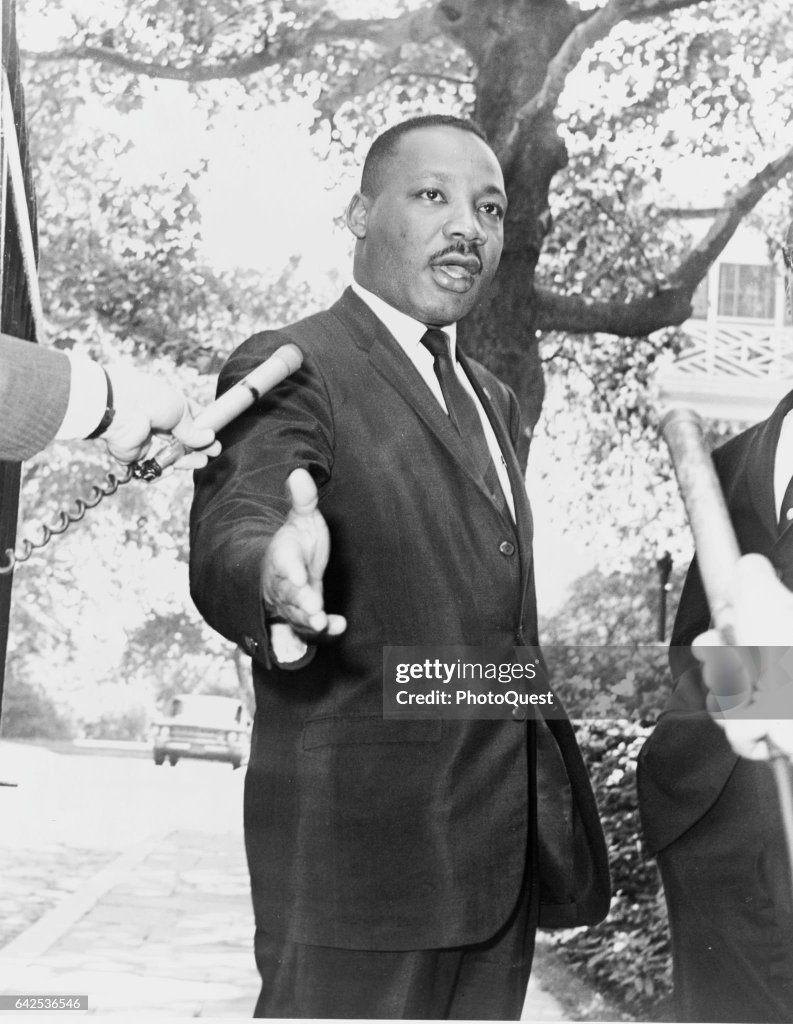
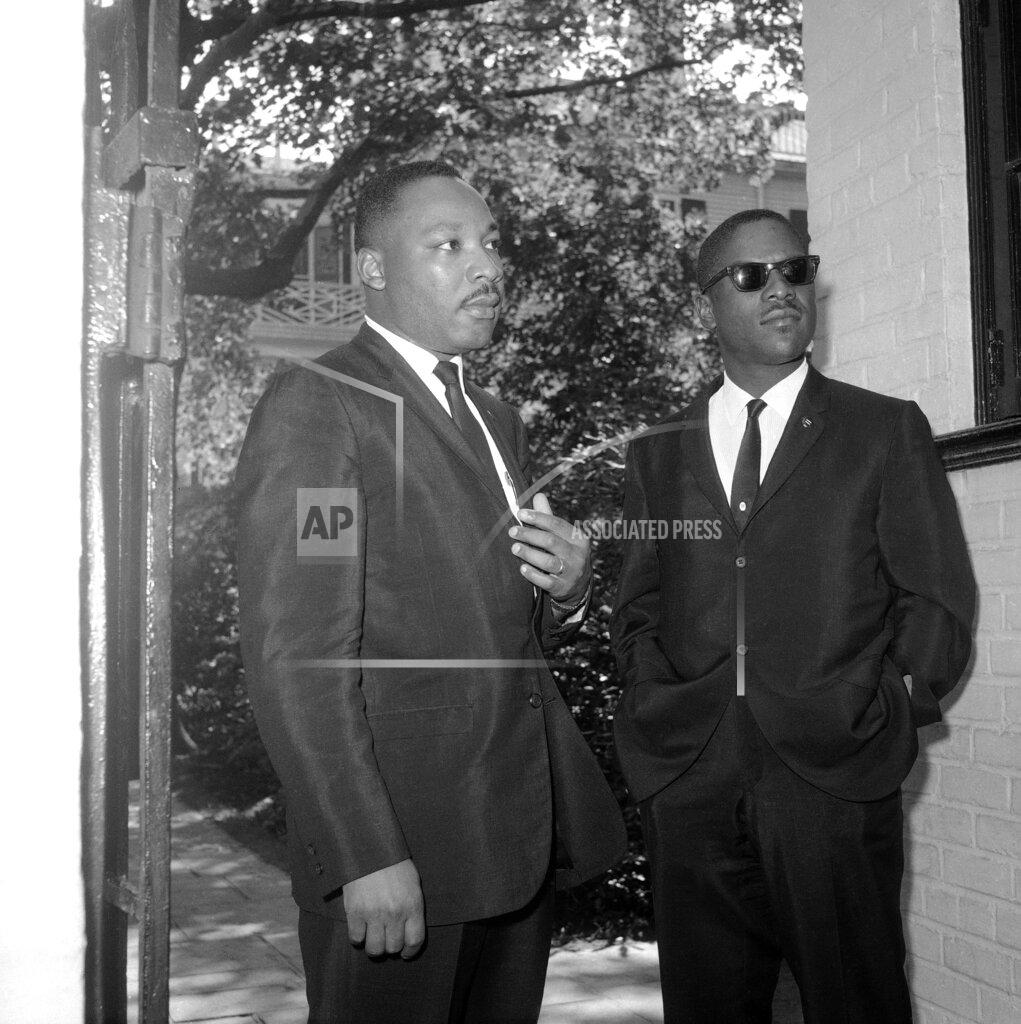
One of the four leaders who signed the appeal, the Rev. Dr. Martin Luther King Jr., president of the Southern Christian Leadership Conference, met for more than four and a half hours with Mayor Wagner at Gracie Mansion yesterday. At a news conference after the meeting, Dr. King denounced Police Commissioner Michael J. Murphy as a man “utterly unresponsive to either the demands or the aspirations of the Negro people,” but did not call for his resignation. “He is intransigent and has little understanding of the urgency of the situation,” the Black leader added. “If he had, he would have suspended Lieutenant [Thomas R.] Gilligan at once, and would not have obstructed establishment of a public review board to investigate charges of police brutality.”
A Federal judge in Hattiesburg, Mississippi dismissed without a hearing today a law suit asking that a United States commissioner be placed in each of Mississippi’s 82 counties to protect the civil rights of Blacks. District Judge Sidney Mize said the suit, which charged widespread terrorist activity, was “one of the worst scatter‐guns I’ve ever heard of.” Attorneys for the plaintiffs planned an immediate appeal to the United States Court of Appeals for the Fifth Circuit in New Orleans. “We hope to have the case back in the District Court for a hearing by the end of August,” said Arthur Kinoy of New York, one of the attorneys.
The House approved today, after years of controversy, a compromise program to put 9.1 million acres of Government land into a wilderness conservation system. The vote was 373 to 1. The program involves, at the outset, 54 areas in 12 states — areas where, the legislation states, “the earth and its community of life are untrammeled by man, where man himself is a visitor who does not remain.” The bill has long been opposed in the House on behalf of ranchers, miners, oilmen and lumber interests. It now goes to the Senate, which adopted a more liberal program both in 1961 and 1963. The Senate could accept the House bill or send it to a Senate‐House conference.
Ranger 7 was in the final stretch of its journey to the moon tonight. Its chances of obtaining the first close‐up pictures of the moon were enhanced by the cancellation of a tricky final maneuver. The spacecraft still showed no signs of trouble as it sailed toward the center of its lunar target area in the northwest corner of the Sea of Clouds. The impact is due at 9:25 AM tomorrow, Eastern Daylight Time. If all goes well this time, Ranger 7’s six television cameras will start operating 15 minutes before impact. They are set up to relay back to earth as many as 4,000 still pictures vitally needed for the Project Apollo manned lunar expedition. Such pictures should be a hundred times or more better than anything obtained through telescopes on earth. Prints are scheduled for public view within 24 hours of the impact.
In response to a request from NASA Headquarters, Gemini Program Office (GPO) provided a study for Gemini missions beyond the 12 originally planned. “The Advanced Gemini Missions Conceptual Study” described 16 further missions, including a space station experiment, a satellite chaser mission, a lifeboat rescue mission, and both a circumlunar and lunar orbiting mission. On February 28, 1965, GPO reported that a preliminary proposal for Gemini follow-on missions to test the land landing system had not been approved. Spare Gemini launch vehicles 13, 14, and 15 were canceled, and there were no current plans for Gemini missions beyond the approved 12-flight program.
Senator Clair Engle, Democrat of California, died in his sleep just after 3 AM today after an illness of 11 months. He was 52 years old. There was speculation here that Governor Edmund G. Brown of California would appoint Pierre Salinger, former White House press secretary, to complete Senator Engle’s unexpired term. Mr. Salinger won the Democratic nomination for Senator Engle’s seat in the June primaries. It is thought that an interim appointment would give him added prestige in his campaign against the Republican candidate, George Murphy, the former actor.
The Washington Senators spotted Cleveland six runs in the first inning, then roared back with their biggest inning of the year — seven runs in the sixth — and defeated the Indians, 8–7, tonight. It completed a sweep of the three‐game series for Washington and handed the Indians their sixth straight loss.
Gary Peters pitched a three-hitter and Bill Skowron drove in all the runs with a triple today as the Chicago White Sox scored a 2–0 triumph over the Detroit Tigers. Skowron, acquired recently in a trade with Washington, delivered his game‐winning blow with two out in the sixth inning.
Baltimore tied a club record with five homers and a rookie, Dave Vineyard, gained his second straight victory today as the Orioles defeated the Minnesota Twins, 7–4. The five homers, two by Jackie Brandt, tied the Baltimore record set against Los Angeles in 1961. Earl Robinson, Dick Brown and Brooks Robinson hit the other homers for the Orioles.
Tight pitching by Vernon Law and Don Schwall and the timely hitting of Bill Virdon and Jerry Lynch led the Pittsburgh Pirates to a sweep of a doubleheader with Houston, 1–0 and 8–3, tonight. Virdon singled home Law, who also had singled, in the sixth inning of the opener and it was all the right‐hander needed to gain his ninth victory in 17 decisions. Lynch got the Pirates started in the second game with his 12th homer of the season in the fourth and ignited a seven‐run uprising in the sixth by singling home the first two runs.
Johnny Briggs, a rookie, hit a two‐run walk-off double with the bases filled in the 10th inning tonight to give the Philadelphia Phillies a 4–3 victory over the San Francisco Giants. The victory, their second in the three‐game series, increased the Phillies’ National League lead to 1½ games over the secondplace Giants. The Giants had taken a 3–2 lead in the top of the 10th on Willie Mays’s run‐scoring single. But Johnny Callison led off the Phillies’ half of the inning with a double into the rightfield corner. Gaylord Perry hit Tony Taylor with a pitch, and Richie Allen beat out an infield hit, filling the bases. Manager Al Dark then brought in Billy Pierce. Briggs doubled off the right‐field wall, scoring Callison and Taylor to win it. Willie McCovey, whose runscoring double and two‐run single had sparked the Giants to their victory last night, tied the game in the ninth inning by slamming his 14th homer over the right‐field wall with one out.
Dow Jones Industrial Average: 839.37 (+0.70).
Born:
Vivica A. Fox, American actress (“Kill Bill: Vol. 1”) and television producer, in South Bend, Indiana.
Alek Keshishian, Lebanese-American film director (“Madonna: Truth or Dare”), in Beirut, Lebanon.
Jürgen Klinsmann, manager of the U.S. national soccer team (2011–2016) and the German national team (2004–2006), and striker for the West German national team; in Göppingen, West Germany
Died:
Clair Engle, 52, U.S. Senator for California since 1959 and Congressman representing northeastern California from 1943 to 1959, died of a brain tumor.
James M. Landis, 64, former Chairman of the Securities and Exchange Commission, dean of the Harvard University law school, and adviser to three presidents, drowned accidentally in his swimming pool in Harrison, New York.

 History Diaries