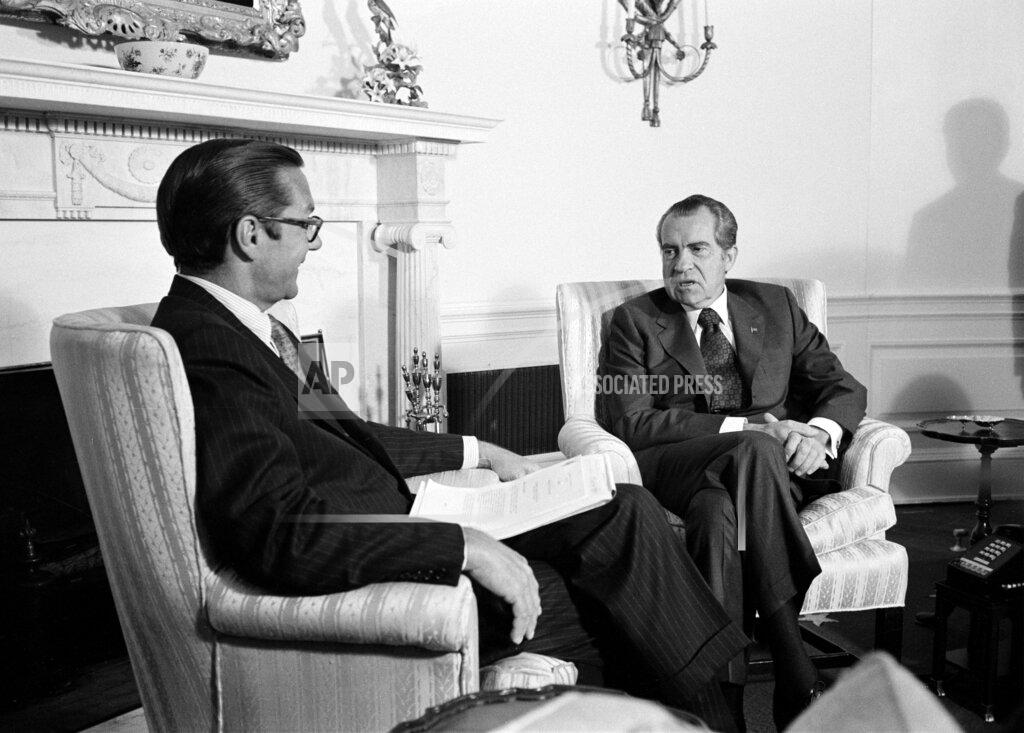
The Foreign Ministers of Greece, Turkey and the United Kingdom signed a peace agreement in Geneva, after mediation by U.S. Secretary of State Henry Kissinger, providing for the immediate end of fighting on the island of Cyprus. Greece and Turkey reached agreement in Geneva on a new Cyprus cease-fire letting Turkey keep forces there until an acceptable settlement is reached. The British Foreign Secretary, James Callaghan, who kept the negotiations going as mediator, called the accord “the first step on a long, hard road.” The talks will resume August 8.
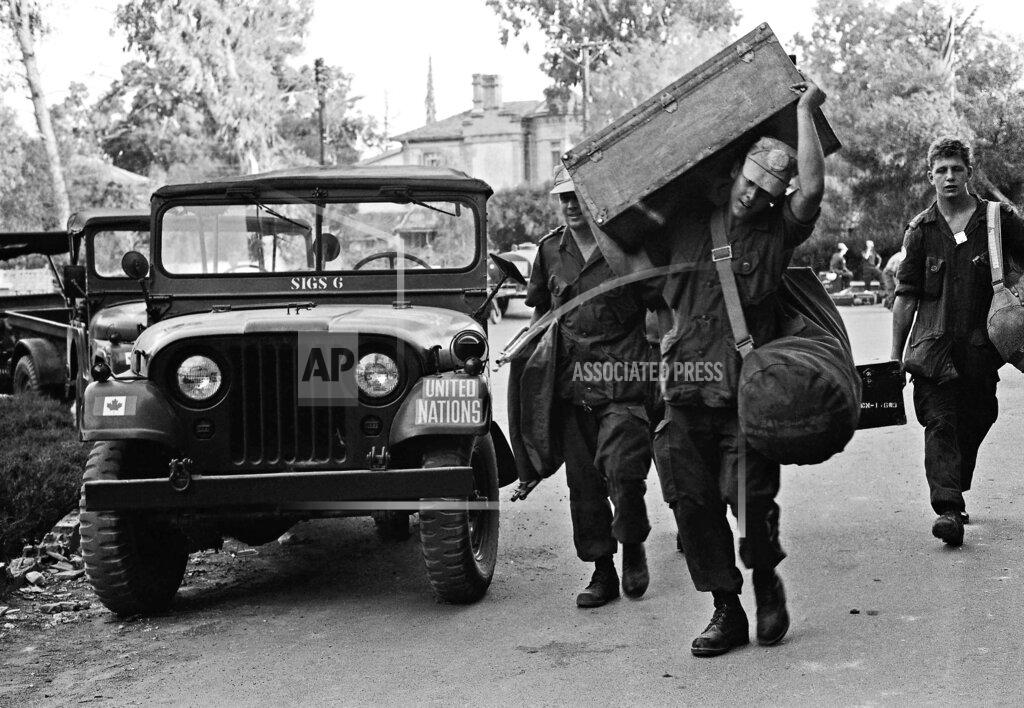
Turkish tanks and guns fire from the olive groves while infantrymen dart from foxholes and advance through the dappled shadows cast by the dusty blue leaves. From the foothills of the jagged mountain range that faces the sea on the northern beaches of this island, the Greek Cypriot defenders fire down with mortars, rockets and machine guns hidden in the scrub pine and myrtle. Between the Turks and Greeks is the ancient village of Ayios Epiktetos, whose stone houses and narrow crooked streets have been abandoned since the Turks attcaked Sunday night. The village six miles east of Kyrenia marks the farthest eastward push by the Turks from their bridgehead, which stretches seven miles west of Kyrenia to the outskirts of Karavas and plunges 15 miles inland over the mountains to the Turkish sector of Nicosia, the capital. Both coastal areas, have seen heavy clashes since Sunday despite the cease-fire declared eight days ago.
The Turks have been pouring troops, tanks, artillery and supplies into their bridgehead, with up to 20 landing craft and convoys of cargo helicopters arriving daily from the Turkish mainland less than 80 miles away. More than 40 tanks and other, tracked vehicles rumbled through Kyrenia early yesterday, and landing craft were churning toward the beaches this morning. The Turkish tank force is believed to number about 250, in support of more than 20,000 troops. After early losses the Greek Cypriot side is not believed to have, more than a dozen tanks in operating condition. The Turkish landings have been unchallenged in the air, and the cloudless skies over Cyprus — shimmering in summer heat of over 100 degrees — are at the command of Turkish jets, which can reach here in minutes from mainland bases.
The Greek Cypriots have rounded up several thousand Turkish men who are being held as virtual hostages in Limassol, Paphos, Larnaca and other towns. The Turks are holding several thousand prisoners in fortresses in Kyrenia and have shipped at least 700 to the mainland. There are more than 5,000 refugees at Bellapais, near Kyrenia, and in a large hotel in Kyrenia that have been kept out of Turkish hands by United Nations military personnel. The Turkish military commander has reportedly demanded that the United Nations personnel get out of the Turkish‐controlled area, and the Turks have begun holding up food convoys.
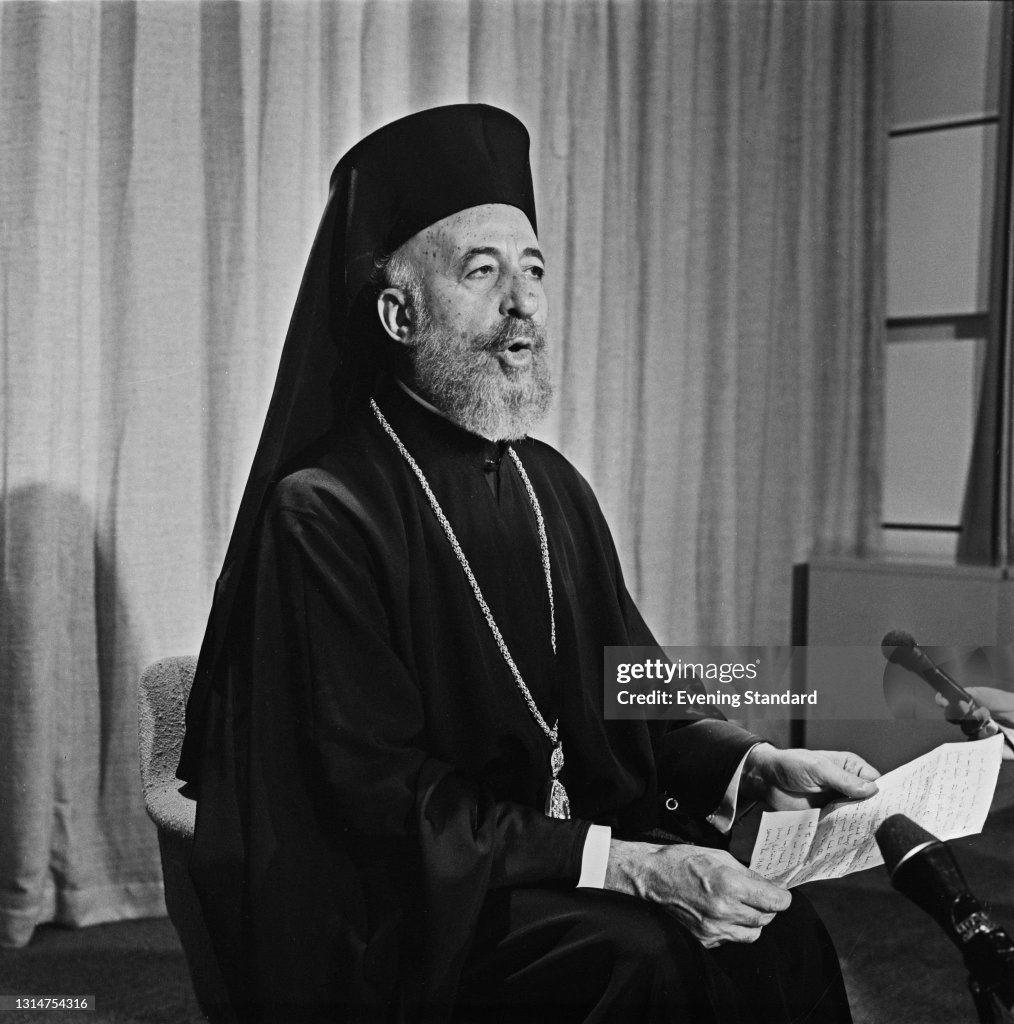
The first-round Cyprus talks in Geneva have dealt this week with comparatively simple matters: the conditions for a cease‐fire, the size of the buffer zones, the short‐range status of Turkish troops. The difficulties encountered during these negotiations already give some sense of the size of the task still ahead — finding a long‐range formula for the political future of the island. Much has changed in Cyprus in the last two weeks, since Archbishop Makarios was overthrown by the Greek‐led National Guard and Turkey invaded the island. But the core of the problem remains essentially the same.
The island nation is 80 percent ethnic Greek, and 18 percent ethnic Turkish and, in simple terms, the key question is this: How will power be shared by the two communities? At the moment, the Turks do not seem to be waiting for an answer from the world of international diplomacy. They are moving, every day, to establish a quasi-independent, self‐sufficient area in Cyprus, and will worry about longer range negotiations later. The agreement signed in Geneva tonight would seem to bolster this bold Turkish initiative. The cease‐fire line will include territory captured by the Turks in recent days, and will not force a roll‐back to the original lines of a week ago, as requested by Greece.
According to basic democratic theory, the rights of a minority are guaranteed by the rules of law, and by the tacit assumption that the majority will not oppress its opponents. But in a place like Cyprus — or Northern Ireland, or Bangladesh — the divisions are so severe that the theory tends to break down. As Rauf Denktash, the leader of the Turkish Cypriotes, put it recently: “If you lose an election in England, you shake hands. Here, if you beat a man, he becomes your mortal enemy. Maybe it’s the spirit of vendetta, something in the temperament which makes you fight for everything, in spite of the laws and the rules.”
[Ed: More bluntly, and ominously for the western world: Democracy and the rule of law work wonderfully in high-trust, culturally homogenous societies. They do not work absent those two starting conditions. Witness Yugoslavia, the Balkans in general, northern Ireland, much of Africa, and a myriad of other places around the world. And waving your magic wand of altruistic constitutional powers means absolutely zip when the murders begin. Something to ponder in fear and doubt, for our own future.]
East German border guards prevented an official of West Germany’s environmental office from driving to West Berlin, where location of the agency is challenged by East Germany with Soviet backing. The East Germans contend West Berlin is neither ruled by West Germany nor a part of it. The dispute has delayed United States recognition of the East German government.
Generalissimo Franco walked unaided to his car as he left a Madrid hospital to recuperate from phlebitis. But there was debate within his government whether he should resume powers temporarily delegated to his successor as Spain’s chief of state, Prince Juan Carlos. Opponents of the regime appeared to be rallying their forces for an early test of strength.
The Irish Republican Army offered a month-long amnesty to Northern Irish informers who had leaked IRA plans to the British army. In a statement declaring August as amnesty month, the group declared it had “kept watch on a number of individuals during phone tapping operations” and that “no action will be taken against these people provided they come forward and make a clean breast of their activities.” Traditionally the IRA has dealt with informers by assassination or shooting in the knees.
A strong earthquake rocked areas of India, Pakistan and Afghanistan. In New Delhi the quake, which registered 6 to 6.5 on the Richter scale, cracked walls in large office buildings and sent people running into the streets. People ran in panic from homes and offices as buildings trembled for about a minute. No casualties were reported. The Soviet press agency Tass reported a strong earthquake in Soviet Central Asia and said the epicenter was below the town of Faizabad in Afghanistan.
India’s Parliament heard sharp attacks on the United States following allegations that a World Health Organization malaria research project was really an American project for research in germ warfare. The Indian government denied allegations of secrecy in the project and a W.H.O. official said the only American involvement was the contribution of some funds.
North Vietnamese forces captured Măng Búk (Nang Buk), a district town in the Central Highlands of South Vietnam, field reports said. The fate of the 800-man government garrison was not reported. The Saigon command had announced that most of the town’s 5,000 residents had been evacuated a month ago, apparently in expectation of the attack, which began late last week. Meanwhile, the Saigon command said its tank-led forces recaptured an outpost near the district capital of Thượng Ðức, south of Đà Nẵng from Communist forces. The post was one of seven lost the day before to enemy troops.
Malaysia Prime Minister Tun Abdul Razak announced in Kuala Lumpur that parliament and all state assemblies except that of Sabah will be dissolved and new elections held soon. Under Malaysia’s system elections are held every five years or when parliament is dissolved. Some officials said that Razak chose to call elections now because the country’s growing inflation might cause him to lose support later.
Members of House Foreign Affairs subcommittees heard State Department and Pentagon officials testify against curtailing military aid to South Korea, saying it might jeopardize the security of all East Asia. Prof. Edwin Reischauer, former ambassador to Japan, said the South Korean government’s repressive policies had so weakened the country that aid should be cut to pressure President Park Chung Hee to liberalize his policies.
Woodworkers in British Columbia accepted a new one-year contract and began returning to their jobs after a six-day strike. A spokesman for the International Woodworkers of America said the pact with the Interior Forest Labor Relations Assn. of the province called for a 12% pay boost, from $4.45 to $5.10 an hour, and benefits.
At least 80 persons, including two foreign television correspondents. were detained after seven hours of disturbances in Lima in protest against the military government’s expropriation of the major newspapers of Peru, police said. Jane Berger, 28, an American, and Derek Furlong, 33, a Briton, were taken into custody while attempting to film the demonstrations. They were expected to be released shortly.
Segregated voting was held in Rhodesia for the 66-member House of Assembly, with white voters picking candidates for the 50 seats reserved for the white minority, and black and mixed-race voters selecting from 26 candidates for the 16 “tribal seats” reserved for the non-white candidates. The Rhodesian Front party won all 50 of the contests for the white seats although candidates from the Rhodesia Party were on the ballot. At the time, 300,000 residents of Rhodesia were white, while 5,700,000 were black or mixed race. Despite being only 5% of the population, the whites had 76% of the seats in parliament. Rhodesia’s white minority electorate overwhelmingly returned Prime Minister Ian Smith and his Rhodesian Front party to five more years in power. Smith’s party appeared to have gained 43 of the 50 seats in parliament reserved for the country’s 300,000 whites. Twenty-six blacks were running for eight elective seats which, along with eight seats to be appointed by the Tribal Electoral Council, represent Rhodesia’s 5.7 million blacks in parliament. Smith, a white supremacist who a decade ago declared Rhodesia independent of Britain, ran unopposed.
A black sailor told a court-martial he had jumped ship from the USS Midway because of racial discrimination, lack of advancement and poor conditions. Fireman Apprentice Coy Anderson, 19, was sentenced to loss of one stripe and temporary withholding of some pay. Forty-three other seamen faced trial or disciplining for failing to sail with the carrier when it left port in Japan June 14.
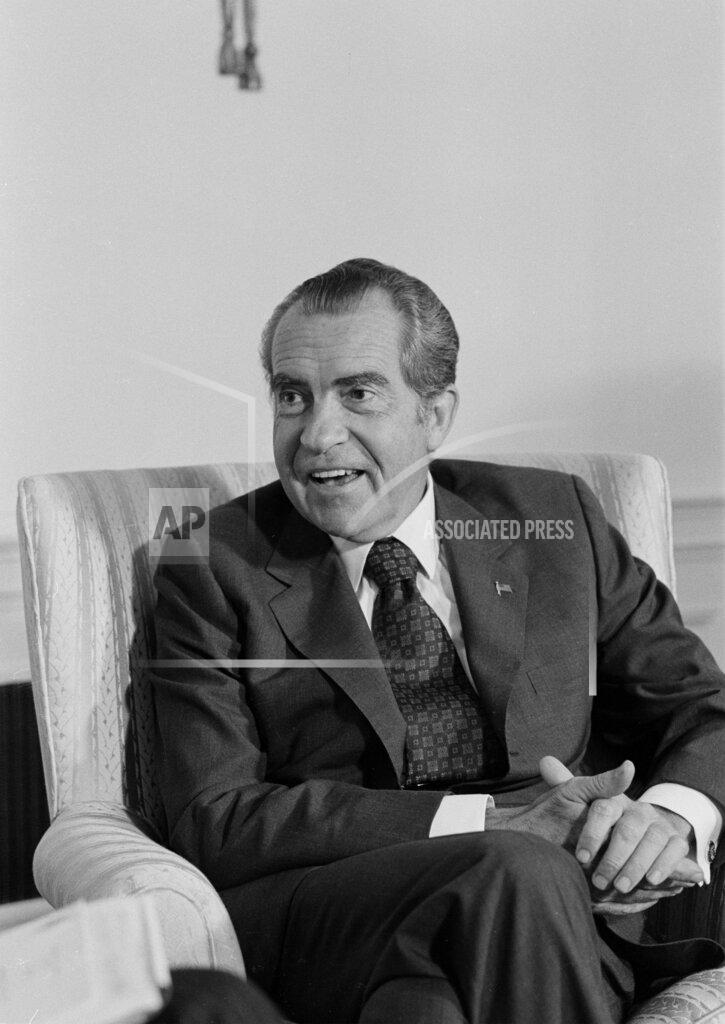
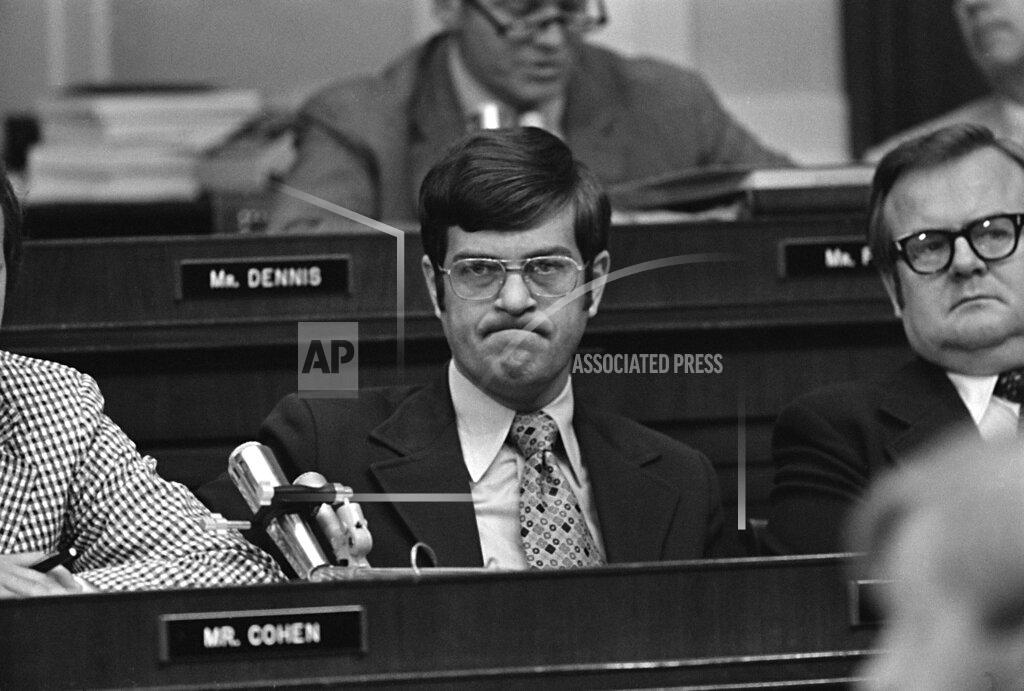
The House Judiciary Committee completed its bill of impeachment against President Nixon with a third article charging him with unconstitutionally, defying its subpoenas. The 21 to 17 vote ran close to party lines. The committee rejected charges of usurping congressional war powers and of demeaning his high office by his personal financial conduct.
The U.S. House Judiciary Committee adjourned its proceedings for impeachment after passing three articles of impeachment in three days. A proposed Article IV, regarding illegal use of power in the 1970 invasion of Cambodia, was rejected, with 12 votes for and 26 against. Debate in the full House on whether to impeach was scheduled for August 19, but Nixon’s resignation on August 9 made the point moot.
A former press secretary of Senator Hubert Humphrey and the aide’s partner in a computer services concern were charged with helping a large milk cooperative make illegal contributions to campaigns of the Minnesota Democrat and others. The special prosecutor’s office said they provided computerized mailing lists to Democrats, for which Associated Milk Producers, Inc., paid the sum of $82,000.
The House Ways and Means Committee approved changes in the tax laws that would bring modest tax reductions to many low and middle-income persons but would have the effect of reducing the top tax rate for many of the wealthiest from the present 70 percent to 50 percent.
The House of Representatives unexpectedly defeated by a 221 to 181 vote a move to give $800 million in federal subsidies to mass transit systems, including the New York subway. Rural and conservative Congressmen joined forces against what they called a “big-city boondoggle,” The action effectively killed immediate hopes of federal funds to help underwrite the subway deficit threatening the 35-cent fare.
“Unfortunate semantic difficulty” surrounds the testimony of Secretary of State Henry A. Kissinger on wiretapping, Senator J. William Fulbright (D-Arkansas) said, declaring the question of who “initiated” the wiretaps may never be resolved. At his confirmation hearings last year, Kissinger denied that he “initiated” any of the wiretaps of 17 government officials and newsmen from 1969 to 1971. Kissinger reiterated his denial to the Senate Foreign Relations Committee in an inquiry begun at Kissinger’s request. Fulbright said Kissinger maintained that a “program of surveillance” was agreed upon at a meeting between President Nixon, then-Attorney General John N. Mitchell and the late FBI director, J. Edgar Hoover. Fulbright said Kissinger believed that the “program” initiated the wiretaps, but when it came to individuals it was difficult to avoid thinking of furnishing names as “initiating.” Kissinger furnished names of individuals who had access to leaked secrets. The question: Did Kissinger misrepresent his role?
A 56-year-old drifter, Gordon Marais, charged with setting three Manhattan churches afire Monday during a nightlong arson spree that left one priest dead, was released from a federal mental hospital in Washington, D.C., by court order last Friday. Marais had been held on a warrant from San Bernardino, California, but was released when California authorities said they would not prosecute. The Rev. Thomas Smith, 71, was found unconscious in his room in the rectory of St. Vincent Ferrer Church and died later of smoke inhalation at New York Hospital.
The Texas Department of Corrections rejected a proposal that five high prison officials trade places with 13 hostages held under threat of death by three armed convicts at the state penitentiary in Huntsville. The offer was made by Fred Gomez Carrasco, leader of the rebel convicts who took over the prison library and seized the hostages last Wednesday. Ron Taylor, prison information officer, said later a shot was fired from the library where the hostages were being held but “we don’t know why it was fired.”
The Ford Motor Company will cut its capital spending in the United, States by more than $220‐million next year, its chairman, Henry Ford 2nd, said today. He said the company’s expenditures would “drop dramatically” in the United States because of disappointing profits, rising costs and the prospect for only a modest increase in car sales in 1975. The decision was disclosed at a news conference called in conjunction with the preview of Ford’s 1975 model cars, which go on sate September 27. Mr. Ford said he believed that if current economic policies were continued, American auto industry sales “will be at least 10 million and could reach 10.5 million units during the 1975 model year — a half million to a million more than will be sold in the 1974 model year.”
The House passed and sent to the Senate a $13.5 billion bill to fund farm, environmental and consumer programs for the 1975 fiscal year that started July 1. Major provisions include $4 billion for the food stamp program, $1 million for an antitrust investigation of major oil companies, authority for the Federal Trade Commission to investigate up to 500 business firms in a study of conglomerates and possible monopolistic trends and limitations on allotments to individual nations in the “Food for Peace” program.
Quota systems to attain racial balance in law enforcement agencies are discriminatory and nonresponsive, Dr. S. I. Hayakawa, president emeritus of San Francisco State University, told the International Conference of Police Association meeting in Chicago. He criticized efforts by groups charging racial discrimination among city police forces as resulting in a court freeze on hiring.
The 1974 Scheldeprijs cycle race was held in Belgium and the Netherlands, and was won by Marc Demeyer.
At the Oakland Coliseum, rookie right-hander Jim Bibby of the Texas Rangers pitches a no-hitter against the World Champion Oakland A’s. Bibby strikes out 13 A’s in forging a 6–0 victory. Jeff Burroughs, who will win the American League’s MVP Award, hits a grand slam the second of three grand slams in a ten-day period (July 26th-August 4th). Bibby, a Vietnam veteran, becomes the 14th rookie to throw a no-hitter and becomes the first hurler in franchise history to accomplish the feat. The 28-year-old right-hander was obtained in a June 6th trade with the Cardinals.
The New York Yankees continued their plunge through the standings of the American League’s Eastern Division tonight, dropping a twilight-night double-header to the Milwaukee Brewers at County Stadium, 3–2 in 10 innings and 4–0 in the nitecap.
The Detroit Tigers, baseball’s oldest major league team with an average age of 29.5 years, needed only one home run this time plus a two‐run throwing error to beat the Boston Red Sox, 7–5. The Tigers went into the ninth trailing, 5–3, then tied the game on Gary Sutherland’s single and Al Kaline’s first‐pitch home run off Reggie Cleveland. Jim Northrup, who had doubled, and Ben Oglivie, who was intentionally walked, then scored on the two‐out throwing error by Boston’s rookie catcher, Tim Blackwell.
The Pittsburgh Pirates and New York Mets split a doubleheader today. Pittsburgh won the first game, 6–0, and the Mets rallied to take the second, 4–3.
Chris Speier cracked a bases‐loaded double, his fourth hit of the game, off Danny Frisella in the 12th inning to give the San Francisco Giants a 6–3 victory over the Atlanta Braves. Dave Kingman’s pinch‐hit homer leading off the ninth had sent the game into extra innings. Jim Barr worked 7⅔ innings and retired 18 Braves in order from the second through the seventh innings, but Elias Sosa wound up with his sixth triumph in relief when the Braves rallied for three runs in the eighth.
Don Wilson collects his 100th victory as a Houston Astro, toppling the Cincinnati Reds, 8–4. The righthander fans nine in eight innings of work. Lee May drives in three while Cesar Cedeno and Cliff Johnson support with solo homers.
The Los Angeles Dodgers defeated the San Diego Padres, 8–0. The Dodgers increased their NL West Division lead over the Reds to 5½ games. Andy Messersmith and Mike Marshall combined for the shutout. Steve Garvey and Steve Yeager homered for the Dodgers.
Dow Jones Industrial Average: 765.57 (-5.32, -0.69%).
Born:
Hilary Swank, U.S. film actress (two Academy Awards, “Boys Don’t Cry” (Best Actress, 1999) and “Million Dollar Baby” (Best Actress, 2005)); in Lincoln, Nebraska.
Jacek Dukaj, Polish science fiction writer known for “Starość aksolotla” (“The Old Axolotl”); in Tarnów, Poland.
Matt Stevens, NFL quarterback (Kansas City Chiefs), in Sulphur, Louisiana.
Died:
Elizabeth Gould Davis, 64, American librarian, author (“The First Sex”), suicide by firearm.
Lev Knipper, 75, Russian-Soviet composer (“Poem of the Komsomol Fighter”; “Tales of a Plaster God”), and secret agent.

 History Diaries