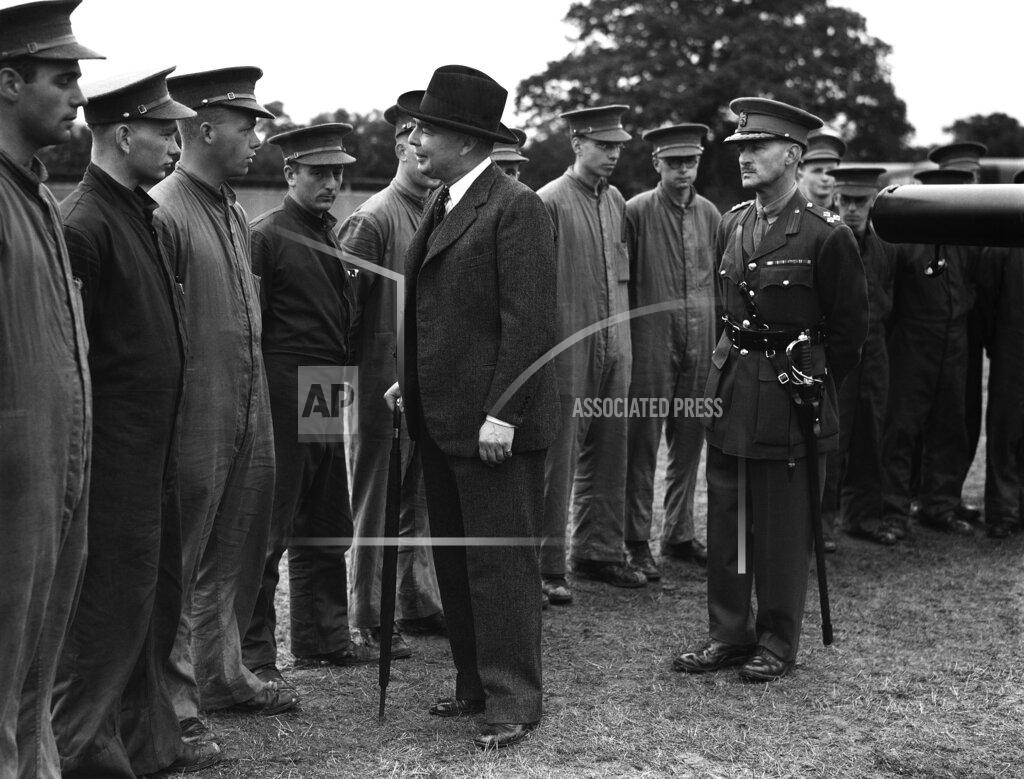
World arms costs for 1939 are totaled at $20 billion, $2 billion above 1938. Britain and France are mainly responsible for the increase.
Word of a cheering nature came from Moscow today. It was learned that as a result of further conversations in the Kremlin yesterday Anglo-French staff talks with Russia may begin next week alongside the political talks, which are to be continued. Many snags may yet appear before Prime Minister Neville Chamberlain makes his projected statement to the House of Commons Monday afternoon, but it is now taken for granted that staff talks have been definitely agreed upon, though unanimity by no means has been reached on the tripartite defensive alliance as a whole. There still is no agreed formula on the difficult question of what constitutes “indirect aggression.”
However, as the staff talks are likely to last two or three weeks there is still time for political negotiators to reach some agreed basis before a political military pact would be ready for signature. In any case, the continuance of these joint negotiations in good feeling is bound, it is held, to have no mean psychological effect on a would-be aggressor. With a strong Anglo-French military mission in Moscow, it is thought that an aggressor might think twice before embarking on any adventure that might invoke Russian hostility. At least the British and French Governments would have a chance of knowing what action, if any, Russia had in mind — which, according to most accounts, was more than they did at the time of the September crisis.
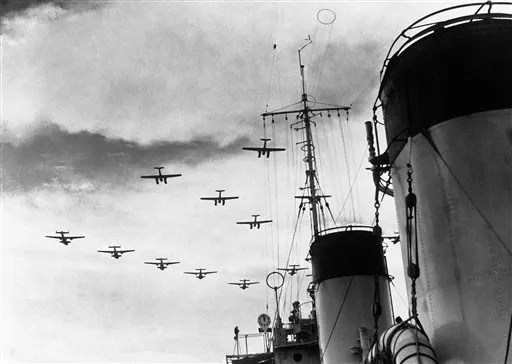
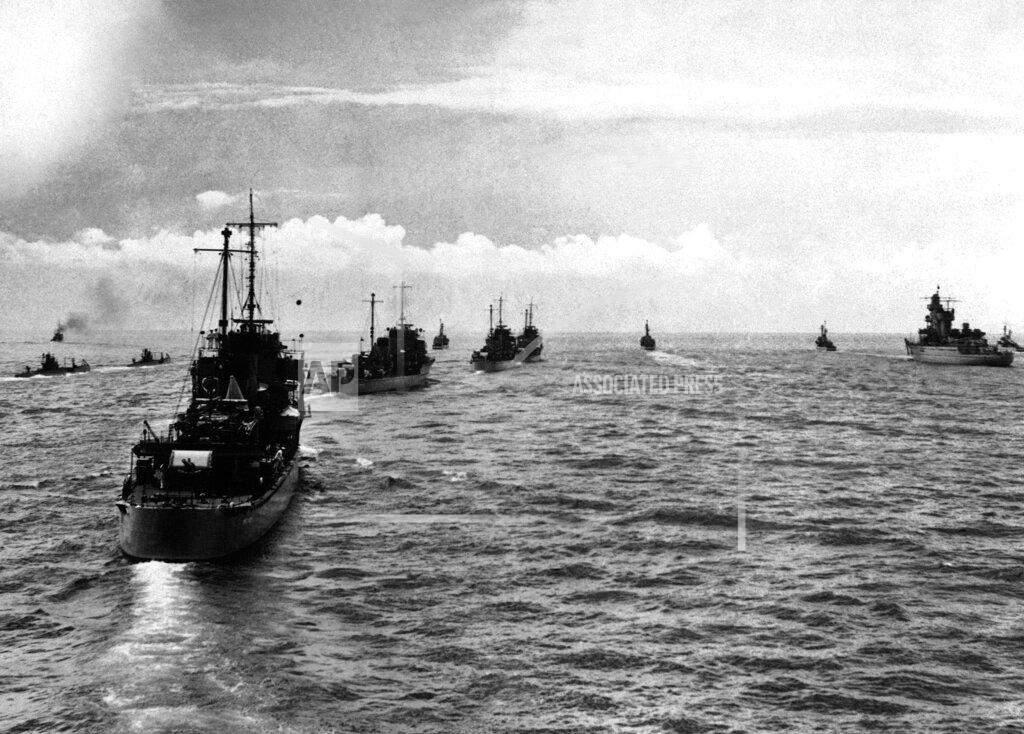
Meanwhile the British Home Fleet, which shortly will be joined by the flagship Nelson, today started to assemble at Rosyth, one of the navy’s old war stations on the east coast of Scotland, and tomorrow nearly 11,000 naval reservists. will start manning the ships of the reserve fleet which by the end of the week will have a full complement of 130 vessels of all sorts and sizes in commission. Thus, by next Sunday, taking into account the 135,000 Territorial troops now on maneuvers with the auxiliary air and other units, Britain will have under arms the greatest mobilization of land, sea and air strength in her peacetime history.
London’s defensive “balloon barrage” is now being flown for training purposes and scores of silver gas bags, anchored to their mobile. trucks in parks and other open spaces are floating just below the clouds. The crews will be on duty all week learning how to handle the fickle balloons in all sorts of weather. Large-scale air force exercises will begin next Saturday over the whole east and southern part of England and only two narrow corridors will be open for European civilian airliners. Combined AngloFrench training flights are projected and on August 9 London will have its great “blackout.” The reserve fleet will be kept at full commission until the end of September.
King Leopold is to unveil a statue to his father, the lake King Albert, at the head of the new Albert Canal in the outskirts of Liege at 3 PM tomorrow. The ceremony originally was intended to serve as the formal opening of the new canal — the biggest civilian undertaking that Belgium has carried out in the century of her independence — but the canal burst its banks a few weeks ago, and it will take months to repair the damage. Tomorrow’s ceremony has thus lost some of its original meaning, though little of the popular interest that makes it the outstanding occasion of the year in Belgium. Three thousand survivors of the defense of Liege in 1914 are to occupy seats on the gardened esplanade behind the Albert statue tomorrow afternoon — a reminder that while the Albert Canal is intended for commercial purposes in peacetime it is also an important part of Belgium’s defenses in wartime.
Belgium will soon open the Albert Canal with great ceremony. To those who take the gloomiest view of Europe, this giant among Belgian canals is mainly of interest because it forms an important part of the country’s defenses on the eastern frontier. Now that the German army is back in the Rhineland and Belgium has reverted to neutrality on the Dutch and Swiss model, the duties of Belgium to Europe are limited in her own view to the defense of her frontiers.
“Belgium’s role,” said Foreign Minister Spaak to the Chamber in 1937, “is to cover the battlefield of Europe with such obstacles that even the boldest will recoil from them.” The Albert Canal is one of those obstacles, part of an eastern frontier which is now heavily fortified and haunted night and day by watching eyes and listening ears. To break into Belgium through Holland an invader would now have to cross not only the Meuse but also the broad fortified moat of the canal, whose banks at vital points are from 130 to 210 feet above the water, with nearly vertical walls.
Liége is the focal point of the eastern frontier. Like Verdun, it lies down in the Meuse Valley, with its forts among the hills, and it is generally understood that the Liége forts are better equipped for the role of a Belgian Verdun today than they were in 1914. The Albert Canal forms a wide, watery ditch, running north and west from Liége to the port of Antwerp. Along a front of seventy miles, it covers all the large towns and important industrial centers against invasion from the east, mainly against invasion through Holland.
Among the hills of Liége and in the water defenses of the flat northern plain it forms part of the existing military works. Its newest section in a military sense lies between Liège and the north, where the Maastricht bridges over the Meuse offer a route to the invader second in importance only to that of Liége itself. The Maastricht bridgehead is a Dutch enclave on the Belgian side of the Meuse, and, while it would hardly be fair to assume that the Dutch could not defend this awkward outlying bit of Holland, a successful Dutch defense probably would be a pretty heroic piece of business. The Albert Canal has now ditched off this highly sensitive enclave. Connecting with the Meuse to the south of it and again to the north of it, the broad most of the canal rounds it at a distance in places of only thirty feet from the frontier. The “Maastricht gap” thus seems to have been securely closed at last.
The Danzig government presents two protest notes to the Polish government concerning illegal activities of Polish customs inspectors and frontier officials. The Danzig Government objects to hostile Polish economic measures and threaten to undertake reprisals.
Poland is accused in the Berlin press of being partly responsible for the flooding of the River Oder, which has caused serious devastation in Silesia. The failure of the Poles to repair dams and dikes in Polish Silesia contributed to the danger, it is asserted.
For the first time since Austria’s annexation, anti-Nazis in Vienna yesterday openly demonstrated their hatred of the present regime. Early in the morning, according to witnesses of the incident, a small band of unidentified persons smeared paint on a marble memorial tablet dedicated Tuesday to the memory of the assassins of Chancellor Engelbert Dollfuss. Not only was the tablet defaced, but also street markers bearing the names “Street of the July Fighters” and “Planetta [one of the assassins] Place.” The Reich Press Bureau in its official explanation states that “the tablet has been removed because it was merely provisional. It will be replaced by another within a few days.”
France jails another journalist for anti-Semitism.
Italian Premier Benito Mussolini marks his 56th birthday. The paper mentions the celebration, but not his age.
The Netherlands royalty anticipates the second birth to the Prince and Princess.
Pavel Sukhoi is named the Chief Designer of aircraft factory number 135 in Kharkov, Ukraine.
Syria is expected to become a kingdom, with Emir Abdullah, ruler of Trans-Jordan, occupying the throne.
President Roosevelt was absent from the capital on a fishing holiday off the Virginia Capes.
The Senate today in Washington debated the Administration’s lending program in another night session, with Senator Bridges digressing to launch a veiled attack on Senator Guffey for alleged connection with the Mexican expropriated oil lands difficulties, to which Mr. Guffey entered a general denial.
The House passed and sent to the Senate the Smith bill restricting the admission of aliens and adjourned at 2:53 until noon on Monday.
Its Banking and Currency Committee voted to report, after cutting $850,000,000 from various items, its own version of the Administration lending program.
The House Banking Committee followed the Senate’s lead of Friday and slashed the government lending bill by $850,000,000. The Congressional insurrection of conservative Democrats and Republicans, acting as an anti-New Deal coalition, spread from the Senate to the House today in such a fashion as to indicate that the present session is about to end in serious frustration of Administration wishes. Some observers, after watching today’s sessions of both chambers, thought that all the remaining legislative programs of Congress would be overthrown and adjournment would be taken early next week.
The last major enactment which President Roosevelt and his advisers want is the lending program by which it is hoped to stimulate the country’s budding economic recovery into an accelerating upcurve to cancel out the “recession” of 1937. But yesterday and today the bill was deeply slashed and its future is uncertain. The rising revolt of Congress was evidenced today in both Senate and House action. The Senate, considering the Works Financing Bill, passed an amendment by Senator O’Mahoney designed to prevent government interference with private business. The upper chamber also adopted an amendment by Senator Tydings to restrict political contributions by labor unions.
Within less than twenty-four hours after a caucus of House Democrats had pledged “continued” support to the policies of President Roosevelt, the House Banking and Currency Committee, composed of fifteen Democrats and ten Republicans, slashed $850,000,000 from its version of the Works Financing Bill. This amount was identical with the reductions from a companion bill voted by the Senate last night, but it differed as to the funds slashed. The House committee ordered its $850,000,000 reduction through the continued operation of the coalition of Republicans and conservative Democrats, which has ruled Congress for the last two weeks.
Having thus applied the ax, the committee ordered the reduced bill reported to the House on Monday. The vote to report was 14 to 10. The measure was in such a condition that several Democrats expressed grave doubt that it ever would be considered on its merits on the House floor. Even though it was recommended by the committee tonight, the bill had to run through the complicated process of the Rules Committee before reaching the open House for debate and amendment.
After spending eight hours on the lending measure today the Senate agreed to invoke a debate limitation, beginning with the session Monday, in an effort to complete it at the next sitting. The limit was set by unanimous consent at fifteen minutes for each Senator on the bill itself and fifteen minutes for any amendment proposed, excepting any amendment seeking to restore the $500,000,000 highway loan authorization which was deleted from the measure yesterday.
The Senate passed an amendment by Senator O’Mahoney to the lending bill intended to prevent government interference with private enterprise, and another by Senator Tydings to restrict political contributions by labor unions.
The House passed the fifth anti-alien enactment of the session, sharply limiting the activities of those teaching or urging the overthrow of the government. The drastic Smith Anti-Alien Bill was passed today by the House and sent to the Senate after the House had refused, 273 to 48, to recommit the measure at the insistence of a liberal group. The measure was passed substantially as it came from the Judiciary Committee. The author, Representative Smith, Democrat, of Virginia, succeeded in restoring one title deleted in the committee.
This title would outlaw teaching or advocating in any form the overthrow of the United States Government or any of its subdivisions; the printing or publishing of books or papers advocating violent overthrow of the government; or the defending or justifying of any such forbidden actions; and the organization or acceptance of membership in any organization devoted to overthrowing the government. The bill would amend existing law against Communists in such a manner as to meet the requirements indicated by the Supreme Court in the Strecker case.
Colonel F. C. Harrington stopped dismissals of WPA workers on rolls for eighteen months after the Senate approval of the amendment to the lending bill modifying the 1940 Relief Act.
Crystallizing sentiment with regard to a third term for President Roosevelt, with 38 percent of those represented in favor, 40 percent against and the rest undecided, was reported yesterday in a survey made by the American Institute of Public Opinion, of which Dr. George Gallup is director.
A grand jury indicts three big Ohio tire companies — Goodyear, Goodrich, and Firestone — for misleading consumers.
FDR’s son rebukes John L. Lewis for his verbal attack on the Vice President. The “blast” of John L. Lewis, president of the C.I.O., against Vice President Garner “may have done irreparable damage to the fine cause of labor advancement in this country,” Elliott Roosevelt, son of the President, said in a radio talk today.
New York Mayor La Guardia pledged his support last night to District Attorney Thomas E. Dewey’s request for a $25,000 “dead or alive” reward for Louis (Lepke) Buchalter, fugitive gangster who, Mr. Dewey believes, is waging a “war of extermination” against members and former members of his gang.
President Roosevelt fished “right in the middle” of the biggest run of marlin spearfish in the history of Middle Atlantic sport fishing today, but reports tonight indicate, that the fighting beauties had passed up the Presidential hook until tomorrow, at least.
The sweeping changes in the naval high command which have been under way for several weeks will be practically completed Tuesday morning when Admiral William D. Leahy, Chief of Naval Operations, is succeeded by Admiral Harold R. Stark, who has been for two-years in command of the cruiser divisions of the Battle Force.
The New York Yankees led the Chicago White Sox, 2 to 0, before rain forced a postponement at the end of two innings.
The New York Giants snapped a three-game losing streak with a 5–2 victory at Chicago. Harry Gumbert shut out the Cubs with one hit for eight innings.
The Brooklyn Dodgers defeated the Cardinals at St. Louis, 7–3, Luke Hamlin pitching his eleventh victory with the aid of a three-run homer by pinch-hitter Ernie Koy.
The Cincinnati Reds swept a doubleheader from the Philadelphia Phillies, 3–0 and 9–2.
A party of Canadian manufacturers will sail today for the United Kingdom to seek the placing of direct munitions orders from Britain to Canadian plants.
Only those Spanish refugees whose hands show that they have been accustomed to manual work are being accepted for emigration to Mexico, it is stated in Paris, and protests are being raised by Spanish “intellectuals.”
Mexican scientists evolve a way to get more spotted fever vaccine from rats and mice.
Italy sees closer ties with Japan. The press is certain that the U.S. blow is intended toward Axis powers.
Shanghai’s intermittent British-Japanese friction flared anew tonight in an incident that brought Japanese with bayonets fixed and British troops face to face on a disputed International Settlement boundary. The affair produced no actual clash, but the Japanese temporarily detained four British soldiers and threw a barrier along the British defense zone. This drew a strong British military protest as an encroachment on British-guarded territory.
Thousands of terrified Chinese fled into the British area before a Japanese naval force of 200 closed the gaps between the barricades on the boundary between the Japanese and British defense sectors. The barricades extended along the entire mile-and-a-half length of North Kiangsi Road, from Soochow Creek to the northern limit of the British area. The trouble started when four Seaforth Highlanders in a military truck entered the Japanese defense sector to repair barbed wire. British said they were under the impression that the territory was British.
Japanese forces quickly blocked off the alleyway in which the British were working by stretching barbed wire across the exit and held the Highlanders and their truck for two hours and a half as British officers negotiated with the Japanese for their release. The Japanese in the meantime, working at top speed, strung three strands of wire along the length of North Kiangsi Road.
On seeing this, Chinese living in the Japanese sector fled across the roadway to the British side in scenes reminiscent of the 1937 exodus into the Settlement from Chapei when the Japanese were attacking. Chinese had been advised that the road would be blockaded in preparation for a census announced by the Japanese for August 10, and barricades without wires already had been erected, but this failed to relieve the panic.
Carrying everything movable from food to beds, Chinese streamed through rapidly narrowing gaps in the barricades and piled their goods high on the British sidewalk. Many fled so rapidly that they failed to turn off their lights, which could be seen blazing from deserted rooms. Tonight, the Japanese side of the barrier was almost deserted, while the roadway and British sidewalk were crammed with terrified, homeless Chinese.
In Tokyo, the conference on the Tientsin situation struck a snag as a result of the Japanese demands on the British in connection with Chinese currency.
The Japanese Government, praising its new trade treaty with Germany, indicated that it would provide the Reich with foodstuffs in exchange for heavy machinery and arms. While traders were expressing disquiet lest Japan lose the advantages of most-favored-nation clauses in her trade with the United States, the Foreign Office announced today that the German-Japanese trade agreement initialed in Berlin yesterday was an “innovation.”
Dow Jones Industrial Average: 144.00 (-0.11).
Born:
Annea Lockwood, American composer (“Piano Burning”), in Christchurch, New Zealand.

 History Diaries