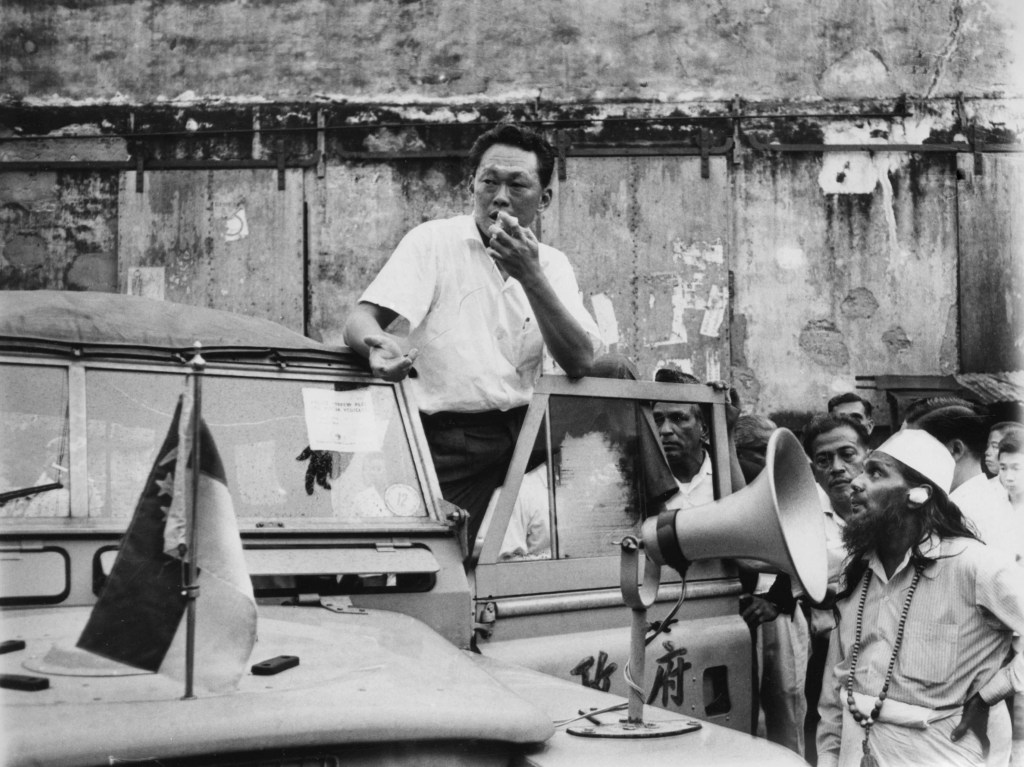
ARVN troops, aided by air strikes, inflict heavy casualties on Việt Cộng forces attacking Bến Cát. A South Vietnamese military spokesman credited today a swift counterattack by fighter‐bombers with inflicting severe casualties on Việt Cộng units that attacked the district capital of Bến Cát, 30 miles north of Saigon, yesterday. The heavy aerial pounding routed the attackers. Government casualties in and around Bến Cát were put at 19. The government contended that 300 Việt Cộng were killed in the engagement. Estimates by United States advisers were more conservative. Ambassador Maxwell D. Taylor flew into the Communist‐infested Mekong River Delta for an on‐the‐spot check of progress there.
The Defense department identified today Major Reed G. Jensen of Denver as an Army officer killed in an ambush in South Vietnam yesterday.
The U.S. military raises its estimates of Communist forces in South Vietnam to 28-34,000 fulltime regular Việt Cộng troops, another 60-80,000 guerrillas, and claims that about 30 percent of units formed in past eight months have infiltrated from North Vietnam. Six months ago, the official estimate of the Việt Cộng regular forces’ strength was 23,000 to 27,000. About 10,000 such infiltrators have come in during the last five years, it was claimed.
The figures, made public for the first time, indicate intensive recruiting of Việt Cộng inside South Vietnam, since for every infiltrator in a new unit, whether platoon, company, battalion or regiment, there are two local recruits. The gains in Việt Cộng numerical strength seem to have been even greater than the revised estimates show, since 10,000 Việt Cộng casualties have been reported by military headquarters during the same six‐month, period. The military spokesman said the bulk of these casualties had been suffered by the Việt Cộng’s irregular guerrilla troops. He declined to give an estimate of the number of Việt Cộng civilian agents now operating alongside the insurgents’ armed forces.
In comparison with the new estimates of Việt Cộng strength, official figures put the South Vietnam Government’s armed forces at nearly 500,000. Of these about 200,000 are in the regular Army, Navy and Air, Force and 300,000 in the full‐time paramilitary units. There are now 16,300 United States servicemen in South Vietnam and it was announced two days ago that their number would be increased.
South Vietnamese Foreign Minister Phan Huy Quát charged today that pro‐Communist Việt Cộng troops masquerading in government uniforms had been attacking Cambodian border hamlets with the intention of stirring up trouble between Cambodia and South Vietnam. The Minister’s charge was made as part of his denial of Cambodian charges that regular Vietnamese troops had attacked a Cambodian hamlet June 24 and that Vietnamese planes had dropped poisonous powder on border villages between June 13 and July 23. The denial was in form of a note to the United Nations Security Council. Earlier, an official source said that no flights operated in the area during the period charged by Cambodia.
The Laotian Army was reported tonight to have advanced within striking distance of Muong Kassy, an important supply base of the pro‐Communist Pathet Lao. Details from the front were scant, but informed sources said the Government troops expected to take the base tonight or tomorrow. At last report, the government’s forces were forming a pincer on Route 13 about six miles south of Muong Kassy.
In political developments, Prince Souvanna Phouma, Premier of the coalition regime, announced four resignations and replacements in his Cabinet. The resignations, expected for several weeks, reflected dissatisfaction among young officers who had taken part in a right‐wing coup last April. The leaders of that coup desisted under United States pressure and allowed Premier Souvanna Phouma to stay in office. Subsequently the right‐wing and neutralist factions merged. The officials who resigned had urged the appointment of more officials who could bring higher standards of efficiency and integrity to the Laotian Government.
R. A. Butler, the British Foreign Secretary, told Foreign Minister Andrei A. Gromyko today that London was willing to co‐sponsor a 14‐nation conference on Laos if the internal situation in the country could be stabilized. Mr. Butler met with Mr. Gromyko for two hours this afternoon. Earlier in the day, the British suggestions were submitted to the Soviet Foreign, Ministry in a memorandum. The memorandum is understood to have said that three conditions would have to be fulfilled before Britain would join the Soviet Union in its call for a new Geneva conference to seek to restore peace to divided Laos.
The conditions were listed as an effective cease‐fire between the Government and pro‐Communist Pathet Lao forces, a withdrawal of the Pathet Lao troops to the positions they held before their spring offensive, and effective reactivation of the coalition regime headed by Prince Souvanna Phouma. The coalition, as set up by 1962 Geneva conference, comprised the neutralist, right wing and pro‐Communist factions in the Southeast Asian country. The pro‐Communist Pathet Lao withdrew in 1963 after a renewal of fighting. The conditions stipulated today were essentially the same as those put forward previously by Britain and the United States.
Sources close to Mr. Butler said that Mr. Gromyko had reserved judgment on the British communication. They added that the issue would be discussed Friday when the two ministers met again. Western diplomats were not very hopeful that the Soviet Union would accept the three conditions.
The French Government is advocating a strategy of immediate, massive nuclear attack on the Soviet Union if it invades Western Europe. Speaking through the senior French military figure, General Charles Ailleret, chairman or the Chiefs of Staff, the Government rejected the United States concept of a flexible response to any Soviet aggression. General Ailleret made known the views of President de Gaulle’s Government in a recent lecture to the North Atlantic Treaty Organization’s staff college. The lecture was published today in The National Defense Review, a government publication read mainly by military men but available to the general public.
The United States is the only Western ally with sufficient nuclear strength to deliver the massive strategic blow that General Ailleret advocated. President de Gaulle’s chief strategist thus appears to be asking for an assurance of that American protection whose availability the President and his ministers have doubted in the past. General Ailleret’s doctrine is also seen by military observers here as an indication of how France would use her own nuclear power if she achieved the necessary size. The general condemned a flexible strategic response for military rather than political reasons. Response with conventional weapons was rejected on the following grounds:
- The Soviet Union and its allies have an advantage in ground forces of three to two, land the superiority is even greater in fighter and ground‐support aircraft.
- The Soviet bloc can concentrate an attack anywhere from Norway to Turkey.
- Soviet forces are assumed to be unhaltable by conventional means in a slowly developing flexible response. They might be halted on the Rhine, General Ailleret said, but it is more realistic to expect them to advance to the Somme and Aisne Rivers and the Vosges and Jura Mountains in France, and the Alps.
The French general also rejected employment of tactical nuclear weapons — short‐range missiles, aerial bombs and atomic artillery — as a means of halting an attack. His reason was that although this might save Europe from invasion, it would invite destruction. Western Europe, he predicted, would be crushed by Soviet nuclear attack from the Atlantic Ocean to the Soviet frontier. The Ailleret recommendation was to destroy the roots of Soviet invasion, and the possibility of maintaining it, by strategic nuclear bombardment of Moscow’s war potential.
The leadership of the Soviet Communist party may be expected within the next few days to send invitations to 26 foreign Communist parties to attend a meeting in Moscow this fall, usually well‐informed sources said tonight. The meeting would have the task of making preparations for a world conference of Communist parties to discuss the Soviet ideological quarrel with Communist China. Confirmation of the report could not be obtained. The 26 to be invited were thought to include all the Communist parties in power and the parties of Italy, France, Japan and some Latin‐American countries. It was assumed that an invitation had gone also to the Chinese Communist party.
Rebels in the Congo were reported today to have occupied two more small towns north of Leopoldville. According to reports reaching the capital, the rebels have seized Kwemouth, 60 miles up the Congo River. They are also believed to have occupied Mushie, about 150 miles north of Leopoldville on the north shore of the Kasai River. These rebels are apparently the same group that crossed the Congo River last week from the Congo Republic, the former French Congo, and occupied Bolobo, a town about 180 miles north of here. All these towns are in Lake Leopold II Province. Last week’s capture of Boloho was the first significant rebel activity in the province. A new front there would pose a serious new threat to Premier Moïse Tshombe’s Government, already beset with revolts in Kwilu, Kivy, Maniema and North Katanga provinces.
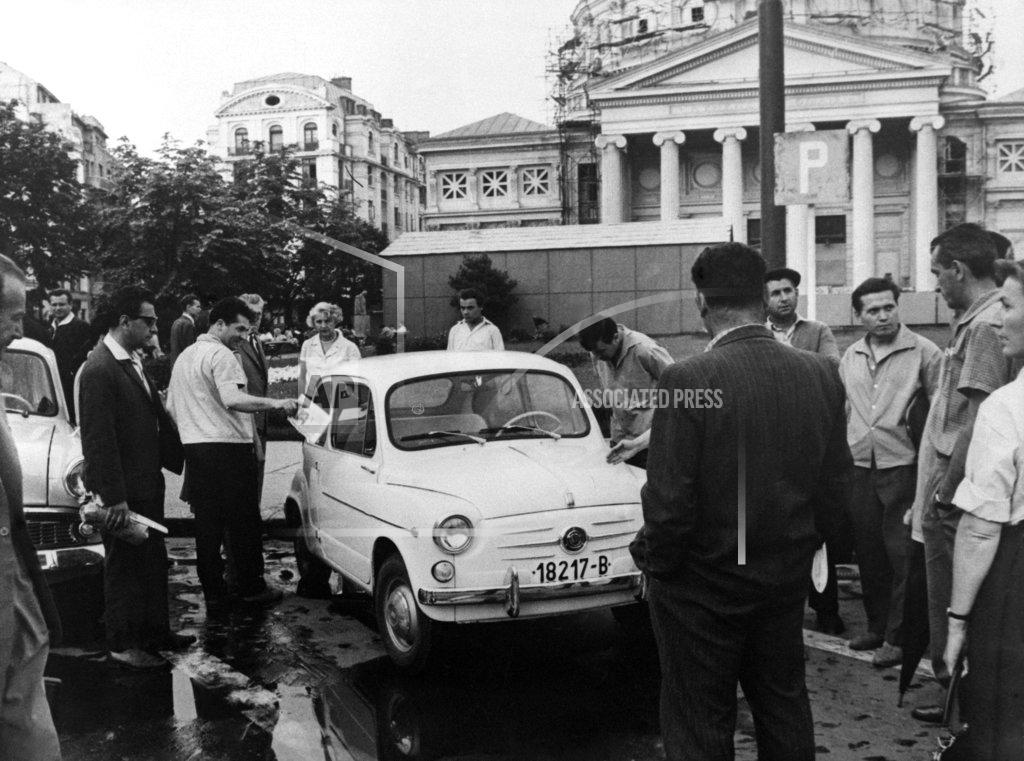
The French Government is “thoroughly satisfied” with preliminary discussions with the Premier of Rumania, Ion Gheorghe Maurer, and his delegation, Alain Peyrefitte, the Minister of Information, said tonight. The talks have centered on an expansion of trade and of technical and cultural ties between these countries. Geography, history, the common Latin origin of their languages and “a certain communion of sentiments” have all favored progress, Mr. Peyrefitte said. The French are mainly interested in developing their trade with Rumania and the other countries of Eastern Europe. The Rumanian delegation, which arrived Monday, has emphasized its interest in Western industrial techniques, especially those of France.
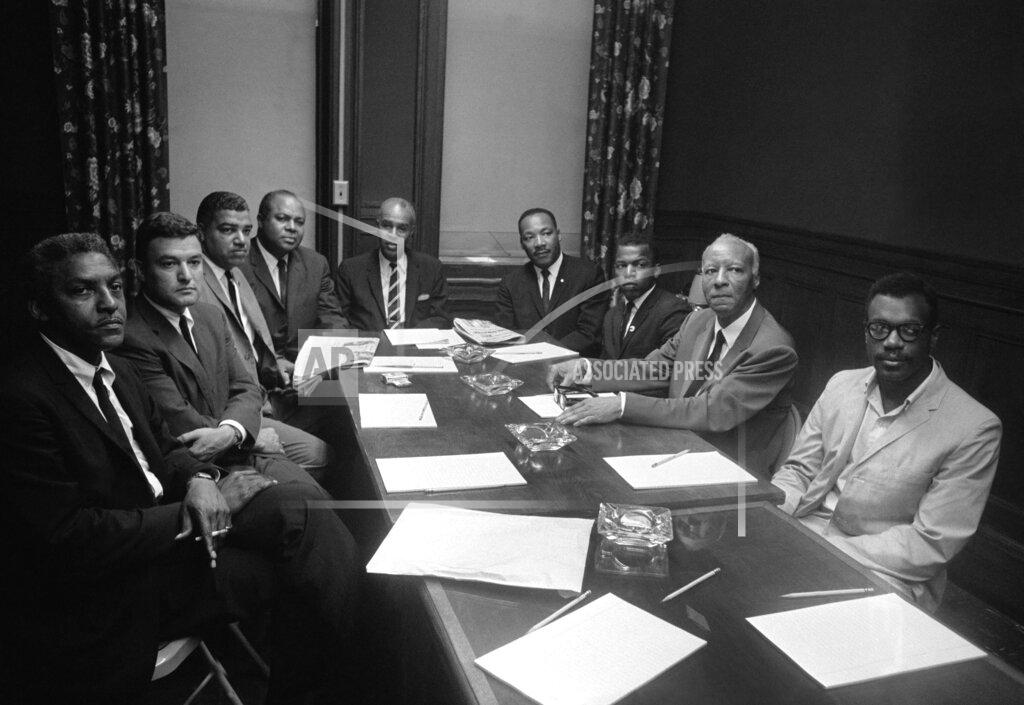
In New York City, “the leaders of the six major Negro organizations in the United States” signed a statement agreeing to “a broad curtailment, if not total moratorium, on all mass marches, mass picketing, and mass demonstrations until after election day, next November 3” and to concentrate instead on working to defeat Barry Goldwater in the presidential election. Roy Wilkins of the NAACP; Martin Luther King, Jr. of the SCLC; John Lewis of the SNCC; A. Philip Randolph of the Negro-American Labor Council; Whitney Young, Jr. of the National Urban League; and James Farmer of the Congress of Racial Equality signed for their respective organizations.
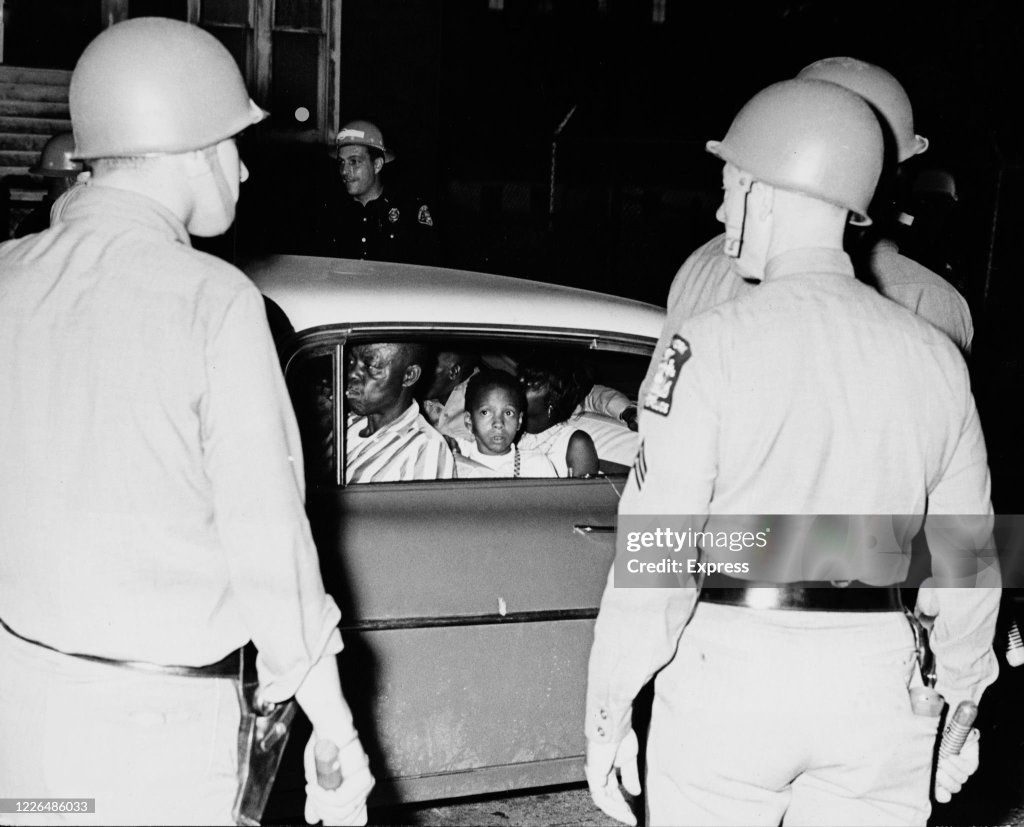
A statement signed by four Black leaders said “our own estimate of the present situation is that it presents such a serious threat to the implementation of the Civil Rights Act . . . that we recommend a voluntary, temporary alteration in strategy and procedure.” The “present situation” referred to in the statement was described by one of the leaders last night as covering the passage of the Civil Rights Act of 1964 on July 2, the Republican nomination of Senator Barry Goldwater of Arizona for President and recent rioting and looting by Blacks. Five leaders signed a separate statement that denounced rioting and looting by Blacks in “several urban areas.” The leaders called on Blacks to increase voter registration and political activity.
The first statement, in addition to calling for an end to demonstrations, was critical of Senator Goldwater. “We believe that racism has been injected into the campaign by the Goldwater forces,” it said. “The Senator himself maintains his position,” the statement continued, “that civil rights matters should be left to the states — clear enough language for any Negro American.” The statement was issued following a meeting here of national civil rights leaders. The unexpected move was regarded as a test of their influence among Blacks.
A bill to increase Social Security benefits for 20 million Americans and bring nearly 800,000 others under the program for the first time sailed through the House today by the lopsided vote of 388 to 8. Under the measure, Social Security taxes would be raised gradually over a period of years to finance the additional benefits. The bill would place under Social Security for the first time about 170,000 self‐employed physicians and internes and approximately 600,000 elderly persons not now eligible for benefits. The bill now goes to the Senate, where efforts will be made to expand it to include some form of medical care for the aged. This move may be sponsored by the Administration, but as yet the final decision has not been made.
President Johnson began something like a cat-and-mouse game with Senator Barry Goldwater today on the question of televised debates in the coming campaign. George E. Reedy, the White House press secretary, made the President’s move by using Senator Goldwater’s words. He cited statements the Senator made last winter to the effect that a President in office was not obligated to debate his opponent. Mr. Reedy declined to say, however, whether Mr. Johnson took the same view. And he said the question of debating the Republican Presidential candidate would be decided by “the Democrats” after the campaign had begun. The White House statements were made in response to reports yesterday that Senator Goldwater had told a Congressional group that he was “ready, willing and able” to debate Mr. Johnson. The net effect of the response was to leave the President free to enter a debate if he chooses, but also to lay the groundwork for refusing.
Informed sources insisted today that the President had made no decision on the debate question, and that in fact little thought had been given to the matter by him or by his advisers. It was conceded, however, that a number of Mr. Johnson’s associates are opposed to his participation in televised debates. One reason for the opposition is the feeling that a President of the United States should not debate directly with anyone, even with a challenger for his office. A more practical political consideration is that a Johnson‐Goldwater political debate would tend to place Senator Goldwater more nearly in a status of equality with the President, thus lessening an immense campaign asset of any incumbent. In addition, by appearing on the same television program with the President, Senator Goldwater would be given more public “exposure” than he might be able to get by appearing alone.
Another reason advanced by some of those opposed to a debate is that the campaign might become centered in the public mind on the single question of who scores the most points in a direct confrontation. Again, that might dissipate many of the advantages an incumbent President takes with him into a campaign. All these factors, to some extent, worked to the advantage of Senator John F. Kennedy in his four campaign debates with Vice‐President Richard M. Nixon in 1960. He was less well known than the Vice President when the campaign opened, he was considered less experienced and, as the candidate of an incumbent party, Mr. Nixon had some of the assets of an incumbent President. Most political observers agree that Senator Kennedy appeared to better advantage than Mr. Nixon in their first debate however. He gained, as a result, wide public exposure and an equal footing with the Vice President.
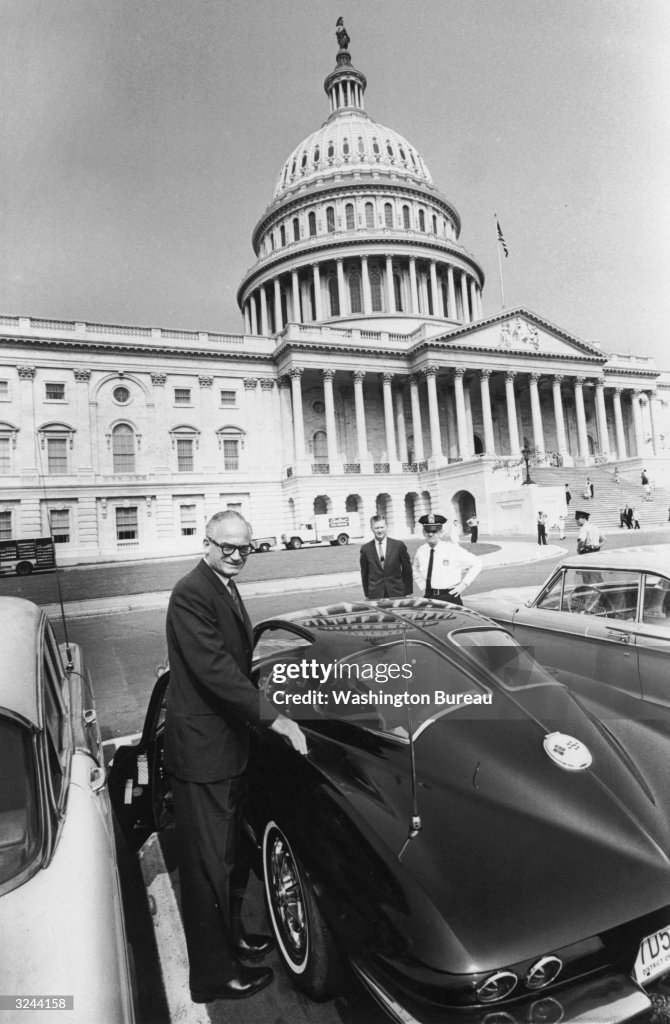
Senator Barry Goldwater announced today two developments in his campaign to unify the Republican party behind his Presidential candidacy. He said that Governor William W. Scranton of Pennsylvania, his principal rival for the party’s nomination, had agreed to be the host at a “summit meeting” of the 16 Republican Governors and other leading party figures. The meeting will be held in Hershey, Pennsylvania, probably between August 12 and 15. The Arizona Senator also said that Ray C. Bliss, Republican state chairman in Ohio, and Leonard W. Hall, former national chairman and general campaign manager for the Presidential ticket in 1960, had agreed to serve on a steering and planning committee. The panel will formulate general strategy and prepare the campaign calendar.
A right‐wing West German weekly published today an article under the name of Senator Barry Goldwater that calls the proposed multilateral nuclear force an “insult to the intelligence of our allies.” “This nuclear bone is a tranquilizer, not a solution,” says the article attributed to the Republican Presidential nominee. The United States proposal a nuclear force calls for an allied‐controlled fleet of surface ships armed with nuclear missiles and manned by crews drawn from nations in the North Atlantic alliance. The West German weekly is Deutsche National Zeitung und Soldaten‐Zeitung. The article purportedly written by Senator Goldwater bears the headline “We Are Obligated Toward Europe.”
Senator Goldwater’s press secretary denied later today that the Senator had ever written the article printed under his name in a German weekly. The press secretary, Edward K. Nellor, said that the Senator had received, but had never answered, questions addressed to him on behalf of the weekly by a professor of English at La Salle College in Philadelphia.
Why did Governor George C. Wallace of Alabama quit the Presidential race? Did any hidden factors underlie his action? Was the move designed to aid Senator Barry Goldwater, the Republican nominee? Have most Wallace supporters joined the Goldwater camp? What factions make up the new Republican Southern alliance? These questions have generated debate in the wake of the Wallace withdrawal a week and a half ago. Some answers are apparent. Some are not, and many have been obscured by the maneuvering of both the Goldwater and Wallace forces. However, some reasons for the Wallace action and clues to the possible motivations have emerged in talks with friends and critics of the two men in a week‐long trip through Alabama.
One fact that was generally conceded was that the nomination of Mr. Goldwater and the adoption of a conservative platform by the Republican National Convention eliminated the publicly given raison d’être for the Wallace candidacy. Mr. Wallace made this point in his withdrawal statement. But many politicians feel that the Governor’s decision was reluctant. They feel that Mr. Wallace was impelled toward withdrawal by the prospect of an embarrassing defeat at the polls in his own state and by an abrupt loss of financial support for his campaign. The Goldwater nomination, they note, all but wiped out what popular support there was for the protest campaign being waged by Mr. Wallace. Observers said there had been a very real question whether the Alabama Democratic Presidential electors, who were committed to the Governor although technically unpledged, could have defeated those pledged to Mr. Goldwater.
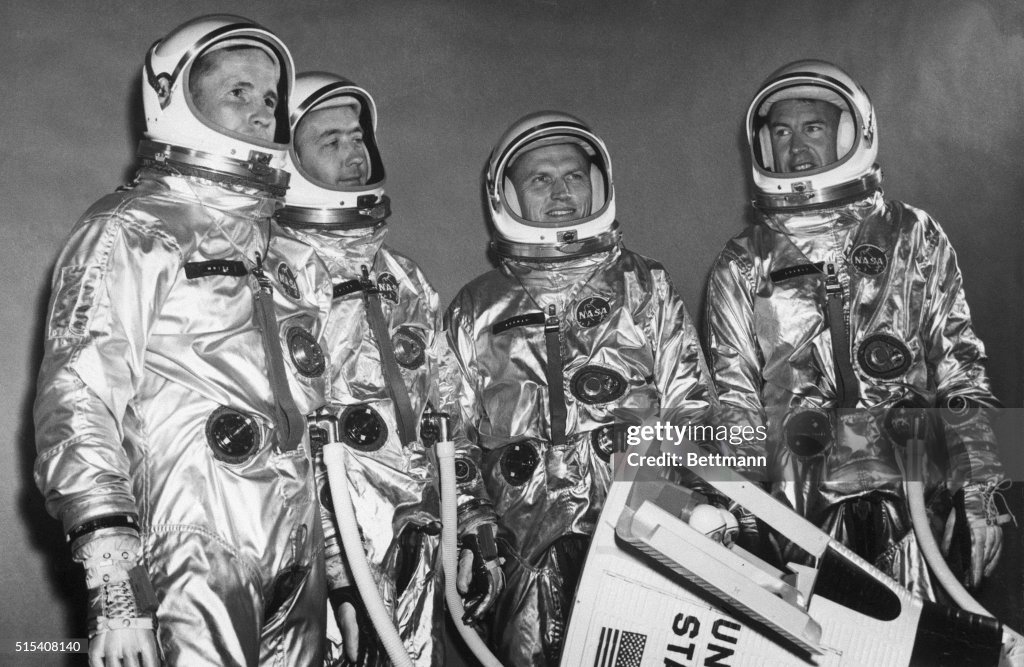
NASA Flight Crew Support Division personnel visited Langley Research Center for a simulation of the Gemini optical rendezvous maneuver. The simulation projected a flashing target against a background of stars inside a 40-foot (12 m) diameter radome, representing the view from the command pilot station and window port. During the demonstration, a lighted window reticle was found to be useful in the line-of-sight control task.
North American conducted the first towed test vehicle (TTV) captive-flight test required by the Paraglider Landing System Program. A helicopter towed the TTV to 2,600 feet (790 m). After about 20 minutes of total flight time, the test pilot brought the TTV to a smooth three-point landing. The tow cable was released immediately after touchdown, the wing about four seconds later. This highly successful flight was followed on August 7 by a free-flight test that was much less successful. After the TTV was towed by helicopter to 15,500 feet (4,700 m) and released, it went into a series of uncontrolled turns, and the pilot was forced to bail out. North American then undertook a test program to isolate the malfunction and correct it, including 14 radio-controlled, half-scale TTV test flights between August 24 and December 13. Two highly successful radio-controlled, full-scale TTV free flights on December 15 and 17 justified another attempted pilot-controlled flight on December 19, with excellent results.
Gates Brown hit a two-run homer off a southpaw relief pitcher, Frank Baumann, in the eighth inning tonight, giving the Detroit Tigers a 3–2 victory over the White Sox. Chicago took a 2–0 lead with runs in the third and seventh. In the third Aguirre walked Bill Skowron with the bases filled to force in a run, and Gerry McNertney hit a homer in the seventh. Norm Cash belted a homer in the bottom of the seventh, cutting the White Sox lead to one run.
The New York Yankees, who allowed Dean Chance to extend his shutout record against them to 36 innings last night, extended one for themselves tonight as they defeated the Los Angeles Angels, 5–0. In fact, they went Chance one better. Jim Bouton pitched a four‐hitter that ran his string of scoreless innings against Los Angeles to 37, walked only one batter, allowed only one man to reach third base and won his sixth game in his last seven starts.
Don Lock’s second homer of the night, a three‐run clout in the 12th inning, gave the Washington Senators a 4–1 victory over the Cleveland Indians tonight. Joe Cunningham walked with one out in the 12th and then Gary Bell, Cleveland’s fifth pitcher, hit Chuck Hinton. Lock’s 17th homer then broke it up. Lock had tied the score for the Senators in the sixth with a bases‐empty homer.
Sam Bowens and Norm Siebern hit homers to lead the Baltimore Orioles to a 4–3 victory over the slump‐ridden Minnesota Twins tonight. The Twins suffered their 15th loss in 18 games and their 10th defeat by one run while dropping into 7th place. Milt Pappas gained his ninth triumph against five defeats although he was forced from the game in the sixth inning after suffering a recurrence of a knee injury.
Roberto Clemente, the National League’s leading hitter, drove in two runs tonight as the Pittsburgh Pirates defeated the Houston Colts, 5–2. Clemente singled across the Pirates’ first run in the first inning and sent another home in the third on a force play. He singled again in the seventh, giving him a 2‐for‐4 night. That raised his average to .345, one point ahead of Billy Williams of Chicago.
The St. Louis Cardinals scored seven runs on eight singles in the seventh inning today to defeat the Chicago Cubs, 9–1. It was the Cards’ fifth straight triumph and tied the National League’s longest winning streak of the year. The Cards made their runs in the inning off three Cub hurlers, including the starter and loser, Lew Burdette.
The Milwaukee Braves knocked out Joe Nuxhall with five runs in the first inning and went on to a 6–2 victory over the Cincinnati Reds today. A two‐run double by Joe Torre sparked the uprising, which helped Tony Cloninger to his 10th victory. Cloninger pitched seven‐hit ball and set a club season high of 11 strike‐outs. He had most of his trouble with the first two men in the Reds’ batting order, Pete Rose and Chico Ruiz. Rose singled, tripled and walked and scored the Reds’ runs on Ruiz’s single and double.
Willie McCovey, whose run‐scoring double tied the game in the eighth inning, slashed a bases‐filled single for two runs in the 10th tonight, leading the San Francisco Giants to a 6–3 triumph over the first‐place Philadelphia Phillies. The victory moved the Giants to within half a game of the Phillies. Jesus Alou followed McCovey in the 10th with a single that scored Jim Hart, who had hit solo homers in the fourth and sixth. Hart now has 17 home runs. The Phillies took a 2–0 lead on home runs by Richie Allen, his 18th, in the second and Ruben Amaro in the third. They scored another tally in the fourth when John Callison tripled and scored on a force play.
Dow Jones Industrial Average: 838.67 (+1.32).
Born:
Pepper Johnson, NFL linebacker (NFL Champions-Giants, Super Bowl 21, 25, 1986, 1990; Pro Bowl, 1990, 1994; New York Giants, Cleveland Browns, Detroit Lions, New York Jets), in Detroit, Michigan.
Keith Woodside, NFL running back (Green Bay Packers), in Natchez, Mississippi.
Ronnie Murphy, NBA small forward (Portland Trailblazers), in Dover, Delaware.
Lisa Peluso, American actress (“Search for Tomorrow”; “Loving”), in Philadelphia, Pennsylvania.
Died:
Vean Gregg, 79, American baseball player.
Jules Brévié, 84 and former French colonial administrator who served as Governor General of French West Africa from 1930 to 1936 and then as Governor General of French Indochina from 1936 to 1939
Gunnar Reiss-Andersen, 67, Norwegian poet and dramatist.

 History Diaries