A bill permitting summary deportation of suspected IRA members was given Royal Assent. Home Secretary Samuel Hoare immediately made use of the law by signing deportation orders for nineteen Irishmen that same day. Within a few minutes of the royal assent giving life to the bill to check Irish Republican Army outrages at 2:15 this afternoon the British police had started their great round-up. By 8:40 PM, the scheduled time for the departure of the famous. “Irish Mail” from Euston Station, men and women desiring to leave the country for Dublin had filled three trains and the sale of tickets was suspended until tomorrow.
Among the passengers who crowded the gangways in the trains and scrambled for accommodation in the baggage cars were a number of I.R.A. suspects who had decided not to wait until deportation orders under the new law had been made against them. Altogether, Sir Samuel Hoare signed nineteen expulsion orders today. Seven of the first group of eight refused to leave the country and were taken to Brixton jail, where they will remain forty-eight hours while their objections are examined.
“The man with a slouch,” who was held for questioning after Wednesday’s bombing at Kings Cross Station, will be deported tomorrow. This man, whose name is believed to be Walsh alias Murphy, fainted today at the identity parade when one of the victims of the Kings Cross outrage was wheeled past him on a stretcher. Although Walsh was not positively identified as one of the men who deposited baggage in the checkroom he made no appeal against the order for his deportation. The police received many reports saying that Sean Russell, reputed Irish Republican Army leader, had reached London from Detroit, but there was no authentic evidence that he is in this country.
The House of Commons this afternoon readily agreed to a number of amendments to the bill suggested by the Lords, but one providing for the detention of suspects pending inquiry regarding whether deportation should be ordered aroused some protest. The Home Secretary declared that if those powers had existed forty-eight hours earlier one or the other of Wednesday’s outrages might have been forestalled. The period of detention, he insisted, could not exceed forty-eight hours unless special directions were issued by the Home Secretary, in which event detention could be expanded to five days.
No Ministry of Information will be established in England in peacetime, Sir Samuel Hoare, Home Secretary, told the House of Commons today when discussing the government’s request for additional appropriations of 260,000 for putting the British case abroad.
The French Council of Ministers extended the term of the Chamber of Deputies for two years until June 1, 1942, meaning there would not be an election in the fall as expected. The council also created a Commissariat of Information and named the famous writer Jean Giraudoux to be its head. The new office’s purpose was “to support French national defense by organizing efficient diffusion of French information beyond the French frontier.” In Paris, the extension of the present Parliament for a period of two years was reported to have been approved at a Cabinet meeting held this evening at the War Ministry. The official confirmation of the decision and its announcement will be made tomorrow after a full meeting of the Cabinet presided over by President Albert Lebrun. The intention to take this course has been ascribed to Premier Edouard Daladier for some time past, the Premier’s argument being that it was not desirable to begin an electoral campaign during the present tense European situation. The prorogation will be made by decree and the Chamber of Deputies, which was elected in May, 1936, with a Popular Front majority, will continue in existence.
At its outset and for the first eighteen months the Popular Front remained united most of the time. under the leadership of the Socialist, Léon Blum, with M. Daladier and other Radical Socialists participating in the government and the Communists supporting it. During the last eighteen months, the Radical Socialists and a few Right and Center Ministers have formed the Cabinet, with a majority that has varied extensively according to whether the Socialists voted with or against the government. The last occasion on which Parliament was prorogued was during the war.
Today’s Cabinet meeting was given over largely to the discussion of eighty new decree laws, which will be approved tomorrow. Among them is the text in 402 articles of what the government intends to do to encourage larger families. About 9,000,000,000 francs will be appropriated in bonuses and credits partly drawn from the tax on bachelors and childless families and from the increase in the tax on alcohol. A bonus between 2,000 and 3,000 francs will be given for each first child.
Special attention has been given to helping young peasants remain on the land by means of loans and a change in the Inheritance Law. If the oldest son has worked on the land since the age of 18, he will be entitled to a sum equivalent to ten times the amount of the wages he would have received as a laborer as the first claim before all other inheritors. Penalties for abortion and for the publication of obscene and pornographic literature will be doubled. A further limitation will be put on the manufacture of “pot-still” alcohol and certain aniseed products will be suppressed.
A Paris court frees a Communist editor. Applause greets the acquittal in the freedom of press test case.
The adoption of children will be facilitated and an adopted child will receive equality in inheritance rights. The guardianship of natural children will also be made less complicated. The operation of the French wheat board will be improved under the new decrees so as to prove less burdensome on the Treasury. A control service on radio emission, attached to the Premier’s office, is being set up. This will affect mainly broadcasts on political and general subjects destined for foreign countries
The “Sixteenth Great German Radio and Television Exhibition, Berlin, 1939,” was opened here this morning by Propaganda Minister Joseph Goebbels. In this vehement period when the Germans are fighting for their rights, the Propaganda Minister said, they stand united behind Chancellor Hitler.
With obvious reference to alleged British propaganda attempts to separate the German people from their government, Dr. Goebbels continued: “The very attempt to separate the nation from the Fuehrer, regardless whence it comes, must be regarded as hopeless. The radio, however, has the task to parry such attempts when undertaken and destroy them. To assist in this task is its duty of honor. It must remain on the job against lies and calumnies and thus it is, alongside the press, the sharpest spiritual weapon in our people’s fight for existence. May it always remain there as such and in the future be the voice of the Führer, which has awakened the nation and today, I call the entire world back to reason.”
The British and French Governments are expected to make a joint announcement Monday regarding the dispatch of military missions to Moscow and, at the same time, report progress on the negotiations.
The German embassy in London, England, United Kingdom reports to the Foreign Ministry in Berlin, Germany that the British are attempting to start talks with the Soviet Union.
The fifth Dutch government of Prime Minister Hendriku Colijn falls and the cabinet resigns. Queen Wilhelmina asks them to stay on until a new government can be cobbled together.
During his conversation with Dr. Casimir Papee, the Polish Ambassador, on Monday, Pope Pius is understood to have asked him to suggest to his country dominion status for Danzig under Berlin’s authority for five years. There is a good deal of talk about it in high Vatican circles and it leaked out today.
Jews in Slovakia are forbidden to live in rural areas.
Excavators uncover an ancient Israeli city in Palestine dating from the 2nd to 13th centuries.
In Washington today, President Roosevelt held his usual press conference this morning, received several callers, met with his Cabinet and left the capital late this afternoon for a fishing trip off the Virginia Capes.
The Senate debated, in night session, the Administration lending program, after having knocked out the highway provisions on motion of Senator Byrd.
The House debated the Alien Registration Bill and adjourned at 5:11 PM until noon tomorrow. Its Democratic members met in a night caucus, called at the instigation of the New Dealers, to try to determine a party program for the rest of the session.
While a helpless leadership pleaded vainly for the Administration’s Works Financing Bill, the Senate economy group, a Democratic-Republican coalition, today stripped $850,000,000 from the President’s lending program. After adopting in the afternoon, by a vote of 42 to 38, Senator Byrd’s motion to eliminate $500,000,000 for toll roads, tunnels and bridges, a torn and occasionally angry Senate went on to adopt, in the closing moments of a hectic session tonight, a motion by Senator Wheeler to kill a proposed authorization for the Reconstruction Finance Corporation to advance $350,000,000 for railroad equipment.
These eliminations reduced to $1,640,000,000 the total authorization in this so-called “recovery” program which began with recommendations of $3,060,000,000 made by the President and reached the Senate in the form of a bill carrying $2,490,000,000. Furthermore, the Senate rejected the “prevailing wage” for Federal projects.
At 11:37 PM, Senator Barkley, the majority leader, bowed before the debacle of Administration plans and the threat of an indefinite number of proposed amendments and speeches and moved that the Senate recess until 11 AM tomorrow, and the motion was adopted. He had previously expressed a determination to hold the body in session until any hour necessary to obtain a final vote on the bill tonight. Added to the failure of the Democratic party lines to hold in supporting these prime sections of the bill came, as a conclusion to the twelve and one-half hours session, a final failure by Mr. Barkley to obtain a unanimous consent agreement to limit debate, which would have assured a vote tomorrow.
Senator Barkley first proposed a straight limitation on all debate, but Senator Austin, acting minority leader, objected on the grounds that Senators Bridges and Nye wished to deliver long speeches. Senator Barkley renewed his request, making specific exception for them, and a moment’s silence indicated that he would succeed. Then from the rear of the Democratic side came a lone, dry voice saying in flat tones, “I object.”
President Roosevelt described himself today as in a quandary over the Hatch bill, which aims to curb the political activities of Federal employees. He has made no decision yet as to whether to sign or veto the measure before the deadline date of August 3. Taking advantage of a question at his press conference this morning, the President recorded himself as in favor of the objectives of the bill, but proceeded then to raise such questions as to its operation as to raise still another question as to whether he would sign it. He cautioned correspondents against speculating one way or another, or drawing from his statements any inferences as to what he would ultimately do.
The President said he would continue his study of the measure on a weekend cruise on the Potomac. River and Chesapeake Bay, during which he would have the company. and advice of Secretary of Commerce Hopkins, who was Works Progress Administrator at the time. of many of the activities which provoked the Hatch bill. and Frank Walker, secretary of the Democratic National Committee.
The President will take along several documents pertaining to the measure, among them an opinion from Attorney General Murphy as to its constitutionality, which is understood to hold the bill constitutional in every important respect. The President said today that he had not yet received the Attorney General’s recommendations. This, however, did not modify the persistence of reports from authoritative sources that the document had been sent to the White House two nights ago. Mr. Roosevelt raised the question as to who would enforce the Hatch bill, and whom it would cover. He complained that the language was very general in its terms — so general, in fact, as to lead to doubts as to its constitutional validity, should attempts be made to apply it specifically.
Suppose, he said, you were a voter and also a federal employee. Could you go to a political meeting under the bill? Nobody knows, he answered. Suppose again, he continued, that your best friend was running for office and he asked you, a government employee, to sit on the platform with him at a speaking engagement. Could you do it? And what if you, without his solicitation, sent him a check for $25? Would you be violating the law? A correspondent mentioned the case of a veteran Democrat, who, he said, is United States marshal for the District of Columbia and who has been active in nominating conventions for years. Would he be barred? The President replied that there was no question about that particular case. He would be taking part in a party convention and, under the terms of the proposed act, would be barred.
Mr. Roosevelt went ahead to mention a number of other questions which would be raised and which in many cases would constitute a serious constitutional question. One correspondent asked whether farmers receiving parity payments would be covered under the prohibition against any one receiving benefits from the government participating in certain political activities.
The President replied that this question brought up a new problem inherent in the language of the bill itself. There were as many opinions as to the meaning of the language as there were people who read it, he said. Senator Hatch, author of the measure, when confronted with the President’s doubts, declared there was “a definite and certain answer to every question he asked.” He said that he had already gone over every legal point with the Attorney General in a very “satisfactory” conference which they held two days ago.
Replying to questions raised by President Roosevelt today about the bill now before him to curb political activities of most federal employees, Senator Hatch said the legislation had been based on civil service rules which were well known and understood. Mr. Hatch went over point by point with reporters the questions which Mr. Roosevelt had raised concerning the bill at a press conference.
The Chief Executive had suggested that the legislation involved this real problem: What could people do legitimately under its very, very broad terms? Mr. Hatch said he agreed with the President that all “government employees should understand and know exactly what they can do, or cannot do.”
“For that reason — to avoid all confusion and doubt — we used the language of the existing civil service rules because they have been interpreted and construed throughout the years,” the Senator added. “They are known and understood.” The civil service rules apply to persons in the classified civil service; the Hatch bill would apply to thousands of others — all except “policy-making” federal employees, in fact. Opening a pamphlet from the Civil Service Commission, Mr. Hatch said it made plain, for instance, that a “federal employee can attend the Jackson Day dinners voluntarily and can belong to political clubs such as the Young Democrats.”
Regarding an observation by Mr. Roosevelt that the Hatch bill might be interpreted as forbidding a person to attend a political rally or contribute voluntarily to the campaign expenses of a friend, Senator Hatch said: “Of course, an employee could attend a political rally as a spectator, but he could not serve as an officer for political clubs or attend a political convention as a delegate.” As to political contributions, the Senator continued, federal employees could make these voluntarily to organizations, but existing federal law prohibited campaign contributions to “an officer or employee of the government.”
[Ed: LMAO. Now, all of a sudden, FDR cares about whether something is constitutional? Yeah, Right. Pull the other one, it has bells on it.]
Thomas Dewey plans to offer $25,000 for racketeer Lepke Buchalter, dead or alive. He asks for the reward to end the war of extermination in the garment industry.
In the U.S., General Motors triples its income.
Paul V. McNutt, the Federal Security Administrator, directed the Social Security Board today to trim Federal grants for the Indiana Unemployment Compensation Commission by the amount which it cost to publish a recent commission bulletin carrying Mr. McNutt’s picture.
A poll indicates that 69 percent of Michigan residents disagree with their governor about becoming a dry state.
Dr. William Mayo, co-founder of the Mayo Clinic, dies.
With the addition of first baseman Elbie Fletcher, the Pirates send first baseman Gus Suhr to the Phillies for pitcher Max Butcher.
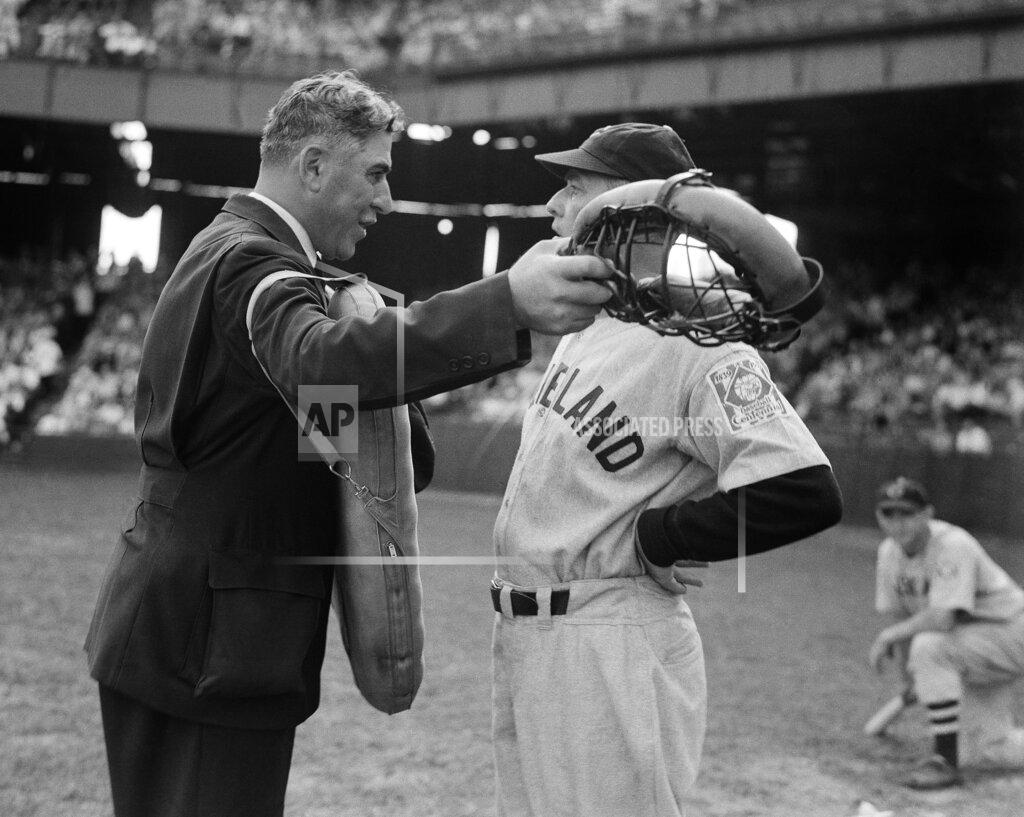
Washington’s Ken Chase loses his no hitter in the 9th inning when he gives up two safeties, but holds on to beat Bob Feller and the Indians, 2–0. Skeeter Webb has the first hit.
At Fenway, Chet Laabs belts a first inning grand slam, off Eldon Auker as the Browns jump to a 7–0 lead and hang on for an 11–6 victory over the Red Sox.
Canadians are ready for a curb on Japan and are held certain to terminate trade ties with Tokyo if Britain abrogates the treaty.
An assassin slays a Mexican general who was a close friend of Mexico’s president, Cardenas.
Six persons were killed and twenty injured in a clash last night between Muslims and Hindus in the State of Hyderabad. The fight followed demonstrations by Muslims at the palace of the Nizam in protest against a new constitution which Muslims contended gave Hindus a preponderant influence.
The Chinese are reported to have made further progress in regaining territory occupied by the Japanese in the big Southeast Shansi cleanup drive, launched early in July when they recaptured Tsinshui. Messages from Sian, announcing the reconquest of the city, say the success was scored by two Chinese columns, one advancing from the west, the other pushing northeast from Yangcheng. The Chinese forces were said to be now converging on Tsincheng, the most important city in Southeast Shansi.
In Southern Hupeh Chinese guerrillas retook the Tingszechiao railway station south of Hankow, according to Changsha dispatches. The station is being held against a two-way assault by Japanese forces.
Two hundred Chinese guerrillas penetrated last night to the gates of the South City section of Peiping and abducted twenty-eight Chinese, including policemen of the Japanese-sponsored administration. The guerrillas took advantage of heavy rains which immobilized the Japanese forces so far as countryside pursuit was concerned. The rains interrupted all railroad traffic in North China, except that on the Peiping-Mukden line. Disastrous floods threatened in Hopeh Province.
Ninety Japanese soldiers were killed Monday in a battle with guerrillas at Wenchuan, twenty miles from Peiping.
Hong Kong holds an air defense drill and practice blackout.
The self-protective tendency noticeable yesterday because of the hope that the United States’ motive for denouncing the trade treaty with Japan might have been economic disappeared today. All Japanese realize the motive is political and are troubled because they do not yet fully understand Washington’s purpose. Official views are not mature enough for detailed comment, said the Foreign Office spokesman.
A fuller knowledge of American public opinion is wanted and Japanese officials in New York and other centers as well as Washington have received instructions to report it. But while they do not yet comprehend all the implications of the United States move, the Japanese have definitely grasped the idea that President Roosevelt seeks political results. In a situation where officials and editors feel unable to comment, a selection of headlines furnished a rough picture of the first impressions. Last night’s headlines were: “America abruptly abrogates treaty; an incomprehensible move”; “Roosevelt’s act a device to win popularity; next steps awaited; financial circles cautious.”
This morning’s headlines were more positive. Among them were: “Foreign Office suspects America’s sincerity,” “British attitude likely to become firmer,” “American move has political significance,” “Japan stands ready to sign a new treaty to meet the new situation.” The hypothesis that abrogation of the treaty may be a prelude to an arms embargo still is credited, evidently because that is an easily understandable purpose. Even if an embargo is enforced, even if it includes oil, it is believed Japan can prepare herself in the six months before the treaty expires.
The Foreign Office spokesman again repeated his regret that action was taken so hastily. Efforts at the press conference to ascertain the meaning of the last paragraph of the official statement were unsuccessful. This paragraph reads: “A new situation is fast developing in East Asia. The Japanese Government has long been hoping that other countries would frankly recognize this fact. If the American Government desires to conclude a new treaty with Japan in conformity with the new situation in East Asia the Japanese Government will, of course, be glad to do so.”
The spokesman was offered two alternative readings, that the paragraph meant that recognition of the new situation in China was demanded as a prerequisite to the conclusion of a new treaty, or it was a promise that American interests would be protected if American recognition was granted.
Dow Jones Industrial Average: 144.11 (-0.40).
Born:
Barry Ashbee, Canadian NHL defenseman, (NHL Champions, Stanley Cup-Flyers, 1974; NHL All-Star, 1974; Boston Bruins, Philadelphia Flyers), and coach, 1974-77 (Flyers), in Weston, Ontario, Canada (d. 1977, of leukemia).
Died:
Dr. William James Mayo, 78, American surgeon and co-founder (Mayo Clinic in Minnesota).
Beryl Mercer, 56, Spanish-born American actress.




 History Diaries