The U.S. Navy destroyer USS Maddox (DD-731) was sent to the Gulf of Tonkin on a mission to conduct surveillance of North Vietnam communications, and would clash with a North Vietnamese ship one week later.
Administration officials said today that they hoped South Vietnam’s leaders had been persuaded to call off their threats to carry the antiguerrilla war into North Vietnam. The belligerence of Saigon in the last month appears to be ending, officials said. They saw signs of a graceful retreat in a statement today by Premier Nguyễn Khánh declaring that his country had “complete freedom of action.” There is hope in Washington that the United States’ offer to send as many as 5,000 more troops and several hundred civilian advisers to South Vietnam will demonstrate Washington’s commitment to the war effort and soothe ruffled feelings.
The offer should further demonstrate, officials said, the United States’ belief that Communist guerrillas must be resisted primarily through political and economic action in the most threatened provinces of South Vietnam. Officials emphasized, however, that Washington’s displeasure over bellicose statements in Saigon had nothing to do with the new build‐up of American forces. The need for more men, they said, was first reported by Ambassador Henry Cabot Lodge at a strategy conference in Honolulu on June 1 and was recently corroborated by his successor, Ambassador Maxwell D. Taylor.
The increase in advisers, disclosed yesterday, calls for the assignment of Americans to the most extended South Vietnamese positions in the most troubled provinces. From there, military advisers are to help the Saigon Government extend its control over rural regions to pave the way for teams of civilian experts in agriculture, public health, and education. These teams will also be reinforced by American advisers. It will take several months to mount the program, most of which is still only a plan, officials said. But they explained that a properly coordinated effort of this kind had not been made before. Only one or two American civilians have thus far been available in some Vietnamese provinces. Implicit in the program, Administration sources emphasized, is the conviction of Washington that too much work remains to be done in South Vietnam to justify a dispersal of resources in military action against North Vietnam.
In acknowledging General Khánh’s contention that Saigon was free to pursue any policy it wished, a spokesman for the State Department also called attention to the general’s denial of policy differences with the United States. The assertion of a right to extend the war, the spokesman indicated, is not the same as an intention to do so. That appraisal was shared by several officials who deal with Vietnamese affairs. Some have interpreted Saigon’s statements evidence of political friction among its leaders, others as a sign of frustration with military as well as political problems.
North Vietnam has lodged a protest with the International Control Commission accusing United States and South Vietnamese warships of “intrusion into its territorial waters,” Peking radio said today. The message to the commission, which is supposed to supervise the Indochina settlement of 1954, said the warships had carried away 11 North Vietnamese fishermen.
A major government offensive against the Communist‐led Pathet Lao is under way and apparently successful, according to high‐ranking Laotian military sources. The sources outlined for the first time today the strategy with which the Government hopes to push the Pathet Lao troops back to the Plaine des Jarres. The first phase of the offensive began Sunday, they said. The Government forces succeeded in taking about 15 miles of Route 13, the major roadway between Vientiane, the administrative capital, and Luang Frabang, the royal capital. The Government army is a combined neutralist and rightwing force commanded by General Kong Le. After the pro-Communists withdrew from Laos’s coalition regime and the civil war resumed last spring, the neutralists and rightists drew together to resist the Pathet Lao threat.
The Pathet Lao had long held the section of the road that is now said to have been recaptured — from Kiou Kacham through Sala Phou Khoun and Muong Kassy to Pha Tang in the south. The Government force has cleared Route 13 of Pathet Lao throughout the Pha Home region, it was reported. The second phase of the attack is due to begin tomorrow, the military sources said in an interview, with a drive on Muong Kassy. Muong Kassy, about 35 miles north of General Kong Le’s headquarters at Vang Vieng, is an ambitious goal for the government army. The muong, or village, of Kassy is a major supply base for Pathet Lao forces in the western sector of Lao.
As the Government soldiers work their way up Route 13, they are employing several tactics to prevent Pathet Lao replacements from streaming along the east‐west Route 7 to aid a counteroffensive. The sizable neutralist stronghold on Route 7, Muong Soui, has the task of holding the Pathet Lao to the east. At the same time, Meo tribesmen are harassing the Pathet Lao troops, already on Route 7 between Muong Soui and the Route 13 junction. The Meo, commanded by General Van Pao, are hill people who are strongly anti‐Communist. With women and children, the Meo in the Muong Soui region, number about 5.000. Meo women are reported armed. Apart from the Meo, the Government and Pathet Lao forces in the battle area are reported about evenly matched.
The Soviet Union was understood today to have agreed to defer a final decision on its threat to withdraw from its role as co-chairman of the 14‐nation Geneva conference on Laos. Informed sources reported that Premier Khrushchev indicated this to R. A. Butler, the British Foreign Secretary, in a 90‐minute talk at the Kremlin after Mr. Butler had made a “strong appeal” for continued British-Soviet exchanges on Laos. Britain and the Soviet Union were co‐chairmen of the 1962 Geneva conference that arranged peace in Laos and guaranteed the country’s independence and neutrality. The cochairmen have kept special responsibilities in the supervision of the accords on Laos and efforts to maintain peace there. The Soviet Union threatened Saturday to “re‐examine” its position as co‐chairman if the Western powers continued to oppose a reconvening of the Geneva conference to review current hostilities in Laos. Mr. Butler, who is in Moscow for a five‐day visit, also conferred today with Foreign Minister Andrei A. Gromyko.
Laos became the principal topic of the Foreign Secretary’s talks with the Soviet leaders as a result of Moscow’s threat, made in a message to the British Government. Western plans for a mixed-crew naval force within the North Atlantic Treaty Organization, disarmament and the long‐standing Soviet refusal to contribute to the cost of United Nations peace‐keeping efforts in the Congo and the Middle East also were discussed. Mr. Butler will give Mr. Gromyko a memorandum tomorrow suggestions on how a conference on Laos could be convened. Informed sources indicated that these suggestions would reflect the three conditions previously agreed upon by Britain and the United States — a ceasefire, recognition of Prince Souvanna Phouma as Premier and a withdrawal of the pro‐Communist Pathet Lao forces to the positions they had held before they launched an offensive in May.
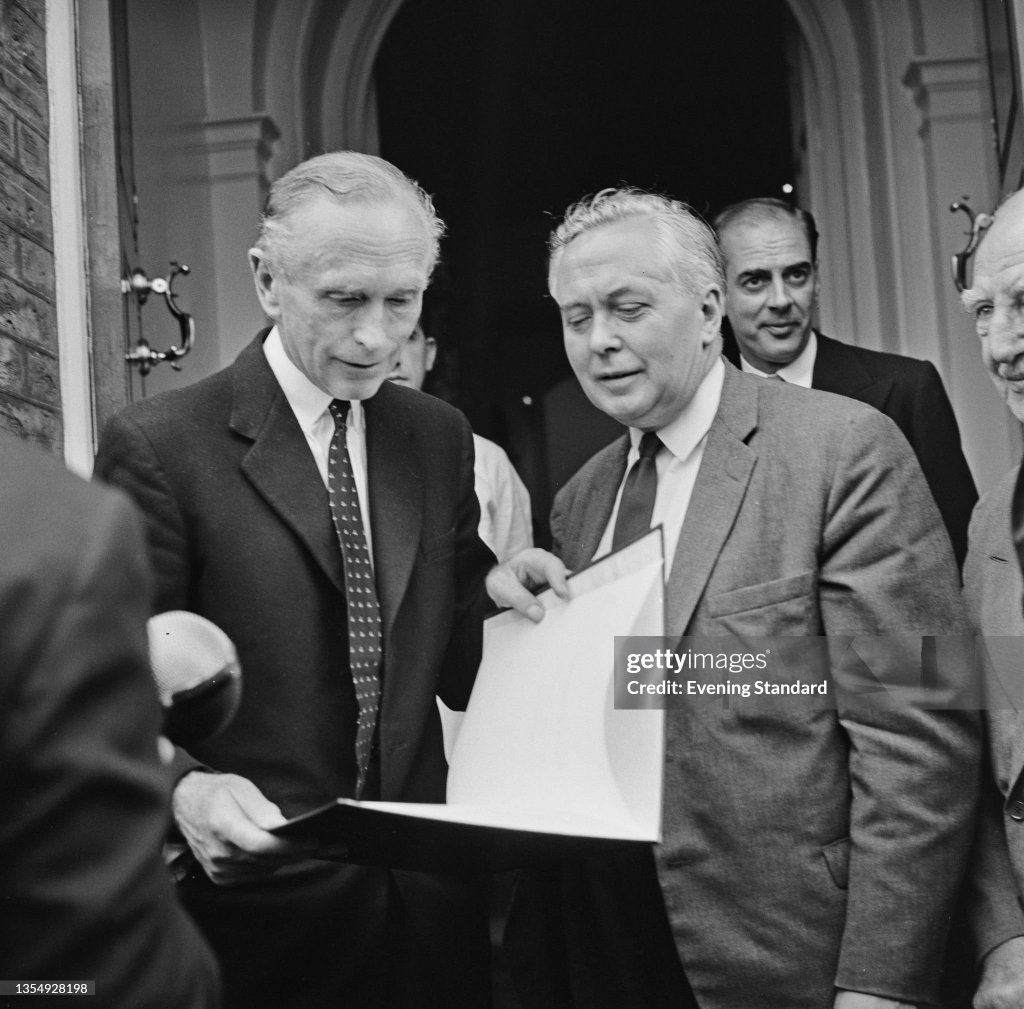
Sir Winston Churchill retired from the House of Commons at the age of 89 after 64 years as a Member of Parliament. Labour and Liberal MPs joined those of Churchill’s Conservative Party in honoring the former Prime Minister of the United Kingdom. A resolution in praise of Churchill was passed unanimously; the only other such honor had been accorded in a vote of thanks to the Duke of Wellington. Prime Minister and fellow Tory Alec Douglas-Home spoke of “the luster the right honourable gentleman, the member for Woodford” had brought to Commons. Opposition Leader and future Prime Minister Harold Wilson, speaking for Labour, said, “In our darkest hour of 1940, Churchill was the choice of the nation”; and Liberal leader Jo Grimond praised Churchill for having led the UK “with immense power, through crisis, without weakening democracy” and former Prime Minister Harold Macmillan said, “He is the greatest member of Parliament of this, or any other age.”
A convoy of 32 trucks with an armed Greek Cypriot escort left the closely guarded dock area of Limassol port last night, a reliable source reported. As in the past, the convoy was believed to be carrying war materials for the Greek Cypriot security forces, which Archbishop Makarios, President of Cyprus, has put at 25,000 “well-trained men.” Archbishop Makarios rejected yesterday the United Nations peace force’s insistence on complete freedom of movement on the island. United Nations sources have expressed deep concern over the President’s stand.
Premier Khrushchev and Chancellor Ludwig Erhard have declared their willingness to meet, the West German Government announced today. A spokesman said at a news conference that Dr. Erhard told Aleksei I. Adzhubei, editor of Izvestia, the Soviet Government newspaper, this morning that he was prepared to discuss an “unrestricted list of topics” with the Soviet Premier in Bonn. Mr. Adzhubei, a son‐in‐law of Premier Khrushchev, is on a visit to West Germany. Soviet readiness to hold such a meeting led to speculation that Mr. Khrushchev, in a reversal of his previous stand, was now willing to take up the question of Germany’s reunification. Several weeks ago, during a visit to Copenhagen, Dr. Erhard stressed that he would confer With Mr. Khrushchev if “useful” questions could be discussed.
Republican nominee Barry Goldwater challenged his Democratic Party rival, incumbent U.S. President Johnson, to a series of televised presidential debates in the same format as the Kennedy–Nixon debates of 1960. With nothing to gain, President Johnson declined to meet Goldwater on television, and no presidential debates would take place until 1976.
Senator Barry Goldwater told a group of House Republicans today that he was “ready, willing and able” to debate the campaign issues with President Johnson on television. Representative Jack Westland of Washington disclosed the Senator’s readiness to face the President in debate after emerging from an hour‐long meeting between the Republican nominee and 70 to 80 Republican members of the House. The meeting was arranged by Mr. Westland for those House members who supported Senator Goldwater before the balloting began at San Francisco.
Mr. Westland said Senator Goldwater had told the House group that he would like Congress to complete action before adjournment on legislation that would suspend the present so‐called “equal‐time” law. Under the present law, candidates of minor parties can demand and get “equal time” if the broadcasting companies have given time to candidates of the major parties. This law was suspended in 1960 by Congressional resolution. The suspension made possible the four debates between John F. Kennedy and Richard M. Nixon.
The Mississippi Democratic convention refrained today from endorsing Senator Barry Goldwater of Arizona, the choice of most delegates, for President. But it left the door open for possible defection to Mr. Goldwater, the Republican nominee, after the national convention. The convention will open in Atlantic City on August 24. Officially, the convention voted to send an uncommitted and unpledged delegation to Atlantic City, promised to put up a slate of electors pledged to the Democratic, ticket and recessed until September 9. It was understood that the meeting September 9 would provide a second slate of electors ostensibly unpledged but with an understanding that they would vote for the Senator.
Strong pro‐Goldwater sentiment among the delegates was quieted by party leaders, who do not want to jeopardize their position in the national convention. The newly organized Mississippi Democratic Freedom party, composed primarily of Blacks, has challenged the regular Democrats for their seats. Many of the 244 delegates arrived at the State Coliseum in automobiles bearing Goldwater bumper stickers. Some who had pro‐Goldwater resolutions were persuaded to withhold them until the meeting September 9.
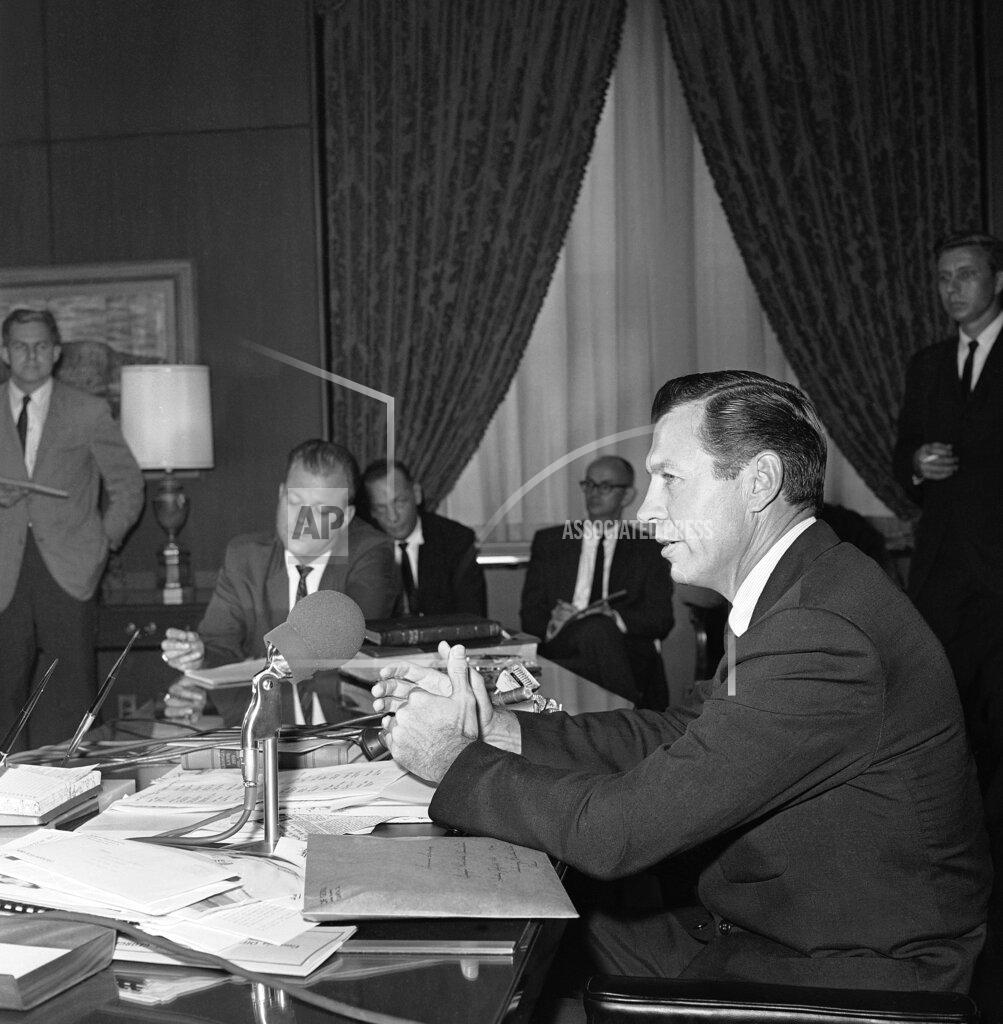
President Johnson’s antipoverty bill narrowly cleared the House Rules Committee today amid renewed Republican charges that it was “phony” and a “sloppy piece of work.” A vote of 8 to 7 opened the way for House floor action, possibly next week. Democratic leaders predict a “hard fight” but say they have the votes to pass the bill. An almost identical measure passed the Senate last week by a vote of 61 to 34. The House floor fight is expected to be far more partisan than it was in the Senate, where 10 of the 32 Republicans supported the bill.
House Republicans, contending that the measure is an election‐year bid for votes, have formed an almost solid opposition bloc and have promised an all‐out floor fight. Thus, the Administration’s hopes for passage rest on recruiting sufficient support from Southern Democrats, many of whom traditionally oppose large domestic spending programs. There are 254 Democrats and 178 Republicans in the House. Some Republican support has been needed to pass major Administration measures in recent years because of Southern defections. Seeking to lure Southern support, the Administration chose Representative Phil M. Landrum, Democrat of Georgia, to steer the bill through the House.
However, some Southerners are already on record as opposing the bill. Representative Howard W. Smith, chairman of the House Rules Committee, announced the bill’s clearance through his committee today by saying: “This crazy bill was reported out of committee, and I don’t care if you say I called it that.” The committee placed a six-hour limit on floor debate, the largest amount of time allotted to any measure since the civil rights bill, on which a 10‐hour limit was placed.
The Senate approved today a bill to impose quotas on imports of beef and other meats that were held to be depressing domestic markets. The vote was 72 to 15. The measure now returns to the House with drastic changes from the original, noncontroversial bill on wild animal imports that was passed there more than a year ago. Administration opposition is expected to persist and many observers expect it to prevail. There is concern in official quarters that the cuts would damage international trade policies and agreements.
Opponents also contend that consumer meat prices would eventually rise. Under the bill, the quotas would be set at the import averages of 1959 through 1963. This would reduce foreign meat imports from the 1.7 billion pounds of 1963 to about 1.2 billion pounds. Included with beef were veal, mutton, and lamb.
The Senate rejected with a voice vote a proposed amendment regarded as the Administration’s effort at least to ease the restrictions. It was offered by Senator Mike Mansfield, the Democratic leader, and co‐sponsored by 24 colleagues. It would have preserved the proposed quotas but applied them country by country and in line with reciprocal trade agreements and would have excluded processed meats. Before making its final decision, the Senate defeated, 70 to 19, a proposal by Senator Jacob K. Javits, Republican of New York, that the legislation be returned to the Finance Committee for further study. This would have killed the measure for this session.
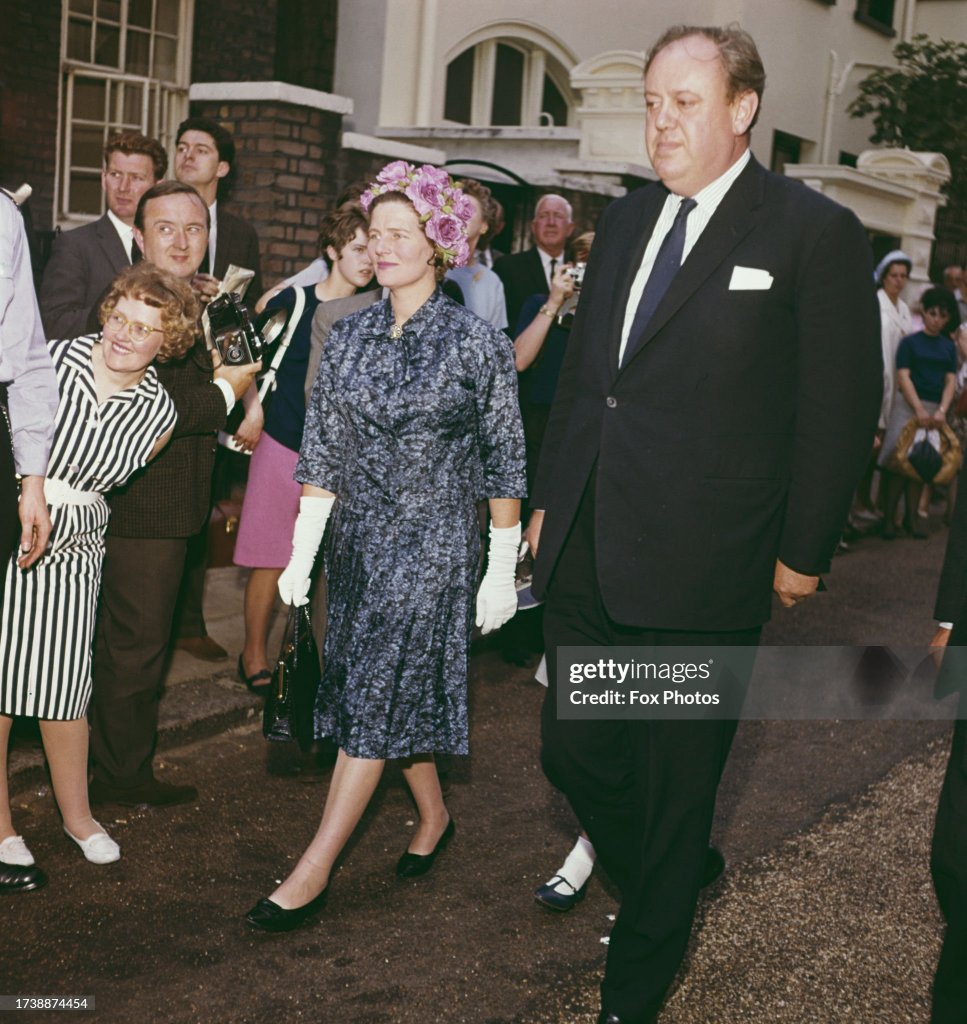
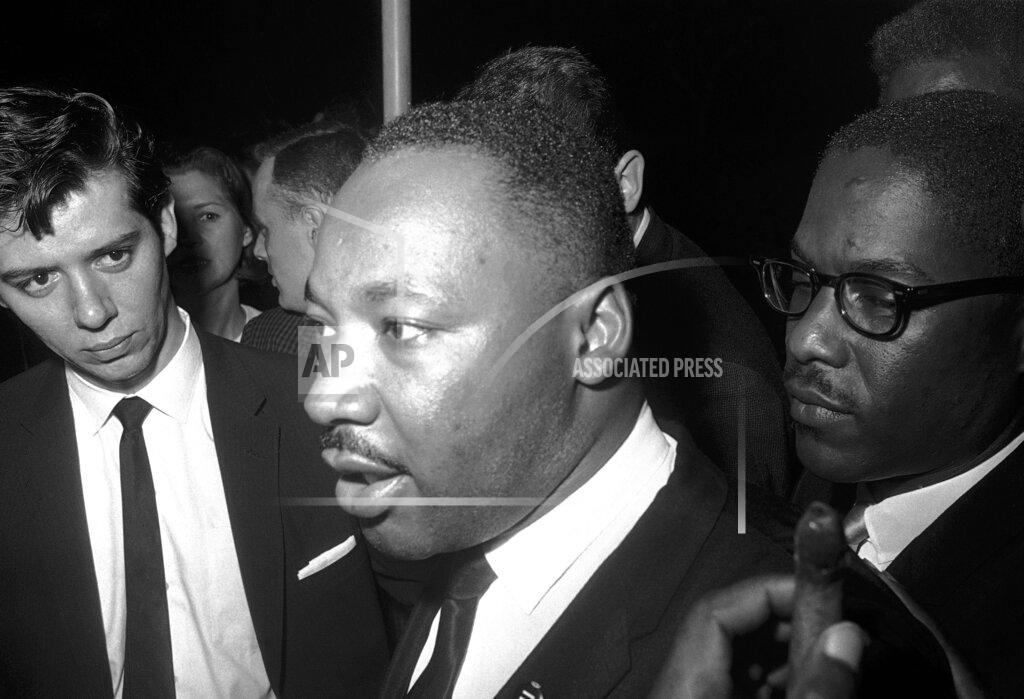
New York Mayor Wagner and the Rev. Dr. Martin Luther King Jr. met at Gracie Mansion yesterday for renewed talks on ways of preventing further racial explosions in the city. The mayor and the civil rights leader from Atlanta conferred while Harlem leaders were voicing their injured feelings because Dr. King had not met with them before going to see the Mayor. Dr. King, who is considered the country’s most compelling proponent of Black rights and nonviolence, arrived in New York Monday night on what he called a “peace mission” at the invitation of the mayor. After a four‐hour meeting at Gracie Mansion that lasted into the early hours yesterday, it was announced that the results would be reported at a news conference yesterday at 4 PM. However, the news conference was canceled and the talks were continued at Gracie Mansion.
Meanwhile the teamsters’ union ended a two‐day embargo on liquor deliveries to Harlem and the Bedford‐Stuyvesant section of Brooklyn. The drivers, who said they feared for their safety in these areas, agreed to make deliveries in both areas before 2 PM each day. Jesse Gray, the Harlem rent strike leader, sought dismissal of a Supreme Court injunction against demonstrations in Harlem by his Community Council on Housing. Mr. Gray contended his July 19 call for “guerrilla warfare” had been intended for Mississippi, not for New York City. The case will be continued in Supreme Court today.
Yesterday’s meeting between the mayor and Dr. King ended at 6:45 PM. As Dr. King left Gracie Mansion, he told reporters that he and the mayor had been “discussing this whole situation in detail on both a long‐range and a short‐range basis.” He said there had been “some contact with Washington during the discussion,” but he did not elaborate. Two of Dr. King’s announced proposals were believed to have prolonged the meetings at Gracie Mansion.
Dr. King said he would request the creation of a civilian review board to hear complaints of police brutality. He also said he would request the suspension of Lieutenant Thomas R. Gilligan, the white policeman who shot and killed a 15‐year‐old Black youth, James Powell, on July 16 touching off last week’s rioting in Harlem and Brooklyn. But these two points have met resistance from Police Commissioner Michael J. Murphy. He has denounced proposals for setting up an independent civilian board as “a divisive tactic” that would undermine his department’s effectiveness. And he has declined to suspend Lieutenant Gilligan, who is on sick leave while a grand jury investigates the shooting. On both of these positions, Mayor Wagner has supported Commissioner Murphy.
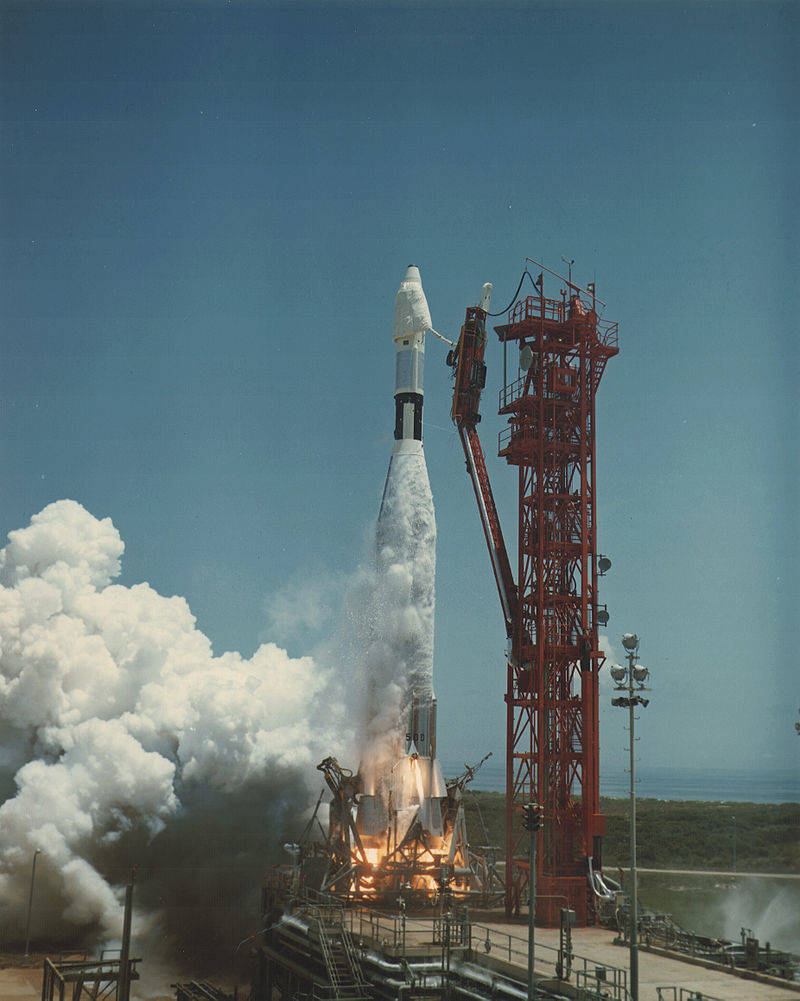
Ranger 7 was successfully launched toward the Moon from Cape Kennedy. The Ranger spacecraft carrying six television cameras was launched today on a scheduled 68‐hour flight to the moon. The cameras were set to take and relay to earth some still pictures of the lunar surface. They are to operate during the last 15 minutes before the vehicle crashes into the moon Friday morning. The launching was so accurate that, even without the standard mid‐course correction maneuver, the spacecraft, named Ranger 7, was on a collision course with the moon. But the predicted impact point was on the left‐hand back side, as viewed from earth. So plans were going ahead to fire a mid‐course rocket to bring the picture‐taking and impact area to the front side.
At midnight, Eastern Daylight Time, the spacecraft was reported 73,420 miles from the earth. It was traveling at 4,946 miles an hour, having been slowed by the earth’s gravity from an initial speed of about 24,500 miles. If close‐up pictures are finally obtained, they should be 100 to 1,000 times as detailed as anything ever seen through earth-bound telescopes. That would mean the difference between being able to distinguish a compact car and something twice the size of a battleship. The pictures are especially needed to facilitate planning for landing astronauts on the moon. It is hoped the first landing can be made by 1970.
Broadway musical actress-singer Ethel Merman (56) divorces Academy Award-winning actor Ernest Borgnine (47) after 32 days of marriage
The Los Angeles Angels’ Jim Fregosi hits for the cycle to assure a 3–1 win over the New York Yankees. New York’s only score is a Mantle homer over the centerfield fence at Chavez Ravine, one of only two hits off Dean Chance. It’s the first homer given up by Chance in 69 innings.
Orlando Pena scattered seven hits and singled home the winning run to lead the Kansas City Athletics to a 2–1 victory over the Boston Red Sox tonight. Pena, who won his first game since June 13, singled off the loser, Dave Morehead, in the second inning.
Chuck Hinton’s three‐run homer in the fifth inning off Luis Tiant gave the Washington Senators a 4–3 victory over the Cleveland Indians tonight. Tiant, a rookie, allowed only two other hits as he suffered his first major league defeat after three victories. He retired after six innings because of a pulled groin muscle.
George Thomas’s sacrifice fly in the seventh inning broke a 3–3 tie tonight and sent the Detroit Tigers on their way to a 6–3 triumph over the Chicago White Sox.
A two-run homer by Mike Shannon and a triple by Curt Flood, which scored two runs, were the key blows in a five-run 10th-inning rally that gave the St. Louis Cardinals a 12–7 victory over the Chicago Cubs today.
Gus Triandos hit his first home run in three months tonight to lead the Philadelphia Phillies to a 4–0 victory over San Francisco. The victory increased the Phillies’ National League lead to 1½ games. Jim Bunning held the Giants hitless through 5⅓ innings, then had to have relief help from Jack Baldschun when he weakened in the ninth. Triandos, who only recently recovered from a hairline fracture of a finger on his right, hand, belted a three‐run homer just inside the left‐field foul pole off Billy O’Dell in the fourth inning. It was Triandos’s second homer of the season. Bunning coasted to his 10th victory and his first since he beat the Giants at San Francisco July 4. He allowed four hits.
Dow Jones Industrial Average: 837.35 (-3.70).
Born:
Lori Loughlin, American actress (“Full House”, “Summerland”), in Queens, New York, New York.
Dave Alexander, NFL center, guard, and tackle (Philadelphia Eagles, New York Jets), in Silver Spring, Maryland.
Bruce Wilkerson, NFL tackle and guard (Los Angeles Raiders, Jacksonville Jaguars, Green Bay Packers), in Loudon, Tennessee.
Egypt Allen, NFL defensive back (Chicago Bears), in Dallas, Texas.
Bob Milacki, MLB pitcher (Baltimore Orioles, Cleveland Indians, Kansas City Royals, Seattle Mariners), in Trenton, New Jersey.
Terry Taylor, MLB pitcher (Seattle Mariners), in Crestview, Florida.
Died:
Robert Avnet, 45, President of Avnet Electronics Corporation, committed suicide by jumping from the 8th floor of his apartment building in West Los Angeles.
 History Diaries