Another conversation by representatives of Britain, France and the Soviet Union, looking toward a three-power pact against aggression, was held in the Kremlin this evening and lasted for an hour and a half. How much progress, if any, was made toward bridging the remaining gap separating the desires of the Soviet Union, on the one side, and Britain and France, on the other, could not be learned from the diplomats participating in the conference. But while agreement has not yet been reached, the negotiations have not yet broken down, and further conversations will be held.
In French and British circles, it is believed the next meeting of Premier Vyacheslav M. Molotov of the Soviet Union, Sir William Seeds, British Ambassador; Paul Emile Naggiar, French Ambassador; and William Strang, special British envoy, may be in the next day or two. It is not necessary to await further instructions from London and Paris. But it was learned tonight that the French and British negotiators may receive at any time a new communication from home on “another subject” that may help in the negotiations for this pact.
Though no official confirmation is obtainable here of reports from London and Paris that British and French military missions will visit Moscow for conferences on military aspects of the proposed three-power collaboration, there is good reason to believe such missions will come and that their conversations, paralleling those of the diplomats, may hasten the final decision as to the pact. It is possible the new communication expected from London and Paris will concern such military talks. The attitude in British and French circles tonight continued to be one of “cautious optimism.”
The Soviet press has not published the slightest comment on Britain’s concessions to Japan in China or on the conversations in London between Robert S. Hudson, British Secretary for Overseas Trade, and Dr. Helmuth Wohlthat, German economic adviser, but from the prominence with which the Soviet press has published news dispatches concerning them it can be judged that Moscow is not pleased. One of the greatest obstacles to the conclusion of a three-power pact is believed by neutral observers to be Soviet fears that Prime Minister Neville Chamberlain might revert to his appeasement policy, thus compromising Britain’s reliability as an ally, and these latest British moves look at this distance disturbingly like appeasements.
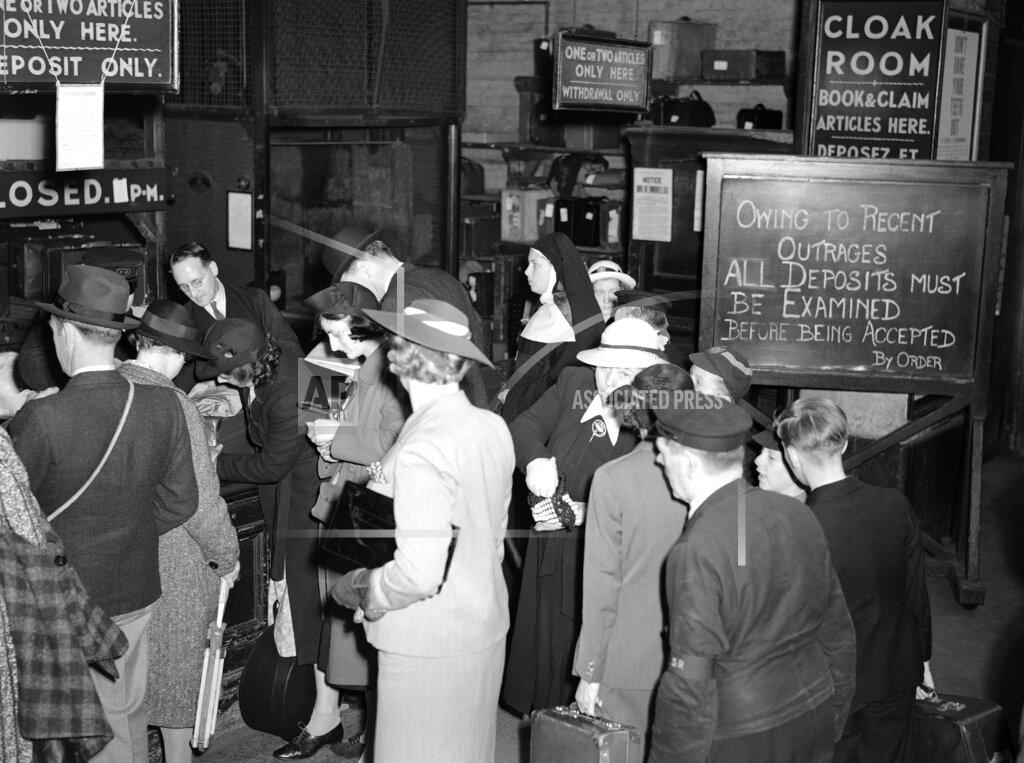
Forty houses in North London were raided in a hunt for IRA bombers. With nearly 1,700 detectives engaged in tracking the perpetrators of bombing outrages here yesterday, Prime Minister Neville Chamberlain today expressed his “deepest sympathy” for the victims and promised the House of Commons that “no effort will be spared to bring to justice those guilty of these criminal and cowardly attacks.” A man “with a slouch” who was said to resemble a man seen at the Kings Cross Station checkroom shortly before the explosion was meanwhile located by detectives, and they accompanied him to the Cannon Street police station. Four other men went with him for questioning, but up to a late hour tonight it was said that no charges had been filed.
Detectives concentrated their attention on a check-up on every Irishman who has entered England. since last January, when the Irish Republican Army launched “Plan S,” a detailed program of terrorism. This fell into the hands of the police and was revealed to the House of Commons by Sir Samuel Hoare, the Home Secretary, only last Monday. Fifty of these, who, it is understood, have been shadowed by the police ever since they came over, will be deported the moment the new bill providing the government with special powers becomes law — perhaps tomorrow afternoon.
Not only were 20,000 members of the Metropolitan police force ordered to keep a special lookout, but plainclothes men were on duty at all the main railroad stations, particularly those handling passenger traffic with Eire. An absolute rule has been imposed that no parcels can be left at the checkrooms of railroad stations or other public institutions, such as the British Museum, unless they are first opened to make sure they contain no explosives.
Prime Minister Neville Chamberlain bars extending the parliamentary session, guarding against a coup.
Nazis criticize Britain as a colonial power, saying millions lack necessities.
The denunciation of the American-Japanese trade treaty has not yet come within the purview of German official consideration in Berlin although the pact’s abrogation is the day’s leading news. Informal conversations in informed quarters indicated a tendency to await further developments in the Far Eastern controversy, and the next six months, it was observed, might yet produce a situation that would permit a different interpretation of the American action than can be ventured under present conditions. To that extent the German position is that the pact’s annulment is not a matter of immediate political economic urgency.
On the other hand, speculation turns on the question whether President Roosevelt will be able to carry his alleged “policy of discrimination” as it affects trade treaties to indefinite limits without further impairing German economic interests at home and abroad. In the German view the notification to Japan suggests an analogy to the American discriminatory procedure toward Germany, not only respecting the official attitude on the question of concluding a comprehensive trade pact with the Reich, but also regarding the practice of imposing countervailing duties, which, as the Germans see them, represent a studied attempt by the United States to project punitive measures into German-American trade relations.
At present the Germans are inclined to view the Tokyo notification as a political demonstration. primarily, and it is admitted that the United States obviously is in a more favorable position to rebuke the Japanese than is Britain. The significance of this political motive is not minimized in German circles, particularly as it occurs at a time when British diplomacy has been. compelled to beat an almost ignominious retreat in the Far East.
President Roosevelt may have concluded that Britain deserved the prompt intervention of an avenging angel in her present predicament. Six months remain for a more mature contemplation of future American policy toward Japan and her invasion of China, it is suggested here, and from that angle the repudiation of the trade treaty is described as a political gesture. It is not believed that President Roosevelt would still further paralyze American cotton production by flouting America’s second-best buyer — as which Japan ranks after Germany.
In the end it is believed not improbable that Japan might take a leaf from Germany’s economic bible and decide to embark on a vast scheme of synthetic production. More significance is attached to speculation as to whether Japan, in the event her trade relations with the United States should definitely be imperiled, would not proceed to compensate herself through a still more active invasion of China. Such retaliation, it is pointed out, could not fail to make her domination of China’s economic resources a permanent menace to American business interests there.
The Nazis of Danzig hope to turn over to Germany soon a community that has almost completely solved its own “Jewish problem,” party leaders said tonight. Danzig has forced some 18,000 Jews to emigrate; some 4,000 remain.
Germany gives women free courses on beauty, showing them how to look beautiful on two marks monthly, two minutes daily.
The French court convicts two of anti-Semitism, jailing them under an incitement law.
The Bohemian prelate flees to Poland. The Gestapo searches houses and jails several railway workers accused of aiding the priest.
A wide split among exiled leaders of the overthrown Spanish Republic today left former Premier Juan Negrín shorn of authority and gave the reins of the “government in exile” to a permanent committee of the last Cortes [Parliament]. Negrín had fantasies of raising an army and reconquering Franco’s Spain. The Committee elected to use its remaining funds to aid Spanish refugees instead.
The Swiss Government announced today that all frontier brigades of the Swiss Army would be required to undergo a special fortnight of training during the Summer. Under the Swiss system of military organization, the frontier force is a separate entity from the regular army divisions, being comprised entirely of men inhabiting the frontier regions. All of them retain not only their uniforms but also arms and ammunition. The entire force can be mobilized on a few hours’ notice. Its purpose is to hold the invader at bay until the rest of the army mobilizes.
Stalin purges another 79 military and diplomatic figures in the Soviet Union, including a number from the Far East.
In Washington today, President Roosevelt received Senator Hatch, Senator Neely and other callers and sent to the Senate the nomination of James Lawrence. Fly to be chairman of the Federal Communications Commission.
The Senate continued debate on the Administration’s $2,490,000,000 lending program in a night session.
The House completed Congressional action on the railroad reorganization bill, as well as the bill to authorize the “barter” arrangement with Great Britain whereby cotton would be exchanged for rubber, adjourned at 5:30 PM until noon tomorrow.
The Labor Committee, during its hearings on amendments to the Wages and Hours Act, heard a bitter attack on Vice President Garner by John L. Lewis. The Foreign Affairs Committee heard Ambassador Davies on the state of affairs in Europe. The Rules Committee approved a special procedure to get to the floor the original Norton, or Administration, amendments to the Wages and Hours Act, as well as the amendments to the Home Loan Act and the proposed increase for bonds of the United States Housing Authority.
Intimations from Tokyo that Japan might institute reprisals in consequence of the denunciation by the United States of the 1911 commercial treaty with that country failed to move officials in Washington today. Whether there will be negotiations for a new commercial treaty, and, if so, whether they will be preceded by discussions of political matters, were questions that Secretary of State Cordell Hull would not answer. Much will depend upon developments in the six months that will elapse before the treaty will stand abrogated.
For the next few days eyes here will not even be on these long-range possibilities, but upon the immediate reactions to the denunciation, which came as a surprise to all foreign diplomats in Washington. Officials will closely watch reports from China and Britain as well as Japan and public opinion in the United States as reflected in Congress and the press. With these views studied and analyzed, official thoughts will then turn to developments over the next few months. Not until much more water has passed over the dam, apparently, will efforts be made to determine whether there shall be negotiations with Japan for a new treaty.
The immediate reaction in Congress, as far as it was expressed, was regarded as distinctly favorable. Senator Key Pittman of Nevada and several other members. of the Senate Foreign Relations Committee, from both political parties, applauded the denunciation. “I think the implication is clear,” Senator Pittman said, “that the State Department is dissatisfied with the present inconsistent situation.” Senator Walter F. George of Georgia commented that the action showed that “we have no sympathy with Japan’s aggressions in China,” and Senator Claude Pepper of Florida predicted that the denunciation would receive an “enthusiastic reception from the American people.” Senator Sherman Minton of Indiana declared that the treaty was a “dead cock in the pit,” while. Senator Tom Connally of Texas said the abrogation was “fully justified.”
On the other hand, Senator Lewis B. Schwellenbach of Washington favored even stronger measures, including an immediate embargo of war shipments to Japan on the ground that she had violated the Nine-Power Treaty. Senator William E. Borah of Idaho considered the denunciation of the treaty “a closed incident” and said he favored the imposition of an embargo against the shipment of arms to Japan.
John L. Lewis denounced Vice President Garner today as “a labor-baiting. poker-playing, whisky-drinking, evil old man,” and thereby started a wave of resentment among members of Congress, who rushed to the Vice President’s defense and gave him an ovation on the House floor. Appearing before a special meeting of the House Labor Committee, summoned to consider the tangled situation involving proposed amendments to the Wages and Hours Law, Mr. Lewis smote the table with his palm until the ashtrays rattled as he made a personal attack on Mr. Garner. The committee members were taken by surprise, and all in the room were electrified by the vehemence of the leader of the Congress of Industrial Organizations.
Mr. Lewis, clad in a white linen suit, began speaking calmly, explaining his opposition to proposed changes in the law, but when he asserted that the “genesis” of a campaign against organized labor in the House was the Vice President. he raised his voice and fairly bellowed out a declaration that he would oppose the Texan’s reported Presidential aspirations. “You know, the genesis of this campaign against labor in the House of Representatives is not hard to find,” Mr. Lewis said. “It is within the Democratic party. It runs across to the Senate of the United States and emanates there from a labor-baiting, poker-playing, whisky-drinking, evil old man whose name is Garner. “Some gentlemen may rise in horror and say, ‘Why, Mr. Lewis has made a personal attack on Mr. Garner.”
“Yes, I make a personal attack on Mr. Garner for what he is doing, because Garner’s knife is searching, searching for the quivering, pulsating heart of labor. And I am against him. I am against him officially, individually and personally, concretely and in the abstract, when his knife searches for the heart of my people. I am against him in 1939 and I will be against him in 1940 when he seeks the Presidency of the United States. And I say to Mr. Garner and I say to the people of the United States that he will never achieve the Presidency of this Republic by baiting labor and seeking to debase Americans.”
Asserting that the issue was whether 25 cents an hour was too much for an American, Mr. Lewis concluded his testimony with an appeal to the committee to let amendments wait until the law had had a fair trial. He was joined in this plea by W. C. Hushing, legislative agent of the American Federation of Labor, and W. D. Johnson of the Association of Railway Labor Executives. Because of the attack on Mr. Garner, Mr. Lewis left the committee in stunned silence. To reporters at the door as he went out, he said: “You must understand that it came from my heart because I spoke extemporaneously. I meant it.”
Vice President Garner chuckled as he read a paragraph of the Lewis statement handed to him by newspaper men. He was about to return the statement to the reporter, but was told that there was “more to it.” “Isn’t that enough?” he inquired. The remainder of the statement was read to him and Mr. Garner chuckled again. “I have no comment to make,” was all he would say. “I never make criticisms, or comment on anything.”
First compromises by the Senate Administration leadership on the $2,490,000,000 Works Financing Bill today failed either to halt a bitter struggle within Democratic ranks or to bring a final vote within noticeable distance.
Attorney General Murphy stated today that the government would appeal concurrently on different issues to both the Circuit Court and the Supreme Court from the adverse decision of Justice James M. Practor on its anti-trust case against the American Medical Association.
The possibility that the strike of privately employed truckmen on WPA projects might constitute a boycott against the government and thus lead to prosecutions was being studied yesterday by Lieutenant Colonel Brehon B. Somervell, local WPA Administrator.
Major General H. H. Arnold, commandant of the United States Army Air Corps, started his annual inspection of corps reservations throughout the country at Mitchel Field today.
Customs agents seize 2,000 pieces of Japanese art from a Fifth Avenue store worth $75,000 to $100,000.
A grand jury indicts 104 in Harlan, Kentucky, mine wars. They ask $535,000 in bail bond.
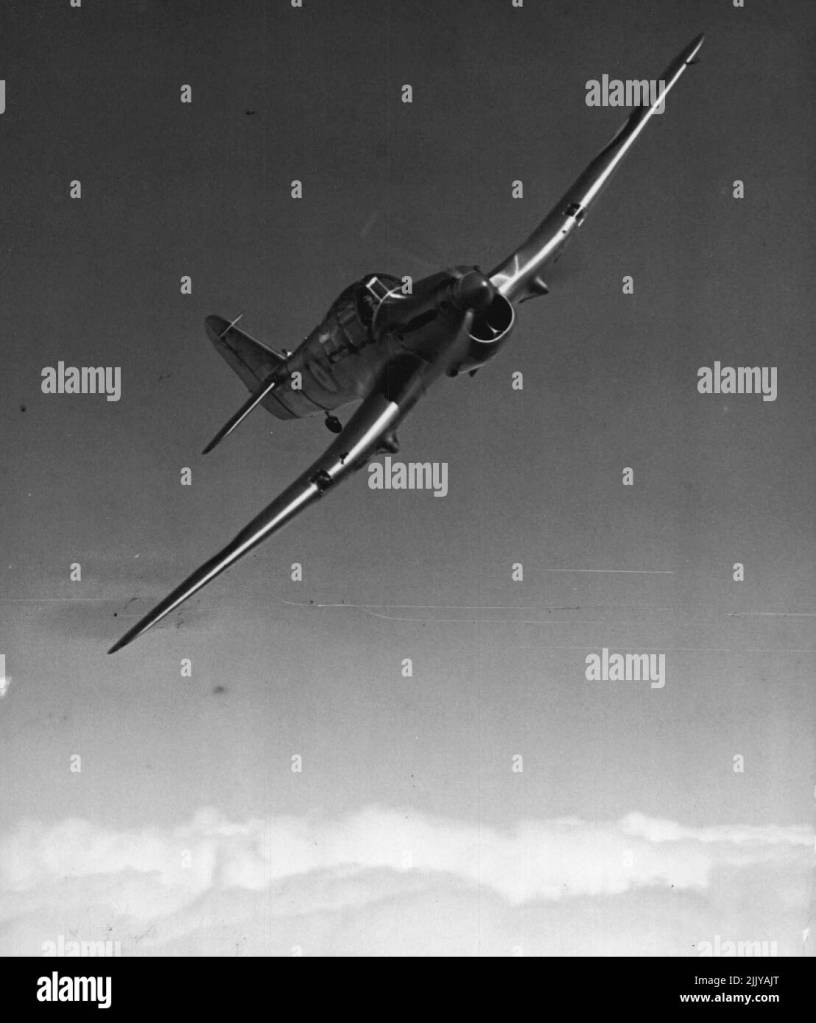
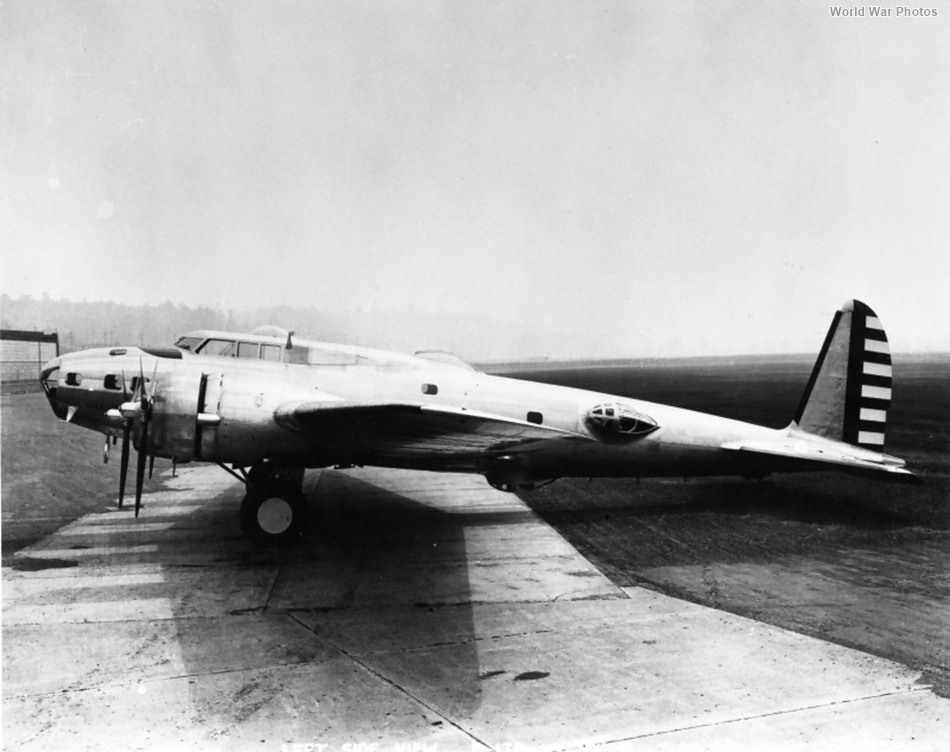
The U.S. Douglas B-23 Dragon aircraft takes its maiden flight. The Douglas B-23 Dragon was an American twin-engined bomber developed by the Douglas Aircraft Company as a successor to (and a refinement of) the B-18 Bolo. While significantly faster and better armed than the B-18, the B-23 was not comparable to newer medium bombers like the North American B-25 Mitchell and Martin B-26 Marauder. For this reason, the 38 B-23s built were never used in combat overseas, although for a brief period they were employed as patrol aircraft stationed on the west coast of the United States. The B-23s were primarily relegated to training duties, although 18 of them were later converted as transports and redesignated UC-67.
The Dodgers acquire Louisville shortstop Pee Wee Reese, sending the Red Sox a reported $75,000 and 4 players to be named. Pitcher Red Evans (21–14 for New Orleans in 1938) and outfielder Art Parks + two minor leaguers eventually trade uniforms. Tom Yawkey, one of three partners who bought the Louisville team for $100,000, voted against the sale: his partners, Donie Bush and Frank McKinney, voted for the sale.
Paul Trout held the Washington Senators to five hits today, the Detroit Tigers beating the Senators, 8–1. The victory gave the series to Detroit, two games to one.
Chicago White Sox veteran Clint Brown, making his thirty-ninth appearance of the season in a relief role, checked the Boston Red Sox and pulled a 12–7 victory out of the fire for the White Sox today in the last game of the series.
Pinch hitter Don Padgett cracks a grand slam, off Manny Salvo, to lead the St. Louis Cardinals to a 9–4 victory over the visiting New York Giants. Padgett will hit .399 this year in 233 at bats.
Behind the neat five-hit hurling of Bill Lee and some timely hitting by Augie Galan, Glenn Russell and Manager Gabby Hartnett, the Chicago Cubs beat the Brooklyn Dodgers by a 3–1 score to gain an even break in the series.
The United States, Japan and Germany are ready to buy mineral products from Bolivia, according to reliable but unofficial sources.
The Central Reserve Police Force was formed in India.
Chinese military dispatches port the recapture of Yangcheng, an important town in the southeast Shansi area in which the Japanese are attempting to clean up Chinese guerrillas. The Chinese say a number of important Japanese communications lines were cut and that Japanese control of the recently occupied cities of Kaoping and Taingcheng is menaced by constant Chinese counter-attacks. Heavy rains also are said to be interfering seriously with Japanese operations.
Japanese officials said today that the action of the United States in abrogating the 1911 trade treaty had been “unbelievably abrupt,” but they withheld indications of their course until Washington’s motives became clearer. This official attitude is intended to cover the time lag that invariably accompanies Japanese reactions to unexpected shocks. Opinion here is a group product and groups will have to discuss the United States announcement from all angles before a Japanese opinion can be said to exist.
But this mask of defensive immobility that the Japanese automatically assume whenever confronted with unforeseen dangers does not conceal the shock inflicted by the Washington action, which shatters much wishful thinking and intentional concealment of the attitude of the United States toward Japan’s militaristic adventures. Even after group opinions have been formulated into phraseology suitable to be read in wartime by the public, the effects of the United States action will continue to ferment slowly in the Japanese mind.
Since the Anglo-Japanese formula on China was signed last week, the Japanese people have been lulled with the belief that Britain, which they understood to be their sole opponent, has changed her course. Essentially the shock conveyed by the news from Washington is caused by the discovery that the United States intends to support its policy by action.
First official comments minimized the effectiveness of the American step while emphasizing its unfriendliness. Among the aspects that officials believe will require clarification is the connection with domestic politics in the United States. But they acknowledge that what chiefly concerns Japan is the international significance of the abrogation. They wonder whether the United States is revising its commercial treaties as a method of protecting its rights against totalitarian encroachments.
But the American action is also. noticed as a gesture aimed specifically at Japan’s present policies. Where the Washington statement mentions possible “new developments” it is feared that Japan is intended to read “new order in East Asia.” “We have yet to learn what America’s real intentions are,” a Foreign Office official said. Meantime, he pointed out, there will be no change for six months.
Another Foreign Office statement said that the reasons given by the United States for abrogation would have served equally well for revision. It declared that the timing of Washington’s action, with the Anglo-Japanese conversations going on, made it “highly susceptible of being interpreted as having political significance.” The statement concluded with a reference to Japanese policy. “A new situation is fast developing in East Asia,” it said. “The Japanese Government has long been hoping that other countries would frankly recognize this fact. If the American Government desires to conclude a new treaty with Japan in conformity with the new situation in East Asia the Japanese Government will, of course, be glad to do so.”
In other words, Japan is going ahead with her policy, but is ready to make a new treaty in which the United States can protect its rights in accordance with those “new developments” mentioned in Washington’s statement. The Foreign Office spokesman also said that “Japan certainly will take retaliatory measures if there is discrimination by America,” The Associated Press reported.
The timing of the U.S. pact announcement worries Britain, fearing it will embarrass Tokyo negotiations but hoping for benevolent effect. U.S. secrecy on the matter irks London.
The action of the United States in abrogating the 1911 trade treaty with Japan has caused jubilation in Chungking. Coming simultaneously with the announcement of a new British credit, the United States. move virtually effaced the gloom caused by the Anglo-Japanese agreement in Tokyo. The initial reaction of Chinese officials was to indulge in pleased speculation on the far-reaching consequences of the Washington move and on future anti-Japanese actions by the United States. Sober commentators, of course, recognized that termination of the treaty was. not immediately effective and that abrogation in itself could be only a psychological deterrent to Japan.
The lift to Chinese morale has already been tremendous, and a feeling that United States support will continue works to inject a new spirit in the Chinese. Commenting on the United States action, Foreign Minister Wang Chung-hui said the Chinese people welcomed the announcement as “an indication of the desire of the United States to maintain its position and prestige in the Pacific region.” He declared he felt sure the Washington step had been taken “with full consideration of the great disorder in East Asia, from the political as well as the commercial point of view, brought about by the Japanese military.” The Minister voiced the hope that the move would presage a more definite and more positive attitude by the United States “to do what is in its power to stop international lawlessness and restore peace, confidence, and goodwill among nations.”
News of the denunciation of the Japanese-United States treaty created. widespread excitement today in Shanghai and Tientsin, where foreigners believed it was the most important action by a neutral power since the Chinese-Japanese conflict started. American and British business men expressed enthusiastic approval. Britons, many of them disappointed with their own government’s Far Eastern policy, appeared expressly pleased.
Informed circles expressed the opinion that recent incidents in which citizens of the United States were slapped by Japanese sentries and other occurrences involving them had provided the final impetus for Washington to act. The public in China was somewhat surprised since most of the incidents involving Americans have not been reported in the local press. The Japanese military has made every effort to minimize the incidents whenever the news leaked out.
U.S. exporters express concern that Japan may cancel orders.
Philippines President Manuel Quezon said today that Francis B. Sayre will be welcomed to the Philippines as High Commissioner with assurances of confidence and high personal regard. His long association with Philippine affairs leads them to think he is the best possible choice to succeed Paul V. McNutt.
Dow Jones Industrial Average: 144.51 (+0.69).
Born:
Irv Cross, NFL cornerback (Pro Bowl 1964, 1965; Philadelphia Eagles, Los Angeles Rams) and broadcaster (CBS), in Hammond, Indiana (d. 2021).
Ted Luckenbill, NBA power forward (Philadelphia-San Francisco Warriors), in Elkhart, Indiana (d. 2012).
James McGee, British pathologist and professor (“Morbid Anatomy at Oxford”), in Mossend, Lanarkshire, Scotland, United Kingdom.
James Victor, Dominican-American actor (“Boulevard Night”, “Streets of LA”), in Santiago Province, Dominican Republic (d. 2016).
William Eggleston, photographer, in Memphis, Tennessee.
Michael Longley, poet, in Belfast, Northern Ireland, United Kingdom.
Naval Construction:
The Kriegsmarine (German Navy) Type 37 torpedo boat T18 is laid down by F. Schichau, Elbing, East Prussia (werk 1406).
The Royal Navy “N”-class destroyer HMS Nizam (G 38) is laid down by the John Brown Shipbuilding & Engineering Company Ltd. (Clydebank, Scotland).
The Royal Navy “N”-class destroyer HMS Norman (G 49) is laid down by Thornycroft (Southampton, U.K.).
The Royal Navy Hunt-class (Type I) escort destroyers HMS Tynedale (L 96) and HMS Whaddon (L 45) are laid down by A. Stephen & Sons Ltd. (Glasgow, Scotland).
The Regia Marina (Royal Italian Navy) submarine Guglielmo Marconi, first of her class of 6, is launched by Cantieri Riuniti dell’Adriatico (C.R.D.A.), Monfalcone, Italy.
The Royal Navy Halcyon-class (Third Group) minesweeper HMS Sphinx (J 69) is commissioned. Her first commander is Lieutenant Commander John Robert Newton Taylor, RN.
The Вое́нно-морско́й флот СССР (ВМФ) (Soviet Navy) “M” (Malyutka)-class (3rd group, Type XII) submarine M-57 is commissioned.

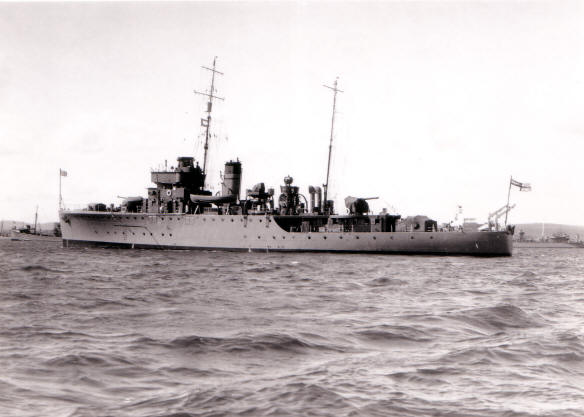
Upon completion she joined the 6th Minesweeping Flotilla shifting to the 5th Minesweeping Flotilla in September 1939. The flotilla carried out minesweeping in the English Channel and the North Sea until December, when it was transferred to Rosyth
Lost 3 February 1940.
On 3 February 1940 HMS Sphinx (Cdr. John Robert Newton Taylor, RN) was sweeping an area in the Moray Firth, about 15 nautical miles north of Kinnairds Head (near Fraserburgh) in position 57º57’N, 02º00’W when attacked by enemy aircraft. A bomb pierced the fo’c’sle deck and exploding destroying the fore part of the ship. She remained afloat and was taken in tow by HMS Halcyon but steadily flooded and capsized and sank. The wreck was later washed ashore north of Lybster and was sold for scrap. The Commanding Officer and forty of the men were killed in the explosion.
 History Diaries