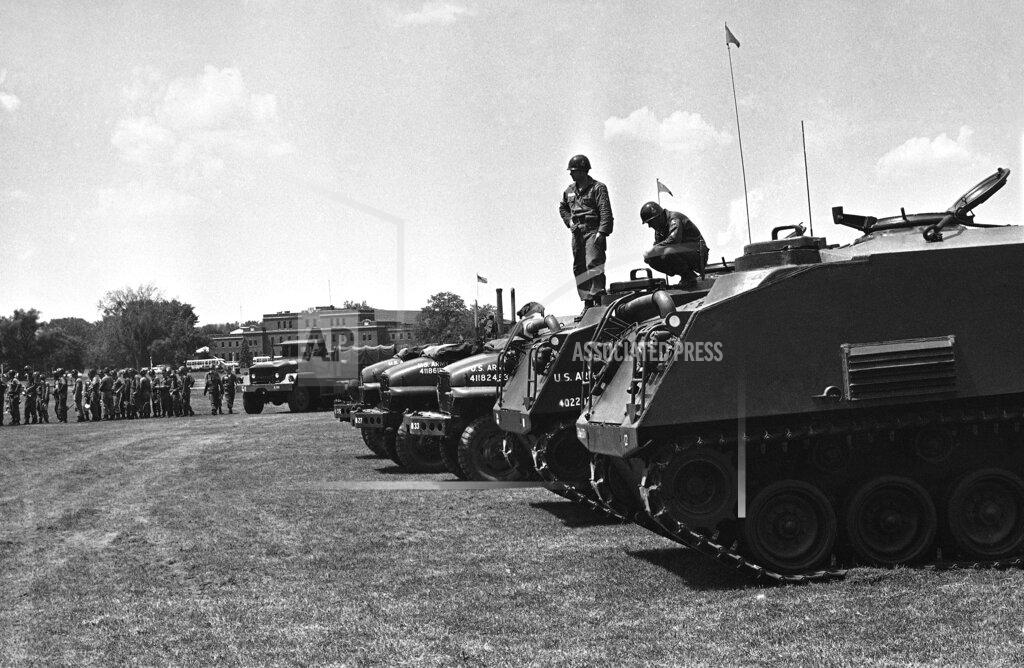
It is announced that the United States will be sending an additional 5,000 U.S. troops to Vietnam; its present military force there is about 16,000. Military spokesmen and Washington officials insist that this does not represent any change in policy, that new troops will only intensify present U.S. efforts. The Vietnamese Government announced in Saigon earlier today that the United States would increase its military assistance, but the magnitude was not disclosed. Officials in Washington said tonight that it would be “in the order” of 5,000 men. It is understood that the additional troops will work mainly in the field, accompanying and advising Vietnamese units down to the battalion level. The Saigon announcement said that, in addition, the United States would send more military equipment to bolster the critical struggle against the Communist forces.
The announcement of the step‐up of about 30 per cent was viewed as further evidence of the deep concern in Washington about the trend of the war. However, there was still no sign of a United States decision to carry the war into North Vietnam or to throw American units into combat. The 5,000 men will be sent to South Vietnam the next few months. The first contingent is expected to be a 600‐man unit from Okinawa. Plans for the shipment of this unit had been announced before today’s action. The disclosure of a major increase in the United States mission illustrates a complete change from the more hopeful atmosphere of last year, In October, the White House announced that its goal was the withdrawal of all United States forces by the end of 1965.
This policy was changed before the year was out as the Việt Cộng guerrillas stepped up their military activity. The plan to reduce the United States forces was abandoned in December. Now, seven months later, comes the announcement of a major increase. Already 158 American servicemen have lost their lives in the war even though they have not been serving as members of United States combat units. The basic United States policy remains unchanged. This is to help the South Vietnamese fight the war on their own territory and gradually wear down the guerrilla forces. There have been recent reports from Saigon that the Việt Cộng, now sometimes attacking in organized strength, may be preparing for a major military campaign in central Vietnam. One objective that has been mentioned is capture of the former capital city of Huế on the South China Sea.
Asked whether the increase in United States assistance in both personnel and equipment could be for use outside of South Vietnam, the State Department spokesman, Richard I. Phillips, said the purpose of the move was “intensification and improvement of our assistance to South Vietnam for pacification and related programs in South Vietnam.” He refused to amplify, but the United States position is still opposed to carrying the war to North Vietnam, except for occasional guerrilla raids. At present, there are American advisers with all Vietnamese battalions, which have about 450 men each. There are also six or more aides in each of Vietnam’s 43 provinces advising units similar to the National Guard and the militia. The Special Forces operate in small teams as experts in guerrilla and counterguerrilla warfare, recruiting and training peasants to combat the Việt Cộng.
Premier Nguyễn Khánh announced tonight that the United States had agreed to a sweeping increase in its civilian and military personnel in South Vietnam, to be implemented immediately. According to the Premier’s announcement, the disposition of the new personnel will be as follows:
- Additional military advisers for South Vietnamese armed forces units, especially at the battalion level of the army but also for navy patrols and air force squadrons.
- A “major increase” in United States Special Forces units. Premier Khánh said these would support Vietnamese Special Forces “to enhance the capacity for guerrilla actions against Việt Cộng units and bases and to deal with infiltration” from across South Vietnam’s frontiers.
- Increased numbers of United States military advisers to Vietnamese paramilitary units, the squads and platoons that man outposts and district towns.
- Additional civilian advisers “at all levels in such fields as economic development, public administration, health, police forces, agriculture and general welfare.”
Premier Khánh emphasized in his announcement that there would be no change in “concepts” agreed upon by the United State and South Vietnamese Governments and that the American personnel would continue to serve only as advisers.
Mao Tse‐tung, chairman of the Chinese Communist party, had “cordial, friendly talks” in Peking today with two North Vietnamese and two Việt Cộng delegations, Hsinhua, the Chinese Communist press agency said in a broadcast monitored here. The visitors were identified as delegations from the Vietnam Committee of World Peace, the Vietnam Committee for African‐Asian People’s Solidarity, the National Front for Liberation, and an organization of Việt Cộng journalists.
Neutralist sources said today that the Laotian Government army had captured two North Vietnamese soldiers near Pha Home, a battle site between Luang Prabang, the royal capital of Laos, and Vientiane, the administrative center. The source said the Government intended to bring the two soldiers to Vientiane as proof of Communist intervention in Laos. Impartial observers generally credit the neutralists’ report that the North Vietnamese crossed the border to help the pro-Communist Pathet Lao forces. In the past, the neutralists produced identity papers that they said came from North Vietnamese fighting in Laos, but did not produce the captives. Such intervention by the North Vietnamese is a violation of the Geneva accords of 1962.
Military experts in Vientiane believe that without the goading, strategy and supplies of the North Vietnamese troops directed from Hanoi, the Pathet Lao army could not have been kept on the offensive.
The capture of the two soldiers is reported to have come during fighting along Route a main north‐south road that links Luang Prabang and Vientiane. A neutralist spokesman also reported that two Pathet Lao soldiers were killed, 12 were wounded and 22 taken prisoner in the last 48 hours. One neutralist soldier was reported dead. The fighting so far is subject to at least two interpretations. Either the neutralists have launched a long‐expected offensive to clear Route 13 of the Pathet Lao and secure the neutralist base of Moung Soui, or, as the neutralist communiqués charge, “a violent attack” has been opened by the Pathet Lao, which the Government troops are merely resisting. No Western correspondents have been permitted in the battle area for weeks.
The neutralist and Pathet Lao troops alternate along Route 13 and along the vital east‐west artery, Route 7. These positions form a triangle pointing at the Communist-held Plaine des Jarres. If the Pathet Lao could overrun Moung Soui, they would have full control of Route 7 from the North Vietnamese border at Sala Phoukhoun. Phoukhoun, which is a crossroads village at the junction of Routes 7 and 13, is already held by the Pathet Lao. Such a move by the Pathet Lao would leave Vang Vieng, the headquarters of General Kong Le’s neutralist forces, as the only major government stronghold separating the Pathet Lao from Vientiane.
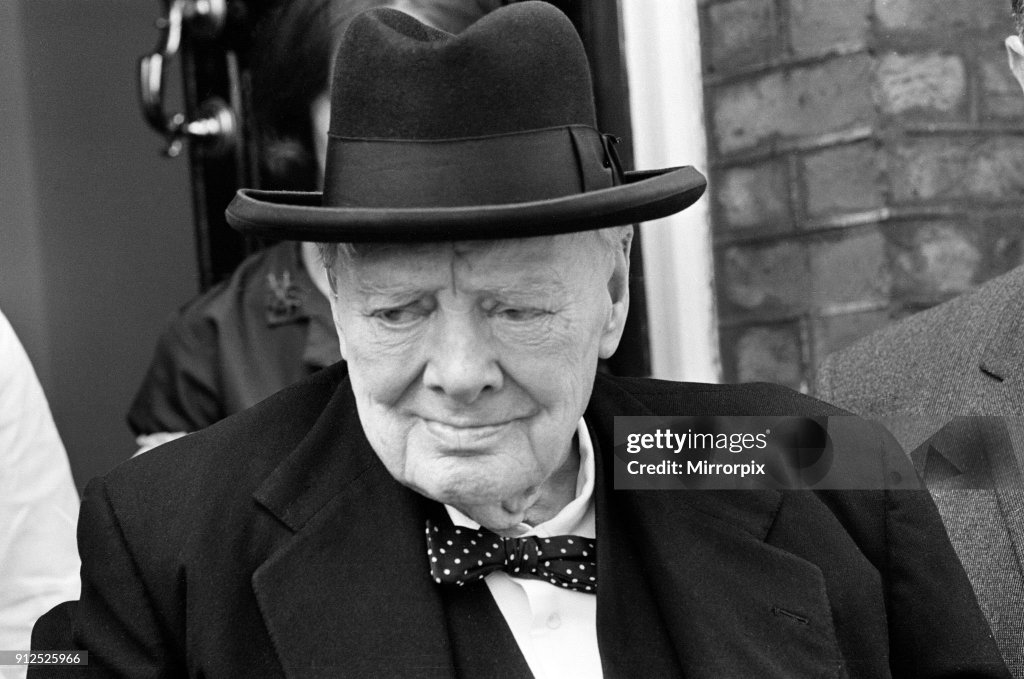
Sir Winston Churchill attended a meeting of the House of Commons for the last time, 63 years after he had made his first appearance as a Member of Parliament. The 89-year-old, former leader of the Conservative Party and twice Prime Minister of the United Kingdom, would be voted a resolution of thanks the next day, and would pass away six months later.
Tomorrow the chamber he has served for over six decades will record, in an official tribute, its “unbounded admiration and gratitude for his services,” but Sir Winston is not expected to be there. The frail health of the 89¬-year‐old former Prime Minister, his colleagues feel, would not permit the response he would feel obliged to give if he were present. Instead, a written reply will be read to the House later in the week. Parliament will adjourn Friday and Sir Winston, who still represents the Woodford constituency, has said he intends to retire.
Archbishop Makarios, President of Cyprus, said today that the Cyprus question should be taken “soon” to the United Nations General Assembly. He prefaced the statement with the remark that he did not believe an “agreed solution” of the crisis was “possible.” The President expressed his views at the airport before leaving for Athens to consult with the Greek Government on the political, and military situation relating to Cyprus. Archbishop Makarios is expected back Wednesday after having conferred with Premier George Papandreou and other Greek officials.
Cyprus charged today that goods ostensibly sent for the relief of Turkish Cypriot refugees in Cyprus were being stockpiled instead by Turkish Cypriot fighters. The charges were made in a letter from Zenon Rossides, the Cypriot delegate, to the Secretary General U Thant. The Cypriot letter replied to a protest last week from Turkey complaining that some relief supplies were being blocked and that import duties were demanded for other shipments intended for relief.
Five hundred more Greek citizens will be expelled from Turkey soon, the Turkish Government has announced. The statement said 1,017 Greeks had already been expelled for “harmful activities” in recent months and that a new list of 500 was being drawn up.
President Johnson has sent word to Democratic leaders that “bread and butter” issues should be stressed in the coming political campaign to overshadow the possible adverse effect in some places of racial issues. Mr. Johnson’s message has been conveyed to top‐rank party figures in New York and elsewhere by members of the Cabinet. They revealed that the President lectured the Cabinet for more than an hour last week on campaign strategy and techniques. The President reportedly emphasized that the best way to deal with the “white backlash” vote was to “talk jobs, prosperity, opportunity… a good future.”
One Cabinet member quoted Mr. Johnson as stating: “When the people know how good things are and are going to be, they’ll stop worrying about who is going to move next door.” His reference was to reports that some voters in overwhelmingly Democratic communities of the North and West believed that the Civil Rights Act might cause them to lose jobs to Negroes and accelerate the integration of their neighborhoods. Mr. Johnson instructed his Democratic colleagues to talk “prosperity, people and peace” in the campaign.
The President also indicated that he was inclined to schedule relatively few barnstorming tours during the campaign. That chore would fall to his Vice‐Presidential running mate, he implied. His own public appearances would be restricted to normal Presidential activities, such as news conferences, with major addresses to the nation on television. Mr. Johnson reviewed in detail the campaign strategies of President Franklin D. Roosevelt in 1936 and 1940 and President Dwight D. Eisenhower in 1956. Mr. Johnson said he considered these campaigns models for an incumbent seeking reelection.
At one point, according to a Cabinet member, the President asked if anyone in the room realized that Mr. Roosevelt had not even begun to electioneer outside Washington until two or three weeks before the 1940 election. In the 1936 campaign, he noted, Mr. Roosevelt toured only 14 states, spending just over two weeks. Mr. Johnson’s political lecture also encompassed the need for a Presidential candidate and his official family to think in terms of electoral votes, as against popular votes. He explained, with examples, how the 25 electoral votes of Texas and 43 of New York could be won even if the popular vote a near stand‐off in those states.
Senator Barry Goldwater announced today that he intended to call a meeting of all Republican Governors and other leading party figures in the interest of party unity. The Republican Presidential nominee did not set a date for the meeting. He said it would come after two breakfast conferences to which he and Representative William E. Miller of upstate New York, the Vice-Presidential nominee, have invited Republican members of the House and Senate on August 6 and 7. At these breakfast sessions, Mr. Goldwater said, “we will discuss what we will have made by then for our campaign, and we will find out what is on their minds.” Because of the number of Republicans in Congress — 33 in the Senate and 178 in the House — it will be necessary to have two breakfasts.
Mr. Goldwater said that he expected former President Dwight D. Eisenhower and former Vice President Richard M. Nixon, the Presidential nominee in 1960, would attend the meeting of leaders. When asked whether Governor William W. Scranton of Pennsylvania and Governor Rockefeller of New York would attend, he said that all 16 Republican governors would be invited by him and Mr. Miller. Thus, he indicated that he expected the attendance of his two leading rivals for the nomination.
Referring both to the meetings with Republican legislators and the meeting of the party leaders. he said: “They will be in the interest of the campaign and Republican candidates in the campaign and in the interest of unity in the party, which, of course, Congressman Miller and I have been working on more years than we care to remember.” Senator Goldwater made his announcement at the end of a long afternoon of conferences on Capitol Hill and in the headquarters of the Republican National Committee.
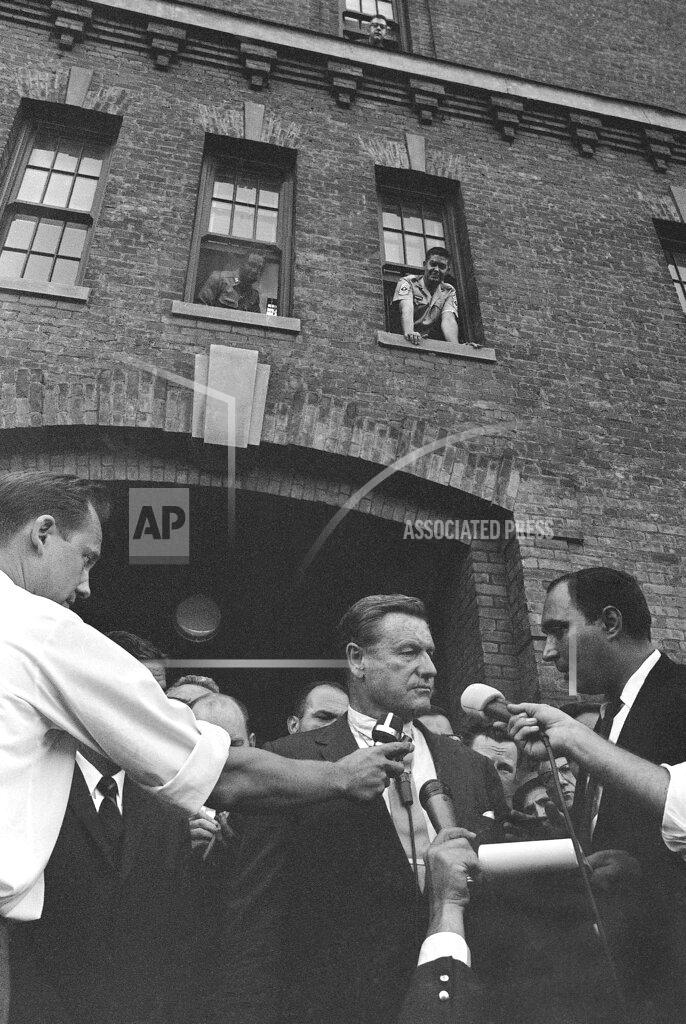
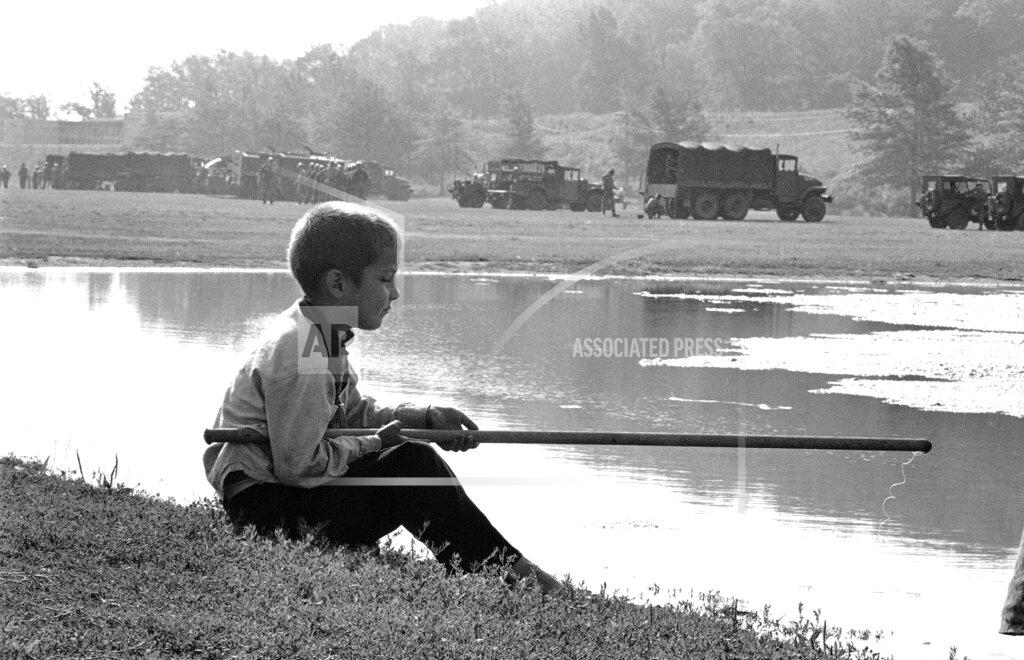
New York Governor Nelson Rockefeller flew to Rochester unannounced today and inspected the scene of three nights of racial rioting. He said he was saddened and shocked by what he saw. The governor toured the riot area in an automobile, and visited with the National Guardsmen he called out yesterday and congratulated them and the state policemen on their work. He met with city, county and state officials for about an hour, and then returned to New York City. Quiet prevailed throughout Rochester tonight. The police radio buzzed with routine traffic. In areas where violence had occurred earlier, the loudest noise came from television sets in houses and apartment buildings.
The Governor was asked at a news conference late in the afternoon whether the racial violence here was the kind of extremism he had had in mind when he appealed to the Republican National Convention to adopt a platform plank condemning all forms of extremism. Mr. Rockefeller replied: “Have you been downtown through the streets where these riots took place and seen the boarded‐up stores? I think that’s clear evidence of extremism, that anyone who had seen it would not hesitate to call it extremism. “As governor, and as a citizen, I deplore this kind of violence. Regardless of the objectives, it cannot be justified.”
Rochester’s courts and prisons were straining today to get out from under an overload caused by the weekend of mob violence. About 650 persons were arraigned on a wide variety of charges ranging from unlawful assembly and vagrancy to riot and illegal possession of firearms. Four judges worked from early in the morning well into the evening in an effort to get through a 40‐page docket. One of them, Judge Sidney Z. Davidson, held his court at the Monroe County Penitentiary. Arrests for violation of the curfew led to considerable confusion and some embarrassment. City attorneys discovered that the curfew, imposed on Saturday by City Manager Porter W. Homer, had no grounding in any municipal ordinance. As a result, the charges were switched to unlawful assembly based on a section of the State penal code.
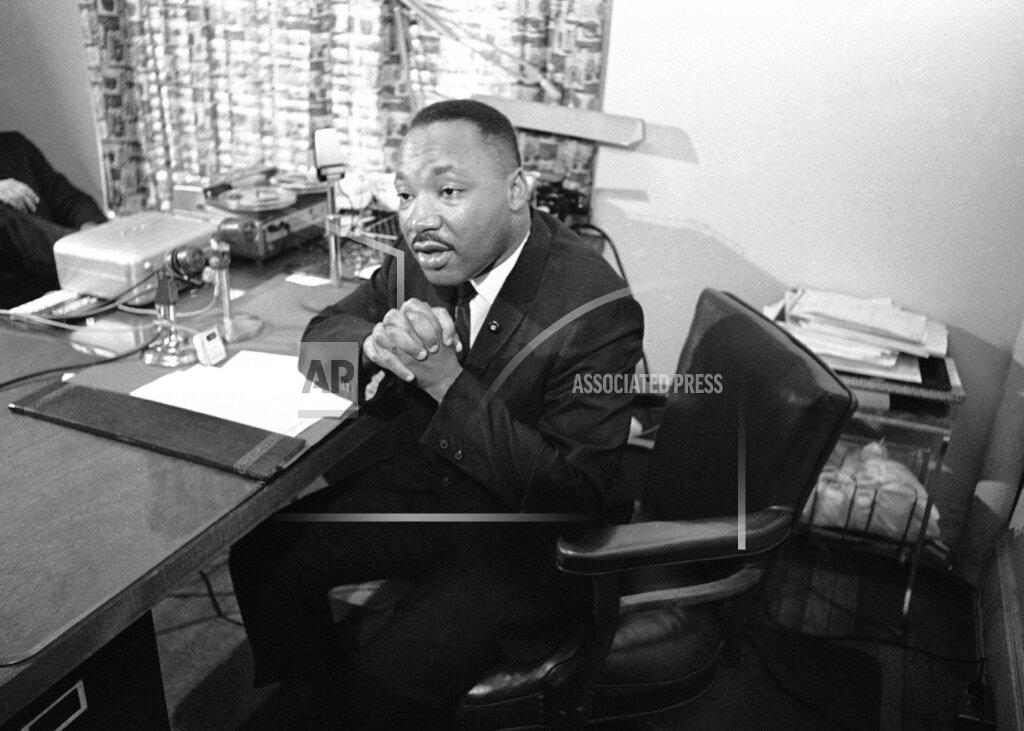
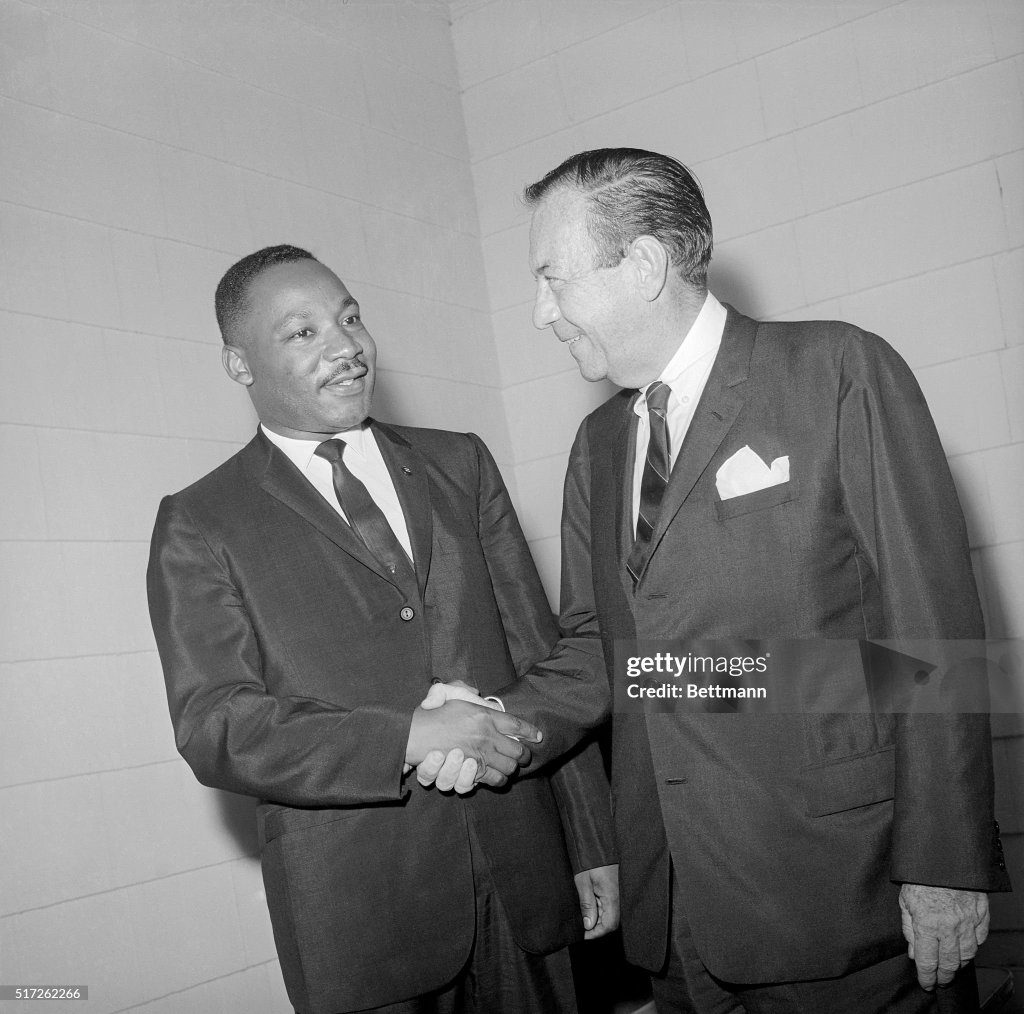
The Rev. Dr. Martin Luther King Jr. met with New York Mayor Wagner for nearly four hours last night and early today on “matters of national importance in the field of civil rights.” Neither Dr. King nor the mayor talked with newsmen after the meeting. Leslie Slote, acting executive secretary to the mayor, who reported on the meeting, said that the discussions would be continued at 4 PM today in City Hall and that a press conference would follow. Mr. Slote also said Federal and city officials would be contacted as a result of the meeting. He would not elaborate on the statement.
A left‐wing Harlem Black was said yesterday to have urged Blacks to kill policemen and judges. Testimony by police witnesses in Supreme Court ascribed the actions to William Epton, leader of the Harlem Defense Council and a top member of the Progressive Labor Movement. He was also said to have urged Blacks to lure policemen into side streets where they could be bombarded with bottles and other missiles.
Two Blacks were attacked by a crowd of white men last night when they came out of a Greenville, Mississippi movie theater integrated by the Civil Rights Act of 1964. Mike McGhee, 24 years old, suffered a head cut when struck by a bottle thrown into the car into which he was attempting to flee. His brother, Silas McGhee, 21, was beaten before he reached the car but was not seriously hurt. Earlier this month, both were beaten by whites inside the theater. Last week, the Federal Bureau of Investigation arrested three white men on charges of conspiracy to violate the Civil Rights Act in the attack July 16. Night riders fired three shots into the McGhee home three miles from Greenwood Saturday night. The McGhee brothers have been conducting a two‐man campaign for peaceful integration of the Leflore Theater since the Civil Rights Bill was enacted July 2. The management agreed to comply, but a gang of whites attend the theater almost nightly to keep Blacks away.
Seven physicians from Northern and Western states were in Mississippi today seeing after the health needs of several hundred civil rights workers. The spokesman for the group said, there had been much misinformation about what the doctors were doing here. “They are not here to practice medicine nor to investigate the Mississippi medical profession,” said Clare Bradley of Waltham, Massachusetts. “They are here to serve as liaison with the project workers and Mississippi doctors and see that the workers do not neglect their health needs.” The Medical Committee For Human Rights, which is working out of the office established by the National Council of Churches, was created at the request of the Council of Federated Organizations, the coordinating group for the organizations sponsoring the Mississippi summer project.
Senator J. W. Fulbright of Arkansas has proposed in a new book that an international consortium, including the United States and possibly the Soviet Union, build a sea‐level canal between the Atlantic and Pacific Oceans.
The rooms where the air defense of a continent will be directed are taking form now and through the winter in a great cavern inside Cheyenne Mountain near Colorado Springs. The bare, ancient rock of the cavern walls disappears day by day as the prefabricated three-story steel buildings are erected and joined together. The houses perch on big coil springs of such strength that 2,600 pounds of weight causes the springs to sag only one inch. These 11 buildings will contain the combat operations center of the North American Air Defense Command. The heart of this center is a big dark room with a transparent map across which lights move to indicate the flight of aircraft.
Astronauts James A. McDivitt and Edward H. White II were named as command pilot and pilot, respectively, for the Gemini 4 mission scheduled for the first quarter of 1965. The backup crew for the mission would be Frank Borman, command pilot, and James A. Lovell, Jr., pilot. The mission was scheduled for up to four days’ duration. At a press conference on July 29 at Manned Spacecraft Center, Deputy Gemini Program Manager Kenneth S. Kleinknecht said that on the second crewed Gemini space flight an astronaut would first be exposed to the hazards of outer space without full spacecraft protection. Although he first said that the experiment would involve “stepping into space,” he later modified this by saying that it might involve nothing more than opening a hatch and standing up.
An attempt to launch a Ranger spacecraft to take closeup pictures of the moon was scrubbed today by technical trouble. The launching was postponed until midday tomorrow. The flight will be the seventh in the frustrating Ranger series. None of the previous flights, all conducted by the National Aeronautics and Space Administration, has been successful. Lunar close‐ups are desired to confirm the design of the craft being built to land two American astronauts on the moon. The lunar expedition is to be conducted, it is hoped, before 1970.
“Sometimes a Great Notion”, the second novel by Ken Kesey is published by Viking Press.
The first comic book convention to feature well-known artists was held as a one-day event at the Workman’s Circle Building in New York City, after being organized by readers Bernie Bubnis and Ron Fradkin. The New York Comicon attracted 50 people in its first outing.
The Hall of Fame inducts eight new members, swelling the ranks of the 25-year-old institution to 101. The recent inductees include Luke Appling, voted in by the BBWAA, along with spitballers Burleigh Grimes and Red Faber, pre-1900 era players Pud Galvin, Tim Keefe and John Montgomery, lifetime .330 hitter Heinie Manush, and skipper Miller Huggins, who were all selected by the 12-man Veterans’ Committee in February.
In the first clash of tenth-place teams in major league history, the Washington Senators prevail, beating the New York Mets in the Hall of Fame exhibition game, 6-4. The Cooperstown combatants will collectively lose 209 games this season, but Washington will climb out of the cellar to finish ahead of Kansas City.
The New York Yankees won their fifth straight game and cooled off “the hottest team in baseball” tonight when Ralph Terry shut out the Los Angeles Angels, 3–0. Terry, making his first start in six weeks, allowed only seven singles and two walks and struck out six men. The Yankees made only seven hits, too. But one of them was a two‐run double by Elston Howard and another was a home run by Roger Maris.
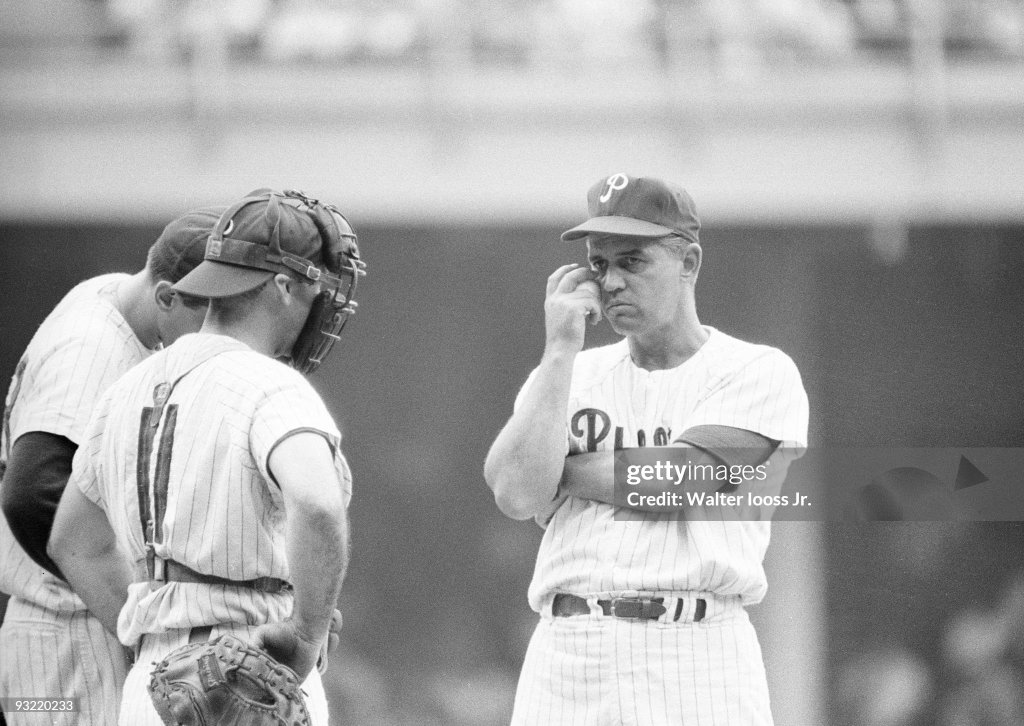
Reds’ manager Fred Hutchinson enters a Cincinnati hospital for further cancer treatment. Dick Sisler takes the helm.
Jim Maloney, backed up by a solid 16‐hit attack, eased to his 10th victory of the season tonight as the Cincinnati Reds routed the Milwaukee Braves, 11–2. The hard‐throwing Maloney drove home two of the Cincinnati runs with a single in the five‐run seventh and a sacrifice fly in the eighth. Deron Johnson started the Reds off with his 12th home run of the year in the second inning and Marty Keough finished things by hitting his seventh home run in the ninth with Johnson on base.
Dow Jones Industrial Average: 841.05 (-4.59).
Born:
Rex Brown, American heavy metal bassist (Pantera), in Graham, Texas.
Ron Jackson, American jazz guitarist, composer, arranger (Flubby Dubby), and educator, in Manila, Philippines.
Kevin Thomas, NFL center (Tampa Bay Buccaneers), in Tucson, Arizona.
Ron Plantz, NFL center (Indianapolis Colts), in Chicago, Illinois.
Dennis Smith, NHL defenseman (Washington Capitals, Los Angeles Kings), in Detroit, Michigan.
 History Diaries