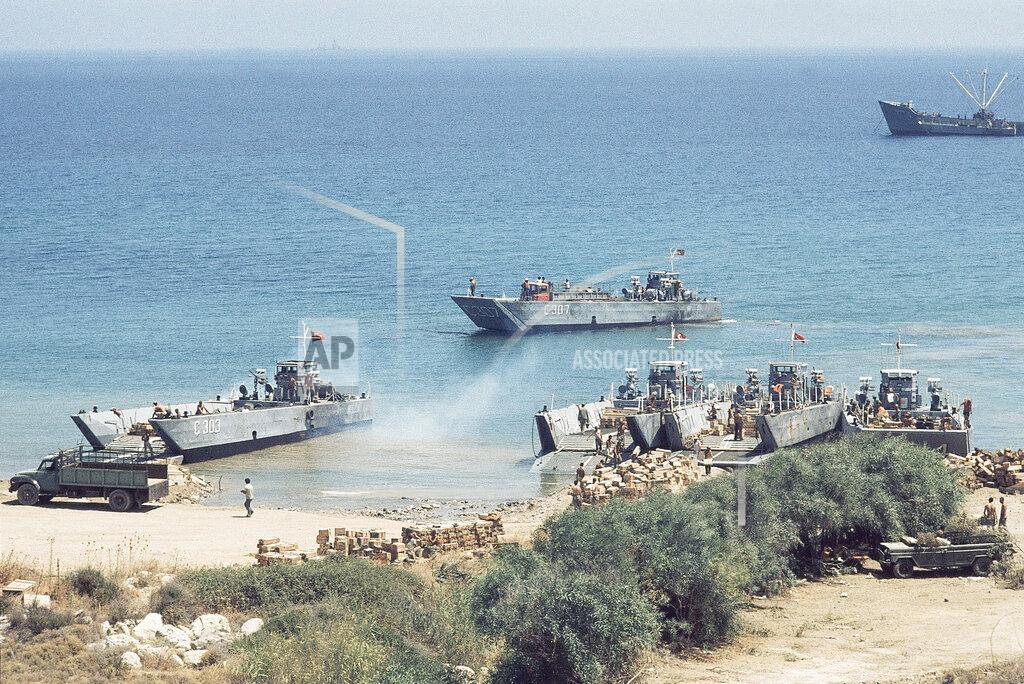
American assurances to Athens and a Turkish compromise offer revived hope that the three-nation conference in Geneva could reach an agreement on enforcing the cease-fire in Cyprus and open the way for further negotiations. Late Friday night, the Turkish Foreign Minister, Turan Güneş, presented a Turkish proposal combining cease-fire provisions and demands for political talks to Britain’s Foreign Secretary, James Callaghan, who has been acting as mediator. He passed the proposal to the Greek Foreign Minister, George Mavros, who said it was “a great improvement” and relayed it to Athens.
Secretary of State Kissinger gave the new Greek government strong assurances that Washington would back up the fragile cease-fire in Cyprus. The assurances followed a day of growing restiveness among Greek officials who feared that Turkish forces in Cyprus were broadening and strengthening their positions at the expense of the Greek Cypriot community. Mr. Kissinger was also in close touch with Turkish officials in Ankara, and diplomats in Athens speculated that the Secretary had put heavy pressure on the Turks to stop fighting.
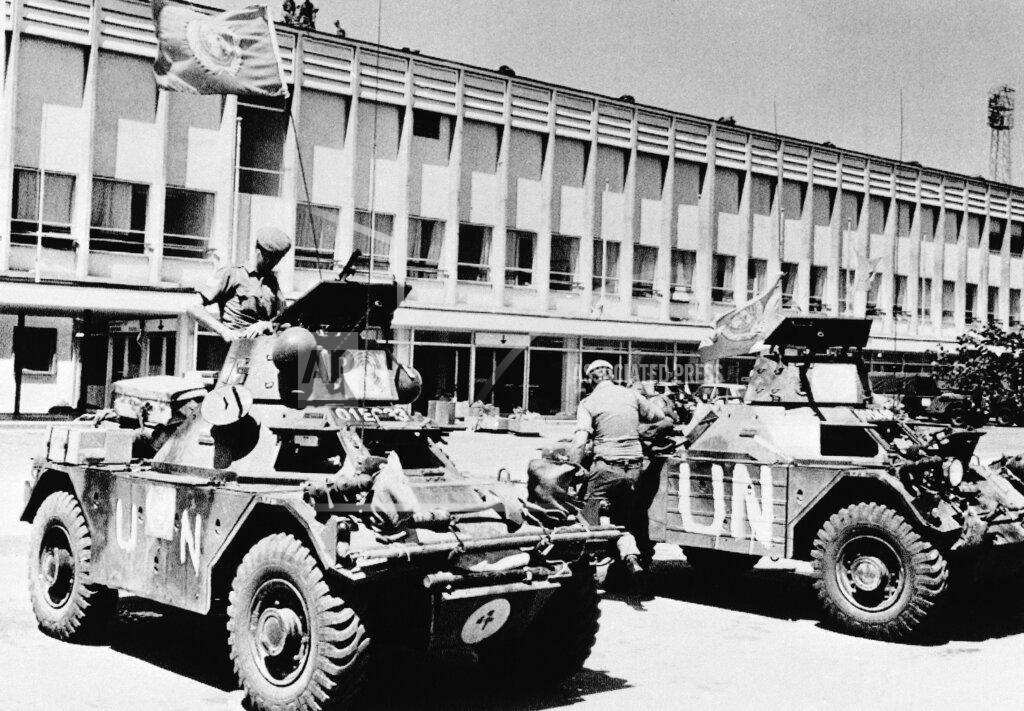
Turkish forces that advanced Friday to within four miles of the strategically situated village of Myrtou in Cyprus held their ground today as Greek Cypriot National Guard reinforcements moved up from the west. Cyprus had its quietest day since the fighting broke out a week ago. Turkish units either remained in place, or in some cases, withdrew slightly to consolidated positions as Greek Cypriot troops strengthened their own lines. No significant shooting incidents were reported by either United Nation observers or the National Guard.
The Greek Cypriote President, Glafkos Clerides, told newsmen in Nicosia this morning that it appeared that the Turkish units had stopped their advances “at least momentarily.” Yesterday Mr. Clerides warned in a news conference that full‐scale fighting would resume if Turkey continued to use the cease‐fire as a means to grab more land. Turkey landed troops in Cyprus last Saturday as a result of the overthrow of the Cypriot government of Archbishop Makarios in a coup by the National Guard, which is led by Greek Army officers. Turkey acted in support of the Turkish Cypriot minority.
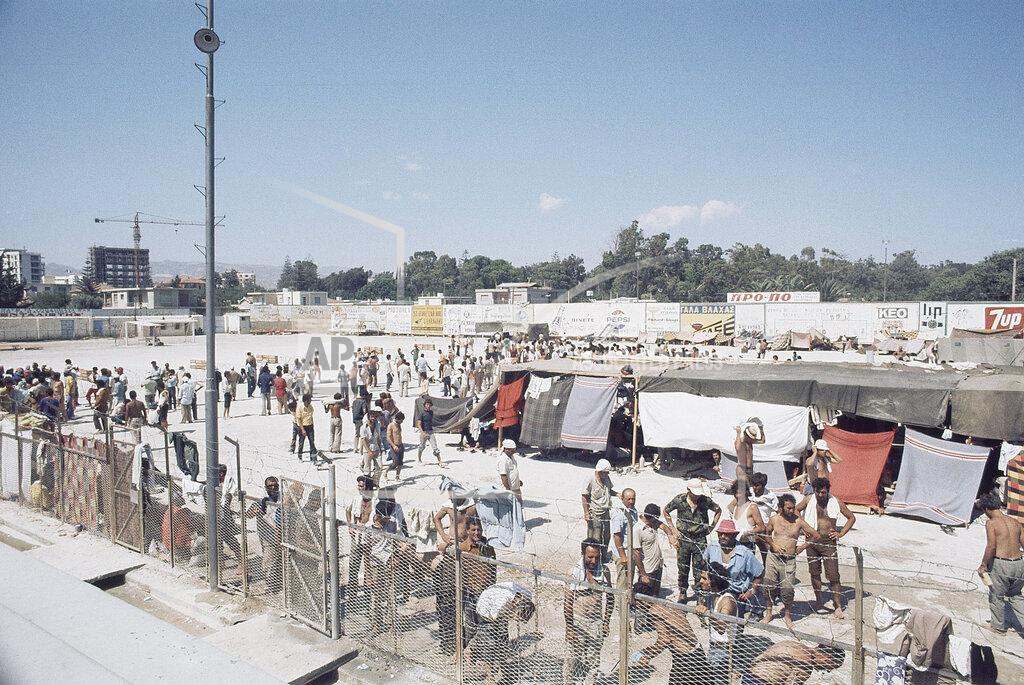
Yesterday Turkish units, moving westward from their beachhead at Kyrenia, captured several small villages and pushed to within four or five miles of Myrtou, which sits astride the main Nicosia‐Morphou Road. Several thousand Greek Cypriot refugees fled the area ahead of the Turkish advance. All but about 30 of the 6,000 inhabitants of this village fled late yesterday or this morning. Today however the forward Turkish units near here withdrew slightly. They gave up the tiny village of Ayios Ermolaos and fell back to a line of hills to the east. A Greek Cypriot contingent then reoccupied the deserted village.
There have been persistent unconfirmed reports that Greece landed substantial numbers of troops and supplies under the cover of darkness on Thursday and Friday, nights at the port of Karavoitasi on Morphus Bay, in northwestern Cyprus. Estimates of the Greek reinforcements ranged from 1,500 to 3,000 men. They reportedly included commandos and antiaircraft and antitank units of the Greek Army. The Turks now control an oval‐shaped chunk of formerly Greek Cypriote territory on the northern coast about 20 miles in length and seven miles in width. It runs from a point 3.5 miles east of Kyrenia to an irregular line near the village of Karavas. Virtually all of this area was seized after the ceasefire officially began on Monday. In addition, the Turks have greatly increased their strength inside the Turkish corridor that reaches from Kyrenia inland to Nicosia. They have also moved tanks to within 500 yards of the Nicosia airport.
Portugal’s President, General António de Spínola, announced that his government would grant unconditional independence to the European nation’s African colonies in Angola, Cape Verde, Mozambique, São Tomé and Príncipe and Portuguese Guinea (later Guinea-Bissau. Spinola had signed a notice on July 25 that stated, “The principle that a solution to the overseas wars is political, and not military, implies the recognition by Portugal of the right to self-determination by the people.”
Five bombs exploded within 3 minutes this afternoon in the small town of Portglenone, and authorities said damage was extensive. The British Army said that the bombing was preceded by an anonymous telephone warning. People were cleared from the center of town, and there were no casualties. Four of the bombs were planted in bars and the other in a parked car. Police officials attributed the blasts to the militant Provisional wing of the Irish Republican Army, which is attempting to force the British out of the province.
Israeli and Arab gunners exchanged light small-arms and artillery fire across the Lebanese border, the Tel Aviv command said. The fighting began after gunners in Lebanon fired a volley of bazooka shells at the Israeli settlement of Zarit, about two miles from the border, a military spokesman said. No damage or casualties were reported from the shelling.
About 2,000 Jewish nationalists — including bearded rabbis, university professors and wives and children — squatted on Arab land in the heart. of Jordan’s occupied West Bank to oppose any effort by Israeli Prime Minister Yitzhak Rabin to make territorial concessions at peace talks with Jordan. Rabin, whose government voted to break up all unauthorized settlements, was seeking a way to remove the squatters from an unused railway station at Sebastiya. The nationalists have pitched tents and strung barbed wire at the site.
President Anwar Sadat told an audience of 2,500 at Alexandria University that last year’s war with Israel had opened the way for Egypt to liberalize its tightly socialist economy “so that we can raise the standard of living.” With the war in the past, Sadat said, “we are ready to cross from a stage of austerity to a stage of prosperity.” Sadat outlined a crash plan to be completed by the end of 1975 under which Egypt would make use of “latent potential, reconstruct the Suez Canal cities, complete previous development plans, maintain the current growth rate and implement other urgent projects.”
South Vietnamese bombers flew heavy strikes in support of government troops around an embattled district town south of Da Nang, the Saigon command said. Fighting continued for the 10th day around Đức Dục along the northern coast 20 miles south of Da Nang. The command claimed 45 North Vietnamese were killed in the bombing. Heavy fighting also was reported in the Central Highlands where the command said Communist forces launched a ground attack against the district town of Măng Buk after two days of shelling.
Two Chicago theatrical agents won reversal of 1973 convictions for allegedly transporting four women to Saigon and forcing them into prostitution. The U.S. Court of Appeals in Chicago ruled that there were “latent contradictions” in the government’s case against Charles Zemater, 44, and Raymond Auler, 51, and noted the four women could have “contrived the highly publicized escape” to provide material for a book they later contracted to publish.
The retaking of the town of Oudong earlier this month has been called a major Cambodian Government victory. But the victorious troops preside over a wasteland. Oudong is in ruins. And the revered 17th‐century complex of Buddhist temples and tombs atop the hills on the outskirts of town — Cambodia’s royal capital for 250 years, burial place of many of the Khmer kings, depository of priceless Buddhist relics — is also sacked and largely destroyed. Most of the more than 20,000 people who used to live in this bustling market town on Route 5, about 24 miles northwest of Phnom Penh the capital were taken off into the jungle by the insurgent troops when they withdrew. Almost none of the civilians who survived these battles have returned to their towns, not trusting the government security. They have gone, instead, to Phnom Penh, already swollen with refugees, and to equally crowded provincial capitals Not even the stray dogs have returned to the ruins along Route 5.
Nguon Sath has been looking at ruins like these for more than four years now, for though he is only 23 years old, he has been in the army since the war began. He fought through the entire Oudong campaign. He was a volunteer at the start in 1970, but now his weariness is intense. He says, like so many other soldiers, that he does not understand why Cambodians are fighting Cambodians. “But when I get orders, I must fight,” he says, shrugging helplessly. Nguon Seth looks around him at the clusters of rubble that used to be houses, shrugs again and says: “By the time we find out who is right, and who is wrong, everything in Cambodia will be broken into little pieces.”
[Ed: No. God help us all, no. I’m so, so sorry. It will be so much worse than that.]
Prince Souphanouvong leader of the pro‐Communist Pathet Lao, today held historic meeting with several generals who were his opponents in the recent Laotian civil wars informed sources said. Observers said the meeting could help speed up initiatives for peace and reconciliation in Laos after more than 10 years of fighting. The meeting came while the Premier, Prince Souvanna Phouma, half‐brother to the Pathet Lao leader, convalesced after heart‐attack. Since the formation of the country’s delicately balanced coalition government last April, Prince Souvanna Phouma’s role has been to seek to reconcile traditionally antagonistic factions within the government. But informed sources said that the meeting today was designed to pave the way for better mutual understanding between, the Pathet Lao and rightist military leaders.
Premier Chou En‐lai has left the hospital and is making a good recovery from his recent illness, diplomatic sources have said today. Ill health forced the 76‐year‐old Premier to reduce his official duties in early May and he is reported to have suffered heart attack about a month later. The Premier apparently left the hospital shortly before meeting on July 20 with visiting Niger delegation on establishing diplomatic links between the two countries. Observers here believe that Mr. Chou will still rely heavily on his Deputy Premiers even after his recovery, although he may retain the post of Premier, a position he has held for a quarter of a century.
Edward LeBlanc, who had led the British West Indies colony of Dominica for 13 years as Chief Minister and then as Premier, resigned suddenly and without explanation, four years before Dominica would become an independent nation. Patrick John became the new premier the next day, and would become the first Prime Minister of Dominica on November 3, 1978.
Peru’s military Government took over the country’s eight major independent newspapers today and announced it would turn them over to Peruvian labor groups. The move, which President Juan Velasco Alvarado’s Government said was made “in the national interest,” appeared to be a hard blow to freedom of expression in the Latin-American country.
Hundreds of people were reported fleeing from Sao Paulo, Brazil, to avoid an epidemic of meningitis which has killed more than 230 people. The Jornal do Brasil estimated 4,000 people have the deadly contagious disease which affects the brain and the nervous system. Sao Paulo, with a population of 6.7 million, is Brazil’s largest city. Another newspaper in Sao Paulo reported that more than 60,000 people formed huge lines outside five special shops selling drugs that allegedly prevent the disease.
Inflation in Chile will be around 250% during 1974, a senior government official said in Santiago. Mrs. Alicia Romo, head of the State Directorate of Industry and Commerce, made the prediction in a speech to wives of air force officers.
The Rhodesian Army began Operation Overload, the forcible relocation of 49,690 black African civilians within the Chiweshe Tribal Trust Land to 21 “protected villages” away from guerrillas of the Zimbabwe African National Liberation Army (ZANLA). By August 15, the relocation was completed but the protected villages proved to be inadequately protected and lacked sanitation facilities.
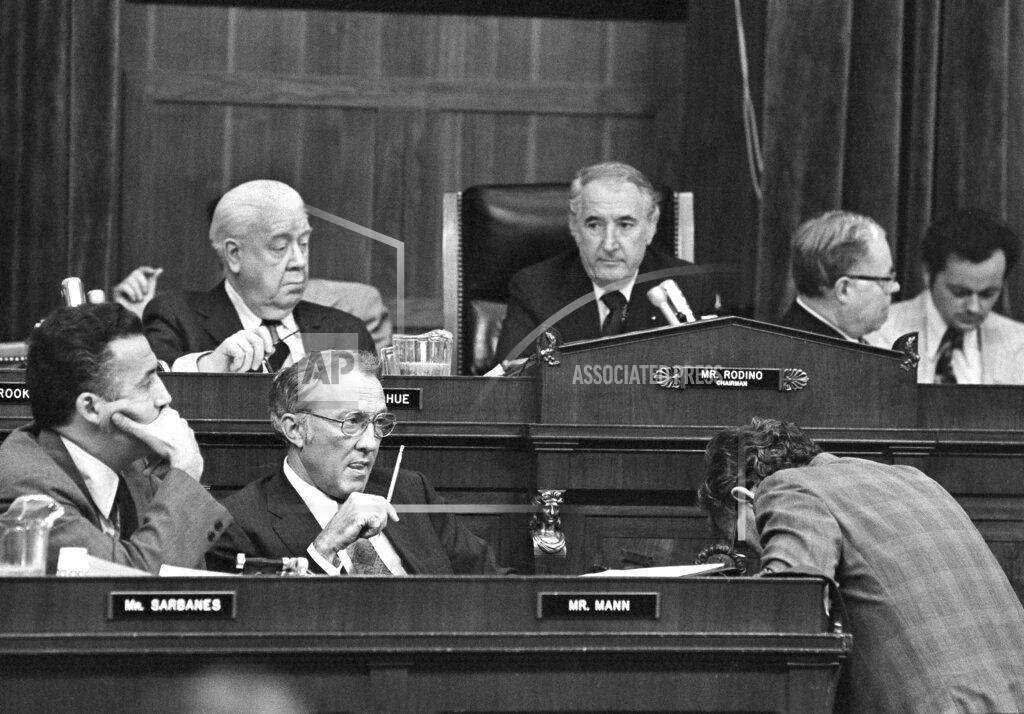
The U.S. House Judiciary Committee voted, 27 to 11, to approve the proposed Article One for the impeachment of U.S. President Nixon, a resolution alleging that “Richard M. Nixon, using the powers of his high office, engaged personally and through his subordinates and agents, in a course of conduct or plan designed to delay, impede, and obstruct the investigation” of the Watergate scandal as well “to cover up, conceal and protect those responsible; and to conceal the existence and scope of other unlawful covert activities.” Six Republicans joined all 21 Democrats on the Committee in voting in favor of the article. White House Press Secretary Ronald Ziegler told reporters, “The President remains confident that the House will recognize that there simply is not the evidence to support this or any other article of impeachment. He is confident because he knows he has committed no impeachable offense.” This set in motion the constitutional process that could ultimately strip President Nixon of his office. The margin of the vote, with six of the committee’s Republicans joining all 21 of the Democrats in adoption of the resolution, was believed certain to set a pattern for debate on the charge in the full House next month.
A document prepared for members of the House Judiciary Committee by John Doar, its special counsel, declares that proof of President Nixon’s complicity in the Watergate cover-up lies not only in his overt actions but also in his failure to take actions that might have resulted in bringing the facts of the case to light. It lists 50 separate “undisputed incidents” that, Mr. Doar said, show that President Nixon must have “made a decision” to join the cover-up.
Lieutenant Governor Ed Reinecke of California was found guilty by a federal grand jury in Washington of lying to the Senate Judiciary Committee in April, 1972. He was indicted last April of having lied when he testified at a hearing on the nomination of Richard Kleindienst for Attorney General. The perjury conviction carries a maximum penalty of five years’ imprisonment, or a fine of $2,000, or both, Mr. Reinecke, a Republican, said the verdict was “a gross miscarriage of justice.”
Four of seven convicts barricaded in a prison library in Huntsville, Texas, since Wednesday are now considered hostages of the other three, prison officials said. A total of 15 persons, including a Roman Catholic priest, prison guard and nine civilians are being held as hostages in a revolt initiated by Fred Gomez Carrasco, 34, serving a life sentence for assault to commit murder. Authorities continued to bargain with Carrasco, who wounded a guard in the takeover of the library, and the two other convicts.
Thousands of General Motors Corp. employees at three plants remained off the job in contract disputes, including one at GM’s vital Guide Lamp Division at Anderson, Indiana, which produces headlights for all GM vehicles. The Anderson strike, which began early Friday, could affect production throughout the GM system. Workers were also on strike at GM’s St. Louis assembly plant, which builds Corvette sports cars, Chevrolet light trucks, and Chevrolet Impalas, and at GM’s Vega and van assembly plants at Lordstown, Ohio.
The Consumer Product Safety Commission warned of possible serious electric shocks from a household trouble light that is already suspected of causing one death by electrocution. About 200,000 of the “household trouble lights” or “mechanic’s lights” have been sold in the last year nationwide by such stores as Woolco, Zayre, Korvette’s, Food Fair and J. J. Newberry, the commission said. They were manufactured by A.L. Electric Corp. of New York and bear no brand name or identifying marks. The commission said the soft plastic cover that serves as a handle just below the bulb in the lights is so flexible that a user’s hand could easily touch a metal part of the bulb receptacle.
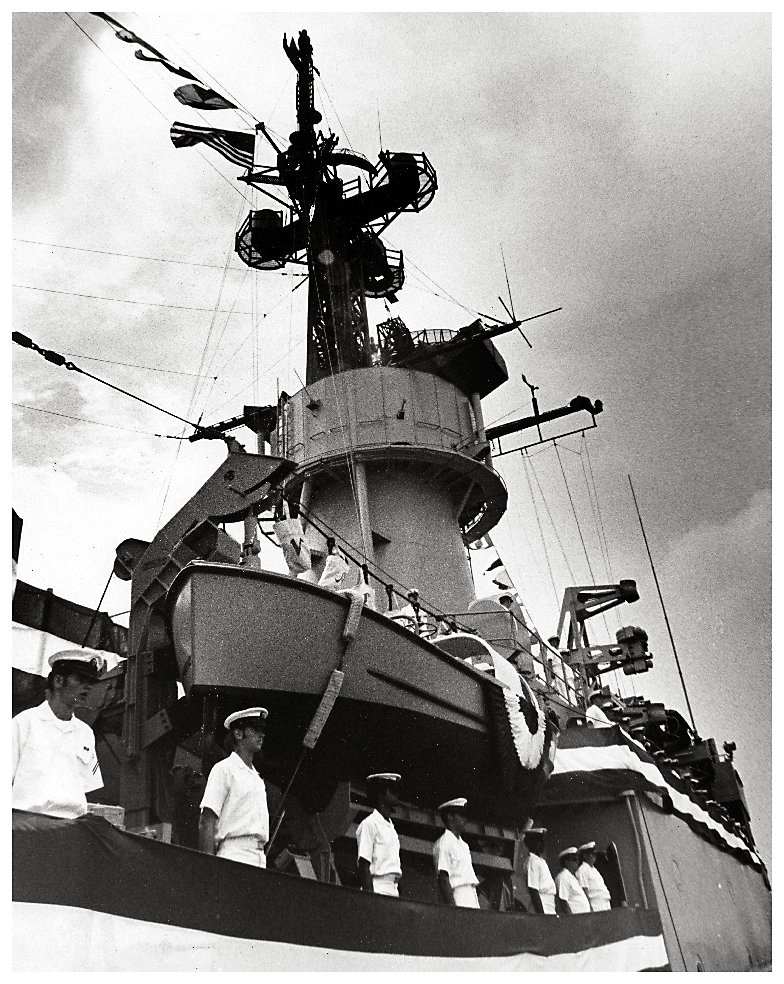
The U.S. Navy, which is in the midst of a multibillion‐dollar ship construction program, is running into serious problems trying to prevail on a newly prosperous shipyard industry to build its warships. As a result, the Navy is considering a return to its policy of building some warships in its own naval yards — a policy abandoned nearly a decade ago, largely at the insistence of commercial shipyards which were then eager for Navy work. Since 1968 the Navy at the direction of the Defense Secretary Robert S. McNamara has contracted with private shipyards to build all its warships. The McNamara decision led to the closing of naval shipyards in Brooklyn, Boston, and San Francisco, and the Navy’s eight remaining yards have been limited to repair and overhaul work.
Leaders of Baltimore’s police union are struggling to keep their local alive despite reprisals by the city’s police commissioner after the recent five‐day strike. The last hope of Local 1195, Police Council 27 American Federation of State County, and Municipal Employes is a reluctant Governor Marvin Mandel. Union leaders say the Governor has promised to intervene with Donald D. Pomerleau, the former Marine colonel who heads the city’s 2,500-member police force. But Mr. Mandel has insisted that he never promised to help the union. Union leaders met here yesterday to discuss the possibility of withholding campaign contributions and possibly withholding their endorsement of the Governor’s candidacy for re‐election as a way of forcing him to intervene. Mr. Pomerleau has dismissed 91 probationary patrolmen, suspended 24 veterans, including all of the union leadership restricted the access of union organizers to police buildings and demoted at least 18 college‐educated patrolmen to the lower paying regular patrolmen grade. He has also cut off the union dues payroll check‐off and revoked the local’s exclusive bargaining agreement.
The will of author Pearl S. Buck has been declared invalid by a Rutland, Vermont, County jury and sent back to probate court to decide how to settle the estate, believed to be worth $1 million. The verdict ended the first round of a bitter dispute between six of the late author’s eight adopted children and Theodore Harris, a former Arthur Murray dance instructor who became a close friend and manager for Miss Buck in her final years. Miss Buck left only $4,000 annually to her children, to be paid from a trust fund. The balance of her estate was left to Harris. Miss Buck, the author of 80 books, died on March 6, 1973. She was 80.
A 63-year-old man was killed and a police officer critically wounded in a gunfight in a hospital corridor in Jacksonville, Florida. Police said Officer Darrell T. Toohey was shot at point-blank range in St. Luke’s Hospital by John R. Suit of Jacksonville. Toohey then fired two shots at Suit, killing him instantly, police said. Officers said Toohey was called to the scene when Suit drew a revolver during an argument with his former wife, who was at the hospital to visit her father.
The New York region’s building boom that lasted more than a decade is over, and the building industry is in its worst crisis since the early 1950’s, perhaps since the Depression. The problem is not limited to New York. Construction has declined sharply in Boston and on the West Coast, among other areas. Thus New York’s situation is not unique, but its long-time role as center of architectural innovation and enormous building activity makes the problem all the more severe locally.
The British & Irish Lions rugby union completed their 12-week tour of South Africa, playing to a 13–13 draw against the Springboks of South Africa after 21 consecutive wins.
John Lowenstein, Jack Brohamer and George Hendrick hit successive run-scoring singles in the third inning today and the Cleveland Indians held on to defeat the reeling Detroit Tigers, 3–2. Singles by Buddy Bell and Frank Duffy off Lerrin LaGrow, who lost his 10th game against seven victories, preceded the singles to center by Lowenstein and Brohamer. Hendrick’s scoring hit off the glove of Aurelio Rodriguez, the third baseman, capped the rally that sent the Tigers down to their 17th loss in 20 games.
Jorge Orta singled twice during a six-run rally in the eighth inning tonight, helping the Chicago Sox to a 9–5 victory over the Texas Rangers.
Bruce Dal Canton pitched a five-hitter and the Kansas City Royals backed him with a 16-hit attack to defeat California, 6–3, tonight, handing the Angels their 14th straight loss at home.
Maintaining their almost two‐year jinx over the New York Yankees at Fenway Park, the Boston Red Sox continued their less‐than‐firm hold on first place in the American League Eastern Division tonight. They did with a 5–4 triumph over the Yankees before the largest crowd in Fenway in more than three years.
Their spirits buoyed by the renaissance of Tom Seaver, the New York Mets gleefully took on the Montreal Expos, one of the teams they had to catch, last night at Shea Stadium. Since spirits can’t swing bats, field or throw baseballs, the Mets translated their joy into eight runs and 10 hits and a masterfully pitched game by Bob Apodaca to win, 8–5.
A two-run double by Tommy Helms and a two-run single by Greg Gross paced the Houston Astros to a 11–3 victory over the San Francisco Giants tonight. Larry Dierker (7–5) helped his own cause by accounting for two Houston runs. Dierker singled home one run in the three-run second inning and laid down a perfect sacrifice bunt in the three-run sixth to score another run.
Mike Schmidt drove in four runs with a homer and a double to lead the Philadelphia Phillies to a 7–4 victory over the Pittsburgh Pirates tonight and a sweep of their doubleheader. Mike Anderson’s two-run single in the seventh enabled the Phillies to overcome a four-run deficit and win the opener, 6–5.
Lou Brock doubled and singled and stole his 64th base of the season today to lead the St. Louis Cardinals to a 3–2 victory over the Chicago Cubs. Brock opened the game with a double to left off the loser, Bill Bonham (9–12), and scored on a single by Bake McBride.
Tony Perez doubled home two runs in a four-run first inning tonight and the Cincinnati Reds went on to defeat the San Diego Padres, 5–1. Tom Carroll, a rookie, pitched his third straight victory since his recall from the minors on July 4.
Henry Aaron drove in four runs and hit his 726th career homer tonight as the Atlanta Braves routed the Los Angeles Dodgers, 10–0. Dusty Baker hit two home runs and Ralph Garr raised his league- leading batting average to .364 with four straight hits, including a double, for the Braves. The Dodgers got only four hits off Phil Niekro.
Born:
Brian Sikorski, MLB pitcher (Texas Rangers, San Diego Padres, Cleveland Indians), in Detroit, Michigan.
Pete Yorn, American musician (Musicforthemorningafter), in Pompton Plains, New Jersey.
Eason Chan (Chan Yick Shun), Hong Kong Cantopop music singer and actor; in British Hong Kong.
Died:
Lightnin’ Slim (stage name for Otis Hicks), 61, U.S. blues musician, died of stomach cancer.



 History Diaries