General Khánh and the top South Vietnamese military leaders hold secret talks at Đà Lạt, but it is reliably reported that some present call for expanding the war into North Vietnam and Laos; it is also known that some ARVN generals have visited Taiwan to discuss the possibility of Nationalist Chinese troops being sent to Vietnam.
Qualified sources said that detailed plans for various types of action had been drawn up covering both ground and air activities, hut that none of these had been decided upon. Before flying to Đà Lạt Friday, General Khánh brushed aside warnings from the United States Ambassador, General Maxwell D. Taylor, that any extension of the war would go against current American policy. The Premier’s insistence on clinging to the program of attacking North Vietnam has confronted the United States Government with a new and serious situation. By itself, Premier Khánh’s Government is not considered militarily capable of scoring significant successes against the North Vietnamese Communists by either air or ground attacks.
The South Vietnamese commanders could, however, send aircraft or ground units into North Vietnam or Communist-controlled parts of Laos, engage Communist defenses and thereby force the United States either to support their action or to repudiate the Government of South Vietnam. Among the plans under study by the Vietnamese generals is a strike at Communist supply lines in southern Laos with the help of two divisions of Chinese Nationalist troops brought from Taiwan for the purpose. Several Vietnamese generals have visited Taipei recently to discuss such joint military operations.
Former Vice President Richard M. Nixon, in an article in the August edition of The Readers Digest, urges that the guerrilla war in South Vietnam be extended into North Vietnam. He said the United States prospects in the area “have gone from fairly bad to immeasurably worse.”
Communist attacks of increased size and apparent strategic purpose throughout the four northern provinces of South Vietnam have led to concern here that a major Việt Cộng military assault is pending in central Vietnam. While United States sources are more cautious than the Vietnamese Army leaders in characterizing the fighting in the north, one American adviser said: “It is a new war here, much more military than combat that can be properly characterized as insurgency or guerrilla.” United States advisers in South Vietnam were alerted to watch for indications that the Saigon regime might move to carry the war into Laos or North Vietnam. Premier Khánh and his aides met to discuss strategy.
One possible aim of the Việt Cộng, according to an interpretation of the attacks in this region, would he the capture of the city of Huế. Another aim would be to sever the four northern provinces from the rest of the country. Huế, on the South China Sea, is the former royal capital. Its capture by the Việt Cộng would constitute an important psychological blow to the regime in Saigon. If this is indeed the objective of the Việt Cộng, it is a revival of a plan that was frustrated in 1961, when President Kennedy stepped up United States military support to Saigon. Việt Cộng forces also have probed Government positions along the southern boundary of Quảng Tín Province. The guerrillas have blown up several bridges and there have been some pitched battles between insurgents and South Vietnamese paramilitary units, with as many as 100 reported killed. Most of the fighting has involved units of 10 to 40 guerrillas in sabotage raids and ambushes of government regular and paramilitary forces. But attacks by as many as 200 to 300 men, organized in battalions, are no longer uncommon.
These Việt Cộng forces have demonstrated professional military skill with apparent broad strategic objectives. There have been fewer minor incidents and harassments and an increasing number of outright military attacks. The Việt Cộng forces have numbered designations and many of the units have been identified by prisoners. It is also generally agreed that the guerrillas have organized sizable training camps and staging areas in the forested mountains of the west, where they conduct maneuvers virtually without interference. Interrogation of prisoners has disclosed that an increasing number of North Vietnamese soldiers are serving with the Việt Cộng. In the past, most of the Việt Cộng soldiers identified as North Vietnamese were from South Vietnam but had been trained in the North. It is now evident that many “strangers” who have appeared among Việt Cộng draftees are professionals from the North Vietnamese Army. For the most part, these North Vietnamese regulars have been used as “fillers” in Việt Cộng units.
Twenty‐seven Việt Cộng guerrillas in nine provinces defected to the South Vietnamese Government in the week ended Friday, the Information Ministry reported today in Saigon.
North Vietnam reiterated today its view that the situation in Laos was “extremely dangerous” and called for immediate reconvening of the 14‐nation Geneva conference, Hsinhua, the Chinese Communist press agency reported. Western reports that North Vietnamese troops were in Laos are “allegations and merely brazen slanders,” the Vietnamese added.
The Soviet Union has renewed in more emphatic form than ever its proposal for a reconvening of the 14‐nation Geneva conference on Laos. In a communication yesterday to the British Government, Moscow warned that it would have to “re‐examine” its role as co‐chairman, with Britain, of the existing peace‐keeping machinery in Laos if the United States and other Western powers continued to “block” the convening of such a conference. Western diplomats here said they found it hard to believe that the Soviet Union would voluntarily relinquish the influence that goes with its post as co‐chairman of the Geneva conference. The Russians charged that United States interference in Laos had led to “extreme aggravation” of the situation there. Therefore, Moscow said, the 14 powers that signed the original Geneva agreement on the independence and neutrality of Laos should meet again to discuss “immediate measures.” The communication was handed to Sir Humphrey Trevelyan, the British Ambassador.
Member nations of the Organization of American States, with the exception of Mexico agreed to avoid any trade with Cuba (other than food and medical supplies) in response to Cuban support of guerrilla operations in South America.
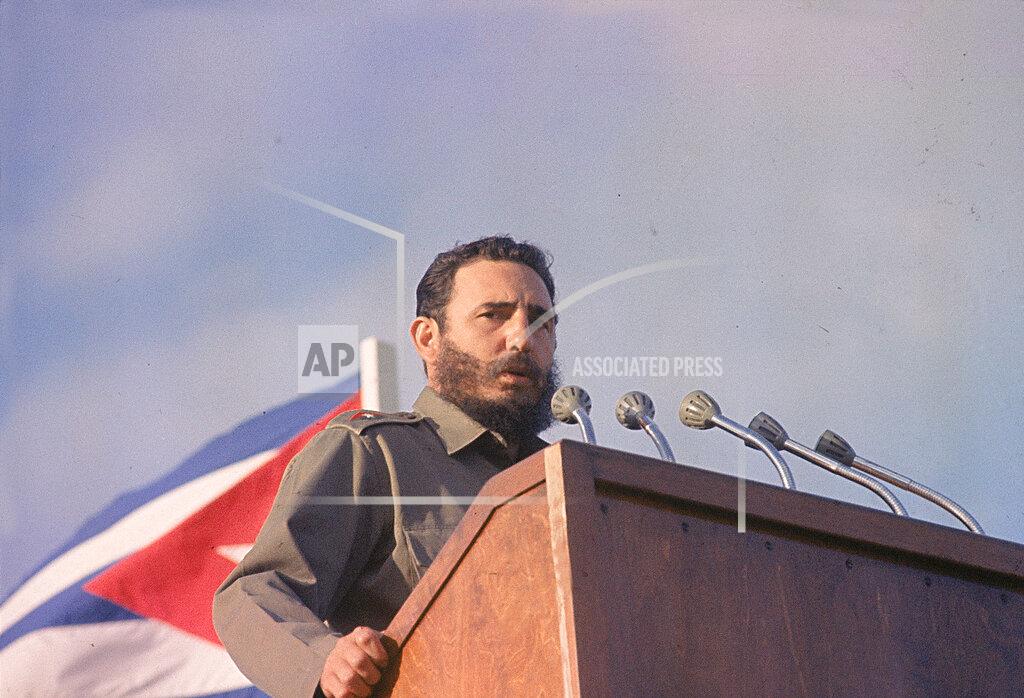
Cuban Premier Fidel Castro tonight denounced the resolutions of the Organization of American States imposing sanctions on Cuba and declared that Cuba had the right to help revolutionary movements in all countries that practiced “acts” against her. The assertion came in a bitterly worded “Declaration of Santiago” read by the Premier at the end of a three-and-a-half-hour speech. The audience of more than 200,000 was attending a celebration of the anniversary of the start of Dr. Castro’s fight against the Batista regime. At Dr. Castro’s request, everyone present raised his hand after the declaration had been read. The Premier then declared it adopted as Cuba’s answer to the O.A.S. resolution.
Ninety-four passengers on the Automara express train in Portugal were killed in an accident near Custóias, when their overcrowded railroad car became uncoupled from the rest of the train, and hurtled down an embankment. The group was returning home to Oporto from the beach resort at Póvoa de Varzim, and had only a few minutes left on their trip when disaster struck. The car they were in was supposed to carry no more than 70 people, and more than twice that many (161) had been on board.
In an apparent retaliation for the bombing of the Johannesburg railroad station three days earlier, a newly-constructed refugee center in Francistown in neighboring Bechuanaland (now Botswana) was destroyed by a bomb on the eve of its dedication ceremony. Nobody was injured in the bombing, which was believed to have been carried out by the South African Bureau of State Security, but the building was a total loss.
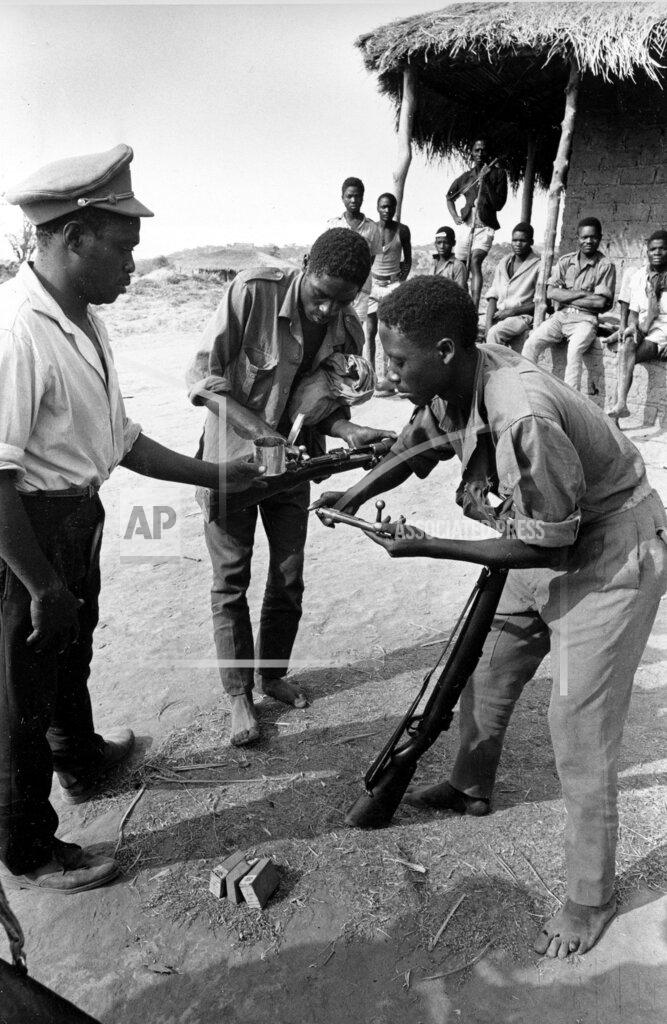
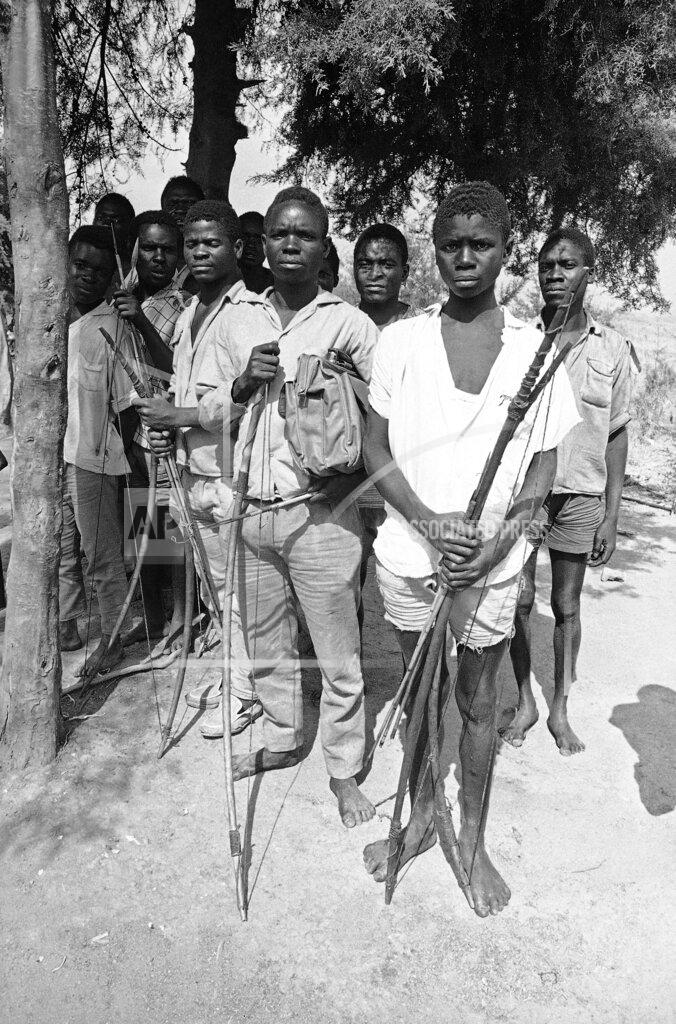
Fourteen African villagers have been killed and 17 wounded in a remote part of Northern Rhodesia in a battle between the police and members of a religious sect. Three platoons of police mobile units, armed with automatic weapons, went to the stockaded village of Chapaula, near the Tanganyikan border, yesterday to recover the body of a 22‐year‐old British assistant inspector, Derek P. Smith, who was speared to death when a patrol was surprised there Friday. The villagers belong to the “Lumpa church,” led by a self-styled prophet, Alice Lenshina. They charged the police with axes and bows and arrows until 31 of them fell.
Premier Moise Tshombe paid tribute today to the memory of his archrival, the late Patrice Lumumba, in this stronghold of Lumumbist sentiment. Mr. Tshombe laid a wreath on the monument to the Congo’s fiery first Premier, who was murdered In Katanga in January, 1961. Mr. Tshombe, then the President of the secessionist province, has been widely called responsible for the killing. The Premier’s face was impassive as he stood at attention before the large, glass‐covered painting of Mr. Lumumba in the center of Lumumba Square. He did not appear to notice the large sign 10 feet away lauding “the hero of Congolese independence and unity, assassinated January 18, 1961, in Katanga.”
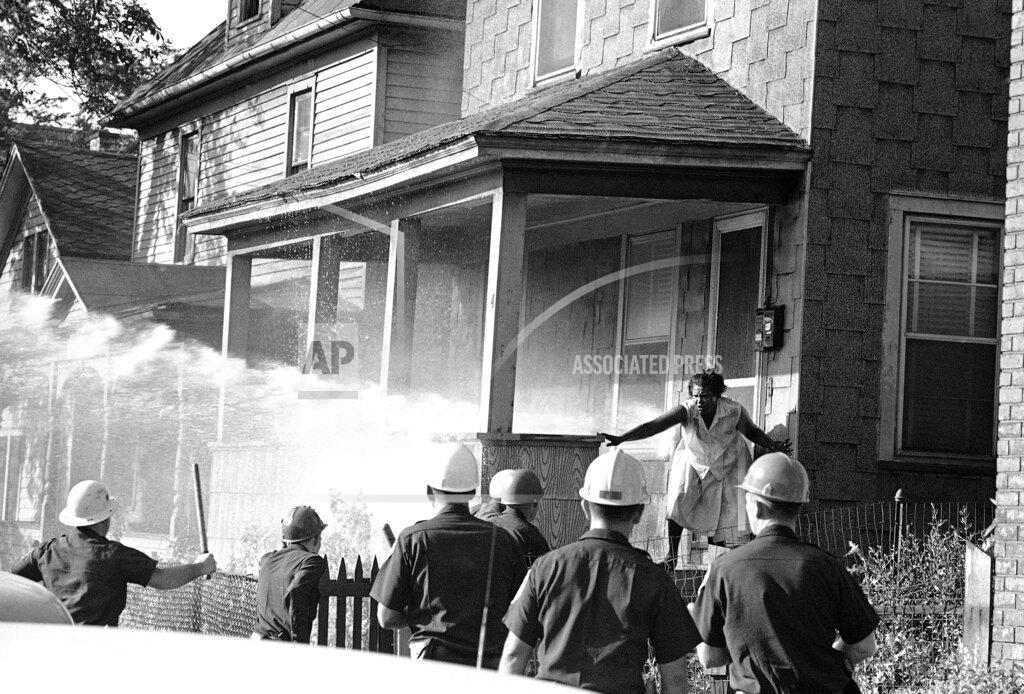
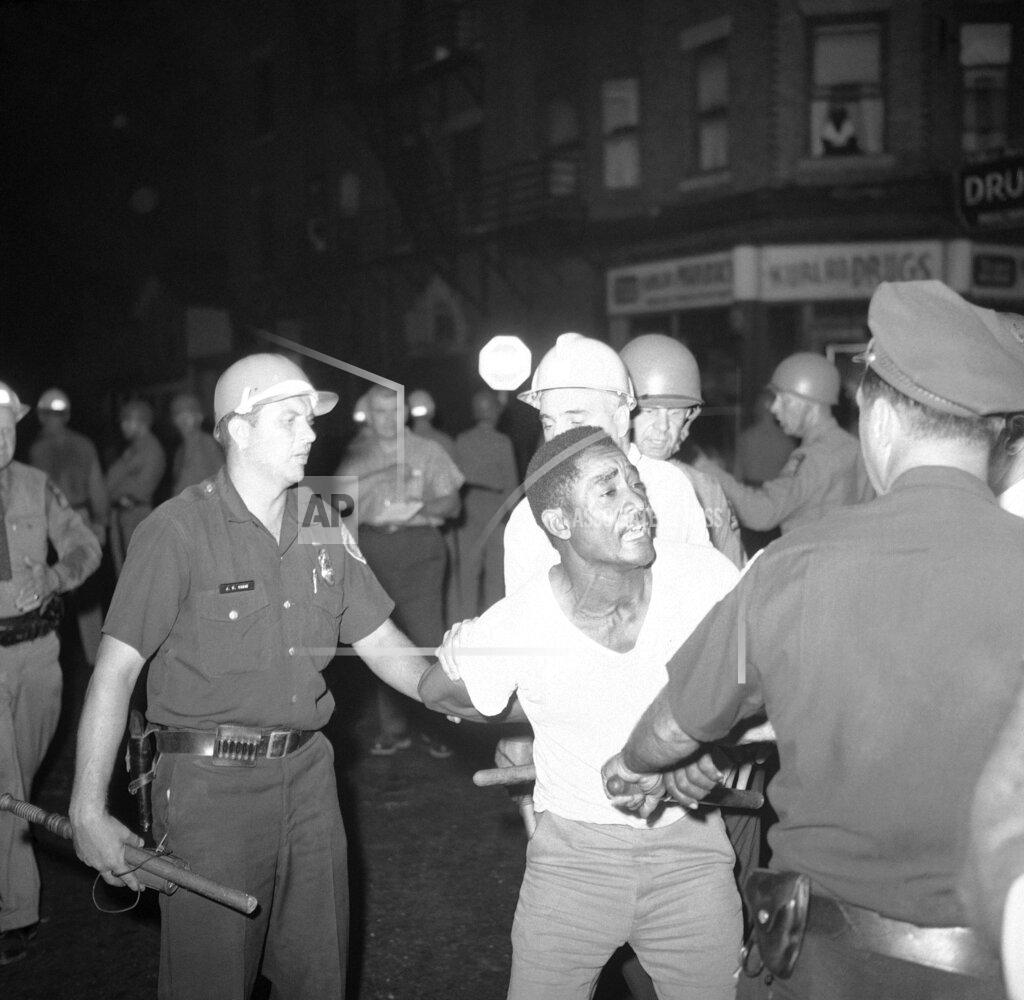
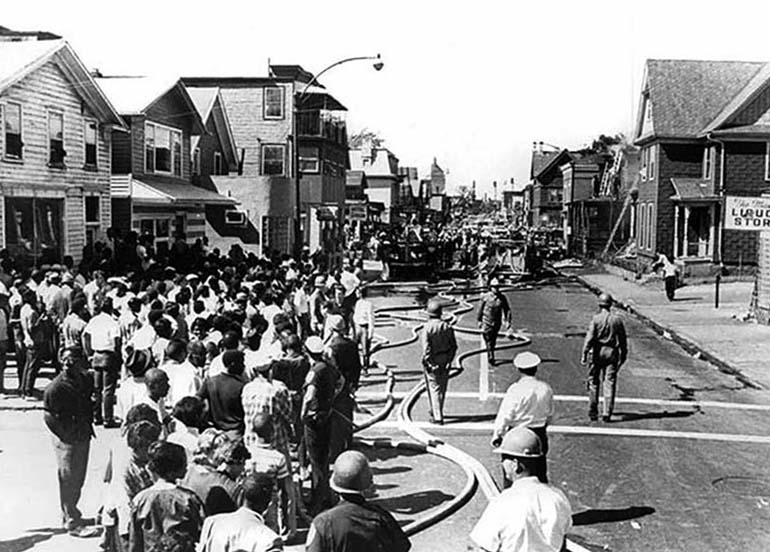
Governor Rockefeller called out more than 1,000 National Guardsmen last night to help in ending racial rioting in Rochester, New York. At 3 AM today, the situation was uneasy but under control. Policemen were keeping crowds off the main streets in two Black areas that had been torn by violence and looting since late Friday night. About 300 uniformed guardsmen from Rochester cruised rapidly through the areas in open trucks shortly after 9 o’clock last night. They carried rifles and bayonets but no ammunition. Minutes after the column passed on Joseph Avenue, the center of one Black section, a Molotov cocktail was tossed at a fire engine from a housing project. Rifle fire from the buildings followed.
The troops then returned to their bivouacs, where they were kept on alert. A guard unit from Auburn, 60 miles away, arrived early today. Another unit, making the 115‐mile trip from Binghamton, was expected before dawn. The two units have a total of 840 men. Before the appearance of the guardsmen, more than 120 rioters were arrested in a hot, humid day of violence. The 600 state and county policemen, augmented by 400 state police, had to use tear gas and fire hoses to disperse mobs. The temper of this city of 325,000 was further inflamed by the crash of a Civil Defense helicopter into one of the riot areas. Three persons were killed in the crash and the fire that followed.
By Sunday night when the Rochester, New York riot ended, approximately 250 stores were looted; five white people died (four men died in a helicopter crash blamed on the riot), and nearly 350 people were injured. The police had arrested more than 900 people in connection with the uprising, the majority were employed Black men between 20 and 40 years old with no prior records of violence. Only 15 percent of those arrested were white.
The New York Police sharply reduced their forces in Harlem and in Brooklyn’s Bedford-Stuyvesant section yesterday. “We hope this will return the situation to normal,” a spokesman at Police Headquarters said. For the most part, the two neighborhoods were calm. However, Molotov cocktails were thrown through the front windows of three stores run by whites in Bedford-Stuyvesant. The gasoline‐filled bottles started fires that were quickly extinguished, and one person was slightly injured. There was no looting. Figures on police strength were withheld, and the spokesman said reinforcements were still on hand. But policemen were patrolling in pairs at intersections in Harlem, in contrast with the blue ‐ coated groups that had been moving along each block constantly during the preceding week. Some of the 30 Harlem leaders who had met for two and a half hours with Mayor Wagner at Gracie Mansion Saturday reaffirmed their criticism of police handling of the five nights of racial disorders that started July 18.
Alexander J. Allen, executive director of the New York Urban League, said he was “increasingly concerned” that Police Commissioner Michael J. Murphy still maintained “unqualified support” for his men. Mr. Allen said many policemen had been “immature, unprofessional.” He added that “the use of racial epithets, the indiscriminate beating of citizens, excessive shows of force and the use of live ammunition in crowd control are among the reasons for our concern.” Both Mr. Allen and the Rev. Richard A. Hildebrand, president of the New York branch of the National Association for the Advancement of Colored People, said Mayor Wagner had been impressed by the broad unity of Harlem leadership achieved during the crisis.
Seven leaders in the Harlem community, appearing on television and radio yesterday, said the public now had a chance to take positive steps to deal with the issues underlying the unrest in the Black slums — jobs, housing, schools, policing. The leaders are James Farmer, Basil Patterson, Bayard Rustin, Cleveland Robinson, Percy E. Sutton, Madison S. Jones and the Rev. Richard A. Hildebrand. The relative calm in the city, they agreed, indicates that the situation can now enter a constructive phase. It is dangerous to predict, they indicated, but they think the Mayor, the Governor and the citizenry can now press forward on a corrective program. Without positive action, they said, further trouble is inevitable.
Night riders used gunfire, dynamite, tear gas and Molotov cocktails to harass Blacks and civil rights workers in five Mississippi communities during the weekend, the Council of Federated Organizations reported today. A spokesman for the council, which is sponsoring the summer civil rights drive in this state, said the greatest damage was the burning of an automobile owned by a staff member of the Student Nonviolent Coordinating Committee. The violence appeared to have stemmed from the stepped‐up efforts by terrorist groups to protest the presence of several hundred volunteers who are conducting schools and working for Black voter registration and in behalf of the Mississippi Freedom Democratic party. The party is a predominantly Black group seeking to become the official branch of the National Democratic party in the state. During the week, Senator James O. Eastland and other officials charged that members of the Communist Party had infiltrated the Mississippi summer project.
Senators will resume debate tomorrow over whether they should be required to make a limited disclosure of their outside financial interests. There had been some question whether the proposal would be pushed since the Senate, in a surprise move on Friday, voted to establish a bipartisan committee to oversee the conduct of its members. The establishment of the committee appeared to “take a great deal of the steam” out of the financial disclosure proposal, according to Mike Mansfield, the majority leader.
Senator Mansfield, who had conferred with legislative lawyers, said today he was satisfied that the disclosure proposal was “separate and apart” from the investigation panel. “In my opinion, we must face up to it,” he said. The disclosure proposal was recommended by the Senate Rules Committee after an investigation into the tangled finances of the Senate’s onetime secretary to the Democratic majority, Robert G. Baker. It would require Senators to disclose any outside business or financial holdings in which they have a beneficial interest exceeding 50 percent of their Senate incomes. This would also apply to Senate employes earning more than $10,000 a year.
Some Senators have said the disclosure proposal is too weak, some have said it is too strong. It is opposed by the minority leader, Senator Everett McKinley Dirksen. When the disclosure proposal is settled, the Senate will move on to a heavy schedule as legislative leaders seek to wind up the session before the Democratic National Convention, opening August 24. “We’ll stay in fairly late every day and meet every Saturday,” Senator Mansfield said. He will meet with Democratic Senators tomorrow to set up a legislative timetable.
Teamsters President and U.S. union leader Jimmy Hoffa is convicted of fraud and conspiracy. A Federal jury found James R. Hoffa, president of the International Brotherhood of Teamsters, guilty of mail and wire fraud and conspiracy today in the use of his union’s pension fund. A jury of four women and eight men found Hoffa guilty on four of 21 counts in what the government called a $25 million scheme. He was convicted on one count of conspiracy and three general counts of fraud, and acquitted on 17 other fraud counts. The jury also found each of six fellow defendants guilty on the conspiracy count and at least one other count. The jury, whose foreman was Walter M. Gogerty, a security guard and teller in a suburban bank, reached its verdicts after 17½ hours of deliberation over three days.
Hoffa, who is appealing a Chattanooga Federal Court conviction for jury tampering, stared at the jurors impassively. He and the six others were accused of fraudulently arranging $25 million in loans from the teamster pension fund and of diverting $1.7 million for their own use. Hoffa, as head of the teamsters — the nation’s largest union — is one of the trustees of the pension fund.
President Johnson delighted some 200 tourists today by taking them for a walking, talking swing around the White House grounds. Mrs. Johnson and the Johnson beagles, Him and Her, gave the tourists an added bonus. It all started when Mr. Johnson saw a group gathered outside the southwest gate. The President, who had Him and Her on a leash, first got in some handshaking with the tourists, then asked if they would like to come in and take a walk with him. The tourists shouted that they would and Mr. Johnson ordered the gate opened.
The 1964 Australian Touring Car Championship was won by Ian Geoghegan, the first of his five wins in the event.
In Cleveland, the Boston Red Sox sweep a pair from the Indians but pay a penalty when left fielder Tony Conigliaro suffers a broken arm in game 2 when he is hit by a Pedro Ramos pitch. Ed Connolly pitches 6 scoreless innings in the 3–1 win. In game 1, Conigliaro hits his 20th homer to back Earl Wilson’s 4-hit, 6–1 victory. Conigliaro was not through breaking things as he gets fined $250 by manager Johnny Pesky for breaking curfew. It is the third time this season he has broken curfew.
Johnny Buzhardt pitched the Chicago White Sox to a 3–0 victory over the slumping Minnesota Twins and a sweep of their doubleheader today. The White Sox won the opener 5–4, on a two–out, basesloaded single by a relief pitcher, Eddie Fisher, in the 12th inning.
In Philadelphia, the first-place Phillies drop a doubleheader to St. Louis and two lefty pitchers. Cardinals’ Rookie Gordon Richardson tops the Phils 6–1 in his first Major League start, then Ray Sadecki beats them 4–1 in the nightcap.
The Milwaukee Braves sweep the New York Mets in a doubleheader at Shea, but Atlanta uses 11 pitchers to do it. The Mets also use 11 pitchers, a two-team record, as the Braves win 11–7 and 15–10. Game 2 features 39 hits. Rico Carty drives in 5 runs and Hank Aaron finishes the scoring with a 3-run homer in the 9th. Both wins go to Chi Chi Olivo who toils just 2⅔ innings.
The Cincinnati Reds and Pittsburgh Pirates split a pair with the Bucs taking the opener, 7–2 and the Reds coming back for a 5–1 win. Willie Stargell homers in each game and Leo Cardenas hits a grand slam in game 1.
San Francisco snapped Sandy Koufax’s winning streak at 11 today by defeating the Los Angeles Dodgers, 5–2. Willie Mays hit a tie‐breaking double and Jim Hart followed with a home run in the ninth inning. The victory, coupled with Philadelphia’s double loss to St. Louis, sliced the Phillies’ National League lead to a half-game over the Giants.
Two Chicago Bear players — Willie Galimore and John Farrington — were killed tonight when their car crashed on a Jasper County road about 2½ miles west of Rensselaer, Indiana. Coach George Halas announced at the Jasper County Hospital that the two players had been killed. No other details of the accident were disclosed immediately. Galimore, a graduate of Florida A. and M. University, joined the Bears in 1957 and had been a starting offensive halfback through most of his seven years with the National Football League champions.
Born:
Sandra Bullock, American film actress (“Speed”, “The Blind Side”), in Arlington, Virginia.
Danny Woodburn, American actor (“Conan the Adventurer”), and activist for the disability rights movement linked to his dwarfism, in Philadelphia, Pennsylvania.
José Bautista, Dominican MLB pitcher (Baltimore Orioles, Chicago Cubs, San Francisco Giants, Detroit Tigers, St. Louis Cardinals), in Bani, Dominican Republic.
Rickie Winslow, NBA small forward (Milwaukee Bucks), in Houston, Texas.
Anne Provoost, Belgian author (“In the Shadow of the Ark”), in Poperinge, Belgium.
Died:
Francis Curzon, 80, 5th Earl Howe, British politician, naval officer and auto racer (1931 Le Mans).
William A. Seiter, 74, American film director
 History Diaries