The British Government is giving active consideration to a proposal to provide. Russia with a new and dramatic proof of the genuineness of Britain’s desire for an anti-aggression agreement by opening staff talks immediately, it was learned tonight. The Cabinet and the army’s High Command have been discussing this move for several days, but it has been kept secret pending the conclusion of the agreement with Japan. Now that a settlement, however ambiguous, has been reached with the Japanese, Britain is turning back to the long drawn-out Moscow talks in a final drive to complete the peace front.
From the time that the annihilation of Czecho-Slovakia, last March, first made the Anglo-Russian agreement even the subject of discussion, Moscow has been insisting that there should be immediate staff talks to prepare the way for full and efficient military cooperation in the event of war. Hitherto, however, although they have gradually given way to all the other earlier Russian demands, the British have refused to consider the request for staff talks arguing that there would be time enough to have them when political agreement, laying down the basis under which there would be any military cooperation, was reached.
Now, however, the British have recalled that there are to be both military and political sections in the agreement and an important section in the government holds that it would be just as well to save time by having the staff talks while a definition of what constitutes “indirect aggression” is being debated. In fact, although the report could not be confirmed tonight, there are grounds for believing that new instructions have been sent to Ambassador Sir William Seeds in Moscow to make a proposal that a British military mission be sent out to Moscow immediately. In any case, government opinion is certainly moving in that direction.
If the final decision is in the affirmative, Britain plans to make sure of wounding no Russian susceptibilities by sending out a little-known officer — as when William Strang instead of the Foreign Secretary, Viscount Halifax, went to Moscow — and General Sir Edmund Ironside, Inspector General of Overseas Forces, who conducted the recent staff talks with Poland, is being considered. It is recalled, however, that Sir Edmund might not be too popular, since he served with the British Expedition against the Soviets at Murmansk and Archangel. If the Russians should prefer someone else, the British, it is thought, would choose another equally distinguished officer, perhaps even Viscount Gort.
The entire Berlin press today features extensive accounts of German submarine maneuvers in the Baltic Sea, in which the entire submarine fleet — reported to number seventy-one craft — participated under the personal supervision of Admiral General Erich Raeder.
A Nazi plan for the conscription of women of means and leisure to do compulsory service as workers in factories, including ammunition plants, is being tried out in Celle and Hanover. The plan is meeting with considerable resistance. In the initial week the women showed what the Nazis consider a remarkable lack of talent for the compulsory jobs meted out to them. In Celle and Hanover several groups of socially prominent women of all ages — even in their fifties — were ordered to report for work for a maximum of six weeks in ammunition plants and similar organizations of national importance.
In Celle, the conscription measure raised a tremendous storm. It is one of those prosperous small towns with a big garrison, a huge air field and an important high court where wives of functionaries and army officers abound and all are aware of their social importance. The women who were drafted to work in a nearby munitions factory were ordered to muster in at 5 AM. Some succeeded in getting their husbands to intervene on their behalf. Only women who had small children were excused. The women were told their protests were useless “unless they wanted to create the impression they were not ardent Nazis.” They went to work.
Britain sent 240 of her most modern bombing planes roaring over France today on the anniversary of Louis Bleriot’s history-making flight across the English Channel thirty years ago.
At a secret meeting in Warsaw, Poland agrees to give reconstructed “Enigma” code machines to Britain and France, along with data about deciphering the cryptograms sent by Germany. At a conference in Warsaw the Poles reveal to the French and British that they have broken the German Enigma code system and pledge to give each a Polish-reconstructed Enigma machine, along with details of their Enigma-solving techniques and equipment, including perforated sheets by Henryk Zygalski, Polish mathematician and cryptologist, and the cryptologic bomb by Marian Rejewski, Polish mathematician and cryptologist.
The twin engine prototype Avro Manchester makes its first flight. Although it will serve with eight Bomber Command Squadrons, the Manchester suffers from persistent engine problems and will be withdrawn from service in 1942. The program is not a total loss, however, as the design will be reworked and eventually emerge as the four-engine Avro Lancaster heavy bomber, the most important aircraft of the wartime RAF Bomber Command.
The British Admiralty places an order for 26 Flower-class corvettes under the 1939-40 Naval Estimates.
Pax Ting, the first Girl Guide and Girl Scout World Camp, opened in Gödöllő, Hungary. 5,800 Girl Guides attended from around the world.
The fifth and last Dutch government of Prime Minister Hendriku Colijn, forms.
The Supreme Soviet of the Russian Socialist Federated Soviet Republic — the great Russian republic, which includes most of European Russia and Siberia and is by far the largest of the Soviet Union’s eleven constituent republics — began its annual session in the Kremlin this evening. Andrey A. Zhdanov, member of the Political Bureau, presided, and among members in honored seats on the rostrum were President Mikhail Kalinin, Premier Vyacheslav M. Molotov, Lazar M. Kaganovitch, Commissar of Fuel Industry; Marshal Simeon Budyenny and Vice Premier Andrey Vishinsky.
Maxim M. Litvinov, for a long time Commissar of Foreign Affairs until his unexplained removal from that spotlighted place early last May with no indication of his future, was present in his capacity of ordinary delegate. He had some trouble finding a seat. Attendants at length directed him to the almost empty second row, where he sat with vacant seats on either side. So far as could be seen no one spoke to him or appeared to recognize him.
A band of Palestinian Arabs frees a kidnapped U.S. pastor for $2,500. Exhausted and ill as a result of eating tribal food, the Rev. Gerould Goldner, 29-year-old kidnapped Ohio minister, was returned to the Holy City and the arms of his father today, just a week after he had been taken captive by a wandering Arab band in the Moab hills.
Today in Washington, President Roosevelt returned from Hyde Park and conferred with legislative and departmental advisers; received many other callers and signed many bills, including one extending the time for constructing the Niagara Falls Bridge.
The Senate heard Senator Barkley open discussion of the Lending Bill; passed a bill creating new Federal judgeships; approved a new Panama treaty, and recessed at 5:36 PM until 11 AM tomorrow.
The House received through its Interstate Commerce Committee a letter from President Roosevelt urging coordination of national oil conservation policy; debated the Lea Transportation Bill and adjourned at 5:45 PM until noon tomorrow.
The Administration’s $2,490,000,000 Works Financing Bill went before the Senate late today accompanied by an ultimatum from Senator Barkley, the majority leader, that Congress would not be permitted to adjourn until this measure had been disposed of “one way or the other.” Senator Barkley asked that a chance be given to the program on the ground that previous New Deal efforts have failed to solve the nation’s unemployment problem. He recited the previous efforts, the emergency works created by the WPA, the PWA and the CCC; he listed the long-term programs involved in the Social Security Act, the Wages and Hours Law and the lending agencies thus far created. and added: “But, even so, we have not been. able to solve the problem of unemployment.”
“No effort will be made to adjourn Congress until this bill is passed upon one way or the other,” he said. The statement came within a few hours after the Senate leader and Representative Rayburn of Texas, majority chieftain of the House, had gone over the legislative situation with the President at a White House conference.
The force with which Mr. Barkley delivered his ultimatum was traced back to the White House conference, but the qualification to his statement, that the bill must be disposed of “one way or the other.” was believed to have been prompted by the situation which was rapidly developing on Capitol Hill. Passage of the lending program by the Senate, at least in some form, is expected, but opponents in the House were counting on enough support to indicate a close vote and possible emasculation or defeat of the measure. In the Senate, the chances were that the measure would be hedged about by restrictions before approved.
House leaders planned personal appeals to committee members to free the lending bill from the Banking and Currency Committee. They pleaded with recalcitrants on the Rules Committee for a special order to consider the $800,000,000 Housing Authority Bill, which is regarded as part of the program. Indications pointed tonight to success so far as forcing the measures to the floor was concerned. At his press conference President Roosevelt said he had not discussed with Congressional leaders any method for bringing the Works Financing Act to the floor of the House despite restraining influences within the Rules Committee. Neither had he heard of any difficulties between the committee and Administration leaders in the House for obtaining consent to early consideration of the measure.
U.S. Democrats sign a party caucus and ask for the end of raids on the New Deal. They act to bring recalcitrant members into line for the administration. In a move to avert further session-end raids on New Deal legislation by a recurring coalition of Republicans and Conservative Democrats, more than fifty Administration Democrats in the House signed a petition for a party caucus today. The petition was signed up as a recalcitrant majority of the Rules Committee continued to sit tight on the $800,000,000 Housing Authority Bill, and as the Republican-Conservative Democratic coalition which dogged the leadership last week threatened to extend its activities to program and other administration measures.
Representative McKeough of Illinois, prime mover in the caucus call, made it plain that the move was intended to break up the combination which has brought so much havoc to the New Deal legislative program. Mr. McKeough issued the following statement: “A caucus has been called by Democratic members of the House of Representatives for the purpose of considering the necessity of favorable action by the Rules Committee of the House with relation to the housing program, the spending-lending legislation and such corrective amendments to the recently enacted Works Progress Administration Appropriation Bill as will remove restrictive and oppressive provisions.
“It is the sense of the members signing the call for the caucus that no adjournment take place until this necessary legislation has been passed, or the responsibility for the failure so to pass is properly placed upon the reactionary coalition consisting of a small bloc of Democrats and practically the entire Republican membership of the House. “This coalition has operated throughout this session of Congress to defeat humanitarian and progressive measures and is attempting to sabotage and destroy existing labor and liberal legislation enacted by previous Congresses of the Roosevelt Administration.”
The Administration’s lending program was denounced by the Republican Special Committee on Debt as a “gigantic pork barrel” and “State socialism by stealth” in a report made public today by the committee of which Representative Daniel A. Reed of New York is chairman.
President Roosevelt undertook again today to scotch reports of differences between himself and Postmaster General James A. Farley on the third-term question when, at a regular press conference, he described as “tommyrot” published stories that Thomas G. Corcoran and other left-wing New Dealers were trying to purge the cabinet of anyone opposing a third term, starting with Farley.
Maury Maverick, Mayor of San Antonio, Texas, and former Representative in Congress, charged in an interview yesterday that the Presidential boom of Vice President Garner was being promoted by lobbyists for big business whose primary interest was in the election of a reactionary as the next President of the United States.
John L. Lewis challenged the building trades unions, backbone of the American Federation of Labor, by announcing today formation of the United Construction Workers Organizing Committee.
Using nature lore he learned as a Boy Scout, 12-year-old Donn Fendler of Rye, N.Y., emerged today exhausted and almost naked from the Mount Katahdin wilderness in which he had wandered for eight days while the object of one of Maine’s greatest searches.
The Communist Party of the United States finances itself from dues and collections and also believes in the seizure of property and money to further its work, Merriel Bacon, continuing his testimony at the Harry Bridges deportation hearing, said today.
New York police chiefs discuss how science can aid crime detection.
The Tuzigoot Site in Arizona was made a U.S. National Monument.
Unbeaten rookie Atley Donald wins his 12th in a row for the Yankees, beating the visiting Browns 5–1. DiMaggio’s home run off Brownie southpaw Howard Mills is the big blow, as the ball travels an estimated 450 feet into the left field Bleachers. Only Hank Greenberg, last year, has reached those distant seats in 16 years. Red Rolfe also homers to back Atlee’s five-hit victory. His 12 wins in a row is a rookie American League record for starting pitchers, tying him with Russ Ford of the 1910 Highlanders.
With the score tied 3–3 at the end of 8 innings, the Cleveland Indians score 9 runs and the Philadelphia A’s 5 in a record-setting 9th inning. Tribe pinch hitter Jeff Heath has a double and triple in the big inning.
Supported by plenty of home-run slugging, the Boston Red Sox opened their longest home stay of the season today by toppling the hard-pressing Chicago White Sox twice, 3–2 and 6–5, before a crowd of 20,000. The second game went ten innings. The Red Sox’ Joe Cronin homered and doubled, and Ted Williams added a triple in the first game. In the second, Jimmy Foxx hit two home runs for Boston.
Harry Craft hit his eighth homer of the season with a man on base in the seventh inning tonight to give Cincinnati a 2–1 victory over the Boston Bees before 28,682 fans at Crosley Field. It was Bucky Walters’s seventeenth victory of the year and his sixth straight and increased the Reds’ National League lead to ten games.
Frank Demaree and Mel Ott hit home runs with the game tied 3–3 in the 13th inning and the New York Giants snap their losing streak, beating the St. Louis Browns, 6–3. Carl Hubbell got the win for the Giants.
The Brooklyn Dodgers sweep a doubleheader with the Chicago Cubs, winning 8–6 and 3–1. The Dodgers hit three home runs in the first game, and Leo Durocher hit his first of the year in the nitecap.
A wild pitch by Relief Hurler Hugh Mulcahy in the tenth inning, with the bases loaded and two out, gave the Pittsburgh Pirates two runs and a 5–4 victory over the Philadelphia Phillies today. The victory sent Pittsburgh to second place, ahead of the Cardinals, with a percentage of .5244 against St. Louis’ .5238.
Salisbury’s (Eastern Shore League) Count Henri S. “Hank” Bertrand de la Vigne, known as the only titled pitcher in baseball, wins his 11th of the year, beating Milford 8–0 and striking out 11. The Count will be 14–9 for the year, but he will never make it to the majors.
Mexican internal disorder grows in gravity. Federal troops fight rebels and other revolts are brewing. The disturbances at Irapuato, which yesterday delayed the return of President Lazaro Cardenas to Mexico City, have apparently grown more serious. Strenuous fights are reported in the country outside that town between Federal troops and rebel formations commanded by a bandit named Lucio Campos.
The U.S. Senate finally ratifies the treaty with Panama, negotiated in 1936, which gave the Panamanian government the commercial rights of a sovereign state to the Canal Zone. U.S naval and military authorities opposed the revised treaty and delayed Senate ratification. The Senate ratified a treaty with Panama today to replace that which was made with the new country in 1903, a compact dealing with the status of the Panama Canal Zone. Ratification was accorded only after the Senate had established the understanding that in the event of war this country may defend the canal in any means necessary.
Japanese 64th Infantry Regiment and 72nd Infantry Regiment launched a failed main attack two days ago on Soviet forces defending the Kawatama Bridge in Mongolia Area of China. The Japanese disengaged from the attack today due to mounting casualties and depleted artillery stores. By this point they had suffered over 5,000 casualties between late May and 25 July, with Soviet losses being much higher but more easily replaced. The battle drifted into a stalemate.
The strength of the Red Navy’s Pacific fleet was glowingly outlined last night in a speech here by Admiral Nikolai G. Kuznetsov, Navy Commissar, which is especially interesting in view of a renewed tension in the Far East centering on the Mongolian-Manchukuoan border and the Island of Sakhalin.
The Japanese consul at Canton informed other foreign consuls that the Canton River would be closed to foreign shipping for two weeks beginning at midnight tomorrow for military reasons. The Japanese Navy announced today that it would close the Canton River for two weeks beginning at midnight tomorrow in a move reliably reported is designed to blockade shipping between Canton and Hong Kong, British colony. Simultaneously with the closing of the river, explained officially as for “military reasons,” it was said the Japanese also planned to blockade the British and French Concessions on Shameen Island at Canton. Notice of the river closing was served today by the Japanese Consul at Canton to consular authorities of the United States and other foreign powers. Foreign quarters at Canton were without official information as to the reported plans to blockade Shameen, where the United States Consulate and American business houses are located.
Reports in Hong Kong said Japanese sentries would be posted at both bridge entrances to Shameen and that all persons entering or leaving the island would be searched as at Tientsin, where a Japanese blockade has been in force since June 14. Foreigners believe that closing of the Canton River to third-power shipping was decided upon to facilitate troop movements in the Canton area for large-scale operations or for landing troops for action elsewhere in Kwangtung Province. A United States gunboat prepared to speed from Hong Kong to Canton, sixty miles up the river, to reach Canton before the blockade becomes effective.
The Foreign Office spokesman indicated today that Japan interpreted British acknowledgment of “special requirements” for the Japanese Army in China as applying to all of China — not merely occupied areas. The spokesman noted that the agreement announced on Monday between Foreign Minister Machiro Arita and British Ambassador Sir Robert Leslie Craigie referred to “regions under their (Japanese military forces) control.” Then he was asked what Japan’s reaction would be if Britain continued to assist Generalissimo Chiang Kai-shek in ways not involving Japanese-occupied territory. “We certainly do not expect that any such assistance will be given,” he replied.
The joint British-Japanese committee, appointed yesterday, spent today discussing practical measures of cooperation for the maintenance of security and public order in Tientsin. The committee completed its work and will. report tomorrow to the full conference. The Tientsin settlement has disappointed newspapers that have been conspicuously anti-British. Kokumin finds the official statement extremely negative, saying: “England has only pledged herself to the strict neutrality proper for third parties.” Hochi is unable to decide whether Britain or Japan won a diplomatic victory, saying: “England has neither gained nor lost; she simply returns to her original stand.” Asahi approves the statement on the settlement and finds that its importance lies in the language in which Britain recognizes the actual situation. Nichi Nichi observes that Britain has made a great change since the days she supported the League of Nations in stigmatizing Japan as an aggressor.
Japan will be held responsible for any injury to Americans or damage to their property resulting from operations incident to the closing of the river between Canton and Hong Kong, U.S. Secretary of State Cordell Hull announced today. The latest report in Washington, as of January 1, placed 1,228 Americans in Hong Kong and ninety-eight in Canton. The Americans at Canton are principally active in missions and schools, while at Hong Kong their principal occupations are trading and shipping. Official notice has been received by local American officials from Japanese authorities in China of the Intention to close the river. In itself this represents what has become normal practice in the warfare between China and Japan. The same river has been closed before. Moreover, the American attitude is the same as has been asserted ever since the practice was adopted.
What does count, in the opinion of observers here, is that the position of the United States remains unchanged, even though Great Britain has been forced to accept another humiliation by her agreement with Japan over issues precipitated at Tientsin. It is felt in diplomatic circles here that Britain in the agreement has not consented to depart from policies she has actually been following for months in China, but the important fact remains that she has at last reduced them to paper. That, it is recognized, has a significant psychological and political reaction in the Orient.
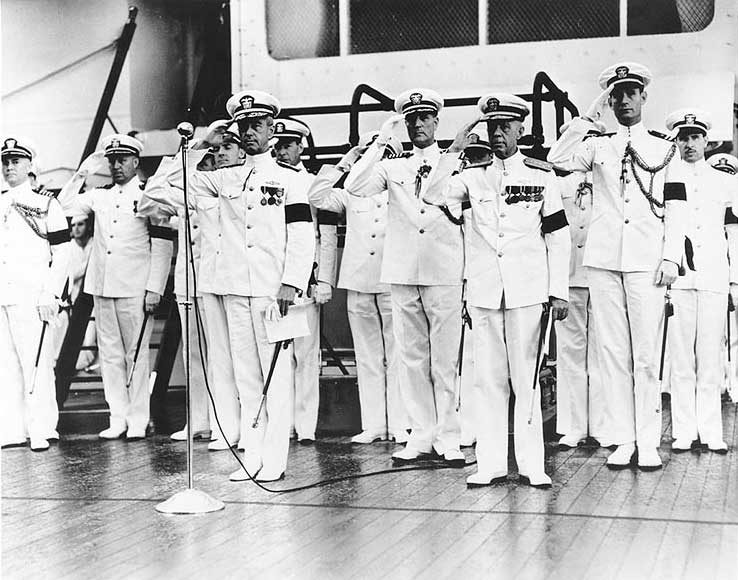
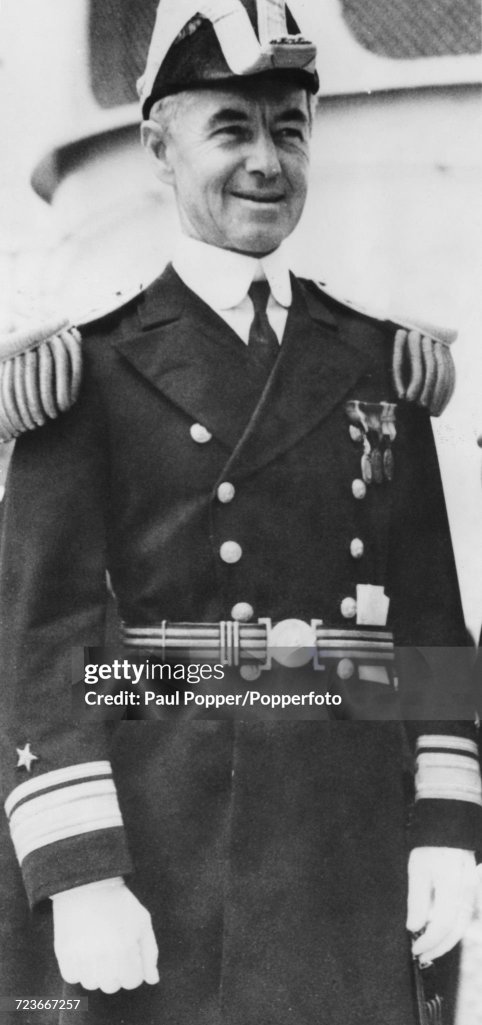
“To all a hearty ‘Well done’” were the closing words of Admiral Harry E. Yarnell today when he turned over the command of the United States Asiatic fleet to Admiral Thomas C. Hart aboard the flagship USS Augusta.
Chiang Kai-shek doubts British betrayal. Generalissimo Chiang Kai-shek repudiated the suggestion that Britain had compromised with Japan at the expense of China in a statement on China’s wartime position in relation to international support. The Chinese leader stresses that a shift to aid Japan is unthinkable.
The Japanese resume night raids in China, attacking Chungking at dusk with incendiary bombs. Casualties were estimated at 100, almost all in the northern part of the city.
Dow Jones Industrial Average: 143.10 (-1.08).
Born:
Santiago Rosario, Puerto Rican MLB pinch hitter, first baseman, and outfielder (Kansas City A’s), in Guayanilla, Puerto Rico (d. 2013).
Richard Trythall, American-Italian pianist, contemporary classical and electronic music composer (Continuums; Parts Unknown), and educator, in Knoxville, Tennessee (d. 2022).
Naval Construction:
The British Admiralty places an order for 26 Flower-class corvettes under the 1939-40 Naval Estimates.
The Royal Navy Tree-class minesweeping trawlers HMS Chestnut (T 110) and HMS Whitethorn (T 127) are laid down by the Goole Shipbuilding & Repairing Co. Ltd. (Goole, U.K.); Chestnut completed by Amos & Smith.


 History Diaries