Neutralist Laotian forces began falling back from the Phou Kout foothills today as the Pathet Lao moved up five battalions for an imminent attack. Some fighting is already in progress, military sources said. Laotian Government T‐28 fighter bombers were making constant attacks on the Pathet Lao positions, but the Pathet Lao and North Vietnamese forces had three battalions ready to attack, and two others were moving into position.
Phou Kout Hill, at the western edge of the Plaine des Jarres, commands a strategic east‐west route, Highway 7, leading 13 miles westward to the neutralist stronghold of Muong Soui, 110 miles north of Vientiane. It has changed hands seven times in heavy fighting since May. Military sources said that the Pathet Lao and North Vietnamese battalions were concentrating near the hill and that a major attack was expected momentarily, with skirmishing already under way. They said the main battle would begin when two Communist battalions arrived from Communist headquarters at Khang Khay on the Plaine des Jarres, a few miles to the southeast. Khang Khay is the pro‐Communists’ headquarters.
American and South Vietnamese pilots flew fighter‐bomber attacks against 10 targets in South Vietnam Wednesday night and yesterday morning, the heaviest night air action this month. United States military spokesmen said the planes had used bombs, rockets and machinegun fire to help defend nine outposts and a fortified village from Việt Cộng attackers. The planes flew by the light of magnesium flares parachuted from transports. The widely scattered night operations were followed yesterday by air strikes in support of three helicopter assaults by Vietnamese soldiers. One helicopter went down, and fighters flew air cover while a second rescued its American crew. No one was injured.
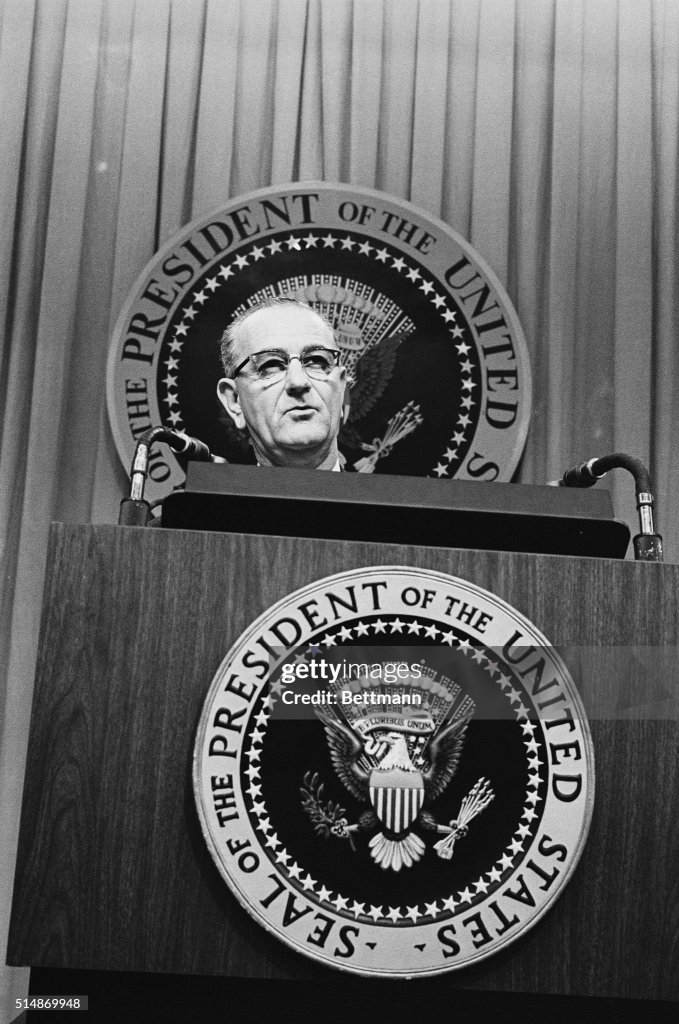
President Johnson dismissed today President de Gaulle’s call for an international conference to proclaim the neutrality of Vietnam, Laos and Cambodia. “We do not believe in a conference called to ratify terror,” Mr. Johnson said at his news conference. If the Communists honored the agreements of previous conferences, the President said, there could be peace in Southeast Asia “immediately.” Until then, he added, the United States will take any action necessary to support the freedom and independence of South Vietnam and the neutralist Government of Laos. In addition to sharply rebutting several points made by President de Gaulle at a news conference yesterday, Mr. Johnson sought to suggest that there had been no misunderstanding between Washington and Premier Nguyễn Khánh of South Vietnam.
The President virtually denied, though he did not mention, reports of a disagreement yesterday between South Vietnamese leaders and the United States Ambassador, General Maxwell D. Taylor, about whether the anti‐Việt Cộng war should be carried into North Vietnam. In effect, Mr. Johnson also contradicted strong expressions of displeasure and puzzlement that other Administration officials have voiced about the increasingly belligerent statements of several leaders in Saigon. Premier Khánh and Ambassador Taylor have established “the closest understanding with each other,” Mr. Johnson said. “They are in continual consultation,” he went on, “about the policies of the whole program in that country — political, social, economic and military.”
He added: “It is true that there is danger and provocation from the North, and such provocation could force a response, but it is also true that the United States seeks no wider war.” The President thus tried to end the subsurface tensions that had been developing in recent weeks between Washington and Saigon. Officials here had begun to suspect the South Vietnamese of trying to embarrass the Administration during an election campaign into assuming a greater share of the military burden. General Khánh’s government is widely regarded here as the last hope for sound leadership in Saigon, and a quarrel would be considered disastrous to the war.
In dealing with President de Gaulle’s suggestions for Southeast Asia and Europe, Mr. Johnson came closer than ever before to a public dispute. The proposals were not regarded as new, but the manner of their presentation and several of General de Gaulle’s related comments deeply troubled officials at the White House and the State Department. They felt that Paris had wholly abandoned its earlier assurances that it shared Washington’s desire to halt the spread of Communism in the former French colony of Indochina. They also resented General de Gaulle’s repeated implications that United States’ interests there were colonialist.
The South Vietnamese Government has rejected all suggestions for a political settlement of this country’s struggle against Communist guerrillas. In a statement today, the Foreign Ministry termed such suggestions “prejudicial to the fight that Vietnam leads in the vanguard of the free world against aggression imposed upon it by the Communist international.” The ministry made no mention of yesterday’s news conference by President de Gaulle of France, who proposed a four-nation agreement to end the fighting. Early drafts of the Vietnamese statement included a rejection of the proposal, but when the final draft was issued a spokesman for the ministry said there would be no comment on General de Gaulle’s news conference.
Instead, the statement was a reply to the United Nations Secretary General, U Thant, who suggested in New York two weeks ago that talks be held on the Laos and Vietnam disputes, possibly at a reconvention of the 1954 Geneva conference that led to the partitioning of Vietnam. In an interview on French television last Tuesday, Mr. Thant called again for Geneva talks about Vietnam. The Foreign Ministry statement said: “A new Geneva conference would not resolve the problem, for experience shows that the Communists scarcely respect their commitments and do not hesitate to promote the illusion of a false peace to continue their invasion movement toward the South.”
During the morning the United States Ambassador, General Maxwell D. Taylor, met with Premier Nguyễn Khánh as a follow‐up to yesterday’s conference, in which the Ambassador questioned the intent of recent South Vietnamese statements favoring attacks on North Vietnam. American officials who maintained silence yesterday confirmed today, when confronted with news reports, that the conference had taken place, but they denied that there had been any clash. Other qualified sources, however, reported that there had been a dispute centering on Wednesday’s statement by the commander of the South Vietnamese Air Force that sabotage commandos were being dropped into North Vietnam.
The U.S. Government said today that the United States had agreed to give South Vietnam about $4 million worth of surplus food in addition to planned aid this year. Under an agreement signed by the United States Ambassador, General Maxwell D. Taylor, and South Vietnam’s Foreign Minister, Phan Huy Quát, the United States will send an additional 6.200 tons of wheat and flour and 5,600 tons of sweetened condensed milk. These commodities are sold to Vietnamese businessmen who pay the Vietnamese Government for them in local currency. Saigon uses the money to pay army salaries.
The United Nations confirmed for the first time today reports that clandestine truck convoys were operating from the port of Limassol. A spokesman announced that 30 loaded trucks, in two convoys of 13 and 17 vehicles, left the Limassol docks at 1:50 and 3 AM today. Newsmen counted convoys of 106 and 36 trucks on three nights last week and traced them to the Troodos Mountains, a Greek stronghold. Until today United Nations spokesmen would say only that “these movements are classified information, reported to U Thant only.”
Two days ago, Mr. Thant, Secretary General of the United Nations, complained to the Cyprus Government of restrictions on the movement of United Nations troops enforcing a ceasefire between Greek and Turkish Cypriots. He specifically complained about the Greek Cypriots’ refusal to give United Nations patrols access to the Limassol docks, and about Cypriotes “seriously obstructing” observers when the convoys left the docks. The spokesman admitted today that United Nations forces had again been refused admission to the dock area. Asked what steps were possible if United Nations movements continued to be restricted, he said “it is up to the Secretary General.” An authoritative source estimated Tuesday that about 5,000 troops had landed at Limassol. There have been no reported landings of Turkish troops recently.
President Johnson offered understanding and cooperation today to Premier Moise Tshombe of the Congo. He thus completed an official change of attitude toward a man Washington had vigorously opposed. The Administration did not favor or expect Mr. Tshombe’s sudden assumption of political power, officials reported. But now that he leads the central Congolese Government instead of the once‐secessionist province of Katanga, they said, the United States shares many of his objectives and will give him full support. Mr. Johnson, speaking at a news conference, listed the “disturbances” in the Congo among his major foreign policy problems. When asked about the reversal of attitudes here he ignored the quarrels of the past, merely saying: “We are going to be as cooperative and as helpful as we can and attempt to see that the people of that area have as good a government as is possible and we have every intention of being understanding and cooperative.”
President de Gaulle asked Chancellor Ludwig Erhard early this month for West German help in building France’s independent atomic force and the request was rejected out of hand, highly qualified informants said today. They said this rebuff, even more than differences between Bonn and Paris over the political organization of Europe, was responsible for the deep chill that has settled on relations between the two neighbors. The West German Government, openly irritated by President de Gaulle’s gibe yesterday at what he termed West Germany’s “subordination” to United States leadership, replied today with a sharp statement. “German policy is dependent neither on the United States nor France,” the statement said. “A common policy of the two governments cannot mean the adoption of all the views of the partner.”
Heavy fighting, with many dead and wounded, has broken out northwest of Sana, capital of the republican forces in Yemen, the International Committee of the Red Cross said in Geneva today. Large forces of royalist tribesmen are entrenched in almost inaccessible mountains in that area. The International Committee said its tent hospital north of the fighting was crowded to capacity with wounded fighters and injured civilians.
Frederick John Harris, a white member of the terrorist group African Resistance Movement, planted a time bomb inside a suitcase which he left at the “whites only” railroad platform at the Johannesburg Park Station in South Africa. The explosion injured 24 people. One of them, 77-year-old Ethel Rhys, would die of her injuries a month later. On April 1, 1965, Harris would be executed.
More than 300,000 people will crowd into Santiago de Cuba Sunday to commemorate the first battle in Premier Fidel Castro’s long fight to overturn the Batista Government. Dr. Castro flew to Santiago from Havana early this morning. His government has invited 100,000 campesinos, or farm workers, from all parts of Cuba to the celebration, and Dr. Castro visited the camp set up to provide the campesinos with food and shelter until the celebrations end Tuesday. About 25,000 campesinos had already arrived. They gave the Premier a warm welcome.
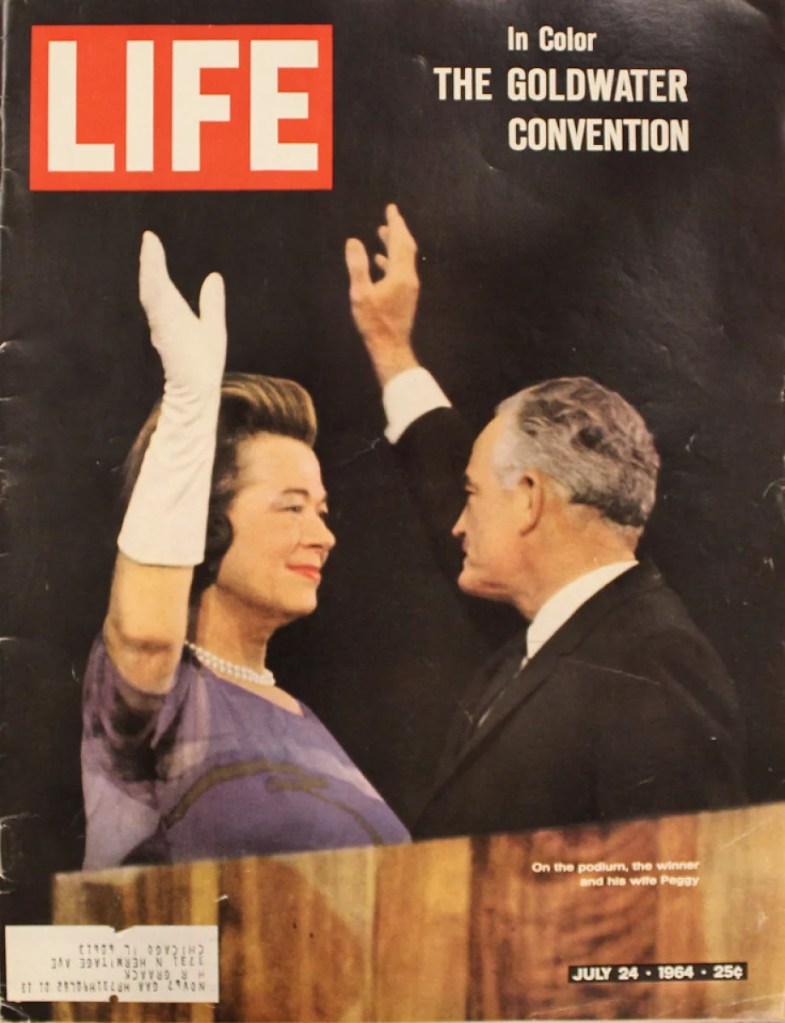
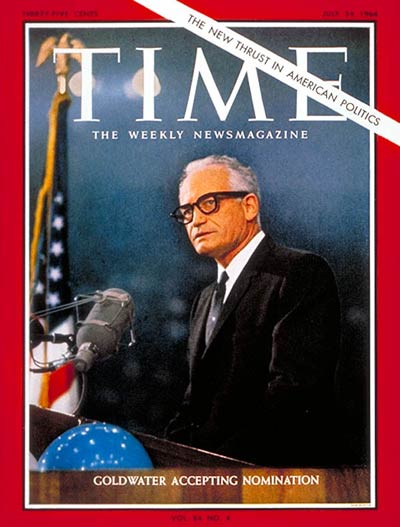
U.S. President Johnson and his challenger in the upcoming November presidential election, Barry Goldwater, met in the White House at Goldwater’s request, and agreed that both sides should avoid making “racial tensions” (between white and black Americans) an issue in the campaign. According to Goldwater, the two men also agreed that the U.S. policy regarding Vietnam would not be an issue during the campaign either, and both honored the agreement as candidates. At a news conference earlier in the afternoon, President Johnson said that the rebuking of bigots who seek to excite racial tensions was a good idea and that the civil rights issue would be discussed by him during the campaign.
After the meeting, George E. Reedy, White House press secretary, read a statement that Mr. Goldwater had seen and, according to a reliable source, had agreed upon. The statement said: “The President met with Senator Goldwater and reviewed the steps he had taken to avoid the incitement of racial tensions. Senator Goldwater expressed his opinion, which was that racial tension should be avoided. Both agreed on this position.” Mr. Goldwater avoided speaking to the large group of reporters who had gathered at the White House because of the meeting.
The Arizona senator entered the White House grounds by the southwest gate in a private automobile at 5:11 PM, 19 minutes early. He left by the southeast gate at about 5:50. The meeting started about 5:30. The two-party leaders were alone during their conversation, Mr. Reedy said. A laugh swept Mr. Reedy’s office when a reporter jokingly asked: “No interpreters?” Mr. Goldwater went directly to his apartment after the meeting and was not available for comment. An assistant said, after having spoken to him: “We are standing by the statement — it was agreed upon.”
At his afternoon news conference, President Johnson pointed out that he would not agree to any suggestion that civil rights, as a political issue, be kept out of the campaign. However, he said no word or deed of his had, or he hoped would, “lend any aid or any comfort to the small minority who would take the law into their own hands for whatever cause or whatever excuse they may use.”
President Johnson seized every opportunity in his news conference today to emphasize how wide and deep were the differences between him and Senator Barry Goldwater on many domestic and foreign issues. In response to questions that he had obviously anticipated, he registered his disagreement with the Republican Presidential nominee’s views on the control of nuclear weapons, the constitutionality of the Civil Rights Act of 1964 and the extent of the Federal Government’s authority in dealing with local violence.
It seemed to those present that Mr. Johnson regarded the news conference, his first since the Republican National Convention last week, as a prelude to the political campaign. He was at pains to make two points. The first was that he believed the purpose of a campaign was to discuss issues, that he intended to discuss them, and that he thought the voters were more interested in the candidates’ views of the issues than in their opinions of each other. The second was that he trusted the voters to use their good judgment to make “a good decision” between the candidates and their views.
The Republican National Chairman, Dean Burch, said today Senator Barry Goldwater would not ignore his friends to woo his enemies in the approaching Presidential campaign. Mr. Burch made the statement in answer to a question on whether Mr. Goldwater planned to concentrate his campaign in any particular geographical sections. Mr. Burch used the California primary to illustrate his point. “We had seven days left. We were strong in the south, weak in the north. We spent 612 days in Southern California, one half‐day up North.” Mr. Goldwater’s national strength is said to be strongest in the West, Midwest and South. Mr. Burch, in an interview, said scheduling for the campaign would be discussed next week in Washington and “after that we’ll know definitely where to hit and how often.”
A race riot breaks out in Rochester, New York; five men are ultimately killed in the next two days. Rochester’s Rebellion began tonight on Nassau Street in Rochester’s Seventh Ward. It started at a block party with 200 people present. At 10 pm, Rochester police arrested Randy Manigault, a 19-year-old African American man, for public intoxication and harassing women at the party. Since the arrest was made in an atmosphere of tension, additional police were called to the scene. False rumors of an assault on a pregnant woman by a police officer and a child by a police dog spread through the crowd at the party and soon into the surrounding neighborhood.
By this point, Rochester Police Chief William Lombard was on the scene personally directing his officers. When he ordered the crowd to move, many young Blacks began throwing rocks at the police cars, and one police car was overturned. By 11:30 pm, more than 400 people were battling the police and all available officers went to the streets. At 2:00 am the next morning, Chief Lombard ordered the police officers to use riot weapons on the crowd. By 3:30 am, the crowd had grown to 2,000 people and looting began on Clinton Avenue, the main thoroughfare through Upper Falls.
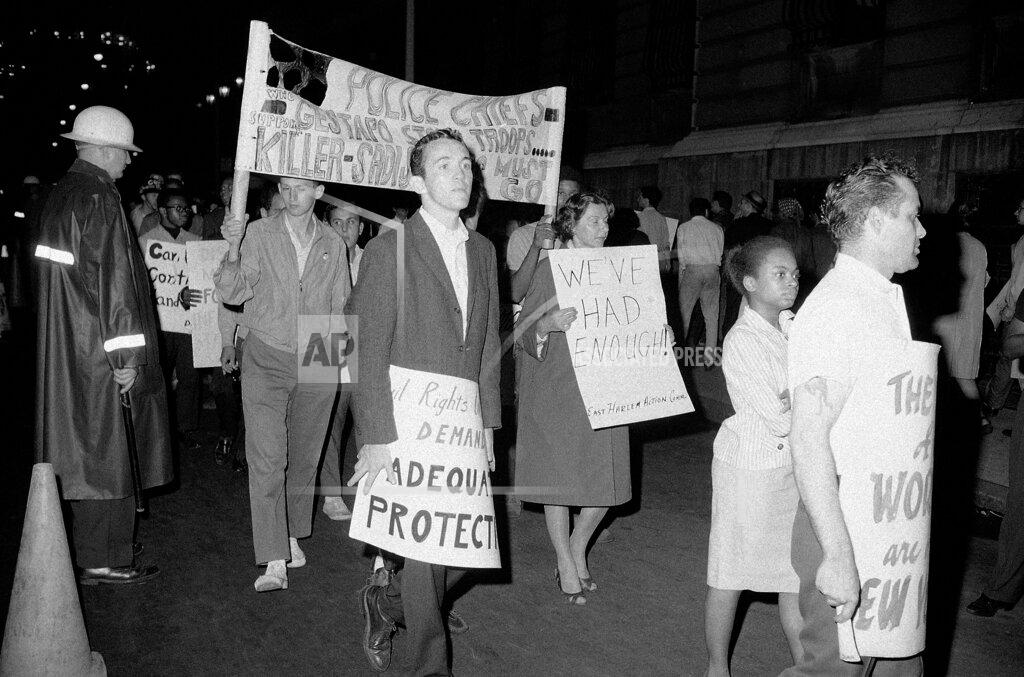
New York Police Commissioner Michael J. Murphy tonight banned a Harlem protest march scheduled for tomorrow afternoon by a militant left‐wing organization. Mr. Murphy asserted in a statement that he was acting “to preserve and improve the uneasy peace which now prevails.” He assailed the sponsors of the march as “advocates of violence and disorder who proclaim their doctrines openly.” William Epton, a spokesman for the Harlem Defense Council, which organized the march, said it would begin as planned at 4 PM. His group will defy the ban Mr. Epton said, because “it is a violation of the Constitutional right to assemble and demonstrate peacefully.”
A rural Louisiana parish (county) asked for the help of the Federal Government today under the new civil rights act in solving its school desegregation problem. The state of Louisiana and a Federal District Court judge immediately supported the request from St. Helena Parish that the Community Relations Service, set up under the new law, and the Federal Commissioner of Education help solve the problem. The St. Helena School Board repeatedly has refused to submit a plan for desegregation, pleading that it feared violence would accompany racial mixing in the schools. St. Helena, Louisiana’s smallest parish, is in the southeast corner of the state, bordering Mississippi. It is 30 miles north and east of Baton Rouge. This is an area in which violence has flared in the past and where the Ku Klux Klan is reported to be enjoying a resurgence of power.
Federal District Judge E. Gordon West, to whom the school board members had expressed their fear of violence, had given the board until noon today to submit a plan for gradual desegregation. Lack of compliance, he warned, would provoke a court order for complete and immediate integration when school opens August 12. Minutes before the deadline, the school board members appeared in Federal Court with Louisiana’s Attorney General, Jack P. F. Gremiliion. They asked that the services of Francis Keppel, the United States Commissioner of Education, and of the new Community Relations Service be sought “in a sincere and humble effort to preserve the peace and tranquility of the community.”
At a press conference, President Johnson publicly revealed the existence of the Lockheed SR-71 Blackbird spy plane, which he said could fly at three times the speed of sound, at altitudes of more than 80,000 feet (24,000 m) and could “provide worldwide reconnaissance ability” to the United States.
The Senate established a bipartisan committee tonight to oversee the conduct of its members. The action came as a surprise to both Democratic and Republican leaders and to a number of the advocates of higher ethical standards for members of Congress. The latter had held little hope of constructive action in the field. After nearly five hours of wrestling with its collective conscience, the Senate voted, 50 to 33, to set up a six‐member Select Committee on Standards and Conduct, consisting of three Democratic and three Republican members. Before the voting, a number of Republicans had criticized the Senate Rules Committee for its investigation of the tangled finances of Robert G. Baker, the Senate’s one‐time majority secretary. The rules unit, like all standing committees in the Senate, controlled by Democrats.
Senator B. Everett Jordan, the chairman of the Rules Committee, had bitterly opposed setting up the new investigating unit. He declared that “this Senate does not need a police force over it.” Senator Spessard L. Holland, Democrat of Florida, maintained that creation of the committee would be interpreted “as a vote of ‘no confidence’ in the Rules Committee.” The Senate postponed until Monday consideration of what had been scheduled as the most important ethics measure: a resolution that would require partial disclosure of outside financial interests by Senators and some Senate employes. This resolution had been drafted by the Rules Committee as an outgrowth of the Baker investigation.
New money totaling $46,774,401,000 to equip and operate the nation’s defense forces this fiscal year was recommended to the Senate today by its Appropriations Committee. The total was $15,134,000 more than approved earlier by the House. But it was $696 million below President Johnson’s budget requests and nearly $1.5 billion below the defense funds provided by Congress last year.
A nuclear criticality accident occurred at the United Nuclear Corporation Wood River Junction nuclear facility, killing 1.
Hank Aguirre gives up 5 runs on three homers to New York in the first 4 innings, but the Detroit Tigers overcome a 5–2 deficit to beat the Yankees, 10–5 in the opener of a doubleheader. Eight straight Tigers reached base and all eight scored during an 8th-inning outburst. The Yankees won the nitecap, 6–3, but Whitey Ford left the game after just two innings with a flareup of his season-long hip strain.
John O’Donoghue pitched a six‐hitter and Chuck Shoemaker tripled home the game’s only run in the third inning tonight as the Kansas City Athletics scored a 1–0 victory over the Los Angeles Angels. The shutout was O’Donoghue’s first in the majors as he won his duel with Don Lee, who allowed five hits in seven innings. The victory brought O’Donoghue’s won‐lost record to 7–6. Lee is 5–2.
Right‐hander Jim Giant fired a six‐hit 6–3 victory over the third‐place Chicago White Sox tonight to snap an eight‐game losing streak for the Minnesota Twins. Grant went the distance to record his fourth victory in 20 lifetime decisions against Chicago. He lifted his season mark to 8–5, including five triumphs since he was traded to the Twins by Cleveland. Harmon Killebrew’s double capped a decisive two‐run outburst by the Twins in the fifth inning. With the Sox leading, 3–2, Zoilo Versalles hit his 10th homer into the left field seats to tie the score. Tony Oliva then singled and scored on Killebrew’s two‐bagger.
Gene Oliver and Lee Maye each drive in 3 runs as the Milwaukee Braves top the New York Mets, 8–5. For New York, Larry Elliot homers in his 4th straight game. Hank Fischer pitched the whole game for Milwaukee, earning his eighth victory. He was on the ropes twice — in the third inning, when the Mets took a 3–1 lead and in the seventh, when they climbed to within 7–5. But Fischer survived both rallies and completed an eight‐hitter with six strike‐outs and three walks.
Jim O’Toole pitched a fourhitter and drove in a run with a single as the Cincinnati Reds trimmed the Pittsburgh Pirates, 2–0, tonight. O’Toole and Bob Friend battled through a scoreless game until the Reds’ seventh with Friend allowing just three hits. But Frank Robinson led off the seventh with a double and scored on Deron Johnson’s single. Johnson took second on the throw to the plate, was sacrificed to third and came home on O’Toole’s single. O’Toole increased his record to 11–4.
San Francisco scored nine runs in the seventh inning, tonight and gave Juan Marichal his 14th victory by routing the Los Angeles Dodgers, 11–3. The Giants, picking up their ninth victory in 11 games with the Dodgers this season, remained two games behind the National League-leading Philadelphia Phillies. The Giants sent 13 to the plate in their big inning and seven got hits. There were also two wild pitches by Joe Moeller and two bad throws by Derrell Griffith, who had four errors before the night was over. Marichal, beating the Dodgers for the fifth consecutive time contributed two singles to the rally. Harvey Kuenn, who went 4‐for‐5, slammed two doubles in the inning, giving him three for the game. Marichal, posting his 14th complete game, struck out nine and walked none.
Dow Jones Industrial Average: 845.64 (-0.84).
Born:
Barry Bonds, MLB outfielder (record for most home runs in a season,73 in 2001; most home runs in a career, 762; N.L. MVP, 1990, 1992, 1993, 2000-2004; All-Star, 1990, 1992-1998, 2000-2004, 2007; Pittsburgh Pirates, San Francisco Giants); in Riverside, California.
Ray Phillips, NFL linebacker and defensive end (Atlanta Falcons, Philadelphia Eagles), in Mooresville, North Carolina.
Warren Marshall, NFL running back (Denver Broncos), in High Point, North Carolina.
Pedro Passos Coelho, Prime Minister of Portugal from 2011 to 2015; in Coimbra
 History Diaries