The Reich admits a materials shortage that is sometimes so acute it threatens a standstill in production. That Germany is acutely suffering a severe famine in raw materials and skilled labor, required to execute the ambitious schemes of public works undertaken under the Four-Year Plan, has been no secret for months past. Until last week, however, the matter could be discussed in public only with discretion. But since Field Marshal Hermann Göring, the Four-Year Plan Commissar, himself announced the necessity of a rigorous investigation to distinguish between those works which are really urgent, and accordingly entitled to preferential claims on the insufficient supplies available, and those whose execution might be postponed till a more convenient moment, the German technical press has seized the opportunity to discuss a situation that is causing deeper and deeper concern.
Consequently, the public is now learning from authoritative quarters that there is a shortage of materials and men everywhere, sometimes so acute as to threaten to bring production to a standstill. These “bottlenecks” exist in great variety and forms, but they are most striking, so far as labor is concerned, in the building trades, metal-working industries and coal. mining. With regard to raw materials, the shortage is particularly marked where the materials have to be imported, so that supplies are dependent primarily on the availability of foreign exchange.
Even where raw materials are. found in the Reich itself, however, “bottlenecks” have arisen because it has not been possible to increase the production of the materials in question fast enough to keep pace with the increasing volume of public works undertaken.
To some extent this might be said to be true of iron, the supply of ore for which is imported and in part mined in Germany itself. Both the import of iron ore and the production of home-mined ore has substantially risen, but the shortages are greater than ever because consumption has reached dimensions never known before. The increasing output of ore mines in Germany has not solved the problem if the number and type of blast furnaces are insufficient to smelt all the ore.
Hungarian Prime Minister Pál Teleki informs Germany and Italy that should a war broke out between Germany and Poland, Hungary would not participate in a joint invasion; German leader Adolf Hitler will soon intimidate Teleki to retract the statement. On the same day, Italian leader Benito Mussolini warns Hitler that should war break out due to the Polish-German tension, Italy would come to Germany’s help, but Mussolini believes it would not be a simple Polish-German War, but rather, other nations such as the United Kingdom and France will be dragged in, leading to another great war.
Hungary has a plan for the “Jewish problem.” It will send them to the United States in exchange for Aryans already living in the U.S.
A numerus clausus is instituted in Slovakia, restricting Jews in the professions to four percent. Another Slovak decree dismisses all Jews from the army.
Prince Alexander is dead in Bohemia. He was a great friend of the Czechs and beloved by the poor.
Rudolf Caracciola won the German Grand Prix.
Turks mark the return of Hatay, and troops take over barracks.
Mahatma Gandhi wrote directly to Adolf Hitler, addressing him as “friend” and requesting that he refrain from starting a war “which may reduce humanity to the savage state.” The letter never reached Hitler, as it was intercepted by the British government.
A Czech newspaper is banned from publishing for eight days. It criticized the new street names given by Germans.
Although Prime Minister Neville Chamberlain is expected to reveal the full terms of the new agreement with Japan in the House of Commons tomorrow, the British public is already turning back to face what has been recognized all along as the real problem—Danzig.
A sensation was created in London tonight by the disclosure that Robert S. Hudson, energetic Secretary of the Department of Overseas Trade, had discussed a far-reaching peace settlement, including a huge loan with a representative of the German Government last week. Mr. Hudson said tonight that he had already informed Prime Minister Neville Chamberlain of his conversations with Dr. Helmuth Wohlthat, German economic adviser, and that the Prime Minister would make a statement in the House of Commons within the next few days, possibly tomorrow. It was stated here tonight that Mr. Chamberlain had decided to ask Mr. Hudson for an “explanation.”
Mr. Hudson, though not a member of the Cabinet, has Ministerial rank and has had a part in the responsibility of handling the credits that Britain is making to her allies as well as the earlier “fighting fund” to enable British manufacturers to meet subsidized Nazi competition. Mr. Hudson admitted today that strictly in a personal capacity he had discussed the terms of an ambitious “peace settlement” last week with Dr. Wohlthat, but denied any definite sum was mentioned for a proposed loan to Germany. Mr. Hudson told The Daily Express that Dr. Wohlthat, whose announced purpose in coming to London was to attend an international whaling conference, had asked for an interview.
According to Mr. Hudson, Dr. Wohlthat had been impressed since his arrival by the stiffening of the British attitude and had urged some kind of Anglo-German agreement that would avoid war and bring general prosperity; to this Mr. Hudson replied that it was out of the question for Britain to surrender any overseas possessions or participate in handing back the former German colonies. However, they got as far as drafting an agreement for discussion, the main points of which were given as follows:
- Chancellor Adolf Hitler would be told that Britain and her allies would resist any attempt by Germany to dominate Europe by force.
- If Herr Hitler were agreeable to return to the path of peace and diplomatic negotiation, Britain and her allies would see that Germany got a fair deal, including access to raw materials.
- Assistance would be given to Germany to turn from her present war basis, under which practically all industry in the country is devoted to war purposes, to a development of peacetime industry and commerce.
- Friendly cooperation would be granted in the markets of the world between Britain, Germany, and other great industrial countries.
- Germany would agree to arms limitations if not actual disarmament and withdraw from Czecho-Slovakia.
Franco returns one-third of food seized from a refugee commission.
Soviet Foreign Minister Vyacheslav Molotov meets with British and French representatives to work out a potential agreement against Germany; the plan Molotov proposes is similar to the 1914 alliance that attempted to contain the German Empire.
A British soldier was killed today in Palestine and four were wounded, one severely, in a clash near Hebron between troops and an Arab terrorist band.
During the night the new Jewish settlement of Negba, near Gaza, suffered heavy firing by Arab terrorists. The settlers, who have been living there only two weeks, returned fire and repelled the attack. The bandits had mined the road to the settlement, preventing the arrival of Jewish reinforcements. The position of Negba is aggravated by the fact that the government did not sanction its establishment and therefore contends that it is entitled to withhold security forces from the settlement.
President Roosevelt and Postmaster General James A. Farley, “the man behind the ballots” who sold him to the country in 1932 and again in 1936, faced each other in the contemplative atmosphere of the library in the President’s family home in Hyde Park tonight for a heart-to-heart talk that observers believed might decide the fate of the Democratic party in 1940. Amid persistent reports that he would part company with “the boss” if the President should seek nomination for a third term next year, the genial chairman of the Democratic National Committee arrived this afternoon by automobile from Keene, New Hampshire, where he had been visiting his son at a summer camp.
If Mr. Farley came to Hyde Park House for a showdown with the President on the third term issue, there was no indication of it from either of them. The President had already described the visit as a purely social one to bid each other good-bye before Mr. Farley’s departure Wednesday for a vacation in Europe.
But the lights burned late into the night in the Roosevelt library where the two men reminisced over their past experiences as political partners and it was thought extremely doubtful that the discussion could avoid the third-term question in view of Mr. Farley’s reported opposition to it and to the fact that he has yet to deny categorically the stand attributed to him. The Postmaster General waved a cheery greeting to reporters who were on hand to witness his arrival, but drove straight to the President’s home on the banks of the Hudson River, without stopping to comment on his visit.
At the Roosevelt mansion he was informed that Mr. Roosevelt was not at home, but was spending the afternoon at his private cottage in another part of the 1,000-acre estate. Mr. Farley, driven by a White House chauffeur, started for the cottage and met the President driving his own car along a shady dirt road winding among the woods. After a warm exchange of greetings, the Postmaster General entered the front seat of Mr. Roosevelt’s open automobile. Together they drove back to the President’s home.
There was one thing about the conference between Mr. Roosevelt and Mr. Farley of which political observers were entirely certain. It was that if the President sought Mr. Farley’s opinion on a third-term venture he would get it straight from the shoulder. Mr. Farley has assured friends that if and when his opinion on the subject was asked by Mr. Roosevelt, he would give it to him in plain language and within the hearing of none but the President.
The whole WPA program will “collapse” unless Congress acts at once to appropriate additional funds for WPA and to modify restrictive provisions of the new Federal Relief Act, the United States Conference of Mayors declared yesterday in a report sent to each member of the House and Senate.
With the Administration’s lending bill as the major obstacle to early adjournment, both houses of Congress will drive during the coming week to clear the last legislative slate for the session with the hope of an ending some time before August 5.
A half mile long snowslide which apparently claimed the lives of six members of a college scaling party yesterday on steep-sloped Mount Baker, gave up the bodies of two of the victims today.
The American FBI combats the rise in espionage. Cases have increased from 250 to 1,651.
AFL stage unions face a serious rift. The AFL refuses to say if the unit led by Sophie Tucker is still in the federation.
In celebration of the thirtieth anniversary of the U.S. Army’s purchase of its first airplane, one built by the Wright brothers, fleets of war planes will take off simultaneously on August 2 from Air Corps posts throughout the country and fly over cities, the Air Corps announced today. The planes will rise at a signal from the War Department’s offices here.
An increasingly serious view of the drought that has parched the North Atlantic States and some Western areas was put forward yesterday by the New Jersey State Department of Agriculture.
The Detroit Tigers roll by the Philadelphia A’s, 16–3, as every starter collects a hit for Detroit except winning pitcher Tommy Bridges, He has 2 RBIs. Pitchers let down Connie Mack as starter Buck Ross allows 6 runs while recording just one out. Bob Joyce and Nels Potter allow 3 runs apiece, and Jim Schelle puts his name in the record books by allowing 3 runs without getting an out in his lone Major League appearance.
Philadelphia A’s catcher Harry O’Neill appears in his only major league game. In 1945, the 22-year-old backstop will die in combat on Iwo Jima, becoming one of only two big leaguers to be killed in World War II.
The Pittsburgh Pirates and Boston Bees split a pair with the Bucs taking the opener, 3–2 and Boston shading Pittsburgh, 1–0. in game 2. Lou Fette tosses his 6th shutout in the nitecap and will lead the National League in that category. This is his last Major League win, however, as arm trouble will curtail his career. Fette will make six more starts this year, all losses for Boston, but he will log 146 innings, just short of qualifying for 6th place in ERA (2.96) in the league. He will finish at 10–10.
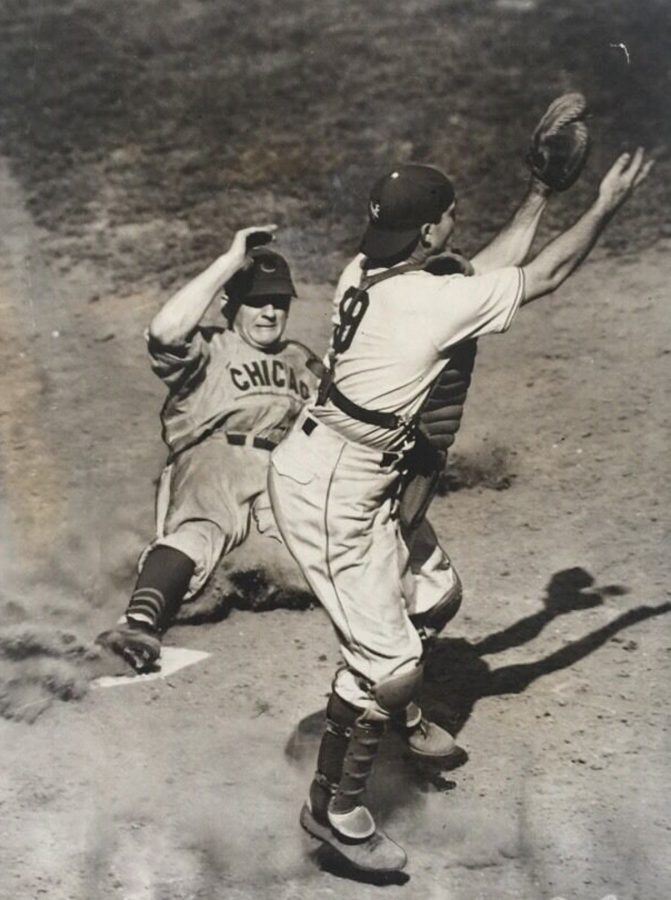
The New York Giants lose their ninth game in a row, bowing to the Chicago Cubs, 7–5.
The Brooklyn Dodgers use the new yellow-colored baseball again, but the Cardinals see it better in a 12–0 win. Johnny Mize and Jimmy Brown each have 4 hits as the Birds collect 20 to back Bob Bowman’s 3-hitter.
Japanese artillery again bombarded Soviet positions at the Kawatama Bridge in Mongolia Area of China while infantry units launched attacks. The Japanese launched another large-scale assault, sending the 64th and 72nd Infantry Regiments against Soviet forces defending the Kawatama Bridge. Japanese artillery supported the attack with a massive barrage that consumed more than half of their ammunition stores over a period of two days. The attack made some progress but failed to break through Soviet lines and reach the bridge.
Thomas C. Hart is promoted to Admiral & assumes command of U.S. Asiatic Fleet in Shanghai.
Japanese bombers attack Chungking, China; one of the I-15bis fighters of Chinese 21st Pursuit Squadron which rise to intercept them claims one bomber shot down.
Japanese soldiers beat a U.S. Navy man, a warrant officer on the gunboat USS Guam, at Hankow. The American is held for four hours until the Japanese are persuaded to release him.
Britain agrees to recognize the need for the Japanese army in China. A formula is signed for the parley. A brief memorandum embodying the Anglo-Japanese agreement was signed by the British Ambassador, Sir Robert Leslie Craigie, and Foreign Minister Hachiro Arita at midnight. Its terms will be released in London and Tokyo simultaneously tomorrow. Because of the delay in receiving his instructions Sir Robert was unable to begin the fourth and final preliminary talk with Mr. Arita until 11:05 PM. At 12:15 AM, the Foreign Office announced that the document was signed.
Its contents had been approved by the Japanese Cabinet earlier in the day and communicated to Emperor Hirohito yesterday afternoon. In a press interview last night Premier Baron Kiichiro Hiranuma said that the general principle evolved would be applicable to all China and would facilitate negotiations on all local issues.
The newspaper Asahi publishes what is declared to be a text of the memorandum signed last night. As translated from the Japanese, it reads: The British Government recognizes the actual conditions prevailing in China, where large scale hostilities are in progress; also recognizes that as long as such conditions prevail the Japanese Army has specific rights from the standpoint of the preservation of its security and maintenance of peace and order, and has taken cognizance of the necessity of excluding acts harmful to the Japanese forces and likely to be advantageous to their enemies. The British Government will refrain from all acts and measures that might impede the aforementioned purposes of the Japanese. Army and undertakes to make this policy known to the British authorities and nationals in China.
An outline by an authoritative British source confirmed the substance of this text, but it was officially asserted that nothing had been agreed upon, except this formula. The British here assert that it only places British neutrality on the same basis as the neutrality of the United States and other powers now observed in China. They admit that British neutrality in China has hitherto been subject to some environmental changes. This policy has been described in Tokyo as a defense of British interests. In Geneva and Chungking, it has sometimes been described as assistance to China. That is the Japanese view.
Japan makes six demands on Britain; currency cooperation in China is among them. Turning over “criminals” to the Japanese is another.
Born:
Charles Harrelson, American murderer and hitman, father of actor Woody Harrelson, in Huntsville, Texas (d. 2007).
Jim Kerr, NFL safety (Washington Redskins), in Colver, Pennsylvania (d. 2008).
Naval Construction:
The Вое́нно-морско́й флот СССР (ВМФ) (Soviet Navy) “ShCh” (ShChuka)-class (6th group, Type X-modified) submarine ShCh-216 is laid down by 61 Kommunara (Nikolajev, U.S.S.R.) / Yard 200.


 History Diaries