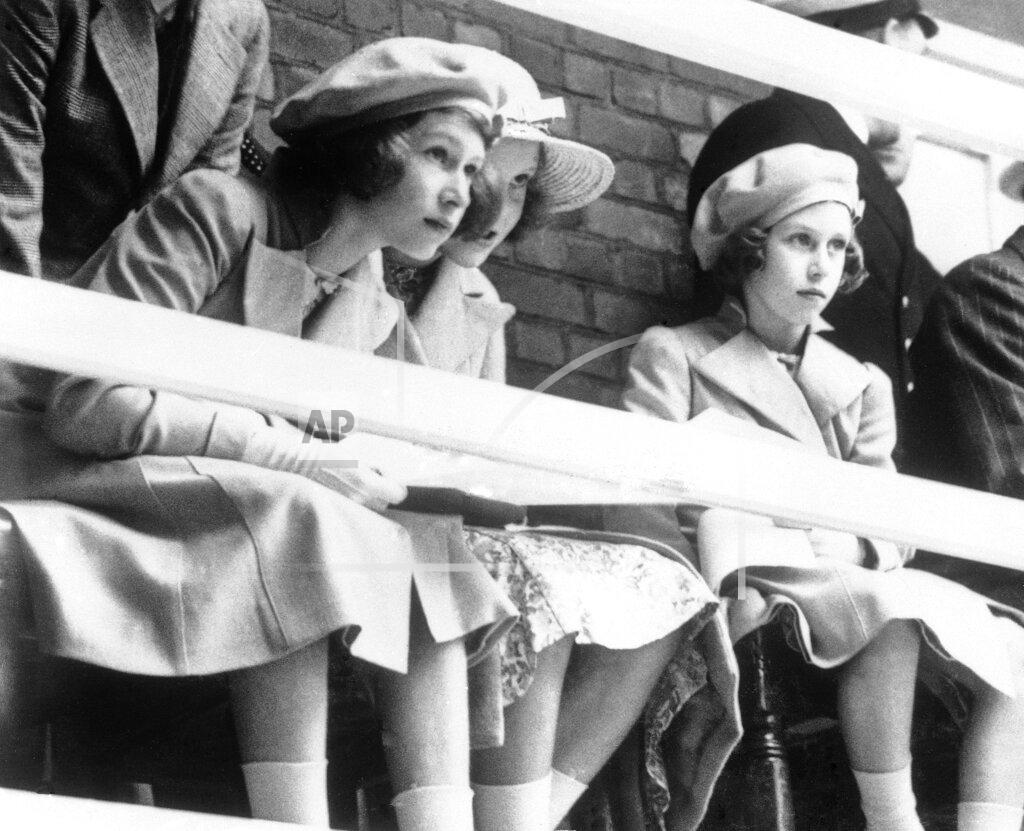
Elizabeth develops another keen interest because of this day. She meets a young, dashing cadet named Philip. Elizabeth would later say that this was when she fell in love with Prince Philip, and the pair began exchanging letters regularly. She reportedly “never had eyes for anyone else” from that moment forward. They will marry eight years later, and spend 73 years together.
The reported British “unofficial overtures” to Germany for economic appeasement, based on a disarmament pledge by the Reich and the renouncement of its “aggressive, militaristic methods,” unleashed a chorus of raucous laughter in Berlin’s official quarters and in the press today, and even the added allurement of a £1,000,000,000 bonus for good behavior failed to muffle the outbreak of hilarity.
The project impressed German quarters as another attack of “nerves” which British statesmanship, in the German view, has suffered since it embarked on its “encirclement” drive. A British offer has not yet reached official quarters and Dr. Helmuth Wohltat, one of Field Marshal Hermann Göring’s principal aides in the execution of the Four-Year Plan, who has just returned from London also has not brought back any concrete proposals. Dr. Wohltat’s mission to London, it was announced, was confined to participation in the international whaling conference and consultations with members of the Evian conference on the refugee problem. It is presumed that he also received the opportunity to confer with British officials and financiers.
It is stated here that the conferences did not extend to the reported economic appeasement plan for the proposed £1,000,000,000 loan to Germany in return for disarmament under foreign control. The appeasement scheme. it is suspected in Berlin, was intended as a first-rate weekend sensation, but its premature exposure, the press comment adds, left it a complete “‘dud.”
The British Government disowned today any connection with widely reported appeasement discussions with Germany, and some political quarters said they sensed dangerous implications in Nazi predictions of a peaceful Danzig settlement.
Czechs may aid the Reich, the state President Emil Hácha says. The announcement causes a stir in predicting war loyalties, and the popular view is different. The attitude of the Czechs in the event of war was referred to in a public statement that received prominence in the press today. State President Emil Hacha, interviewed by the Sudost Echo, is quoted as having said that in the event of certain developments in German foreign policy the Czechs would stand loyally with the Germans. This statement, which is frankly at variance with popular sentiment and which comes immediately after the Acting Premier’s broadcast warning to the Czechs not to imagine that war would benefit them, caused a minor sensation. It is felt to be evidence of very sharp warnings made by the German authorities to the Czechs that unrest during a war would be ruthlessly suppressed.
Details of conversations that Heinrich Himmler, Germany’s police chief, had with the Czech Interior Minister, Dr. Franz Jezek, continue to leak out, perhaps by German design. Herr Himmler is reported to have said that the lives of 1,000 or 100,000 Czechs were immaterial to Germany if they were necessary to keep order here. Whatever the truth may be in these reports, they are symptomatic of the way the Czechs today interpret German intentions. The Czechs, on the other hand, have no illusions about their isolated and defenseless position, and it may be declared with confidence that no plans are in existence for such melodramatic and suicidal acts as popular risings. That there would be acts of sabotage is a foregone conclusion, which even the most optimistic German must reckon with.
It is a policy of the Czech Government to counsel caution and discretion on its people. Despite the low prestige that the State President and the government enjoy, there is nonetheless a very real understanding between them and the people, who are trained in political tactics and can recognize every finesse in a speech. Meanwhile military preparations are visible in many parts of the protectorate and in Slovakia.
Hungarian Slovaks will be “hostages.” The treatment of minorities will be determined by the way Budapest acts. A novel feature of the new Slovak Constitution adopted unanimously by Parliament yesterday is the method provided for treating the Hungarian minority. This minority, it is said, will be held as a hostage against the Slovak minority in Hungary and will be treated on a reciprocal basis.
The President of the republic is to be elected within three months. The Parliament, of eighty members, is to be elected by universal secret ballot, and the National Council will be made up of nominated members. In this council the Hlinka party will be represented, as will the German and Hungarian minorities, whose members will be registered.
German interests will also be protected by a German State Secretary, who will be a member of the Slovak Government. All Slovak citizens must join corporations according to their professions or status in life. These corporations are a mixture of the Italian fascist system and the German Labor Front.
The Sudetenland is free and German, but the honeymoon between the people of the Sudetenland and the Reich is over. While no one regrets the passing of the Czech regime, being included in the German Reich is not the Elysium people expected.
Italy again denies disorder in Tyrol. Independent investigation is impossible as the region is closed. A representative of the Ministry of Popular Culture repeated today to this correspondent the previously issued official denial of recent reports current in foreign circles here of serious disorders in South Tyrol involving the death of twenty-six Tyroleans of German extraction and four Italians.
Newspapers report on possible joint Italo-German military maneuvers along their common border in the South Tyrol.
HMS Thetis was raised seven weeks after its tragic sinking.
Princess Elizabeth meets Cadet Captain Philip of Greece at the Royal Dartmouth Naval College.
Birthrates show a worldwide decline. Population increases are due to lower mortality rates. In every country, women live longer. Although the world’s population at the end of 1937 — estimated at 2,125,000,000 — was 9,000,000 greater than at the end of the previous year, the 1938-39 edition of the League of Nations Statistical Year Book, which has just been published here, discloses that birth rates are declining in almost every country.
Latvia ratified the Geneva Convention for the Suppression of Counterfeit Currency.
Alerted that Germany and the Soviet Union were engaged in talks once again, British Prime Minister Neville Chamberlain begins preparations to engage with the Soviets as well.
Britain and France agree to Russia’s proposal that military staff talks be held at once to spell out specifically how Hitler’s armies are to be met by the three nations.
British troops, war planes and police prepared tonight to seek the Rev. Gerould R. Goldner, kidnapped Ohio pastor, as failure to contact his Arab abductors diminished hope for ransoming of the American.
President Roosevelt’s approval of the Hatch bill, restricting political activities of rank-and-file Federal employees, which now awaits his signature, was regarded as a foregone conclusion by White House attachés here in view of the “general support” of the measure in both branches of Congress. Although President Roosevelt withheld comment on the action of the Senate, which sent the measure to the White House yesterday, he already had given his endorsement to the bill “in principle” when it was passed by the upper chamber in a form more objectionable to the administration than the final draft.
The President said at the time that everyone agreed that the purposes of the Hatch bill were good. He endorsed the objective of taking politics out of relief and of placing restrictions on the political activities of purely administrative employees of the government.
His only objection was that the measure was unfortunately phrased, so much so that it might even prevent a Senator or Representative up for re-election from seeking popular support or speaking on his own behalf. Otherwise, the President had no fault to find with the bill and left the impression it would have his approval if his minor objections were met. Aside from their recollection of Mr. Roosevelt’s previous endorsement of the Hatch bill “in principle,” his aides would say only that he had ten days in which to act on the measure. A Presidential veto of the bill would come as a complete surprise to his immediate associates, they said.
Mr. Roosevelt has lately displayed an increasing interest in newspaper editorials as expressions of public sentiment on legislative proposals. Only yesterday he produced a sheaf of forty-five newspaper editorial clippings endorsing his neutrality policy to show the extent of popular approval of his stand. It was the consensus of observers here that if the President should be influenced by the majority of the editorials on the Hatch bill there could be no doubt of his approval.
So far as could be learned from the temporary White House office, Mr. Roosevelt had no official visitors during the day, which he devoted entirely to relaxation and casual conversation with friends and neighbors. After a family luncheon at Mrs. Franklin D. Roosevelt’s Valkill cottage, not far from the estate of his mother, the President inspected his reforestation project and completed his view of sapling spruce trees that have been hit by the drought.
There was an echo of Mr. Roosevelt’s recent conflict with the Senate over the neutrality issue after he had read that Senator Borah had suggested lifting the customary injunction against discussion of the details of White House conferences by those present. The Senator made the discussion after the President yesterday gave his version of what had taken place at the Tuesday night meeting that ended all hope of Neutrality Act revision at this session.
To one of those with whom he talked during the day the President expressed amusement and surprise at Senator Borah’s suggestion, in as much as his press conference description of what took place Tuesday night had been in reply to questions as to the accuracy of the versions given by certain Senators present at the conference.
The Administration’s lending program, to provide authorization for loans up to a top limit of $2,490,000,000, was reported favorably by the Senate Banking and Currency Committee today with only minor modifications. The measure will be rushed to the floor on Monday by Senator Barkley, majority leader and a member of the committee, as a start for the stampede toward adjournment of this session of Congress.
The proposal, designed to be the Works Financing Act, will have full Administration support behind it. An organized effort to arouse public interest will begin on Monday night, when five officials will outline the plan over the Red Network of the National Broadcasting Company. The speakers, who will conduct a round-table discussion for forty-five minutes, will be Secretary Wallace, Senator Barkley, Senator Wagner, John M. Carmody, Federal Works Administrator, and Jesse H. Jones, Federal Loan Administrator.
Another factor favorable to early adjournment was the decision by the Senate Education and Labor Committee today to defer recommending amendments to the National Labor Relations Act until the next session. Senator Thomas of Utah, its chairman, said that the committee felt no report should be made pending the investigation of the Labor Relations Board which a special five-man House committee will conduct during the recess of Congress.
However, the committee voted to report favorably the Civil Liberties Committee’s bill to prohibit coercive labor practices, defined as the employment of labor spies or professional strike-breakers, hiring of guards with criminal records, the employment of guards outside of company property, and the use of tear gas, machine guns, and similar “industrial munitions” by guards. Action on the program for national grants-in-aid to the States for health assistance was also deferred to permit a subcommittee headed by Senator Murray to continue studies during the Summer and Fall. Senator Thomas’s bill to make the Civilian Conservation Corps a permanent organization was reported favorably, as was Senator King’s bill to exempt the Virgin Islands and Puerto Rico from the Wages and Hours Law.
With a decision due Thursday on the demand of some American Federation of Labor officials for extension of the WPA strike to all Federal construction projects in this city, New York Mayor La Guardia yesterday summoned George Meany, president of the State Federation of Labor, and Thomas A. Murray, president of the Building and Construction Trades Council, to a conference tomorrow at the World’s Fair City Hall.
Although the purpose of the call was not made clear, it was expected that the mayor would throw his influence against any spread of the walkout to government-financed work done under private contract at full union wages. Mr. Murray announced after a meeting of his council on Friday that “a great many” of the 125 affiliated unions were in favor of a general stoppage that would take 50,000 AFL members from their jobs and tie up the construction of low-rent housing developments, schools, tunnels, parkways and other Public Works Administration projects.
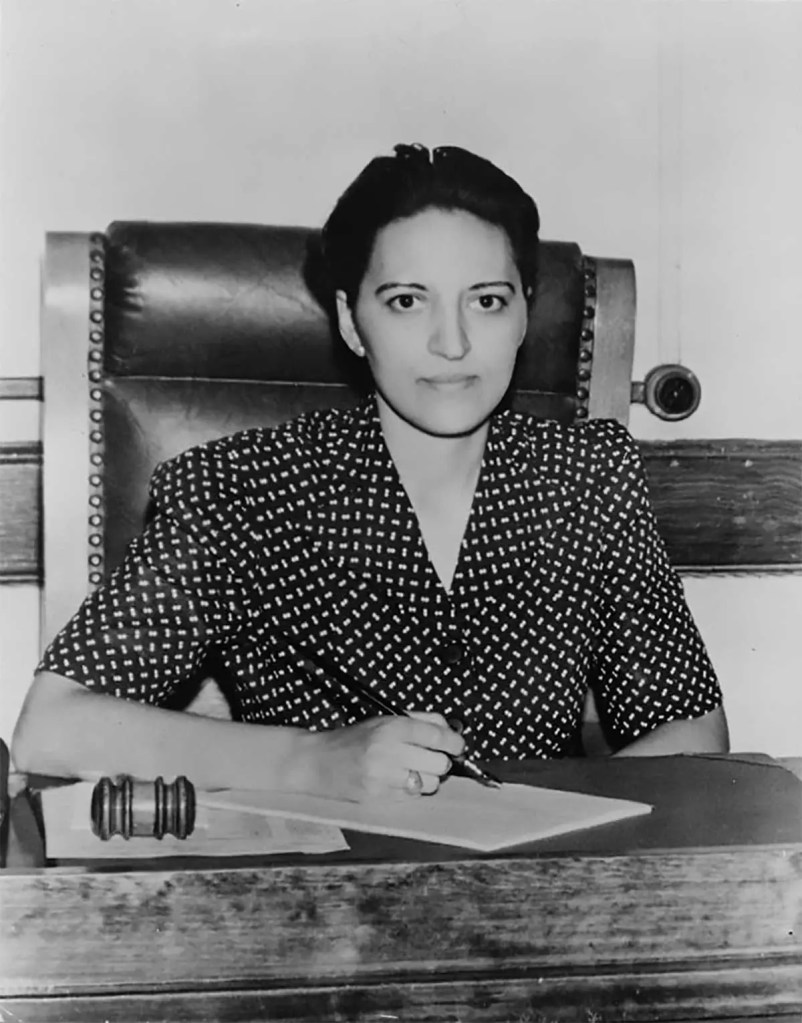
New York Mayor Fiorello La Guardia summons Attorney Jane Bolin to his office and swears her in as the first African-American female justice of the Domestic Relations Court, and the first Black female judge in the United States.
The bipartisan majority checks the New Deal. A Republication coalition and a big section of Democrats are having their way in the dying Congress.
The sixth congress of the Baptist World Alliance opened in Atlanta. More than 40,000 delegates (called ‘messengers’) sang and prayed on a baseball field in one of the largest religious assemblies ever held up to that time.
The American Council on Education urges aid for rural youth. Many are without guidance, the report says.
Detroit pitcher Schoolboy Rowe helps his own cause by bashing a 2nd inning grand slam off A’s pitcher Nels Potter. Rowe drives in five runs before being chased in the 6th inning, but his Tigers hang on for an 11–10 win. In game 1, Lynn Nelson allows 5 hits — 3 to Hank Greenberg — as his A’s win, 4–2. Buck Newsom gives up 16 hits in the loss.
Jack Wilson, strong-armed right-hander with speed and a sharp curve, yielded only seven hits today as the Boston Red Sox beat the St. Louis Browns, 6–3. St. Louis suffered its sixth straight defeat.
The New York Giants commit six errors and suffer another loss, this one to the Chicago Cubs, 8–7, despite getting 15 hits. That makes eight losses in a row for the Giants.
A Boston Bees fan, outraged when Al Lopez drops a pop foul, his 2nd error and the team’s 7th of the game, jumps from the stands to punch the Boston catcher. Pittsburgh wins, 9–3.
Big Paul Derringer exhibited his usual mastery over the Philadelphia Phillies today as the Cincinnati Reds’ star right-hander shut out the Phils, 2–0, for his thirteenth victory of the season against four defeats.
Japanese artillery bombarded Soviet positions at the Kawatama Bridge in Mongolia Area of China while infantry units launched small scale attacks.
The Chinese report that they have administered a setback to the big Japanese clean-up drive in Southeast Shansi through the recapture of Tungfeng. The town was said to have been taken after a short and bitter struggle that cost the Japanese 350 men. The Chinese have launched an attack in West Shansi at Lingshin and Hwohsien, on the Tatung-Puchow Railway, in an effort to divert Japanese attention from the Southeast Shansi campaign.
Loyang messages, however, admit that Chinese forces have evacuated Tsinching, one of the main objectives of the Japanese drive in the southeast. The Chinese are said to have made an orderly withdrawal in order to avoid being trapped by one Japanese column advancing north from Poai and another pushing east from Yangcheng.
The Hong Kong government was informed officially today that the Japanese Navy was laying minefields along several Kwangtung province coastal stretches, across the entrances to a large bay northeast of Amoy and also across entrances to two bays immediately north of Swatow.
The Chinese worry about the direction of Japanese-British talks, and await a fuller report. The apparent concessions of the British have caused deep concern, but the authorities are reluctant to express a definite reaction pending the receipt of clearer and more detailed reports. Already, however, news of an agreement on the question of the principles that are to govern Anglo-Japanese relationships in North China has produced a feeling of depression. It is natural that the effect on Chinese morale of any British accession to the Japanese viewpoint would be great, coming as it would on top of the latest slump in the yuan and reported reverses in Shansi.
Commenting on the currency situation, a Finance Ministry spokesman said that no further immediate steps were planned to control the exchange value of the yuan. Since the Chinese dollar has firmed, he said, it is proposed to wait to see to what levels it goes. Meanwhile experts from the Shanghai Customs Administration have arrived to assist in working out the details of the application of the ban on non-essential imports recently decreed. It is expected to take some weeks before the machinery to enforce the restrictions is created and before their effect becomes evident.
An American and three Chinese were killed and nineteen persons wounded today in Shanghai’s worst outbreak of terrorism in two years. A. T. Wilson, 47-year-old former Philadelphian known up and down the China coast as “Tug,” died of gunshot wounds received when he tried to halt one of a group of terrorists fleeing from a pistol and grenade raid on the plants of two newspapers supporting the Chinese regime of Generalissimo Chiang Kai-shek.
One of the Chinese was killed when the terrorists fired several shots into one of the newspaper offices. Another Chinese and one of the gunmen were killed in an ensuing gun battle with police on a densely crowded street. A Russian cabaret girl, three Chinese policemen of the International Settlement and fifteen Chinese bystanders were among the wounded. More than 150 shots were fired and several hand grenades thrown. Police said the terrorists were all of Chinese nationality.
Nazis assail the British over China concessions. The British Far Eastern policy, since the beginning of the Sino-Japanese conflict, is severely criticized in the Diplomatische-Politische Korrespondenz today as outmoded and designed to provide “advantages” to Generalissimo Chiang Kai-shek’s government.
The old Australian S-class destroyer HMAS Stalwart is scuttled in the Pacific Ocean
Dow Jones Industrial Average: 144.71 (+1.25).
Born:
Gila Almagor, Israeli actress (“Munich”), in Petah Tikva, British Mandate of Palestine.
Naval Construction:
The Kriegsmarine (German Navy) Type IIC U-boat U-60 is commissioned. Her first commander is Oberleutnant zur See Georg Schewe.
The U.S. Navy Sargo-class submarine USS Swordfish (SS-193) is commissioned. Her first commander is Lieutenant Chester Carl Smith, USN.
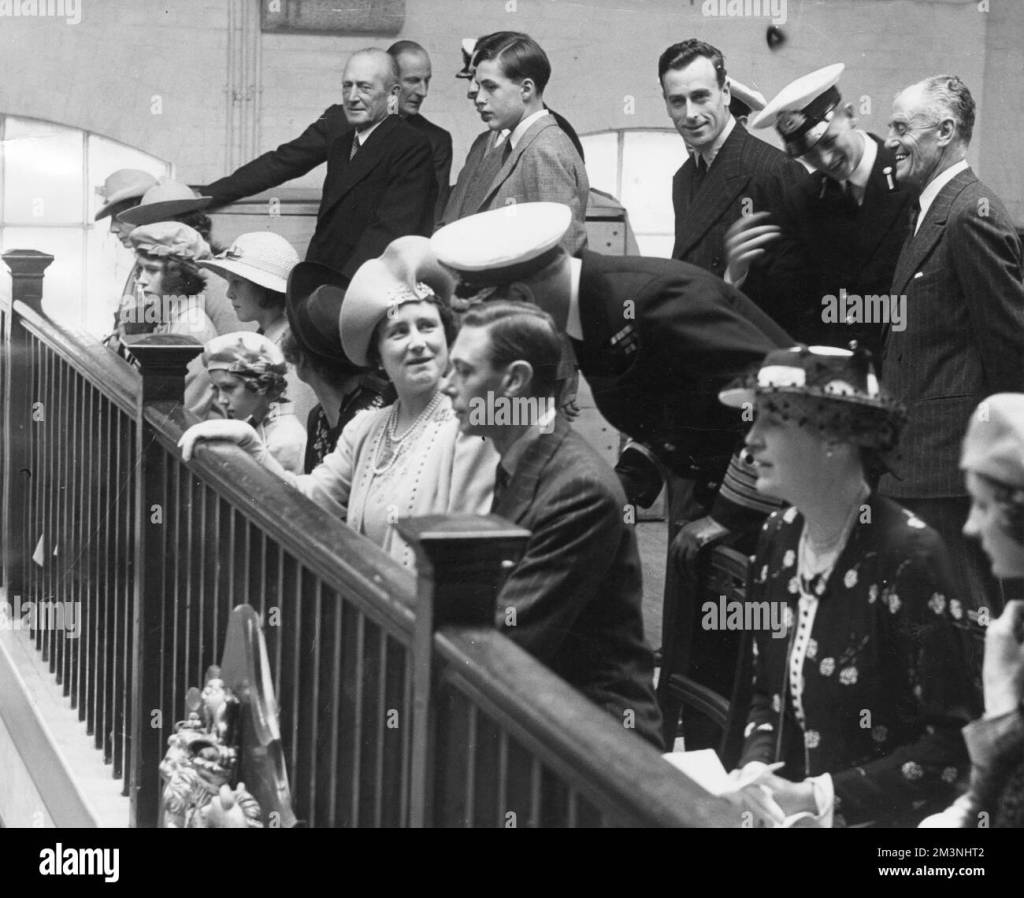
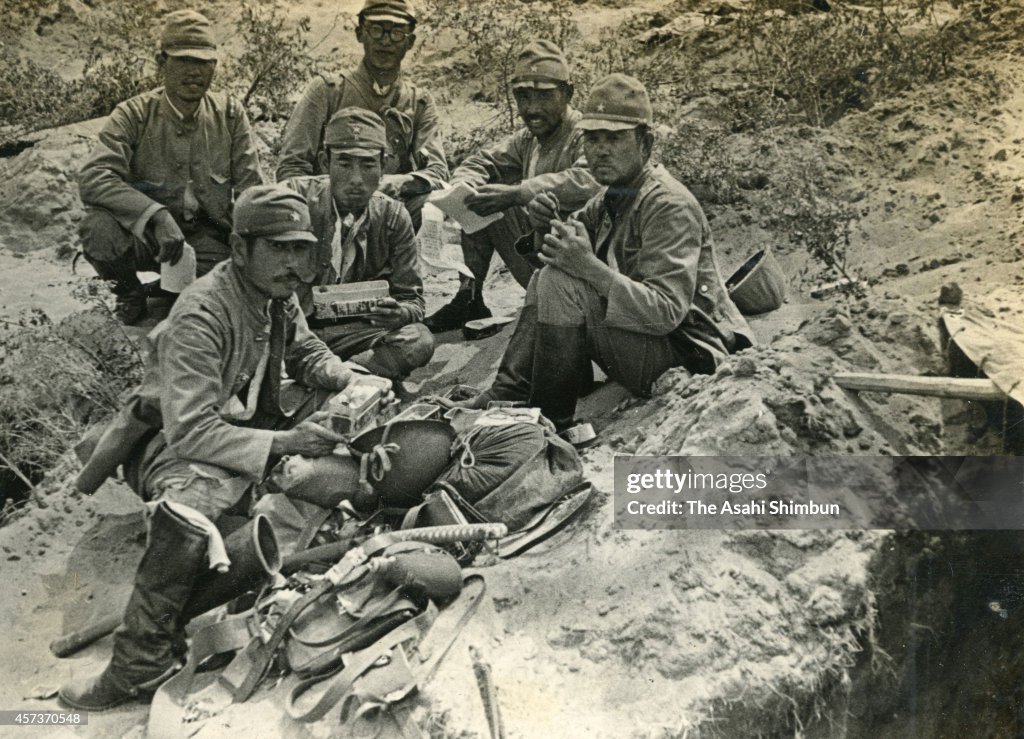
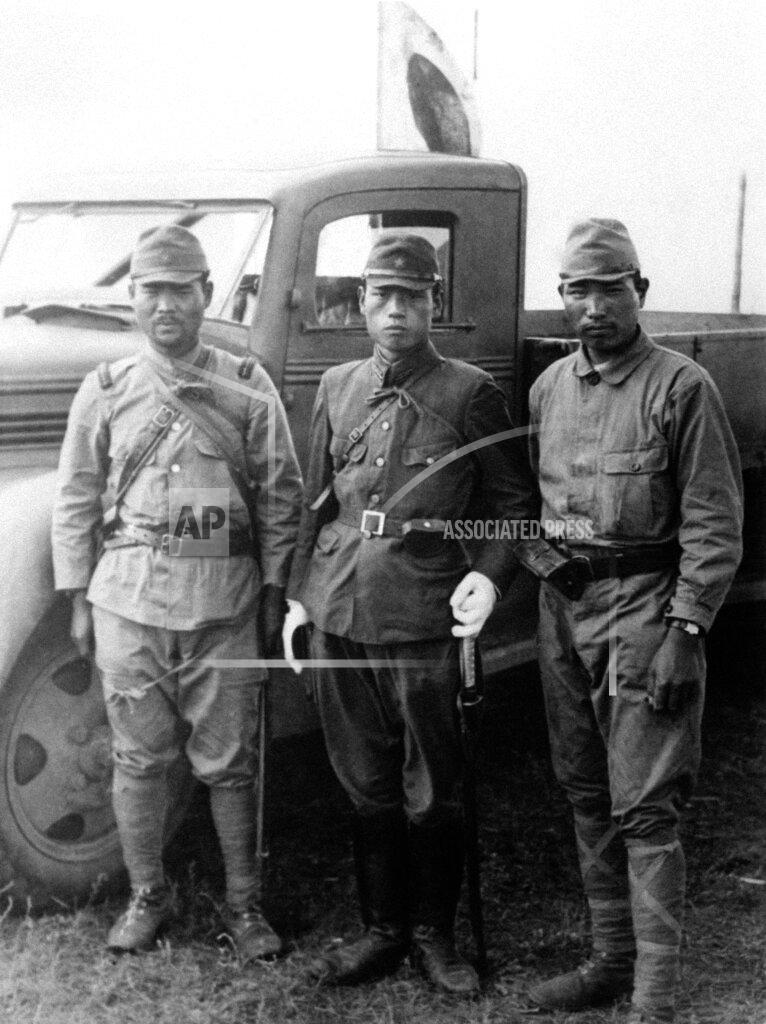


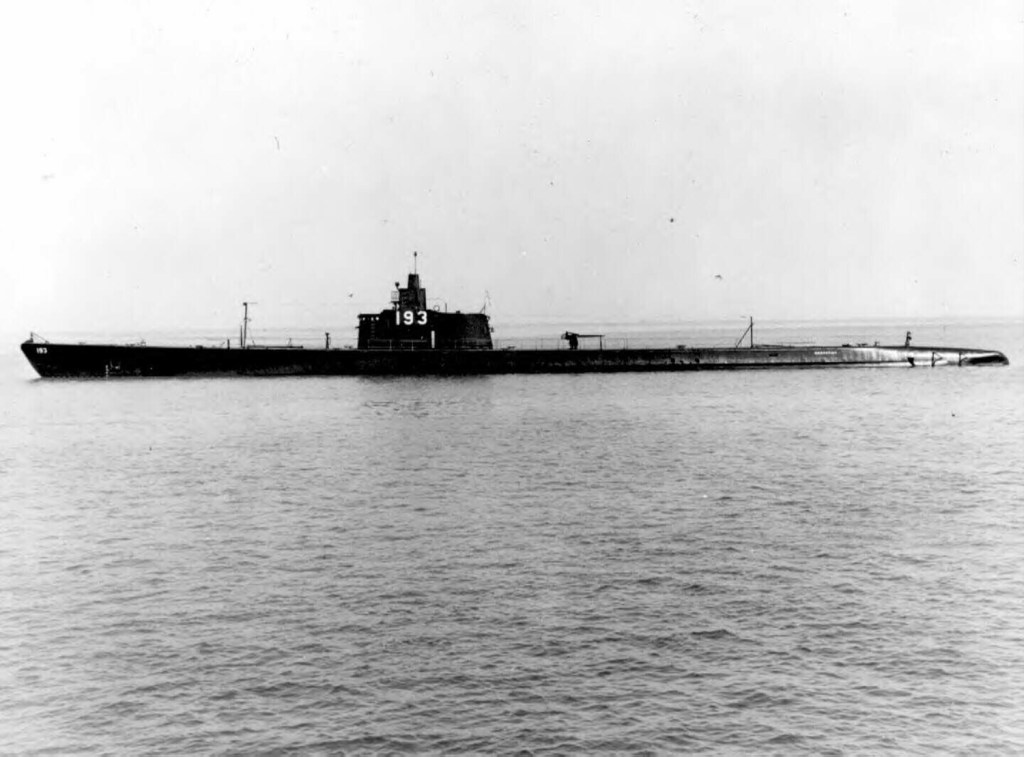
Following shakedown in the Pacific and post-shakedown repairs at Mare Island, Swordfish operated out of San Diego, Calif., until early 1941, when she set sail for Pearl Harbor. On 3 November, Swordfish, in company with three other United States submarines, departed Pearl Harbor, and on 22 November, arrived at Manila, Philippine Islands. The submarine remained at Manila until the Japanese attack on Pearl Harbor on 7 December. The following day, she set sail on her first war patrol, conducted off the coast of Hainan, China. After damaging several enemy vessels on the 9th, 11th, and 14th, Swordfish sank her initial victim of the war on 16 December. Hit amidships by one of three torpedoes, the cargo ship Atsutasan Maru erupted in a cloud of smoke and flames and disappeared beneath the waves. On 27 December, Swordfish embarked the organizational staff of the Submarines Asiatic Command Staff at Manila and headed for Surabaya, Java, arriving on 7 January 1942.
Swordfish departed Surabaya on 16 January for her second war patrol, conducted in the Celebes Sea and in the Philippines. On 24 January, she torpedoed and sank the cargo ship Myoken Maru off Kema, Celebes Islands. On 20 February, she submerged in the entrance to Mariveles, Luzon, only to surface after dark to take on board the President of the Philippines and his family. She departed through a minefield and arrived at San Jose, Panay, Philippine Islands on the 22d, where the President and his party were transferred to a motor tender. Swordfish then returned to Manila Bay and embarked the High Commissioner of the Philippines, arriving at Fremantle, Western Australia, on 9 March.
Swordfish got underway from Fremantle on 1 April for her third war patrol, with her primary mission being to deliver 40 tons of provisions to the besieged island of Corregidor. However, Corregidor fell to the Japanese before the mission could be carried out; and the submarine was ordered to patrol in the vicinity of Ambon Island. The only ships sighted were beyond effective range, and the submarine returned to Fremantle on 1 May.
Departing Fremantle for her fourth war patrol on 15 May, Swordfish was in the South China Sea on 29 May where she sank a 1,900-ton cargo ship and was in the Gulf of Siam on 12 June where she torpedoed and sank the cargo ship Burma Maru. The submarine returned to Fremantle on 4 July.
Although her fifth war patrol, conducted in the Sulu Sea, and her sixth war patrol, conducted in the Solomon Islands, were unproductive, during her seventh war patrol Swordfish sank the 4,122-ton cargo ship Myoho Maru on 19 January 1943. Returning to Pearl Harbor on 23 February, the submarine underwent overhaul until 29 July, when she got underway for her eighth war patrol.
On 22 August, she sighted her first target of the patrol, and quickly sent the cargo ship Nishiyama Maru to the bottom, the victim of two torpedo hits. A convoy was intercepted on 5 September, and Swordfish damaged a large tanker before sinking the cargo ship Tenkai Maru. The submarine concluded this patrol at Brisbane, Australia, on 20 September.
Swordfish’s ninth war patrol lasted only three weeks. Shortly after reaching her assigned patrol area, material defects were discovered, and the submarine had to return to port.
On the day after Christmas 1943, Swordfish departed for her tenth war patrol, conducted in Tokyo Bay. On 14 January 1944, she sank the passenger-cargo ship Yamakuni Maru and two days later sank the converted gunboat Delhi Maru. On 27 January, she fired two torpedoes at the converted salvage vessel Kasagi Maru, which broke in half and sank. Swordfish terminated her tenth patrol at Pearl Harbor on 7 February.
Swordfish put to sea on 13 March for her eleventh war patrol, conducted in the Marianas Islands. Although several enemy ships were damaged during this patrol, no sinkings could be confirmed; and the submarine returned to Majure on 29 April.
Swordfish’s twelfth war patrol was conducted in the area of the Bonin Islands. On 9 June, the submarine found the Japanese destroyer Matszukaze clearly silhouetted against the horizon and sank the enemy ship with two torpedoes from her bow tubes. On 15 June, she torpedoed and sank the cargo ship Kanseishi Maru. The remainder of the patrol was unproductive, and the submarine terminated her twelfth patrol at Pearl Harbor on 30 June.
On 22 December, Swordfish departed Pearl Harbor to conduct her thirteenth war patrol, in the vicinity of Nansei Shoto. On 2 January 1945, she was ordered to patrol clear of the Nansei Shoto area until completion of scheduled air strikes. She acknowledged receipt of these orders on 3 January. No further communication was received from the submarine. On 15 February, after repeated attempts to contact her by radio had failed, she was reported as presumed lost, the victim of unknown causes.
Lost circa 12 January 1945.
In the report of her loss, mention was made that Kete (SS-369), which at the time was patrolling the vicinity of Okinawa, reported that on the morning of 12 January she contacted a submarine by radar. It was believed that contact was with Swordfish. Four hours later Kete heard heavy depth charging from this area, and it was believed that this attack might have been the cause of Swordfish’s loss.
Japanese information on antisubmarine attacks does not mention the attack heard by Kete on 12 January, and records no attacks in which Swordfish is likely to have been the victim. However, it is now known that there were many mines planted around Okinawa, since the Japanese were expecting an Allied invasion of that island. The majority of the mines were planted close in. It is considered about equally likely that Swordfish was sunk by depth charge attack before she reached Okinawa for her special mission or that she was lost to a mine at that place. Japanese sources sometimes credit her with sinking Shoto Maru on 4 January and being sunk in return by her escort, Kaibokan CD-4, since no claims for Shoto Maru match her sinking time.
Swordfish (SS-193) earned eight battle stars for World War II service.
She remains on Eternal Patrol.
 History Diaries