The New York Times reports:
“The German position on Danzig was restated today with considerable frankness and apparent authority, and the statement was obviously intended definitely to dispose of recurring reports abroad that the Reich was prepared “to negotiate with Poland over the return of the Free City” or had initiated overtures to that effect.
“Danzig, it was stated, was neither subject to negotiations nor the object of barter or bargaining. Being purely a German city it must be returned to the Reich unconditionally and without compromise. The statement added that it was hoped, however, that a peaceful solution of the problem might yet be found. That hope, it was assured, was definitely shared by Chancellor Hitler. Reports that the Reich was prepared to negotiate over Danzig were sheer and futile inventions, it was again emphasized. The official formulation of the German position went no further today, but voluntary observations, which claimed no authoritative basis and thus represented informal conjectures over the further course of events, admitted that the situation was still “obscure.”
“Confidence that the issue can be settled by peaceful means apparently has not been abandoned. It was suggested, however, that the present international tension over Danzig cannot continue for many months and the task of cutting the Gordian knot still awaits some master stroke of diplomacy. In this connection German unofficial speculation is inclined to assign to Britain the largely hypothetical role of mediator, the assumption being that with or without the conclusion of the Anglo-Soviet alliance British intervention in the dispute over Danzig still might be conceivable.
“German speculation proceeds on the theory that a tri-power alliance committing her to automatic military aid would involve Britain in a possible conflict concerned with Danzig only, which, it is believed here, she obviously desires to escape. To escape such an entanglement under a tri-power pact and yet preserve her prestige as the guarantor of Polish integrity, Britain, it is argued in German quarters, might find it advantageous to intervene to the extent of urging moderation on Poland and the abandonment of her “truculence.” This viewpoint assumes that neither British nor French statesmen can deny much longer German claims on Danzig or permit the deadlock to terminate in armed conflict.
“The other alternative, in the unofficial German view, is based on the conviction that Britain, failing to conclude a pact with the Soviet, would be in an even stronger and less prejudicial position to intervene in the Danzig crisis. Freed of automatic entanglements imposed by a tri-power pact, Britain — so runs the private German thesis — could with greater freedom proceed to convince Poland of the futility of her stand on Danzig by warning Warsaw that it was confronted with the specter of Russo-German rapprochement or, at any rate, with a neutral or negative military factor in Russia, leaving her at the sole mercy of a powerfully armed opponent in Germany.
“Such a development, it is believed here, would considerably enhance Britain’s prospect of influencing Warsaw. Within the framework of this speculation the Danzig problem hangs suspended for the moment. The German position remains adamant, if the daily official statements are to be accepted. The declarations that Herr Hitler foresees a peaceful solution remain equally positive.
“Nazi Germany spoke out tonight in an official statement of her government to declare she was “100 percent optimistic that there will be no war” over the Free City of Danzig. “On the contrary,” an official spokesman told the foreign press in one of the most unequivocal statements yet issued here on the Free City, “we believe in the common sense of mankind and feel sincerely convinced the Danzig question soon will be solved without compromise but also without bloodshed.””
[Ed: Germany, of course, is rapidly preparing for war, whatever fantasies she spins for the western media.]
Polish circles tonight described as “a combination of wishful thinking and persistent propaganda” the Berlin Foreign Office statement that Danzig would be restored to Germany peacefully and without compromise on the part of Germany. Poles expressed surprise that the Berlin declaration should have come immediately after the departure from Warsaw of Major Gen. Sir Edmund Ironside after four days of conferences on the coordination of British and Polish military strength in time of emergency.
Sir Edmund, Inspector General of British Overseas Forces, returned to London by air. There had been a feeling here that his visit was a gesture of British-Polish cooperation that Berlin could not ignore. Informed persons expressed the belief that his talks here were satisfactory and established the framework for whatever joint action may be necessary. It was authoritatively stated that there are no negotiations in progress between Poland and Germany regarding Danzig at present.
A statement by a German Government spokesman that Germany rejected a warlike solution of the Danzig problem was received cautiously in London. Officially the reaction was “no comment,” with a rider carefully added to the effect that the British position on the Danzig question was still unchanged. That position, it was emphasized, is that Britain has guaranteed Poland, and if Poland thinks that any act of German aggression threatens her independence and fights, Britain will fight too.
Perhaps to emphasize this position there is a note of optimism over the negotiations for a loan of £5,000,000 additional credits by Britain to Poland. Negotiations for this loan have been difficult up to today because of the disagreement over the Polish desire that the money be turned over in gold and that Poland be allowed to spend it when and where she pleased. The British Treasury wanted to make the loan in sterling and control its expenditure so as to ensure that most of it would be spent here. It was a stormy discussion for the most part but it is apparently going better now.
After a long meeting today between Colonel Adam Koc, leader of the Polish financial mission, and Treasury officials, it was announced that there would be a further meeting tomorrow between Colonel Koc and Sir Frederick Leith-Ross. The supposition of closer agreement is confirmed by the attitude of Polish circles that the matter is progressing satisfactorily. The fact that the British took the German declaration without any particular cheering is perhaps an indication of how far Chancellor Adolf Hitler has gone to destroy whatever trust anybody here had in him. The first reaction of most officials was “Why did he do it, and what does it mean?”
The first answer to those questions took the form of the belief that it was a piece of German propaganda aimed at putting any onus for trouble in Danzig on the Poles. It was also suggested that the statement, and especially the reports that the Germans expected Britain to make some effort to settle the Danzig question, might constitute an attempt to drive a wedge between Britain and Poland. This suspicion was the reason for the official indication that the British attitude toward Danzig had not changed. The belief that the Germans were attempting to sow seeds of distrust between Britain and Poland caused some indignation here, and the tendency was to stress the plain words of Prime Minister Neville Chamberlain and Foreign Secretary Viscount Halifax in recent months.
A Reich pastor dies in a prison camp. He is the first to be punished for fighting Nazi curbs on the church. National Socialism’s determination to suppress any voices that protest against the role in German spiritual life it has allotted to the churches claimed its first victim Tuesday with the death in the Buchenwald concentration camp of Pastor Schneider of Dickenschied in the Rhineland.
Hungary seizes a book that predicts the German defeat in war.
Italy gives the rights of Trieste to the Reich. The invitation to use transshipping facilities is extended. An invitation to Germany to make free use of commercial transshipping facilities at Trieste was volunteered by Italy, it was stated today, and a formal agreement to that effect was not required in the circumstances.
An estimated 100,000 Jews have fled Austria since German annexation.
A controversy is going on between the Slovak and Hungarian press about the theft of nine golden chalices, valued at about $200,000, from the Cathedral of Kassa (Kosice, an important town formerly in Slovakia but ceded to Hungary under the Vienna agreement following the Munich accord).
The Constitution of Slovakia was passed.
British Foreign Secretary Lord Halifax writes to British Ambassador to Poland Clifford Norton, asking him to express to the Polish government the British desire for Poland to refrain from acting defiantly to recent German threats.
The Short S.26 G-class large transport flying boat designed and produced by the British aircraft manufacturer Short Brothers makes its first flight. A total of three S.26 flying boats were constructed on behalf of Imperial Airways, but these were only briefly operated by the airline in a training capacity due to the outbreak of the Second World War. During 1940, all three S.26s were impressed into military service, leading to the type being used by both the Royal Air Force (RAF) and the Royal Australian Air Force (RAAF). They were reconfigured into a more suitable arrangement for military transport duties, after which individual flying boats transported mixed cargoes around the Mediterranean and the Middle East.
Soviet newspapers announce that the Soviet Union and Germany have resumed trade agreement talks. It was a cover for the secret negotiations that would ultimately result in the Molotov-Ribbentrop Pact. Trade negotiations are underway between Germany and Soviet Russia, the Moscow radio station announced tonight. The Soviet trade delegate in Berlin is carrying on the negotiations with an attaché of the Nazi Economics Ministry. It was recalled that a German trade negotiator was en route to Moscow last January to open talks with Soviet officials when he suddenly was ordered to return to Berlin. At that time German circles here said the interruption was the result of political interpretations.
Premier Vyacheslav Molotov aroused new conjectures of something brewing between Moscow and Berlin last May 31 when, in a speech to the Supreme Soviet [Russia’s Parliament] he casually mentioned that trade negotiations with Germany may be resumed. The brief announcement tonight was the first authentic admission from the Soviet side that the negotiations actually had been resumed. It did not say where the talks were taking place, but it was understood they were proceeding in Berlin. The midnight-news broadcast contained no mention of the German announcement today concerning peaceful acquisition of Danzig.
Soviet Russia has now built a large submarine fleet whose vessels are equal and in some respects superior to those of any other power and now is rushing construction of capital ships unexcelled by any now afloat — even Great Britain’s new King George V — it was announced today by Ivan T. Tevosyan, Commissar of the Shipbuilding Industry. Soviet shipbuilders, he said, had learned their technique by building merchant ships in the first Five-Year Plan and now were turning it to good account in the government’s drive to build up a navy second to none in the world. This is all being done according to plan, he added, and under the direct guidance of Joseph Stalin.
The Red submarine fleet, the Commissar went on, now has powerful squadrons in all the Soviet’s naval theatres — in the Baltic, the White Sea and the Black Sea, with an especially large concentration in the Far East — all capable of guaranteeing the sea borders of the Soviet Union. He stressed the excellence of Soviet submarines in the vital factors of surface speed, underwater speed, cruising range, depth of submersion and number of guns carried.
The Jewish Agency for Palestine issued today a statement rejecting Colonial Secretary Malcolm MacDonald’s appeal for cooperation with the British Government’s new policy for Palestine.
Today in Washington, the Senate completed Congressional action on the Hatch bill to ban political activities by Federal Administrative employees and on the Trust Indenture bill. It also passed the so-called “truth in fabric” bill and a bill to prevent discrimination against certain law school graduates in making appointments to government positions. Its Banking and Currency Committee revised the Administration’s lending-spending bill and the Foreign Relations Committee. received communications from Secretary Hull relative to proposals for revision of the 1911 Commercial Treaty with Japan and to embargo arms to Japan. The Senate recessed at 4:32 PM until noon on Monday.
The House started its consideration of the Lea Transportation Bill. Its Banking and Currency Committee continued questioning Jesse Jones, Federal Loan Administrator, on the lending-spending bill; the Labor Committee heard opposition to proposed Wagner Act amendments, and the Rules Committee agreed to hear witnesses Tuesday on amendments to the Wages and Hours Law. The House recessed at 4:59 PM until noon tomorrow.
The House version of Senator Hatch’s bill to keep the rank and file of Federal office holders from engaging actively in political campaigns. was adopted by the Senate today, only a few hours after a rebellious coalition in the House had “put teeth” back into the measure. Thus, the bill was sent to the White House, but only after the author had challenged an incipient opposition to kill the measure by sending it into conference.
In a speech couched in terms. seldom heard in the Senate, Mr. Hatch denounced “certain maneuvers that I have seen on the floor.” He directed his remarks primarily at Administration leaders who, prior to the 1938 elections, succeeded in killing the bill. In the chair while Senator Hatch spoke was Vice President Garner, an open advocate of the Hatch bill and one so much concerned about it that after the bill was in position for the President’s signature members flocked into Mr. Garner’s office to offer their congratulations alike to the Vice President and the bill’s author. Notably absent from the chamber during Mr. Hatch’s speech was Senator Alben Barkley, the majority leader and center of a controversy over political activities of the WPA in Kentucky last year. Mr. Barkley was attending a meeting of the Banking and Currency Committee.
Leading opponents of the bill present on the floor — men dubbed “opponents” because of previous expressions of opposition — were Senators Minton and Guffey, the first being the assistant majority leader and the other an ardent New Deal follower. Senator Minton rose to reply to Mr. Hatch before the vote was taken, and during most of his speech appeared to be speaking in opposition, but at the conclusion he said he accepted the bill and meant only to denounce the manner in which Senator Hatch had made criticisms which he considered unfounded. The conclusion of Senator Minton’s speech marked, however, the surrender of a minority which made possible final passage of the bill “without opposition.”
The Hatch Act was designed by its author to prevent the packing of national conventions with office holders, a factor that may be extremely important in future national conventions, and to curb political activities by all officials except the President and Vice President, members of Congress, and those officials whose work makes them responsible for formulating national and international policies. The bill was passed by the Senate earlier this session without debate or a record vote, in circumstances which made it appear probable that it would either die in the House or be amended to a point that would nullify its intended effect.
The refusal of Senators to revise neutrality legislation at the present session of Congress was described. by President Roosevelt today as a definite blow to business recovery and as increasing the possibility of war. He prefaced his remark with the statement that neutrality legislation was a dead issue until Congress met again in January. Leaving no doubt of his intention to abandon the fight until next year rather than take the issue to the country in hopes of an affirmative mandate, Mr. Roosevelt indicated in his press conference that he would forgo his plans of a swing around the circle this Summer. He probably would not go to Alaska and return through the Northwestern States as he had planned, the President said, but would limit his trip to the San Francisco International Exposition.
The Senate assumed full responsibility for its refusal to adopt “cash and carry” neutrality legislation at the present Congressional session and the country understood that situation thoroughly, Mr. Roosevelt said. Under the circumstances, there was nothing that could be done until January except to pray awfully hard that there would not be another crisis in Europe.
Discussing the economic phase of the situation, the President quoted an unidentified investment banker to the effect that refusal in the Senate to revise neutrality legislation “will slow up the finest little economic boom we have had in some time.” Only once during his remarks on the neutrality question did the President’s voice rise above the casual conversational tone with which he began. That was when, in speaking of the meeting with Senate leaders at the White House Tuesday night, he accused those members who had blocked action at this session of gambling against the possibility of an outbreak of war in Europe.
Even then, Mr. Roosevelt only shaded his expression just enough to give added point to his contention. He spoke of this Senate rebuff to his Administration as though it was all in a day’s work and one of those things that had to be taken in the Presidential stride. It was the President’s first press conference since the White House meeting which ended all hope of a confidence vote in his foreign policy at this session. However, Mr. Roosevelt’s manner today contrasted sharply with the one he displayed at the press conference he held in these same surroundings the day after the Senate first voted against continuing his currency devaluation powers. The indignant, ungloved attack of that former occasion gave way today to what seemed a disposition to bow before the inevitable.
The final chapter in Congress’s refusal to revise the neutrality laws at this session was apparently written today when Senate leaders, acting on advice of Secretary Hull, laid aside a proposal empowering the President to impose retaliatory embargoes on war supplies to Japan.
Giving ground before a new coalition of Republicans and conservative Democrats, the Senate Banking and Currency Committee today cut $310,000,000 from President Roosevelt’s $2,800,000,000 lending program and decided, after a night session, to resume its efforts tomorrow to complete committee action on the bill in order to rush the measure to the floor before the adjournment urge should become unmanageable. The coalition is seeking to drive the amount still further down, however, and presented amendments in an endeavor to restrict the total to $770,000,000, the sum which the President and Secretary Morgenthau estimated would be required for the first year.
The members of the committee said they came to no decision on the difference, but would meet again in the morning in the hope that action could be completed. Senator Adams, Democrat, of Colorado, a leader of the economy bloc, whose motions were responsible for the day’s reduction, advocated an amendment to prohibit loans for projects that would be in substantial competition with existing private enterprise.
Only yesterday Senator Barkley of Kentucky, majority leader, had submitted an amendment removing the revolving fund feature of the program and putting it on a year-to-year basis. He made the proposal in an effort to offset some of the opposition. But Republicans contended that under Mr. Barkley’s amendments Congress at this time should not authorize more than is needed for 1940. This amount they estimated at $770,000,000.
Funds totaling $62,800,000 appropriated by Congress for the Army Air Corps expansion program were allotted today by Harry H. Woodring, Secretary of War, for projects involving housing and air corps technical construction.
A punishing drought of the sort that intermittently scorches some sections of the West lay tonight over the normally moist and green acres of six Northeastern States — New York, Pennsylvania, Connecticut, New Jersey, Massachusetts and Vermont. The Rhode Island situation is not so serious.
Stores widen the use of multiple prices, finding that offers of two or more items at a reduction spur sales.
The cargo ship Edgar F. Luckenbach collides with the wharf at New Orleans, Louisiana and is severely damaged. She is beached but later sinks.
The St. Louis Browns faltered again in the ninth today and the Boston Red Sox won in eleven innings, 6–5. Going into the ninth St. Louis led, 5–4, having jumped out to a big lead in the first inning when Joe Grace cleaned the bases with a triple. But the troublesome Jimmy Foxx tripled and came home on Ted Williams’s single to tie the score. In the eleventh Williams came to bat again with Bobby Doerr on second and two out. His sharp blow off George McQuinn’s glove sent Doerr home with the winning run. Doerr had singled.
The New York Yankees saw their winning streak snapped at eight games as they were defeated by the Chicago White Sox, 4–1.
Carl Reynolds’s homer with two aboard gave the Cubs a 3–1 victory over the Bees today and marred an otherwise smooth pitching performance by Jim Turner. The Cubs, who lost the first two of the three-game series, were outhit, 13 to 11, and went scoreless until the seventh-inning homer brought in Stan Hack and Augie Galan in addition to Reynolds. The only Boston tally came in the last half of the seventh, when Debs Garms drove in Turner.
Trailing 3–1 in the ninth inning with two out, Chuck Klein of the Pittsburgh Pirates clouts s three-run home run off Cliff Melton to defeat the New York Giants, 4–3. It marked the Giants’ seventh consecutive loss.
Mexico’s President Lazaro Cardenas, who in the five years since his accession to power has already distributed more land to the peasants than all previous Mexican Governments combined, pledged himself today to a policy of fifty acres of land to each Mexican peasant.
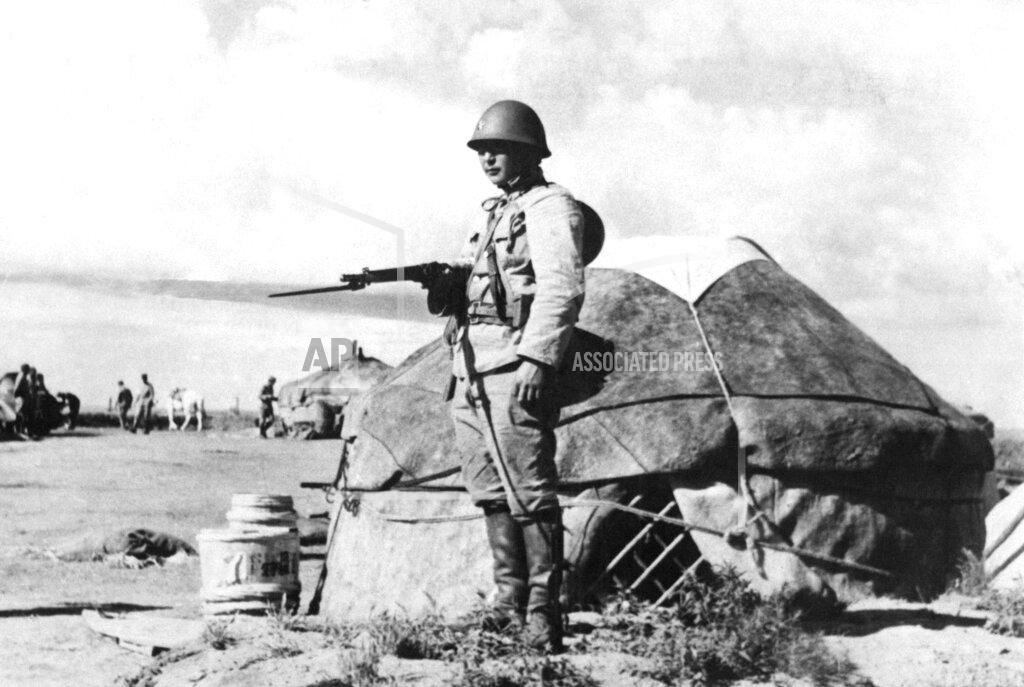
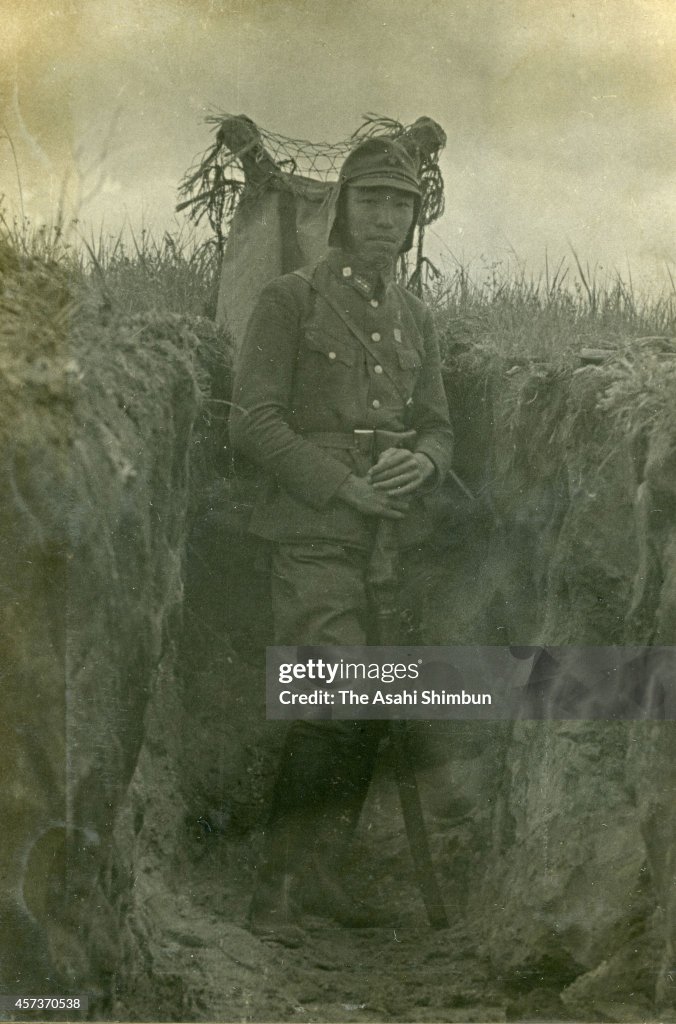
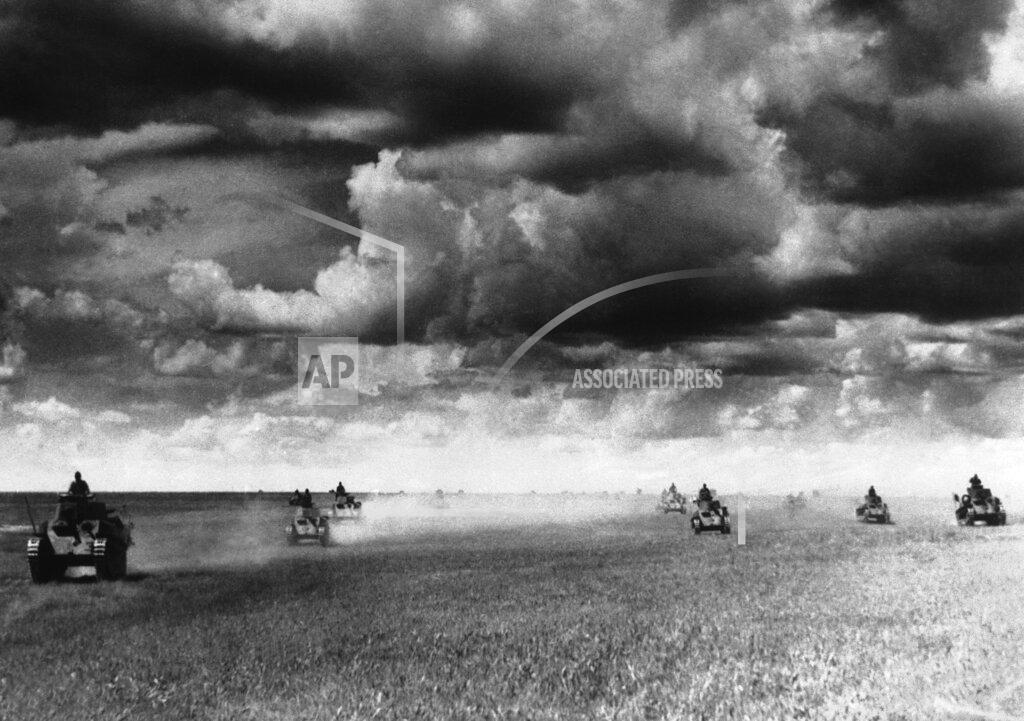
The Japanese navy threatens the Soviets. A fleet is assembled in northern waters, ready for action. Japan assembled warships in northern waters to back her stand against Russia in a dispute over coal and oil supply sources today. Thirty-nine Soviet planes were reported shot down today in a battle over Lake Bor, in the Outer Mongolian-Manchukuoan zone of hostilities.
The Chinese are indifferent to U.S. neutrality laws, believing that the old law was not followed and so the new one would not be, either.
Britain agrees to Japan’s demand and the parley in Tokyo continues. Britain has accepted Japan’s demands, subject to some face-saving alterations in wording, and only London’s approval of the formula upon which the British Ambassador, Sir Robert Leslie Craigie and Hachiro Arita, the Japanese Foreign Minister, agreed yesterday is needed to complete the first stage of the Tokyo negotiations. When Sir Robert receives final instructions, he will again meet Mr. Arita. Unless London makes an utterly unexpected eleventh-hour about face, today’s conference will induce another joint statement intimating that an agreement has been reached.
The substance of that agreement is a British acknowledgment that an abnormal situation exists in China and an undertaking not to permit such actions within the British sphere as might endanger the Japanese Army or obstruct its efforts to maintain peace and order. With this general principle established, detailed negotiations for a settlement of the Tientsin dispute are expected to begin on Monday. The agreement was facilitated when the Japanese altered the phraseology of their original proposals, which demanded a change in British policy. Mr. Arita politely took the line that Japan realized that British influence had been established in the Far East for more than a century, but the situation had changed radically and these changes could not be ignored.
He refused to insert words stating that those changes were the “result of Japan’s armed operations” and Sir Robert quietly dropped them. The British side also opposed phraseology that implied that their past policy was wrong but admitted that their official machinery in China could be improved. Personal feeling between Britons and Japanese has embittered the situation almost everywhere they were in contact and liaison has been poor. Improvements in these matters, it is promised, will be given effect in the Tientsin agreement.
Dow Jones Industrial Average: 143.46 (+2.22).
Born:
John Negroponte, American diplomat, first United States Director of National Intelligence, in London, England, United Kingdom.
Kim Fowley, American rock producer (The Runaways-“Cherry Bomb”), in Los Angeles, California (d. 2015).
Died:
Ambroise Vollard, 73, French art dealer (car accident).
Naval Construction:
The Royal Navy Lake-class ASW whaler HMS Windermere (FY 207) is launched by Smith’s Dock Co., Ltd. (South Bank-on-Tees, U.K.).
The Royal Navy British Power Boat 60-foot motor anti-submarine boat HMS MA/SB 5 is commissioned.


 History Diaries