A Danzig customs officer shot and killed a Polish soldier today near the Danzig frontier village of Postelau and officials of the Polish commission declared tonight that they would demand satisfaction from the Nazi-controlled Free City. One Polish official said: “My government has not yet acted formally, but it would seem that we will not be appeased by a mere apology in this case.” The shooting also irritated the Danzig Nazi authorities and heightened the tension along the uneasy frontier with Poland. More men from Danzig’s strengthened police force were sent to border points.
The Pole, whose name was given here as Witold Budziewicz, was shot by Max Stein, a Danzig customs inspector. The Danzig and Polish versions of what happened still were far apart tonight. The Danzig story was that the Pole had aimed his rifle at the customs officer from a distance of fifty feet and that the latter, on Danzig soil, fired “in indisputable self-defense.” “If Stein had not shot, he would have been a dead man now,” one Danzig officer said. The Nazi newspaper Vorposten stoutly defended Stein’s conduct and said the incident “is renewed evidence of the danger brought about by the artificially stimulated psychosis of nervousness in Poland.” “But it is questionable if one may still speak of nervousness,” the paper adds, “it is truer that we are confronted with deliberate Polish provocation.”
A version of the shooting that spread through Gdynia, Polish port, was reported based on a deposition by the widow of the slain soldier who was said to have witnessed the shooting, while carrying lunch to her husband. A Danzig customs official and two Stormtroopers crossed the border from Postelau to Bozepole, in Poland, according to this deposition, and Budziewicz ran forward to challenge them. The guard, it was said, was unslinging his rifle, but before he could bring it even into a warning position one of the Danzigers fired, the bullet striking Budziewicz in the abdomen. The three Danzigers immediately returned to Danzig. Polish indignation was at a high pitch, particularly in Gdynia, but foreign observers in Warsaw expected the Polish Government to do its utmost to keep the incident from developing to dangerous proportions.
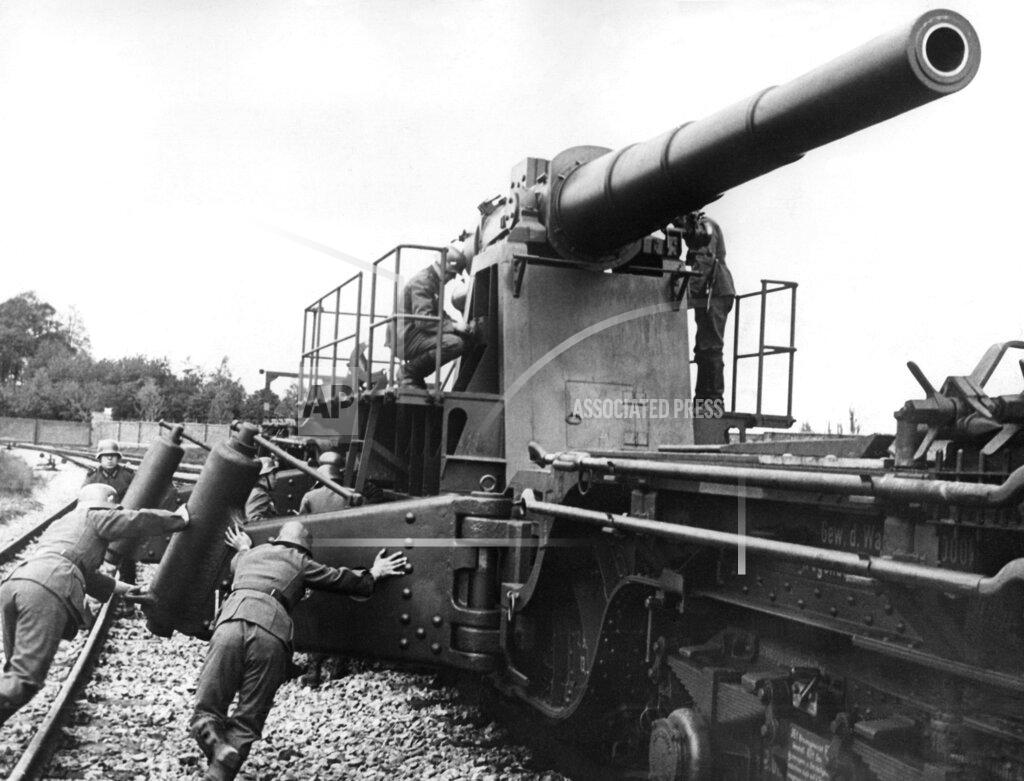
Colonel General Walther yon Brauchitsch, Commander-in-Chief of the German Army (Heer), today sent an unmistakable warning in the direction of Poland and her guarantor nations that the “old Prussian land of East Prussia” is German territory and the Reich is able, if necessary, to give military backing to these claims. He warned that “Germany does not seek a fight, but we do not fear it.”
Benito Mussolini announced a plan to break up large estates in Sicily, irrigate the land and resettle in addition to constructing new villages, houses and roads. If all went according to plan, Sicily’s population would double in a decade to 8 or 9 million people. The large estates of Sicily, which from time immemorial have made that island poor and uncultivated, will be broken. up, the land irrigated, houses, villages and roads built and the population eventually doubled. This was the historic decision announced by Premier Mussolini today to Sicily’s fascist leaders.
The plan, which has been in preparation for several years, is hailed as one of the greatest measures undertaken by fascism in its seventeen-year history and as proof of the proletarian basis of the fascist movement. Certainly, the task is as great as the draining of the Pontine Marshes. Signor Mussolini himself characterized it as an “event of extraordinary importance destined to remain among the most fateful in Italy’s history.” He recalled how two years ago he promised that Sicilian latifundia would be broken up and peasants, living in poverty in the villages, would be spread out on their own farms. Sicily would then hold double the present population, he said, and be “one of the earth’s richest countries.”
Increasing Hungarian-Rumanian tension has been noticed during the last few days. Recently the mayor of the village of Halmi, near the Hungarian frontier, was killed when he was attacked with hand grenades by seven Hungarian inhabitants, who are now being tried at Cluj charged with his murder.
The British Treasury seemed today to be winning its stubborn battle to control the spending of the 5,000,000 cash loan that had been promised to Poland, in addition to big credits, for the purchase of armaments and war materials.
British Foreign Secretary Halifax met with Swedish businessman Birger Dahlerus in London, England, United Kingdom, telling him to approach Hermann Göring for possible Anglo-German negotiations to avoid war.
The British House of Commons approved limiting Jewish immigration to Palestine in a 188-to-119 vote. British policy on Palestine — particularly the latest decision to cut off legal immigration for six months, beginning October 1 — came under heavy fire in the House of Commons tonight, with the Labor opposition contending that the decision to suspend immigration was proof of failure of the government’s new policy. At the same time Laborites made a great play with reports that the permanent mandates commission of the League of Nations had decided that the new policy of shutting off Jewish immigration after five years, unless Arabs agreed to its continuance, was a violation of the mandate of the League under which the British govern Palestine.
Replying to this statement Malcolm MacDonald, Colonial Secretary, said the mandates commission’s report had not yet been published and would not be until British comments on it had been drafted. Should the League Council decide at its Fall meeting that the new policy was in violation of the mandate, Mr. MacDonald indicated the British would seek a change in the mandate. However, he said any such change would be submitted to the House of Commons before the League would be asked to approve it.
Eight Arabs were killed and seven injured in a new series of incidents in Southern Palestine early today. Experienced observers in Palestine declare that this latest outbreak indicates that Colonial Secretary Malcolm MacDonald’s policy is not leading to peace in the Holy Land but is only encouraging Jewish extremists, who contend the Jews can gain nothing by peaceful methods. In the early hours of today in various suburban districts of Tel Aviv four Arabs were killed; in the vicinity of the Jewish colony of Petach Tikvah three Arabs were killed and two wounded, and near the Jewish colony of Rehovoth one Arab was killed and one wounded, in the same neighborhood where a few weeks ago five Arabs were murdered.
The Rev. Jacob H. Goldner, missionary from Akron, Ohio, and his son, the Rev. Gerould R. Goldner, were kidnapped yesterday by a gang of armed Arabs while traveling by donkey-back between Jerusalem and Jericho. His son was released and told to return with a ransom of $5,000 for the release of his father.
President Roosevelt tonight sent to the Evian Inter-Government Refugee Committee a message expressing his “earnest hope” that the sessions of the committee here “will result in constructive preparation for a speedy alleviation of the terrible plight of those peoples whom we have been striving to assist.”
Today in Washington, President Roosevelt left the capital for a weekend visit to Hyde Park.
The Senate confirmed nominations of Charles W. Eliot, Frederick A. Delano, and Charles E. Merriam to the National Resources Planning Board and received Senator Mead’s amendment to his lending bill to provide insured loans to business. The Banking and Currency Committee received Senator Barkley’s amendments to the Administration’s lending-spending bill, and the Education and Labor Committee heard further opposition to proposed amendments to the Wagner Act. The Senate recessed at 4:48 PM until noon tomorrow.
The House adopted a resolution for an investigation of the National Labor Relations Board, and completed Congressional action on a bill authorizing the purchase of more land for certain military posts and a bill authorizing the overhauling of certain battleships. After voting on the NLRB inquiry, the House proceeded at a session lasting far into the night to amend and pass the Hatch bill.
The House voted today for an investigation of the National Labor Relations Board by a five-man committee. A coalition of conservative Democrats joined with an almost solid phalanx of Republicans to drive through by a vote of 254 to 134, over the violent protests of New Dealers, the resolution sponsored by Representative Howard W. Smith, Democrat, of Virginia. Immediately afterward the House plunged into another acrimonious contest, this time over the Hatch bill, designed to prevent office holders, especially WPA administrative officers, from having any part in politics. Parliamentary tactics of delay proved unavailing as amendments intended to strengthen the measure as it came from the Senate were pushed through.
The action on the Labor Relations Board came despite the assertions of members of the Labor Committee that to authorize a special investigation would mean a “slap in the face” for them. That committee has been conducting its own inquiry into board activities. Advocates of the Smith resolution countered with accusations that the standing committee had been “stalling” the inquiry to prevent consideration at this session of amendments to the Wagner act, the ultimate aim of the Labor Board’s opponents.
The House late tonight passed the Hatch bill designed to prohibit federal administrative officers from using their authority to interfere in or affect Presidential or Congressional elections and fixing drastic penalties against exploitation of relief workers. The vote was 242 to 133, representing a good-sized bloc of Democrats and almost the whole Republican membership. The fight that preceded final approval of the measure lasted more than 13 hours, ending shortly after midnight. The House a few moments before had refused to recommit the bill, voting by roll-call, 232 to 146.
The coalition of Democrats and Republicans wrote into the measure far more stringent provisions than the Senate voted, aimed at removing the political influence of hundreds and perhaps thousands of administrative, as differentiated from executive officers from the 1940 Presidential and Congressional campaigns. The measure goes back to the Senate, and leaders expected disagreement there to some of the amendments, which would necessitate a conference between the two houses.
Democratic leaders were striving by every means today for early adjournment as they saw control of Congress drifting rapidly into the hands of a coalition of Republicans and “self-willed” Democrats, with consequent danger to the rest of the Administration’s legislative program.
Taking command in the House this afternoon, that coalition put through by a large majority a resolution ordering a sweeping investigation of the National Labor Relations Board, and then turned to the task of strengthening and passing the Hatch bill, designed to restrict activities of officials and employees in elections and particularly to prevent political exploitation of relief workers. Administration leaders were fearful lest the same combination. might direct its attention next to President Roosevelt’s lending program. They were put on notice to watch for such a contingency when Republican Senators, flushed with their recent stopping of the Presi dent’s Neutrality Law revisions, began an open drive against the lending plan today.
The decision of the Senate Republicans to center fire next on the President’s lending program was reached at a party conference this morning. A similar meeting of the House minority has been set tentatively for Monday. The Senators said they would persist in their opposition, aimed mainly at cutting down the amount and hedging the plan with restrictions, despite numerous alterations suggested by Senator Barkley, including one to make the program temporary and another eliminating from the title the term “self-liquidating.”
Senator McNary, minority leader, said the Republicans would offer a series of amendments calculated to remove some of the “unusual powers” contained in the program and to decrease all authorizations. He thought final approval would be voted if these amendments were accepted. A threat to adjournment plans was seen in the assertion of Senator Townsend of Delaware that debate on the measure may require “a week or two.”
Having cut to the bone the rest of his legislative program for the present session of Congress, President Roosevelt arrived in Highland late tonight and went directly to his family home at Hyde Park, New York, to pass a quiet weekend in relaxation after a strenuous fortnight’s struggle with the Senate over the neutrality issue.
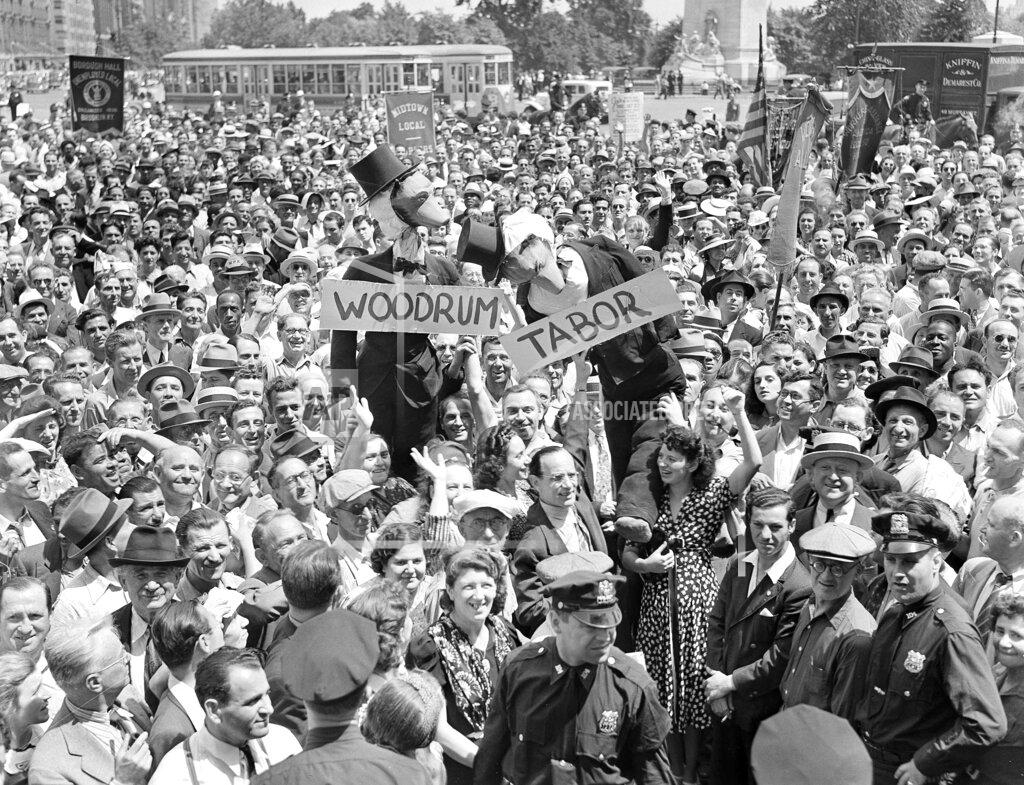
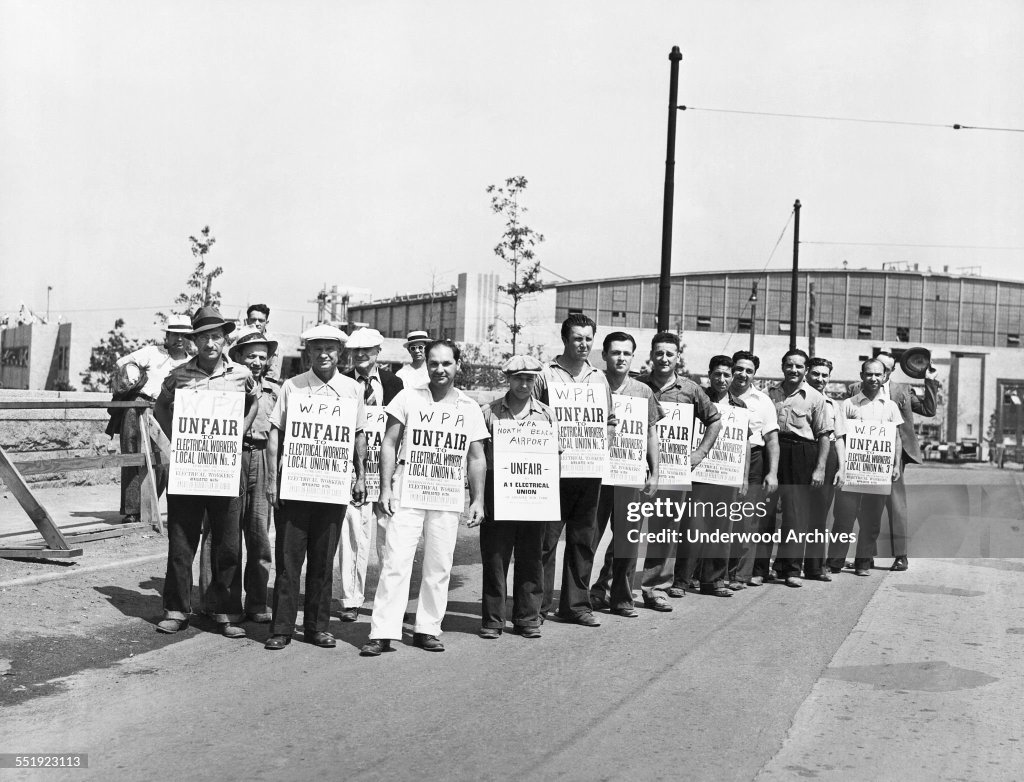
Despite predictions by national officers of the Workers Alliance that 500,000 WPA workers would quit their jobs yesterday in protest against provisions of the new Federal Relief Act, a survey last night indicated that substantially less than 10 per cent of that number took part in the one-day stoppage.
The board of directors of the New York World’s Fair Corporation at a meeting last night voted to reduce the 75-cent admission rate by selling 1,000,000 combination books good for five admissions and ten amusement concessions, worth $7 in all, for $3.75 each, and by cutting the admission rate to 40 cents after 9:30 o’clock at night.
A Massachusetts group criticizes the First Lady, condemning her stand of supporting working women.
Charley (Red) Ruffing did a pretty good job of stopping the lowly St. Louis Browns single-handed today at Sportsman’s Park to record his thirteenth victory of the campaign, 2–1, and give the New York Yankees a sweep of the three-game series and their eighth triumph in a row. The Yankees now have a ten-game lead in the American League pennant race.
The dashing Chicago White Sox, who had not won a shutout victory until Johnny Rigney turned the trick yesterday, made it two in a row today behind Thornton Lee — again at the expense of the Boston Red Sox. The score today was 4–0, Chicago, landing on Denny Galehouse for all its runs in the first inning. The White Sox won four out of five games in the series with Boston, which recently was climbing toward first place with a string of twelve straight triumphs. Chicago, meanwhile, crept within three and a half games of the second-place Red Sox in extending its spurt to fifteen triumphs in the last nineteen games.
The Pittsburgh Pirates beat the New York Giants, 8–4, on the strength of a five-run third inning. The Giants have now lost six games n a row and fallen into fifth place in the pennant race.
The Boston Bees took their second consecutive game from the Chicago Cubs, 2–1, today in an old-fashioned pitchers’ duel. Sailor Bill Posedel allowed Chicago only six hits and Vance Page gave eight to Boston.
Japanese readiness to negotiate with Soviet Russia for settlement of the Manchukuo-Outer Mongolia conflict was indicated today in authoritative quarters in Hsinking. The suggestion was put forward by the newspaper Manchu. All newspapers in Manchukuo are strictly controlled by the government, which is controlled by the Japanese Army. Other informed sources expressed the belief that the Japanese would be willing to negotiate if Russia took the first step.
It was indicated that any such negotiations would be held in Tokyo or Moscow and be directly between the two great powers concerned — Japan and Russia — and not their protectorates, respectively, Manchukuo and Outer Mongolia. The conflict, nominally between the two protectorates, has produced more than two months of intermittent warfare on Manchukuo’s northwestern border in which each side reported it had killed thousands of the enemy. Indications of Japanese willingness to negotiate followed closely recent military declarations that reprisals might be made on Russian cities for Soviet air raids on towns well within Manchukuo.
Officials belatedly disclosed that the raids had continued as recently as Tuesday, with two attacks on Halunarshan, Japanese Army railhead 125 miles from the recent border battlefield. The Japanese report said there were no casualties. Informed sources said that Japanese reprisals might lead to extension of the conflict, which would be unwelcome to a Japanese Government already heavily involved in a war with China and a bitter dispute with Great Britain. Border reports told of comparative quiet on the recent battlefield along the Khalka River, with a small Outer Mongolian detachment still holding ground in the disputed area east of the river.
Swabue, a Kwangtung Province port midway between Hong Kong and Swatow, has been occupied by Japanese forces after naval and aerial bombardments which demolished Chinese shore defenses. Chinese reports said several hundred Japanese bluejackets were landed last evening. The Chinese said the invaders lost heavily. The landing force pushed into the interior. Since the attackers were not supported by army units, it was believed the Japanese merely were ending Chinese use of the port which, since the loss of Swatow, has handled considerable junk-borne Chinese trade, especially exports to Hong Kong.
Heavy fighting continues in Southeastern Shansi, where 120,000 Japanese troops are attempting to smash Chinese forces in the Taihang and Taitsing Mountains. With most major centers in the disputed area already occupied by Japanese, the Chinese are offering desperate resistance to the invaders’ advances at Tsingheng and Kaoping, two bases still in Chinese hands.
A Japanese drive toward Tsingcheng from the west is said to have been halted at Tungfeng by charges by a detachment of Chinese “dare-to-die” troops. Similarly a Japanese push toward Tsingcheng west from Poai is reportedly held up by a sturdy Chinese stand along the Shansi-Honan border. Kaoping is endangered by a steady Japanese drive southward from Changchih, which is progressing despite determined Chinese resistance.
The outcome of the Southeast Shansi campaign, one of the biggest clean-up drives undertaken by the invaders, cannot be estimated for some time. Chinese tactics call for the abandonment of major centers if a stand demands too heavy sacrifices. Thus, the Japanese may take all important towns in Southeastern Shansi, but ultimately fail to hold them in the face of Chinese counter-movements and harassment.
The Japanese demand that the British capitulate. The Tokyo parley reopens with threats to close it unless key points are met. The third conversation between the British Ambassador, Sir Robert Leslie Craigie and Hachiro Arita, the Japanese Foreign Minister, reopened shortly after 11 AM today. Previously it had been reported the talk had been postponed as the result of a meeting of representatives of the Japanese Army and the Foreign Office yesterday afternoon. These military and diplomatic leaders decided that Japan will insist on her fundamental demands or terminate the parley.
Their decision was made known in a barrage of threats directed against Britain in all sections of the press this morning. The more moderate journals, Asahi and Nichi Nichi, said that the government was prepared to break up the negotiations unless Japan’s demands on fundamental issues were accepted. Kokumin, voicing the right wing views, demands that negotiations for a military alliance with Germany and Italy be immediately reopened.
Japan’s demand that Britain recognize “the new situation in East Asia” and cease to take actions hostile to Japan was stated in writing in a memorandum given to Sir Robert at the opening conversation, according to Asahi. Sir Robert on Wednesday gave a written reply, which, though conciliatory in tone, virtually refused Japan’s principal demands.
This was studied by Mr. Arita and his Foreign Office advisers whose views were submitted to Premier Kiichiro Hiranuma yesterday afternoon. Later the military representatives were called in and the decision was made that unless Japan’s “immutable” demands were granted it was useless to continue the parley. Evidently Sir Robert was privately informed last night to give him time to consult London. It appears that the Japanese Government, under the inspiration of the military clique, is not only determined to obtain a change in British policy in China but to lower British prestige by something like a public confession and repentance. Anticipating a rupture, Kokumin demands a military alliance with the Axis. “This alliance must be a strong one directed against Britain and the Soviet Union as hypothetical enemies,” says Kokumin.
Dow Jones Industrial Average: 141.24 (-1.40).
Born:
Jimmy Warren, AFL and NFL cornerback (AFL All-Star, 1966; San Diego Chargers, Miami Dolphins, Oakland Raiders), in Ferriday, Louisiana (d. 2006).
Frank Budd, NFL wide receiver (Philadelphia Eagles, Washington Redskins), in Long Branch, New Jersey (d. 2014).
Jeanne Bice, American entrepreneur (Quacker Factory clothes), in Fond Du Lac, Wisconsin (d. 2011).
Judy Chicago [Judith Cohen], American artist (“Dinner Party”), in Chicago, Illinois.
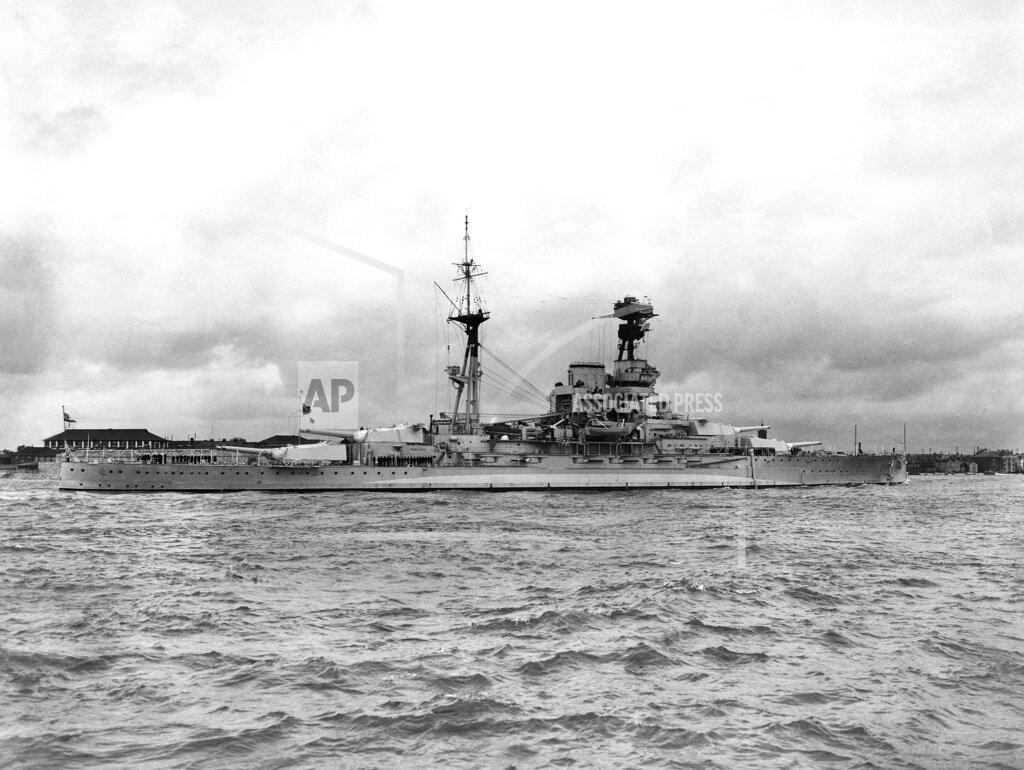
Naval Construction:
The Royal Navy Fiji-class (Crown Colony-class) light cruiser HMS Uganda is laid down by Vickers Armstrong (Newcastle-on-Tyne, U.K.); completed by Parsons.
The U.S. Navy South Dakota-class battleship USS Massachusetts (BB-59) is laid down by the Bethlehem Steel Company (Quincy, Massachusetts, U.S.A.).
The Kriegsmarine (German Navy) Type 1937 torpedo boat T14 is launched by Schichau, Elbing, East Prussia (werk 1402).

 History Diaries