Việt Cộng forces overrun Cái Bè, the capital of Định Tường Province, killing 1 South Vietnamese militiamen, 10 women, and 30 children. A Communist attack early Monday cut off Cái Bè, a provincial capital 55 miles southwest of Saigon, Reuters reported. South Vietnam military sources reported today that contact with the town of Cái Bè, 55 miles southwest of Saigon, had been lost after a major Việt Cộng attack. Some reports said the town, a district capital in Định Tường Province, had been overrun by the Communist guerrillas. Reinforcements were being rushed to the area. On Saturday, seven Americans were slightly wounded in an engagement with Việt Cộng forces near Cao Lãnh, 60 miles southwest of Saigon. Their helicopter was shot down while on a medical evacuation mission. All but one of the wounded men — three officers and four enlisted men — later returned to duty.
On 31 July, South Vietnam will charge that the troops involved in the Cái Bè attack were NVA regulars and that Chinese Communist advisers led the attack.
Vietnamese students invaded the French Embassy in Saigon early today, smashing windows, breaking furniture and tearing pictures from the walls. A station wagon was burned on the embassy grounds, and the students fled when three fire engines arrived to put out the fire, The embassy appeared deserted and no arrests were reported. The attack on the embassy followed a torchlight parade by 1,000 students through the main streets of Saigon. The marchers were marking the end of the “National Day of Shame,” the 10th anniversary of the Geneva agreements that resulted in the partition of Vietnam.
The South Vietnamese Government called today for an increased war effort to liberate North Vietnam from Communist domination. With a declaration, the Government marked the anniversary of the agreement setting up Communist North Vietnam and pro‐Western South Vietnam. “If Communist China and Communist Vietnam obstinately continue their war of aggression,” the declaration said, “the Government and entire people of Vietnam will step up the war with determination until total victory liberates the whole of our national territory.” Stressing a theme that Premier Khánh has been emphasizing lately, the declaration compared the anti‐Việt Cộng war to the lengthy campaigns of centuries past to expel Chinese invaders from Vietnamese soil.
Ten years ago today, the world powers signed the agreement ending France’s war in Indochina and ordering the withdrawal of France’s colonial presence from Southeast Asia. The South Vietnamese Government did not sign the agreement. “Over the last 10 years, Communist China and Communist North Vietnam never once implemented the cease‐fire and helped to restore peace, which was the only objective of the Geneva agreement they themselves had signed with the colonialists,” the declaration said. In the declaration, Saigon demanded that Peking withdraw forces and arms that are said to be in North Vietnam and “abandon the scheme of using Vietnamese to kill Vietnamese, and of using the Vietnamese people as a means to realize its dream of invading the free countries of Southeast Asia.”
In a news conference in Washington, President Johnson insists that U.S.-South Vietnamese relations are good.
President Johnson escorted Prime Minister Keith J. Holyoake of New Zealand from the White House today, and Mr. Holyoake told newsmen that he and the President had “talked quite intimately” about the war in South Vietnam. But he added, “I don’t think I should say anything about what was discussed.” The New Zealand Prime Minister said that although his country was cooperating in the war against the Communist Việt Cộng, “you’ve got to understand that in this area our top priority is Malaysia.” He said he hoped the conflict between Indonesia and Malaysia could be settled peacefully. Mr. Holyoake said that when he was in Saigon recently, he formed “a very favorable impression” of Major General Nguyễn Khánh, Premier of South Vietnam.
Following a meeting of the National Security Council to discuss the recent events in Saigon, the Joint Chiefs of Staff draw up a memo proposing air strikes in unmarked planes flown by non-American crews against targets in North Vietnam. It will be the 30th before the memo reaches Secretary Rusk.
Despite its increasing tone of belligerence, Communist China is not at all eager to see a widening of the war in South Vietnam, according to analysts in Hong Kong. These analysts maintain that the Chinese Communists do not want to become involved in a conflict extending throughout the whole of Vietnam because a major military adventure would interfere with the small economic gains they are making and because their army has serious weaknesses in equipment and technology. A reluctance to become more involved in Indochina is reflected in the great care with which recent hints of intervention have been worded, these analysts say. China has yet to commit itself directly to send troops into Vietnam if the North is attacked, but the hints have become steadily stronger. Yesterday the possibility of such a development was indirectly raised in a new Chinese Government statement.
In Laos, Route 13 is unpaved and rock-strewn, a narrow, red‐dirt road that connects the two capitals. In the fighting last spring on the Plaine des Jarres and at Phou Kout and Muong Soui, the goal of the Communist‐led Pathet Lao was control of Route 13. Should the Pathet Lao succeed in its announced intention to seize the road as far as Ban Hin Heup, strategists see little to prevent the pro‐Communist troops from occupying at their will Luang Prabang, the royal capital, or Vientiane, the largest city, or both. Vientiane is the administrative capital.
In Phong Hong, about 70 air miles southwest of the fighting, villagers have watched recently as convoys headed up Route 13 toward Van Vieng, headquarters of General Kong Le’s neutralist army. They have also seen the wounded return from the Plaine des Jarres, across the distant mountains. Twenty neutralist soldiers were wounded yesterday in retaking part of a hill at Phou Kout, a vantage point that changed hands six times last spring. The people of Ban Phong Hong seldom see strangers. Westerners generally remain in Vientiane, 50 miles south. The lightly traveled road rolls through rice paddies, where the water is deep enough for children and old women to catch two‐inch fish.
The Laotians cluster in groups of 8 or 10 families. Their huts are on poles 10 feet off the ground. In good weather, the walls and partitions are removed and the family spends its leisure sitting and watching the road. Most of the women wear white cotton bodices and black skirts. The men wear sarongs to the knee, or shorts. The young children, who go naked, are clean and well supervised. Along the part of Route 13 still held by the neutralists, small army posts rise every few miles. At each a bamboo pole is stretched across the road. But the youthful soldiers in green fatigues and faded maroon berets readily lift the barriers as cars approach. At one post yesterday, Western reporters were received hospitably by the young lieutenant who was temporarily in charge.
Trucks loaded with what appeared to be war matériel rumbled through the night in Limassol on Cyprus under heavy guard, heading into the mountain fastnesses of the Troodos range. Last Thursday, U Thant, Secretary General of the United Nations, urgently appealed for a halt in the military build‐up in Cyprus. The Greek Cypriot truck convoy was the first to have left Limassol since Mr. Thant’s appeal. The resumption of military importations was followed later today by a response to Mr. Thant’s appeal by Archbishop Makarios, President of Cyprus.
The archbishop said he shared Mr. Thant’s anxiety about the arms build‐up in Cyprus, but added that the government’s action was justified by Turkish threats of intervention and internal subversion by the Turkish Cypriots. Strengthening of Greek Cypriot defenses, he said, is designed to maintain peace and therefore is not inconsistent with the Security Council’s resolution on Cyprus. Limassol is a gay town, but not around the docks these days, as shipments of equipment and men from abroad are secretly unladed in the darkened harbor area.
Three ships flying the Norwegian flag were anchored in the harbor last night. Just before midnight the first units of the convoy moved out of the dock area, apparently en route to secret depots in the Troodos Mountains and the Nicosia region. Between 11:30 PM and 2:30 AM, 36 trucks left Limassol. Most of the trucks carried small crates, some of which looked like gun and ammunition boxes. Seven of the three‐ton trucks carried mammoth crates about 20 feet long, 20 feet high and six or eight feet wide. At a key turnoff just west of Limassol, two armored scout cars of the United Nations peace‐keeping force and a small group of newsmen watched on the procession, under the suspicious eyes of armed Greek Cypriot policemen and national guardsmen.
What happened last night has been going on for a month as the Cyprus Government has embarked on what it describes as a military build‐up to offset the threat of invasion by Turkey. As the sound of the approaching trucks reached the ears of the United Nations force at the turn‐off to the mountains, the sergeant in charge ordered a scout car to take position at the edge of the road. The powerful lights of the scout car were turned on to throw the convoy into sharp relief as it went by. A few miles down the road from the turn‐off, Greek Cypriot forces were dug in in strength. Beyond this point no foreigners, including the United Nations troopers, who are supposed to have complete freedom of movement, could go. The Greek Cypriot military build‐up includes automatic weapons, artillery and light spotter aircraft. There are said to be a few torpedo boats. Reports that the Greek Cypriots have received small rockets have not been substantiated.
The National Movement of the Revolution was instituted as the sole legal political party in the Republic of Congo.
In Colombia, guerrilla leader Manuel Marulanda, nicknamed “Tirofijo” chose the South American nation’s independence day to proclaim the manifesto of his organization, the Bloque Sur, with the adoption of seven goals that formed what called the National Agrarian Policy. In addition to the division of large farm estates and their redistribution to the peasant sharecroppers who worked on them, the manifesto also promised peasants credit, seeds and technical advice on farming, and pledged that Colombia’s indigenous peoples would be able to observe their traditions on their ancestral lands.
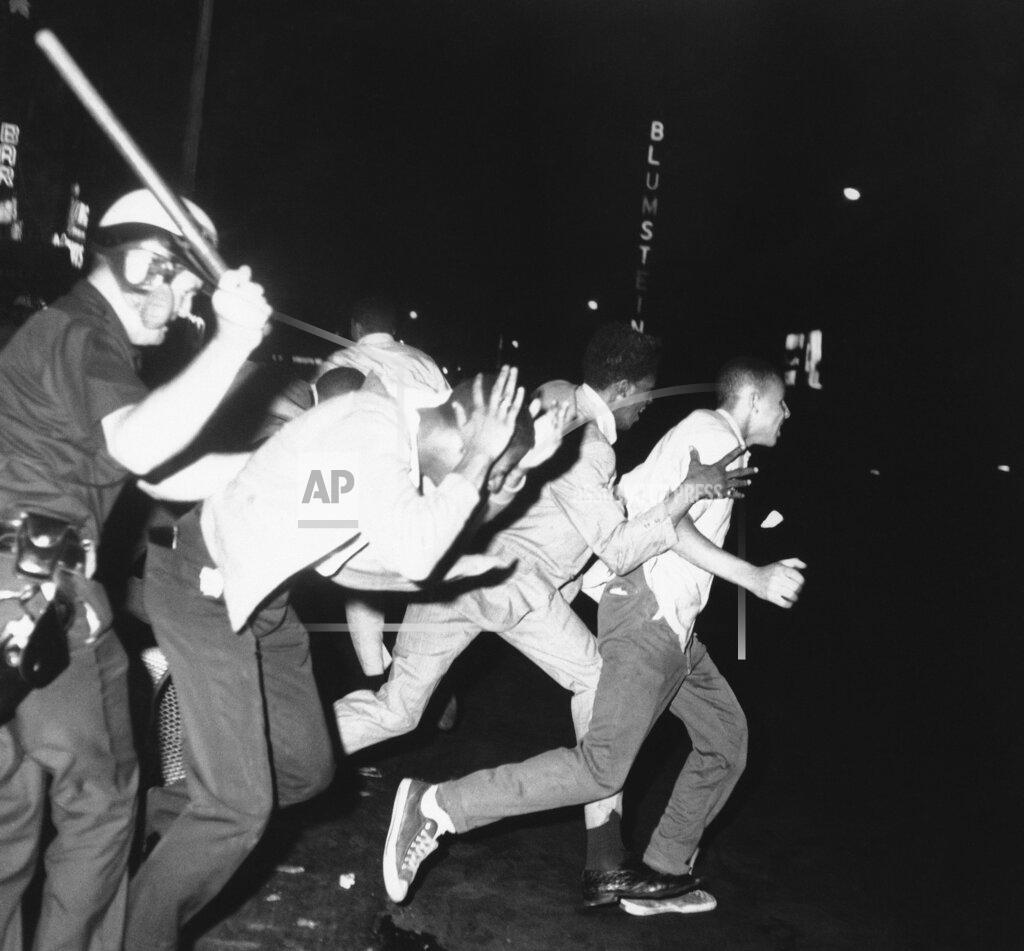
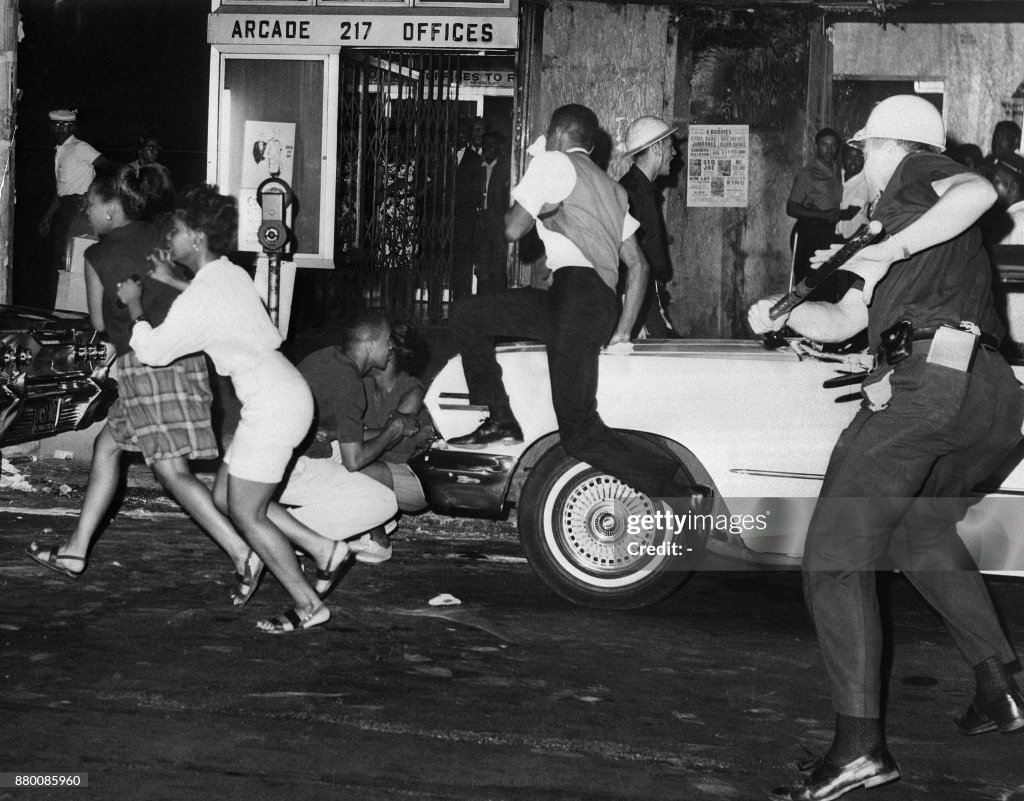
Violence flared in Harlem for the third straight night as gangs of Black youths clashed with the police. By 3 AM today, at least 20 persons had been arrested and 17 injured, including 3 policemen. In the Bedford‐Stuyvesant section of Brooklyn, a Congress of Racial Equality rally held last night to protest the killing of a 15-year‐old Black youth flared into an angry demonstration after the audience rejected the CORE leaders’ appeals that they go home. About 1,000 Blacks gathered at Fulton Street and Nostrand Avenue shouting “Killer cops” at the 20 men assigned to the scene. When bottles began raining on the police a call was sent out for 40 additional policemen. At least three persons were arrested and one person was injured in the outbreak, which appeared to be contained by 2:30 AM, an hour and 15 minutes after it started.
In Harlem, at least 500 policemen patrolled the streets. The police occasionally fired volleys into the air to bring restive crowds under control. On other occasions single shots were fired, once when a Housing Authority patrolman, Stelson Welch, was attacked by two men he caught looting a pawn shop, and again while another crowd was being dispersed. The police reported five arrests early today of persons breaking into shops and looting. The arrests were made by Transit Authority patrolmen on special duty with the police department. The three injured policemen suffered cuts and bruises when they were struck by bottles and bricks. The three were Patrolmen Thomas Cormican, Arthur Tragele and Lowell Lavine.
Some bars near 125th Street closed voluntarily. Others kept their doors locked and were admitting patrons one at a time after brief inspections at the entrance. Six Blacks were injured early today at Sam’s Bar, on Eighth Avenue. Bricks and debris had been thrown from the roofs in the area, bringing several squad cars to the scene. When the police attempted to clear out the bar, punches and shoves were exchanged. Shots were fired through the window of the bar. After the bar had been cleared, groups of angry Blacks stood outside shouting threats at the police. They were pushed south on Eighth Avenue toward 125th Street by members of the tactical patrol force, who arrived on the scene in three buses.
The disturbances in Harlem began shortly before sunset. About 50 Blacks, moving in apparently leaderless groups, marched up and down Seventh Avenue near 125th Street. Onlookers expressed threats and threw bottles at policemen, who dispersed the crowd with drawn guns and nightsticks. No shots were fired. Some small fires were set in trash cans and buildings. They were extinguished quickly. A window of a cigar store at 125th Street and Seventh Avenue, where the crowd was heaviest, was smashed. After the marchers had been dispersed, and as the daylight turned into dusk, large groups of people milled about 125th Street, the main business street of Harlem.
At 9:30 PM the police broke up a march by about 1,000 Blacks at Second Avenue and 125th Street. The march had grown rapidly before the police fired a volley of shots over the heads of the demonstrators. There were no injuries, and the crowd quickly dispersed when the shots rang out. The police closed off traffic on 125th Street between Amsterdam Avenue and Fifth Avenue and Lenox Avenue and Seventh Avenue between 116th and 135th Streets. Five pieces of fire apparatus were also moved in to block off part of 125th Street.
About 150 persons, mostly teen‐agers, gathered in front of the headquarters of the Congress of Racial Equality at 307 West 125th Street at 10:45 PM. Moments later James Farmer, executive director of the civil rights organization, emerged and told the group that Mayor Wagner was returning to New York and that Lieutenant Thomas R. Gilligan would appear before a grand jury investigating the fatal shooting of James Powell. “They should kill him” [Lieutenant Gilligan], the crowd roared, “They should kill him.” Mr. Farmer then told the crowd to return home. They responded: “We’re not going home, we are home.”
James Powell, the 15-year‐old Black boy who was shot last Thursday by a white police lieutenant, was buried near the crest of a grassy hill in Ferncliff Cemetery today. Only a dozen persons, relatives and close friends of the family, attended the brief graveside services, conducted by the Rev. Theodore Kerrison, pastor of the St. Augustine Baptist Church in Harlem. Three Black officers from the sheriff’s office’ of Westchester County watched. Mrs. Annie Powell, the mother of the boy, shouted at one point during the service, “Oh God, look how I brought my boy to you.” The body, in a silver‐gray casket, was placed alongside that of his father, Harold Powell, who died a few years ago. The family has a burial plot in the cemetery.
Acting Mayor Paul R. Screvane announced last night that a grand jury would take up today the case of the police lieutenant whose fatal shooting of a 15-year‐old Black youth touched off a series of Harlem riots. Mr. Screvane also announced that more Black policemen, including officers, were being sent into Harlem and that Deputy Mayor Edward F. Cavanagh Jr. would review the Police Department’s handling of charges of brutality by policemen. The moves by the city administration were in part a response to proposals made by two different Harlem groups in City Hall conferences on easing the tensions in the nation’s largest Black area. Mayor Wagner, who was in Palma, Majorca, a Spanish island in the Mediterranean, was consulted and approved the moves.
The Police Department yesterday defended its use of gunfire in putting down the weekend riots in Harlem. Deputy Commissioner Walter Arm said patrolmen had been ordered to shoot over the heads of crowds that refused to disperse and of individual Blacks who were hurling bottles and bricks from tenement roofs. “We felt this means of control would be more effective and less harmful than the alternatives available to us,” he explained in an interview, “and we have been proven right.” Mr. Arm indicated that the decision to open fire had been taken at the highest level of the department. Police Commissioner Michael J. Murphy is known to have been in constant touch with the situation as it developed Saturday night. Several prominent Black leaders complained bitterly on Sunday about the tactics employed by the police. They charged that many patrolmen had lost their heads and had fired wildly whenever they encountered the slightest provocation.
Malcolm X said today that the violence in Harlem was a result of “outright scare tactics” by the New York police. “I am surprised that the trouble has been contained to the degree it has,” the Black Nationalist leader said. “Until two years ago New York City used wiser methods than any other city to deal with racial problems.” Malcolm, who is attending the Organization of African Unity as an observer, said that under Police Commissioner Michael J. Murphy, “for some strange reason, tactics have changed.” “Now it is a case of outright scare tactics,” he said. “This won’t work, because the Negro is not afraid. If the tactics are not changed, this could escalate into something very. very serious.”
Senator Barry Goldwater said today he would welcome an opportunity to sit down with President Johnson and reach an agreement on how they could avoid inflaming racial tensions in the Presidential campaign. Mr. Goldwater did not advance the suggestion. It was embodied in a question by a reporter. At the White House it was said that President Johnson would be more than willing to join the Senator in any efforts to keep the civil rights issue out of the campaign. Reporters had clustered around Mr. Goldwater in the lounge of the American Airlines Admirals Club in the Chicago Airport, where the Senator changed planes on a flight from Phoenix, Arizona, to Washington. “I think that’s a very good idea — that’s gone through my mind,” said Senator Goldwater when asked if he thought it would be feasible to act jointly with the President to avoid arousing racial feelings in the campaign.
Fifteen Blacks were arrested in Monroe and in adjoining West Monroe, Louisiana today in an attempt to desegregate three branches of the public library. The police arrested four in West Monroe and 11 here. The Blacks were charged with disturbing the peace or trespassing and were held under bond. There were no disturbances. The Blacks attempted to get library cards. They were turned down, and sat at tables in the branches. They were told to leave, but said they would not until their cards were issued, the police said. Richard Haley, director of the Southern office of the Congress of Racial Equality, said the arrests were a “complete illegality.”
A Federal court was asked today to order compliance with the Civil Rights Law in St. Augustine and to restrain segregationists from “intimidating, threatening or coercing” those who complied. In other legal movies here today, St. Augustine integrationists asked that state, county and city police be ordered to render “color‐blind law enforcement” and that officials be restrained from having demonstrators arrested and from trying those already arrested. A hearing on all of the suits was set for Wednesday before United States District Judge Bryan Simpson. In the suit seeking compliance with the Civil Rights Law, Blacks charged that most restaurants complied with the law for about a week, then resegregated and turned away Blacks.
President Johnson asked Congress today to appropriate $13,088,000 to carry out programs authorized by the Civil Rights Act of 1964. In a letter accompanying the request, the President said that Congress, by enacting the legislation, had earned a place of honor for itself “among those who have fought for human dignity in our history.” Now, the President said, money is needed “to increase popular understanding of the law, to provide help in coping with the problems caused by its initial impact, and to increase the federal government’s capacity to enforce it.” “The more promptly we are able to make effective the act’s protections, the sooner justice will be provided to all our citizens in the manner prescribed by the Constitution,” the President declared.
Meanwhile, the Senate confirmed, by a vote of 53 to 8, President Johnson’s nomination of LeRoy Collins, former Governor of Florida, to be director of the Community Relations Service. The service was created under the Civil Rights Act to facilitate voluntary compliance with the antidiscrimination provisions of the law, particularly the ban on discrimination in public accommodations. Senator Strom Thurmond, Democrat of South Carolina, asked for a roll call on the nomination, and he was the only Senator to speak against confirmation. However, seven Southerners joined Senator Thurmond in voting against Mr. Collins, who, as Governor, gradually revised his views on racial segregation land counseled his state that it must adjust to a new era in racial relations.
The Senate passed by voice vote today the bill to give a pay increase of 2½ per cent to most officers and enlisted personnel of the armed forces. The bill, which will cost about $207 million a year, was sent to the House. Approval is expected there before Congress adjourns. Congress, which recessed for the Republican National Convention last week, returned today and began trying to clear the legislative slate before the Democratic convention August 24 in Atlantic City. In this drive the Senate also voted a bill to simplify and equalize the complex system of dual employment and pay in government service. It covers thousands of instances where retired civilian and military personnel continue Federal employment. Prompt action by the House on the military pay bill and Presidential approval could increase military pay envelopes next month or in September.
Ion propulsion was used for the first time in a space launch into Earth orbit, as SERT-1 (the Space Electric Rocket Test) was sent up by NASA’s the Wallops Island facility, off the coast of Virginia, by a Scout rocket.
Dmitri Shostakovich completes his 10th String quartet.
Don Wert doubled across the deciding run after Dick McAuliffe had pulled the Detroit Tigers even at 5–5 with a two‐run homer in the eighth inning tonight as Detroit scored a 7–5 victory over the Boston Red Sox. McAuliffe, who hit three homers in the last series between the teams, drove his 17th into the right‐field stands off the loser, Bob Heffner. Bill Freehan singled before Wert hit his double. Carl Yastrzemski had increased a Boston lead to 5–1 with a two‐run homer in the fifth, but in the seventh, George Thomas hit a two‐run homer for the Tigers.
Don Buford, a rookie, batted in four runs tonight to lead the Chicago White Sox to a 9–0 victory over the Los Angeles Angels. Fred Talbot scored his second shutout for Chicago. He gave up nine hits. The victory, their fifth straight, moved the White Sox within half a game of Baltimore, the American League leader. Buford hit his third homer of the season with two men on base to highlight a four‐run, sixth inning. He singled in the seventh to drive in a run in another four‐run frame. In his first time at bat, he tripled and scored on Floyd Robinson’s single.
Jerry Grote’s double with the bases filled in the fourth inning drove in. three runs tonight and provided the Houston Colts with a 4–1 victory over the Los Angeles: Dodgers. John Roseboro, the Dodger catcher, was forced to leave the game in the fifth when a foul tip cut the middle finger of his right hand.
Ron Santo hit a three-run homer in the ninth inning today to give the Chicago Cubs a 6–4 victory over the San Francisco Giants. Santo’s homer was hit off Bob Shaw, who had just taken over for the starter, Bob Bolin, with men on first and second and none out. Before Santo connected with the count 2–2, Del Crandall, the Giants’ catcher, had argued with the plate umpire, Paul Pryor, over a pitch that Crandall thought should have been a called third strike on Santo. The Giants had taken the lead, 4–2, with three runs in the fifth inning, including consecutive home runs by Orlando Cepeda and Crandall off the Cubs’ starter, Ernie Broglio.
Dow Jones Industrial Average: 849.39 (-1.96).
Born:
Chris Cornell [as Christopher John Boyle], American singer (Soundgarden, Audioslave, Temple of the Dog, in Seattle, Washington (d. 2017)
Dean Winters, American actor (“The Vulture” in “Brooklyn Nine-nine”), in New York, New York.
Murray Craven, Canadian NHL left wing (Detroit Red Wings, Philadelphia Flyers, Hartford Whalers, Vancouver Canucks, Chicago Blackhawks, San Jose Sharks), in Medicine Hat, Alberta, Canada.
Mark Lee, MLB pitcher (Kansas City Royals, Milwaukee Brewers, Baltimore Orioles), in Williston, North Dakota.
Jim Lewis, MLB pitcher (San Diego Padres), in Jackson, Michigan.
Andre Spencer, NBA small forward (Atlanta Hawks, Golden State Warriors, Sacramento Kings), in Stockton, California (d. 2020).
Tony Gladney, NFL wide receiver (San Francisco 49ers), in San Mateo, California.
Terri Irwin [née Raines], American naturalist; widow of Steve Irwin, in Eugene, Oregon.
Died:
Anna Vyrubova, 80, Russian lady-in-waiting, the best friend and confidante of Tsaritsa Alexandra Fyodorovna.
 History Diaries