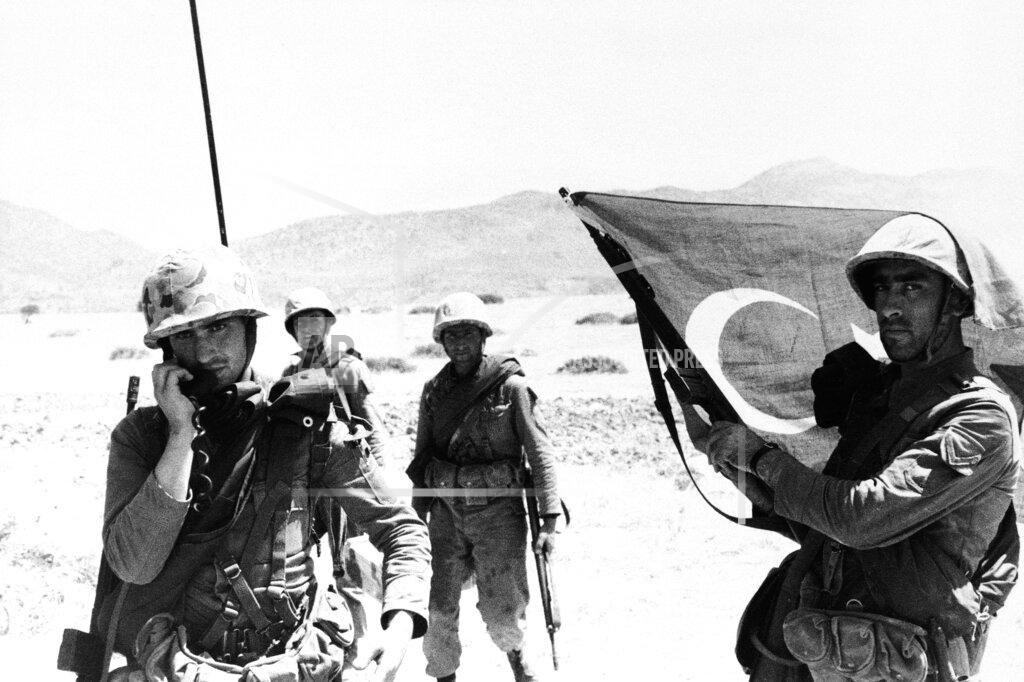
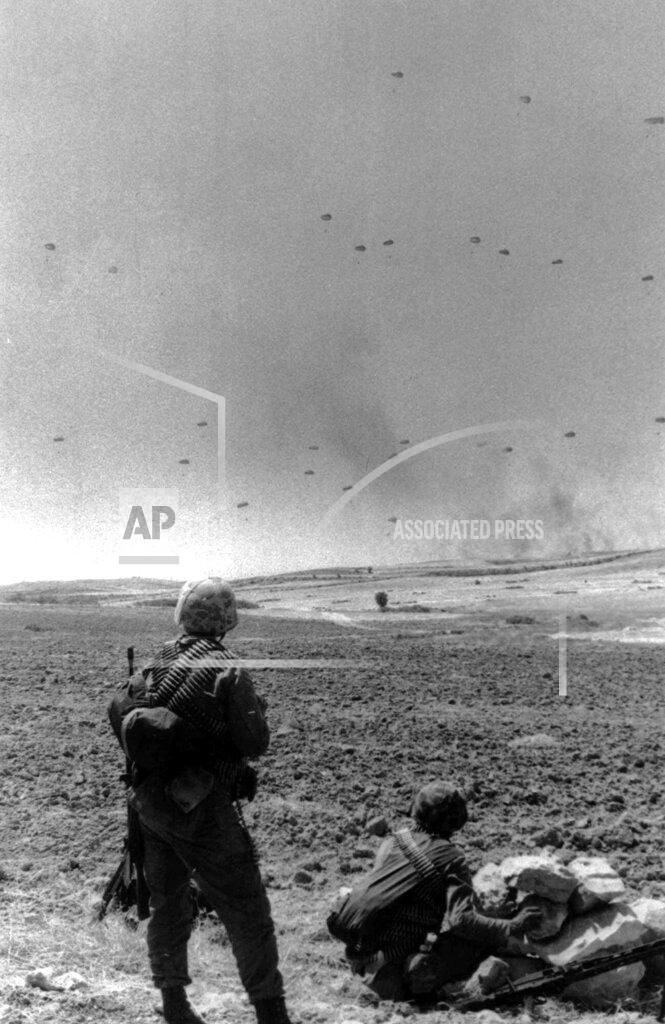
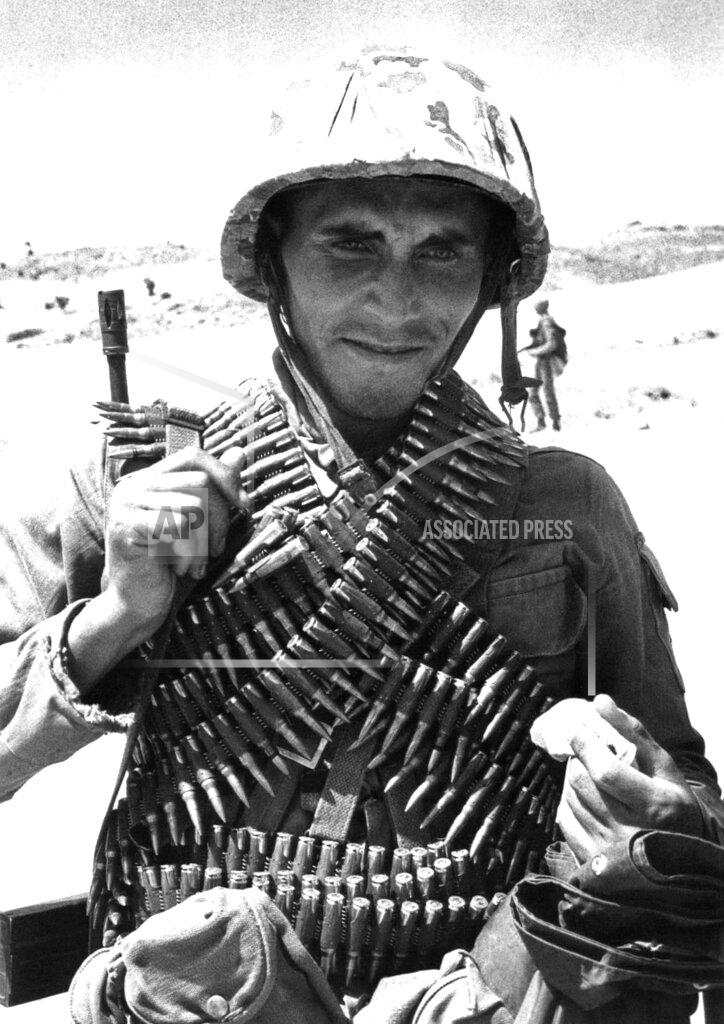
Turkish troops have already landed in Cyprus, Premier Bulent Ecevit said today. He said Turkey had intervened at 6 AM local time (11 PM, Friday, New York time). Premier Bulent Ecevit of Turkey reported that Turkish troops landed in Cyprus at 6 AM local time this morning after his government had explored all diplomatic ways of solving the crisis brought on by the Cypriote coup d’état last Monday. Turkish paratroopers were said to have dropped into the Turkish sector of Nicosia, the Cypriote capital, and sporadic fire broke out along the line separating the Greek and Turkish communities. Turkish troops also were reported landing in northern Cyprus. The Cypriote National Guard, led by Greek army officers who spearheaded the coup that deposed the government of Archbishop Makarios, prepared to defend Nicosia.
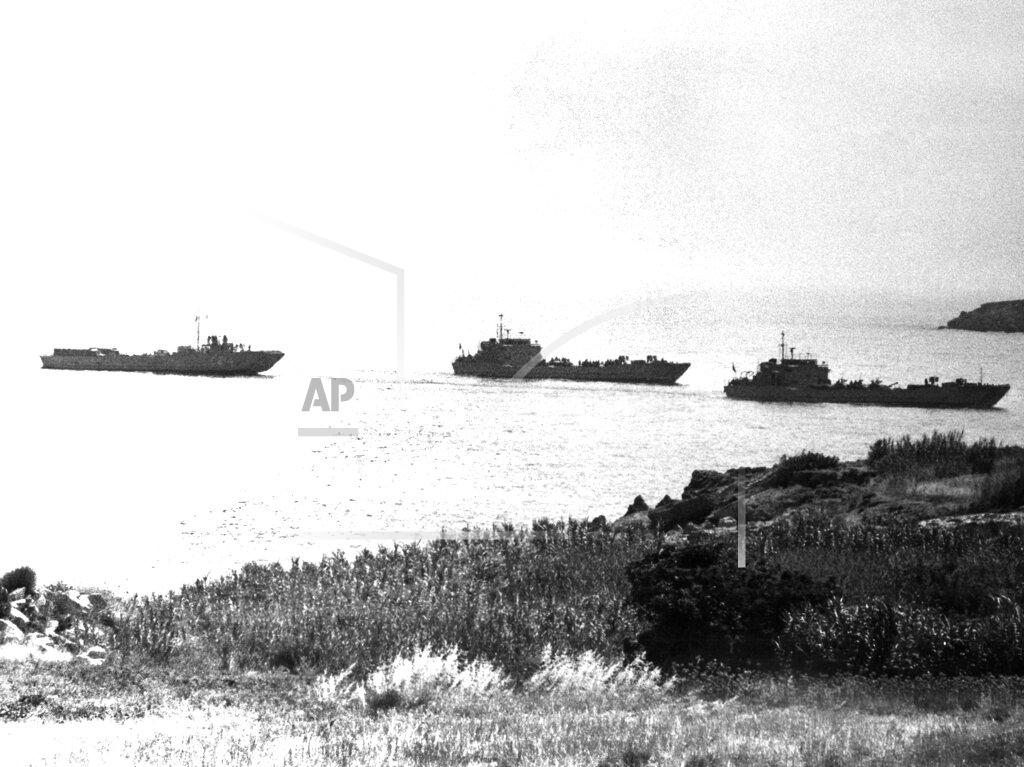
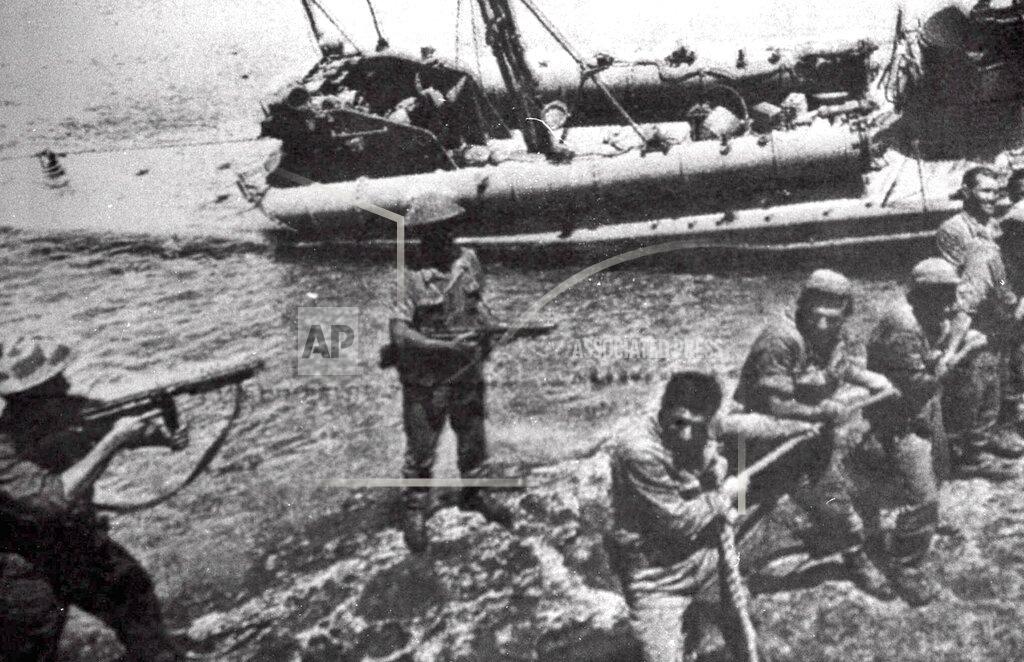
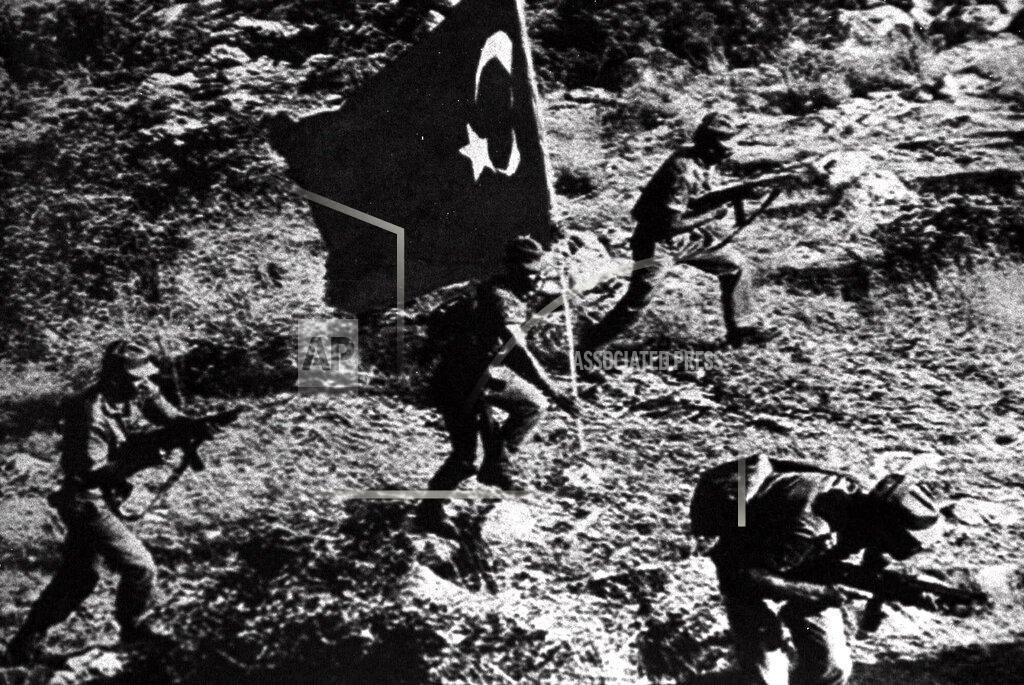
Five days after Greek Cypriot activists overthrew the government of Cyprus, armed forces from Turkey carried out a massive invasion and occupation by land, sea and air of the northern portion of the island republic, which was primarily occupied by Turkish Cypriots. After departing from the Turkish port of Mersin the night before, four battalions of 3,500 Turkish soldiers began coming ashore at Glykiotissa, near the northern port of Kyrenia at 7:15 local time, and engaged in battle against the Greek-commanded Cypriot National Guard. At the same time, Turkish warplanes bombed the airport at the capital, Nicosia, and both a Cypriot National Guard camp and a Greek Army contingent near Nicosia. Turkish Prime Minister Bulent Ecevit said that the decision to invade was made at an emergency meeting of his cabinet before dawn.
Invading Turkish forces swiftly seized control today of a 10-mile-long corridor from the north coast of Cyprus to Nicosia, the capital. Bloody fighting raged most of the day and was particularly heavy between the Greek and Turkish Cypriot communities in Nicosia. A United Nations spokesman in New York said a cease-fire between these two groups failed to hold up.
Hours after the Turkish invasion of Cyprus, members of the Greek Cypriot National Guard entered the predominantly Turkish village of Alaminos and murdered 15 men between the ages of 25 and 50. According to a correspondent with the American TV network NBC, the national guardsmen were reportedly upset that their commander had been killed in a fight with Turkish invaders.
The Turkish troop landing in Cyprus will top the agenda at a Security Council meeting scheduled for 11 AM today. One Western diplomat predicted a cease‐fire call would be the logical first‐order of business. The Security Council had been scheduled to meet today to consider a resolution calling for the withdrawal of the Greek Army officers serving with the Cyprus National Guard that toppled the Makarios Government last Monday. The Turkish troop landing in Cyprus is expected to be taken up by the United Nations Security Council when it meets today. The Council had been scheduled to meet this morning to consider a demand for the withdrawal of Greek officers commanding the Cypriote National Guard.
The Greek government announced a general mobilization and pledged to meet “expansionist Turkish acts” at any cost. The military rulers of Greece were clearly surprised by the Turkish invasion of Cyprus despite repeated warnings from Ankara. They ordered reservists to report for duty immediately and men rushed from their homes and jobs. The order could raise a force of up to 160,000 men. Armor and troop reinforcements were moved to the Greek-Turkish border in the northwest. There was no retaliatory action against Turkey, but the government left its options open, saying that it would attack “wherever” it believed the country’s “national interests’ were threatened.
Heavy artillery and gunfire continued throughout the day in Nicosia as Turkish forces moved to widen their beachhead on the northern coast of Cyprus. About 1,000 paratroopers dropped on the plain north of the capital appeared to have secured the 16- mile road between Nicosia and the port of Kyrenia on the north coast, which was shelled by Turkish gunboats and bombarded from the air. Sea landings were also reported at Kokkina and Lapithos, west of Kyrenia, The Turkish Cypriote radio repeated throughout the day that the invasion was a police action, not a military one, and was intended only to restore the elected government of Archbishop Makarios.
Syria has placed her armed forces in a state of maximum alert and the Egyptian Navy has been instructed to stay close to home shores following the Turkish invasion of Cyprus today, according to informed Arab press quarters here. Syria’s President Hafez al-Assad canceled a scheduled visit to Yugoslavia, where he was to have arrived today. Syria and Egypt were said to be apprehensive that fighting might spread in the eastern Mediterranean region if full-scale war erupted between Greece and Turkey. Syrian leaders were reported to fear an Israeli involvement if military action expanded. Arab sentiment is in favor of Turkey.
The Soviet Union denied today that its military forces had been placed on alert as a result of the Cyprus invasion. The Soviet press agency Tass referred to a report by Agence France‐Presse saying that Soviet forces had been placed on alert. Other news organizations, including The. New York Times, published similar reports. Tass said it had been “instructed by competent organs to state that the France-Presse report is an utter fabrication aimed at further aggravation of the situation, which, obviously, is in the interest of certain aggressive circles.” The report concluded: “The armed forces in the Soviet Union remain in their usual state and have not been placed on alert.”
Leonid I. Brezhnev, the Soviet leader, called today for a meeting of world Communist parties, opposed by some parties on the ground that such a conference would probably be used to ostracize China from the world Communist community. Mr. Brezhnev made the appeal in the course of a relaxed, 37‐minute speech delivered at Katowice, an industrial city in Polish Silesia, which he visited today as part of his participation in the 30th anniversary observances of Communist rule in Poland. At no point did Mr. Brezhnev allude to Cyprus. His speech, as well as the current festivities in Poland, were transmitted live on Soviet television. The Soviet leader defended the current atmosphere of détente, saying that ‘nothing will deter us from establishing firm peace in the world.”
Spain’s ailing leader, General Francisco Franco, appeared Saturday to have pulled back from a near-fatal medical crisis. Generalissimo Franco, ailing since July 9 with phlebitis, appeared today to be fighting back against the effects of the internal bleeding that suddenly developed yesterday morning. The alarm that led to a temporary transfer of power to the 81‐year‐old General’s designated successor, Prince Juan Carlos de Borbon, subsided somewhat after doctors reported the hemorrhaging that had caused him to vomit blood continued in check and that he had been able to take nourishment normally. The six‐man medical team even had him walking this morning. The medical bulletin, issued shortly after noon, was more explicit than previous ones in acknowledging that doctors were fighting against both phlebitis and thrombosis in the right thigh. The effort to inhibit blood clots had apparently provoked hemorrhages and it remained to be seen whether the effort to stop the bleeding would not in turn bring about new clots.
A group of women calling themselves the “Dublin City Women’s Invasion Force”, including Nell McCafferty and Nuala Fennell, intruded on the Forty Foot bathing place in Sandycove, traditionally a men-only nude bathing area, to claim the right to swim there.
Fears of a crisis between Egypt and the Palestine Liberation Organization have been expressed here following President Anwar el‐Sadat’s endorsement of King Hussein’s position on a Middle East settlement. Arab diplomats said the crisis could drive, Yasser Arafat, chairman of the Palestine Liberation Organization, and his moderate supporters away from the Cairo leadership and closer to the radical Arab camp led by Iraq. This, it is feared, could upset current moves to bring peace to the area. Farouk Kaddoumi, who has the title of foreign minister of the Palestine Liberation Organization and is one of Mr. Arafat’s closest lieutenants in Al Fatah, the largest of the Palestine guerrilla groups, has announced here that a conference of leaders of Egypt, Syria, Jordan and the Liberation Organization is now out of the question. Such a conference of the Arab parties directly concerned with the projected Middle East talks in Geneva is being sought by President Sadat as the second step in inter‐Arab coordination, after his meeting with King Hussein of Jordan in Alexandria this week.
Fatah has come out in open opposition to the joint declaration issued by President Sadat and King Hussein Thursday, which recognized the King as representative of the Palestinians in Jordan and the Palestine Liberation Organization as spokesman for Palestinians outside Jordan. In a strongly worded statement issued here last night, Fatah, the largest of the six main guerrilla factions that form the Liberation Organization, condemned the Hussein-Sadat declaration as a plot to obliterate the national identity of the Palestinian people by appointing King Hussein as their representative. It warned that the “Palestine and Arab masses will together confront this imperialist, Zionist and Jordanian design against our Palestinian cause.”
Saudi Arabia probably will invest a major portion of its oil wealth in the United States, the Saudi oil minister said Saturday. Sheik Ahmed Zaki Yamani said, however, that Americans need not fear that the Saudis will buy up American industries with their billions of dollars in surplus funds. Sheik Zaki said in an interview at his palatial summer home near Saudi Arabia’s summer capital at Tail that the government is considering investing in special United States Government securities.
Holding one‐third of the world’s oil reserves, the Saudis are afraid that over the long run their interests would be hurt if the prices do not stabilize at lower levels, Essentially, what they fear is an oil glut later this century if high prices trigger, as they already have done to some extent, an intensive search for oil outside the Middle East and for oil substitutes.
Other O.P.E.C. countries, led by Iran, with less oil, are Interested in getting as much as they can right now. Iran, with ambitious military and economic development programs and a relatively large (33 million) population, wants the money to transform its backward society into superpower status. It was with this eye on progress that the Iranian Government has entered into the deal to acquire a 25 per cent interest in the steelmaking business of West Germany’s Krupp organization.
Death sentences for five South Korean dissidents, issued by a military court-martial, were commuted to life imprisonment by Defense Minister Suh Jong Chul. The group— poet Kim Chi Ha, Yoo In Tai, Kim Byung Kar, and Rah Byung Shikr — were leaders of demonstrators and had been convicted on charges of attempting to overthrow the government.”
The South Korean Defense Ministry said today that the navy had destroyed a North Korean reconnaissance vessel and killed at least five of its crew in the fourth sea clash with Communist North Korea this year. The ministry said a South Korean naval vessel immobilized a 40‐ton ship disguised as a fishing boat after a two-hour chase off the west coast. Two rubber rafts, two sets of radio transmitters, life jackets and other items were captured from the North Korean ship, the ministry said.
Elliot Richardson told the House Judiciary Committee last month that President Nixon imposed restrictions on Archibald Cox’s Watergate investigation even before Mr. Cox officially became the special prosecutor. In an affidavit, Mr. Richardson, the former Attorney General, also said that Mr. Nixon threatened to dismiss Mr. Cox several times before he finally ordered him discharged last October 20.
A presidential review of the White House tape recordings of President Nixon’s meetings with John Dean was started three weeks before Mr. Dean’s appearance before the Senate Watergate committee last year. It was depicted in part in a transcript of an edited tape recording made public by the House Judiciary Committee as part of its analysis of the dismissal of Watergate special prosecutor Archibald Cox last fall. The recording provided little new information about Mr. Nixon’s alleged role in the Watergate cover-up, but it did depict a new kind of White House with General Alexander Haig, the White House chief of staff, and Ron Ziegler, the President’s press secretary, serving as replacements for H.R. Haldeman and John Ehrlichman.
The House Judiciary Committee questioned its senior lawyers on their analysis of impeachment evidence, an analysis that declares that President Nixon was directly responsible for the Watergate burglary and assumed “active management” of the ensuing cover-up attempt. In a rare Saturday meeting, the committee discussed with John Doar, the special counsel, and his aides the 306-page “Summary of Information” that the bipartisan inquiry staff presented Friday as a foundation for the President’s impeachment. The evidence was summarized in harsh and uncompromising terms.
James St. Clair, President Nixon’s defense lawyer, told the House Judiciary Committee in a formal brief made public today that there was no solid evidence that President Nixon had committed impeachable offenses. In a 151-page document, Mr. St. Clair asserted that “in light of the complete absence of any conclusive evidence demonstrating presidential wrongdoings sufficient to justify the grave action of impeachment, the committee must conclude that a recommendation of impeachment is not justified.” He relied on portions of tape-recording transcripts, documents and testimony in his case against impeachment.
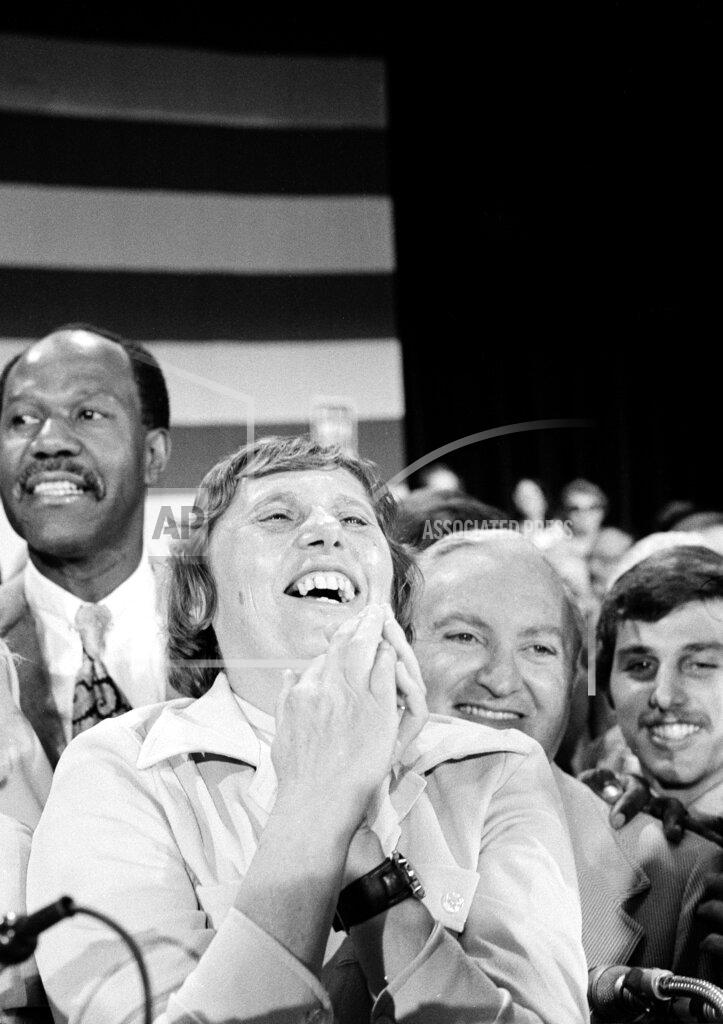
United States Representative Ella Tambussi Grasso was nominated by acclamation today at the Connecticut Democratic Convention as the party’s candidate for Governor. Bushnell Memorial Hall resounded with applause aid cheering when Frank N. Zullo, former Mayor of Norwalk, who had fought until last night to win the 20 percent of the votes needed to Wage a primary battle, dropped out of the race. Mr. Zullo stepped up to the stage and said: “I will support the nominee of this convention, no matter who she might be,” emphasizing the word “she.” Never before in Connecticut has a woman been nominated for Governor by a major party. The only women elected Governor in other states were those who followed their husbands in office.
The jobs that sustain New York City’s economy — in manufacturing for example — are being lost at a rate that is causing concern among city officials, economists, businessmen and labor leaders. Manufacturing has had the biggest decline in employment — 169,000 jobs since 1970. There was a decline of 251,000 jobs in all employment categories in the city over the last four years.
On the fifth anniversary of the Apollo 11 landing on the Moon, Neil Armstrong, Buzz Aldrin and Michael Collins spoke at a press conference, where Armstrong confirmed a statement by Collins that Armstrong had exercised his right as mission commander to be the first person to walk on the Moon, despite early flight plans that gave the assignment to Aldrin. Armstrong said that since he was closest to the hatch, he left the lunar module first even though the practice was for the module pilot to leave first, allowing Aldrin to go first “required that the two crewmen change places in pressurized suits in a cramped area. It was not impossible, but it was very difficult and possibly dangerous.” Collins had written in his book, Carrying the Fire: An Astronaut’s Journeys, that Aldrin and Armstrong had argued about the decision prior to the mission launch, and said “I did not mean to imply in my book that there was anything abnormal about the reversal. It was a normal thing and made the best sense.” Aldrin told reporters “I do what my boss tells me to.”
The city of Los Angeles, responding to a wave of angry public sentiment, this week adopted a ban on public nudity in all area beaches, parks and playgrounds. The Council seeks to make it a misdemeanor for any person to bathe, sunbathe or walk in the nude at any city beach or recreational facility. Meanwhile, the American Civil Liberties Union has won a restraining order staying the ban pending a hearing on August 2. Only four weeks ago, the City Council tentatively adopted plan allowing bathers, if they desired, to sunbathe naked in certain designated beach areas. The action had been expected to reach easy passage in a second council vote this month. But a storm of public dissent, generated by the proposed ordinance, quickly convinced legislators that rather than approve nudity on certain beaches, it would be better to ban it altogether.
Representative Les Aspin contended today that for three and a half years the Atomic Energy Commission has knowingly failed to protect pregnant employes from possible radiation doses in excess of the maximum level recommended by scientists as safe for the fetus. Lester R Rogers, the commission’s director of regulatory standards, said that the risk of an excessive dose of radiation to a woman “and even to the fetus is extremely low.” He acknowledged in an interview that the commission had not required employers to tell women employes at nuclear energy facilities about the recommended exposure standard. Mr. Rogers confirmed that the commission had not yet adopted the standard. He said that his staff was “looking at” the question of recommending to the commission “a special exposure limit for women.”
The Ford Motor Company plans to raise prices on its 1975 models an average of 8 percent, or $420, when it introduces its new models next September. Ford’s intention to put through the increase was made known in a letter sent to 6,800 Ford dealers throughout the country. The letter said “1975 model passenger cars will reflect ‘advance billing prices’ that are approximately 8 percent higher than present 1974 model prices.” During the 1974 model year, Ford raised its prices six times for a total of $522, or 11.1 percent, on its average car and truck.
Heavy spring rains perked up greenery and eased the threat of a water crisis in parched south and central Florida, but they also precipitated the worst mosquito infestation in years. Lee County, on the Gulf Coast spent $75,000 on mosquito control activities in one week this month. In Martin County, on the Atlantic, officials say some 45 species of mosquitoes are making life miserable for people and their pets. And the Everglades are swarming with saltmarsh and flood‐water mosquitoes.
The first rock concert to be held at Knebworth House in Hertfordshire, UK, featured The Allman Brothers Band, Van Morrison, Tim Buckley and others, and was attended by an estimated 60,000 people.
Trailing the Oakland A’s, 9–8, in the bottom of the ninth, the Cleveland Indians get runners to second and third with nobody out. Rollie Fingers retires George Hendrick and Charlie Spikes, but with first base still open, manager Alvin Dark elects to pitch to John Ellis, who promptly lines a single to center to win the game.
Bucky Dent, the shortstop, hit a tie‐breaking single with two out in the seventh inning today to back the seven‐hit pitching of Wilbur Wood and give the Chicago White Sox their sixth straight victory, 3–2, over the Milwaukee Brewers.
Mark Belanger’s three‐run homer capped a four‐run rally in the ninth inning that lifted the Baltimore Orioles to a 5–2 victory over the California Angels and a split of today’s twilight‐night doubleheader. Nolan Ryan scattered five hits and Frank Robinson scored one run and drove in the other as the Angels won the opener, 2–0.
Bob Bailey’s 13th home run of the season, leading off the ninth inning, started a two‐run burst and led the Montreal Expos to a 3–2 victory over the San Francisco Giants. Bailey’s tie‐breaking homer off a rookie, Ed Halicki, ended the Giants’ three-game winning streak and was the fifth victory in the last seven games for the Expos.
Willie Stargell greeted Danny Frisella with a lead‐off home run in the 11th inning tonight, enabling the Pittsburgh Pirates to defeat the Atlanta Braves, 7–6, for their seventh consecutive victory. The Braves had tied the score on Ivan Murrell’s pinch homer off Ramon Hernandez with two out in the eighth.
George Mitterwald drove in two runs with an eighth-inning single and two more with a home run in the ninth as the Chicago Cubs scored nine runs in the final two innings tonight, crushing the Cincinnati Reds, 11–6.
Born:
Bengie Molina, Puerto Rican MLB catcher (World Series Champions-Anaheim, 2002; Gold Glove Award 2002, 2003; Anaheim-Los Angeles Angels; Toronto Blue Jays, San Francisco Giants, Texas Rangers), in Rio Piedras, Puerto Rico.
Simon Rex, American actor (“Red Rocket”), in San Francisco, California.
Yury Slyusar, Russian businessman and CEO of United Aircraft Corporation (UAC); in Rostov-on-Don, Russian SFSR, Soviet Union.
Died:
Alexander Kartveli, 77, Georgian-Russian born U.S. aeronautical engineer for Republic Aviation and pioneer in turbojet military fighters.
Allen Jenkins, 74, American actor (“Hey Jeannie”, “Top Cop”, “Girl Habit”).


 History Diaries