
The SS Heimwehr Danzig reported the arrest of twenty “Marxists” they said were conspiring to bomb bridges and other buildings in the event of war between Germany and Poland. Twenty former members of Marxist organizations have been arrested in Danzig in the last few days and are facing trial on charges of high treason, it was announced today. A sensational story is told in this connection of plans to destroy the Danzig gas works and carry out other acts of sabotage. The police, it is declared, got their clue about six weeks ago, when there was an accidental explosion in a workman’s house, resulting in the death of the man and his wife. The suspicions of the authorities were aroused, and the arrests are a result of their investigations.
Explosives and weapons are said to have been found in possession of the men facing trial. The police further assert that the men were in contact with “foreign powers.” It is now acknowledged officially that there are about 4,000 extra policemen here. The barracks are too small to accommodate them; a school and training college in Langfuhr have been requisitioned. It is expected that by the end of the school holidays a new barracks on the outskirts of the Free City will be ready.
In London, The Daily Mail reported from Warsaw that Colonel Sobocinski, Polish military expert attached to the staff of the Polish Commissioner in Danzig, had been arrested by the police. A conference was immediately held at the Polish Foreign Office at which, It was said, several high staff officers were present. It was hinted afterward that unless Colonel Sobocinski was immediately released, with apologies, the incident would have most serious consequences.
Danzig’s new political police, the Free City’s counterpart of the German Gestapo, today smashed what Nazis described as a ring of “Socialist dynamiters.” The police said that twenty “Marxists” had been jailed on charges of treason. Officers were so confident that all opposition had been overcome that they declared only three more men actively hostile to the Nazi plan for reuniting Danzig with Germany were still at large.
Authorities said the arrested Socialists were diehards who had refused to recognize the changed conditions when the Nazis became dominant in 1933. They asserted they had evidence that the Socialists had conspired to bomb bridges and public buildings in the event of a clash with Poland. They added there were indications that those arrested had had “relations with a hostile foreign power,” and in official circles no effort was made to conceal an opinion that the “foreign power” was Poland.
Evidence of military activity, meanwhile, increased in Danzig. Several small detachments of helmeted men were seen in the streets. Military trucks appeared frequently, moving between barracks on the Danzig-Zoppot highways and Danzig’s two hills — Bischofsberg and Hagelsberg. Several German Army officers were observed on the streets, and helmeted dispatch bearers sped about on motorcycles. But by and large Danzig appeared normal. On the streets there were about as many uniforms as are to be seen in almost any German city.
German exasperation with the Czechs has reached a high pitch. The newly appointed Czech Minister of the Interior, Josef Jezek, was summoned to Berlin where Heinrich Himmler, head of the German police, said that if necessary, Germany would deal with the utmost ruthlessness to impose order on the Czech people.
The fate of President Roosevelt’s neutrality proposals had a depressing effect upon London today, especially as the news from Washington coincided with an ugly deadlock in the Anglo-Polish loan negotiations and with continued failure to make headway in the three-power negotiations in Moscow.
Prime Minister Neville Chamberlain had a stormy day in the House of Commons today, first facing a series of Opposition questions ranging over most of the international situation. and then precipitating bitter criticism when he sought to cut four days off the time for debate of government bills.
The Parliamentary Opposition got little information from him beyond the fact that negotiations are going on in Tokyo concerning the Tientsin dispute and that Mr. Chamberlain hoped to be able to announce the conclusion of a British-French-Soviet mutual-assistance pact before Parliament adjourns. “We certainly have not got an agreement yet,” the Prime Minister said in response to questioning.
Mr. Chamberlain hinted at the possibility of a loan to Poland, saying that negotiations were now going on which might result in an agreement that would require statutory authority. A loan would require Parliament’s approval, but the granting of credits would not.
Arthur Greenwood, acting leader, of the Labor Opposition, led the attack on Mr. Chamberlain for shortening the time to debate government bills.
The British Air Force today followed up its successful flight over France last week by sending another hundred-odd bombers on the same mission. This time some of the planes went as far as Marseille and covered about 1,400 miles before returning to their bases in the Midlands.
General Sir Archibald Wavell was made Commander-in-Chief of Middle East Command.
A group of Royal Air Force bombers flew from London to Marseilles and back as a demonstration of British air power. It was not lost on the public that the distance from London to Marseilles was about the same as the distance from London to Berlin.
Many of the cherished principles of British civil liberty are frankly set aside in a bill the government presented to Parliament today for urgent passage to curb the activities of Irish terrorists in Great Britain. Without trial or without any possibility of appeal to the courts, British subjects entering this country from abroad suspected of plotting outrages could, as the measure stands, be expelled. Even Britons of long-established residence here, who came under suspicion, could have their movements checked by registration at police stations.
The government, in asking for these extraordinary powers, considers that an implicit state of war exists between the Irish Republican Army and itself. Yet it is reluctant, for fear of causing political difficulties. with Premier Eamon de Valera, to impose simple passport regulations such as exist between Great Britain and the United States or to decree the registration of all Irish residents in Britain.
Home Secretary Sir Samuel Hoare is asking Parliament to strengthen the hands of the executive and the police against plotters with this measure for two years. He proposes, in short, to apply for the first time in British history to suspects who are British subjects the same type of legislation that is applied to undesirable aliens. It is understood the government regards the measure as urgent because the police are aware that further outrages are being plotted. They are said to have an excellent idea of the identity of persons likely to commit them.
Under existing legislation, the police have insufficient evidence to arrest and charge suspects, nor can they hold suspects longer than twenty-four hours without making specific charges against them. The government, however, rejected the possible alternative method of dealing with suspected persons by interning them and decided in this emergency to throw certain long-established civil liberties overboard in an effort to avert a possible catastrophe. According to an expert estimate tonight, the recent explosions in Piccadilly might have caused 1,000 deaths, and the threat formerly held to be primarily against property is now regarded as against life as well.
France led by far all other countries in licenses obtained for arms, ammunition and implements of war from the United States during June, according to the monthly report issued by the U.S. State Department today.
Ruthenians resist the Hungarian regime. A guard detachment is ambushed and martial law is tightened.
Deposed Albanian King Zog says the fight goes on. He lives in exile in Sweden.
The Soviet Baltic Fleet, which recently returned to its base at Kronstadt after elaborate Spring maneuvers has put to sea again on new exercises, it was announced officially tonight.
Today in Washington, President Roosevelt agreed to confer at the White House with the executive committee of the Inter-government Committee on Refugees if he is in Washington in September.
The Senate passed the Bankhead bill extending Federal crop insurance to cotton and confirmed the renomination of Edwin L. Davis to the Federal Trade Commission. The Banking and Currency Committee heard Marriner S. Eccles, Federal Reserve Board chairman, discuss the lending bill. The Senate recessed at 5:13 PM until noon tomorrow.
The House passed a bill providing for regulation of the sale of trust indentures and considered the Smith anti-alien bill. The Labor Committee appointed a subcommittee to consider proposed amendments to the Fair Labor Standards Act, and the Foreign Affairs Committee heard demands for an embargo on war materials to Japan. Secretary Morgenthau testified before the Banking and Currency Committee on the lending bill. The House adjourned at 5:38 PM until 11 AM tomorrow.
Authoritative word that Congress would be hurried back into special session should a war crisis develop in Europe and the general assumption that, meanwhile, President Roosevelt and his Senatorial opponents would take the neutrality fight to the country, stood out today in the aftermath of last night’s White House conference, at which the Administration was forced to withdraw efforts to lift the automatic arms embargo. Information that a special session would be called to meet any new challenging foreign situation came from Stephen Early, secretary to the President, who was present at last night’s conference between the President and Secretary Hull and Senate leaders.
While Mr. Early sought to soft-pedal the suggestion that the President intended to appeal to the country over the head of the recalcitrant Senate, the assumption continued that this would be done. It was based on the political realities of the situation involving neutrality legislation and on remarks which the President was reported by Senators to have made last night. Along with revision of the Neutrality Act, the imposition of embargoes on the export of war materials to Japan has been relegated to a Congressional pigeon-hole for action at some time in the future, according to opinion at the Capitol.
Mr. Early told newspaper men that the President was greatly disappointed over the outcome of the White House conference. He added that information received by the State Department indicates every possibility of another crisis in Europe during the Summer. “I am certain of one thing.” Mr. Early said, “and that is that from the time of adjournment until January, when Congress meets again, the President will pray as never before in all his life that there will be no new crisis in Europe.” At the same time, Mr. Early threw doubt on reports that Mr. Roosevelt will attempt to arouse public feeling on the issue during the trip across the country, which he will make soon, or that he will stage a “fireside chat” over the radio on the subject.
“The majority leader of the Senate and the minority leader, with Senator Borah agreeing, told the country that the responsibility for the decision is theirs-the Senate’s as a body,” Mr. Early said. “The President accepted that, and then. in his statement he told the country that neither he nor Mr. Hull had in any way retreated from the position they took, and that they stood firm in the belief that if they gave them this legislation at this session it would go a long way to strengthen the government of the United States in its efforts to preserve peace in the event of another crisis in Europe.”
Having publicly abandoned the drive for Neutrality Law revision at this session, Administration leaders directed their efforts today toward salvaging at least part of President Roosevelt’s lending program and adjourning Congress by August 5 at the latest. It appeared today that the controversial spirit in Congress involved the $2,600,000,000 lending program, and in order to get it through the Administration would have to consent to further trimming, or to limitations not intended in the original plan.
Senator McNary, minority leader, summoned Republicans in that body to a conference tomorrow to discuss the lending proposal, and Representative Martin of Massachusetts, House minority leader, said he would call a similar meeting of his followers, probably on Monday. Indications were strong that the minority in each house would make demands for changes. “There’s a lot of opposition to the program,” Mr. Martin said. “I think all of the fellows would like to see it go over until the next session, and that includes the Democrats.”
Democratic leaders proposed to make every possible effort to get some of the lending program through Congress before adjournment. Senator Barkley said at a Banking and Currency Committee meeting today that the leadership was ready to make whatever concessions were necessary to get it through. Reports from last night’s neutrality conference said that Senator Barkley had appealed in vain at the end for Republican cooperation in putting through the lending plan. Stephen Early, secretary to the President, who sat in at the meeting, said that when the conferees decided definitely to defer neutrality legislation, Senator Barkley sought to start “a little horse trading” on the other issue.
Congressional investigators, seeking a link between the Communist party and unrest on WPA projects, directed WPA officials in this city yesterday to supply them with a full list of participants in stoppage demonstrations called by the Workers Alliance and the WPA Teachers Union, Local 453, an affiliate of the American Federation of Labor.
An assertion that protracted delays by the National Labor Relations Board in making decisions were robbing the Wagner act of its effectiveness was made today by John Green, president of the Industrial Union of Marine and Shipbuilding Workers of America, a C.I.O. affiliate in testifying before the House Labor Committee.
The fight in the House over amending the Wages and Hours Law moved today toward a showdown as Representative Sabath called a meeting of the Rules Committee for tomorrow morning to consider rules to speed legislation other than that which, its sponsors insist, must have the right of way.
President Roosevelt today invited Earl Winterton, chairman of the Inter-Governmental Committee on Refugees; Sir Herbert Emerson, director, and the five vice chairmen to confer with him in Washington early in September on means of speeding up permanent settlement of the victims of Nazi “racial” and political persecution.
Union miners and coal operators waived major differences today to bring peace again to strife-torn Harlan County. After conferring with Federal conciliators at Knoxville, Tennessee, for five days, representatives of the United Mine Workers and the Harlan County Coal Operators Association adopted a seven-point agreement to run until March 31, 1941.
A net operating postal surplus of $10,000,000 for the fiscal year ended June 30, and revenues totaling $745,093,350, the highest for any year in the history of the service, were reported today by Postmaster General Farley.
Lynwood (Schoolboy) Rowe and Archie McKain pitched the Tigers to an 11–0 victory over the Senators today, evening the series at a game apiece. Rowe, after allowing three hits, was forced to retire in the fourth inning when Jimmy Vernon’s line drive struck him just above the left knee cap, inflicting a painful bruise. The Schoolboy tossed Vernon out at first, then collapsed. An X-ray examination of the injury was ordered.
Excellent pitching by Jack Knott and Johnny Rigney, backed by a batting attack that produced twenty-four hits, gave the White Sox a sweep of their doubleheader today with the Red Sox, 4–1 and 8–0. The second-place Boston club thus dropped to nine games behind the Yankees.
A timely ninth-inning bunt by substitute Shortstop Rabbit Warstler brought home a badly needed run today and gave the Boston Bees a 3–2 victory over the Chicago Cubs and pitcher Milburn Shoffner his third straight triumph.
The Brooklyn Dodgers lose 4–2 to the Cincinnati Reds in ten innings, when Bill Hershberger bloops a single over the drawn-in infield, scoring two runs.
Arky Vaughan hits for the cycle to pace the Pittsburgh Pirates to a 10–3 win over the New York Giants. The Pirates bang out 19 hits in support of Mace Brown, who wins his fifth game of the season. The Giants have now lost five in a row.
The Boston Red Sox trade Louisville shortstop Pee Wee Reese to Brooklyn in exchange for $35,000 and 3 players plus a player to be named (Red Evans, September 1, 1939). Reese will finish the season at Louisville, hitting .279, and then move to Brooklyn.
The Peruvian Foreign Office asserted today that two Peruvian Civil Guardsmen were killed yesterday when Ecuadorean troops made “a surprise attack” on the disputed frontier between the two nations.
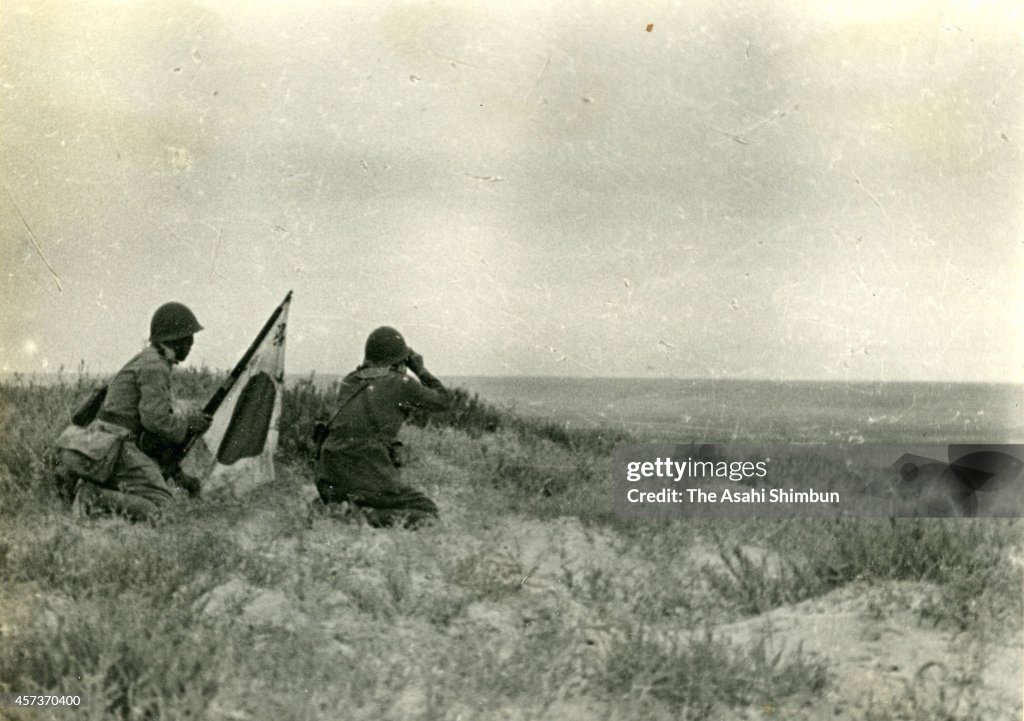
The Anglo-Japanese conversations were resumed yesterday by Hachiro Arita, Japanese Foreign Minister, and Sir Robert Leslie Craigie, British Ambassador. The talks lasted all day and were adjourned last evening till tomorrow. The negotiations have not reached. a stage at which anything can be disclosed with advantage. A brief communiqué issued last night by agreement merely stated that the British Ambassador and the Japanese Foreign Minister continued their exchange of views on the general questions that form the background of the Tientsin situation. As before, the two plenipotentiaries conferred alone.
Domei, Japanese news agency, said it had learned authoritatively that Sir Robert’s attitude as a whole was conciliatory but that he had raised categorical objections to some of Mr. Arita’s principal demands. Mr. Arita maintained that his proposals were based upon actual conditions in China and urged Sir Robert to reconsider his objections.
The fact that the conversations have begun and will continue on those general questions for which Japan demanded precedence is accepted here as a first installment of success and the tone of the press has become more moderate. Prime Minister Neville Chamberlain’s declaration that Britain would not change her policy at Japan’s request and had not been asked to do so evidently has been endorsed here, and demands for reversal of the British policy have disappeared from the press.
A new formula has been found according to which Britain is being asked to recognize that a state of hostilities actually exists and that the entire area around Tientsin is in control of the Japanese Army. This may be the thin end of a wedge, the other end of which is still hidden, but in the Japanese view it merely asks for recognition of obvious facts.
The Japanese press announced today that a wide gap still existed between the British and Japanese viewpoints. Sir Robert’s instructions, according to the newspaper Asahi, enabled him to accept some of Mr. Arita’s propositions while he flatly rejected others. Both plenipotentiaries exchanged a written formula at one part of the discussion, indicating agreement was arrived at on some points. Nichi Nichi claims to have discovered that Sir Robert intimated a strong objection to giving Japan any general assurance covering policy. He stated, according to Nichi Nichi, that if Britain found it necessary to revise her views on the situation in China such revision would be expressed in methods adopted to deal with, concrete problems but not in a formal declaration.
Dow Jones Industrial Average: 142.64 (-1.12).
Died:
Rose Hartwick Thorpe, 89, American poet (“Curfew Must Not Ring”) and writer.
Naval Construction:
The Royal Navy Tree-class minesweeping trawler HMS Wistaria (T 113) is laid down by Smith’s Dock Co., Ltd. (South Bank-on-Tees, U.K.).
The U.S. Navy Tambor-class submarine USS Tuna (SS-203) is laid down by the Mare Island Navy Yard (Vallejo, California, U.S.A.).
The Nihon Kaigun (Imperial Japanese Navy) B1-type submarine HIJMS I-17 is launched by the Yokosuka Navy Yard, Yokosuka, Kanagawa Prefecture, Japan.
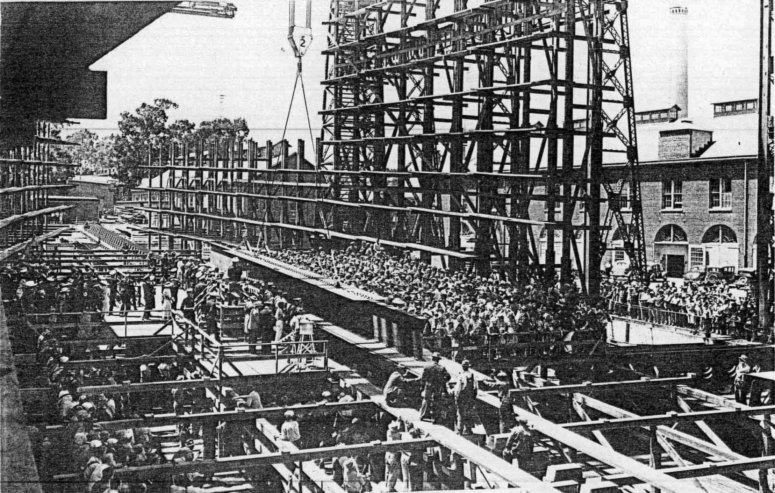
The Royal Navy Fiji-class (Crown Colony-class) light cruiser HMS Mauritius (80) is launched by Swan Hunter and Wigham Richardson Ltd. (Wallsend-on-Tyne, U.K.); completed by Wallsend.



 History Diaries