During a speech in Moscow at a reception for visiting Hungarian leader János Kádár, Soviet Premier Nikita Khrushchev gave a speech indicating, for the first time, that he was aware that Soviet dictator Joseph Stalin had been poisoned in 1953 by Internal Affairs Minister Lavrenti Beria, who was later executed. According to one historian, Leonid Brezhnev and his allies within the Politburo were alarmed by the statement and “decided that in revealing Kremlin secrets Khrushchev was behaving irrationally and that he should be removed from power.”
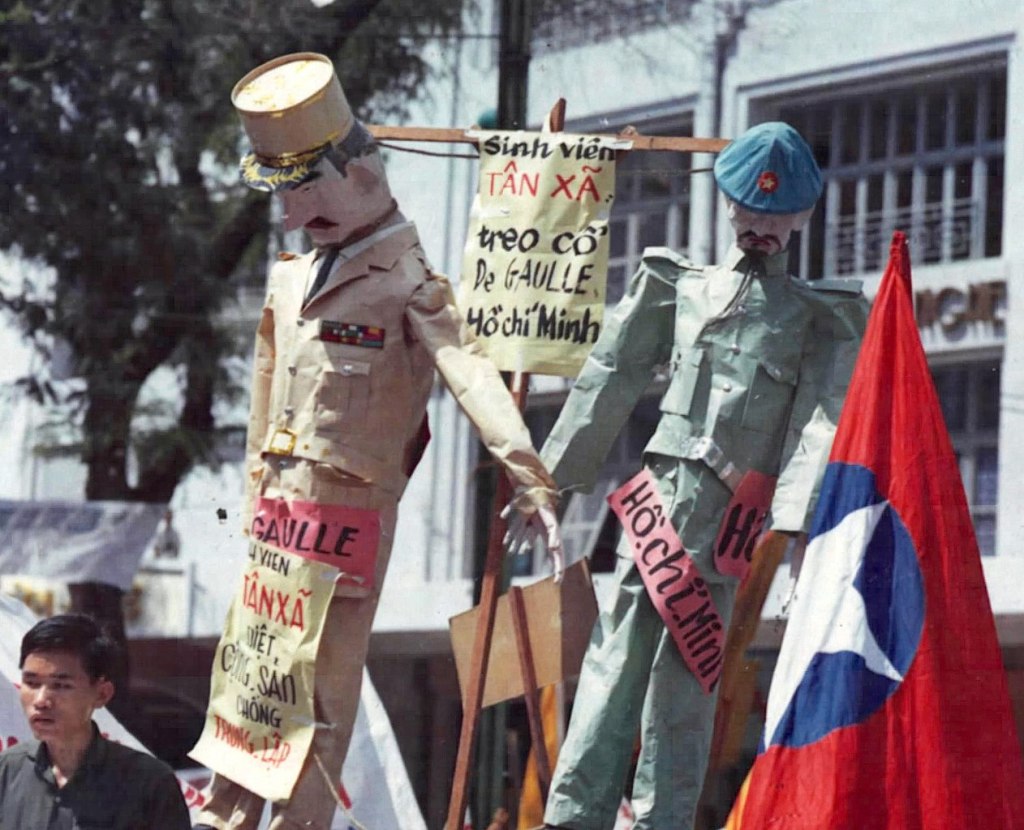
On what the South Vietnamese call ‘The Day of Shame,’ the 10th anniversary of the signing of the Geneva Accords that partitioned Vietnam, Premier Khánh, at a rally in Saigon, calls for an expansion of the war to North Vietnam. At a rally in Saigon, South Vietnam Prime Minister Nguyễn Khánh called for expanding the war into North Vietnam. Before a crowd of 100,000 people, General Khánh led the rallying cry “Bác Thiên!” (“To the North!”) and called on volunteers to not only defend South Vietnam, but to liberate North Vietnam. Ambassador Taylor and other U.S. officials present decline comment on Khánh’s position (but it is known that the United States regards this as breaking an agreement to consult with Washington before issuing such a call).
The crowd, estimated to number 100,000, was not overly enthusiastic in the hot sun, but student leaders rushed to embrace the Premier after his speech, shouting “Bác Thiên!” at the top of their voices.
While General Nguyễn Khánh was demonstrating a willingness to play to the masses just as American officials have wanted him to do, from their point of view he chose the wrong issue. American officials have told newsmen repeatedly that General Nguyễn Khánh opposes action against North Vietnam without American guarantees of assistance — a true statement as far as it goes. It leaves out the fact that General Nguyễn Khánh is trying desperately to get these guarantees so he can offer his people a new element in the war, which has lingered on so long.
The Republican party’s nomination of Senator Barry Goldwater is believed to have reinforced the hope of Vietnamese editors and officials who view Senator Goldwater’s policy as more favorable to extending the war than is that of the present Administration. During his first 12 days as Ambassador, General Taylor has made it clear that he is not bringing a new policy from Washington that would encourage the Vietnamese who hope for attacks against North Vietnam. American officials have been careful not to rule out the possibility of implementing one or more of the contingency plans now before them, but it is clear that they hope these steps will not be necessary.
The flagship of the Seventh Fleet, the cruiser USS Oklahoma City, will arrive in Saigon Tuesday for a three-day operational visit, the United States Navy announced today. The announcement said Vice Admiral Roy L. Johnson, Seventh Fleet commander, would confer with United States and South Vietnamese military and Government officials. It will be the first visit to the South Vietnamese capital for Admiral Johnson and the 15,000-ton cruiser.
Skirmishing between Laotian neutralist and pro‐Communist armies, which had been expected to drop off during the rainy season, was reported continuing today in northern Laos. The Defense Ministry announced that government troops had opened a counterattack in the region of Phou Kout. At the village of Na Kho, the communiqué reported, the neutralists destroyed four 105-mm. cannon, four 85-mm. cannon and an antiaircraft battery. The report said ground troops had again been aided by T-28 fighter‐bombers, which had proved effective- in previous engagements against the Communist‐led Pathet Lao.
The initial information about the war in north‐central Laos comes from the ministry in Vientiane, the administrative capital. Later accounts received by Western military sources do not always agree with judgments in the early communiqués. Last Thursday, for example, the neutralist Government announced that the Pathet Lao had begun an offensive on Muong Soui, a key neutralist position west of the Plaine des Jarres. The following day, Western sources had gathered enough accurate reports from the scene to describe the action as a probe rather than a full‐scale attack. Today’s announcement did not estimate casualties on either side.
Newsmen driving on Route 13, which connects Vientiane with the northern area, saw the wounded being returned here in Red Cross trucks, presumably after being flown out of the area of the counterattack. It was near Phou Kout that a T-28 was shot down Thursday. In a delayed announcement of the destruction of the plane by Pathet Lao artillery, the Government also reported that another T-28 was shot down two days earlier. Some Western sources saw the acknowledgment as a new attempt by the neutralists to report accurately the details of the war effort. Communist broadcasts from the Chinese mainland had previously made claims of Pathet Lao victories that were believed to be exaggerated. The Laotian neutralists oppose both the Communist orientation of the Pathet Lao and the pro‐Western views of the rightist faction.
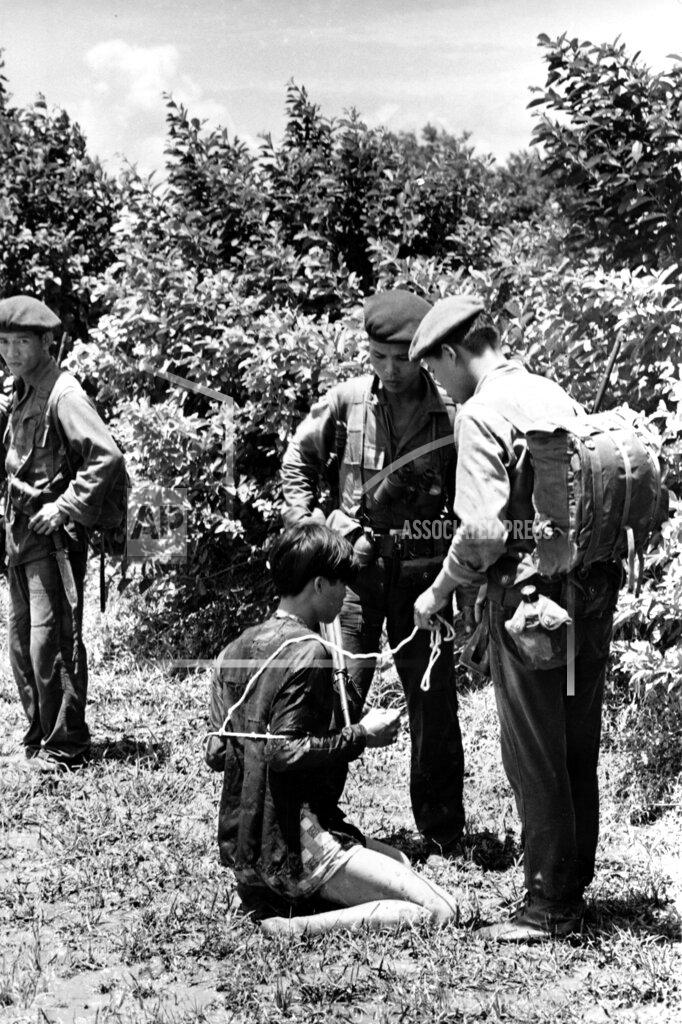
The UN team that has been inspecting the Cambodian-South Vietnamese border returns and on the 28th urges prompt action by the Security Council to avoid further conflict. Meanwhile, Cambodia continues to accuse South Vietnam of new acts of aggression, and on the 29th, Cambodia charges that the United States and South Vietnam used chemical weapons in attacking an area, killing 76 Cambodians in six villages. The United States promptly denies any use of chemical weapons, and South Vietnam claims that it was Việt Cộng troops masquerading as ARVN forces that have been attacking Cambodian border villages.
British troops continued today to fight Indonesian guerrillas in northern Borneo. British troops routed 50 Indonesian guerrillas who had entered the Malaysian border area of the Bau district in Sarawak last night, a spokesman said. Sarawak, Singapore, Malaya and Sabah (North Borneo) comprise the British‐backed Malaysian Federation, which was formed last September. The Indonesian press agency Antera said in Jakarta that Indonesian guerrillas along the Borneo border had killed 57 British soldiers since the abortive conference in Tokyo last month between the heads of government of Malaysia, Indonesia and the Philippines.
The Congo town of Baudouinville, 350 miles north of Elisabethville, was reported today to have fallen to rebels. The rebels already hold large areas of Katanga south of Albertville, the rebel‐held North Katanga capital. Radio reports to the East Katanga Ministry of the Interior said a group of 45 rebels had taken control of Baudouinville. Congolese soldiers withdrew from the town following reports from refugees of the approach of “a large number of rebels.” Godefrold Munongo, Minister of the Interior in the new central Government of Premier Moïse Tshombe, flew back to Leopoldville after a week’s visit to Katanga. As he left, Mr. Munongo spoke of plans to regain control of Albertville by peaceful means.
The appointment of Swaran Singh as India’s first full‐time Foreign Minister was greeted in New Delhi today with widespread approval in political and diplomatic circles. The appointment, announced yesterday, appeared to be part of a long‐range plan to strengthen the Indian Government and to relieve the ailing Prime Minister, Lal Bahadur Shastri, of as many burdens as possible. But the appointment inevitably gave rise to a reopening of the question: Just how sick is Mr. Shastri?
China launched its first biomedical rocket, placing four white rats, four white mice and 12 test tubes of fruit flies in the nose cone of one of its T-7 rockets. The rocket traveled into the mesosphere, reaching an altitude of 70 kilometers (43 mi), while films were taken of the animals’ reaction.
Zond 1, the Soviet space probe launched on April 2 for a flyby of the planet Venus, passed within 96,500 kilometers (60,000 mi) of that planet, but no data could be received because of a failure of its transmitters in May and in June. Because of the failure of the second component of Zond 1, no further trajectory corrections could be received after June.
The USSR performs a nuclear test at the Semipalatinsk Test Site in northeast Kazakhstan.
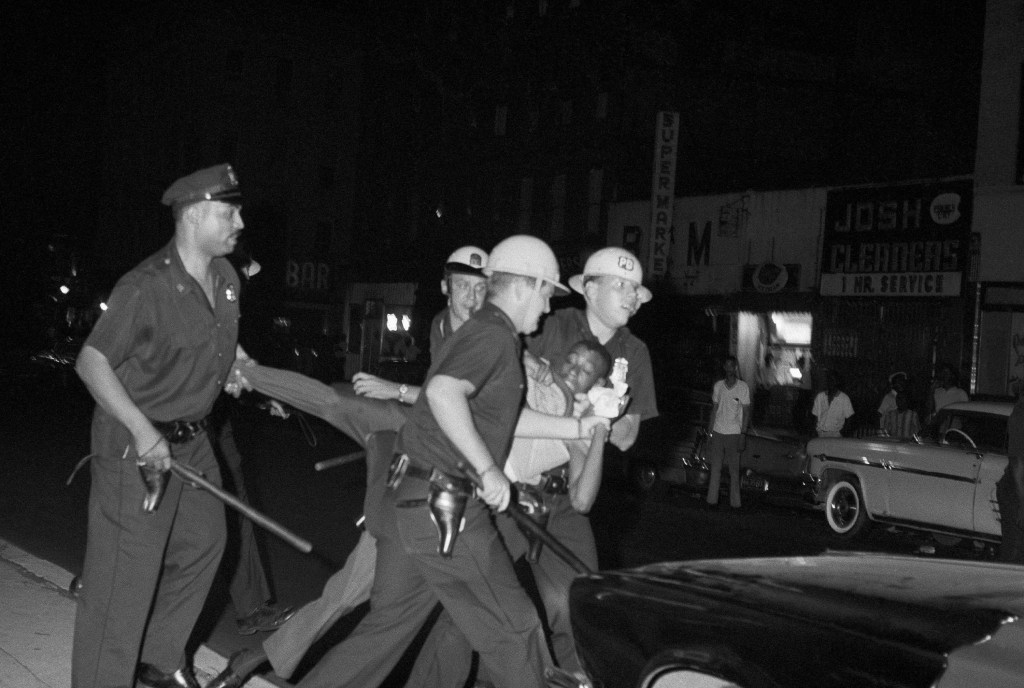
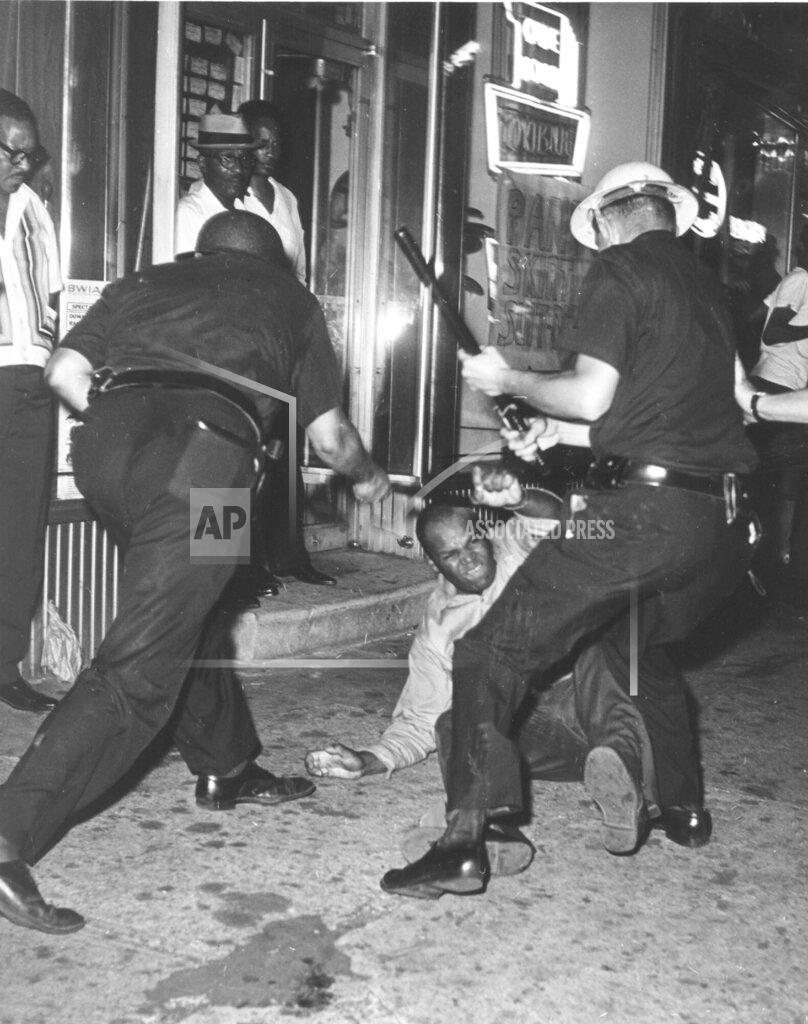
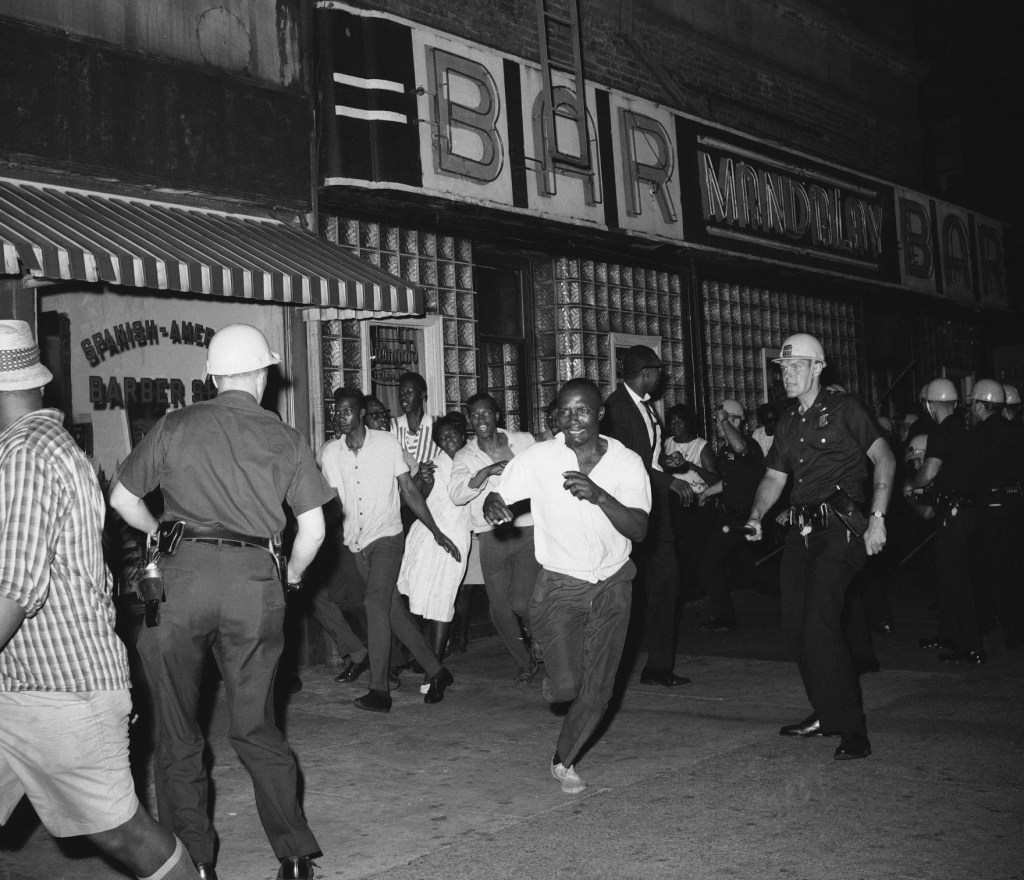
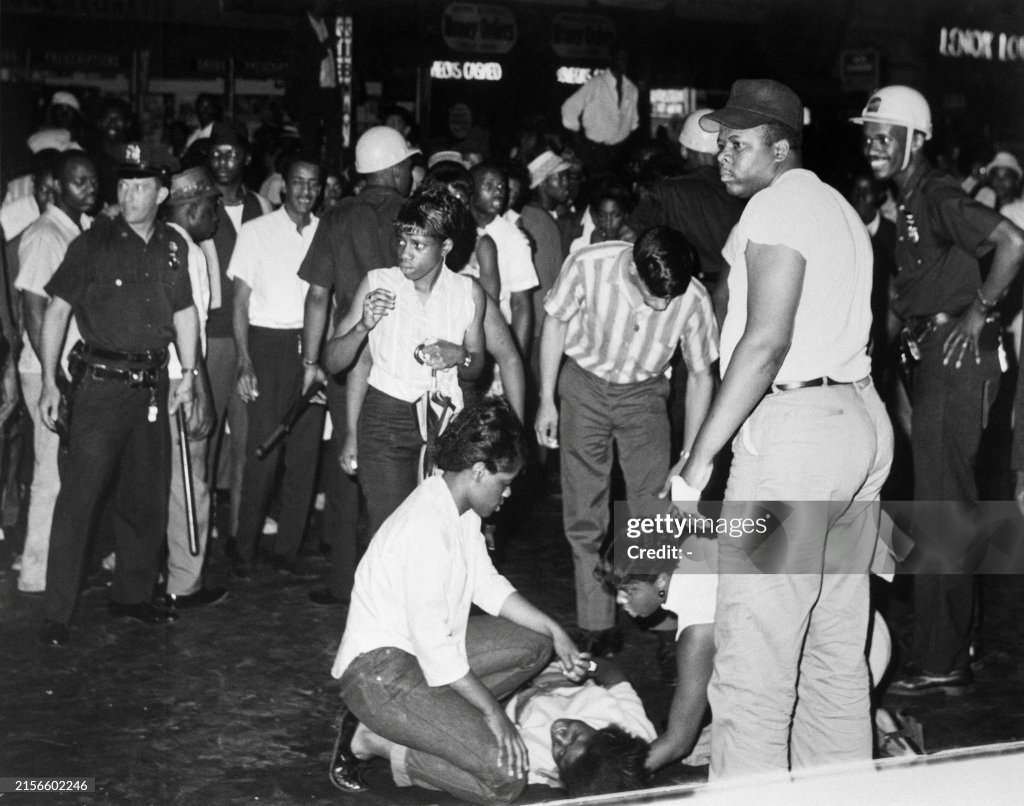
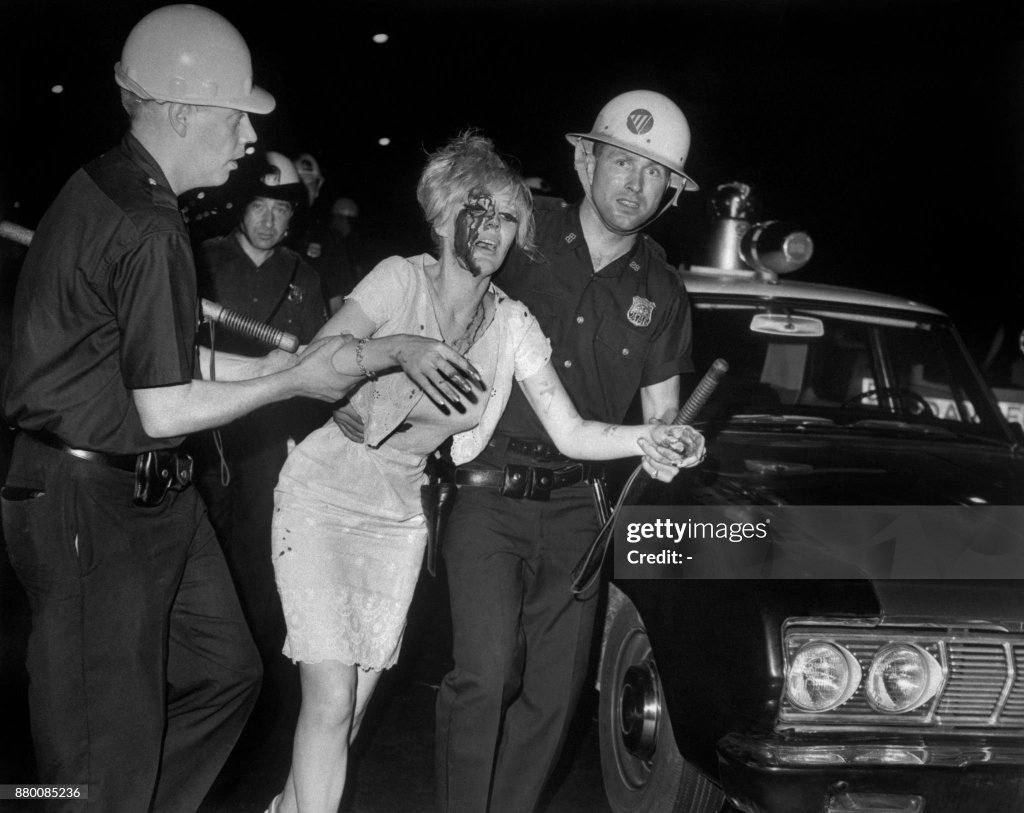
Violence broke out in Harlem for the second time within 24 hours last night, and at least 19 persons were injured. Groups of Blacks roamed through the streets, attacking newsmen and others. Blacks standing on tenement roofs showered policemen in steel helmets with bottles and bricks, and the police answered by firing warning shots over the attackers’ heads. The new disturbances, which ended early today, were less severe and less widespread than the racial rioting and looting Saturday night and early yesterday during which a Black man was killed and more than 100 persons were injured. They developed after appeals by Acting Mayor Paul R. Screvane, Police Commissioner Michael J. Murphy and prominent Black leaders for restraint and respect for law and order.
Early, today, James Farmer, the national director of the Congress of Racial Equality, said he was attempting to reach Governor Rockefeller to discuss the possibility of having the National Guard sent into Harlem. Governor Rockefeller, vacationing in Wyoming, was unavailable. The state troops are needed “to protect the people of Harlem” because the Police Department is not doing so, the CORE leader said. Mr. Farmer had previously charged that patrolmen were firing indiscriminately into crowds, but a high police official denied this and accused Mr. Farmer of making “irresponsible, inciting and dangerous statements.”
Last night’s trouble, like that of the night before, grew out of the death of a 15-year‐old Black, James Powell, who was shot in Yorkville on Thursday by a white police officer, Lieutenant James Gilligan. The boy’s funeral was held last night at the Levy and Delany Funeral Home, at 2250 Seventh Avenue, near 132nd Street. More than 1,000 persons were outside when the services began at 8 PM, in addition to about 150 who were inside. Just before the funeral began, bottles began crashing to the street. Suddenly there were shrieks from the corner of Seventh Avenue and 132nd Street, and patrolmen, waving nightsticks, charged into crowds that were pouring out from behind barricades. The crowd broke up when shots were fired into the air. Three busloads of specially trained anti‐riot policemen drew up and helped put down the outburst, but not before one man was knocked to the ground. At about the same time more than 100 young Blacks, many carrying heavy pieces of lumber, were stopped as they crossed Seventh Avenue at 132nd Street. After one of the group had thrown a bottle that hit a Black police sergeant, the group fled.
A New York Times photographer, John Orris, was attacked by a group of Blacks and punched in the eye. Patrolmen standing nearby dispersed the group by firing five or six shots over their heads. In similar incidents, Robert E. Daley, a cameraman for the Columbia Broadcasting System, was badly beaten, and Tuck Stadler, a reporter for radio station WINS, was burned by a lighted cigarette ground into the back of his neck. Later three persons were wounded by gunfire and three policemen were injured in fighting at 129th Street and Lenox Avenue. The pattern was the case that prevailed much of the night: missiles and gasoline-filled bottles thrown at the police, with shots returned.
Of the 19 persons reported injured, seven were treated for gunshot wounds at two Harlem municipal hospitals. Seven of those hurt were policemen. At least seven arrests were reported. A police department communiqué issued just after midnight reported that isolated “groups of hoodlums are still roaming the streets but the situation is improving very rapidly.” By 1:30 A.M. the streets were almost clear. Nearly all the bars and restaurants in the central Harlem area closed voluntarily around midnight in an effort to maintain the calm.
New York’s entire 25,000-man police force was on 12-hour shifts until further notice because of the explosive situation in Harlem. Operations there were under the direction of Chief Inspector Lawrence J. McKearney, who was stationed at 125th Street and Seventh Avenue. The violence had been predicted for many weeks by police officials and by civil rights leaders. They had spoken frequently of the “long, hot summer” that lay ahead for Harlem, the nation’s largest Black community.
Two men were shot and acid was thrown in the face of a third in a running, five‐hour battle between Blacks and Puerto Ricans Saturday night and early yesterday in the Brownsville section of Brooklyn. Seven men were arrested on charges of carrying or using firearms. The police reported that perhaps a dozen other men were injured in spasmodic fighting between the two groups. There appeared to be no connection between the fighting in Brooklyn and the Harlem rioting. Brooklyn police headquarters announced late yesterday that “extraordinary” precautions were being taken to keep the peace. The Brownsville section had been a scene of earlier trouble between Blacks and Puerto Ricans.
Alabama Governor George C. Wallace abandoned his bid to become a third-party candidate in the 1964 U.S. presidential election, and declined to support either President Johnson or Republican challenger Goldwater. The day before, Wallace had gotten on to the ballot in North Carolina as a candidate for the Constitution Party, after qualifying to run in Alabama and Louisiana, and said that he would stand as a candidate in 16 states altogether.
Senator Barry Goldwater called Governor George C. Wallace’s withdrawal as a Presidential candidate today “a surprise” and said he would have no further comment now. Although it was thought that Mr. Wallace’s action might help Mr. Goldwater in the Southern states as the Republican Presidential candidate, the Senator refrained from discussing the matter. Asked about it on three occasions today, he said each time: “I have no comment at all.” Asked to amplify his views, he would add only, “I never gave this Wallace thing too much thought.” His press secretary issued a statement quoting the Senator as saying, “The Governor’s action is a surprise to me. I have no further comment at this time.”
Last Monday, at a caucus of the Florida delegation at the Republican National Convention in San Francisco, Mr. Goldwater had indicated that he hoped the Alabama Governor would abandon his announced intention of running as a third candidate. He said then that Mr. Wallace was a capable man with a lot of wisdom and that he hoped the Governor would see that his candidacy was unwise. Just as Mr. Wallace asserted today that there had been no contact between him and the Goldwater camp, sources close to the Senator also said that Mr. Goldwater or his aides had never asked Mr. Wallace to withdraw.
Senator Barry Goldwater’s leadership within his party will be tested this week when the Senate opens debate on President Johnson’s $962.5 million antipoverty bill. The debate, scheduled to begin Wednesday, will mark the Senator’s first floor fight as the Republican Presidential nominee. Senator Goldwater opposes the antipoverty bill. The President has repeatedly referred to the measure as “must legislation.” Thus, the Senate fight may be a power struggle between the two men expected to oppose each other in the Presidential campaign this fall. The outcome could foretell the fate of much of President Johnson’s pending legislative program. Republican help has been needed to pass a large part of the President’s legislative program because of Southern defections. Senator Mike Mansfield of Montana, the majority leader, said today that he hoped to get “six or eight” Republican votes for the antipoverty bill.
A Madison County Black church burned to the ground today and Sheriff Jack Cauthen pledged a “thorough, complete investigation” of the incident. Two civil rights workers reported they were beaten after they tried to attend the First Methodist Church in Canton this morning. The two, both white, are Bill Carney, 21 years old, of Providence, Rhode Island, a student at Colgate University, and Michael Piore, 23, of 115 Central Park West, New York City. They said after they had been turned away from the church services and were walking down the street, two men crossed the street and attacked them.
Mississippi Blacks set events in motion today that might lead to an embarrassing dilemma for the Democratic National Convention. Leaders of the Mississippi Freedom Democratic party met here and completed plans for naming a 68-member delegation to the national convention in Atlantic City on August 24. This delegation, which will be fully committed to support the party’s Presidential ticket, will challenge the seating of delegates from the regular state party organization. The loyalty of the latter group in the Presidential race is now considered highly questionable. Thus, the convention must choose between a loyal delegation with no power and few votes and one of doubtful loyalty representing the state administration and a majority of the voters.
Representatives of 18 nations will meet in Washington this week to work out the arrangements for international ownership and management of a global space communications system pioneered by the United States. An unusual international business arrangement — an enterprise in space owned and controlled by a consortium of government and private communications agencies — is expected to emerge from the conference. The crucial question that remains to be resolved is how much voting control foreign nations will have in a satellite system that so far has been developed almost entirely at American expense. With little publicity, but not without some friction, what started off as an American venture in space has gradually been evolving into an international venture.
PGA Championship Men’s Golf, Columbus CC: Bobby Nichols wins his only major title by 3 strokes from ‘Big-2’ Jack Nicklaus & Arnold Palmer; leads wire-to-wire.
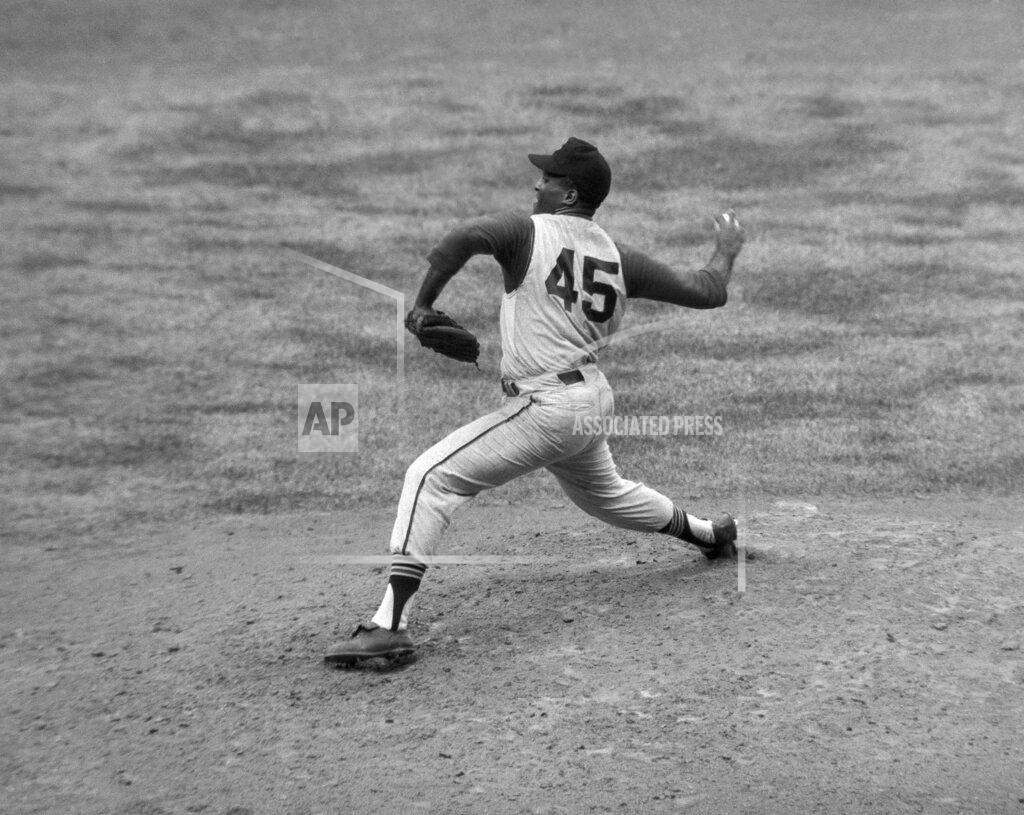
Luis Tiant debuts with a 4-hit, 11-strikeout, 3–0 win for the Cleveland Indians at Yankee Stadium, just the third pitcher in history to win at Yankee Stadium in his Major League debut. Clem Dreisewerd, in 1944, was the last. The losing pitcher is Whitey Ford. Tiant was brought up yesterday after a 15–1 record at Portland (AAA).
Chicago edges the Kansas City A’s, 3–2, in 13 innings when White Sox pitcher Gary Peters socks a pinch homer, in the first game of a doubleheader. They follow it up by winning the second game as well, 4–3. The double triumph lifted the White Sox into second place, a game behind the American League‐leading Baltimore Orioles and half a game ahead of third‐place New York.
Mike Brumley’s two‐out single in the 10th inning scored Ed Brinkman as the Washington Senators salvaged a doubleheader split with the Boston Red Sox with a 5–4 secondgame victory today. Home runs by Eddie Bressoud, Tony Conigliaro, Felix Mantilla, Carl Yastrzemski and Dick Stuart accounted for all but two Red Sox runs as they edged the Senators, 11–10, in the opener. Jack Lamabe, relieving in both games, won the opener, aided by Dick Radatz’s 15th save, but lost the second. Radatz preceded Lamabe in the second game but yielded gametying doubles to Chuck Hinton and Don Lock in the eighth.
Joe Adcock drives in 4 runs as the Los Angeles Angels use a 14-hit attack to whip the Minnesota Twins, 8–6, in the first of two games. Rich Rollins has a grand slam for the Twins. Adcock clubs a pair of solo homers in game 2, and Lu Clinton also solos as Dean Chance shuts down the Twins, 4–0.
The Baltimore Orioles defeated the Detroit Tigers, 5–4, today in an unusual battle of bases‐empty home runs in spacious Memorial Stadium. Each team slugged three homers. Boog Powell, Sam Bowens and Charlie Lau connected in the first two innings off the Tiger starter, Dennis McLain, for a 3-0 Oriole lead. Baltimore’s rookie sensation, Wally Bunker, was credited with his 10th victory against two losses, but he failed to finish after Detroit found the homerun range late in the game.
Frank Bolling drove in three runs in the first game and two in the second as the Milwaukee Braves moved into fourth place in the National League today, beating the Pittsburgh Pirates, 6–2 and 5–4. The double triumph gave the Braves 10 victories in their last 13 games and 16 in their last 22. After Tony Cloninger was the victor with a six‐hitter in the opener, Hank Fischer, normally, a starter, saved a triumph for Denny Lemaster in the second game with four innings of scoreless relief pitching.
Willie Mays’s run‐scoring single in the first inning gave the San Francisco Giants a 1–0 victory over the Houston Colts today and a sweep of their doubleheader. The Giants won the opener, 4–2, on Jim Hart’s two‐run homer. The victory ended the Giants’ longest losing streak of the season at five. Bob Hendley, who gave only four hits, needed relief help in the ninth inning of the second game to post his ninth victory. Hal (Skinny) Brown suffered his ninth setback in 10 decisions despite pitching a three-hitter.
Johnny Callison’s three‐run homer in the ninth inning gave the Philadelphia Phillies a 4–3 triumph over the Cincinnati Rods today after the Reds had erased a four‐run deficit for a 7–4 first game victory. The left-handed Callison’s homer, his 15th of the season, was hit off Bill Henry, a southpaw. Henry had replaced Ryne Duren after a single by Clay Dalrymple and a walk to Cookie Rojas with one out. John Boozer, just recalled by the Phils, was lifted for a pinch-hitter in the ninth, but he was credited with the victory. Jim Bunning had a 4–0 lead for five innings in the first game, then yielded two unearned runs in the sixth and was replaced by Chris Short in the seventh after three singles produced another run. The Reds then clinched it with four in the eighth off Jack Boldschun and Ed Roebuck. Don Paulefich’s two‐run homer was the big blow.
Born:
Kelvin Edwards, NFL wide receiver (New Orleans Saints, Dallas Cowboys), in Birmingham, Alabama.
Scott Hagler, NFL kicker (Seattle Seahawks), in Eufala, Alabama.
Alexandra Curtis, American actress, model and daughter of Tony Curtis and Christine Kaufmann, in Los Angeles, California.
Masahiko Kondō, Japanese singer, race car driver and actor, in Yokohama, Japan.

 History Diaries