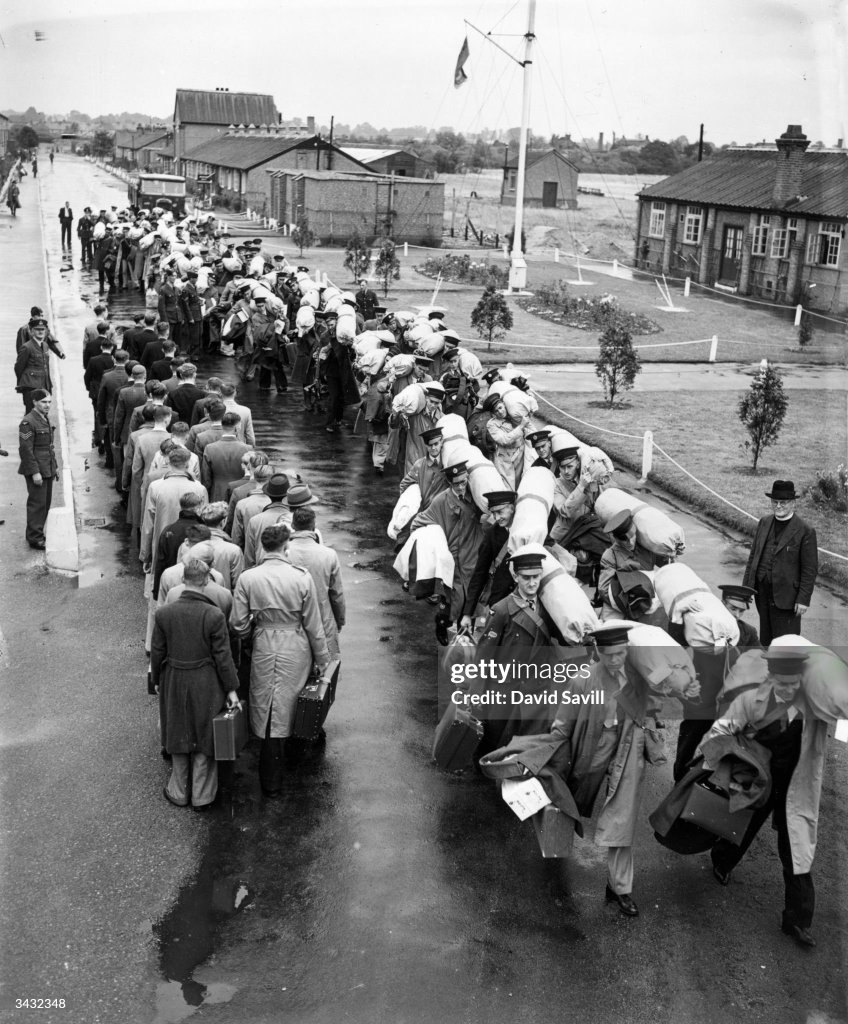
About 2,000 members of the German Versuchungsgruppe — a special unit of Nazi Storm Troopers well known for its exploits in the Sudetenland before the Czecho-Slovak crisis — arrived in Danzig today. Their arrival is believed to be connected with a possible Nazi move in the Free City. There have been many arrests recently among members of the Danzig police force, particularly among those recently arrived from East Prussia. Nazi circles are maintaining the strictest silence about these arrests. It is rumored that about sixty have been seized.
An influential Danzig Nazi party leader declared tonight that “blustering and threats on the part of England” would not shake the determination of Danzig Nazis to bring about the political union of the Free City with Germany. The statement followed day-long conferences of Danzig Senators and political leaders who discussed instructions brought back by Albert Förster, Danzig Nazi leader, from last week’s conferences with Chancellor Adolf Hitler. This firm expression of the Nazi attitude coincided with publication of an editorial by the Nazi newspaper Vorposten, which declared settlement of the “Danzig and Corridor problems” by negotiation was impossible at the moment.
It was thought significant that the “Danzig and Corridor problems” now were regarded as one. Besides the return of Danzig, Germany has demanded from Poland a right-of-way across Pomorze, the so-called Polish Corridor, to connect Germany proper with East Prussia. “After the talks between Hitler and Foerster Danzig Nazis are more hopeful than ever that they will achieve their goal, which is the political union of the Free City with the Reich,” the Nazi leader said. “It was agreed also that the protective measures taken by Danzig were sufficient safeguard against any surprise action that might be undertaken by Poland.” The “protective measures” referred to have been described officially as being the reinforcement of Danzig’s police force.
Reports current abroad that the German Government contemplated the initiation of negotiations with Poland over Danzig were not only officially designated in Berlin today as wholly without foundation but suspicions that the rumors had a British origin were freely included in the official denials.
Money matters threatened today to impose the first strain upon the Anglo-Polish alliance since the British Government gave its historic guarantees to Warsaw three and a half months ago. A stormy interview took place at the Foreign Office this afternoon between Colonel Adam Koc and Ambassador Edward Raczynski on the Polish side and Viscount Halifax, the Foreign Secretary, and Sir Frederick Leith-Ross, economic adviser to the government, representing Britain. From all accounts it was not exactly a brotherly occasion.
The Poles are said to have protested bitterly against the British idea of tying strings to the £5,000,000 cash loan that will be part of the financial help given by Britain to arm Poland’s legions against aggression. Unless the British Cabinet decides tomorrow to meet the Polish wishes there may be some unpleasantness for a time between the governments of the two allies. The cash loan in question was intended to be entirely separate from export credits granted to Poland out of the war chest of £60,000,000 unanimously approved by Parliament last week as a means of strengthening Britain’s allies in Eastern Europe and elsewhere. The sum of £5,000,000 in cash already has been approved by the British. Cabinet, while the French have agreed to advance 600,000,000 francs in cash.
The Poles, however, want the Anglo-French cash to be in gold and they want complete freedom to spend it when and where they like. After all, the Poles argue, the objective of Britain and France ought to be the speedy rearmament of Poland regardless of method. If machine tools, for example, can be bought more cheaply and quickly in the United States than elsewhere, the Poles see no reason why Britain or France should object. The British, on the other hand, insist that the money should be handed over in sterling and they demand tight control over its expenditure.
The Informazione Diplomatica, Italian Foreign Office bulletin, said today that Foreign Minister Count Galeazzo Ciano’s reception in Spain showed that the country was in the opposite European camp from “the great democracies.” The bulletin said Spain’s adherence to the Anti-Comintern Pact and her withdrawal from the League of Nations “lined Spain up in the opposite camp from that of the great democracies, one of which — on her frontier [France] — continues by devious ways to attempt to undermine the existence of the new Spain.” In this connection, the bulletin continued, “General Franco’s Spain knows it can count today and tomorrow on the ready and absolute solidarity of Fascist Italy.”
The Italian Foreign Minister, Count Galeazzo Ciano, was quoted today as having said that Generalissimo Francisco Franco would “soon go to Italy.” The Efe Agency published the statement, which was made before Count Ciano sailed last night for Rome after an eight-day visit in Spain.
Italy denies killings in the Tyrol region.
Exiled King Zog and Queen Geraldine of Albania and their entourage arrived today in Stockholm, Sweden to spend several days. They are en route to France.
Representatives of the thirty-two nations on the Intergovernmental Committee for Refugees (The Evian Committee) will meet again tomorrow, a little over a year since the Evian conference made the first worldwide effort to coordinate the emigration and settlement of fugitives from Germany.
The Soviet Union proposes a trade agreement to Germany.
In Moscow, 35,000 athletes participate in a parade. Boys and girls in shorts and helmets demonstrate military fitness. Thirty-five thousand picked young athletes of both sexes paraded past Joseph V. Stalin through Red Square today in as colorful and picturesque a spectacle as that historic place has ever seen.
A Jewish strike in Palestine proceeds quietly. Guards are ready but no major disorders mark the gesture over the immigration ban. Today’s general Jewish strike throughout Palestine passed off virtually without incident except at the colony of Petach Tikvah, where an abortive attempt at a Revisionist demonstration was frustrated and peacefully dispersed by Jewish civil guards. The strike, which took the form of sitting-in, with all Jewish business and traffic at a standstill, was a protest against Colonial Secretary Malcolm MacDonald’s recent pronouncement banning Jewish immigration to Palestine for the next half yearly schedule.
Today, for the first time in the history of Palestine, there was a self-imposed curfew in the Jewish towns and settlements, beginning at 2 PM and lasting until midnight. All organizations, including those not usually in agreement with the National Council of Palestine Jews, which proclaimed the strike, even to the extreme orthodox group, called on their members to adhere strictly to the instructions for strike and curfew. Although the Revisionist press recommended this strike, and although the Revisionist Palestine Council meeting today adopted a resolution not to interfere with it, nevertheless the Revisionist resolution emphasized what it called the “ridiculousness of this sitting-in strike.”
Today in Washington, President Roosevelt held his regular press conference this afternoon and tonight received Republican leaders of the Senate in a conference on the neutrality laws.
The Senate confirmed the nomination of Charles Alvin Jones as judge of the Third Circuit Court of Appeals. It received Senator Vandenberg’s resolution providing that the United States give Japan six months’ notice of abrogation of the Treaty of 1911 and that the Brussels Conference be reconvened to determine whether Japan has violated the Nine-Power Treaty of 1922. The Senate recessed at 5:23 PM until noon tomorrow.
The House passed a bill establishing Kings Canyon Wilderness National Park in California; completed Congressional action on the District of Columbia tax bill and received the Hinshaw bill to provide the Civil Aeronautics Authority with $6,000,000 for research. Its Labor Committee heard Philip Murray oppose Wagner Act amendments. The House adjourned at 4:54 until noon tomorrow.
President Roosevelt met with key senators at the White House to explore the possibility of trying to revise the American neutrality policy once again. The president and Secretary of State Cordell Hull warned that a war in Europe was imminent, but the prominent Idaho senator William Borah replied, “I do not believe there is going to be any war in Europe between now and the first of January or for some time thereafter.” Hull asked the senator to read State Department cables to understand the seriousness of the situation, but Borah responded that he did not “give a damn about your dispatches” and claimed that he had better sources. The meeting ended with no new agreements.
The Roosevelt Administration late tonight conceded defeat in its attempt to obtain revision of the Neutrality Law at this session of Congress, but in doing so placed responsibility for what might happen to world peace as a result squarely upon the legislative branch of the American Government. Deferment of all neutrality legislation until the next regular session in January was announced by the White House after a three-hour conference between President Roosevelt and Secretary of State Hull and the high command of both major parties in the Senate. The announcement came in two short statements authorized by the White House, one explaining the position of the President and Secretary of State and the other setting forth the opinions of Senators Barkley and McNary, leaders, respectively, of the Democratic and Republican party forces in the Senate.
A threat to tie up further business of the House unless a rule was granted permitting consideration of the Barden wages and hours amendments was made today by Representative Cox, Democrat, of Georgia, leader of a powerful group whose aim is to revise the Wages and Hours Act and the National Labor Relations Act. The threat was made by Mr. Cox to Representative Sabath, chairman of the Rules Committee, whom Mr. Cox accused of trying to prevent consideration of the Barden amendments through failure to call the committee together for the purpose of reporting a rule which would provide for right-of-way on the floor.
A way to compromise, however, was suggested by Mr. Cox later in the day, after he learned that President Roosevelt, at his press conference, had used language which might indicate a veto for the Barden amendments if passed by Congress. “I would counsel those pressing for the legislation to consult with the President to find out what amendments he will agree to,” Mr. Cox said. “We could then adopt those and stop the controversy for the time being.” At the same time, he warned that “certain small industries are being driven out of business” by the operation of the Wages and Hours Law and that “they are obliged to have some relief.”
While the strike of WPA relief workers was reported on the wane throughout the country in all but a few cities, the New York Work Projects Administration dropped yesterday the first 2,000 of the 75,000 workers who are to be let out within the next six weeks. Shortly after project supervisors had handed out dismissal notices to the first group of relief workers Lieutenant Colonel Brehon B, Somervell, local WPA Administrator, disclosed that most of those dropped had been relief workers for seven years continuously.
President Roosevelt turned aside today a question as to whether he had ever informed any one that he would positively run for a third term and wanted Paul V. McNutt, Security Administrator, for a running mate. A reporter remarked at a press conference that a syndicated writer had said he had information that the President would run for another term with Mr. McNutt on the ticket. The President replied by asking whether it would be fair to label that as a newspaper story.
News that the submarine USS Squalus sank almost on an even keel without breaking open her hatches after her bow shot to the surface last Thursday came today from two divers who defied death in a maze of cables to reach the undersea boat for the first time since she broke away from salvage pontoons.
U.S. food demand from Europe is forecast to rise. Military expansion is expected to increase the call for American products.
Jack Russell, convict and desperado, who had been hunted by hundreds of law officers since his escape from the Oklahoma penitentiary a week ago, was captured today in near-by Arkansas by Sheriff Champ Crawford, who disguised himself as a fisherman.
Orthodox Russians in the United States say Poles are razing their churches and charge them with the destruction of 400 edifices.
Edwin H. Armstrong (1890-1954), U.S. radio engineer, starts the 1st FM (frequency modulation) radio station in Alpine, NJ.
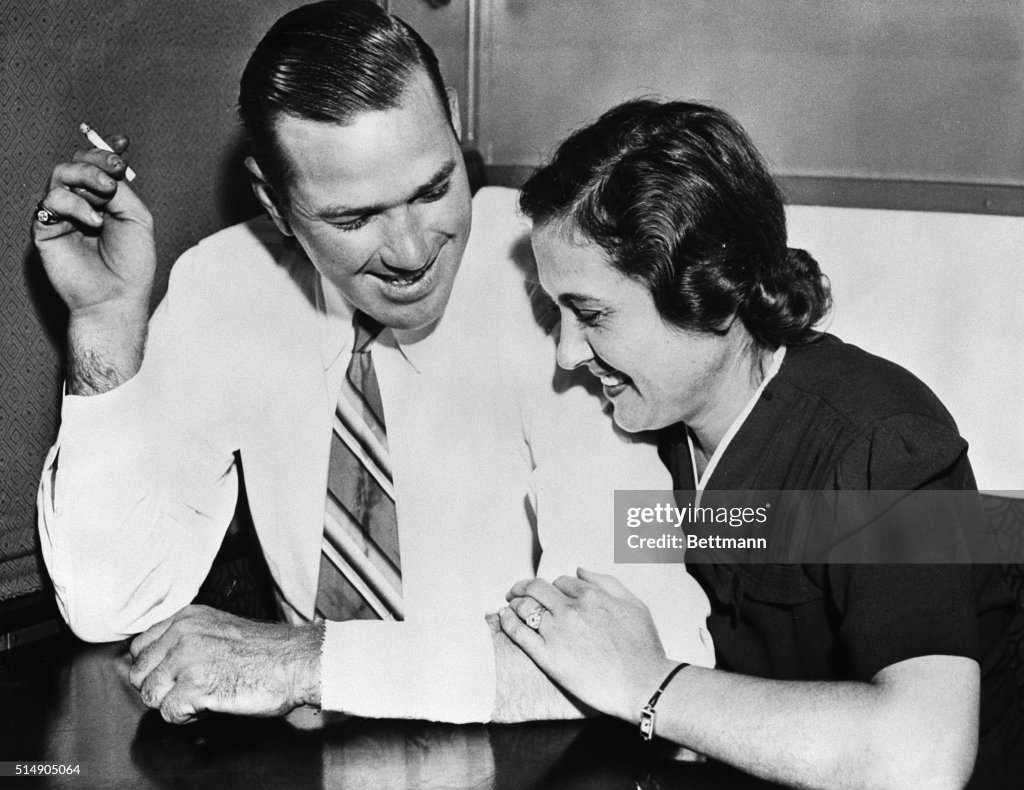
Baseball player Dizzy Dean says he scraped his arm reaching for the phone, denying a domestic squabble.
J. Louis Comiskey, owner of the White Sox, dies at the age of 56 in Wisconsin.
The Boston Red Sox send 21-year-old farmhand Pee Wee Reese to the Brooklyn Dodgers for $35,000 and a player to be named later (Red Evans), along with three minor leaguers due to a less-than-enthusiastic scouting report filed by Joe Cronin, the team’s current player-manager, who deliberately downplayed the prospect’s talent to keep his own job in the Boston infield. The Louisville Colonels regular shortstop, a future Hall of Famer, will become a crowd favorite, helping Brooklyn to win seven pennants during his 16 seasons with the team.
Ernie White, the Texas League leader in strikeouts, fires a no-hitter as Houston beats Ft. Worth, 2–0. It is the first no-hitter by a Houston pitcher since July 5, 1920 when George Little stopped Galveston. White will go 15–7 with Houston this year and 13–4 with Columbia in 1940 to earn a promotion to the Cardinals.
Sixteen bodies were reported recovered in Mexico today from flood waters at Puebla, Puebla State, where the Atoyac River rushed over low areas. Many bridges were destroyed.
Japanese-protected Manchukuo asked today that the Japanese Government protest directly to Moscow against recent Soviet Russian air raids on Manchukuo railway centers. Previous protests have been sent by Manchukuo to the Russian-protected Outer Mongolian Government at Ulan Bator, with no apparent effect. Japanese believe that some, if not all, the raiding planes are based in outer Mongolia.
The Japanese Army in Manchukuo reported that unusual military preparations were in progress across the entire 5,000-mile extent of Siberia, from the Ural Mountains to Vladivostok. Of more immediate concern to the Japanese command was a large Soviet-Mongol concentration north and south of Nomonhan Hill on the disputed Manchukuo-Outer Mongolia border. Fighting was said to continue in the Nomonhan sector after two invading Mongol units were repulsed yesterday. Other Mongol troops may have entered Manchukuo north of this battle zone where no Japanese troops were stationed.
The border warfare between Soviet-Mongolian and Japanese-Manchukuoan forces had developed into an extremely serious situation, Japanese officials said. One authoritative source said the next two days would determine whether the fighting would flare into the most extensive thus far. It has been continuing sporadically since May 11.
Officials were awaiting a formal Mongolian reply to a protest against Soviet air forays into Manchukuo before determining their course. It was believed officially that the severity of the protest would hasten a Soviet response. The authoritative source declared that the Japanese Army, not Tokyo, would determine what steps would be taken. He said the situation would result either in diplomatic negotiations, probably at Moscow, or in Japanese reprisals for the bombing raids.
The Japanese engage in a fierce drive to crush guerillas with 120,000 men attempting to subdue the Chinese. Chinese and Japanese troops are continuing their bitter, swift-moving warfare at a score of points in Southeastern Shansi Province as Japanese columns crisscross a mountainous area of 30,000 square miles in the biggest cleanup drive against Chinese guerillas in the war so far.
A Chinese military spokesman in Chungking today said that the Japanese had now thrown 120,000 men into Southeastern Shansi in the mopping-up campaign carried on by five major columns. These are dividing up and pushing in new directions so that now, with the campaign in its second week, the hostilities have developed into a scramble of opposing forces fighting wherever the enemy is encountered and moving on quickly in a series of outflanking and enveloping maneuvers.
It is asserted in Chungking that the Japanese have already lost more than 5,000 men, and the Chinese casualties are also said to be high. The Chinese now regard the Japanese drive in Southeastern Shansi as one of the major efforts of the war. The Japanese are striking at some of the strongest guerrilla bases in the country, seeking to smash a major force of the Chinese Communist Eighth Route Army and some of the ablest Central Government troops.
Since the start of the campaign the Japanese have occupied Luan, Yangcheng, Tsinyuan, Tsinhsul, Tengliu, Hsiangyuan, Hsiatien, Tsinhsien, Liaohsien, Wuhsiang and Yusheh among other important points. Of these the Chinese claim they have retaken Wuhsiang. Yusheh, Liaohsien, and Hsiangyuan, and assert that, with enveloping tactics beginning to show results., other centers will be recaptured from the invaders.
The Chinese military spokesman asserted that the Japanese recently brought six new divisions and four brigades to China. He said five Japanese divisions, two of them new, together with an independent brigade, were now engaged in the Shansi drive. Six brigades recently were sent to Manchukuo from Japan, the spokesman said. The new troops in China, he declared, were either middle-aged or very young and were altogether inferior fighting material.
The American tanker Associated rescues 209 men from the Japanese freighter Bokuyo Maru after the Japanese ship suffers an explosion and fire in the mid-Pacific.
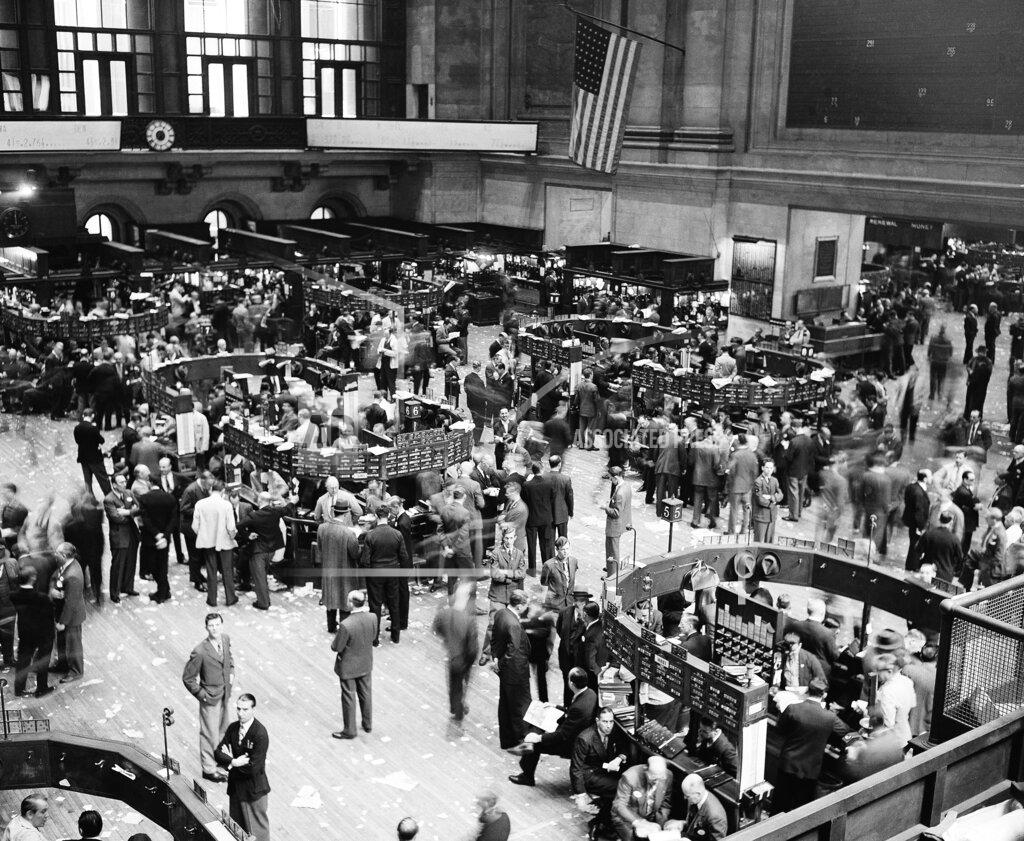
Dow Jones Industrial Average: 143.76 (+1.18).
Born:
Dion DiMucci, Rock ‘n Roll singer-songwriter (Dion & Belmonts – “A Teenager in Love”), in the Bronx, New York, New York.
Brian Auger, British rock and jazz-fusion session and touring keyboardist and Hammond organ player (Befour; Genesis), in Hammersmith, London, England, United Kingdom.
Mike Pyle, NFL center (NFL Champions-Bears, 1963; Pro Bowl, 1963; Chicago Bears), in Keokuk, Iowa (d. 2015).
Tom Minter, AFL defensive back and kick returner (Buffalo Bills, Denver Broncos), in Henderson, Texas (d. 2013),
Jerry Moore, American College football player and coach (Appalachian State, three consecutive NCAA Division I-AA national championships, 2005, 2006, 2007), in Bonham, Texas.
Naval Construction:
The Royal Navy Dido-class light cruiser HMS Dido is launched by the Cammell Laird Shipyard (Birkenhead, U.K.).
The Royal Navy Fiji-class (Crown Colony-class) light cruiser HMS Nigeria (60) is launched by Vickers Armstrong (Newcastle-on-Tyne, U.K.); completed by Parsons.
 History Diaries