Greek Cypriots, bolstered by artillery and armored cars, again took up positions around the Turkish village of Temblos today, ignoring a withdrawal agreement worked out by the United Nations peacekeeping force. Canadian officers, with their 96 soldiers acting as a buffer between the Greek and Turkish sides, sought to head off an armed clash. The village, packed with Turkish Cypriot refugee women and children, is at the foot of the Kyrenia Mountains in northern Cyprus. It previously was undefended neutral ground.
Greek Cypriots moved in yesterday with eleven 25‐pound field pieces, two antiaircraft guns and eight mortars, asserting that about 80 Turkish fighters had moved into the village and should be ordered to return to positions in the mountains. A pullback that began last night after the United Nations agreement was reached was short‐lived. Greek Cypriot forces moved beyond the agreed-upon lines this morning.
At Gastria, in northeast Cyprus, the search for missing Major Edward Macey of the British Army and his driver took a new turn. United Nations policemen, digging in an abandoned reservoir that had been filled with rubble, found a numbered metal tag thought to be from the men’s missing automobile. United Nations headquarters said it was from a vehicle of the same make. Major Macey and his driver, Leonard Platt, were last seen June 7, leaving Gastria.
Major General Sir William Bishop, British High Commissioner, delivered a strong protest to the Turkish Cypriot Vice President, Dr. Fazil Kutchuk, concerning the abduction of Major Christopher Phillips of the British Army. Major Phillips was captured in Nicosia’s Turkish quarter by Turkish Irregulars Wednesday, and released 24 hours later.
Foreign Minister Spyros Kyprianou of Cyprus, leading an official delegation to the Organization of African Unity conference, arrived in Cairo today. He said he had brought a letter from Archbishop Makarios, President of Cyprus, to President Nasser.
Seventy more Greek nationals have been expelled from Turkey, informed sources said. Since March 700 Greeks have been expelled and 500 others face expulsion soon. Further mass expulsions were threatened if any Turk living in Greece was harmed.
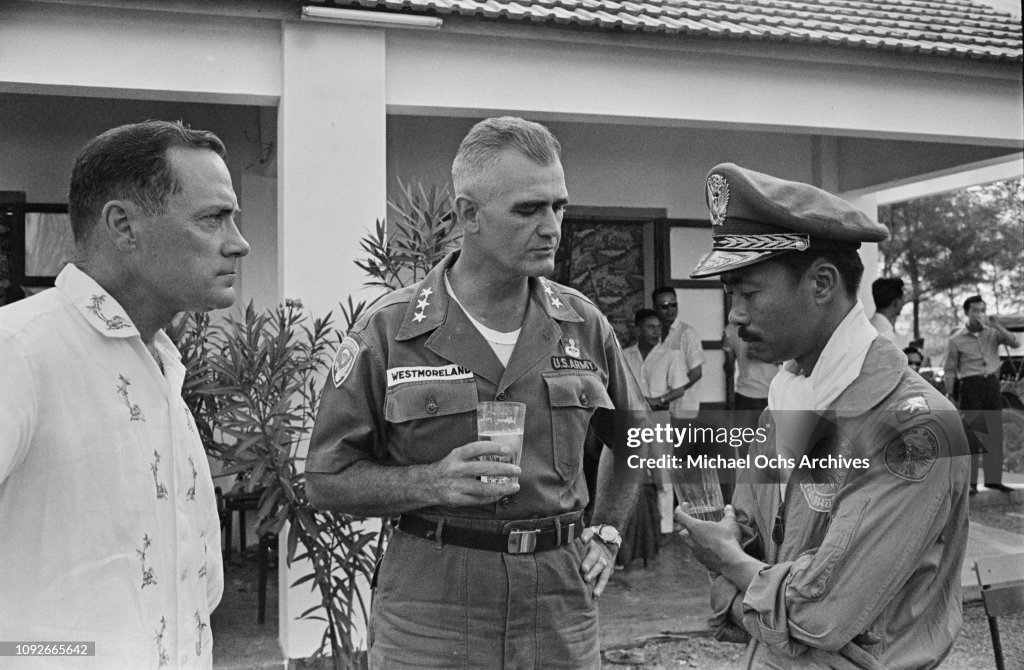
North Vietnam has asked the Soviet Union and Britain — co‐chairmen of the Geneva conference on Indochina — to “restrain” the United States to prevent a further deterioration of the situation in South Vietnam and Indochina. This “extremely serious” situation has arisen because of the United States Government’s “deliberate attempts to rekindle the flames of war in the area,” a North Vietnam note dated July 15, asserted. The note charged that the United States was not only “stepping up the aggressive war in South Vietnam but also plotting to expand it to the whole of Indochina, thus creating an extremely dangerous situation in the area.”
It is difficult to find a pattern of losing or winning in South Vietnam these days. A few months ago, in February or March or April, it was easy — setbacks almost anywhere one looked, signs of deterioration, of disintegration, of psychological and military collapse in the war effort against rampant, Communist insurgents. Now it is harder.
One day will come the word of heartening and good things happening in a hitherto hopeless area: a province chief, a young army major, who suddenly, breaks through the brick walls of stolid civil servants and does something statesmanlike, perhaps a kind of helpful deed for some astonished villagers; a remote outpost manned by a nearly forgotten platoon of self-defense militiamen who rise to an attack by a Việt Cộng company and throw them off. Who knows why they do it, why they fight, when it would seem their government had given them so little to fight for.
Then the next day will come the kind of reports observers of the Vietnam scene have come to expect after months and months of dashed hopes: treachery among presumably loyal village officials who open hamlet defenses to a band of Việt Cộng terrorists or treachery of more passive sort — minor governmental representatives who let constructive orders be dissipated through laziness or misunderstanding.
Việt Cộng followers littered Saigon with Communist propaganda pamphlets today. Authorities expressed fear of violence during National Day of Shame demonstrations scheduled for tomorrow. Nearly 200,000 people are expected to jam the streets for a “mourning” observance of the 10th anniversary of accords signed in Geneva ending the Indochina war and dividing Vietnam into a Communist North and an anti‐Communist South. A nervous watch was maintained on parked cars for Communist booby‐traps. The police said they had learned that the Communists planned to place tanks of butane gas in cars, open the valves and attach a spark-producing device that would touch off the gas.
Premier Nguyễn Khánh, Ambassador Maxwell D. Taylor and other dignitaries are to attend the demonstration, viewing the activities from a special grandstand. Americans were warned to avoid crowds and to stay away, from the demonstration. Britons also planned to stay away, as Britain was co‐chairman with the Soviet Union of the Geneva convention that divided Vietnam.
The Communist handbills called for an all‐out terror campaign against Americans. It mentioned a Việt Cộng sabotage bombing last April of the Card, an American aircraft ferry, in Saigon. The handbills called that sinking and the bombing of Saigon’s American movie theater — instances of “great victories by the South Vietnam National Liberation front.” Next week the cruiser USS Oklahoma City, flagship of the United States Seventh Fleet, is expected to visit Saigon. It will be given unusually heavy guard to prevent any possible Vietcong sabotage attempt.
The propaganda leaflets also assailed the South Vietnamese Government and singled out a Buddhist monk, Thích Đức Nghiệp, who has urged the recruiting of a million new South Vietnamese soldiers for a march on North Vietnam.
Poland is trying to win acceptance from the Pathet Lao, the pro‐Communist fighting force in Laos, for a modified version of her plan for a preliminary, restricted international meeting on Laos, British sources said today. The original plan was advanced in May by Adam Rapacki, Poland’s Foreign Minister. Britain and the United States accepted the proposal. Mr. Rapacki called for preliminary consultations in Switzerland or some other neutral country before the possible reconvening of the 14‐nation Geneva Conference on Laos. The 1962 Geneva Conference agreed on guarantees for Laotian neutrality.
Participants in the consultations would include Britain and the Soviet Union as co‐chairman of the 1962 Geneva Conference, India, Poland and Canada as members of the International Control Commission established to supervise the neutrality agreement, and representatives of the three Laotian political factions, rightists, neutralists and pro‐Communists. Britain agreed last month to a Soviet request to postpone efforts to bring about the preliminary conference. The Russians said the Poles wanted to modify their proposal. According to British sources, the new plan has not yet taken shape. Britain’s Ambassador in Warsaw has been kept informed of the talks the Poles have had with the Pathet Lao.
British sources said it was wrong to assume that the Poles had abandoned their proposal, although they added that it was easy to see how this interpretation could arise in view of the length of time the proposal had hung fire. The original Polish proposal excluded from the consultations Communist China and France, both of which seek to neutralize Laos as well as South Vietnam and Cambodia. It is suspected in London that the Soviet Union is under pressure from the Chinese Communists to get them into the proposed talks and that the Soviet Union in turn is putting pressure on the Poles to get them to modify their proposal.
IN the wild jungles of North Borneo, home of the vanished headhunter and of the vanishing orangutan, a deepening guerrilla war of infiltration, terrorism and subversion, waged by Chinese and Indonesian Communists and Indonesian nationalists against the new Federation of Malaysia, has now entered its second year. If allowed to continue on the aggressors’ terms, this war — like its elder and bloodier prototype in South Vietnam — is virtually unwinnable; at best, it seems, the line can only be held. If extended from its present localized front along the 1,000‐mile border separating Indonesian Borneo (Kalimantan) from Malaysian Borneo (Sarawak and Sabah), the conflict could even drag the United States into another Southeast Asian war, for its ANZUS pact partners, Australia and New Zealand, are directly committed to the defense of Malaysia. But for the time being the Borneo war is going to test British resolution and perseverance as sternly as the South Vietnamese war is challenging the United States.
The United States, Australia, and New Zealand ended their annual meeting in Washington today with a strong expression of concern about aggression in Southeast Asia. As expected, no major differences or decisions developed at the two‐day conference of ANZUS security‐pact countries. The talks were extremely friendly, officials said. A final communiqué reiterated the countries’ “grave concern” about Communist attacks and threats against South Vietnam and Laos. Its most carefully worded paragraph reaffirmed support for Malaysia against Indonesia. The cautious wording on Malaysia resulted not from any disagreement, but from a wish to defer decisions about how and when the United States would respond if that situation deteriorated.
A United States official, speaking in the presence of spokesmen for Australia and New Zealand, said the military defense of Malaysia was recognized as a responsibility “in the first instance” of the British Commonwealth. He also noted, however, that the ANZUS treaty placed an obligation on the United States to help its allies “at some point.” Further discussion is planned to define that point in relation to events, he said. Australia and New Zealand already provide military assistance to Malaysia. The ANZUS pact states that an attack on the forces or territory of any one member would oblige the others to “act to meet the common danger” in accordance with their constitutional processes.
Soviet Union renewed today its charges that the West German Government was pursuing a policy of militarizing Germany and was pressing for access to nuclear weapons. Moscow rejected assertions by the United States, Britain and France that these Soviet accusations against West Germany were groundless. The Soviet position was contained in a statement issued by Tass, the official press agency, in the name of the Soviet Government. The statement was in answer to United States, French and British declarations made at the time of the signing June 12 of a friendship treaty by the Soviet Union and the Communist regime of East Germany. The statement declared that the Soviet Union would continue to do everything in its power to “safeguard the world from aggression by a revived German militarism and Nazism.” It called for the “speediest” conclusion of a German peace treaty.
The United States does not intend to make a major diplomatic issue of the Soviet Navy’s action against an American grain vessel in the Black Sea last Wednesday. High officials said they thought that Moscow must take measures to prevent a repetition of the incident and exercise better control over local authorities in receiving grain and other cargoes from American vessels. They also said, however, that the grain ship’s captain contributed to the misunderstanding and the Soviet authorities had a right to pursue and search his vessel. “I assure you that we would not let any Russian ship out of an American port without proper clearance and that we would catch and search it if it ran off like that,” one official remarked.
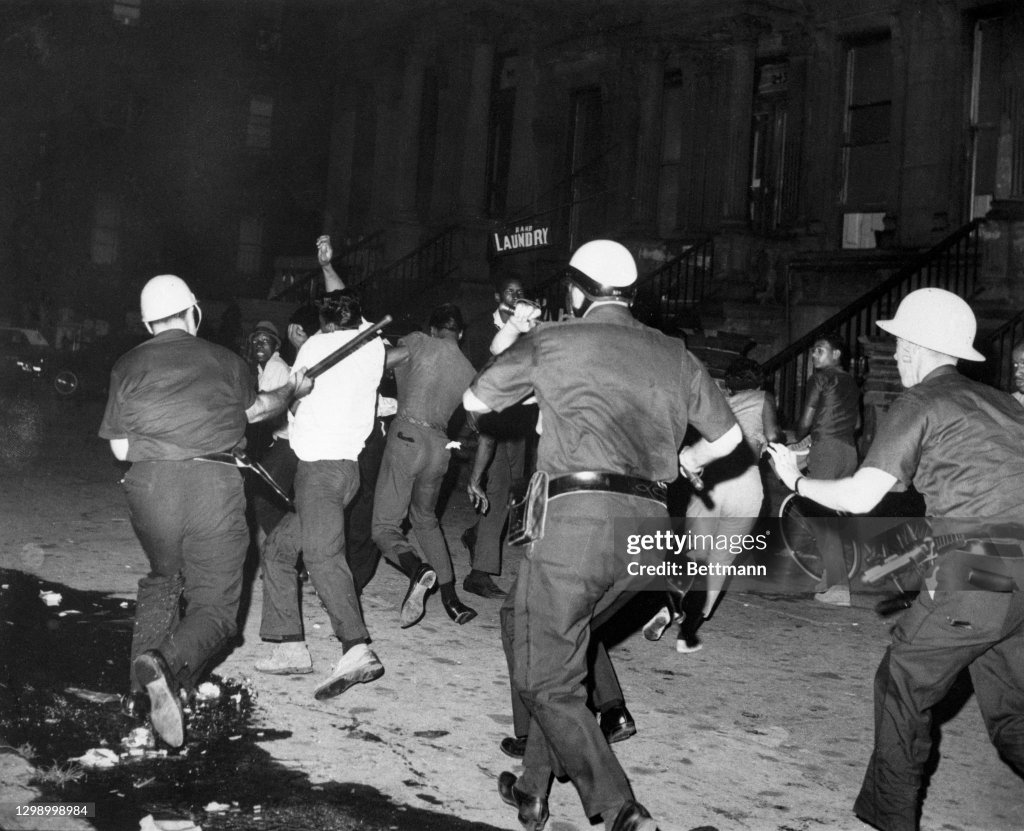
Six days of rioting began in Harlem when a crowd of 4000 protesters assembled outside the Harlem precinct police station to demonstrate against police brutality and the shooting of teenager James Powell. When the protest leaders were arrested by NYPD officers, other members of the crowd began throwing bricks and Molotov cocktails at the station, and others began vandalizing and looting neighborhood businesses and office buildings. Over the next six days, 140 people were injured and one died; 520 people were arrested; and over 500 structures were destroyed. The outbreak was followed, for the first time in the United States in the 20th Century, by a “chain reaction of riots” that would strike seven other major American cities for the next six weeks “before ending in Philadelphia on the last day of August.”
Thousands of rioting Blacks raced through the center of Harlem last night and early today, shouting at policemen and white people, pulling fire alarms, breaking windows and looting stores. At least 30 persons were arrested. There was no estimate on the number injured. Scores of persons with bloodied heads were seen throughout the eight‐block area between Eighth and Lenox Avenues and 123rd and 127th Streets, where most of the rioting occurred. The riot grew out of a demonstration in front of the West 123rd Street police station protesting the slaying of a Black youth by a white police lieutenant last Thursday.
The demonstration followed a rally at 125th Street and Seventh Avenue, where speakers decried the shooting of the boy, 15‐year‐old James Powell, by Lieutenant Thomas Gilligan in Yorkville. When the police sealed off the block in front of the station house, between Seventh and Eighth Avenues, the shouting, keyed‐up crowd spread out in angry groups in the surrounding neighborhood. Shots fired into the air by policemen to disperse the milling crowds echoed through streets littered with overturned garbage cans and broken glass. More than 500 policemen, including all members of the tactical patrol force on duty in Manhattan and Brooklyn, were called out to control the mobs. However, the crowds continued to grow as rumors of the rioting spread through the community.
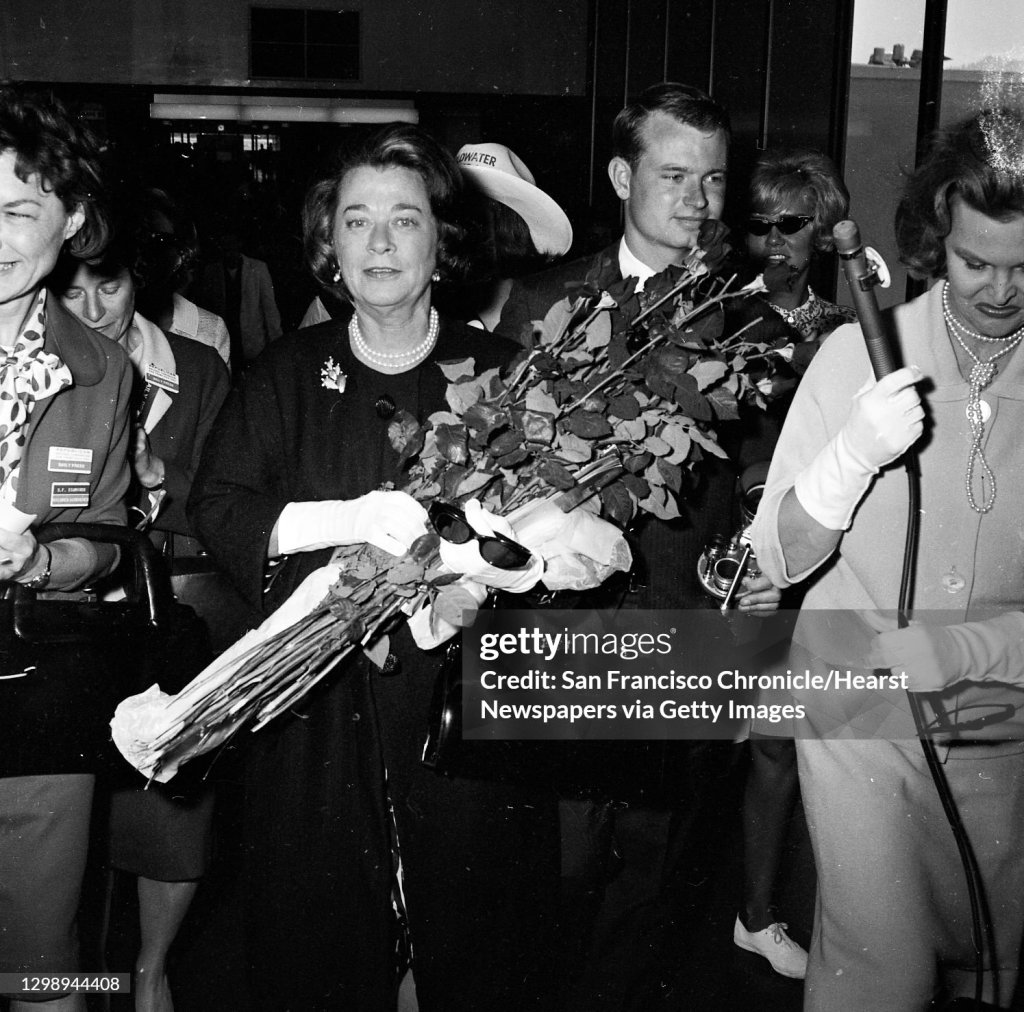
A year ago, the charming old city of Savannah, Georgia was torn with racial unrest. Throngs of Blacks roamed the genteel streets and gaslit alleys of downtown Savannah, clamoring against segregation. Today the city is completely tranquil. The only worry in the minds of civic leaders is that the nomination of Senator Barry Goldwater as Republican candidate for President would hearten the ardent segregationists, endow extremist groups with respectability and upset the good relations that have been quietly worked out between the white and Black communities.
Savannah is so conservative that in the last three national elections the city went Republican. It is believed that Mr. Goldwater might carry Savannah, although most observers give him scant chance of winning Georgia.
However, blended with Savannah’s conservatism is a leaven of common sense. Members of the power structure, working secretly through the Committee of 100 established by Mayor Malcolm Maclean, achieved a peaceful settlement without any further disruption of the local economy. Even before the enactment of the Civil Rights Law, Savannah had almost completed the desegregation of its public facilities.
A new statewide organization called today for peaceful acceptance of the beginning of public school desegregation in Mississippi. The group, Mississippians for Public Education, also spoke out against the tuition grant program enacted by the legislature this week as an escape hatch for whites opposed to the step. The organization represents the first public attempt by whites in cities across the state to deal with the problems posed by the scheduled desegregation of classes here and in Biloxi, Clarksdale and rural Leake County under federal court orders. With the exception of Clarksdale, all of the systems have presented plans providing for grade‐a‐year desegregation starting this September at the first‐grade level.
President Johnson, in his first public comment on the Republican National Convention, aimed a restrained but pointed suggestion at Senator Barry Goldwater today. Meeting with reporters at his ranch home hear here, where he had come for a weekend vacation, the President mentioned Mr. Goldwater, the Republican Presidential nominee, by name in saying that he hoped the Republican party “will campaign in the same spirit” as the Democratic party on the issue of foreign relations and the quest for world peace. Mr. Goldwater, in his acceptance speech Thursday, said foreign policy would be the major issue of the 1964 political campaign.
The President at his news conference also voiced concern over the rise of “hate groups” and violence arising out of the civil rights controversy. Asked if he included the John Birch Society and the Ku Klux Klan in his indictment, Mr. Johnson declared: “I refer to all these organizations by whatever name, under whatever name they mask and prowl and spread their venom. I am not one who believes that the end justifies the means.”
President Johnson presented today the most glowing report on the national economy since he assumed office eight months ago. At a news conference at his ranch home’ near here this morning, he ticked off a series of facts and figures on the economy. They showed that, compared with the estimates made early last year, Government expenditures were down $1 billion, receipts were up more than double that amount, and the Federal deficit was $3.6 billion lower. He cited other key indexes to underscore the success to date of his Administration’s drive to promote economy and efficiency in the operations of the federal government.
Former President Dwight D. Eisenhower has told Senator Barry Goldwater he would be “glad to help” in the Presidential campaign, Denison Kitchel, the Senator’s campaign manager, said today. However, General Eisenhower said he had been “confused” by Senator Goldwater’s defense of extremism, Mr. Kitchel reported. In turn, he said, Senator Goldwater told General Eisenhower: “The most extreme action that you can take in the defense of freedom is to go to war. When you led those troops across the Channel into Normandy, you were being an extremist.”
All Democratic Senators have been called to a conference as Congress reconvenes on Monday to plan what legislation must be disposed of before final adjournment. The Senators, just back from a recess for the Republican National Convention at San Francisco, will have to allow for another break for the Democratic convention at Atlantic City on August 24. “The requirements of the political campaigns notwithstanding,” Senator Mike Mansfield, the majority leader, said in calling the meeting, “there are certain legislative items of business which must take precedence.”
“We can finish the work of this Congress by late August,” he said, “but if we do not, we will be here after the Democratic convention; we will be here in September and on into December if necessary.” Mr. Mansfield spoke first of the appropriation bills. All 12 of the regular money measures have been approved by the House. The Senate has completed only two.
Five measures of major importance to the Administration’s program are in conference for the adjustment of differences between the House and Senate versions. The compromises will require ratification by both branches. These measures are: legislation to broaden and make permanent the food stamp program for improving the diets of the needy with agricultural surpluses; the $1.1 billion Federal highways authorization bill; the $1.5 billion military construction program; the $674 million in Federal pay increases, and legislation to provide counsel for indigent defendants.
Democratic leaders believe that the Presidential campaign will strengthen their position in Congress, possibly dramatically. They believe that the nomination of Senator Barry Goldwater by the Republican National Convention has opened the door to a substantial increase in the Democratic membership of the House of Representatives. More important, Democratic strategists foresee a measurable increase in Administration support in the House, even though some Democratic members may be lost along the way. The hypothesis is that any Republican Representatives who ride into office on Mr. Goldwater’s coattails are likely to replace Southern Democrats, most of whom vote with the Administration only when it suits them.
On the other hand, new Democrats elected to the House in a Johnson‐Goldwater contest are likely to come from the cities and suburbs of the North, Middle West and West and hence hold much more enthusiasm for President Johnson’s programs than the Republicans they replaced. The outlook in the Senate is much less promising for the Democrats than in the House. This is largely because they hold so many of the seats to be filled in this fall’s election — 26 of the 35 — that they almost have nowhere to go but down. In a national Democratic sweep six years ago, the party picked up Senate seats in a few unlikely jurisdictions like North Dakota and Utah. Now those terms are expiring.
The Defense Department, after years of backing and filling, now has decided to invest $200 million in a military communications satellite system. The first launching is scheduled for late next year or early 1966. The Titan III rocket booster, expected to produce 2,000,000 pounds of thrust, will be used to place the military satellites in orbit. Present plans call for putting seven or eight satellites aboard a single Titan III and sending them into orbit. The communications system is to be established around the globe at a height of about 6,000 miles. It will include as many as 24 satellites if the planned three launchings are successful.
Judith Graham Pool published her discovery of cryoprecipitate, a frozen blood clotting product made from plasma primarily to treat Hemophilia hemophiliacs around the world. The paper, “High Potency Antihemophiliac Concentrate Prepared from Cryoglobulin Precipitate”, appeared in the 18 July issue of Nature.
“False Hare” was released as the last Bugs Bunny cartoon (until 1990), the final Warner Bros. cartoon to use “The Merry-Go-Round Broke Down” as its theme, and the last to feature the “target.”
The Beatles’ single “A Hard Day’s Night” entered the UK chart, a fortnight after the release of the film of the same name.
Siw Malmkvist became the first singer from Sweden to have a hit on the U.S. Billboard chart.
At Fenway Park in Boston, the battery of Earl Wilson and Bob Tillman assault the Washington Senators, driving in 8 runs as the Red Sox prevail, 12–6. Wilson and Tillman each hits 2-run homers and Tillman adds a grand slam. Felix Mantilla, Red Sox infielder, also hit a homer, his 12th, off losing pitcher Bennie Daniels, who was driven to the showers shortly before the Tilman grand slam.
The Cleveland Indians, who journeyed through eight losses and one tie this season without defeating the New York Yankees, traveled 15 innings more yesterday and finally beat them, 6–4. The loss dropped the Yanks a full game behind the league-leading Baltimore Orioles, who split a twin bill with the Detroit Tigers. Indians’ rookie Bob Chance provided the winning RBI with a triple, then scored an insurance run on a squeeze bunt.
Ken Boyer, with a grand slam, Bill White, and Tim McCarver of the Cards hit consecutive 8th-inning home runs in a 15–7 bombing of the Mets. The Birds score 11 runs in the frame and almost make it four homers in a row when Mike Shannon hits a double high off the left field wall. White adds two doubles and a single.
Donn Clendenon drove in three runs as the Pittsburgh Pirates beat Warren Spahn and the Milwaukee Braves, 8–2, tonight. The Pirates rocked Spahn for six runs and seven hits in 3⅔ innings. The 43‐year‐old lefthander suffered his 10th setback against six victories. Nevertheless, Spahn set a National League record by appearing in his 697th game. Grover Cleveland Alexander held the previous mark.
The Cincinnati Reds’ Pete Rose hits the only grand slam of his career as he drives in 6 runs in the Reds’ 14–4 home win against the Phillies. His grand slam is served up by Dallas Green. Green will, years later, be his manager.
Born:
Susan Marie Snyder, American actress (Julie- “As the World Turns”), in Dundee, Oregon.
Wendy Williams, American TV and radio host (“The Wendy Williams Show”), in Asbury Park, New Jersey.
Craig Patterson, NFL defensive end (Phoenix Cardinals), in Santa Cruz, California.
Gary Moss, NFL defensive back (Atlanta Falcons), in Habersham County, Georgia.
Fred Davis, NFL defensive back (Seattle Seahawks), in Decatur, Georgia.


 History Diaries