Albert Förster, Danzig Nazi chief, returned today from Germany after conferring with Chancellor Adolf Hitler. Soon after his arrival he summoned a meeting of Nazi chiefs, including Rudolf Hess, Herr Hitler’s party deputy, and Wilhelm Zarske, editor of the Vorposten, who is known as “the Danzig Goebbels.” Nazi circles did not state what projects were discussed. It is reported, however, that the Danzig Nazis intend to promulgate three decrees affecting relations with Poland. The first of these would be an “open and public declaration” that the Danzig people “want to return to the Reich.” The second would be an appeal to Herr Hitler to bring about the union of Danzig with East Prussia. The third would deprive Poles who arrived in Danzig after 1920 of the right to live and work in the Free City.
Forty military supply trucks from East Prussia entered Danzig tonight. The big gray vans — locked up tight — sped into the city in close formation from the East Prussian city of Marienburg, near the Danzig border. They were driven by men in uniform. The machines, accurately counted by observers on the Marienburg-Danzig highway, went to unrevealed destinations. The arrival of about 1,000 boys of the Hitler Youth organization from. Germany tonight also lent a distinctly Nazi atmosphere to Danzig streets. The visitors, in brown shirts and black shorts, gathered for a “pep” meeting in Theatre Square.
Danzigers took keen interest in the visit of Major General Sir Edmund Ironside. British Inspector General of Overseas Forces, to the Polish port of Gdynia, a few miles north of Danzig, and to Warsaw to inspect Polish military preparations. Danzig Nazis were agitated by a report the British general’s tour might include a visit to the Westerplatte, a peninsula in Danzig Harbor where Poland, by League of Nations concession, has stored great quantities of munitions. Nazi leaders have voiced demands that the munitions dump be removed.
Major General Sir Edmund Ironside, Inspector General of British Overseas Forces, received an enthusiastic welcome from Polish leaders and the public when he arrived in Warsaw this afternoon. To avoid passing over Germany, the general flew via Copenhagen, Denmark, and Gdynia, Poland. Official staff talks will begin tomorrow with a conference between the Polish Chief of Staff, General Julian Stachewicz, and General Ironside, at which Marshal Edward Smigley-Rydz and the war minister, Generał Tadeus Kasprzycki, also will be present. Marshal Smigly-Rydz will entertain the British. visitor at a dinner tomorrow night.
General Ironside will spend most of his time in Warsaw, but also will visit military training centers and fortifications along the Vistula River near the capital. After three days here he will leave to inspect forces stationed at various frontier points, particularly the military zone along the East Prussian frontier.
The press emphasizes the visit’s importance. One newspaper says it is “one more proof that the Anglo-Polish alliance is being built up positively and in all respects.” Among the practical results of this visit is the psychological effect on the country generally. It is regarded as a welcome demonstration. that Britain “means business.”
Simultaneously with appeals in Warsaw newspapers for demonstration flights by British Air Force planes to Poland, similar to those recently made to France, the Laborite Daily Herald. reports that plans have already. been made for deliveries by air of British planes to Poland, France, and other “friendly powers” would commence in August. The geographical difficulties in delivering planes to Poland without crossing Germany, The Daily Herald says, will be overcome by flying them across France to Egypt and then north across Turkey and Rumania. Production figures in Britain are. said to be so high that some factories are beginning to reduce their high-pressure work. For some weeks, airplane engines have been shipped to France, to which medium bombers of the Fairey Battle and Bristol Blenheim class will shortly be rushed in large numbers.
A slight hitch has developed in settling the amount of cash the British and French are to lend Poland. Apart from the £60,000,000 credit for the purchase of British manufactures, negotiations have brought agreement on a £5,000,000 cash loan plus a 600,000,000-franc advance from France. But the Poles said they wanted the money in gold rather than in foreign exchange. In addition, the Poles object to the strings the Western democracies are attaching to use of the loan, most of which must be spent in buying war materials or in equipping Polish factories to make their own. The British and French stipulated that most of the money should be spent with them, but the Poles are holding out for permission to buy where prices are right and where they can get the fastest delivery, arguing that the democracies are too busy with their own requirements.
A new form of treason-overeating -was introduced in Germany by Professor G. M. Wirz, an official of the National Socialist Bureau for Public Health, in a speech in this city. Commenting on the steadily increasing food consumption in the Reich, Dr. Wirz said: “Overindulgence in eating is not only injurious to one’s own health, but also constitutes a form of treason.” The reason he gave was that Germans’ love for a hearty meal, particularly the meat course, was endangering the nation’s independence in food supplies. Whoever thus jeopardizes Germany’s self-sufficiency in food is also weakening her political strength, he charged, for “without independence in food, there cannot be political independence.” The German people on the average have been eating altogether too much, he said. Their intemperance in consumption of meat and fats he termed “as bad a vice as immoderate smoking and drinking.”
[Ed: Somehow, I rather doubt that Göring will be missing any meals.]
Germany orders Czechs to despoil forests. Germany demands timber at a 150 percent rate of regrowth.
London newspapers report on Oswald Mosley’s speech at the Britain First Rally at the Exhibition Hall at Earls Court, London, the previous evening. The crowd is estimated at some twenty thousand. Mosley is quoted as saying Hitler would aid world disarmament in exchange for an Eastern Europe pact similar to the Monroe Doctrine. He will continue to enjoy some modest level of support even after the beginning of the war, in part due to his advocacy of a negotiated settlement. He will be interred in May 1940, and hostility towards him will quickly mount as the Battle of Britain and the Blitz bring the war home to Great Britain.
The Bristol Type 156 Beaufighter multi-role aircraft takes its first flight. It was originally conceived as a heavy fighter variant of the Bristol Beaufort torpedo bomber. The Beaufighter proved to be an effective night fighter, which came into service with the Royal Air Force (RAF) during the Battle of Britain, its large size allowing it to carry heavy armament and early airborne interception radar without major performance penalties. The Beaufighter will find extensive use in the war as both a night fighter and a RAF Coastal Command patrol aircraft. Almost 6,000 in many variants will eventually be built.
Feeling against Italy is running high in Bolzano Province [Italian Tyrol], according to vacationers who arrived in Rome from there today. In the past two months, these people said, no fewer than twenty-six Austrians and Italianized Austrians and four Blackshirt militia men have been killed in various shooting incidents. Anti-Italian feeling has become so strong that in itself it would explain the Italian Government’s decision to remove about 200,000 former Austrians and Italianized Austrians who have steadfastly refused to become good Italians, it was stated. There may be trouble, these travelers said, when the details of the agreement between. Italy and Germany over the Tyrol eviction are completed and the exodus of Austro-Italians begins.
These sources said that wherever they went they heard Austrians and Italians of Austrian origin say that they would rather be killed, than give up the farms and homesteads on which they had lived for generations. In anticipation of these difficulties Blackshirt contingents have been sent into Bolzano Province and other points near the Austrian border ready to suppress disorders. Most Austrians feel that they have been betrayed by Germany and do not relish the idea of returning to that country, at a decided sacrifice, for the sake of Italy’s friendship.
Police suspend Czech papers for three days. An article about speaking Czech is seen as a slight to Germany.
Cardinal Bertram sends instructions marked “Top Secret” to the German bishops informing them where priests should report for military pastoral care in case of war.
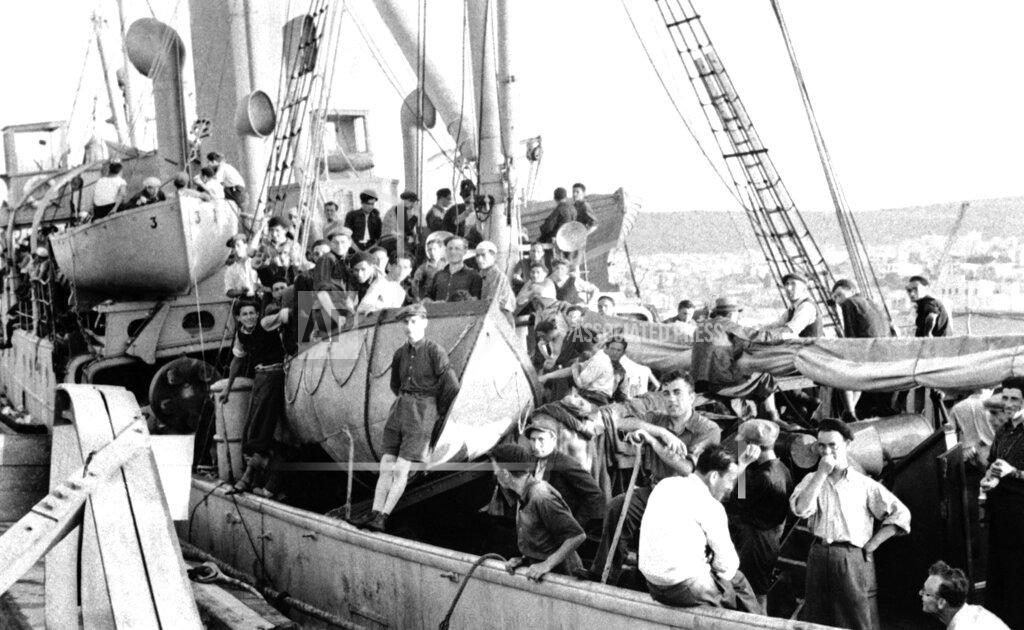
Lebanon admits refugee Jews after an epidemic breaks out on their ship.
President Roosevelt in Washington vetoed the bill extending public health facilities to active foreign service officers, signed several measures dealing with national defense, and conferred with naval experts on expansion of shore bases.
The Senate passed the Neely bill to prohibit block booking of movies, passed amendments to the Walsh-Healey act, and its Judiciary Committee reported favorably the nomination of Charles Alvin Jones to be judge of the Third Circuit Court of Appeals. The Senate adjourned at 5:52 PM until noon tomorrow.
The House considered bills on its consent calendar and refused to entertain measures appropriating additional Federal aid to the New York and San Francisco Fairs, and its Banking and Currency Committee continued questioning Thomas H. MacDonald on the new federal lending program. The House adjourned at 3:33 PM until noon tomorrow.
President Roosevelt plans to make an appeal to the Senate Republican leadership to help him free a neutrality bill from the Foreign Relations Committee before giving his consent for Congress to adjourn without final action on the subject at this session. A tentative decision to this end. was the net result of a conference held by the President this morning with four Congressional leaders and Secretary Hull. Present were Vice President Garner, Speaker Bankhead and Senator Barkley of Kentucky and Representative Rayburn of Texas, majority leaders of the Senate and House, respectively. The arrangement of another conference, to which the Republican spokesmen would be invited, was left to Senator Barkley. So far as a decision was reached today, only the Senate leaders will be asked to attend, as no mention was made of the minority group in the House, where the neutrality question already has been passed upon.
President Roosevelt mapped out with naval officers this afternoon a program of expansion of eight airplane bases on the continent and in outlying possessions. It was agreed, according to those present, to spend this year more than a third of the $65,000,000 authorized for the purpose for development and expansion of bases in the Pacific, Alaska, Jacksonville, Florida, and at San Juan, Puerto Rico. In the Pacific, bases are to be constructed at Midway, Johnson, and Palmyra Islands, Oahu, Hawaii, and in Alaska at Kodiak and Sitka. President Roosevelt urged that the program be carried forward with as much speed as is consistent with economic practice. In the group were Rear Admiral William D. Leahy, Chief of Naval Operations; Rear Admiral J. H. Towers, Chief of Aeronautics; Rear Admiral Ben Moreel, Chief of the Bureau of Yards and Docks; Rear Admiral Ray Spears, Chief of the Bureau of Supplies and Accounts; Rear Admiral Ross T. McIntire, Surgeon General of the Navy, and Captain Daniel J. Callaghan, Naval Aide to the President.
A bill to amend the Walsh-Healey act, which applies to labor standards on government contracts, by extending the scope of the law and lightening its penalty provisions was adopted by the Senate late today.
The New York Work Projects Administration will dismiss tonight the first 2,000 of the 75,000 relief workers who are to be dropped from the rolls within the next six weeks under the new Relief Act, it was announced yesterday by Lieutenant Colonel Brehon B. Somervell, local WPA administrator. Project supervisors will give the relief workers their pink slips, or dismissal notices, informing them that they are not to report for work tomorrow. The pink slips will be given to the workers thereafter at the rate of 2,500 daily, according to Colonel Somervell, in compliance with the mandate of Congress that all workers except war veterans. who have been on WPA for eighteen months or longer must be dropped.
Colonel Somervell’s announcement followed the completion of plans by the Police Department to protect all projects throughout the city in the event of trouble. At the same time, Paul Edwards, business administrator of the Federal arts projects in New York City, revealed that of the 2,000 to 3,000 pink slips to be issued to workers on the arts, music, writers and historical projects, the first 400 would be delivered on Thursday. The dismissal of this first group of arts projects workers becomes effective the following Thursday. About half of the arts projects workers are to be dropped. They will not be replaced.
The War Department rejected yesterday, for a second time, plans for the proposed bridge between the Battery and Brooklyn, because the destruction of such a span in time of war might block access to the Navy Yard from the sea. On learning of the ruling, which was in a letter from Harry H. Woodring, Secretary of War, to Robert Moses, chairman of the Triborough Bridge Authority, Mayor La Guardia announced that he would try to obtain approval for a vehicular tunnel on the same route. “Of course, Secretary Woodring has the final word,” the mayor said, at the World’s Fair City Hall. “I talked with the Secretary by telephone today and discussed the problem. Secretary Woodring promised his fullest cooperation in getting a tunnel. This administration is never daunted by anything. We will just go on to the next thing.”
Mr. Moses accused the Administration at Washington of sabotaging the bridge project. A Battery-to-Brooklyn bridge was essential and no Administration can block it indefinitely, he declared. In explaining why the plans for the proposed bridge were rejected, M. Woodring pointed out that there were already two bridges across the East River to the seaward of the Navy Yard and that they constituted potential hazards in the event of an emergency. Far from encouraging any change in specifications for the projected undertaking to make it acceptable to the War Department, Secretary Woodring said the two existing bridges should be replaced by tunnels when they have reached the end of the period of safe life. If a third bridge were constructed across the East River now, the Secretary said, it would make impossible the attainment of the department’s objective of eliminating all bridges seaward of the Navy Yard. It was fortunate, he said, that construction of a tunnel instead of the proposed span was feasible.
A committee from the American Federation of Labor led by William Green, its president, called on Congressional leaders today and urged action to restore the prevailing rate of wages on WPA. They were not given much encouragement.
Soldiers in Harlan, Kentucky brought into court today 260 men and women arrested after a gun battle between union coal mine pickets and National Guardsmen last week and a circuit judge passed the cases along to a special grand jury meeting on July 25.
Fritz Kuhn, national leader of the German-American Bund, denied at his headquarters here yesterday that he had been intoxicated or had used abusive language to Patrolman Henry Plasse who arrested him on these charges early Sunday morning in Webster, Massachusetts.
A plan to take the fight for the next Democratic Presidential nomination to the rank and file of party voters is being worked out by campaign managers for Vice-President John Nance Garner.
Senator Burton K. Wheeler of Montana has written the editor of The Iowa Legionnaire that he is not a candidate for the Presidency.
Five hundred actors enroll in the new American Guild of Variety Artists. Sophie Tucker will contest the loss of her group’s AFL charter.
Michigan Governor Dickinson aims to reinstate Prohibition.
First Lady Eleanor Roosevelt declines to participate in a debate over women’s jobs. Her challenger states that married women should not be allowed to hold government positions.
Police arrest a man who stole more than 1,000 items from the World Fair.
The Detroit Tigers pounded three pitchers for fifteen hits today to down the Boston Red Sox, 13–6, and snap their string of twelve consecutive victories. Buck Newsome threw a complete game for the Tigers.
The New York Yankees beat Bob Feller, shutting out the Cleveland Indians, 3–0.
Pittsburgh’s Chuck Klein makes his first appearance in Philadelphia since leaving the Phillies, and cracks 2 home runs to lift the Pirates to a 7–4 win.
In a 4–3 loss to the St. Louis Cardinals at the Polo Grounds, New York Giants infielder Lou Chiozza fractures his leg in a season-ending injury. Playing shortstop in place of the suspended Billy Jurges, Chiozza collides with left fielder Joe Moore.
Behind the masterful four-hit pitching of Bucky Walters, the league-leading Cincinnati Reds beat the Boston Bees today, 4–0.
The Chicago Cubs batter three Brooklyn pitchers for 14 hits and rout the Dodgers, 11–2.
Canadians celebrate their 75th year as a nation.
Manchukuoan reports received in Hsinking today reported that eight Soviet planes attacked the railway center of Halunarshan yesterday — the fourth such raid within a week. The invading planes dropped several dozen bombs, the reports said, destroying four railway cars and the post office building and wounding four persons. Halunarshan is in Northwestern Manchukuo, about 125 miles from the Outer Mongolian border. The raid was believed by some observers to have been the Mongolian answer to a diplomatic protest filed by Manchukuo over a dawn raid yesterday on Fularki, which represented the deepest thrust yet made into Manchukuo by Mongol-Soviet forces. Fularki is almost 400 miles from the Mongolian border.
In the protest over the Fularki raid Manchukuoan authorities threatened to bomb Russia’s Siberian air base of Blagoveshchensk in retaliation, and some observers believed that the Mongols bombed Halunarshan again to show contempt for the threat. The town had been raided twice before — last Monday and Thursday.
In view of this, it was believed that the next step lay with the Japanese and that they would not allow the challenge to go unanswered. What form reprisals, if any, would take was uncertain. A spokesman for the Japanese Army in Manchukuo said that no Mongolian land forces were near Halunarshan and communication with the region was difficult. Since Japanese offensives invariably follow reported provocations, and since there were no worldwide repercussions to the Japanese bombing last Monday of Tamsk, a Mongolian air base, observers believed that the Japanese might again cross the border, probably in a series of attacks.
The army spokesman said that the Japanese at present had no airplanes at Halunarshan but did have troops that might be augmented by several truckloads of fully equipped soldiers seen journeying toward the railway station here yesterday morning. Yesterday’s attack on Fularki may have been an attempt to destroy a bridge spanning the Nonni River, which was prominent in the 1931 warfare in Manchukuo, then Manchuria. Fularki is about sixty miles southwest of the important. Manchukuoan center of Tsitsihar! and is on the main rail line between Harbin and Hailar. Seven persons were wounded and two buildings destroyed in this raid. Eight bombs were reported dropped. Observers believed the Russians were demonstrating the vulnerability of the Manchukuoan rail line.
Countering a Japanese announcement of a big-scale invasion of Fukien Province to start Wednesday with operations against Hinghwa, Chinese forces today were blowing up bridges on the Hinghwa-Foochow highway. It was believed that the Japanese might strike out overland toward Foochow, once Hinghwa, an important foreign missionary center seventy miles to the south, had been taken.
Trying to reduce the value of Hinghwa as a prize of war, Chinese there were carrying inland all the property they could move, even rafts of valuable timber, of which Fukien Province is a heavy producer. These were being floated up small streams. Japanese air attacks on Foochow and surrounding territory continued on an increasing scale, but seemed to achieve little beyond killing noncombatants and destroying property.
Prime Minister Chamberlain declared in the House of Commons that the British government “would not and could not” reverse its policy in the Far East. The statement referred to reports of Japanese demands that such a reversal was necessary as a condition for opening negotiations on the Tientsin situation. In the hope of prolonging the British-Japanese negotiations in Tokyo until after Europe’s “danger period” has passed, the British Government indicated today that it would not be unwilling to discuss the broad background of the situation with the Japanese as long as the principles of the British policy in the Far East were not compromised. Prime Minister Neville Chamberlain, answering questions in the House of Commons today, declared emphatically that Britain would not change her general policy at Japan’s bidding although in a conciliatory passage he told the house that no official demand for such change had come from Tokyo.
“There have been many statements in the press, both in Japan and in this country, that the Japanese Government will require a fundamental reversal of the Far Eastern policy of His Majesty’s Government as a condition of opening negotiations,” Mr. Chamberlain said. “I should like to make it clear that this country would not and could not so act in regard to its foreign policy at the demand of another power nor has His Majesty’s Government received any such demands from the Japanese Government.
The Tokyo press sees British submission and shows satisfaction over the first Tientsin talk.
Dow Jones Industrial Average: 142.58 (+4.70).
Born:
Spencer Davis [Davies], English guitarist (Spencer Davis Group – “Gimme Some Lovin’”), in Swansea, Wales, United Kingdom (d. 2020).
Andrée Champagne, French-Canadian actress and politician, in Saint-Hyacinthe, Quebec, Canada.
Milva, singer, actress and television personality, in Goro, Emilia–Romagna, Italy (d. 2021).
Warwick Hutton, British artist and illustrator of children’s books, born in St Pancras, London, England, United Kingdom (d. 1994).
Naval Construction:
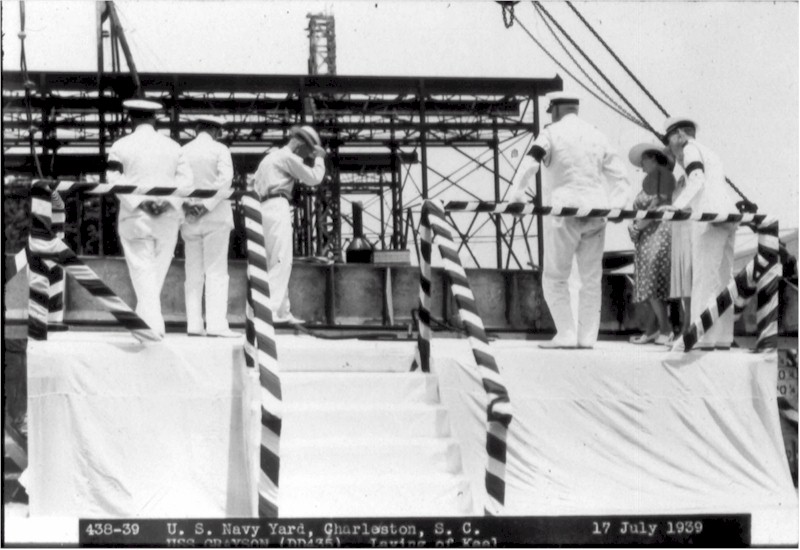
The U.S. Navy Gleaves-class destroyer USS Grayson (DD-435) is laid down by the Charleston Navy Yard (Charleston, South Carolina, U.S.A.).
The Marinha do Brasil (Brazilian Navy) destroyer Javary is launched by J.S. White & Co. (Cowes, U.K.). She will be requisitioned on the outbreak of war and enter service as the Royal Navy HMS Havant (H 32), first of her class of 3.
The U.S. Navy Sargo-class submarine USS Spearfish (SS-190) is commissioned. Her first commander is Commander Charles Edward Tolman, USN.




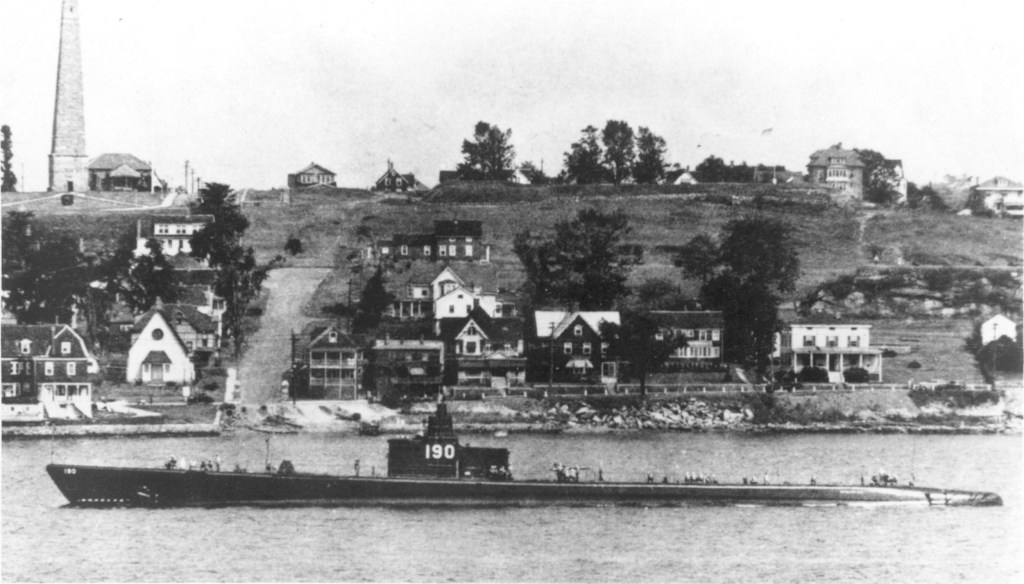
Spearfish conducted sea trials off New London and then held her shakedown cruise in the Guantanamo Bay area from 21 August to 3 October. She was overhauled at the Portsmouth (N.H.) Navy Yard from 1 November 1939 to 2 February 1940. On 10 February, she set sail for the west coast. After training operations in the San Diego training area from 6 March to 1 April, the submarine sailed to Pearl Harbor.
Spearfish operated between Hawaii and the west coast until 23 October 1941 when she departed Pearl Harbor and headed for Manila. She conducted training operations there from 8 November until the outbreak of war on 8 December (7 December west longitude time), when she began her first war patrol. This mission took her into the South China Sea, near Saigon and Camranh Bay, French Indochina, and off Tarakan and Balikpapan, Borneo. On 20 December, Spearfish encountered a Japanese submarine and made a submerged attack. She fired four torpedoes but all missed the target. She put into Surabaja, Java, on 29 January 1942 for refitting.
On 7 February, she began her second war patrol. Spearfish patrolled in the Java and Flores seas and made unsuccessful torpedo attacks on two cruiser task forces. On 2 March, she put into Tjilatjap, Java, and took on board 12 members of the staff of the commander of the submarines of the Asiatic Fleet, for transportation to Australia. The patrol ended at Fremantle, Australia.
Her third war patrol, from 27 March to 20 May, took her to the Sulu Sea and the Lingayen Gulf. On 17 April, she sank an enemy cargo ship of approximately 4,000 tons; and, on the 25th, she sank Toba Maru, a 6,995-ton freighter. On the night of 3 May, the submarine slipped into Manila Bay and picked up 27 passengers from Corregidor to be evacuated to Fremantle. She was the last American submarine to visit that beleaguered fortress before it surrendered.
From 26 June to 17 August, she scouted the South China Sea for enemy shipping and, from 8 September to 11 November, searched the west coast of Luzon where she damaged two freighters.
Spearfish sailed from Brisbane on 2 December 1942 and patrolled in the New Britain-New Ireland area for over a month before entering Pearl Harbor on 25 January 1943. From Oahu, she was directed to Mare Island for a major overhaul which lasted from 3 February to 19 May.
Spearfish returned to Pearl Harbor on 26 May and began her seventh war patrol from there on 5 June. She cruised the Truk Island area, made a photographic reconnaissance of Eniwetok Atoll, and then patrolled in the vicinity of Marcus Island. After refitting at Midway from 1 to 25 August, Spearfish searched Japanese home waters south of Bungo Suido for shipping. On the night of 10 and 11 September, she made a submerged torpedo attack on a convoy of seven freighters escorted by one destroyer and two torpedo boats. The submarine fired torpedoes at four ships and damaged two. Spearfish was depth charged throughout the day but finally eluded the escorts. On the night of 17 and 18 September, she attacked another convoy of seven ships with their escorts, sinking two and damaging one. Upon concluding this patrol, the ship sailed to Pearl Harbor for refitting.
From 7 November to 19 December, Spearfish performed photographic reconnaissance of Jaluit, Wotje, and Kwajalein, Marshall Islands, to aid the forthcoming invasion of those islands. On 5 and 6 December, she acted as lifeguard submarine for air strikes on Kwajalein and Wotje.
Spearfish’s 10th war patrol was made south of Formosa from 17 January to 29 February 1944. On 30 January, she made two torpedo attacks on a convoy of three merchantmen and two escorts. She sank an escort and the passenger-cargo ship, Tomashima Maru. On 10 February, her attack on a convoy of four ships and their escorts damaged a freighter and sank a transport. The next day, she damaged another freighter in an 11-ship convoy. On the 12th, she crippled another freighter.
Spearfish sailed from Pearl Harbor on 31 March for the East China Sea and the area north of Nansei Shoto. On 5 May, she sank a freighter; and, the following day, she sank the cargo ship, Toyoura Maru. When the submarine returned to Pearl Harbor on 27 May, she was routed to the west coast for a major overhaul. After spending the period from 6 June to 3 October at the Mare Island Navy Yard, the ship returned to Pearl Harbor on 10 October and held training exercises for a month.
Spearfish’s 12th and last war patrol took place from 12 November 1944 to 24 January 1945. On the first part of the patrol, she made photographic reconnaissance surveys of Iwo Jima and of Minami Jima. The submarine spent the second part in the Nanpo Shoto area on lifeguard duties and offensive patrols. On 19 December 1944, she rescued seven survivors of a crashed B-29. On 11 January 1945, her guns sank a sampan. She took three Japanese on board as prisoners, but one died several days later.
When she returned to Pearl Harbor on 24 January, Spearfish was used as a training ship until 18 August. On the 19th, she got underway for the west coast and arrived at Mare Island on 27 August. On 7 September, a Board of Inspection and Survey recommended that she be decommissioned immediately and possibly scrapped. It was decided to retain her in an inactive status for experimental explosive tests. The tests were cancelled, and Spearfish was decommissioned at Mare Island on 22 June 1946. She was struck from the Navy list on 19 July 1946; sold to the Lerner Co., Oakland, Calif.; and scrapped in October 1947.
JANAC credits Spearfish with sinking four Japanese vessels, for a total of 17,065 tons.
Spearfish received 10 battle stars for World War II service.
 History Diaries