Western military sources reported today that troops of the neutralist faction in Laos had repulsed a probing attack by pro‐Communist forces on the important base of Muong Soui in the north‐central region. The sources added that the Pathet Lao troops had failed to press their advance after their artillery and supply line had come under strafing and bombing attacks by T‐28 fighter‐bomber planes of the Laotian Air Force. The propeller-driven aircraft struck yesterday morning at Pathet Lao positions in the vicinity of Phou Kout Hill, east of Muong Soui, after the neutralists had been under artillery fire for two days.
A National Defense Ministry communiqué last night said the Pathet Lao advance had begun at 3:30 PM. Two hours later, seven fighter-bombers launched a skip-bombing attack on Pathet Lao forces in the Phou Kout area. The lead plane was struck by 37‐mm. anti‐aircraft fire and exploded. The pilot, who was killed, was identified by an air force source as Lieutenant Boun Lern Leguary, a 23‐year‐old cousin of General Kouprasith Abhay, chairman of the revolutionary committee that seized Vientiane in an April 19 coup d’état.
The source said that the aircraft had succeeded in inflicting heavy damage on the Pathet Lao positions. The fighter-bombers returned to the attack today although no new ground action was reported in the Muong Soui region. Laotian military sources said the Pathet Lao troops had withdrawn after encountering resistance from neutralist outposts about 10 miles from Muong Soui. The sources gave the impression that the extent of the attack launched yesterday by the Pathet Lao had been exaggerated in the Defense Ministry communiqué. The communiqué had said that four battalions of Pathet Lao and North Vietnamese troops had been involved in the attack.
Neutralist and right‐wing forces have observed with increasing nervousness a steady build‐up of Pathet Lao positions near Muong Soui. Preparations for the attack began after the Pathet Lao had succeeded in sweeping neutralist forces commanded by General Kong Le from their main position at Muong Phanh on the western fringe of the Plaine des Jarres. General Kong Le then withdrew to Muong Soui and established a defense position based on four good battalions with two more battalions of Meo guerrilla fighters screening his flanks. Muong Soui blocks the Pathet Lao advance westward along Route 7 to its junction with Route 13, which runs south to Vientiane, the administrative capital, and north to Luang Prabang, the Royal capital. An isolated force of Pathet Lao troops holds the junction of these two roads but has been checked by a recent build‐up of neutralist and right‐wing forces north of yang Vieng. Vang Vieng, about 70 miles north of Vientiane on Route 13, is with the Moung Soui the principal remaining stronghold of General Kong Le.
Prince Souphanouvong, the Pathet Lao leader, has indicated his intention to sweep the neutralist and right‐wing forces from both areas and to re‐establish the Pathet Lao line at Banhinheup, about 50 miles north of Vientiane on Route 13. This would mean the elimination of neutralist and rightwing positions in what the Pathet Lao calls its “liberated areas.” The line of demarcation would then be roughly that of the line established under the ceasefire agreement of June, 1962, dividing the right‐wing zone from that held jointly by the neutralists and the Pathet Lao. This agreement also called for the participation of these three political factions in a coalition government headed by Prince Souvanna Phouma, a neutralist. However, the neutralists broke with the Pathet Lao a year later and fighting began between the two factions. The neutralists are called that because they opposed both the pro‐Western orientation of the rightists and the pro‐Communist orientation of the Pathet Lao.
On Cyprus, a major outbreak of violence apparently was narrowly averted today at Temblos, a Turkish Cypriot village on Cyprus’s northern coast. Eighty Canadian soldiers of the United Nations peacekeeping force and eight armored scout cars were rushed to the village early in the day after information had been received that the Greek Cypriot security forces planned a dawn attack on the village. Temblos is the last remaining Turkish Cypriot stronghold on the coastal strip near the town of Kyrenia, north of the Kyrenia range. Greek Cypriot security forces have surrounded the village for a long time, but had not threatened to move against it. General Kodendera S. Thimayya, commander of the United Nations force, conferred with Polycarpos Georghiades, Greek Cypriot Minister of the Interior, on the tense situation. After their meeting a United Nations spokesman said the minister had assured the general that “there was no intention to attack Temblos or any other place on the island.”
The United Nations Command announced after a day of high‐level negotiations that both Cypriot forces at Temblos would disengage and retire to the positions they held before the build‐up. In the last two days, as firing sharply increased in the Kyrenia Pass area and tension built up, about 80 Turkish Cypriot fighters infiltrated into Temblos from the Turkish positions on the nearby mountain crest to help the village’s regular defenders. Greek Cypriot reinforcements also were moved into the area. During the night 150 members of the National Guard took up positions close to the village. The Greek Cypriots also placed two field artillery pieces, two antiaircraft guns and eight mortars around the village. This morning, after the reported hour of attack had passed without action, the Greek Cypriots moved five armored cars into the area, which then was in a state of general alert.
Spyros Kyprianou, Foreign Minister of Cyprus, had luncheon today with Sakari S. Tuomioja, United Nations mediator in the conflict between the island’s Greek and Turkish communities.
Turkey has sent a note to the Cyprus Government rejecting a Cypriot note protesting the reported landing of Turkish troops on the island, the Turkish Foreign Ministry announced today. The 10‐line note, handed to President Makarios in Nicosia yesterday, described the allegation as “baseless,” the ministry said.
An improved Soviet intercontinental ballistic missile has been tested and presumably is in production. The new missile, with a longer range, estimated at more than 6,000 miles, apparently can carry a large multi‐megaton warhead to its target. More important, its accuracy is believed to be greater than the first Soviet long‐range missiles. Experts believe it was designed with the hardened, below‐ground concrete and steel silos of the United States ballistic missiles as its probable targets. The United States intercontinental ballistic missiles also have a range in excess of 6,000 miles. It is believed, however, that the new Soviet missiles can carry a larger warhead. The development is no surprise to Soviet experts. The Soviet Union has long been following a ballistic missile development program approximately parallel to the American, though it is a much smaller program, which trails the United States in the development of intercontinental missiles.
The United States complained today that a Soviet ship had fired three warning shots across the bow of an American grain vessel and used other “excessive” methods in a Black Sea incident that grew out of a dispute over unloading fees in a Soviet port. The State Department delivered an oral protest to Soviet officials here. The incident, which occurred Wednesday, was described in a message sent by the ship’s master from Istanbul yesterday.
President Gamal Abdel Nasser called on fellow African leaders tonight to forget their differences and to create a “real spirit of understanding” on the continent. Opening a conference of the Organization of African Unity, attended by nearly all the heads of the 34 member states, President Nasser declared that without a firm will and desire for unity any formal or “constitutional unity” would be “only a facade.” His appeal, made in a welcoming address at the opening of the conference in the Arab League headquarters, seemed to be intended to head off a proposal of President Kwame Nkrumah of Ghana that independent African states unite immediately in a federation he calls the United States of Africa.
U Thant, Secretary General of the United Nations, addressed the African leaders. He congratulated the organization on its program and said the United Nations “recognizes the value of regional associations” built on the pattern of the United Nations Charter. The United Nations, he added, no less than the African organization, is concerned with wiping out colonialism and racial discrimination, The remaining colonial powers, Mr. Thant said, “are finding themselves increasingly isolated.”
The monsoon rains that northern India needs for life have come — bringing death to at least 25 persons, untold property and crop damage and danger, misery, and discomfort to millions. Only a few weeks ago, the peasants in the parched states of Uttar Pradesh, Punjab and Rajastan were praying for rain to ensure a bountiful harvest and to provide relief from temperatures of 105 to 110 degrees. Now they are praying to the “angry rain god” to halt, at least temporarily, the torrents of water that have poured daily for the last 13 days. Since the monsoon “broke” on July 4, 22 persons have died in New Delhi alone as a direct result of the near record rainfall. Fourteen lost their lives in nine houses that collapsed when waterlogged walls gave way. Five others were electrocuted when they touched water‐damaged light fixtures, appliances or electric lines. Three persons drowned.
A leading legislator charged today that Venezuela’s Communist party had ordered the terrorist campaign that has taken four lives in the last five days. Deputy Carlos Andres Pérez, a former Interior Minister, said he had documentary evidence that the terrorism was ordered by the party in May. He said the party had vowed to overthrow the Government of Raid Leoni. Terrorists, believed to be members of the Armed Forces of National Liberation, last night gunned down a police guide in Coro, capital of the northwestern state of Falcón. A band of terrorists last night overpowered the watchman at an explosives factory near Valencia and stole $1,200 worth of dynamite.
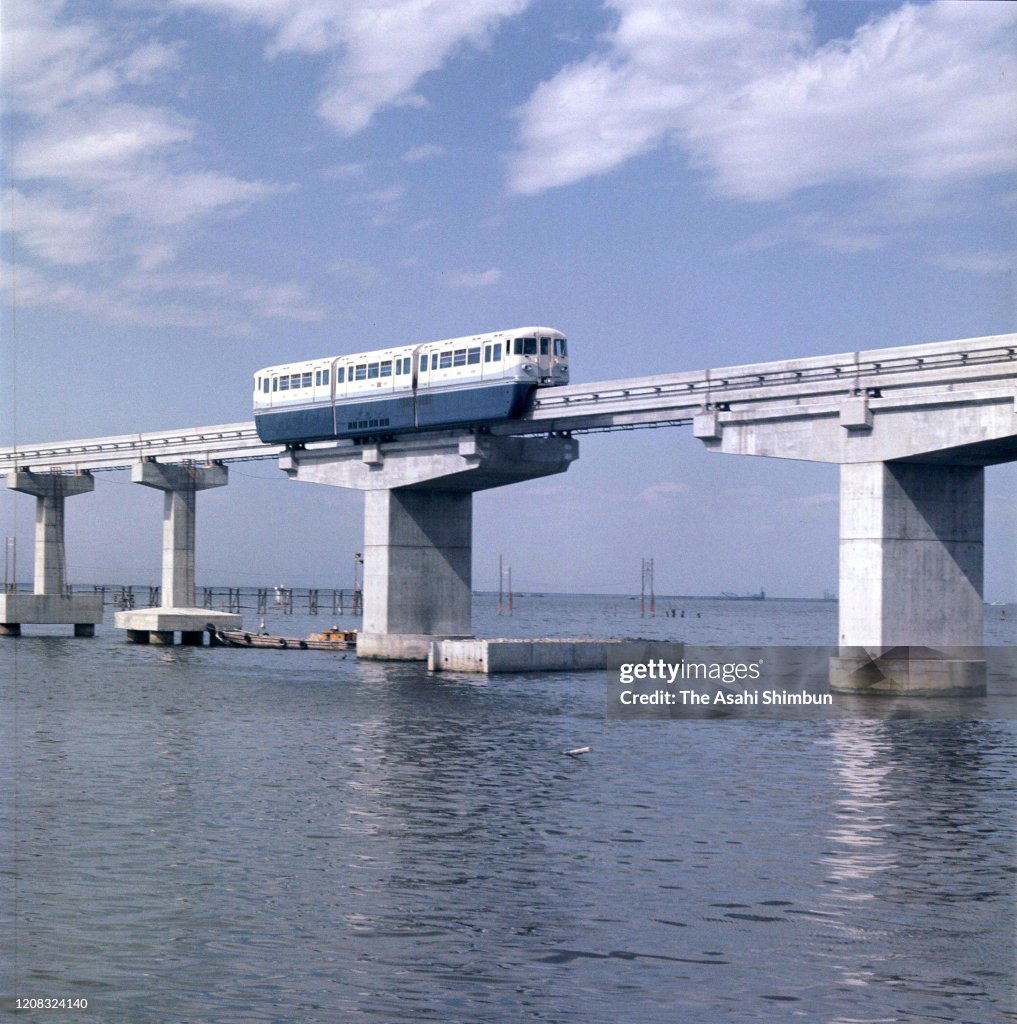
The combination of a minor earthquake in the Sea of Japan near the Niigata Prefecture was followed by torrential rains that crumbled structures and hillsides that had been weakened by the quake. Nearly 150 bridges collapsed and dikes cracked in 200 different places. By the end of the next day, 108 people were killed, 233 were injured and over 44,000 were homeless.
African National Congress leader Nelson Mandela, recently sentenced to life imprisonment, is awarded the Joliot Curie Gold Medal for Peace.
Great Britain performs a nuclear test at the Nevada Test Site.
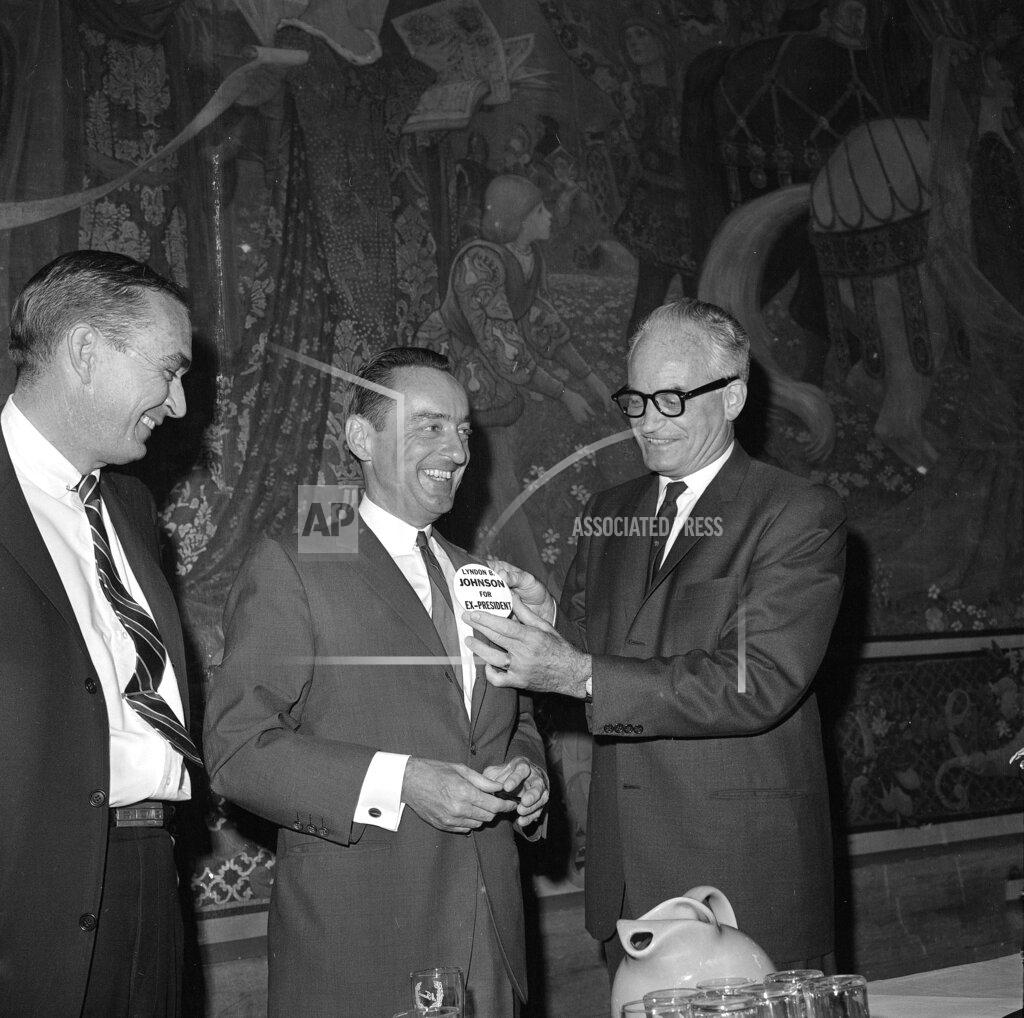
Governor Rockefeller said today that Senator Barry Goldwater’s first speech as the Republican candidate for President contained “dangerous, irresponsible and frightening” material. He referred to Mr. Goldwater’s insistence, in his speech accepting the nomination at the closing session of the Republican convention last night, that “extremism in the defense of liberty is no vice…. moderation in the pursuit of justice is no virtue.” In effect, the Rockefeller statement gave voice to the grumbling expressed privately by moderate and liberal delegates, as well as other Republican leaders who had expected Mr. Goldwater, as victor in the harsh fight for the nomination, to move for party unity. He did not do so.
In his statement, Mr. Rockefeller commented: “To extol extremism whether in ‘defense of liberty’ or in ‘pursuit of justice’ is dangerous, irresponsible and frightening.”
The Governor, who was booed when he spoke for an anti-extremist plank at the convention, added in his statement: “Any sanction of lawlessness, of the vigilante and of the unruly mob can only be deplored. The extremism of the Communists, of the Ku Klux Klan and of the John Birch Society — like that of most tyrants — has always been claimed by such groups to be in defense of liberty. The only sure guarantee of freedom for the individual in America lies in law and order and in the processes of our system of justice which have been developed over the centuries.”
Mr. Rockefeller expressed “amazement and shock” at the Goldwater expression on extremism. He said it raised “the gravest of questions in the minds and hearts and souls of Republicans in every corner of our party.” Although Governor Rockefeller’s statement was interpreted by some observers as a declaration of independence from Mr. Goldwater’s leadership of the Republican party, the New Yorker declared he would fight for his beliefs “within” the party. The statement was issued at the Rockefeller headquarters at the Palace Hotel shortly before the Governor left for a vacation in Wyoming.
In effect, the Rockefeller statement gave voice to the grumbling expressed privately by moderate and liberal delegates, as well as other Republican leaders who had expected Mr. Goldwater, as victor in the harsh fight for the nomination, to move for party unity. There had been complaints by moderates of “heavy‐handed tactics” and “rubbing our faces in the dirt” when Mr. Goldwater picked Representative William E. Miller of New York, a conservative, as his running mate and indicated in other ways he was in no mood for much conciliation. The acceptance speech, caused considerable anxiety among some Goldwater delegates as well as among the non‐Goldwater forces.
Former President Dwight D. Eisenhower let Senator Barry Goldwater know in no uncertain terms today that he would actively support the ticket only if the Republican Presidential candidate made an acceptable public explanation of his statement to the convention about “extremism.” Senator Goldwater said in his acceptance speech that “extremism in the defense of liberty is no vice…. moderation in the pursuit of justice is no virtue.” To General Eisenhower this passage conjured up a philosophy that the end justifies the means and that vigilantes and nightriders are entirely acceptable if their purpose is “the defense of liberty” or “the pursuit of justice.”
The former President did not express himself in precisely these words when Senator Goldwater paid a “courtesy call” to him in his St. Francis Hotel suite. However, his meaning was clear. His feelings on the point were conveyed in these words to intimates later. General Eisenhower did advise his visitor that the passage badly needed clarification, and the quicker the better. The former President has said repeatedly and as recently as Wednesday that he would actively support any candidate who won the Republican Presidential nomination. His position on Senator Goldwater today was a drastic modification of his former stand.
If Senator Goldwater gave General Eisenhower any assurance of a forthcoming explanation of his attitude toward extremism, those who talked to the general later about the discussion did not feel free to say so. But Eisenhower intimates did say they had reason to expect that the Republican candidate would make a strong bid for support from the more moderate wing of the party in his first two or three campaign speeches, around Labor Day if not before. Never a Goldwater enthusiast, General Eisenhower had come to accept the inevitability of his nomination. He remarked to one of those close to him today that until this morning, he had been prepared to campaign actively — if on a limited basis — for the candidate.
In an airport news conference just before his take‐off for Phoenix, Senator Goldwater was still tossing barbs at Mr. Rockefeller. “He’s so vague.” Mr. Goldwater said, “that I would think anyone who doesn’t agree with him is an extremist.” Obviously, he meant an extremist in Mr. Rockefeller’s view. Asked for his definition of extremism, the Senator made it brief: “Extremism in politics is either Fascism on one side or Communism on the other.”
Asked for comment on criticism that his nomination had drawn from some European newspapers, Mr. Goldwater said: “I think they have misunderstood my position. My position is exactly the same as Ike Eisenhower and they got along well with him. If I were they, I would be worried about the Johnson Administration, which is slowly destroying NATO.” The Senator said this country had traditionally looked with disfavor on the foreign press’s taking a part in American political affairs and that the United States had tried to stay out of theirs.
Asked whom he would think Mr. Johnson should pick for the Democratic Vice-Presidential nomination, Mr. Goldwater replied: “If he were smart, he’d take Bobby Kennedy.” He was referring to Robert F. Kennedy, the Attorney General, brother of President Kennedy.
Asked whether the candidacy of Governor George C. Wallace of Alabama would hurt his chances of winning the Presidency, Mr. Goldwater said: “If he confines it to the South, I’d be worried. But by extending it into 25 states or so, he can’t hurt me. He’ll hurt Johnson.”
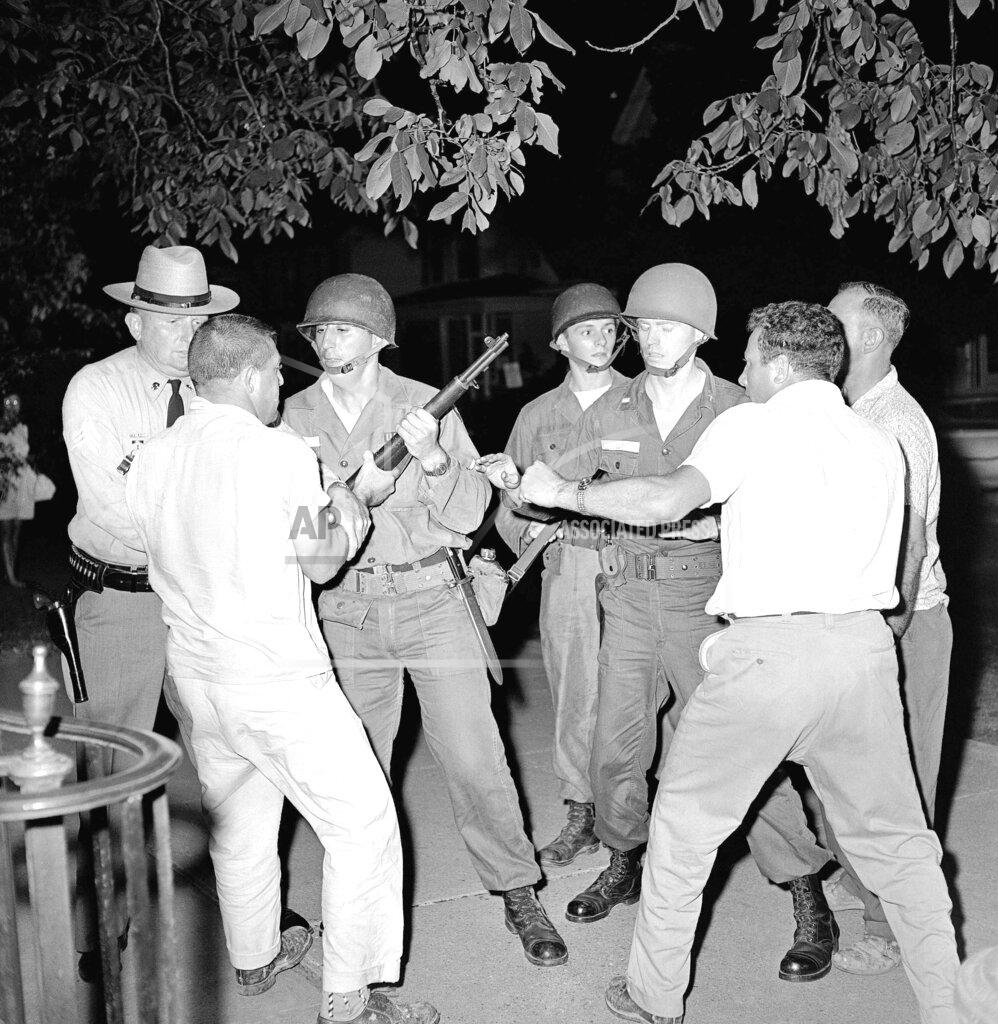
Four St. Augustine, Florida, Black men attempting to integrate a restaurant were attacked and beaten by whites today. One of the Blacks was taken to a hospital. It was the first serious racial violence since a truce in demonstrations was called two weeks ago. The incident occurred near the end of a full day of testing motels and restaurants here by Blacks. Most restaurants and motels have resegregated after picketing by white segregationists.
Dr. Martin Luther King Jr. threatened a new round of massive demonstrations to meet what he called “the most violent and lawless racial situation in the South.” Returning here after a two-week absence, the leader of the Southern Christian Leadership Conference said the city had surrendered to the Ku Klux Klan and had seen “A complete breakdown of law and order.” Klan terrorism against business leaders has “brought resegregation of the city,” he said. “These terror tactics, if successful, could become a pattern of resistance throughout the South.” he said. “This must be stopped.” Dr. King, who led a monthlong series of demonstrations in St. Augustine in June, said demonstrations would start Wednesday if all else failed.
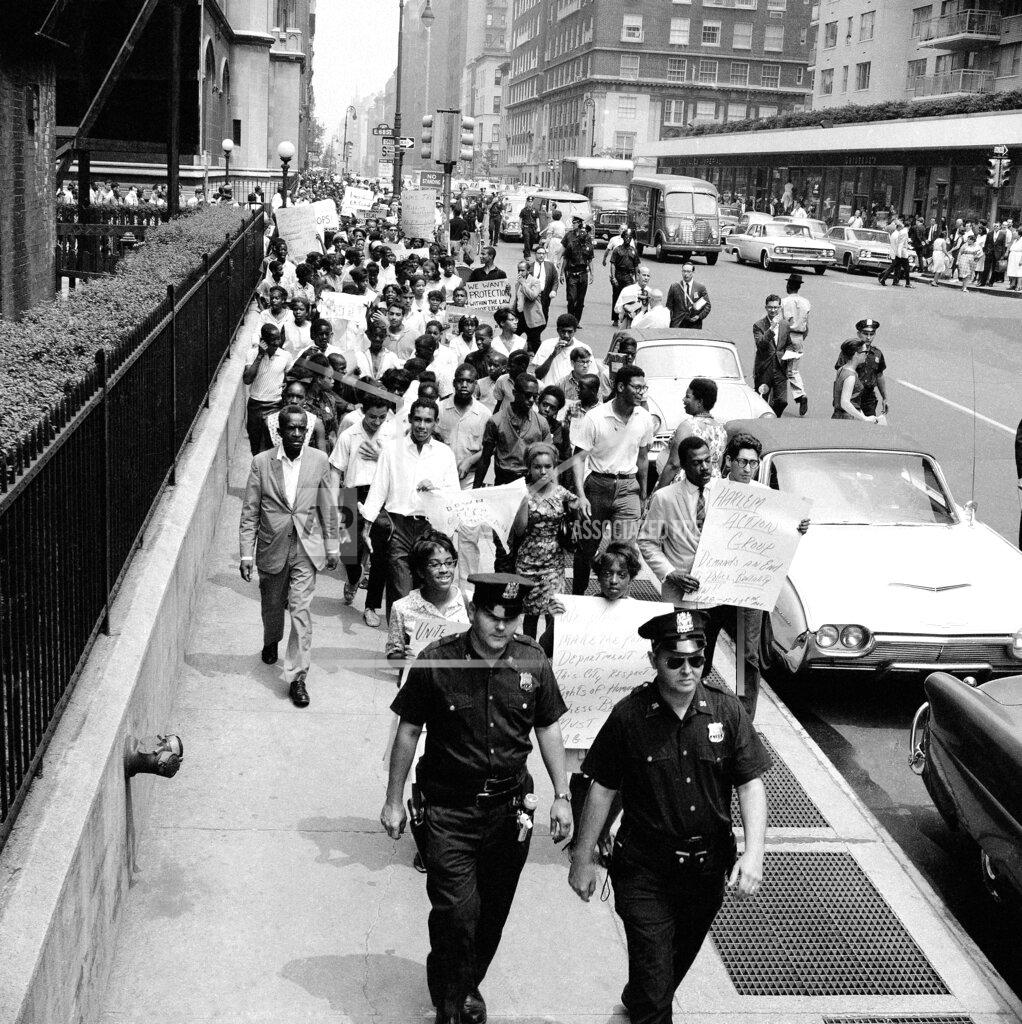
In New York, about 200 Black teenagers conducted an animated but orderly demonstration in Yorkville yesterday to protest the fatal shooting on Thursday of a 15-year-old Black boy by an off‐duty police lieutenant. The demonstrators, carrying school textbooks and placards proclaiming “Save Us From Our Protectors” and “Stop Killer Cops,” paraded for four hours in front of a school on East 76th Street and near the 67th Street station house. Led by local officials of the Congress of Racial Equality, the teen‐agers sang civil rights songs, chanted “Police Brutality Must Go” and “Freedom Nov,” and jeered and hooted at some 50 patrolmen who watched their parading.
While the youths were making their protest, Police Commissioner Michael J. Murphy announced that his department and District Attorney Frank S. Hogan’s office were making a “thorough investigation” of the killing of the boy, James Powell. The youth was shot twice by Lieutenant Thomas Gilligan in front of a six‐story building at 215 East 76th Street. The police said the boy had gone after the lieutenant, who was in civilian clothes, with a pocket knife and had ignored a warning to stop. They said the youth was emerging from the building after having chased the superintendent into an apartment. The superintendent, Patrick Lynch, was said to have inadvertently sprayed water on young Powell and several other Black youths as he hosed down the sidewalk in front of the building.
Several witnesses to the shooting have disputed the police version, declaring that the superintendent provoked the boys by saying, “I’m going to wash all the black off you.” They contended that Lieutenant Gilligan, who is white and is assigned to the 14th Inspection Division Brooklyn, shot young Powell without warning. They also disputed the claim that the youth had a knife in his hand.
Yesterday, Mr. Lynch, the superintendent of the building, gave his version of the events that led up to the shooting. “I said nothing bad to those boys,” he declared softly in an Irish brogue. “They were standing near the stoop. I wanted to spray them flower boxes. I asked them 10 times to move.” Mr. Lynch, who owns a gift and record shop at 87th Street and Lexington Avenue, said he had “accidentally” sprayed the youths, and “they got nasty and began throwing things.”
The first in a series of volunteer medical teams left here yesterday for Mississippi to help ensure that civil rights workers get adequate and, free medical care. The groups, each consisting of a doctor, a nurse and a driver, are being sent into the South by the Medical Committee for Human Rights, Mississippi Project, a recently formed organization of New York doctors and nurses concerned about the safety of civil rights workers. Thursday night, in a meeting at Mount Sinai Hospital, doctors from 15 New York hospitals volunteered to work in Mississippi during their vacations.
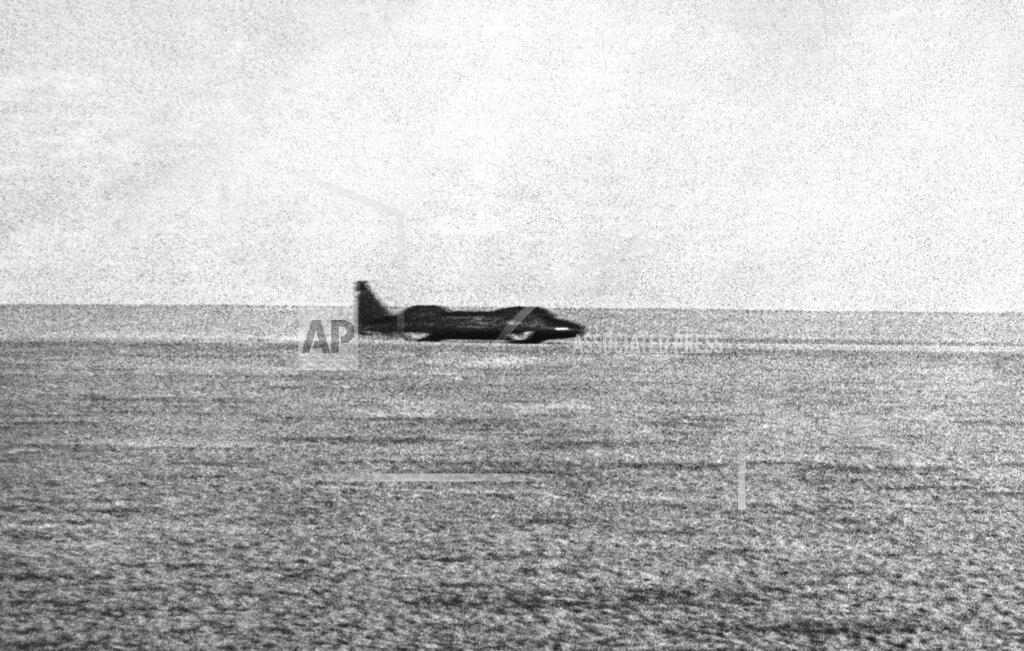
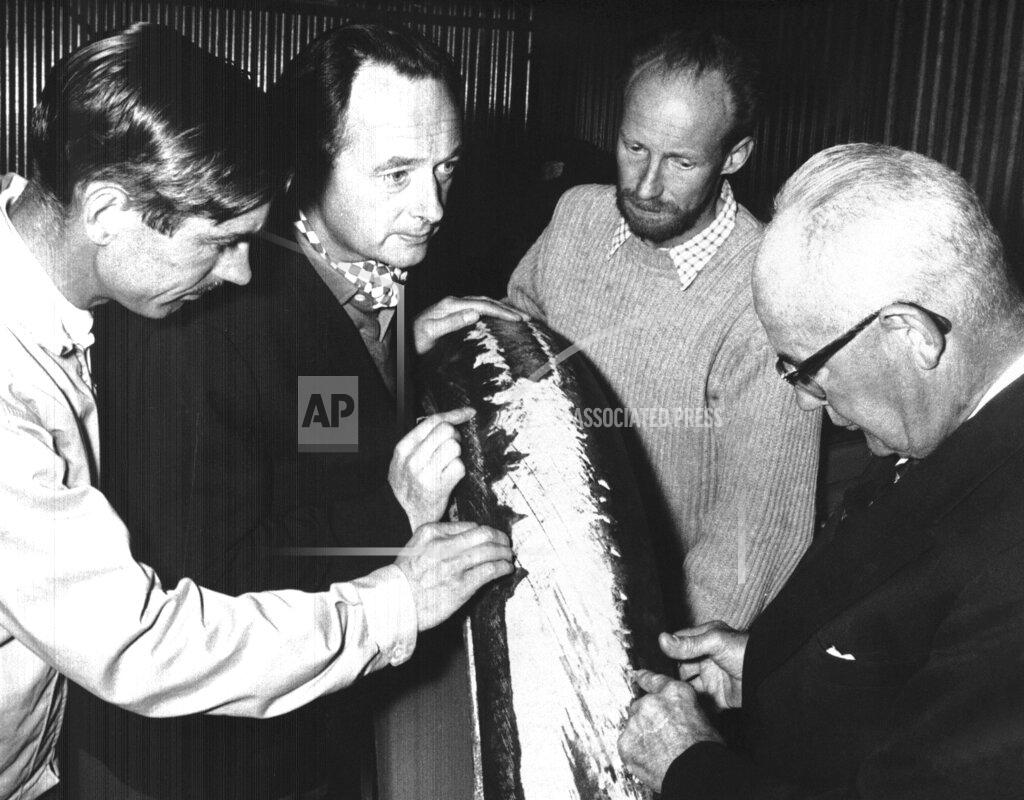
Donald Campbell, son of the great British record-breaker Malcolm Campbell and driver of the, in Bluebird CN7 made his last attempt at the land speed record. His speed, 403.10 mph (648.73 km/h), was less than the unratified speed of the controversial Spirit of America.
The Army’s XV‐5A “lift fan” research plane, a craft with horizontal fans buried in wings and nose, has made its first vertical take‐off and landing. The flight was made Thursday morning at Edwards Air Force Base, California with W. L. Everett at the controls. Numerous conventional flights had been made previously. The lift fan approach adds to what seems to many an endless list of techniques for vertical flight. In trying to improve on the helicopter, the industry has tried, among other things, tilting wings, tilting propellers only, deflecting jet thrust, pointing jets straight down. But the helicopter, despite its disadvantages of limited speed, high cost and demanding maintenance, continues to dominate vertical flight, as far as everyday operations are concerned.
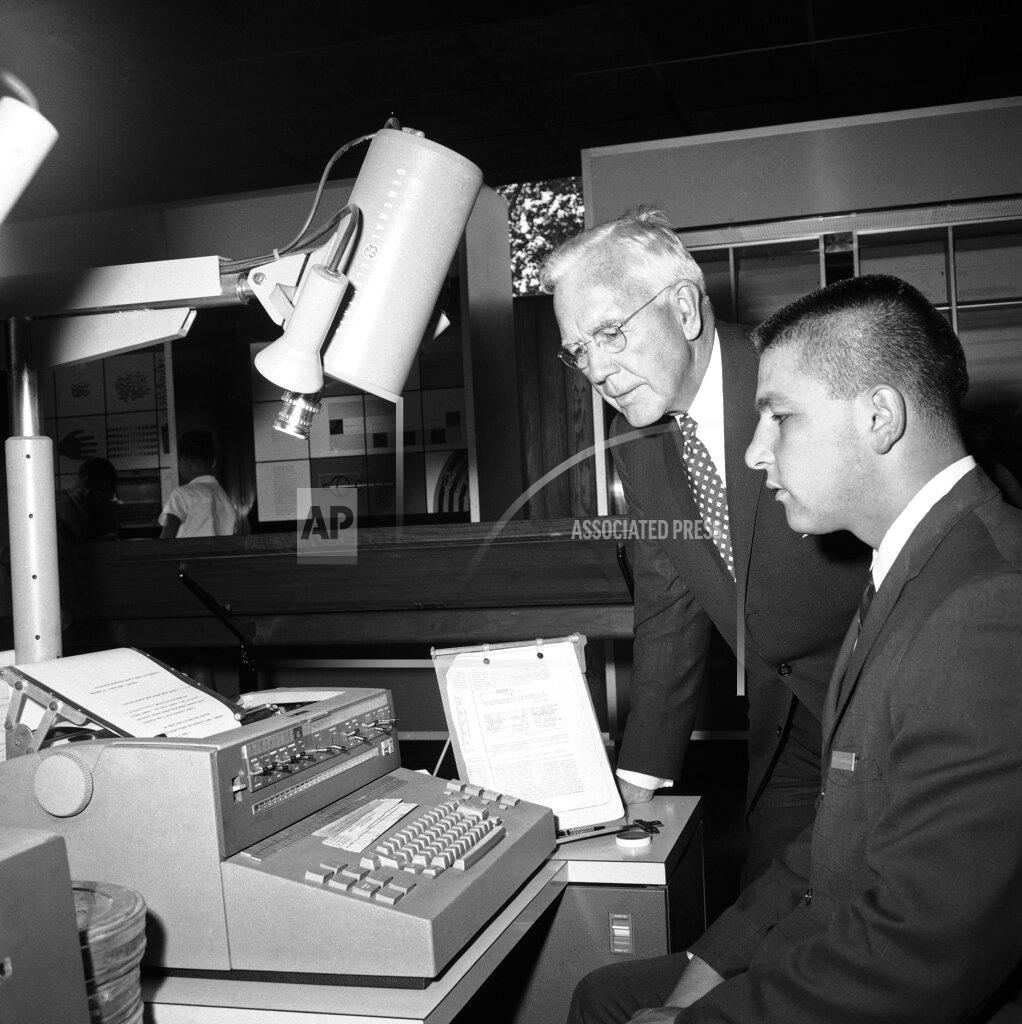
Subscription Television (STV) telecast its first major league baseball game as a closed-circuit cable network available to anyone in California willing to pay five dollars to install a converter, one dollar a month for the service, and $1.50 for a televised Los Angeles Dodgers or San Francisco Giants home game. The first offering was a Dodgers game, a 3–2 win over the visiting Chicago Cubs and “the first color baseball telecast ever seen in Southern California. Frank Sims called the action, and Fresco Thompson provided the commentary. Unfortunately for STV, movie theater owners and television networks objected and, in November, voters would vote in favor of Proposition 15 to ban pay television.
Gary Peters set down the Kansas City Athletics with three hits tonight and the Chicago White Sox won, 6–1. The left‐handed Peters, the 1963 rookie of the year, scored his 11th victory against four defeats. Pete Ward and Ron Hansen led the Chicago attack, driving in two runs apiece, while Bill Skowron hammered his first home run for the Sox and 14th of the season.
The first-place Orioles win again as Robin Roberts shuts out Detroit 5–0, despite giving up 11 hits. The 37‐year‐old right‐hander was in serious trouble only in the eighth inning, when the Tigers filled the bases with two outs on consecutive singles by Gates Brown, Don Demeter and Jerry Lumpe. Roberts, however, retired Bill Freehan on a fly ball. The Orioles maintained their half‐game lead over the New York Yankees, who whipped Cleveland, 8–4.
The Phillies regain first place with a 7–5 win against the Pirates. A wild throw by Don Pavletich led to the winning run. Danny Cater led off the eighth inning with a pinch single. With Costen Shockley at bat, Pavletich, the catcher, tossed wildly past the pitcher, Bill Henry, and Cater raced to second. He took third on Shockley’s infield out and scored on Clay Dalrymple’s bunt. Philadelphia will hold the National League lead until September 27th.
Two San Francisco Giant errors on the same play sent Dave Roberts home from second base with the tie‐breaking run tonight and led the Houston Colts to a 5–2 victory. The Giants have lost four straight. With the score 2–2 in the seventh, Roberts on second and Jerry Grote on first, Bob Bruce bunted and Ron Herbel dropped the ball. Orlando Cepeda picked it up and threw past Hal Lanier covering first, Roberts scoring.
Ron Fairly drove in the winning run with his fourth homer in three days and Don Drysdale gained his 12th victory with a five‐hitter tonight as the Los Angeles Dodgers beat the Chicago Cubs, 3–2. It was the 44th victory for the Dodgers in 87 decisions this season, and it put them over .500 for the first time since opening day.
Dow Jones Industrial Average: 851.35 (+3.88).
Born:
Heather Langenkamp, American film actress (Marie-“Just the 10 of Us”), in Tulsa, Oklahoma.
Craig Morgan [Greer], American country music singer (“My Kind of Livin’”), in Kingston Springs, Tennessee.
Clarence Vaughn, NFL defensive back (Washington Redskins), in Chicago, Illinois.
Terry Wright, NFL defensive back (Indianapolis Colts), in Phoenix, Arizona.


 History Diaries