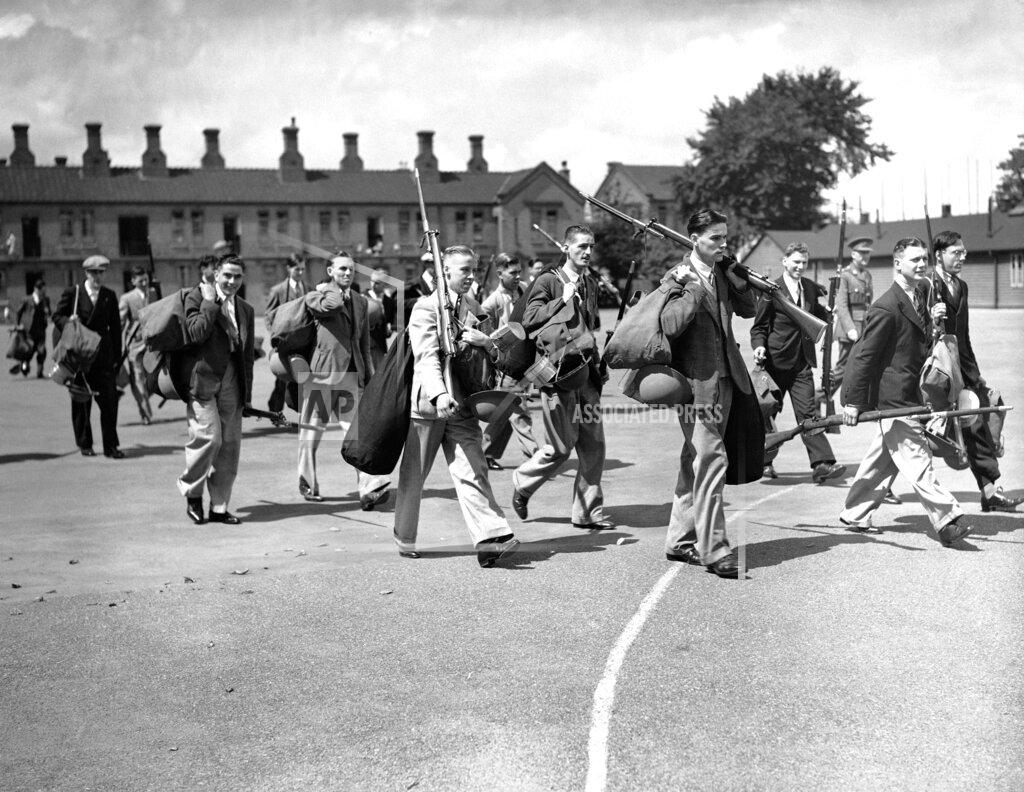
As the long call of “Last Post” rang out over camps and barracks at 10 o’clock tonight, followed fifteen minutes later by the short bugle call for “lights out,” 30,000 young Britons had ended their first day as soldiers. They were the vanguard of 200,000 conscripted militiamen. Few of these 20-year-olds had been Away from their homes for more than a fortnight before. Big crowds of relatives and friends saw them off at railroad stations this morning. The youths, excited at the prospect of their new life, quickly found new acquaintances on the way to their depots. As they exchanged their impressions of what army life would mean the accents ranged from broadest Scottish to Cockney.
Among the conscripts were youths of every class-members of the peerage, miners, mechanics, students, bakers, salesmen and some unemployed. At the end of the train journeys the recruits were quickly marshaled into army trucks and buses by regular army non-commissioned officers. Instead of red tape and the clicking of heels, there were friendly handshakes and pats on the back to greet them. The same note was struck at the camps, where all were introduced by name to the officers.
Those whose uniforms fitted at once received packing cases in which to send their civilian clothes home. Each man received a shaving brush, razor, comb and toothbrush, and another issue was a printed postcard, which the men were ordered to send off immediately to make known their safe arrival. In the barrack rooms, where the men arranged their rifles, helmets and gas masks, corporals and sergeants assisted them to fold their blankets, explained the regulation method of displaying equipment and generally helped the recruits feel at ease.
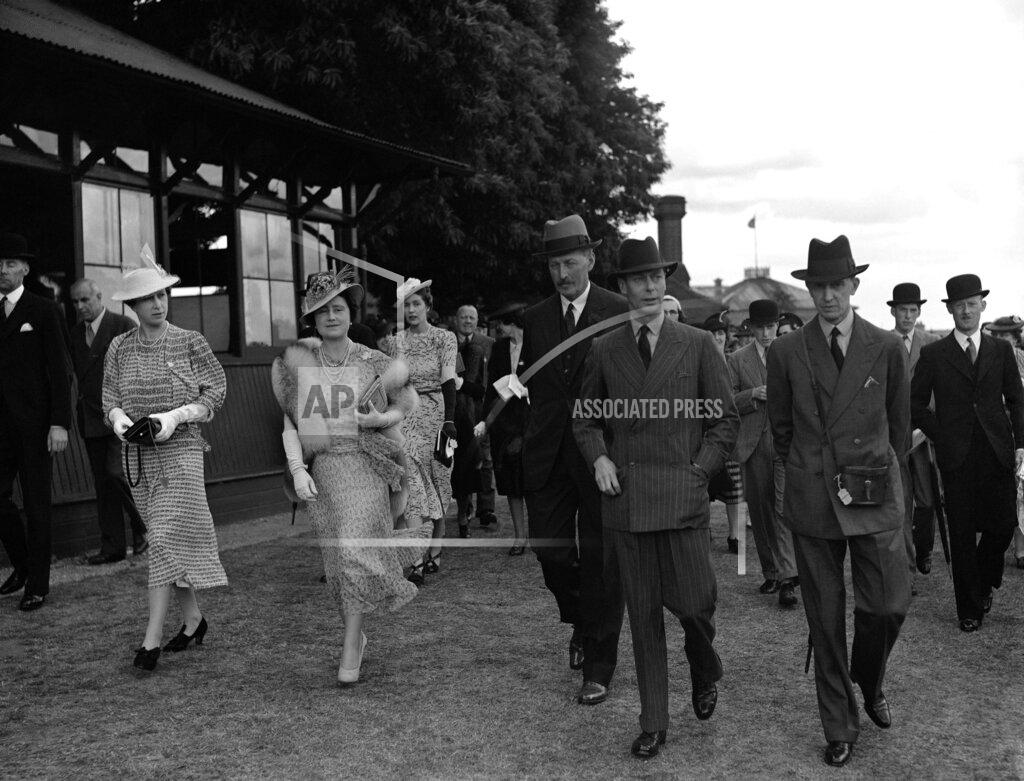
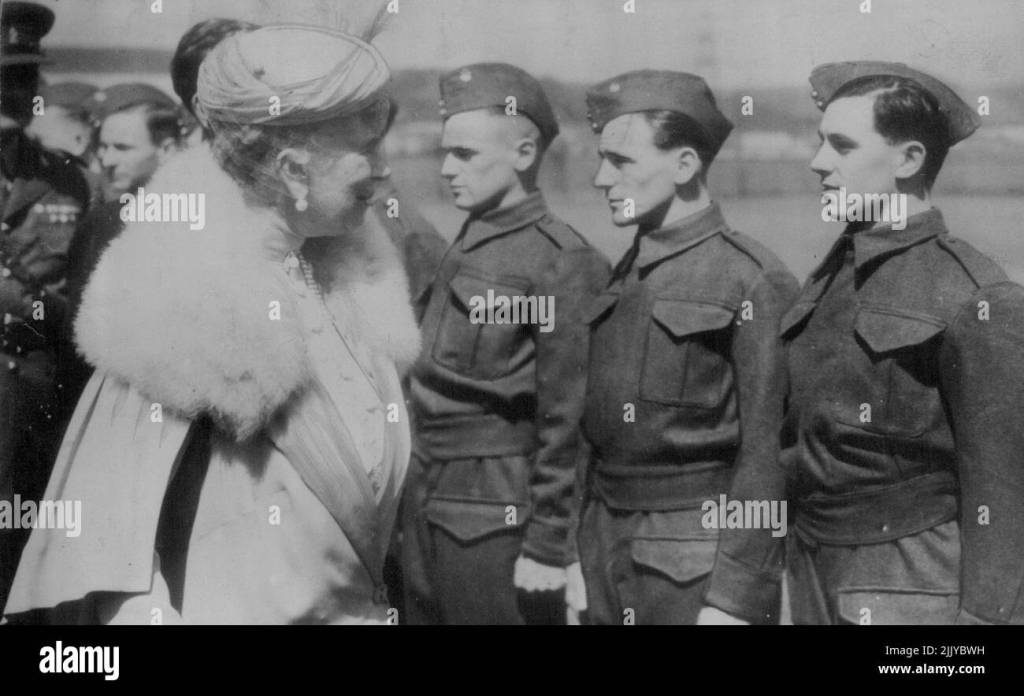
More in keeping with old traditions was the scene at Shorncliffe Barracks, where. Sergeant Major Park greeted the men thus: “Good morning. I am your Sergeant Major. I am very pleased to meet you. Spruce up, because Queen Mary is coming down to inspect you.” After elementary instructions in standing at attention and marching, the youths were inspected by Queen Mary, who paid a four-hour visit to the barracks as Colonel-in-Chief of the regiment.
Leslie Hore-Belisha, the Secretary for War, who made a tour of all the camps near London, addressed the men at Guildford, Surrey. He declared: This is one of the most historic days in the history of the country. You are guests of the nation and will be treated well.” In certain contingencies, he added, Britain would have to depend on them for defense of the empire.
In London, Admiral of the Fleet Sir Roger Backhouse passed away from a brain tumor in London, England, United Kingdom. As First Sea Lord in November 1938, his major contribution in that role had been to abandon the official British policy of sending a major fleet to Singapore to deter Japanese aggression (the Singapore strategy), realizing the immediate threat was closer to home (from Germany and Italy) and that such a policy was no longer viable.
The complete withdrawal of the United States from world affairs as desired by Congress isolationists in the present fight with Roosevelt “would give to the dictatorships stimulus to aggression and incentive to war,” J.L. Garvin will say in The Observer (London) tomorrow.
Boys and girls in Danzig’s Nazi organizations marched and sang in the Free City’s old streets tonight while Europe’s most-watched trouble-spot waited in a dead political calm for the results of Chancellor Adolf Hitler’s latest counsel to Albert Förster, his Danzig lieutenant. There is a pause in things; a lull in the march towards war that will last until later this summer.
The German secret police in Prague are acting with urgency and vigor against certain sections of the Catholic Church in the protectorate on the ground that they are fostering anti-Nazi resistance among the Czechs. A monastery of the Redemption Order in Prague has been subjected to a thorough search by forty police agents for “concealed arms.” The abbot of the Moravian Monastery of Cyril and Methodius has been questioned about sermons unfriendly to Germany that he was reported to have preached.
The Catholic press has been reprimanded for withholding criticism of the Protestant Hussite tradition, an occasion for which arose last week when Jan Huss was celebrated throughout the country as a national hero. The popular Father Loula, who greets scores of thousands of pilgrims at a holy mountain shrine in Central Bohemia, has been accused of turning pilgrimages into nationalist demonstrations. Copies of a seventeenth century prayer by the patriotic priest Balbin, which were distributed in South Bohemia, have been seized and destroyed. The importation of French and British theological books has been interrupted.
The dean of the principal church in Kladno was arrested as part of the retaliatory measures taken after the shooting of a German policeman there, and he carried out with traditional Christian forbearance the menial floor-scrubbing tasks imposed on him. A priest of St. Nicholas Church in Prague, which dominates the city’s Small Side, was arrested and cautioned that his attitude toward Germans applying for documents to prove their “Aryan” ancestry was considered unfriendly. In Budweis a popular priest was insulted because he refused to hang a notice in a social center barring Jews.
All Tyrol Germans are to leave the province, which is to become 100 percent Italian per an agreement.
Italy faces a loss in the Tyrol move. Foreigners are leaving at the beginning of the tourist season.
Speaking at the second session of the annual Congress of German Art in Munich today, Dr. Joseph Goebbels, Minister of Propaganda, explained how this art had been brought once again into the average German’s everyday life.
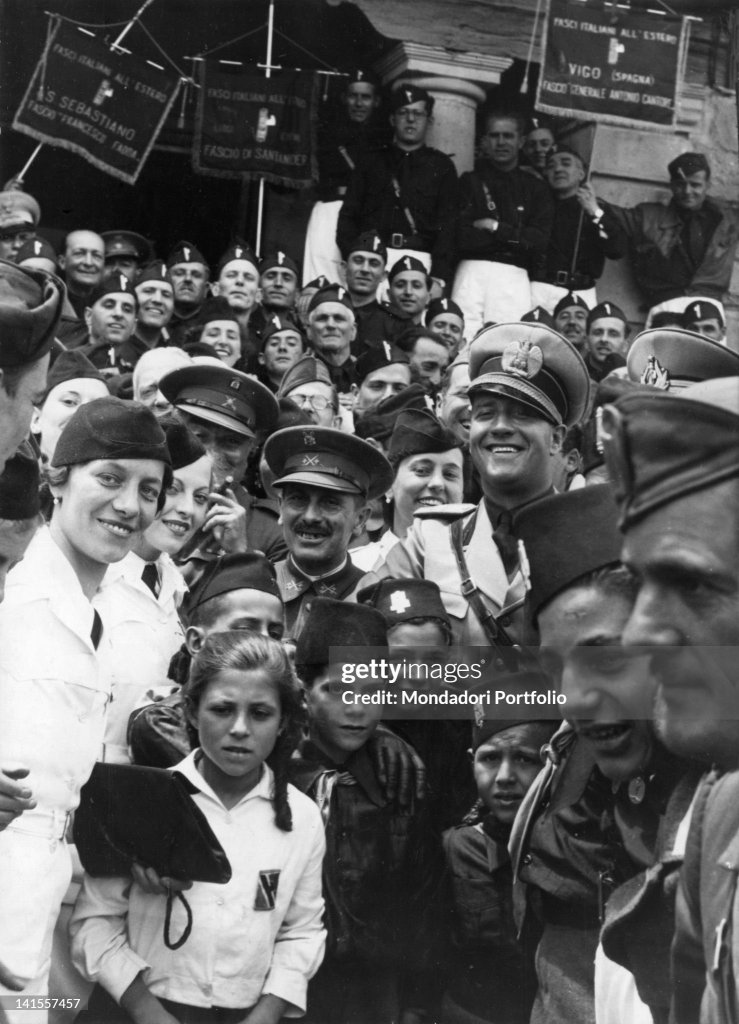
The Italian Foreign Minister Count Ciano is pleased with his visit to Spain. Thousands line the streets of Madrid. With the arrival of Foreign Minister Galeazzo Ciano in Madrid shortly before 1 o’clock this afternoon in a plane that brought him from Vitoria, he practically became a tourist, as all the serious business that he came to Spain for was really concluded after the gala banquet he gave for General Francisco Franco at San Sebastián last night.
The communiqué issued by the Spanish authorities summarized the results of the Italian Foreign Minister’s conversations with General Franco and it was indicated by those closest to Count Ciano that he was highly pleased with the diplomatic accomplishments of his visit.
It is pointed out that the language of last night’s communiqué was not at all ambiguous. If foreign observers were convinced that Count Ciano hoped to promote a military alliance between Spain and the Rome-Berlin Axis, it must be admitted that the Franco government’s announcement that “complete solidarity on all points of view and proposals was reached and collaboration will be advanced so that all the objectives of Il Duce and General Franco will be realized” can hardly be interpreted otherwise than the willingness of this country’s present regime to develop to the fullest extent its war-born friendship with Italy.
The capital’s highest civil and military officials, in addition to religious dignitaries and a numerous representation of provincial Falangists, were present to greet Count Ciano on his arrival at Barajas Airport, whence he was driven into Madrid to the office of the Cabinet Council, where Minister of Agriculture Ramundo Fernandez Cuesta was his official luncheon host.
French Premier Edouard Daladier cautions the press on spy news, warning against making political capital of government inquiry.
Prospects for an early adjournment of Congress were brightened today when a dozen Senators, headed by James E. Murray, Democrat, of Montana, abandoned efforts to restore prevailing wages for skilled workers on WPA projects, thus removing another possible source of long controversy.
Although there seems to be little disposition on the part of the majority leaders thus far to hasten the members of Congress on their homeward ways, it is generally conceded that little remains on the calendar which would justify extending the session much beyond Aug. 1. Those who make this analysis of the situation believe that the issue of reviewing the Neutrality Act is dead until Congress meets again, whether at the regular time next January or in special session earlier.
The foreign situation, and especially the possibility of an acute crisis in European affairs within the next month, seems to be behind the willingness of Administration leaders in Congress to let the nation’s legislators take their time about completing their allotted tasks for the present session.
President Roosevelt’s special message on revision of the Neutrality Act, read to both houses yesterday, was considered to be as much a preparation for a special session of Congress, in the event of critical developments abroad, as anything else.
Whatever may have been the intent of the Administration, there seemed to be little likelihood that the impact of the message would blast neutrality legislation out of the cave into which the House revolt, in restoring the arms embargo, and the Senate Foreign Relations Committee, by voting to defer consideration, have relegated the subject. However, the efforts of Mr. Roosevelt and Secretary Hull have admittedly kept the topic on the list of live issues which must be settled sooner or later.
Regarded from the strictly legislative viewpoint, there remains little to convince any member of Congress, however conscientious he may be, that he ought to remain in the midsummer heat of Washington for many more legislative days.
With New York City WPA operations already crippled by the AFL strike, Lieutenant Colonel Brehon B. Somervell ordered the dismissal of 75,000 workers at the rate of 12,500 weekly for six weeks. At the same time, he admitted that administrative changes required by the law will reduce the efficiency of many projects to “practically zero.” Men let out in the biggest lay-off in WPA history will not be reinstated unless their places cannot be filled from the home relief rolls.
A threat to call for the intervention of federal troops was made by the mayor of Minneapolis, where all projects were shut down after rioting in which one man was killed and many were hurt. The mayor’s threat followed a flat rejection by labor leaders of a suggestion by Governor Harold E. Stassen that they send WPA strikers back to their jobs.
In Washington two hard blows were delivered to WPA strikers. The Senate group that has been seeking to restore the prevailing wage principle announced that there will be no further effort to change the law for the present. The group’s decision followed President Roosevelt’s declaration that “you cannot strike against the government.” Senator Murray said the sponsors of the amendatory legislation, which the strikes are intended to achieve, believed the strike situation made it “inopportune to immediately press for a restoration of the prevailing wage principle.”
At the same time National Works Progress Commissioner Colonel F. C. Harrington gave full support to the action of Minneapolis authorities in closing all WPA projects as a result of fatal rioting.
Another group of workers received good news, however, in an announcement that all members of the theatre projects would be retained on the rolls for the maximum time allowed by law.
Again departing from AFL tactics in other centers, the Philadelphia Building Trades Council announced that, while its WPA workers would not be allowed to return to work on Monday, there was no strike, but rather a lockout by the federal government.
In Harlan, Kentucky, there was more violence, as Brigadier General Ellerbe Carter, National Guard commander, said Bill Roberts, 35, an idle union coal miner, was shot and killed tonight and that Willie Fee, 36, another miner, was held for questioning.
Also in Kentucky, nineteen soft coal miners are dead, and weary rescue squads pressed on late today in an attempt to save nine other men entombed 200 to 250 feet below the surface of a mine by an explosion which came last night about two miles back from the surface entrance. F. V. Ruckman, president of the Duvin Coal Company, owner of the mine in which the accident took place, announced that nineteen had perished, but expressed hope that the remaining nine men might be saved. He said that if they had “sealed in” behind an air-tight door, they might have enough “good” air to “last three or four days.” Fred Ferguson, director of the Indiana Bureau of Mines, assisting in rescue work, predicted, however, that the nine had “only one chance in a thousand” of being found alive. The disaster was the second to strike Kentucky within ten days. At least seventy-one persons were drowned in “flash” floods in the Eastern Kentucky Mountains last week.
The police jury, which is the ruling body of the East Baton Rouge Parish in Louisiana, gave the grand jury $5,000 today to continue its investigation into the affairs of Louisiana State University, but it tied a few strings to the money. The money can only be spent with approval of the district attorney and two district judges. The parish has already returned 24 indictments in the spreading scandal revolving around the former president of Louisiana State University.
Clara Adams of New York City is the first woman to complete a round-the-world flight (as a passenger). Adams set the unofficial record for passenger travel around the world via commercial air travel. The trip lasted sixteen days and nineteen hours and covered 24,609 miles. She departed from New York on the first flight of the Dixie Clipper across the Atlantic. According to a New York Times reporter, she returned to Newark, New Jersey, “clad in a tan-plaid tailored suit, made of Chinese silk, purchased in Hong Kong, and wearing a tan Panama straw hat, purchased in Rangoon.” She described the journey around the globe as “beautiful beyond description and sublime beyond the most vivid imagination of the human mind.”
“Stairway to the Stars” by Glenn Miller went to #1 on the American popular music charts as compiled by Your Hit Parade.
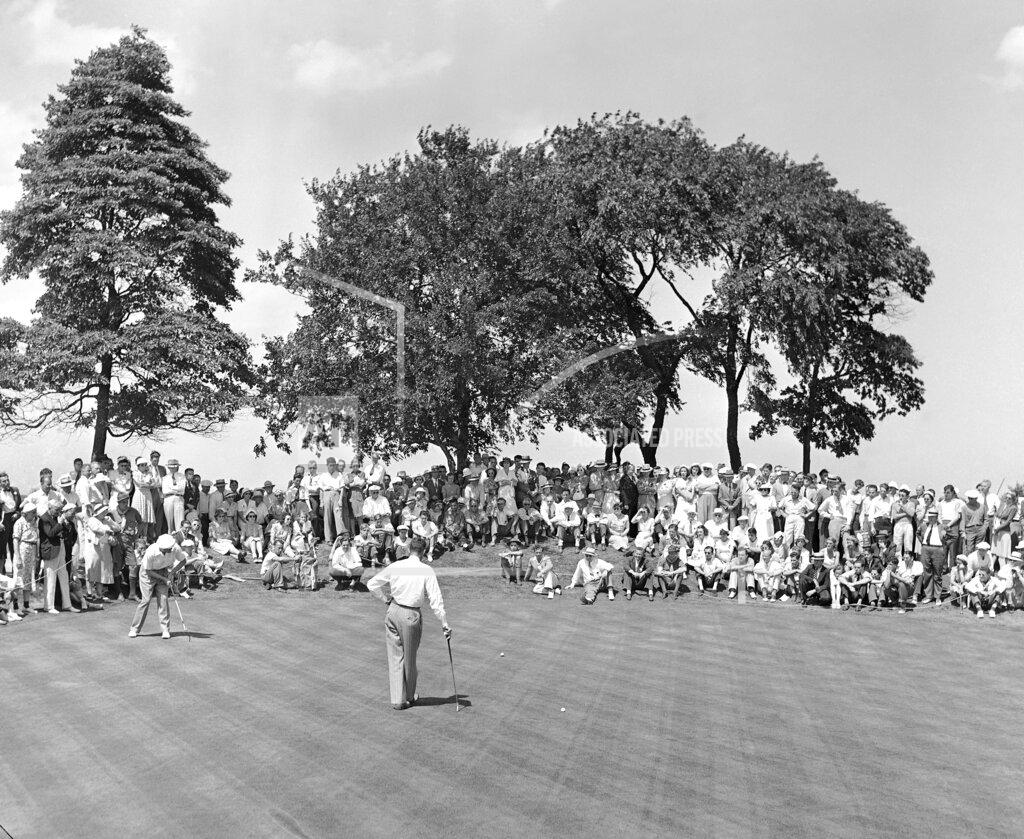
Henry Picard of Hershey, Pennsylvania won the 22nd PGA Championship by one stroke on the 37th hole. The 36th hole had ended with the two men tied. Nelson lost when he barely missed sinking a five-foot putt on the extra hole. Picard led most of the way, his rival going ahead for the first time on the thirty-second hole. The Hershey golfer squared the match on the thirty-sixth, however, with a birdie 3 and went on to score his first major triumph on the extra hole.
The second-place Red Sox plate 5 runs in the 1st inning against Willis Hudlin en route to a 9–5 victory over the host Indians. Cleveland’s leadoff hitter Rollie Hemsley is 5-for–5 as he will set a season record for most at-bats (395) by a catcher batting leadoff. Jason Kendall will break it in 2000. The outcome gave the Red Sox their 10th win in a row; they won their next two games, too, sweeping the July 16 doubleheader in Detroit, 9-2 and 3-0. The walk Ted Williams got in this game was one of 107 he got in his rookie year. The game-winning run he batted in was one of 145 RBIs, enough to lead both leagues and to set a rookie record that has never been matched.
A disputed call on a Harry Craft fly ball down the left field foul line into the upper deck at the Polo Grounds touches off a melee in which the Giants Billy Jurges and umpire George Magerkurth spit at each other. Both will be fined $150 and suspended for 10 days. National League President Ford Frick announces that 2-foot screens are to be installed inside all foul poles to prevent future arguments. The American League eventually also adopts the rule. The Giants lose, 8–4, to the Reds and will add another 8 in a row to take them out of contention.
United States and British consular authorities heard today that a Japanese sentry at Wuhu had slapped two American women missionaries, an American boy and a Canadian woman missionary. The incident occurred at Wuhu on July 3, the missionaries reported. The British and American authorities made immediate representations to the Shanghai Japanese Consulate, which said it had no information but would investigate. Those involved, the report said. were Mrs. Walter Haskell of West Plains, Missouri, of the United Christian Missionary Society; Mrs. Haskell’s 14-year-old son, Winston; Miss Anna Stocks, Bristol, Connecticut, an Advent Christian Mission worker, and Miss Bertha Cassidy, a Canadian born in China and attached to the Advent Christian Mission’s Wuhu school.
The missionaries said that they were walking along a street in Wuhu, Yangtze River port sixty miles above Nanking, and passed a Japanese sentry, who did not notice them. Then they heard the Japanese “bellow unintelligibly.” They halted and turned around, offering for his inspection their credentials, which had been issued by Japanese military authorities. Nevertheless, they asserted, the sentry slapped each so hard that the imprint of his hand remained for several hours.
American Consul General Clarence E. Gauss at Shanghai advised the State Department today that he had requested disciplinary action against a Japanese sentry who slapped American woman missionaries and a boy at Wuhu recently. Upon receiving a complete report of the incident, Mr. Gauss brought it to the attention of the Japanese Consul General at Shanghai and asked that disciplinary measures be taken against the sentry. He also demanded that measures be taken by the Japanese authorities to insure that there be no repetition of such unwarranted treatment of American women and children.
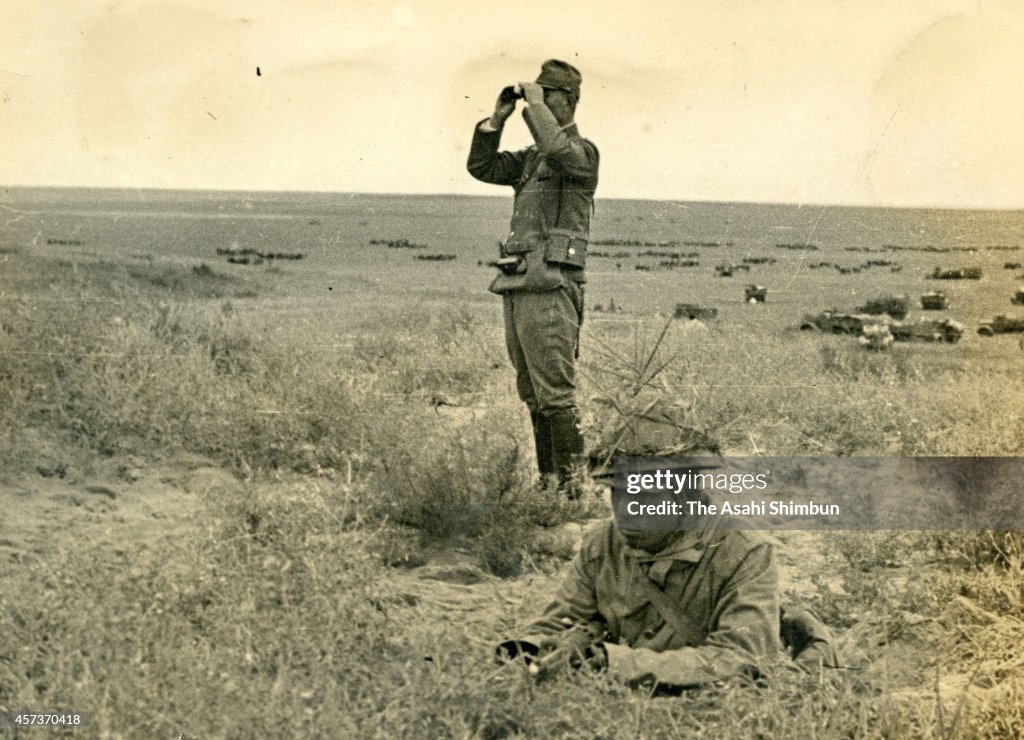
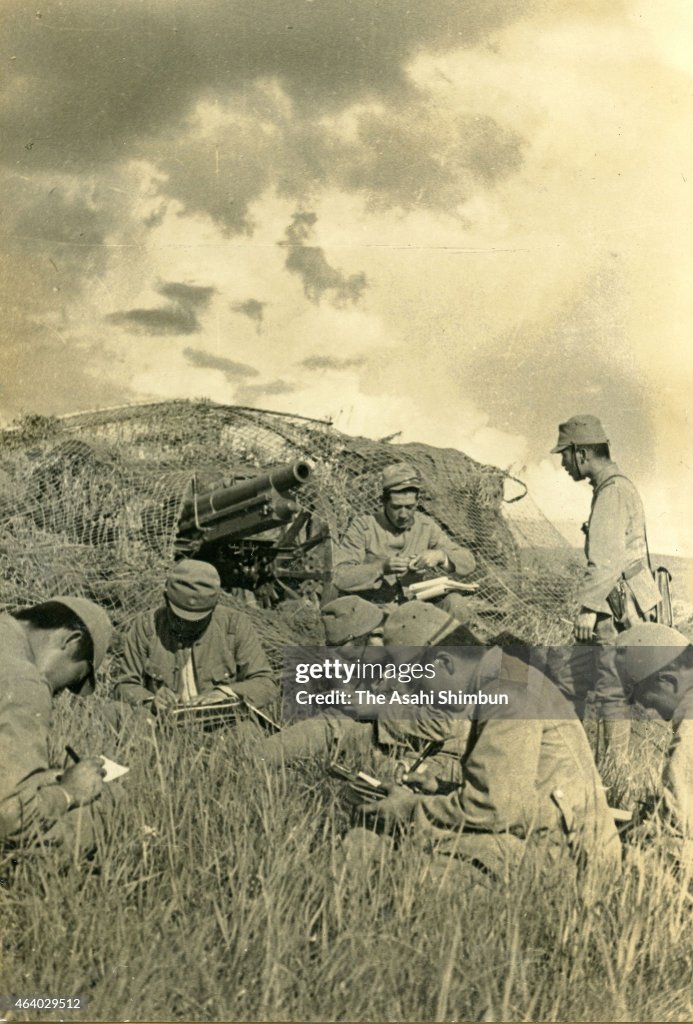
A sweeping Japanese drive against Chinese guerrillas in the mountains of Southeastern Shansi is developing into one of the major clean-up campaigns of the war. Chinese reports indicate that 60,000 to 70,000 Japanese troops are already engaged in the drive. Five columns are advancing through mountainous terrain from the three railways that touch the province.
Dispatches from Sian say heavy fighting is raging where each of these columns meets resistance. The Chinese apparently are using their customary tactics of resisting a short time, then abandoning cities, later returning from their mountain retreats to harass the invaders. Tsincheng, a prosperous Chinese stronghold near the Shansi-Honan border, is believed to have been lost to the Japanese. The Chinese base at Luat is thought to be one of the major objectives of the Japanese campaign.
Backgrounds only were discussed by Japanese Foreign Minister Hachiro Arita and Sir Robert Leslie Craigie, the British Ambassador, at the opening session of the Tokyo conference today. Mr. Arita explained the Japanese Government’s views regarding the manner in which British policy in China is held to have penalized Japan and suggested that an understanding be sought on general policy as a preliminary to discussions of the specific problem at Tientsin.
In three hours of quiet conversation Sir Robert explored Mr. Arita’s statements in order to ascertain precisely what Japan wanted. The conversations were adjourned until Monday and in the meantime Sir Robert will report to London. Although the press asserted that this was the first international conference in history at which Japanese was the basic language, both Mr. Arita and Sir Robert dispensed with interpreters and spoke English.
An agreed communiqué was issued, saying: [Mr.] Arita and [Sir Robert] Craigie met this morning and had a discussion lasting over three hours on certain general questions forming the background of the situation which has arisen at Tientsin. The interview was adjourned to give time for further conversation at another meeting to take place on Monday, July 17.
Later Mr. Arita conferred with a group of high officials of the Foreign Office who are assisting him as an advisory committee and discussed preparations for the next stage. Those officials are Setsuzo Sawada, former Ambassador to Brazil, Masaaki Hotta, former Ambassador to Italy, Sotomatsu Kato, Minister at Large to China, and Tadashi Kurihara, chief of the Asiatic Bureau of the Foreign Office.
The Manila Broadcasting Company first went on the air in the Philippines as KZRH.
Dow Jones Industrial Average: 137.88 (+0.31).
Born:
Aníbal Cavaco Silva, Prime Minister of Portugal, 1985–995; 19th President of Portugal, 2006–2016, in Boliqueime, Portugal.
Don Kojis, NBA forward (NBA All-Star 1968, 69; Detroit Pistons, San Diego Rockets, Seattle SuperSonics), in Milwaukee, Wisconsin (d. 2021).
Mike Shannon, MLB third baseman and outfielder (World Series Champions-Cardinals, 1964, 1967; St. Louis Cardinals) and broadcaster (St. Louis Cardinals radio, 1972-2021), in St. Louis, Missouri (d. 2023).
Patrick Wayne, American actor (“Rounder”, “Shirley”, “Beyond Atlantis”), in Los Angeles, California.
Died:
Admiral of the Fleet Sir Roger Backhouse, Royal Navy, 60, First Sea Lord until his retirement last month, of a brain tumor.
Naval Construction:
The Kriegsmarine (German Navy) battleship “H” is laid down by the Blohm und Voss, Hamburg, Germany. She will never be completed.
The Nihon Kaigun (Imperial Japanese Navy) river gunboat HIJMS Fushimi (伏見), lead ship of her class of 2, is commissioned. Her first commanding officer is Commander Fujitani Ataka.
The Marine Nationale (French Navy) Minerve-class submarine Cérès (Q 190) is commissioned.
The Kriegsmarine (German Navy) Type IX U-boat U-42 is commissioned. Her first commanding officer is Kapitänleutnant Rolf Dau.




 History Diaries