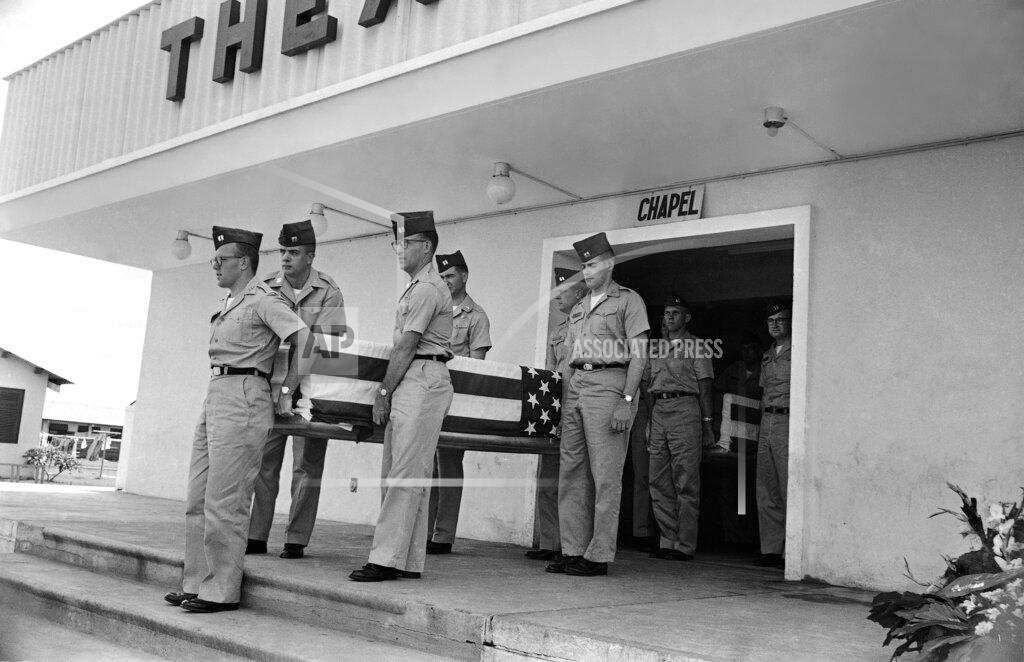
Leonid Brezhnev stepped down from the ceremonial job of head of state of the Soviet Union at the request of Prime Minister and Communist Party First Secretary Nikita Khrushchev, who explained to the 1443 members of the USSR Parliament, the Supreme Soviet, that Brezhnev needed to devote full time to Party matters. The Supreme Soviet voted unanimously to accept Brezhnev’s resignation and then, three minutes later, voted unanimously to approve Khrushchev’s recommendation to elect first deputy premier Anastas Mikoyan as the new President. The shuffling of positions led Western observers to conclude that Brezhnev was being prepared as Khrushchev’s eventual successor, something which would happen three months later.
The Government of Cyprus exerted new pressure on the Turkish Cypriots today as tension on the island appeared to be rising dangerously. The Government restricted the entry of certain Turkish Red Crescent relief supplies for Turkish Cypriots. It also advised Greek Cypriot businessmen to end bulk sales to the Turkish Cypriots of goods newly classified as “strategic materials.” An informed Greek Cypriot described the new measures as “one more turn of the screw.” The United Nations command termed it a “change” in Government policy. It said that U Thant, the Secretary General, had been so informed.
The new measures, together with a recurrence of heavy firing in the Kyrenia Pass area, the arrival of new men and equipment from abroad for the Greek Cypriots and the Cypriot Government’s ultimatum to Turkey to withdraw her clandestinely landed soldiers from the island excited new concern. Ships from Greece were said to be continuing to arrive in the southern port of Limassol. Reliable sources said that 800 to 900 men and heavy equipment were unloaded in the port Monday night. Whether the new arrivals were Greek Cypriots, Greek nationals of Cyprus birth or native Greeks could not be ascertained. But their arrival, in addition to a Greek Minister’s reported statement that Greek soldiers were deserting to serve on Cyprus, fed the growing doubt about Greek Cypriot contentions that only men of Cypriot birth were flowing into the island from Greece.
Meanwhile, the Turkish Cypriots have sent a cable to Mr. Thant. They protested the “new tactics” by the Greek Cypriot authorities to prevent Red Crescent supplies from reaching “thousands of Turkish Cypriot refugees.” The Red Crescent is the Turkish equivalent of the Red Cross. The Government of Cyprus in effect is demanding that the Turkish Red Crescent either pay customs duties on such relief supplies as flour and shoes or purchase them on the island. Greek Cypriot merchants who have made bulk sales to the Turkish Cypriots have been advised to stop selling about 20 items of strategic materials. These include iron, barbed‐wire, detonators, newsprint, T.N.T., fuel and spare parts for jeep-type vehicles.
Shooting around the strategic Kyrenia Pass, which is held by the Turkish Cypriots, was heard for a second day. A United Nations spokesman said situation there had “deteriorated.” Greek Cypriot security forces recently occupied a knoll below St. Hilarion Castle, west of the pass. Turkish Cypriot fighters defending the castle were reported little concerned because the castle dominates the new Greek position. The United Nations also reported a military build‐up in the Turkish Cypriot village of Temblos, the only remaining Turkish stronghold on the coastal strip northwest of Kyrenia Pass. Turkish Cypriot fighters apparently have slipped into Temblos from the mountains.
Communist guerrilla units, their confidence apparently bolstered by increasing numbers of North Vietnamese Army officers in their midst, have shifted their attacks from the mountains to the plains of central Vietnam in the last 10 days, a United States military spokesman said today. Incidents of terrorism, sabotage attacks and propaganda distribution in the northern half of the country doubled in number last week over the week before. For all of South Vietnam there was a “definite increase” in the tempo and intensity of Việt Cộng actions against Government posts and personnel last week, a spokesman said. On the Government side the number of small‐unit actions — mountain and jungle patrols and sweeps through Mekong Delta hamlets by single platoons — soared to a record high in South Vietnam’s seven‐year-old war. A total of 11,570 such small‐unit operations was reported during the week ending last Saturday.
As was usual in this guerrilla warfare, the number of these operations that made contact with the Việt Cộng was small — only about 100 — but this was proportionally higher than contacts in small‐unit actions the week before. The attention of Vietnamese military headquarters and its American advisers was centered on the central highlands and plains, where the guerrillas seem to be making a new offensive after months of relative calm. A senior American officer said the Việt Cộng “center of gravity” had shifted from the mountains and inland plateau of central Vietnam to the coastal plain. Daring ambushes, often by large Việt Cộng units, have struck at the main highway and railroad along the coast.
The Communist North Vietnamese regime in Hanoi has called on its people to be on the alert and to “get ready to frustrate the provocations and sabotage of United States imperialists and their lackeys.” The call was in a directive issued by the secretariat of the Central Committee of the Vietnam Workers (Communist) party during the “week of struggle” July 14‐20, marking the 10th anniversary of the Geneva agreements on Indochina. The aim of the observance, according to the Chinese Communist press agency Hsinhua, is to “demonstrate the surging revolutionary spirit of Vietnamese people against United States imperialist aggressors in South Vietnam and their sabotage and provocations against North Vietnam.”
“The peace and security of the Indochinese countries and Southeast Asia are threatened more seriously than ever before,” the statement declared. Hsinhua said that “over half of the population and three-quarters of the territory of South Vietnam” had been “liberated.” The Việt Cộng, it added, has “annihilated hundreds of thousands of enemy troops, killed wounded thousands of American troops, shot down hundreds of aircraft and captured tens of thousands of United States‐made guns of various kinds.”
The Soviet Union made public today a letter to Communist China harsher in tone than any other published Soviet document about their ideological dispute. The long letter, sent to Peking June 15, charged that the Chinese leaders opposed a Soviet call for a world conference of Communist parties because they were “afraid” of facing the other parties at a meeting. “You have never seriously thought of a conference… because you could not count on the support for your ideological and political platform on the part of a world Communist forum,” the letter said.
The letter, though pale compared with some of the accusations made by Soviet and Chinese newspapers, was more caustic than any Soviet message sent to the Chinese and made public so far. It gave an insight into the tone the Russians and Chinese have been using in the private exchanges in their ideological dispute. The Russians asserted that only two parties in the world — the Chinese and Albanian — were against a world conference. The “overwhelming majority” of the other parties, the letter continued, are actively supporting the idea and a number of parties are for it in principle but have “reservations” about the timing. The Soviet plan for a conference will be discussed again next week when Premier Khrushchev meets with Eastern European Communist leaders in Warsaw.
Addressed to the Central Committee of the Communist party of China, the Soviet letter said: “You do not want the differences to be overcome and in practice you are opposed to the unity of the world Communist movement. You even make no attempt to deny that [in opposing a conference] your aim is to have your hands free to carry out sectional splitting activities.”
The groundwork for the demarcation of the boundary between Communist China and Pakistan has been completed. About 40 pillars have been posted on the frontier, which extends nearly 300 miles along the Karakoram Mountains. The boundary starts in the north from the meeting of the Pakistani, Afghan, and Chinese borders. Data collected during the preliminary work will serve as a basis for maps. The Pakistan-China Joint Boundary Commission is expected to meet in November to exchange maps and agree on a final demarcation. The two countries reached a tentative border agreement in early 1963.
Italian Premier‐designate Aldo Moro got approval today from the leaders of his Christian Democratic party to go ahead and form a new Center‐Left Cabinet to end Italy’s Government crisis. Approval from the party’s directorate came after 12 hours of deliberation and appeared to clear the way for a final accord to set up a new government.
The European Court of Justice issued a landmark decision, Costa v ENEL, holding that for the six member nations of the European Communities (France, West Germany, Italy, Belgium, the Netherlands, and Luxembourg) Community law had to be given precedence over individual national laws if the two conflicted.
Eighteen firemen in Tokyo were killed by an explosion while attempting to fight a blaze in warehouses along the Tokyo harbor. The city sent 1500 firefighters and 180 fire engines to combat the spread of the fire, and the effort had gone on for more than three hours when the flames set off a stockpile of nitrocellulose. The blast injured 46 other people in the area, including reporters, cameramen, nearby residents and other firefighters.
Intermetall, an international organization to coordinate the quality and quantity of iron and steel production in the Communist nations of Eastern Europe, was founded by agreement of Czechoslovakia, Hungary and Poland. By the end of the year, the Soviet Union, Bulgaria and East Germany would become party to the agreement as well.
The “topping out” ceremony was held to mark the completion of what was, at the time, the tallest building in the United Kingdom, the Post Office Tower (officially, the British Telecommunications Tower or BT Tower) in London. It would not begin operation until October 8, 1965. With 34 floors, the main structure is 177 meters (581 feet) high; including antennae on the top, it is 191 meters (627 feet). It would be exceeded two years later by a taller BT Tower in Birmingham; the tallest building in the UK now is The Shard, 95 stories and 310 meters (1,017 feet).
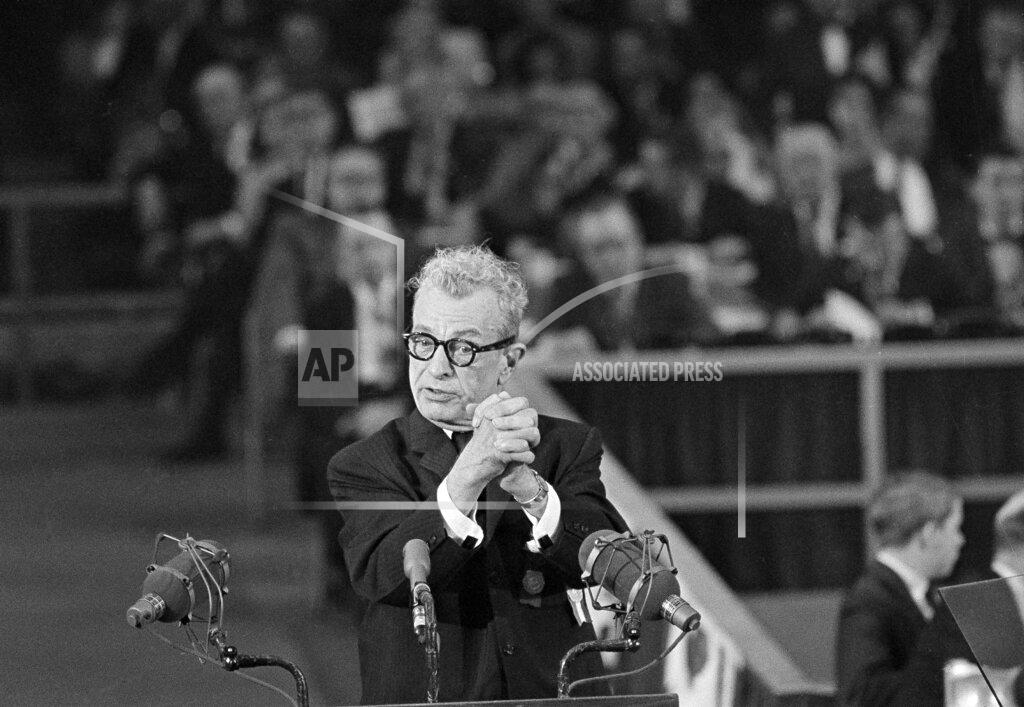
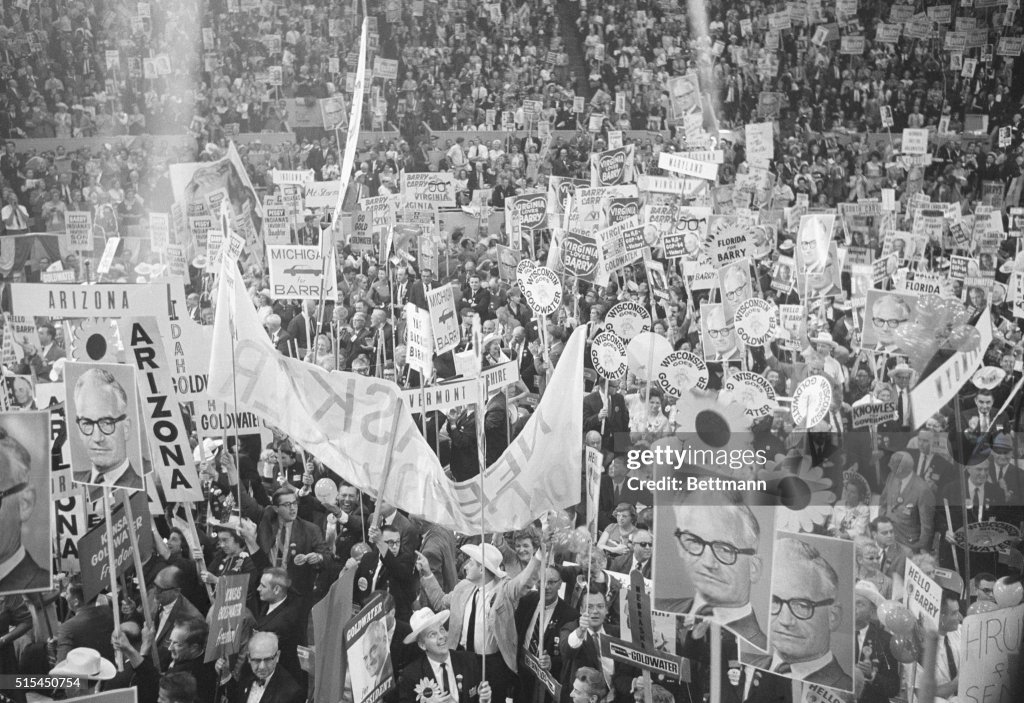
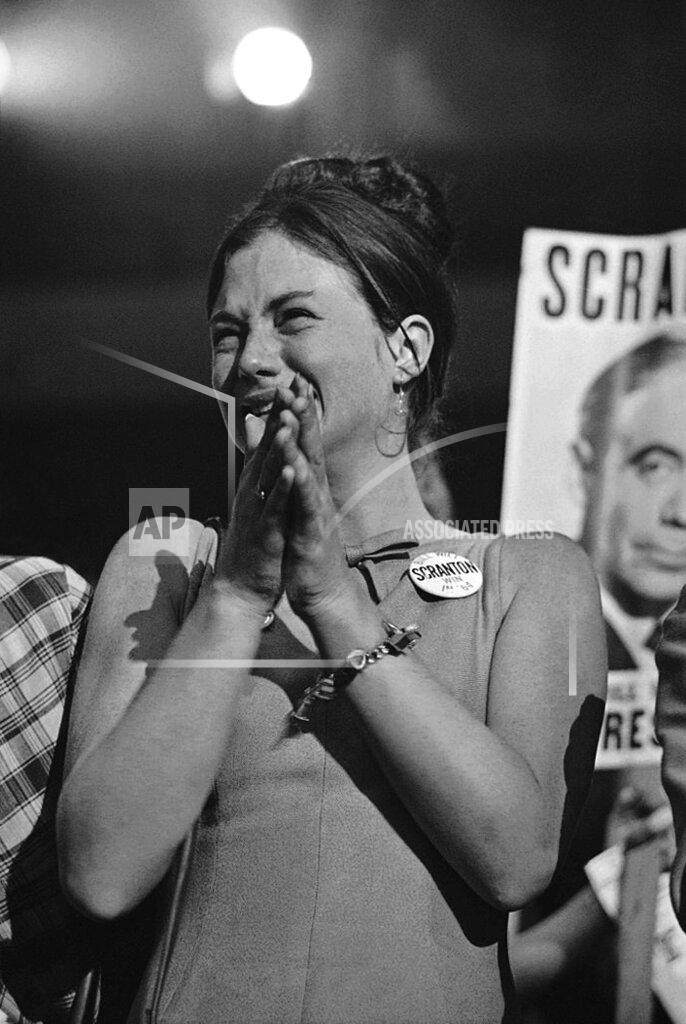
U.S. Senator Barry Goldwater of Arizona received 883 delegate votes on the first ballot of the Republican National Convention in San Francisco to become the Republican Party’s nominee for President of the United States. Goldwater’s chief challenger, Governor William Scranton of Pennsylvania, received 214 votes, and other candidates combined got 211. Other candidates getting votes were Nelson Rockefeller (114); George Romney (41); Margaret Chase Smith (27); Walter Judd (22); Hiram Fong (5); and Henry Cabot Lodge, Jr. (2). Senator Barry Goldwater (Arizona) is nominated by the Republican Party to run for president. Although he has gone to great trouble to explain that he never meant to advocate using atomic weapons in tactical or strategic situations, he has definitely called for a more aggressive approach by the United States, and in the ensuing campaign he will be portrayed by the Democrats as a trigger-happy warmonger.
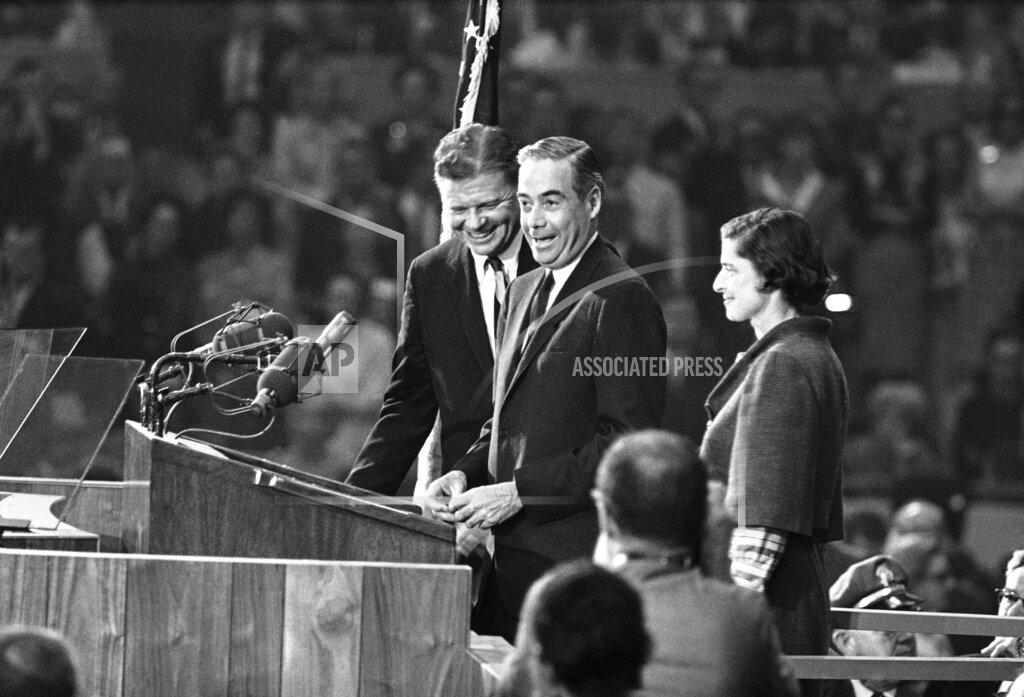
Senator Goldwater did not appear at the convention, which adjourned at 11:11 PM Pacific daylight time (2:11 AM, Thursday, New York time). He will accept the nomination tomorrow, after his choice for Vice President, Representative William E. Miller of New York, is duly nominated. There was never any contest from the moment Senator Everett McKinley Dirksen concluded his nominating speech for Senator Goldwater and set off a wild demonstration that thundered through the Cow Palace for 29 minutes. Governor Scranton, who entered the race only a few weeks ago, nevertheless refused to withdraw before the ballot was taken. He was on the Cow Palace grounds with his wife, waiting in a trailer for the results. As soon as the ballot was completed, however, Governor Scranton came striding briskly down the long wooden ramp to the platform, his wife just behind him, with his campaign assistant, Walter Alessandroni, following.
Senator Barry Goldwater today selected Representative William E. Miller of upstate New York as his Vice‐Presidential running mate. Mr. Goldwater was reported to have asked Mr. Miller to run with him in a phone call about noon, many hours before the Arizonan was formally chosen as the Republican standard‐bearer. Reliable sources made known Mr. Goldwater’s choice. Asked after his nomination whether he had phoned Mr. Miller to offer him the No. 2 position on the Republican ticket, the Senator said “No.” But he added that he was “favorably inclined” toward the New Yorker. “I didn’t think it would be fair to ask him, if that was my intention, until he was through with his official duties at the convention,” Mr. Goldwater said. Mr. Miller is the Republican national chairman. Mr. Miller, interviewed later, said he would be “delighted” to run with the Senator. Before he made his choice, Mr. Goldwater also had been considering Michigan Representative Gerald R. Ford.
Former President Dwight D. Eisenhower condemned today the tactics of Goldwater delegates to the Republican National Convention in rejecting efforts to strengthen a platform declaration on civil rights and to add one on “extremism.” His comment concerned two proposals by Governor George Romney of Michigan. These, as well as others, were overwhelmingly defeated by the convention in a dramatic demonstration of the support that a majority of the delegates were giving Senator Barry Goldwater. In a television appearance as a political consultant for the American Broadcasting Company, General Eisenhower said that he was “unhappy” about the defeat of the proposals, but even more about the way in which this was accomplished.
His earlier disappointment apparently forgotten, General Eisenhower issued a statement from the St. Francis Hotel congratulating Senator Goldwater on his first‐ballot victory. In his brief statement the former President applauded Governor William W. Scranton for moving so promptly to unite all Republicans for the coming campaign with his plea to the convention that the Goldwater nomination be made unanimous.
Senator Barry Goldwater accused President Johnson today of being “the biggest faker in the United States” and the “phoniest individual who ever came around.” The Arizona Republican made his extemporaneous remarks on his way to a service elevator in a back hall of the Mark Hopkins Hotel after addressing a “captive nations” rally. A reporter asked him if the Republican National Convention’s refusal to strengthen its civil rights plank would not give the Democrats a good issue in November.
The Senator’s head snapped around. With an edge of scorn in his voice, he said: “After Lyndon Johnson — the biggest faker in the United States? He opposed civil rights until this year. Let them make an issue of it. I’ll recite the thousands of words he has spoken down the years against abolishing the poll tax and F.E.P.C. [Fair Employment Practices Commission]. He’s the phoniest individual who ever came around.”
Later in the day, after his nomination, Senator Goldwater told a news conference that he intended to wage a “vigorous campaign” but assumed that it would not be a campaign of personal attack. He added that he expected President Johnson also to wage a vigorous campaign. The Senator said he hoped the campaign would give the American people “time to think, and I hope that I’m the better salesman.” Senator Goldwater said that the differences within the Republican party were “rather minor” and that, “with some exceptions, we could almost overlook them.” “I can’t find words to express the feeling that is in my heart,“ Mr. Goldwater said. “No greater honor can come to any Republican.”
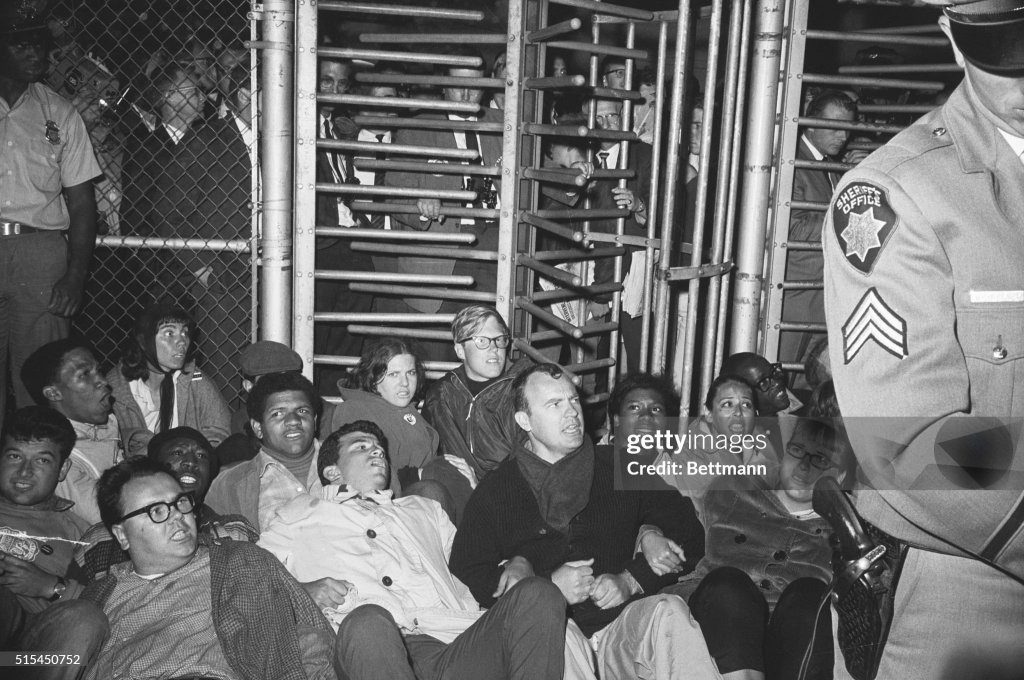
About 20 civil rights demonstrators disrupted the Republican National Convention tonight, but the demonstration was broken up almost immediately. It appeared that members of the Committee on Racial Equality were responsible. A sign was partly unfurled that read “CORE” just before a squad of policemen shoved through the crowd beneath the podium in the Cow Palace to break up a circle of demonstrators who had locked arms. About a half‐dozen demonstrators were ejected from the building. One man fell limp to the floor, where he sprawled for several seconds at the feet of former Senator William F. Knowland of California, one of Senator Barry Goldwater’s chief supporters. One man who went limp when the police grabbed him was carried out of the hall. Others fell to the floor but then got up and walked out.
Senator Richard B. Russell, who led the Southern fight against the Civil Rights Act, called on Georgians today to avoid all violence and to live with the new law “for as long as it is there.” “Violence and law violation will only compound our difficulties and increase our troubles,” Senator Russell said in a speech at the annual meeting of the Coosa Valley Area Planning and Development Commission. “It is the understatement of the year to say that I do not like this statute,” the Senator said. “However, it is now on the books.” Senator Russell said the constitutionality of some provisions would be tested, but while the law was being adjudicated, “all good citizens will learn to live with the statute and abide by its final adjudication even though we reserve the right to advocate by legal means its repeal or modification.”
The Senator led the Southern delegation, which filibustered at length against the civil rights bill before finally being choked off by a closure vote in the Senate. “We put everything we had into the fight,” he said, “but the odds against us mounted from day to day until we were finally gagged and overwhelmed.” The Senator noted that he had been critical of “the growing disrespect for law and order generated by the campaign of civil disobedience by extremist groups. It is a form of anarchy to say that a person need not comply with a particular statute with which he disagrees,” he said. “Ours is a government of lows, not of men, and our system cannot tolerate the philosophy that obedience to laws rests upon the personal likes or dislikes of any individual citizen, whether he supports or opposes the statute in question.”
The Senator said he was sure that the vast majority of people in Georgia were shocked and outraged “by the brutal and sense less murder of a Black Reserve officer upon our public highways a few days ago.” He referred to the death of Lemuel Penn, the Washington, D.C., educator who was shot by a night‐riding assassin last Saturday near Colbert. Georgia. “I am convinced that this cowardly act was generated by a demented mind.” Senator Russell said, “and I trust that the guilty party will soon be apprehended so that we may demonstrate to the world that assassins, even if demented, will not be tolerated in Georgia.”
New arrests of civil rights workers, the closing of a desegregated Jackson park and criticism of the police marked Mississippi’s continuing racial controversy today. Spokesmen for the Council of Federated Organizations said authorities in four communities had arrested 34 participants in the civil rights drive in the last 24 hours. The police in Drew, a Delta town, arrested 23 persons tonight at a voter registration rally, including eight white student volunteers. They were charged with obstructing the streets and sidewalks and held in the Sunflower County Jail at Indianola in lieu of $100 bond each. Those arrested were among some 200 persons attending the rally outside the Holly Grove Baptist Church, according to a C.O.F.O. spokesman.
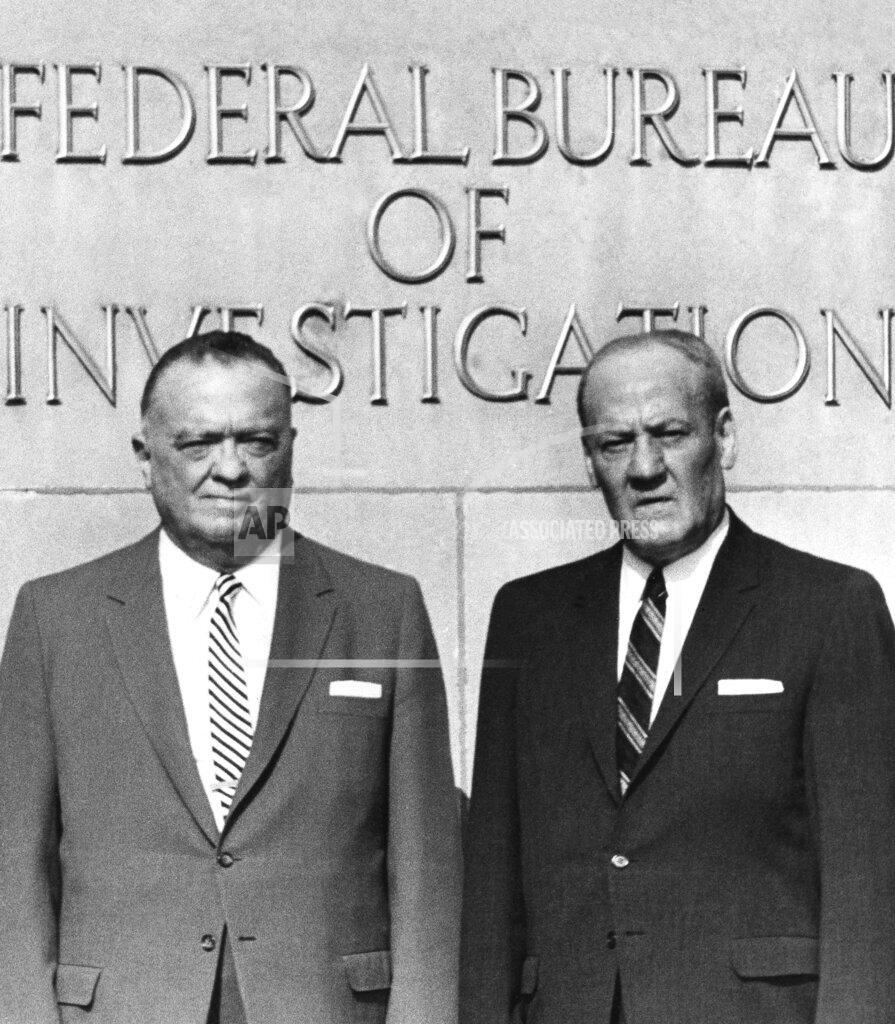
It marked the second such incident in as many days in that community. The Drew police arrested three white youths, three Black youths and a white girl last night at a voter registration rally at the church. Some were charged with distributing literature without a permit and others with obstructing the sidewalk. P. J. Townsend Jr., Drew city attorney, said a “whole gang” of workers arrived at Drew yesterday afternoon from nearby Ruleville and that the resulting tension had forced the town to call out its auxiliary police force. “We didn’t want anything to happen to them here,” he said. He continued that two of those arrested had used abusive language toward police officers. Thirteen agents of the Federal Bureau of Investigation are inquiring into the incident, according to Mr. Townsend.
The seven workers spent the night in jail and were released after having posted bonds ranging from $100 to $200 each. Hearings on the cases were postponed for a week at the request of their three out of state lawyers after officials said that only members of the Mississippi bar would be allowed to appear for them in court. The civil rights workers are Gretchen Schwarz of Sunnyvale, California, James Dann of Venice, California, Charles Scattergood of Arlington, Virginia, Landy McNair of Jackson, Michael Yarrow of Philadelphia, Fred Miller of Mobile, Alabama, and John Harris of Birmingham, New York.
A small city park in a white and Black neighborhood in Jackson was closed on orders from Mayor Allen C. Thompson and the City Commissioners. White residents of the area had presented the petition bearing 590 names to them requesting the action on the ground that unruly and profane groups of Black youths had taken over the park since its desegregation and had made it unsafe for anyone to use. Mayor Thompson said the community house at the park would be discontinued, that playground equipment would be removed, and that the property would be sold to private individuals.
Charles Evers, state field secretary of the National Association for the Advancement of Colored People, said he had visited the park after its desegregation and contended that there had been no major incidents there. Mr. Evers argued that the complaints amounted to little compared to the unsolved slayings of 14 Blacks that he said had taken place in the state since his brother Medgar was killed by a sniper outside his home here June 12, 1963. “Most of these murders were committed by local police officers,” he asserted. “No one has been arrested. No one has been questioned too much, I don’t think. And the FBI hasn’t been able to get enough evidence to put anyone in jail. You really begin to wonder. ‘What good are they? What are they doing here?’”
Dr. Sam Sheppard who had been serving a life sentence in prison after being convicted in 1954 of the murder of his wife, was ordered released after ten years with the posting of $10,000 bail. U.S. District Judge Carl Weinman of Dayton, Ohio held that Sheppard’s trial for murder had been a “mockery of justice” and that the doctor had been denied his constitutional right to a fair proceeding. Judge Weinman directed that Ohio authorities had 60 days to determine whether to try Dr. Sheppard again.
Whitey Ford’s 2–0 win over the Baltimore Orioles raises the New York Yankees into first place in the American League. Whitey Ford’s three‐hit pitching, a two‐run single by Joe Pepitone in the second inning, some dazzling fielding by Tony Kubek and Clete Boyer and an important stolen base by Mickey Mantle were the main elements in the victory.
Dean Chance, backed by Bob Perry’s eighth‐inning homer, pitched his second straight shutout and struck out 12 tonight as the Los Angeles Angels completed a doubleheader sweep by defeating the Detroit Tigers, 1–0. The Angels won the opener, 5–4, scoring the deciding run on Felix Torres’ 430‐foot homer. Lou Clinton also slammed a homer for Los Angeles and Don Demeter hit one for Detroit.
In the first of two with the Cleveland Indians, Kansas City’s Wes Stock wins his 12th straight game, all in relief, winning 5–3. He has not lost since July, 1962. The A’s take the nightcap 3–2, as home runs by Bill Bryan and Rocky Colavito carried the A’s to victory.
The Minnesota Twin’s Mudcat Grant tosses a 6–0 shutout against the Washington Senators, despite allowing 13 hits. Jimmy Hall blasted his 16th, Rich Rollins hit his ninth, and Jim Snyder got his first major league homer to lift Minnesota’s team total to 138 circuit clouts. The Senators collected eight hits in the first four innings and left seven runners on base. The record for most hits allowed in a 9–inning shutout is 14, done twice before.
Jerry Lynch’s home run with two men on in the fourth inning and the clutch pitching of Bob Friend gave the Pittsburgh Pirates a 3–0 victory over the Philadelphia Phillies tonight. It was the Phillies’ sixth loss in seven games. Lynch, a left‐handed batter, hit his homer over the left‐field fence about 440 feet away. It was one of only four hits given in the seven innings worked by Jim Bunning, who suffered his fourth loss against nine victories. It came after Manny Mota had singled and Bob Clemente had reached second base on errors.
Hank Aaron’s run‐scoring single and Lee Maye’s two‐run double in the seventh inning helped the Milwaukee Braves to score a 6–2 victory over the San Francisco Giants tonight. Despite the defeat, the Giants maintained their one‐game lead in the National League as Philadelphia dropped a 3–0 decision to Pittsburgh.
Dow Jones Industrial Average: 844.80 (+1.17).
Born:
Leonard Stabb, American actor (“One Life to Live”, “Guiding Light”), in Woodside, Illinois.
Shari Headley, American actress (“All My Children”, “Coming to America”), in Queens, New York, New York.
Steve Cummings, MLB pitcher (Toronto Blue Jays), in Houston, Texas.
Steve Bartalo, NFL running back (Tampa Bay Buccaneers), in Limestone, Maine.

 History Diaries