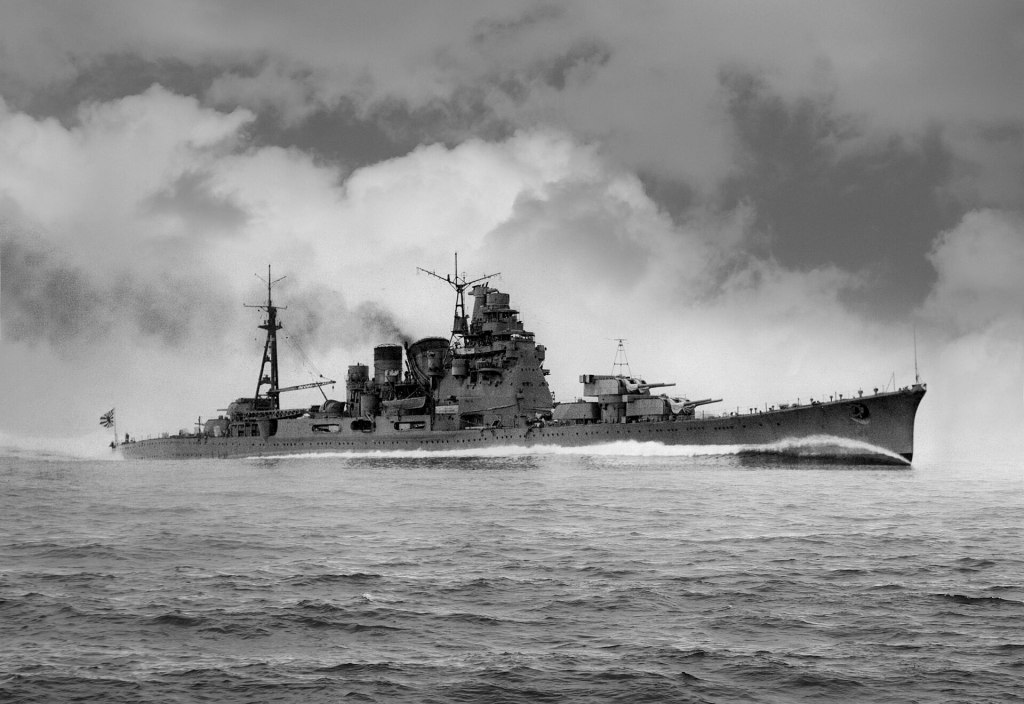
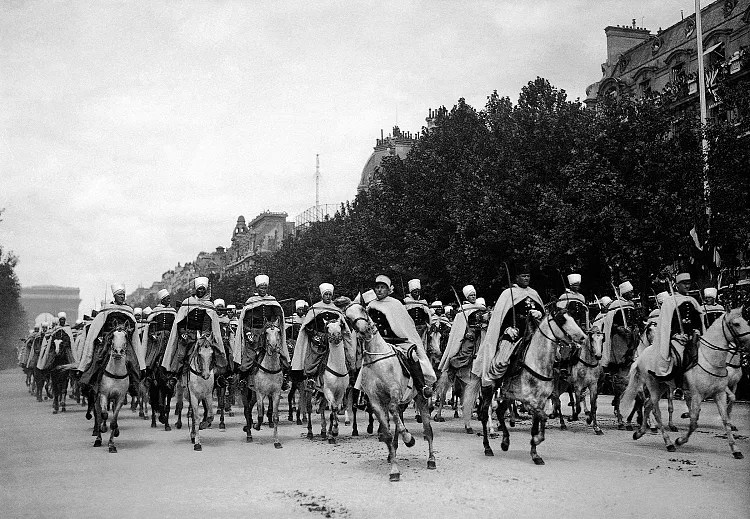
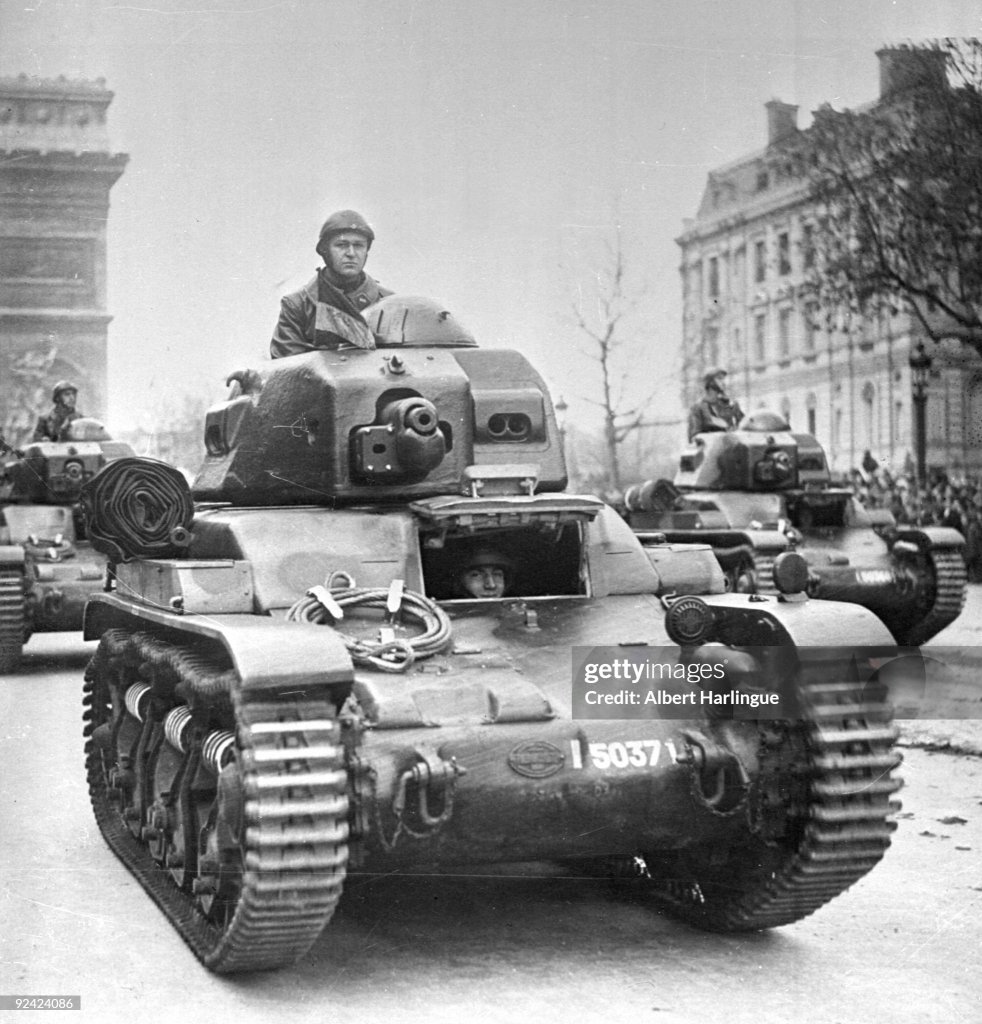
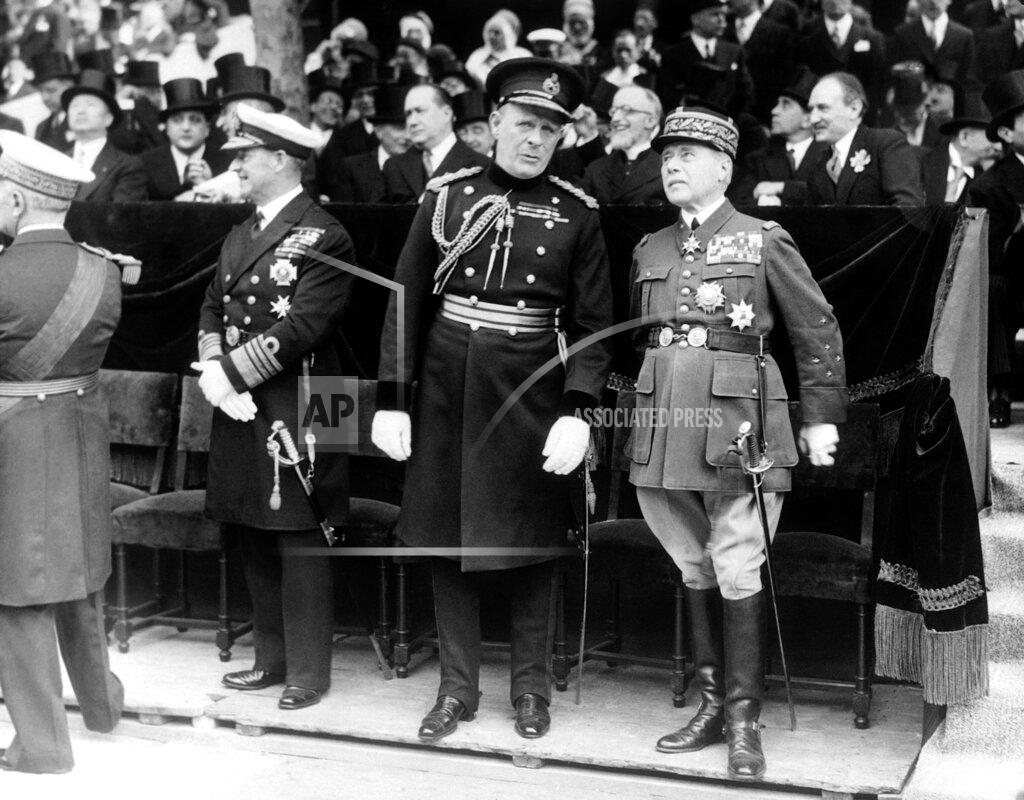
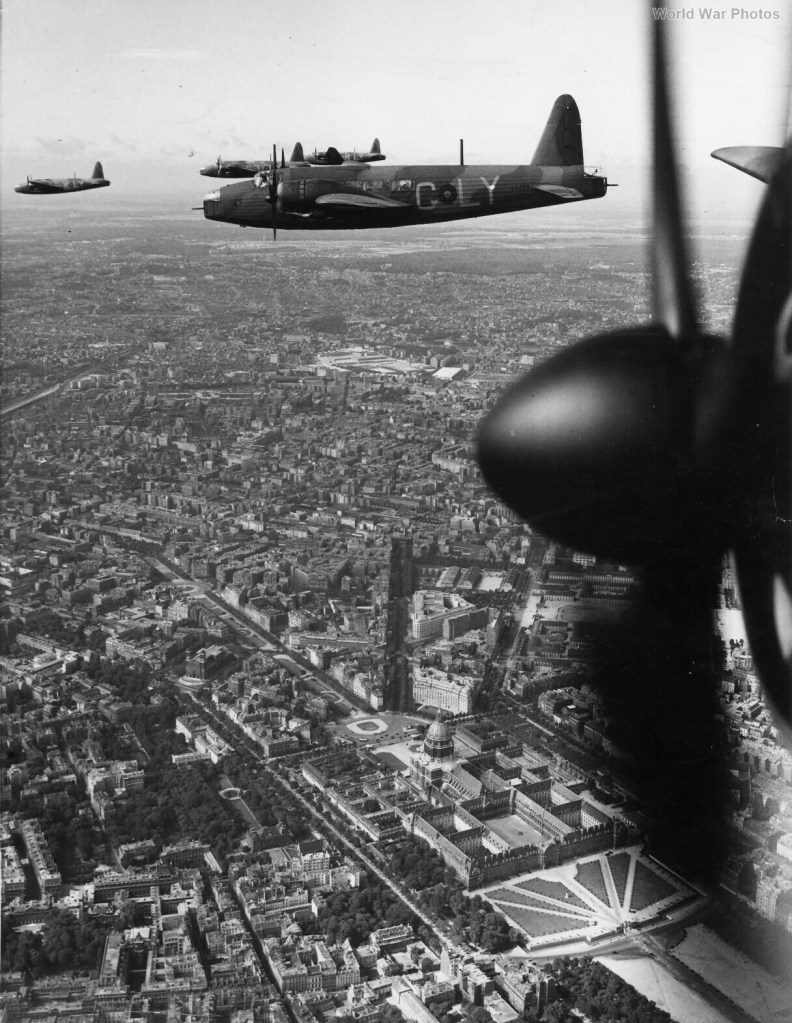
Hundreds of British troops joined the French in Bastille Day parades marking the 150th anniversary of the Storming of the Bastille. It was the first time that Britain and France held military demonstrations together since the World War. All those qualities of heart, mind and body that mark a strong, vital nation sure of itself and of its cause entered into today’s immense celebration. in Paris of the 150th anniversary of the capture of the Bastille and the beginning of the French Revolution. There was an almost terrifying display of military power. Thirty thousand men, selected from all arms and by proven experience among the finest fighters in the world, marched down the Champs Élysées past President Albert Lebrun with a great rumbling of guns, tanks, machine guns and all the complicated machinery of modern war. Four hundred airplanes whirred overhead like flights of geese.
President Lebrun read a radio broadcast message to all Frenchmen in France and in her far-flung possessions, and somberly but with a note of confidence Premier Edouard Daladier told the story of the two first July celebrations and drew a moral for the present. “A free nation is always a pacific nation,” was one of his maxims. “And today,” he added, “we threaten no one. We have no dreams of conquest. We desire peace between all nations and we are going to go on seeking to maintain it, for only so can we assure the safety of civilization. Yet any threat or any effort at domination will find us resolute to defend our frontiers and join our effort to those of all peoples who are resolved to defend their independence.”
Among the 30,000 marchers today. were Foreign Legionaries, Moroccan Goumiers, spahis and Black riflemen from Africa, fierce little men from Asia, and French colonials from wherever the Tricolor has been planted and taken root. There were friendship and alliance, for although July 14 is no British festival there were British sailors and British guardsmen in this procession, and among those planes that went roaring over the straight mile that leads from Napoleon’s Arc de Triomphe to the Place de la Concorde were fifty British bombers, eagerly watched by Leslie Hore-Belisha, the British Secretary for War, and by British admirals and generals. There was an approving and confident attachment to the government of the republic in the cheers with which President Lebrun and Premier Daladier were greeted.
Premier Edouard Daladier’s counter-espionage drive, which already has led to the arrest of two employees of two of the most conservative and important newspapers of Paris, L. Aubin of the Temps and J. Poirier of the Figaro, appeared today to be aimed at a complete cleanup of pro-Nazis in Paris.
Reports about Trieste being leased to Germany for ten years were officially characterized in both Rome and Berlin today as “absolutely false.” All efforts by the reporters outside official circles merely serves to confirm the denial given.
Danzig’s return to the Reich “now, as before, is the only solution acceptable to Germany,” quarters close to the German Government said tonight after the Free City’s Nazi leader, Albert Förster, had spent last night and most of today. with Chancellor Adolf Hitler at Berchtesgaden. A determination to forge ahead, it was indicated, was the result of the talks between Herr Hitler and the man who carries out his instructions in Danzig. There were no signs, however, as to when or how a move would be made to bring the Danzig Germans into the Reich.
Officials tried to keep secret the visit of Herr Förster to Berghof, Herr Hitler’s home above Berchtesgaden. At first, they would not admit that he had seen the Chancellor. Later they said Herr Förster had come to Munich with other Nazi district leaders to attend the annual festival of German art. Informed quarters said Herr Hitler had not changed his mind on Danzig, which he declared on April 28 must return to the Reich. This was a reply in part to a question as to what Herr Hitler has been thinking during the recent period of comparative German official silence. This has coincided with much discussion in Warsaw, London and Paris of the dangers of a Nazi coup in Danzig which the Nazi press has branded “provocative.”
Herr Hitler has been at his mountaintop home and other leaders have been on vacation, giving the impression that Nazi Germany was certain it would attain its objective in time. The Chancellor, who tonight was host to guests attending the German art celebration after motoring from Berchtesgaden with Herr Förster, is to speak Sunday at the formal opening of the art exhibit. But informed quarters said the major part of his address would be confined to artistic subjects.
He is expected to remain silent on Poland until he makes a speech at Tannenberg in East Prussia near the Polish border, August 27, where twenty-five years ago Field Marshal Paul von Hindenburg won one of Germany’s greatest World War victories over the Russians. After that Herr Hitler’s next speeches will probably be those at the Nazi party congress which opens September 2 at Nürnberg.
Marshal Edward Smigly-Rydz will reply to Chancellor Adolf Hitler on August 6. The announcement was made today in the official newspaper. The reply will be made during the jubilee congress of the Polish Legion in Kraków, the ancient capital. Marshal Smigly-Rydz was the first to give a firm reply to the German aggressive demands a few years ago when the Danzig question came up. He declared then, “We Poles will give up nothing, not even a single button.” Military circles believe he will take a determined stand and define Poland’s relations with Germany as well as Poland’s foreign policy generally. An official spokesman said there were no negotiations in progress between Warsaw and Berlin. This referred to rumors that Poland and Germany were negotiating secretly for a Danzig settlement. The Danzig situation was described in Warsaw tonight as still “very unsatisfactory.”
Describing the probable attitude of Spain in the event of a European war, Generalissimo Francisco Franco told the Portuguese newspaper Diario de Noticias that his country “is neither Italian nor German.” He said Spain would endeavor to remain neutral in any war if her territory, honor and vital interests were not affected. Declaring, however, that Spain was ready for war if it came, the Generalissimo added: “Spain wishes to collaborate for peace, but it is not enough to wish for peace. Belgium did not want war in 1914, and Spain does not want war now, but she does not fear it.”
Referring to the Danzig issue, General Franco said: “Danzig is not worth a general conflagration, as Poland will always lose, either with her allies’ victory, owing to future Russian claims against her, or with an Axis victory, when she will be annihilated.”
The visit of Count Galeazzo Ciano, the Italian Foreign Minister, he asserted, was “simply to return the Spanish Interior Minister’s visit to Rome.” “If from an international aspect this visit has not much importance,” he added, “from the Spanish aspect it means reaffirmation of Spanish-Italian friendship.” General Franco says he is preparing new commercial and fishing agreements to be submitted to the Portuguese and Japanese Governments.
Hungary lifts its press ban. The suspended Nazi party organ reappears with new editors.
The Royal Romanian Air Force begins operating German-built He-112 fighters.
The British decision to meet illegal Jewish immigration to Palestine by stopping all legal immigration for six months starting Oct. 1 was welcomed with faint praise by the Arabs today.
President Roosevelt asked for repeal of the arms embargo, so that the U.S. could help such countries as Britain. On 18 July the president will formally ask Congress to revise the Neutrality Law. President Roosevelt sent to Congress today a special message asking for immediate amendment of the Neutrality Act to eliminate its compulsory arms embargo. This action was necessary, the Chief Executive declared, so that the United States might be on record on the side of preserving world peace, and so that the country would be in the best position to avoid involvement if a general war should break out despite preventive efforts.
Thus for the first time, Mr. Roosevelt formally asked for specific changes in the neutrality law, although he has several times previously stated that he thought the statute was not satisfactory. The message took the form of a brief Presidential introduction endorsing and calling to the attention of Congress a detailed statement on the subject by Secretary Hull.
The net effect seemed to be that the President has transferred the issue of revision from Congress to the country. The message was received in the Senate and in the House largely on that basis, and it was believed that Mr. Roosevelt would have much to say about the neutrality situation on his trip around the country, which he has tentatively scheduled to start four days after the adjournment of Congress.
The message pointed to the critical situation likely to prevail in Europe for the next several months, and divided, without naming them, the countries of the world into two categories: those bent on forceful change and those desiring to preserve peace. Secretary Hull found that proponents and opponents of revision are agreed on four cardinal principles of American foreign policy. These he listed as the conviction that the United States must consider first its own peace and security; that the American Government must avoid being drawn into wars between other nations; that this country must steer clear of entangling alliances or involvements, and that this country must maintain strict neutrality to avoid being drawn into war.
The Administration, he said, believes that an arms embargo is a dangerous departure from the practices of international law, while the opponents of change believe the trade in armaments inevitably tends toward involvement and is “immoral.” After more than four years’ experience with the various forms of “neutrality” legislation which have been in effect, Mr. Hull reached the conclusion that “the present embargo encourages a general state of war both in Europe and Asia.” Sees
The result, the Secretary stated, “is directly prejudicial to the highest interests and to the peace and to the security of the United States,” since this country can be at its best only in a peaceful world. The aggressors are “more tempted to try the fortunes of war” if they know their less-prepared opponents “would be shut off from those supplies which, under every rule of international law, they should be able to buy in all neutral countries, including the United States.”
The Senate Foreign Relations Committee decided today to ask Secretary Hull for his opinion on whether an embargo on exports of materials of war to Japan would violate the treaty of amity and commerce, signed by the two nations in 1911. The committee deferred further consideration of pending proposals until Mr. Hull’s reply was received. Like most of the general treaties which the United States signed prior to the World War, the agreement with Japan incorporates the “most-favored-nation” clause. Thus some Senators believe that if an embargo was leveled directly at Japan, the Japanese Government might demand, under the treaty, that they be applied to all nations or lifted from Japan.
The House refused to approve an optional retirement system today for members of Congress, a measure patterned after the Civil Service employes plan. The decision came after a debate in which shouts of “demagoguery” rang through the chamber.
President Roosevelt said that there could not be strikes against the government and that the present WPA strike was such action. Strikes on WPA or any other type of Federal work were forbidden yesterday by President Roosevelt, but striking WPA employees in New York City and other centers announced their intention of staying away from their jobs until Congress restored union wage scales on Federal relief projects.
“You cannot strike against the government,” the President declared at a White House press conference. He emphasized his words by authorizing reporters to quote them directly. A few hours later Thomas A. Murray, president of the Building and Construction Trades Council, representing 125 American Federation of Labor unions in this city, issued a statement in which he said: “You cannot force any American working man to work at his job if, for any reason, he decides that he is unwilling to do so. If the day should ever come when a man who abstains from his job because he is dissatisfied with the terms of employment can be coerced into resuming his job against his will, then our cherished democracy will be dead.”
A plan for settling the WPA wage dispute and resuming normal project operations was taken under consideration by the President after conferences with a committee of AFL executives and later with Mayor La Guardia and other members of the United States Conference of Mayors. The compromise proposal would permit re-establishment of old hourly wage scales on projects begun before the new law went into effect on July 1. The requirement that all WPA employees work 130 hours a month for their security pay would be retained on projects begun after July 1, according to the plan.
It was reported that Mr. Roosevelt would ask Attorney General Frank Murphy to rule on the legality of the proposal. When the idea was laid before Colonel F. C. Harrington, National Work Projects Commissioner, by Mayor La Guardia and his associates before they saw the President, he said he did not believe it could be carried out.
New outbreaks of violence in Minneapolis led to the death by gunfire of one man in a clash between WPA pickets and the police. Earlier in the day the police used tear gas and riot guns in dispersing a crowd of 4,000 strikers and sympathizers. Six persons, including three policemen, were taken to hospitals after the melee. Following the riots, the WPA ordered all projects in the city shut down effective Monday.
In Pennsylvania, where WPA workers were called out for the first time, AFL leaders seemed at odds. In Philadelphia they waited hopefully, but vainly, for a request from President William Green to rescind the strike call, while Pittsburgh leaders denounced the Roosevelt warning and prepared for a walkout to last until the law was changed.
Mounting dismissals throughout the nation indicated the determination of WPA officials to enforce the law. In New York City 646 strikers were dismissed yesterday, bringing the total of those discharged here to 8,543.
Peace negotiations in Harlan County’s soft coal field strife will be resumed tomorrow on neutral territory at Knoxville, Tennessee.
The grand jury which has been investigating charges of graft at Louisiana State University since the resignation as president of Dr. James Monroe Smith and his flight to Canada, brought in twenty-eight true bills just before 6 o’clock this afternoon. Twenty-three of them were against Dr. Smith and two named one of the close friends of the late Senator Huey P. Long, Dr. Clarence Lorio, State Senator, president of the Louisiana Medical Society, head physician at Louisiana State University and political boss of East Baton Rouge Parish. Dr. Smith already is in jail under $50,000 bond on an earlier indictment charging him with the embezzlement of $100,000, which he is accused of borrowing from a local bank with a bogus authorization from the board of supervisors.
The Federal Communications Commission today suspended its rule requiring that international broadcasts “reflect the culture of this country” and “promote international goodwill, understanding and cooperation.”
Rear Admiral Richard E. Byrd, disclosing plans for his coming expedition in the Antarctic, said today that six army tanks and a unique 45,000-pound snow cruiser would be used for transport over the South Pole’s icy wastelands.
Impatient salvagers were blocked by heavy seas today from accomplishing anything but the slightest examination of the task which confronts them in their renewed attempt to lift the submarine USS Squalus from the ocean bottom.
The American Federation of Actors, of which Sophie Tucker is president, lost its American Federation of Labor charter last night after being found guilty by its parent body, the Associated Actors and Artistes of America, of misusing relief funds and mismanaging its affairs. A new union, the American Guild of Variety Artists, with Eddie Cantor as temporary president, was immediately chartered by the parent body to organize actors in the federation’s former jurisdiction of vaudeville houses, night clubs, circuses and carnivals. Miss Tucker, whose union refused to enter any defense to the parent body’s charges on the ground it did not have the power to hold a trial, described the parent body’s action as “very funny” and said that the federation would seek relief in the courts on Monday. In the meantime, she said, the federation would continue its affairs as usual.
The New York Yankees tie the American League record with only one assist, as Red Ruffing wins 8–3 over the Detroit Tigers.
After two were out in the ninth today, the Washington Senators scored six runs and defeated the St. Louis Browns, 11–9.
A six-run burst in the opening inning against three St. Louis Cardinal pitchers was expanded to a 10–4 victory today by the Boston Bees, despite Johnny Mize’s eighteenth homer of the season.
The Brooklyn Dodgers thrash the Pittsburgh Pirates, 14–4, banging out 17 hits. Leo Durocher has three of them, including a double.
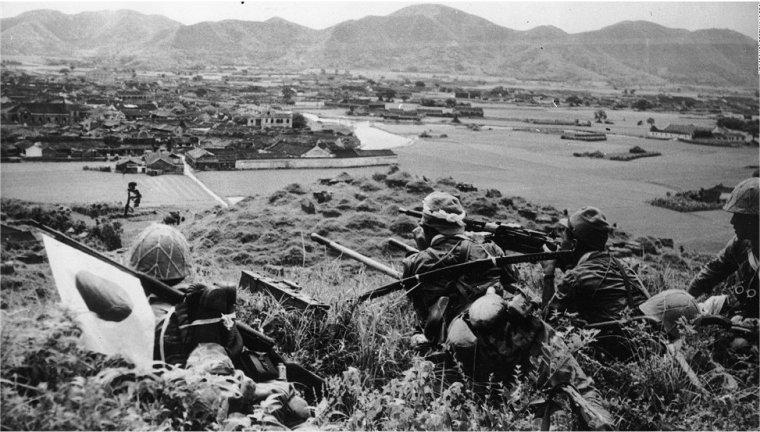
The leading morning newspapers carry the following joint manifesto to Britain: “We are firmly determined to overcome all obstacles to the success of our holy war. We earnestly hope that in the negotiations now opening Britain will rectify her conception of East Asia, look squarely at the new situation there. and cooperate with Japan in the construction of a new order with open, unbiased mind, thereby contributing to the peace of the world.” The manifesto was signed by Hochi, Nichi Nichi, Asahi, Chugaishagyo, Osaka Mainichi, Araka Asahi, Yomiuri, Kokumin, Miyako and Domei, the news agency.
Five thousand Tokyo citizens staged in front of the British Embassy the worst display of anti-foreign feeling ever witnessed in modern Japan. The broad roadway between the Imperial Palace and the moat of the British Embassy was choked with a milling, sweating crowd, shouting, singing, and waving banners. The crowd was not violent and was content. to make raucous noises.
The procession then marched to the military shrine, where the leaders ostentatiously worshiped the souls of the dead soldiers enshrined there. A characteristic climax, which betrayed a certain lack of spontaneity, came two hours later, when the leaders returned to the British Embassy in municipal trucks. They were accompanied by a battery of cameramen and their purpose was to be filmed at the embassy gate beneath forests of anti-British slogans they had brought. Police resistance when they tried to place banners on the embassy gate led to scrimmages. Stones were thrown and attempts were made by heavily bearded men — this style is affected by members of the Black Dragon Society — to charge the gates. Finally, the marchers left, leaving a wreath inscribed, “Britain Is Dead.”
Not even during the agitation that followed the passing of the United States immigration law has Tokyo witnessed such a display of feeling against any foreign nation. Its organizers were a group of local politicians of the Tammany type, some of whom are notoriously pro-German. En route to the British Embassy the procession stopped and cheered the German Embassy. Many of those present were prominent supporters of the Berlin-Rome Axis. The Japanese press gives the number present at 30,000 to 60,000.
Dow Jones Industrial Average: 137.57 (-0.45).
Born:
Ljubisa Beara, Bosnian Serb general convicted of overseeing the Srebrenica Massacre of Muslims, in Sarajevo, Bosnia, Yugoslavia (d. 2017, in prison).
Peter Duryea, American actor (“Star Trek” episode “The Cage” / “The Menagerie”), in Los Angeles, California.
Sid Haig [Sidney Mosesian], American actor (“House of 1000 Corpses”, “Jason of Star Command”), in Fresno, California.
Karel Gott, Schlager singer, in Plzeň, Protectorate of Bohemia and Moravia (d. 2019).
George Edgar Slusser, scholar, professor and writer, in San Francisco, California (d. 2014).
Died:
Alphonse Mucha, 78, Czech artist.
Kate Ker-Lane, 78, English fashion designer and retailer.
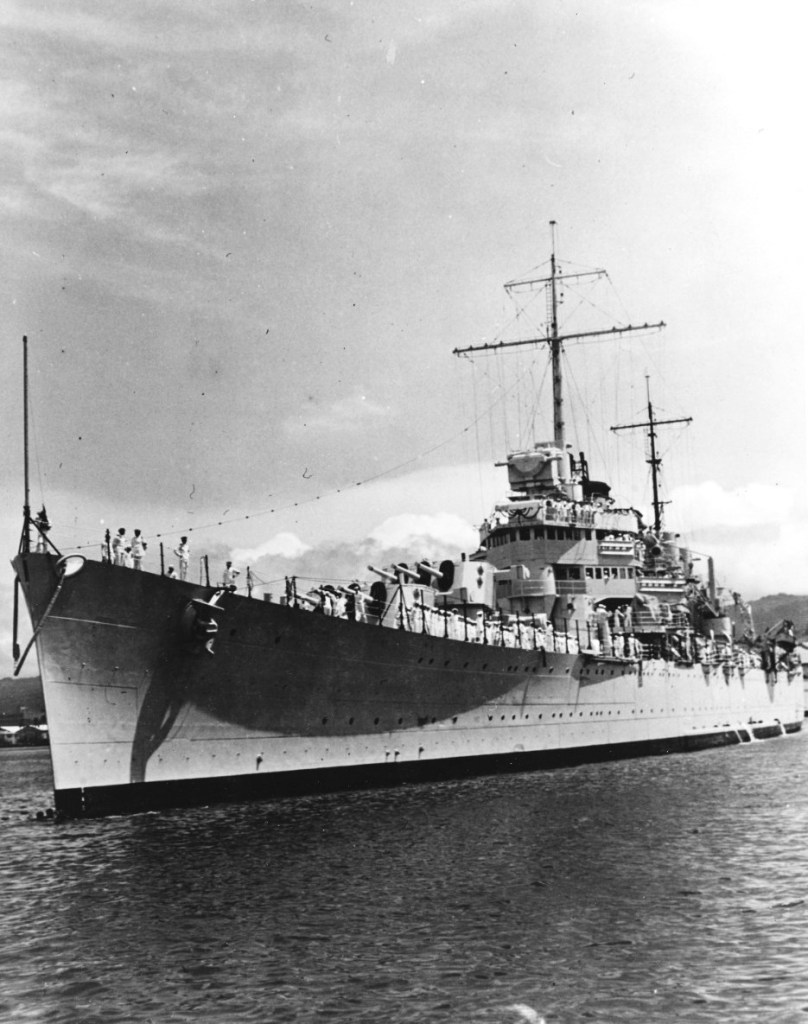
The U.S. Navy Brooklyn-class light cruiser USS Honolulu (CL-48) on her first Pacific deployment, 14 July 1939, Honolulu, Territory of Hawaii. (U.S. Navy via WW2DB)
 History Diaries