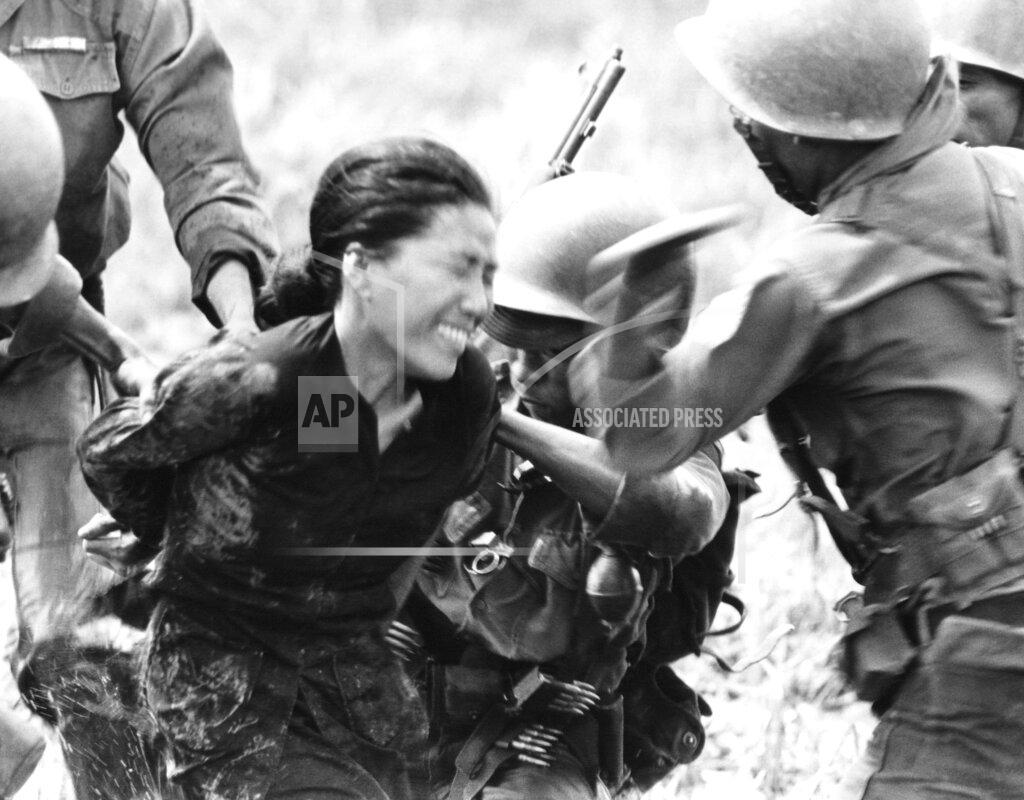
U.S. military intelligence publicly charges that North Vietnamese regular army officers command and fight in so-called Việt Cộng forces in the northern provinces, where Việt Cộng strength has doubled in the past six months. Only the day before. General Khánh had referred to the ‘invasion’ by North Vietnamese Army (NVA) forces. Việt Cộng strength in those hitherto relatively peaceful provinces has nearly doubled in the last six months, a senior American military spokesman said today, and about 20 per cent of the increase is accounted for by infiltrators from the north.
Intelligence experts have confirmed the arrival of 180 members of the North Vietnamese Army in small groups since the beginning of this year and they suspect that at least twice as many have come in without certain detection. Việt Cộng incidents — attacks, terrorism and sabotage — have doubled or tripled within the last 10 days in the two northernmost provinces of South Vietnam, Quảng Trị and Thừa Thiên. These lie just below the 17th parallel frontier with North Vietnam. Diplomatic sources have as yet no inclination to treat this influx as comparable to the introduction of Chinese “volunteers” into the fighting in Korea in the fall of 1950. But they are watching the situation closely.
The official Vietnam press agency reported Sunday that Premier Nguyễn Khánh had referred in an impromptu speech to an “invasion” by regular forces of the North Vietnamese Army. He said his government would soon take “new special steps to halt this Communist invasion.” The American spokesman said the Military Assistance Command here had no information confirming the presence of organized units of the North Vietnamese Army inside of South Vietnam. Additional intelligence reports indicate that North Vietnamese native soldiers have been selected from regular army units, put through special training and sent in small groups along the network of mountain and jungle pathways known as Hồ Chí Minh Trail into South Vietnam. There, according to these reports, they were under order to join existing local units — Việt Cộng battalions — to form new companies and battalions.
The Việt Cộng strength in South Vietnam’s four northern provinces, an area covered by the First Corps of the South Vietnamese Army, has risen from three battalions six months ago to five or six battalions at present, an increase of 900 to 1,000 men. All of these battalions are known to include North Vietnamese personnel alongside South Vietnamese guerrillas. The intelligence reports indicate that two and possibly three of the battalions have received North Vietnamese replacement cadres within the last six months. Analyses by American intelligence officers here stress the importance of the knowledge that many of the infiltrators are natives of the provinces that now are part of North Vietnam. The former French territory of Vietnam was divided in 1954 and the northern half established a Communist regime under Hồ Chí Minh. Two years after the division infiltrators began making their difficult way to the south to stir up the Việt Cộng insurgency, but they have almost all been natives of the southern provinces who chose — or were selected — to go north for guerilla training.
The United States is sending about 300 more of its elite Special Forces to South Vietnam to advise the Saigon regime and help bolster its defenses against North Vietnamese infiltration. In addition, another group of 300 military advisers is being sent to South Vietnam to assist the South Vietnamese Army at the battalion level. The United States reinforcements over the coming weeks will establish the total American military manpower commitment at 16,000. Thus, the withdrawals that were set in motion last Christmas when 1,000 of 16,500 men were withdrawn have been reversed.
The plans became known today. There were also authoritative reports of increases in supplies for the South Vietnamese forces. The materiel includes 105‐mm. howitzers, M‐113 personnel carriers, radios and other “odds and ends” of equipment required to maintain the heightened effort to stem the Communist advances of recent months.
The State Department said it could not confirm American intelligence reports in the South Vietnamese capital that regular officers of North Vietnam’s army had moved across the border and were fighting in four northern provinces. Other sources stressed that there was no information available to permit Washington to make a major diplomatic issue of the situation. Heretofore the Communist assaults on South Vietnam have been supported in the north, but always under the banner of a South Vietnamese “liberation” movement involving Communist‐trained South Vietnamese. In the usual pattern, many of the South Vietnamese members of the Việt Cộng were trained in North Vietnam.
If the Hanoi regime in North Vietnam has started sending its own regulars into the fighting, the hostilities have taken on a new complexion, it was asserted in Washington. However, all that is known in Washington is that two North Vietnamese have been captured. The two men said that they were regulars, that they had been drafted for military service and that they had been specially trained. They gave the numbers of their units, presumably designating North Vietnamese regular units.
The New York Times opines:
“The war in South Vietnam appears to be entering a new and more dangerous phase.
“Disturbing news from Saigon indicates that the support of Hanoi and, apparently, of Peking for the Communist Vietcong in South Vietnam is being steadily increased. Premier Khanh has charged that the North Vietnamese are conducting “an overt invasion” of his country, and for the first time both he and American advisers have confirmed the infiltration of North Vietnamese combat troops, estimated at some two battalions in strength, into South Vietnam.
“Henry Cabot Lodge, former Ambassador, noted, after his return, the presence of some Chinese “advisers” in South Vietnam, and General Khanh has now added that a Chinese Communist regiment has moved into North Vietnam. There has been an obvious increase in the tempo, scale and ferocity of Communist operations, and a major improvement and expansion of their communications routes from North Vietnam into Laos and South Vietnam.
“The political and military implications of all this are ominous. At the very least, they suggest willingness on the part of the Communists to “escalate” the war. For General Taylor, our new Ambassador, this postulates a supreme test of our past military policies in South Vietnam, of which he has been a principal architect. For Washington it poses a major problem. The stepped‐up Vietcong tempo is clearly tied both to the rainy season (which reduces air effectiveness and ground mobility) and to the political campaign in the United States.”
Marshal Chen Yi, the Chinese Communist Foreign Minister, denounced the United States today for what he called “direct and undisguised military intervention in Laos.” He also charged that the United States intended “to expand its aggressive war in South Vietnam.” Speaking at the French Embassy Bastille Day reception, the marshal said that there was a danger that the flames of war kindled by the United States in Laos and South Vietnam might spread to the whole of Indochina “and even to the whole of Southeast Asia.” The United States is, he said, “behaving lawlessly in the international arena, is obstinately placing blind faith in the force of arms.” China and France he added, favor a reconvening of the 14nation Geneva conference on Laos, but the United States has “disapproved.”
Mao Zedong, the Chairman of the Chinese Communist Party and de facto leader of the People’s Republic of China, authorized the publication of an essay in the Party journal Red Flag. The treatise, “On Khrushchev’s Phony Communism and Historical Lessons for the World”, faulted the Soviet Union for its “revisionist” policies and urged a reform that “contained the justification for what would turn out to be the Cultural Revolution.
The Government of Cyprus warned Turkey tonight that if recently arrived Turkish soldiers were not soon withdrawn from the island, it would “deal with the situation.” The warning was contained in a “stern” protest note delivered to the Turkish Embassy here. The embassy was said to have refused to send a representative to the Foreign Ministry to receive the protest. It was sent through a United Nations liaison officer. Reliable sources said that the note termed recent clandestine arrivals of Turkish soldiers’ “aggression” and a “violation of the territorial integrity and sovereignty” of the Cyprus republic.
The note also rejected the Turkish Governments denial of earlier confirmation that soldiers from the mainland were on the island, in addition to the Turkish Army contingent based on Cyprus. The United Nations has confirmed the secret arrival of military personnel from Turkey, the note said. Meanwhile, as reports multiplied about the military buildup by the warring Cypriote communities, the United Nations peace force continued to shrink. The peace unit, which formerly had close to 7,000 men, is now down to 5,781, drawn from Canada, Denmark, Finland, Sweden, Ireland, and Britain. By the end of this month, 400 more Irish soldiers will have arrived on the island, raising the force to 6,181. This is expected to remain its basic strength.
The diminished strength of the force has raised some doubts among some observers that it will be adequate in the face of the military build‐up by the Greek and Turkish Cypriotes, particularly the former. Both military and civilian officials of the peace force apparently do not share these doubts. They maintain that, with the experience thus far gained in peacekeeping, a force of 6,000 can do the job. Doubts persist, however, whether 6,000 men with limited powers would be effective should serious new violence erupt on the island between two communities that are stronger than ever in numbers and firepower.
Not surprisingly, because it has nothing to hide, the United Nations is the only military body on Cyprus that publicly discloses its size and disposition of forces. The Greek Cypriot security forces, now composed essentially of the police force and the national guard, which is being swollen by conscription, are said to number 15,000 to 30,000 men. But one Greek Cypriot Minister has placed the total at 40,000. The old Greek Cypriot police and gendarmerie force numbered about 1,500 men before communal strife erupted last December over proposed constitutional changes, which the Turkish Cypriots regarded as a repression of their minority rights. They are outnumbered 4 to 1 on the island. Last February the Government authorized an increase of up to 5,000 in the police force, which theoretically would bring the combined police and gendarmerie force to 6,500 men. Probably it is larger.
At Geneva, American moderator Dean Acheson submitted a six-point peace proposal that would have allowed Cyprus to become part of Greece, with the exception of the Karpass Peninsula at the far eastern part of the island, which would become part of Turkey.
A Rumanian Communist delegation led by Premier Ion Gheorghe Maurer concluded ideological and economic talks with Soviet leaders today. There were indications that the atmosphere when the talks ended was more relaxed than it was when they started eight days ago. A joint communiqué indicated that the topics discussed included Communist China and economic cooperation within the Council for Mutual Economic Assistance, or Comecon, the Communist equivalent of the Common Market. On both issues the Rumanians have been taking positions different from those of the Kremlin.
Abdul Salam Arif, the President of Iraq, announced that all of the Middle Eastern republic’s political parties would be merged into one legal organization, the Iraqi Arab Socialist Union. At the same time, President Arif announced the nationalization of all banks and insurance companies, and 32 other industrial concerns. The Bank of the Middle East (a British bank) and the Eastern Bank, were taken over, leaving the government-operated Rafidain Bank, and banks devoted to industry, agriculture, estates and mortgages.
Pro‐Castro terrorists dynamited a bridge and bombed a Venezuelan National Guard post today. The two actions, following by a day the slaying of two Caracas policemen, seemed to indicate the resumption of terrorist activities, which had been all but halted this year. Failure to disrupt last December’s Presidential election dealt a blow to the terrorists, who support the Cuban regime of Premier Fidel Castro.
The three‐month‐old Brazilian revolutionary Government is beginning to have its first conflicts with labor. Since the armed forces overthrew President Joāo Goulart April 1, there has been an extraordinary calm on the labor front. This has been in sharp contrast to the chronic strikes in the transportation, banking, shipping and industrial fields under the former regime.
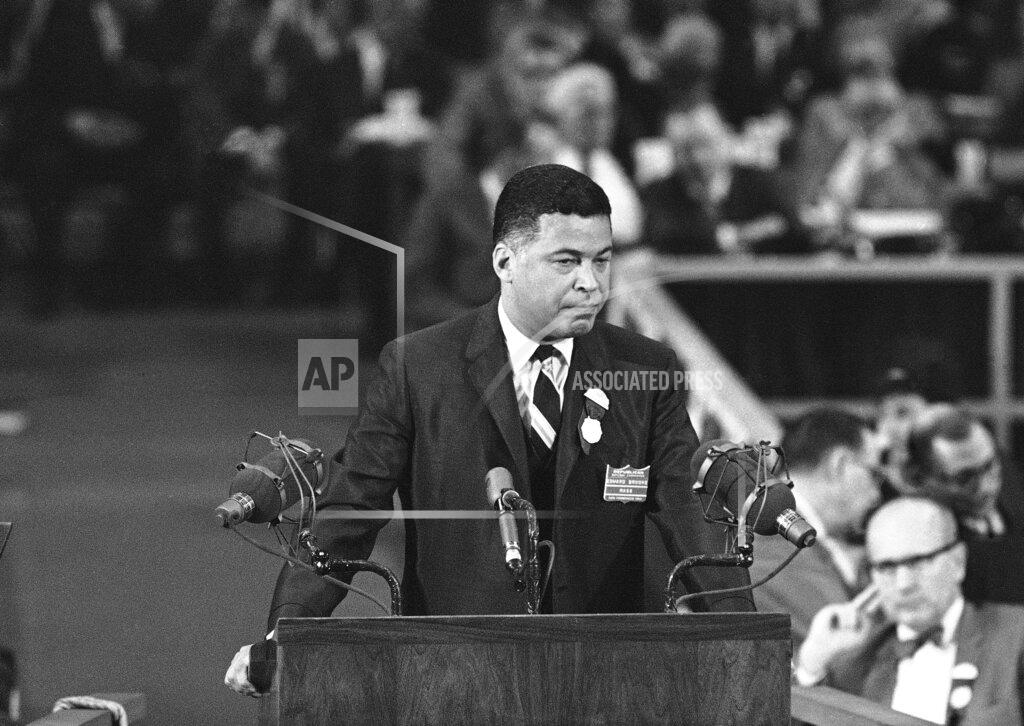
The Republican National Convention sounded a thunderous “no” last night to the proposition that it should condemn the John Birch Society. Then the delegates defeated a proposal to broaden the civil rights plank of the party platform. The roll‐call vote on the civil rights question was 897 to 409, with delegates from 26 states and territories voting solidly against the broadening amendment. Delegates supporting Senator Barry Goldwater of Arizona stayed in their seats past midnight to defeat a third proposal by proponents of Governor William W. Scranton of Pennsylvania. It would have reaffirmed the principle of Presidential control of nuclear weapons. The session, which ran more than eight hours, adjourned in a state of exhaustion at 12:36 AM, after having adopted the platform by voice vote.
After the evening of defeats for the Scranton men, Black delegates and alternates to the convention issued a joint statement challenging Senator Goldwater’s “fitness” to be President. About 150 pickets representing the Congress of Racial Equality and other civil rights organizations organized a sitdown at two turnstiles outside the Cow Palace. They blocked some delegates as they were leaving the auditorium, but other exits were available and traffic was not badly snarled.
But the high point of an unruly evening came earlier. Spectators in the galleries and some delegates almost drowned out Governor Rockefeller with boos when he spoke strongly for a platform amendment that would have repudiated the right‐wing Birch Society and other extremist groups. Then the extremism amendment was easily defeated on a standing vote, divided roughly between the supporters of Senator Goldwater and Governor Scranton.
That vote, and the roll‐call that followed on civil rights, established what everyone knew — that this convention is overwhelmingly for Senator Goldwater for President, and for the platform that was written for his campaign against President Johnson this fall. The extremism amendment was the first offered by Scranton forces in a final platform fight, intended to salvage a partial victory from the convention. Nothing could have better demonstrated the hopelessness of the effort more than the howling response to Governor Rockefeller’s speech. The Governor, interrupted at every pause with a chorus of boos and catcalls, stood patiently during most of the outbursts. Finally, he snapped: “Some of you don’t like to hear it, ladies and gentlemen, but it’s the truth!” That only brought more boos.
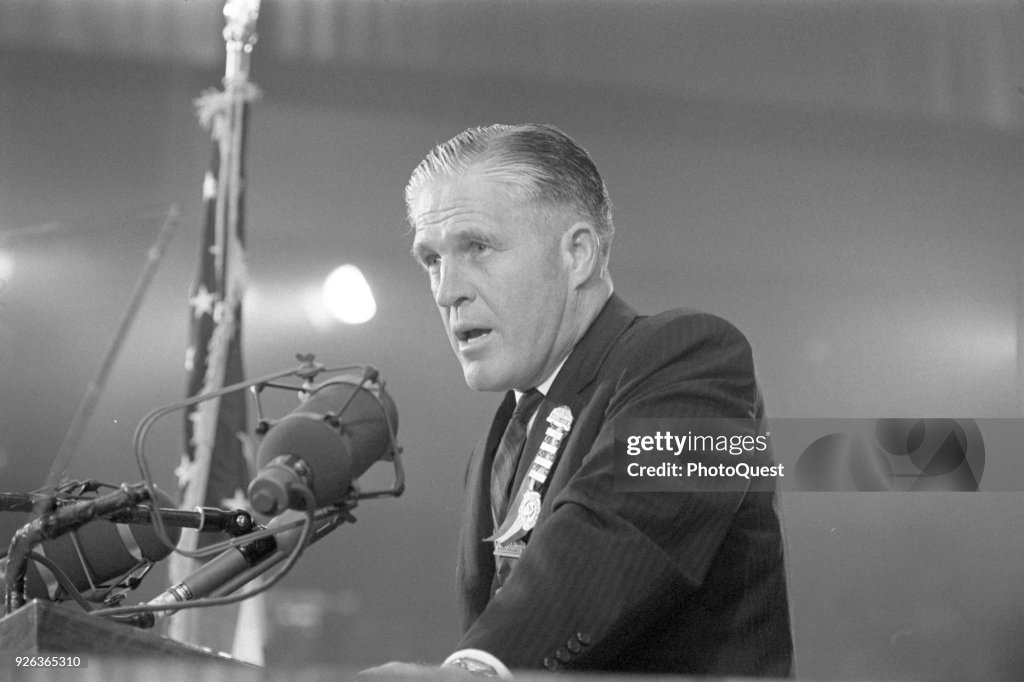
When the amendment supported by Governor Rockefeller had been voted down, Governor George Romney of Michigan came forward with another, milder amendment that would have condemned extremism without mentioning any organization by name. That, too, was shouted down. At the end of the evening, the convention defeated a less sweeping civil rights amendment proposed by Governor Romney. Ironically, the defeat of the civil rights amendment was assured when two Pennsylvania delegates broke out of Governor Scranton’s control and voted against it. That gave the opponents of the amendment an assured majority of 655.
Senator Barry Goldwater said tonight that the defeat of liberal efforts to amend the Republican platform showed that “The Republican convention is reflecting the conservative majority in the Republican party.” Mr. Goldwater was commenting, through an aide who read his statement, on the defeat of liberal attempts to alter the platform on the subject of civil rights, extremism and Presidential control of nuclear weapons. The Senator was missing from his Mark Hopkins Hotel headquarters today for at least nine hours. A member of his family said he was relaxing on a yacht. But his press secretary, Edward K. Nellor, said he “met with advisers at length to go over in great detail his activities and plans for the next few days.”
Earlier today Mr. Goldwater said that the Democrats could not “do more harm” to him than his Republican enemies had. But he also said the conservatives had at last won control of the party from the Eastern liberal wing and that the party platform was a “true representation of the Republican Party” of today. Mr. Goldwater was in such good humor today that he bubbled like a glass of California champagne. He told a breakfast caucus of the 18‐member Oregon delegation that he was still looking for delegates all the time and then joked: “I sometimes think there may be some delegates under my bed. But I look there and it’s just the same old people.”
An overzealous staff, it became clear today, was responsible for producing the harsh letter sent to Senator Barry Goldwater over the signature of Governor William W. Scranton. Antagonistic reaction by delegates to the missive took some of the bounce out of the Governor today as he continued to go from one state delegation to another in search of Presidential nomination votes. Governor Paul Fannin of Arizona announced he would ask the Republican Governors to call on the Pennsylvanian to make a public apology for the strongly worded letter. In the letter Sunday night, Mr. Scranton challenged Senator Goldwater to meet him face‐to‐face on the podium at the Republican National Convention in the Cow Palace here.
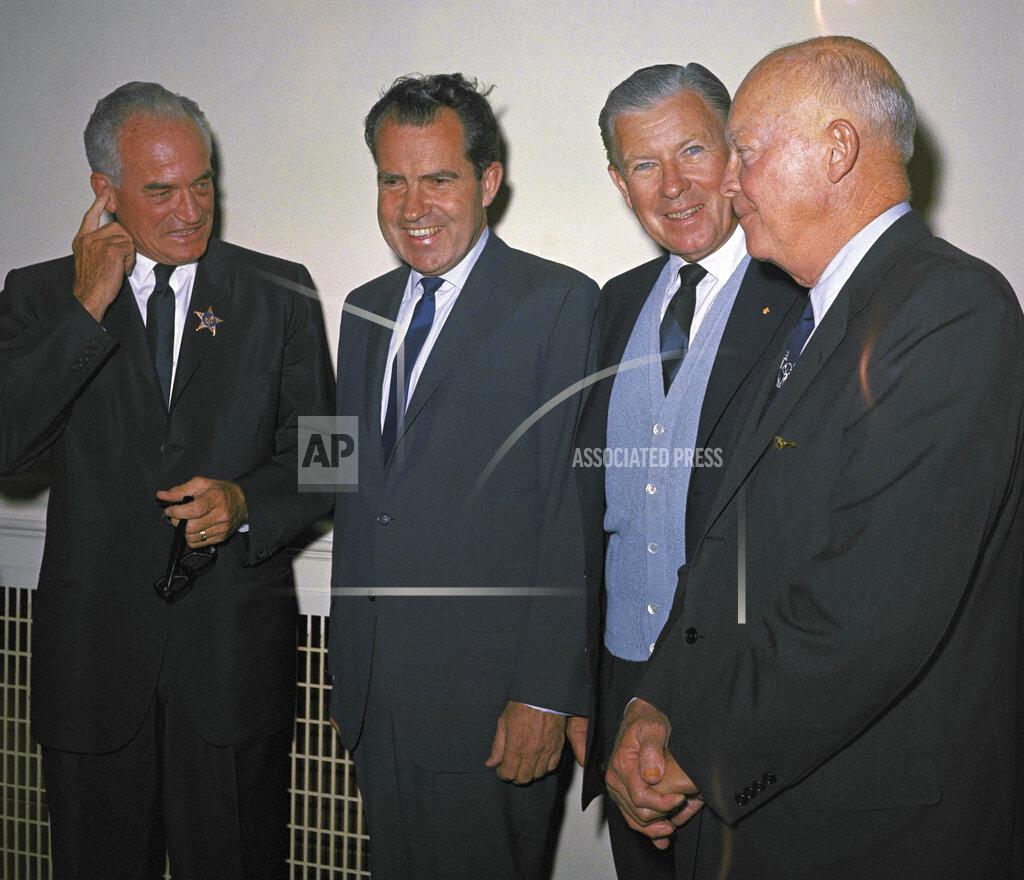
Former President Dwight D. Eisenhower warned Republicans tonight that they must unite behind their convention’s choice of a Presidential candidate or “drown in a whirlpool of factional strife.” In the role of the party’s elder statesman, General Eisenhower appealed to supporters of Senator Barry Goldwater of Arizona and Gov. William W. Scranton of Pennsylvania to “have done with scurrilous and misleading labels.”
“We must learn,” he told the delegates in the major address of the day at the Cow Palace, “that when any Republican concerns himself too much in condemning this or that faction of decent peoples in the party, he is hurting himself and the party.” The Eisenhower admonition evidently was directed to both sides. The Goldwater camp has been using the slogan “A choice instead of an echo.” On the other hand, a letter written for Governor Scranton to the Senator included a harsh attack on “Goldwaterism.”
The former President was cheered to the rafters when he appeared on the speaker’s rostrum, his arms outstretched in characteristic salute. He was interrupted 40 times during his unity appeal and was given a standing ovation lasting almost two minutes at the conclusion of his remarks. But the convention hall fairly exploded when the general told the delegates that they should not let themselves be divided by “those outside our family, including sensation-seeking columnists and commentators… who couldn’t care less about the good of our party.”
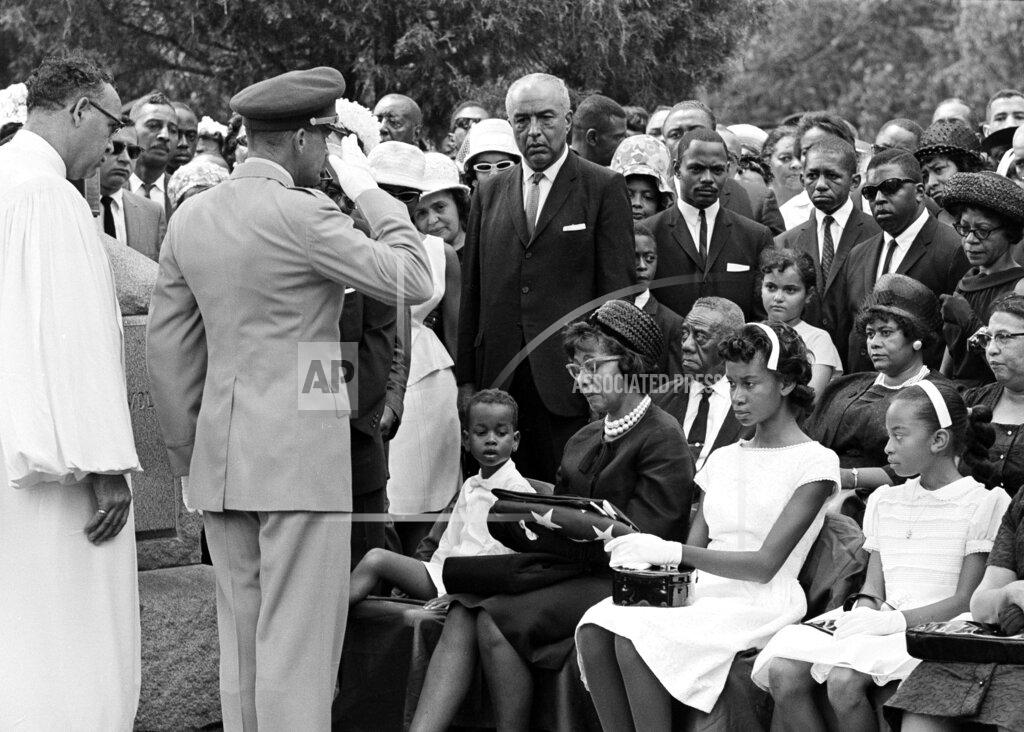
Lemuel Augustus Penn, the Black educator who was slain by a sniper’s shotgun blast as he drove through Georgia last Saturday, was buried with full military honors today at Arlington National Cemetery. The burial of Mr. Penn, an Army Reserve lieutenant colonel, took place after services at the Asbury Methodist Church. The services were attended by 1,500 persons, including J. Lee White, President Johnson’s assistant counsel, who specializes in civil rights. He was the President’s personal representative at the funeral. Major General Chester V. Clifton, the President’s military aide, was present at the graveside ceremonies
Mr. Penn, 48 years old, who was in charge of the District of Columbia’s five vocational high schools, was shot early Saturday morning near Athens, Ga., while returning to Washington after two weeks of reserve training at Fort Benning, near Columbus, Georgia. A statewide search by Federal Bureau of Investigation agents and state police detectives has not turned up Mr. Penn’s assassin. According to the two Reserve officers accompanying Mr. Penn, the unexplained and apparently unprovoked shooting was done by a man who drove alongside their car, fired twice, then fled. Authorities have assumed that the slaying was racially motivated, although Mr. Penn was not active in the civil rights movement. Mr. Penn is survived by his wife and three children, Linda, 13, Sharon, 10, and Lemuel Jr, 5.
An attempt to burn a Black church that an integrated group planned to paint led last night to the arrest of two men. The Ku Klux Klan had warned that it would prevent efforts to conduct integrated projects at the church, a small Presbyterian church with eight regular members, all Blacks. But the police said late today that they had not established any connection between the two men and the Klan. Those arrested were Ronnie Howell, 19 years old, and Kenneth Owens, 21, both of Rocky Mount, about eight miles away. They were charged with conspiracy to commit a felony and were placed in the Wilson County Jail at Wilson under $1,000 bond.
The police said the two men had splashed gasoline from a five‐gallon can on the church steps and were about to set it alight when a deputy sheriff and a highway patrolman, who had been hiding in the church, stopped them. The policemen fired two warning shots. The two fled in an automobile but were soon caught. Howell, the police said is a laborer for a lumber company. Owens was described as unemployed. The police reported that he had a record of arrests and convictions for juvenile offenses. The painting of the church started today, with five highway patrolmen standing guard. The work was done by a group of 18 whites and Blacks, some of them from New York, Pennsylvania and Virginia. Others were from various places in North Carolina.
Plans for the first public school desegregation in Mississippi to begin in September, were submitted today by school boards here and in Biloxi. A third plan was expected to be presented by rural Leake County tomorrow, the deadline set by Federal District Judge Sidney C. Mize. Judge Mize issued a temporary injunction against the three boards last March 4 and ordered them to submit proposals for ending segregation. He handed down permanent injunctions July 6. The plans, all similar, call for beginning the process at the first‐grade level and extending it to at least one additional grade each year.
There was no immediate indication whether this was acceptable to the Black parents whose suits had led to the court order. None of the children involved in the litigation would be admitted to classes with whites, since all have passed the first grade. The Jackson school system has 37,000 public school students, about 40 percent of whom are Black. Biloxi has 9,000, about 15 percent Black, and Leake County 4,700, of whom half are Blacks.
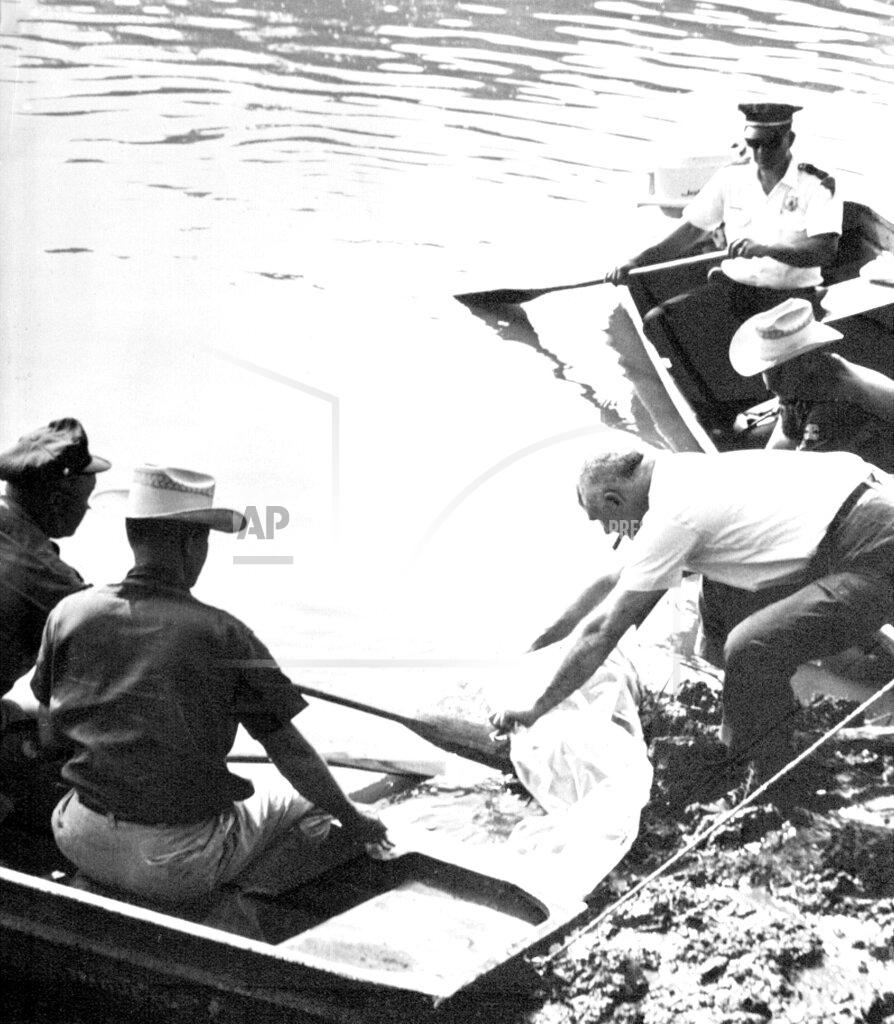
Mrs. Mazie Moore, a soft-spoken woman who has lived all her life on the 60‐acre farm she owns, said today she could not imagine why anyone would bind her son and throw him into the Mississippi River. “He didn’t have any kind of enemy, white or colored,” Mrs. Moore said of her 20‐year‐old son, Charles, who has been missing since May 2. The authorities believe it was his body and that of a friend, Henry Dee, 19, that were found in the river this week 40 miles north of here. The legs of one body were bound with rope. A wire was twisted around the midsection of the other.
Both white and Black residents of Franklin County said the two Black youths were quiet and well‐behaved. The case has aroused suspicion because the county is in the center of an area of recent terrorist activity against Blacks. Civil rights leaders say at least five Blacks have been killed in rural southwest Mississippi this year. Others have been flogged or run out of the area. The Moore and Dee youths were last seen shortly before on Saturday, May 2, standing in front of a service station in Meadville. Reports that they later showed up in Louisiana have not checked out.
A study submitted to NASA by Douglas Aircraft Company concluded that a six-person space research station, capable of orbiting for one year, could be orbiting the Earth within five years. The crew, serving on a staggered schedule, would travel to and from the station on modified Gemini or Apollo spacecraft. The station would provide a small degree of artificial gravity by rotating slowly and would include a centrifuge to simulate reentry forces.
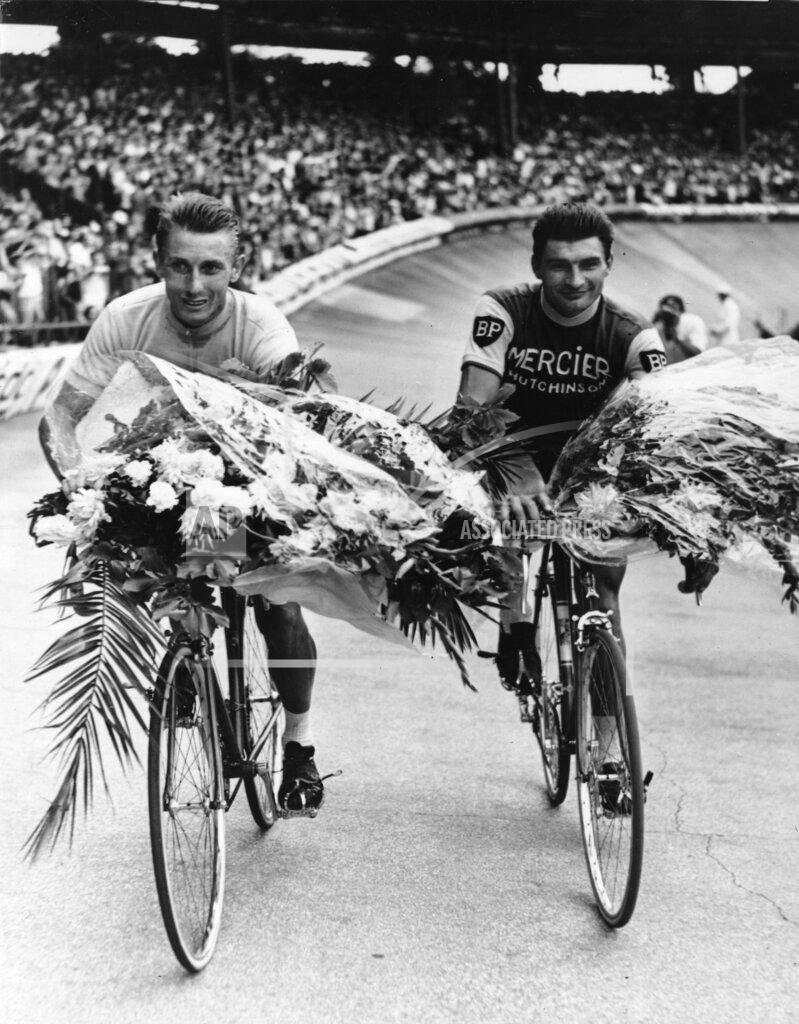
Jacques Anquetil won the Tour de France for the fifth time, for his fourth championship in a row. Anquetil outsprinted Raymond Poulidor on the final stage of the 2719-mile bicycle race, arriving at the Parc des Princes Stadium in Paris after his departure from Versailles. Anquetil’s lead over Poulidor had narrowed to only 14 seconds by the 20th stage on Sunday, and he would win the race by only 55 seconds overall.
The first ever Operation Sail (OpSail) was held off of the coast of New York in conjunction with the 1964 World’s Fair, with a race between 11 Class A tall ships, and another race with 12 Class B ships. The event would be held on five other occasions, 1976 to celebrate the American bicentennial; 1986 to commemorate the centennial of the Statue of Liberty; 1992 for the 500th anniversary of the voyage of Christopher Columbus; 2000 for the Millennium Celebration; and 2012 for the bicentennial of the War of 1812 and the Star-Spangled Banner.
Juan Pizarro, a left‐hander, became the American League’s first 13‐game winner of the season tonight as the Chicago White Sox beat the Boston Red Sox, 4–2. Pizarro allowed five hits through eight innings. Hoyt Wilhelm finished the game after Pizarro had walked the leadoff batter in the ninth.
Baltimore Oriole Bob Johnson’s 6th straight hit as a pinch hitter sets an American League mark, but the New York Yankees win 4–3. The Yankees squeezed by the first place Orioles, and moved to within half a game of the American League lead.
Don Demeter, who had homered his first time up, drove in the deciding run with a single in the eighth inning tonight and brought the Detroit Tigers a 4–3 victory over the Los Angeles Angels.
The Chicago Cubs overcome making five errors in the top of the third inning and beat the New York Mets, 4–2. The Chicago miscues, that include shortstop Andre Rodgers and catcher Dick Bertell each committing two and first baseman Ernie Banks contributing to the total by dropping a pop fly, account for all of New York’s scoring in the Wrigley Field contest.
Roberto Clemente’s infield out in a wild fifth inning enabled the winning run to score as the Pittsburgh Pirates downed the Philadelphia Phillies, 4–3, tonight. Clemente’s grounder with the bases filled scored Bob Veale. Manny Mota was caught in a rundown between first and second on the play. Clemente was ruled out when Mota got back safely and both runners stood on the same base.
The generous Mets, who regularly donate runs to opponents by error and other misplays, didn’t know how to accept graciously such gifts themselves today. After gaining two runs and an early 2–1 lead through the farce of five Chicago errors in the third inning, the Mets allowed the Cubs a three‐run seventh‐inning rally that resulted in a 4–2 victory.
The Cincinnati Reds went on a 16‐hit rampage and routed the Houston Colts 10–3 tonight completing a sweep of a twilight doubleheader. The Reds won the opener 6–5 in the 11th inning on Hal Woodeshick’s wild pitch with the bases full. The Reds pulled out in front quickly in the second game as Frank Robinson hit a two‐run homer in the first inning and five consecutive singles brought in three more runs in the second. Jim Maloney got the victory by scattering six Houston hits.
A two‐run, pinch‐hit single by Bob Skinner with two out in the ninth inning capped a four‐run uprising and gave the St. Louis Cardinals an 8–7 victory over the Los Angeles Dodgers tonight. The Cardinals trailed, 7–4, going into the ninth, with Ron Perranoski pitching in relief of Sandy Koufax, who was trying for his 10th straight victory and 14th of the season.
Rico Carty, a rookie, and Eddie Mathews hit homers as the Milwaukee Braves scored five runs off Juan Marichal in the sixth inning and went on to defeat the National League leading San Francisco Giants, 8–7, tonight. The Giants, however, retained a one‐game lead over the second‐place Philadelphia Phillies, who lost, 4–3, at Pittsburgh. The victory for the Braves was their 12th in their last 17 games. Marichal, who had 12 victories, was protecting a 4–3 lead going into the sixth but Carty led off with a homer. Woody Woodward then beat out a bunt and scored on Mathews’s homer, the 434th of his major league career.
Jack Sanford of the San Francisco Giants undergoes arm surgery.
Dow Jones Industrial Average: 843.63 (1.92).
Born:
Brett Ogle, Australian golfer, broadcaster (2 PGA Tour titles; Fox Sports), in Sydney, New South Wales, Australia.
Darren Hall, MLB pitcher (Toronto Blue Jays, Los Angeles Dodgers), in Marysville, Ohio.
John Holifield, NFL running back (Cincinnati Bengals), in Wayne, Michigan.
Lee Morris, NFL wide receiver (Green Bay Packers), in Oklahoma City, Oklahoma.
Ted Wilson, NFL wide receiver (Washington Redskins), in Zephyrhills, Florida.

 History Diaries