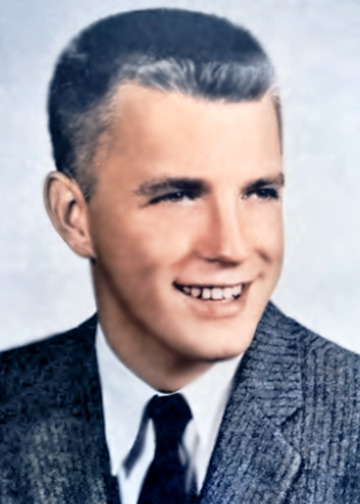
Silver Star
Richard Marion Sroka
CITATION:
The President of the United States of America, authorized by Act of Congress July 9, 1918 (amended by an act of July 25, 1963), takes pride in presenting the Silver Star (Posthumously) to Captain (Field Artillery) Richard Marion Sroka, United States Army, for gallantry in action while engaged in military operations in Vietnam on 13 July 1964, and serving as a Senior Advisor to a Vietnamese Ranger Battalion. Upon learning that a district headquarters in a Vietnamese city was under heavy attack by a hostile force of approximately seven hundred, Captain Sroka unhesitatingly volunteered to participate in the support effort to relieve the besieged city. He bravely placed himself in a lead position to advise his Vietnamese counterparts and, as the support element neared its objective, it was suddenly ambushed by an overwhelming number of enemy troops which delivered a devastating volume of intense gun fire from well-prepared positions. Then, with fortitude, determination, and complete disregard for his own personal safety, Captain Sroka exposed himself to this barrage of weapons fire while assisting in reorganizing the unit and encouraging the friendly troops to pursue their objective. Although subjected to the onslaught of enemy gun fire, he courageously continued his advisory efforts until mortally wounded. Captain Sroka’s conspicuous gallantry in action is in the highest traditions of the United States Army and reflects great credit upon himself and the military service.
Richard is buried at Roselawn Cemetery, Pueblo, Colorado. He is remembered on the Wall at Panel 1E, line 58, along with Major Burkett, of Muskogee, Oklahoma, and Captain Hatfield, of Eufala, Alabama.
Việt Cộng forces ambush an ARVN convoy, 40 miles south of Saigon. Increasingly aggressive Communist guerrillas staged a daring daylight ambush of a South Vietnamese military convoy today, killing 16 Vietnamese soldiers and three United States Army officers. A United States enlisted man and 20 government soldiers were wounded.
The assault occurred about 40 miles south of Saigon when Việt Cộng forces swarmed out of the jungle on the fringes of a Communist stronghold known as Zone D and laid down a withering barrage of fire from automatic weapons. The ambush followed a massive Communist assault over the weekend in the Mekong Delta, where 60 Government defenders were killed. Last week, the guerrillas attacked three American Special Forces camps in the central highlands in what appeared to be a general offensive in that area. A Vietnamese military spokesman said that the guerrillas captured 570 weapons last week, enough to arm a battalion.
A United States pilot escaped injury when his Vietnamese Air Force fighter‐bomber crash-landed at the Biên Hòa air base on returning from a support mission against the Việt Cộng, an American military spokesman reported. Another United States adviser was wounded when a Communist mine exploded near his automobile in Bình Dương Province, north of Saigon. Government casualties last week were given as 192 killed and about 75 missing. Việt Cộng casualties were put at 364 killed and 48 captured.
Assistant Secretary of State William P. Bundy said today that the United States had not ruled out military action against North Vietnam. In an interview with the French broadcasting corporation, he said: “If it should turn out that it is not possible to deal with the insurgency without stronger measures, we have made it clear that we have not excluded the possibility of action against North Vietnam itself.” Asked if the United States would be ready to use drastic measures, meaning nuclear weapons, against North Vietnam or Communist China, Mr. Bundy said the question had been studied carefully, but “I do not think it is appropriate to discuss the measures that might be employed in a case that has not yet arisen.”
The Vietnamese Air Force commander, General Nguyễn Cao Kỳ, claims he has 30 Vietnamese pilots trained to fly jet fighter-bombers against North Vietnam.
A North Vietnamese military court sentenced to death today three described as Chinese Nationalist commandos and sentenced 14 others to terms of five years to life, the Hanoi radio announced. The broadcast, heard in Tokyo, said the 17 defendants were the survivors of a group of 26 allegedly sent by Taiwan and landed in North Vietnam last July.
Cyprus charged in a memorandum to the United Nations Security Council today that arms and military personnel “in great numbers” were being smuggled into Cyprus from Turkey. The memorandum from Zenon G. Rossides, chief delegate, did not ask for a Council meeting on the Cypriot charges. Mr. Rossides conferred with the Secretary General, U Thant, and said he had no intention of asking the Council to meet at the present time. The Cyprus note said that the alleged smuggling constituted “a concealed and piecemeal invasion of the island by Turkey.”
A ranking Greek Cypriot official said tonight that his government would send a note, probably tomorrow, to the Turkish Government “strongly protesting” the recent arrival of Turkish soldiers in Cyprus. The official declared that “any landing of forces here without our consent is tantamount to a violation of the sovereignty and territorial integrity” of the republic. The treaty of alliance under which Greece and Turkey have the right to station a fixed number of troops on the island has been declared abrogated by Archbishop Makarios, President of Cyprus.
The Greek Cypriot official observed that, even if the Cyprus Government considered the treaty of alliance valid, Turkey did not have the right to send in any more soldiers than the 650 members of the regular Turkish Army contingent on the island. It was understood that the decision to send the protest note was taken at yesterday’s extraordinary session of the Cabinet on the Turkish troops issue. Ankara’s denial yesterday that troops had clandestinely been sent to the island followed widespread reports that both Turks and Greeks had come to the island in support of Greek and Turkish Cypriot military forces. Greek Cypriot sources insist that no new Greek‐born soldiers have come to the island. They say, however, that about 2,000 Greek Cypriot students studying in Greece, as well as 400 Cyprus‐born Greek Army officers and 500 Cyprus‐born war veterans, have returned to the island.
Turkey protested to Cyprus today over the decision by the Cypriot House of Representatives to abolish the island’s high and constitutional courts. The legislators voted last week to abolish the two courts and establish a single Supreme Court composed solely of Greek Cypriots.
Peking denounced Premier Khrushchev tonight as the leader of the “privileged stratum” that was attempting to restore capitalism in the Soviet Union. The denunciation was contained in an article that will be published in the Peking press tomorrow under the heading “On Khrushchev’s Phony Communism and Its Historical Lessons for the World.” The article is the ninth comment by the editorial departments of Jenmin Jih Pao and Hung Chi, major Chinese Communist party organs, on the Soviet Communist party’s open letter of July 14 last year. Peking’s latest comment will be published on the first anniversary of the Soviet open letter. Its publication also coincides with the opening of the session of the Supreme Soviet in Moscow, which was addressed today by Mr. Khrushchev.
Analysts said the timing of the article, with its vigorous attack on Mr. Khrushchev, was intentional and aimed at undermining his prestige. These analysts said the article represented Peking’s most direct appeal to Stalinist elements in the Soviet Communist party to overthrow Mr. Khrushchev and described this as the Chinese Communists’ most wounding form of attack on Soviet leaders. They commented that the article was directed over the heads of the party leadership at the Soviet people as a whole, with the aim of fomenting discontent against the regime.
The article said the “broad masses” of the Soviet people were “seething with discontent in the face of the oppression and exploitation practiced by the privileged stratum. “They have come to see ever more clearly the revisionist features of the Khrushchev clique, which is betraying Socialism and restoring capitalism,” it added. “The broad masses of the Soviet people, of the Communists and the cadres, are using various means to resist and oppose the revisionist line of the Khrushchev clique,” the article declared. It forecast that the people would “eventually surmount all obstacles in their path and march toward Communism.”
Premier Khrushchev announced today a wide range of measures to improve Soviet living standards. In a speech to the Supreme Soviet lasting three and a half hours, he said the nation’s 30 million collective farmers would receive old‐age pensions for the time next year. He also said that 18 million “public service workers,” including physicians and teachers, would get raises up to 40 percent. The Premier also announced that the Soviet Government had decided to set up a grain reserve sufficient to cover national needs for half a year or “even a year.” This new reserve would be guarantee against all accidents,” he said.
His announcement was interpreted by Western specialists as a confirmation of their belief that Soviet grain reserves, which had dwindled steadily for about five years, reached exhaustion with last year’s bad harvest. Without mentioning Cuba or the United States, the Premier made it clear that the measures were supposed to go into effect two years ago, but were delayed due to the Cuban Missile Crisis. The international situation at that time “forced us to strengthen our defenses and to increase expenditures for this purpose,” he said. Mr. Khrushchev declared that for the Soviet Government the development of the economy and improvement of living standards of the masses were the “most important and most interesting” aims.
The Christian Democratic Union postponed today a showdown between Chancellor Ludwig Erhard and party critics of his pro‐United States foreign policy. A spokesman announced that a meeting of the Government party’s seven‐man Presidium, scheduled for Wednesday, had been put off indefinitely. The challengers of Dr. Erhard’s leadership, led by his predecessor, Dr. Konrad Adenauer, were reported happy to accept a temporary armistice in the struggle. The issue involves a move by the so‐called Gaullist faction of the Christian Democratic party to force the Erhard Government to follow French policy on European union. Dr. Erhard and the Foreign Minister, Dr. Gerhard Schröder, believe this would dash hopes for developing a broad European community and would estrange West Germany from the United States.
Appeals by Lennie Field and the unrelated Brian Field, implicated in the previous year’s Great Train Robbery, against the charges of conspiracy to rob were allowed by a court. Their sentences were thus effectively reduced to five years. The next day, the court allowed appeals by Roger Cordrey and Bill Boal and quashed their convictions for conspiracy to rob, leaving only the charges of receiving stolen property. Justice Fenton Atkinson concluded that a miscarriage of justice would result if Boal’s charges were upheld, given that his age, physique and temperament made him an unlikely train robber. Cordrey would also be later deemed to be innocent of the conspiracy because his prints were not found at Leatherslade Farm.
A United States Navy ship with an American commander, a German chief engineer, a British officer in the combat information center and crew members representing seven North Atlantic Treaty Organization nations arrived in New York on a brief visit. The ship is the USS Biddle, a guided‐missile destroyer that is designed to demonstrate the feasibility of using men from various countries to operate a force of nuclear-armed ships. The proposed force is aimed at providing NATO nations with greater participation in nuclear operations. According to the Biddle’s commanding officer, Comdr. Thomas E. Fortson, “this is the first time that a modern man‐of‐war has been mix‐manned to this extent.” The 316 crewmen aboard the Biddle work, eat and live together, with the ship operating as a unit of the United States Navy under American rules and regulations.
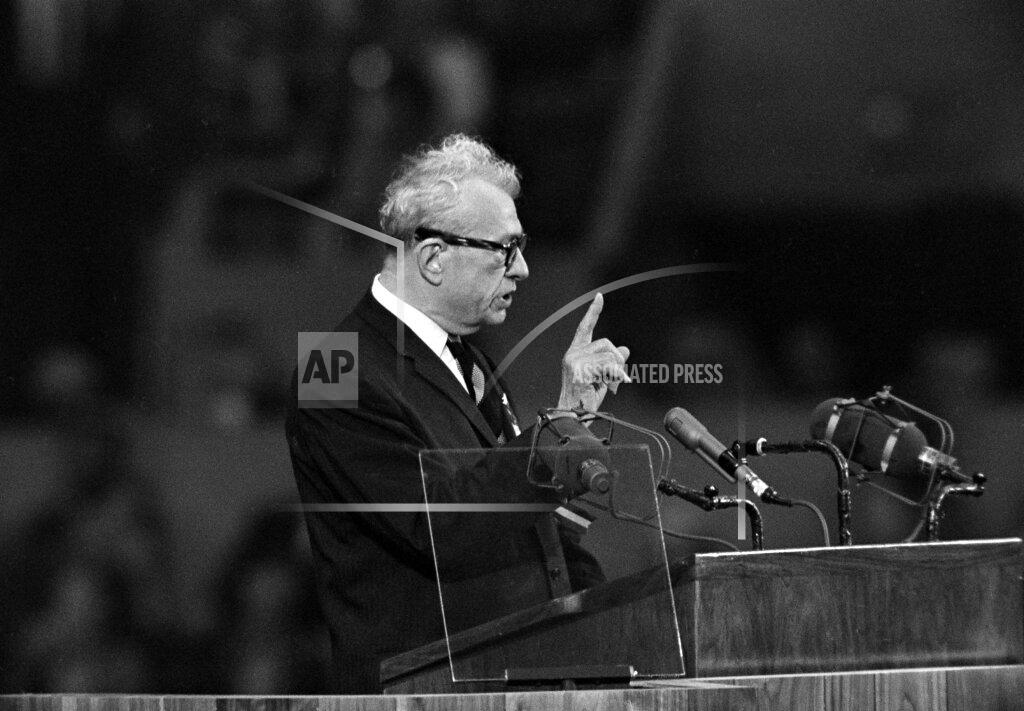
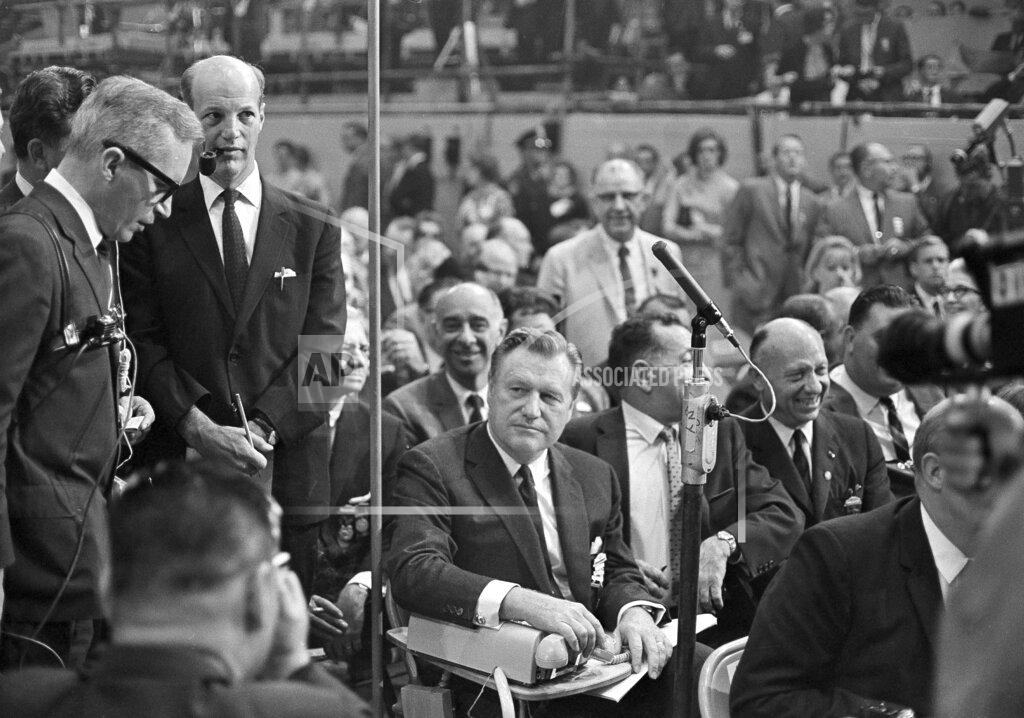
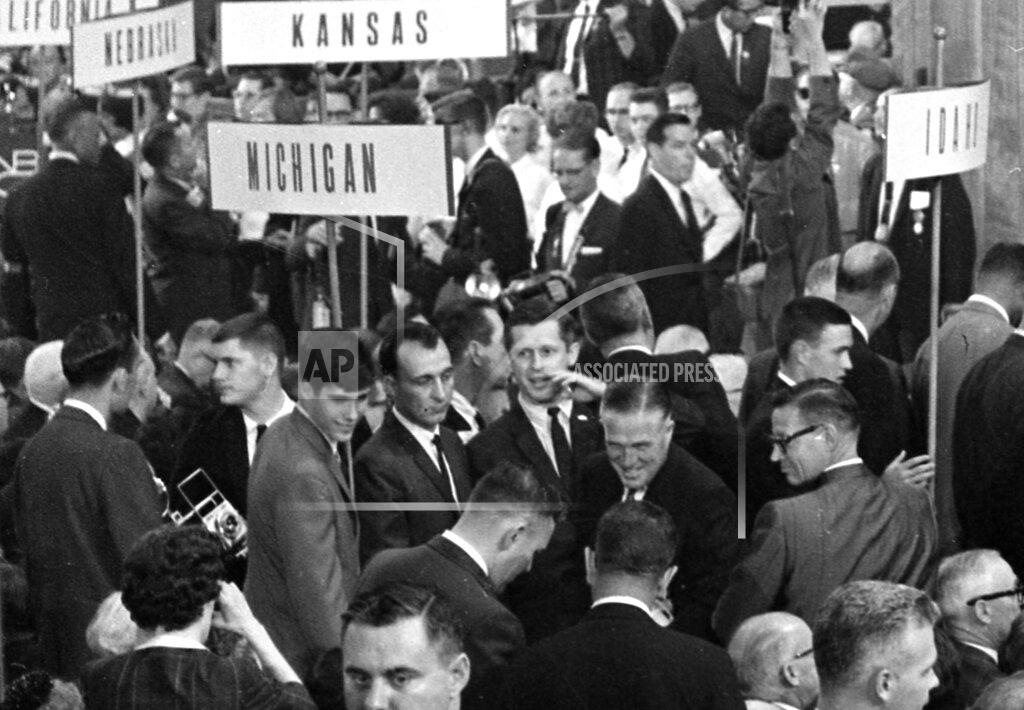
The 28th Republican National Convention opened today and plunged into a spirited floor fight that displayed Senator Barry Goldwater’s iron grip on the delegates. Roaring with enthusiasm, they shouted down a rules change proposed by the forces of Governor William W. Scranton of Pennsylvania. The Scranton motion, which would have barred delegates seated by discriminatory procedures, was designed to put Senator Goldwater in the position of opposing the rights of Blacks. Scranton men contended afterward that the defeat they suffered was just what they had expected. It showed, they said, that Senator Goldwater was opposed to civil rights and was prepared to force his views on the convention.
The Senator’s acceptance of the challenge, and the power he showed in putting it down, apparently signaled an acrimonious convention, with Scranton men challenging at every opportunity and Goldwater men just as eagerly fighting back. But nothing is expected to shake Senator Goldwater’s hold on the convention or to check his inexorable march toward becoming the 20th Presidential nominee in the Republican party’s 110‐year history. That will come late Wednesday, if the present convention schedule is maintained. A major battle on the platform, centering on its civil rights plank, is impending tomorrow. Governor Scranton’s forces will seek to substitute what they consider a far stronger plank than the one written by the Goldwater‐controlled committee on resolutions.
Governor William W. Scranton said tonight that he had not written or seen in advance his highly controversial letter sent last night to Senator Barry Goldwater. But he said he took “full responsibility for it.” The Pennsylvanian, in an appearance before the Wisconsin delegation to the Republican National Convention and in television interviews acknowledged that the staff-written communication was “probably too strongly worded.” But he added that “I don’t apologize for anything.”
Senator Goldwater shortly afterward questioned, by implication, that Governor Scranton had not seen the letter. The Senator said he recognized the Governor’s signature from previous correspondence with him. If Governor Scranton signed the letter without reading it, Mr. Goldwater commented, he should be more careful. Governor Scranton’s press relations director, Jack Conmy, insisted that the letter had gone out unsigned. Earlier, Mr. Goldwater said he believed that Mr. Scranton’s strong attack on him had helped him at the convention. But he indicated concern that the attack might hurt the Republicans’ campaign against President Johnson in the fall election campaign.
Aides noted that the Democrats could cite Mr. Scranton’s harsh charges against Mr. Goldwater, if, as expected, the latter is the Republican nominee. The letter — which Mr. Goldwater rejected without answering — stirred strong reactions in both the Goldwater camp and in other party quarters. It caustically criticized the Arizonan on a number of his major policy stands and challenged him to join Mr. Scranton in a debate before the convention. The letter called the Arizonan’s conservative viewpoints a “crazy‐quilt collection of absurd and dangerous positions.” It accused the Senator of having “too often casually prescribed nuclear war as a solution to a troubled world.”
Mr. Goldwater, who for many years has regarded himself as an underdog fighting against an all‐powerful “establishment,” found himself today firmly in control of the convention and the Republican party. But he feared it would be a damaged prize and a badly divided party. As he left the St. Francis Hotel after a 15‐minute chat with former President Dwight D. Eisenhower, Mr. Goldwater was asked if Mr. Scranton’s attacks would “hurt your chances in November.” “I don’t think that intemperate language ever helps,” the Arizonan said. “I think this is more damaging to the Republican party than it is to me, and that’s what I regret.”
Mr. Scranton’s letter to Mr. Goldwater challenged him to debate before the convention and accused him of having bought and beaten delegates into giving their support. The letter asserted that “you have too often casually prescribed nuclear war as a solution to a troubled world.” Mr. Goldwater “returned” Mr. Scranton’s letter to him as unacceptable — utilizing a form of diplomatic protest sometimes resorted to by governments. The reaction in the Goldwater camp today was one of genuine shock. Mr. Goldwater’s floor manager, Senator Carl T. Curtis of Nebraska, said caustically: “We must forgive and forget this man for the sake of the Republican party.”
Former President Dwight D. Eisenhower expressed general approval today of the Republican platform. If Senator Barry Goldwater campaigns on its declarations, he said, “I don’t see how he can go far wrong.” In response to a news conference question General Eisenhower also said that he did not believe that the nomination of the Arizonan “would represent a turning point in the history of the Republican party,” as asserted by Governor William W. Scranton of Pennsylvania. At the same time, the general insisted that he would not favor one candidate for the party’s Presidential nomination over another.
The former President also went on record as opposing a Scranton‐backed anti‐extremist plank in the party’s platform. He had been asked if he thought the platform should contain a declaration against extremist groups in general and the John Birch Society in particular. General Eisenhower began by saying he did not know anyone directly connected with the latter group. The only thing he knew about the group, he said, was that it was headed by a man [Robert H. W. Welch Jr.] who had “made many statements that were nothing short of character assassination.” Such statements have been made against many persons, “including me,” General Eisenhower said.
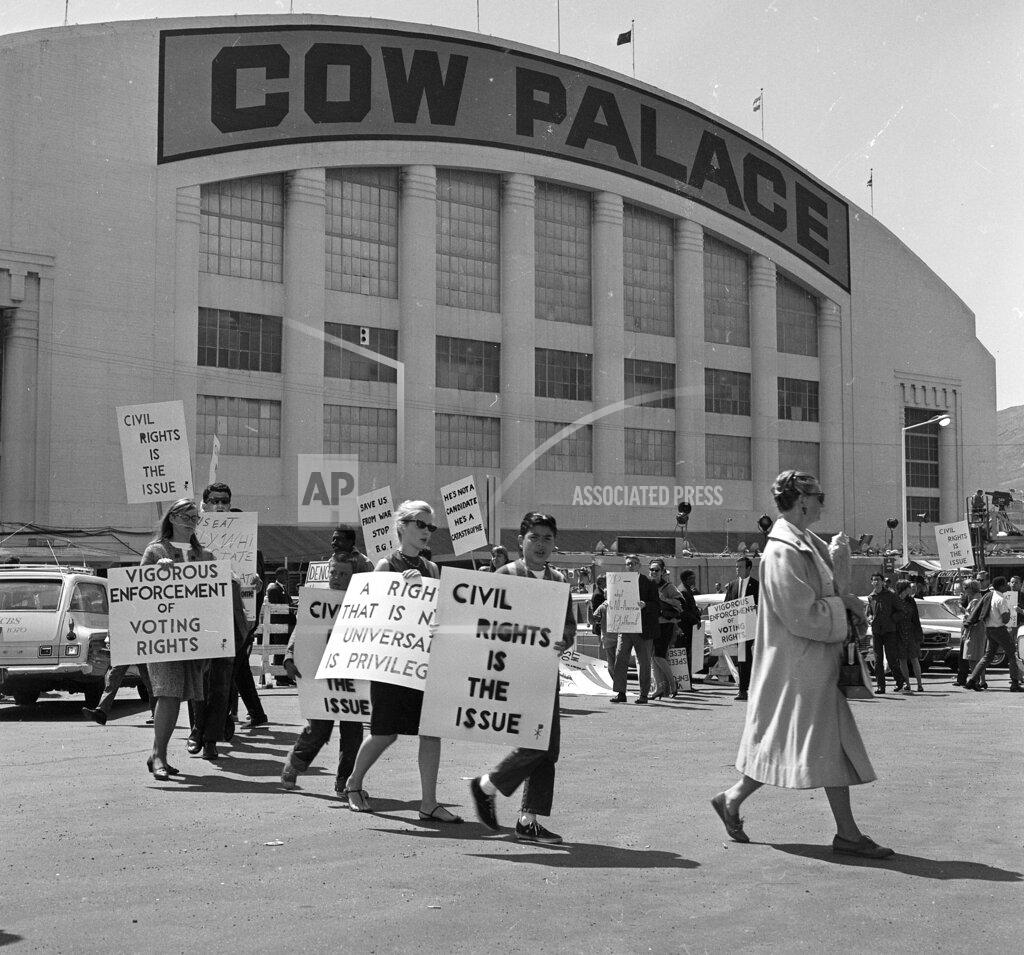
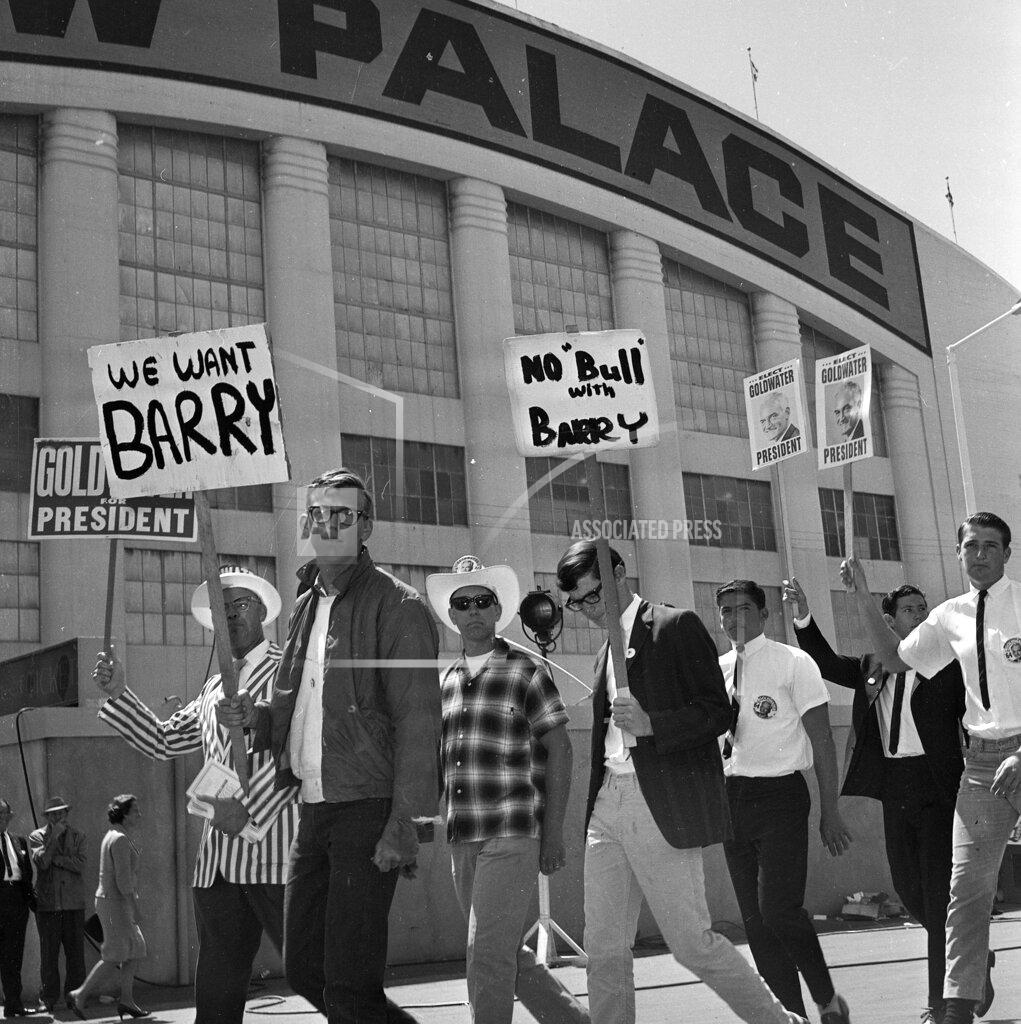
More than 100 civil rights demonstrators picketed the Republican Convention at the Cow Palace today. They were picketed in turn by enthusiasts for Senator Barry Goldwater. “Goldwater must go,” the rights pickets shouted from a roped‐off area outside the entrance. “We want Barry,” about 50 young Republicans responded from outside the roped‐off area. Robert Gaston, head of the California Young Republicans, said Goldwater demonstrators outside the convention hall would eventually number several thousand. Civil rights leaders hoped for more than a thousand pickets tonight and perhaps several thousand later in the week.
A three‐judge Federal court ordered Governor George C. Wallace and the State Board of Education today to refrain from interfering with any court order against school segregation in Alabama. The court had been asked by Black leaders to order statewide desegregation of Alabama’s public schools. This it refused to do, but it directed state authorities to “promote and encourage” integration. Governor Wallace used state troopers last year to delay the admittance of Blacks to white schools. In some instances, he personally blocked them from entering the school buildings. Mr. Wallace was not immediately available for comment on the ruling. The court also prohibited the payment of state funds as tuition grants to pupils who chose to attend private segregated schools rather than integrated public facilities.
The sweeping injunction was directed against Governor Wallace as ex officio president of the State Board of Education; State School Superintendent Austin R. Meadows and all other members of the state board. It was also aimed at members of the Macon County (Tuskegee) School Board because the suit on which the order was based originated in that county. The suit began last spring as a complaint by Blacks against the Macon County board because of the school crisis that developed there following earlier court orders desegregating schools in Tuskegee and neighboring cities. But the suit was broadened to include the state authorities because of a state board order closing Tuskegee High School. The school was closed last January 30 as an economic liability because the entire white student body had left and the school had a total enrollment of only 12 Blacks.
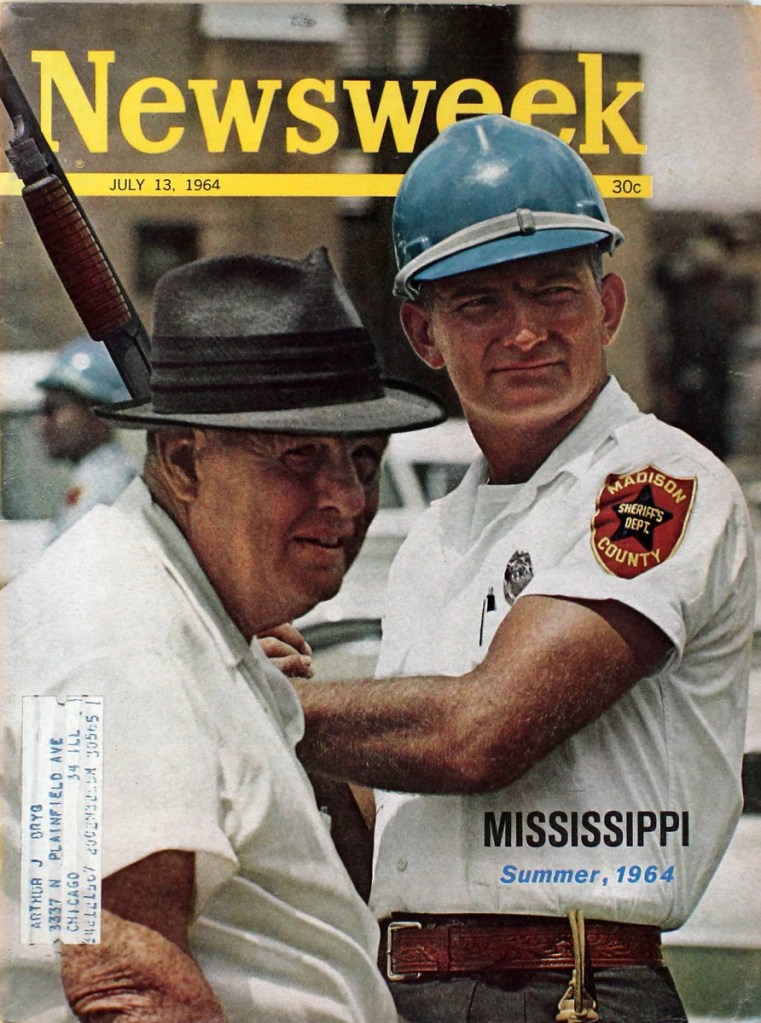
A second body was found in the Mississippi River today. Authorities tentatively identified it and one found yesterday as those of two Blacks who have been missing since April 25. Rope and wire found around their bodies indicated they had been bound and thrown into the river. Their disappearance had not been reported to authorities and it was feared that they were the victims of another racial killing in Southwest Mississippi, the center of terrorist activities in recent months. The body discovered today was believed to be that of Henry Dee, a sawmill worker of Meadville, a small town in the Homochito National Forest 25 miles east of Natchez. Authorities said the body discovered yesterday apparently was that of Charles E. Moore, a 20‐year‐old Meadville youth who had been expelled from Alcorn A. & M. College for taking part in a student demonstration. Authorities said the deaths apparently had no connection with the three civil rights workers who have been missing since June 21.
Meanwhile, Adams County authorities said that two more Black churches were burned by arsonists early Sunday morning in Natchez and that night riders attempted to set fire to the home of a Black contractor in Natchez. The area around Natchez has seen a resurgence of terrorist groups during the last eight months. Civil rights leaders say five Blacks, not counting those discovered in the river, have been killed under mysterious circumstances. Others have been flogged or run out of town.
Rabbi Arthur Lelyveld returned here today and charged that law‐enforcement authorities in Mississippi harassed persons taking part in a voter registration drive. The spiritual head of Fairmount Temple returned by plane after being severely beaten in Hattiesburg, Mississippi, last Friday by two white men who have not been apprehended. The rabbi said he hoped the assailants were apprehended and said he would return to Mississippi if the Federal Bureau of Investigation asked him to identify the assailants.
“I may also be required to testify in the case of harassment against civil rights workers which I saw while I was there,” he said. “I am sorry to say that I have no great confidence in the law‐enforcement agencies of Mississippi, neither in the county forces nor in the city forces of Hattiesburg. The police are very busy in Mississippi harassing civil rights workers and finding causes for apprehending innocent individuals who are there working.”
The New York Yankees clout 4 homers in Cleveland to top the Indians, 10–4. Tom Tresh has a pair, and Mickey Mantle and Clete Boyer chip in as well.
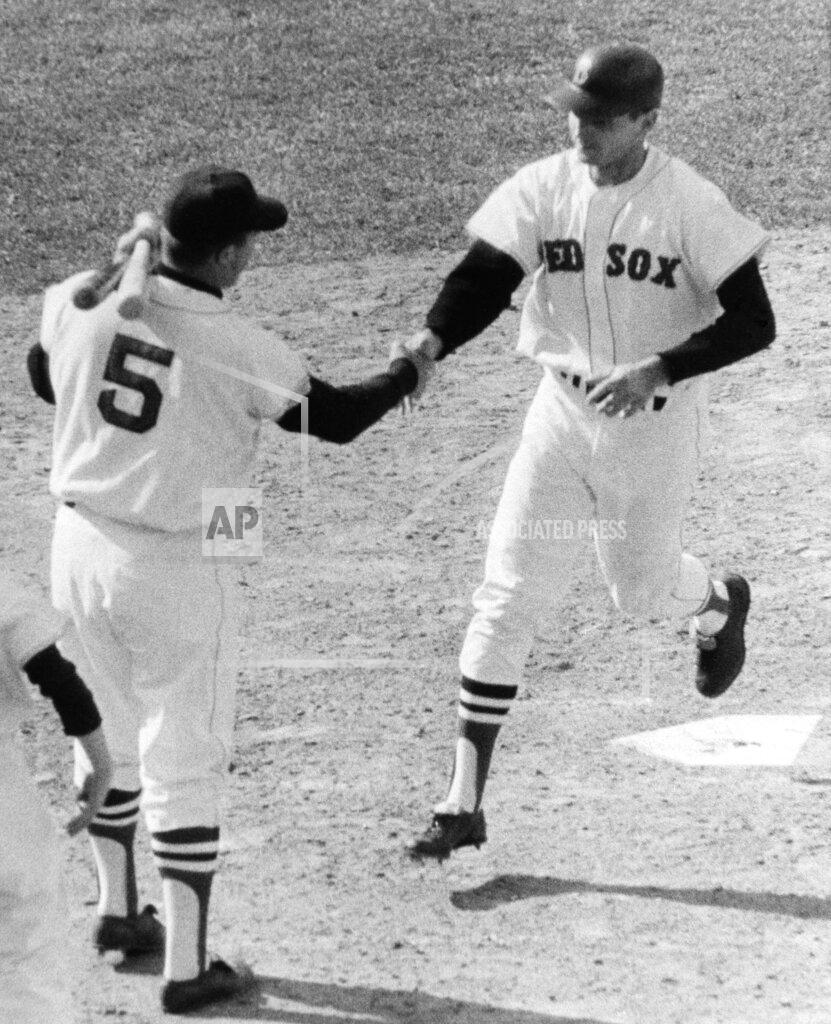
The Boston Red Sox hit successive home runs in two innings tonight and whipped the Washington Senators, 7–0, behind Bill Monbouquette’s fourhit pitching. Monbouquette, a 20‐game winner last year, pitched his first shutout and first complete game of the season.
Andre Rodgers’s ninth homer of the year capped a five‐run sixth‐inning assault off Don Drysdale today and carried the Chicago Cubs to 10–4 triumph over the Los Angeles Dodgers. Rodgers’s homer came after successive singles by Ron Santo, Ernie Banks, Len Gabrielson and Dick Bertell, all after two, out. Larry Jackson coasted to his 12th victory.
The Philadelphia Phillies, who had lost four straight games to left‐handed pitchers, snapped the string tonight by beating Warren Spahn of the Milwaukee Braves, 3–2. Spahn suffered his ninth defeat against six victories, but, went the distance for the first time in 12 games.
Orlando Cepeda’s sacrifice fly broke a 3–3 tie in the ninth inning tonight and the league-leading San Francisco Giants went on to defeat the Houston Colts, 5–3. The victory kept the Giants one game ahead of the Philadelphia Phillies, who defeated Milwaukee tonight, 3–2. Matty Alou, a pinch‐hitter, opened the ninth with a walk and Jesus Alou was safe on an error. A sacrifice moved the runners up, and Willie McCovey walked to fill the bases. Cepeda’s fly scored Matty Alou, Jim Hart singled to drive in J. Alou.
Dow Jones Industrial Average: 845.55 (-1.96).
Born:
Greg Litton, MLB pinch hitter, second baseman, and outfielder (San Francisco Giants, Seattle Mariners, Boston Red Sox), in New Orleans, Louisiana.
Michael Jackson, NBA point guard (Sacramento Kings), in Fairfax, Virginia.
Larry Emery, NFL running back and kick returner (Atlanta Falcons), in Macon, Georgia.
Darryl Oliver, NFL running back and kick returner (Atlanta Falcons), in Palatka, Florida.
Chris Darrington, NFL wide receiver (Houston Oilers), in Los Angeles, California.
Damon Johnson, American guitarist, vocalist, and songwriter (Thin Lizzy, Black Star Riders), in Macon, Georgia.
Leanne Benjamin, Australian ballet dancer (principal ballerina Royal Ballet), in Rockhampton, Queensland, Australia.
Died:
Stephen Galatti, 75, American Director General of the American Field Service since 1939
Joel Brand, 58, Romanian-born German member of the Hungarian Aid and Rescue Committee, died of liver disease


 History Diaries