
To help prevent the further infiltration of Arab guerrillas from southern Lebanon, Israel is installing 12-foot-high wire fences, one studded with tiny razor blades and one electrified, along the 50-mile northern frontier. The fences are equipped with electric warning devices. Similar fences were erected by Israel on her Syrian and Jordanian borders.
“When an apparently reasonable offer to negotiate is surrounded by impossible conditions it is a mockery,” said a Palestinian leader about Israel’s conditional offer to negotiate with the Palestine Liberation Organization. The offer made big headlines in Arab newspapers, but Palestinian leaders withheld official comment and were privately skeptical.
Israeli Prime Minister Yitzhak Rabin denied published reports that the government is considering the possibility of a separate state of Palestine. He also said that Israel would discuss a Palestine settlement with King Hussein of Jordan and not with the guerrillas of the Palestine Liberation Organization.
Iran has proposed a formal ban on nuclear weapons in the Middle East and a spokesman for the Iranian mission at the United Nations said the General Assembly would be asked to consider the idea of a Mideast nuclear-free zone at its session starting in September. The Shah of Iran proposed such a zone six years ago but Iran has decided to take it to the United Nations because “the sense of urgency is much greater,” the spokesman said.
Colonel Vasco de Goncalves, an important political theorist for the Portuguese armed forces but almost unknown to the public, was unexpectedly named Premier of Portugal. He was chairman of the coordinating committee of the Armed Forces Movement that overthrew the dictatorship last April. His appointment as Premier appeared to reflect an effort by the military to take direct control of political affairs after the collapse of the civilian provisional government. Colonel Goncalves said that he expected to announce his cabinet early this week and said that it would include both military men and civilians. General Spinola told reporters that Goncalves had been chosen because he was “better suited than anyone else to carry out the program of the Armed Forces Movement.”
France and the Soviet Union made a point today of demonstrating what Paris considers their special relations. They pledged to double trade in the next five years and declared that mutual cooperation and friendship were an essential component of their foreign policy. The pattern of trade will shift from normal commerce to French industrial construction in the Soviet Union, possibly including nuclear equipment, in return for materials produced by the French‐built factories. While the economic and financial plans were being worked out in Paris, Foreign Minister Jean Sauvagnargues was in the Soviet Union making contact, as the French put it, and assuring the Russians that President Valery Giscard d’Estaing would maintain continuity in French foreign policy. French reports from Moscow said the Russians were pleased to find that the new President intended to keep policy on a generally Gaullist line. Mr. Sauvagnargues carried a message from Mr. Giscard d’Estaing to Leonid I. Brezhnev, the Soviet leader, whom the French minister met in the Crimea.
After a delay in planting caused by a generally cold and rainy spring, Soviet farmers are confidently looking forward to a good harvest. No one is expecting the yield to approach the bumper crop of 1973, which produced a record 222.5 million metric tons of grain. But both Soviet and Western agricultural specialists believe that the Soviet Union stands little risk of suffering the sort of crop disasters that hit agriculture in 1972, prompting mass grain purchases from the United States. Despite a somewhat heavier loss than usual in autumn-planted winter wheat because of cold, some observers contend that this year’s plan of slightly over 205 million tons still looks like a realistic goal.
A West German Government report said this week that there had been no let‐up in Communist political, military and economic espionage despite Bonn’s policy of conciliation with the Soviet bloc. The West German Office for the Protection of the Constitution, the intelligence and internal security agency, said in its annual report that the intelligence services of East European countries continued to operate with undiminished intensity in 1973. Germany was by far the most active, it said. The report did not mention East Germany’s most celebrated spy of recent years, Gunter Guillaume, unmasked in April while working as a top aide of Chancellor Willy Brandt, who resigned over the affair.
Rumanians seem to be paying for the relative independence in their foreign policy in rigid curbs on free expression. By comparison Poland and Hungary seem like open societies. The injunction against candor seems to extend to all social levels. A museum attendant, warming to his subject, spoke rapidly and knowledgeably about the historic exhibit in his charge, but suddenly stopped short and said, “I am so sorry, but I have to tell you I cannot consent to be interviewed.” A senior government official agreed to talk about Rumania with a foreign correspondent, but only on condition that his remarks be kept off the record. As it turned out he declined to concede that any important problems had resulted, or even could result, from national policies. No one seems willing to talk about the shabby, ill‐stocked stores, about the long lines that form instantly outside butcher shops when delivery trucks arrive, about the thriving currency black market and about other obvious signs that things are less than perfect.
Crowds gathered at the gates of nearly every prison in Turkey to welcome thousands of political prisoners being released under a general amnesty. Ministry of Justice sources said almost 5,000 of the nation’s 5,700 political prisoners would be freed over the weekend. Among those released were Can Yucel, a leftist poet and translator, and Mrs. Behice Boran, leader of the banned Turkish Workers Party.
Gunmen assassinated Eritrean leader Hamid Feraeg Hamid as he prayed in a mosque at Agordat, about 500 miles northwest of Addis Ababa, diplomatic sources said. Hamid was believed killed by members of the Eritrean Liberation Front because he had publicly advocated a federal status for Ethiopia’s province of Eritrea and opposed the ELF goal of total independence. Hamid, an adviser to Eritrean Governor-General Lieutenant General Debebe Haile Mariam, was president of the area’s parliamentary assembly until Ethiopia annexed the former Italian colony in 1962.
Prime Minister Indira Gandhi’s ruling Congress party pledged today “to settle all differences with Pakistan bilaterally and by peaceful means.” The pledge followed accusations by Pakistan Thursday and India the following day of “provocative” troop movements near the cease‐fire line in divided Kashmir, the cause of Indian‐Pakistani hostility since British India was partitioned in the late nineteen‐forties. A resolution adopted unanimously by the Congress Working Committee regretted that “the process of normalization received a setback by Pakistan unilaterally calling off the proposed India‐Pakistan talks scheduled for June 10, using India’s peaceful nuclear test as an excuse.”
Premier Souvanna Phouma of Laos was in serious condition after a heart attack, informed sources reported. Members of the Prince’s family and others in the Government did their best to shroud the Premier’s condition in secrecy, but one informant close to the family said the stocky leader was conscious and was able to talk. Several teams of physicians were flown into the country today and the prince’s family was reported considering sending him out of Laos to recuperate. It was the Premier’s first known heart attack, though he had been suffering from high blood pressure in recent months. Clearly, the illness of Prince Souvanna Phouma, who has long been considered Laos’s indispensable man, constituted a grave crisis for the fragile two‐month‐old coalition Government of the Communist‐oriented Pathet Lao and representatives of the old Vientiane Government.
The United States has agreed to stop using its Thai air bases for flights over the Indian Ocean, a Thai spokesman said.
Two strikes that have brought the giant British Columbia forest industry to a virtual standstill appear near an end. In Vancouver, officials of the International Woodworkers of America announced a tentative settlement and asked their members to return to work in the logging industry pending ratification. In Victoria, a settlement was announced in a pulp and paper industry dispute that had closed 21 of 23 newsprint mills in British Columbia. The strike by 11,000 workers involved members of the United Paperworkers International Union and the Pulp, Paper and Woodworkers of Canada.
More than 200 persons were left homeless along the Panama-Colombia border by last week’s series of sharp earthquakes, Panamanian National Guard sources said. Several buildings were flattened in the town of El Real, near the quake’s epicenter 40 miles from the Colombian border. There were no injuries reported.
Slain U.S. diplomat John S. Patterson was buried in the nation’s capital after church services attended by his family and colleagues at the State Department. Patterson, 31, was kidnaped March 22 in Hermosillo, Mexico, where he had been U.S. vice consul. His body was found last Sunday and was returned to Washington aboard a presidential jetliner.
Adelino Romero, the newly elected leader of the federation that controls Argentine labor died today of a heart attack. His death left the Perónist trade‐union movement in further disarray. Mr. Romero, who led the Textile Workers Union, was elected two days ago as secretary general of the General Confederation of Workers, which claims three million members. The 51‐year‐old Mr. Romero was considered to be one of the more moderate Perónist labor leaders, who are struggling with leftwing Perónists for control of the political movement that followed President Juan Domingo Perón. President Perón died on July and was succeeded by his wife, Isabel Martinez de Perón.
Black African leaders have sought unsuccessfully to convince competing guerrilla movements in Angola, Portugal’s largest and richest African colony, that they should form a united front for the purpose of cease‐fire negotiations with Portugal. Among the leaders making such appeals are Presidents Mobutu Sese Seiko of Zaire, Kenneth D. Kaunda of Zambia and Julius K. Nyerere of Tanzania, and Nigeria’s head of state, General Yakubu Gowon. Estimates by all the guerrilla movements put their combined total of fighting men at more than 30,000, but Portuguese military spokesmen in Angola have expressed doubt that they number more than 7,000.
In its last official action, the Senate Watergate committee released a final report in which it proposed a sweeping overhaul of campaign and other statutes that, it predicted, would go far toward preventing another Watergate. The 2,217-page report, concluding a 17-month investigation that first focused attention on the scandals surrounding the Nixon administration, was drawn almost entirely from testimony and documents previously made public. It carefully refrained from assigning guilt or innocence in particular areas to President Nixon or his aides.
President Nixon went to the support of Secretary of State Kissinger with a letter to the Senate Foreign Relations Committee in which he reaffirmed his responsibility for the wiretapping of 17 officials and newsmen between 1969 and 1971. Senator William Fulbright, chairman of the committee, which has begun an investigation into Mr. Kissinger’s role in the wiretapping, confirmed that he had received the letter, but he declined to make it public before the rest of the committee had seen it.
Vice President Ford said that he expected the House Judiciary Committee to recommend impeachment proceedings against President Nixon. He made the statement to reporters after a meeting with the President at Mr. Nixon’s estate in San Clemente, California. But he added that the committee did not reflect the opinion of the House of Representatives as a whole and asserted that he expected the House to reject the impeachment bill. His meeting at San Clemente was his sixth with the President over the last week. He insisted that he and the President had not discussed impeachment at the meetings.
The latest Gallup poll and a series of interviews conducted by the New York Times across the country has found that inflation, overshadowed earlier this year by the energy crisis, has leaped back into prominence as the nation’s primary concern. Forty eight percent of the persons polled by Gallup named the high cost of living as the nation’s paramount problem, far exceeding the 15 percent who were more concerned with “lack of trust in government,” and the 11 percent who named “corruption in government” and “Watergate.”
New York economist Alan Greenspan is expected to succeed Herbert Stein as chairman of the President’s Council of Economic Advisers, White House sources said. Greenspan, 48, is president of Townsend, Greenspan & Co., a consulting firm, and is viewed as an economic conservative, opposed to government interference in the economy. Stein is returning to a teaching post at the University of Virginia in September.
Hospitals were out of blood in Massachusetts and a Red Cross spokesman said summer vacations were to blame. She said the fraternal and church organizations that the Red Cross depended on for donations “are telling us everybody is on vacation” and industrial sources have canceled bloodmobile visits because they can’t afford to have their personnel spare the time. “Hospitals are in a state of panic,” the spokesman said, adding that an emergency appeal had been made for blood. The Red Cross supplies 90% of the blood used in the state, and more than 130 of the state’s 172 hospitals had no blood at all.
Rep. Wayne Owens (D-Utah) was supported by 70.31% of the delegates at the Democratic state convention in Salt Lake City, defeating Donald B. Holbrook, a Salt Lake City attorney, for the nomination for the U.S. Senate. The vote was 1,088 to 458, six more than Owens needed for the 70% margin to allow him to bypass the September primary. Owens will be seeking the seat of retiring Republican Senator Wallace F. Bennett.
Minneapolis financier Dwayne Andreas was found not guilty of making an illegal corporate contribution to the presidential campaign of Senator Hubert H. Humphrey (D-Minnesota) in 1968. The finding was made by U.S. District Judge Edward J. McManus in Minneapolis. The government had charged that Andreas withdrew $100,000 from accounts of the First Trans Interoceanic Corp., of which he is chairman, and sent the money to Humphrey’s campaign committee in Illinois. The defense contended that Andreas had taken a loan from his company and deposited the funds in his own checking account before making the contribution.
Leroy Gibson, leader of the Rights of White People organization, and two members of his group were convicted in Wilmington, North Carolina, of conspiracy to bomb an apartment in a racially integrated area of the city. Gibson, of Jacksonville, North Carolina, and Lawrence Little were sentenced to 12 to 15 years; the third defendant, J. T. Harris, was sentenced to six to eight years.
Apollo 11 astronauts Neil A. Armstrong, Edwin E. Aldrin Jr. and Michael Collins will be reunited this week in ceremonies commemorating the fifth anniversary of man’s first landing on the moon. On Tuesday they will dedicate their launching pad at Cape Canaveral, Florida, as a national landmark.
An unprecedented interest in veterinary medicine is causing such a surge in applications that officials at some of the nation’s veterinary colleges say it’s now more difficult to get into these schools than into medical school. Some of the reasons cited for this popularity were rising interest in ecology and livelihoods related to nature and public service, and an increase in the professional status and income of veterinarians. Graduates of veterinary colleges are getting jobs with salaries from $14,000 to $20,000. Fees charged by veterinarians in some affluent suburbs are approaching and equaling those of medical doctors.
Two federal agencies said that the sludge believed to be creeping toward Long Island beaches is no threat to swimmers and may be of natural origins. But the associate administrator of the National Oceanic and Atmospheric Administration, one of the two agencies that held a meeting on the sludge problem, conceded that within two years it will be necessary to find new disposal areas for sewage sludge farther offshore because of the increasing amount being dumped. He said “The health hazard (along the beach areas of Long Island’s South Shore) was about as low as you could expect anywhere.”
New York and Connecticut surveying teams sought to fix the exact position of the state line that runs through Gulliver’s, the bar in Port Chester, in Westchester County, where 24 young people were killed in a fire two weeks ago. The nightclub straddles the state line between Port Chester and Greenwich, Connecticut. The results of the surveys will enable authorities of the two states to resolve the jurisdictional question of who should file homicide or other criminal charges relating to the deaths against Peter Leonard.
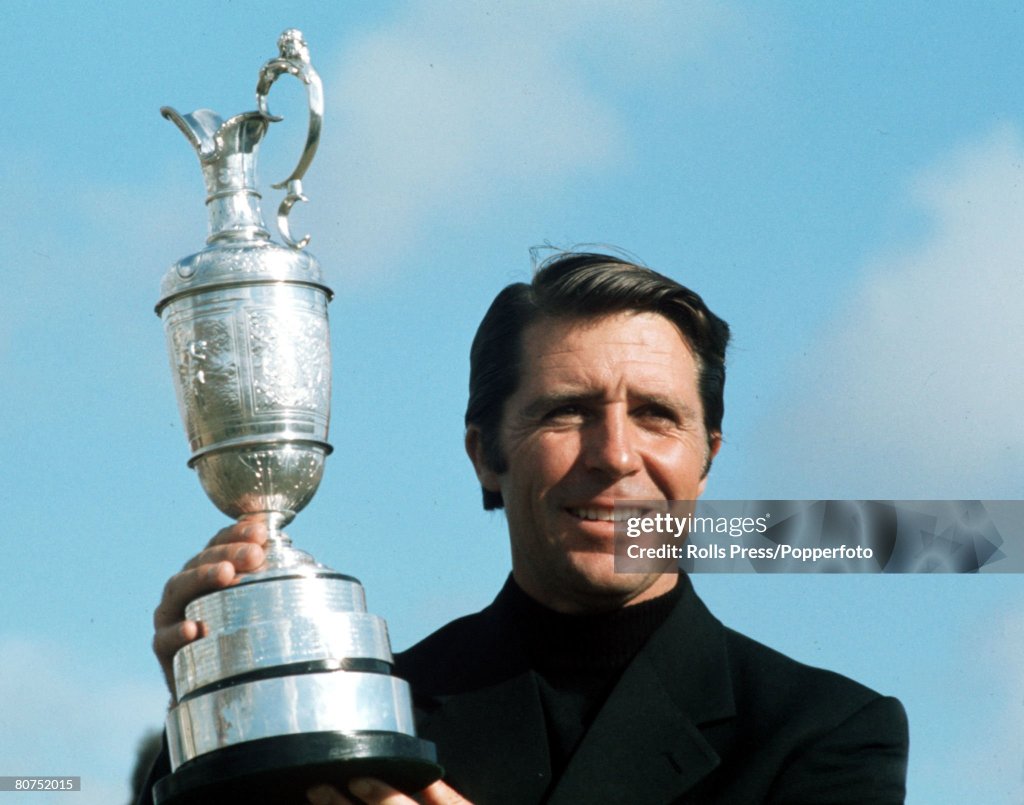
British Open Men’s Golf, Royal Lytham & St Annes GC: South African Gary Player wins his 3rd Open Championship. Gary Player of South Africa won the 1974 British Open golf tournament after leading every round of the 72-hole event and being the only player to finish under par in each round. Player finished with 282 strokes, four ahead of Peter Oosterhuis with 286.
The National Football League players’ strike, which has already claimed the annual College All‐Star game as one of its victims, heads into its third week with no signs of a quick settlement. Moreover, there are indications that the casualty list may be expanded. The July 27 Hall‐of‐Fame game in Canton, Ohio, matching the Buffalo Bills and St. Louis Cardinals, could be the next victim.
Mike Cuellar had a no‐hitter for 6⅓ innings tonight, and with ninth‐inning help from Dave Johnson and Grant Jackson, pitched the Baltimore Orioles to a 2–1 decision over Wilbur Wood and the Chicago White Sox. Cuellar, who has won 12 of his last 15 games, gave up three hits, walked two and struck out four before wilting in the 95‐degree heat and giving way to Johnson in the ninth. Johnson got the first two batters but then gave up a single to Ken Henderson and was replaced by Jackson, who struck out Carlos May to end the game.
Frank Robinson hit the 565th home run of his career and Joe Lahoud belted a triple and two doubles today to lead the California Angels to a 12–1 rout of the Boston Red Sox today. Robinson, who also had a triple and a walk and scored three runs, hit a two‐run shot high off the light tower in left in the seventh inning, his 13th of the season. He has hit more homers against the Red Sox, 35, than against any other American League team.
A blistering 17‐hit attack brought the streaking New York Yankees surging from a 3–0 deficit as they drove out Vida Blue, the starting A’s pitcher, and three of the world champions’ best relievers, hammering Oakland, 12–6. Dick Tidrow pitched six innings to gain his seventh triumph, with Sparky Lyle mopping up.
Jim Wynn’s two-run homer gave Andy Messersmith and the Los Angeles Dodgers a 2–1 win over the New York Mets to hold an 8½-game lead. Messersmith brought his won-lost record to 10–2 and lowered his earned‐run average to 1.96 while holding the Mets to seven hits.
Johnny Bench and Tony Perez combined to drive in seven runs today as the Cincinnati Reds beat the Pittsburgh Pirates, 9–4, with Torn Hall picking up his first victory in his first start this season. Hall, whose last start was last July 28, scattered eight hits in 5⅓ innings and Pedro Borbon stopped the Pirates the rest of the way.
Bobby Tolan hit bases-empty home runs in his first two times at bat tonight to lead the San Diego Padres to a 5–1 victory over the Montreal Expos. Dave Freisleben, a rookie, gave up only five hits to win for the Padres.
The San Francisco Giants belted five doubles off Jim Lonborg in the first four innings, including a three‐run blast by Steve Ontiveros in the third, and rolled to a 13–3 victory over the Philadelphia Phillies today. Mike Caldwell posted his first victory for the Giants since May 19. The Giants’ left‐hander was sidelined with tendonitis and was making his first start since June 6.
Born:
Leon Johnson, NFL running back and kick and punt returner (New York Jets, Chicago Bears, San Diego Chargers), in Morgantown, North Carolina.
Deborah Cox, Canadian R&B singer, in Toronto, Ontario, Canada.
Died:
Patrick Blackett, 76, British physicist (Nobel Prize, 1948, nuclear reaction).
Hamid Ferej, former president of the Eritrean parliament until the area’s annexation by Ethiopia in 1962, and an aide to Lieutenant General Debebe Haile Mariam, the Ethiopian military governor of the Eritrea province was assassinated by members of the Eritrean Liberation Front while he prayed at a mosque in Agordat.




 History Diaries