More than 100 British bombers, heavy and medium, carried out a long-distance non-stop flight over French territory today without a hitch. The heavy bombers covered about 1,200 miles in six and a half hours or less, while the medium bombers did 800 miles in about four hours. The Air Ministry described the performance as a routine practice flight made as a result of the new agreement whereby the British Royal Air Force will practice in France. But it was also a demonstration — whether intentional or not — of the way in which the British air force has been revivified and of the quickness with which it could take up battle stations in France in case of war.
The planes flew mainly at 6,000 feet, but came down as low as 3,000 over towns to give Frenchmen a chance to see them. And a few hours after the planes were safely back in their hangars British news tickers began hammering out reports of the anger the demonstration had caused in Berlin, where it was described as “war-mongering.” The Daily Express tomorrow will use two maps on its front page to convey a hint to the Axis powers about the significance of the flight. Supposing the 1,200-mile flight had been made over Germany, it will point out that a 600-mile radius from England would take in Stettin, Berlin, Leipzig, Salzburg, Innsbruck and Milan.
A circle described from the North Sea near the Franco-German border would take in “Prague, Vienna, Yugoslavia, Rome and Northern Sardinia,” the newspaper will add. Twelve squadrons in all flew the two distances, but their taking off points were kept secret by the Air Ministry, which merely described their home air fields as “somewhere in the Midlands.” The heavy squadrons included big Wellingtons and Blenheims and smaller Battles and Hampdens, all carrying full crews of five or less and all loaded to full bombing capacity. During the flight all the squadrons kept in close touch by radio. with bombing command headquarters at Uxbridge. No French observers made the flight.
The first two squadrons of heavy bombers left their stations at 7:30 this morning and struck the French coast at Havre. Then they laid their course for Bordeaux over Le Mans and Saumur. After flying over Bordeaux they came back over Angers and Caen.
Chamberlain tells the House of Commons that: “The present status of Danzig could not be considered as illegal or unjust… We hope that the Free City will prove once more that different nationalities can collaborate when their interests demand it.”
As expressed in her newspapers, Germany’s answer to today’s demonstration flight of more than 100 British bombing planes to France is, “It should be remembered that Germany also has an air force-and one that has been proved in battle.” The “intimidation flight,” as it has been dubbed by the German press, is being prominently displayed, and the Deutsche Allgemeine Zeitung sounds a direct warning to the Western powers not to attempt any aerial demonstrations over Reich territory.
“Any attempt by a democratic air squadron to exercise over Germany would be ended at once,” it asserts. The Lokal-Anzeiger backs up these words, saying, “Germany can rest assured that not a single British airplane would get through the German air defense.” This newspaper characterizes the British demonstration flight as “another attempt by Britain to cover up her weaknesses.”
The suggestion by Alfred Duff Cooper, former First Lord of the Admiralty, in The London Evening Standard that Britain prove her determination to live up to her guarantees by mobilization of the fleet and similar direct measures evoked a threatening comment on the part of the official German News Bureau. “There must be no doubt in any one’s mind as to what such measures would mean to Germany and whither they would lead the world,” it declares. “Germany is also prepared to mobilize and defend herself against any such provocations.”
The press in Poland commented at length today on Prime Minister Neville Chamberlain’s pledge on Danzig in the British House of Commons yesterday and on its implications for Poland, Germany and the Free City itself. The newspapers express great satisfaction over the firmness that Mr. Chamberlain displayed in warning Germany that on the Danzig issue Britain was determined to act in accord with Poland.
“Germany,” says the official Gazeta Polska, “is now left in no doubt whatever as to what Britain would do should Polish rights in Danzig be endangered by a German maneuver or tricky German methods.” The conservative Czas says that “all doubts about any differences existing between Poland and Britain have now been removed” and that “the leaders in Berlin would do well to realize that fact now in order to avoid any mistakes.” Declaring that “the German campaign tending to show that Britain would not support Poland in the matter of Danzig has come to a definitive end after Mr. Chamberlain’s speech,” tonight’s Goniec Warszawski says that the Free City is “now a European problem.”
Germany orders threshing machines sealed in Bohemia. Farmers are to take their harvest to supervision centers.
Spain and Italy were described tonight by Italy’s Foreign Minister, Count Galeazzo Ciano, as “two great Fascist nations” linked by common ideals and sentiments. Count Ciano, on a seven-day State visit to Spain, spoke as he unveiled a bronze statue of the Roman Emperor Augustus, a gift from Premier Benito Mussolini to this city, once under Roman rule. The unveiling followed a military parade. After the ceremonies Ramon Serrano Suñer, Spanish Minister of the Interior, declared that “henceforth only those wishing our greatness can be our friends.”
“Franco, our victorious Caesar, has conquered this city with a Spanish army and Italian legionnaires,” he said, adding that Italy was considered friendly “because she wants both Italy and Spain to be great.” Count Ciano reviewed a parade of Falangistas beneath triumphal arches as crowds shouted “Viva Italia” and “Mussolini!”
Italy checks the Reich in resisting Pope Pius XII. The Axis nations pull in different directions with Vatican peace efforts.
The order expelling foreign residents from Italian Tyrol has been extended to tourists now. The whole of Bolzano Province will be cleared of foreigners, it was stated today. This extraordinary move, which is certainly unprecedented in Italy, may indicate a desire to have no witnesses to the unhappy scenes that are going to occur in the next few months when the former Austrian population will in large part have to migrate to the Reich. This, however, is guesswork, for the only explanation that Giuseppe Bastianini, Undersecretary for Foreign Affairs, would give to diplomats who went to him to protest today. was that the reasons were “political and military.”
Why there should be any military secrets to guard in a province that borders wholly on German territory is certainly a mystery, but there is, indeed, much that is mysterious about this move. One report going around Rome tonight is that the “military reason” is the movement of troops and material across the Austro-Italian frontier, which Italy desires to keep secret. That again, however, is sheer guesswork.
Nevertheless, the timing of this move plays a vital role in the whole strange affair. It is the height of the tourist season in the Dolomites, which is one of Italy’s most popular districts for vacationers. Moreover, Italy is suffering severely from lack of foreign tourists. Yet she is deliberately losing a whole year’s tourist season in Bolzano and frightening foreign tourists everywhere who may be considering trips to Italy. This, too, brings up the question why just this period was chosen for the emigration of the former Austrians. Why didn’t Italy wait until the tourist season was over? In short, observers here feel that a close study of the situation gives much cause for alarm so far as the international situation is concerned.
Here is the gist of what Signor Bastianini said to foreign diplomats: Tourists are to go immediately. Foreign residents will be expelled in accordance with criteria to be adopted by the Prefect and in accordance with the length of time. given them to liquidate their personal affairs. Foreigners will be allowed only to cross Bolzano Province.”
In his talk with the Netherland Minister to Rome, the Undersecretary is understood to have said the expulsion order is effective “until further orders,” which indicates it is a temporary move. Nevertheless, the plan to force residents to liquidate their holdings — in the case of some Swiss citizens, that means flourishing hotels — shows that the prohibition is not going to be lifted this year.
Bulgarian Premier George Kiosseivanov’s return this evening from his trip to Germany and Yugoslavia was somewhat in the nature of a triumph. From the frontier to the capital crowds assembled at all railroad stations to cheer the Premier.
The Irish army orders munitions from the United States. The total value is put at $10 million.
Apprehensive over the growing possibility that Finland may be forced to accept a Russian guarantee of her independence, the government is taking vigorous measures to meet possible emergencies. An appeal to reserve officers to participate voluntarily in the coming army maneuvers has met with nation-wide approval, as it is realized that the army’s efficiency must reach its maximum as quickly as possible.
The Cabinet has instructed Finnish legations abroad to make clear to foreign governments the serious implications to Finland of any Anglo-Soviet agreement permitting Russia to control this country’s integrity. That Finland is resolved to resist any intruder was the gist of a speech today by Acting Premier Vaino Tanner, declaring that “Finland is determined to defend herself and repulse every attack on her neutrality from whatever direction it may come.”
In Washington today, President Roosevelt nominated Paul V. McNutt as Federal Security Administrator.
The Senate considered amendments to the Social Security Act, as its Foreign Relations Committee voted to postpone neutrality legislation until next session. It recessed at 5:10 PM until noon tomorrow.
The House met at noon, heard of the death of Representative McReynolds of Tennessee, adopted resolutions of sorrow and adjourned at 1:17 PM until tomorrow noon out of respect for the late member. Meanwhile, the Ways and Means Committee heard John W. Hanes, Undersecretary of the Treasury, favor reciprocal taxation of government securities, the Labor Committee heard opposition to amendments to the National Labor Relations Act and the Military Affairs Committee heard War Department officials on a bill for awarding airplane contracts without competitive bidding.
The U.S. Foreign Relations Committee voted 12–11 to defer discussion of revising the Neutrality Act until the next session, scheduled for January 1940. This was a defeat for President Roosevelt, who wanted to repeal the clause that placed an embargo on trade with belligerents, but isolationism in the Senate was strong. The Senate Foreign Relations Committee, by a vote of 12 to 11, decided today to defer all consideration of proposals to revise the Neutrality Act until “the next session of Congress.” The motion it adopted was so worded that it would cover a special session as well as the next regular session in January. However, Administration leaders made no secret of their disappointment at the development and conducted a series of conferences during the remainder of the day with. a view to finding a way out.
Following the Administration’s defeat in the House, which insisted on restoring an arms embargo only slightly relaxed from that of the present law, the Foreign Relations Committee’s action today made the outlook admittedly blacker than had been expected. Pushed by what he considers ominous signs on the European horizon, and with increasing difficulties likely in the Orient, Secretary Hull conferred for an hour. late today with Senator Barkley, the majority leader, and Senator Pittman, chairman of the Foreign Relations Committee. All participants declined to make known the results of this meeting.
It is understood, however, that Mr. Barkley and Mr. Pittman went to the State Department armed with a plan of parliamentary strategy which had met the most favor among the several which had been discussed at the Capitol after the committee’s action became known. This plan has not been definitely decided, but it would involve offering, as a Senate amendment to an important House bill, a clause repealing all “neutrality” legislation. The advocates of this plan claim. for it the following advantages:
- It would not force the House to register an original vote on a proposal against which it has once committed itself.
- It would offer the best chance to prevent a Senate filibuster, because of the importance of the House bill (as yet undiscovered) to which it would be attached, if plans went according to schedule.
- It would attract a large vote in the Senate from those favoring repeal and those dissatisfied with any pending proposal for revision.
President Roosevelt, at his regular press conference this afternoon, declined to comment on the situation, except to call attention to what Secretary Hull had said earlier in the day. The Secretary’s comment was to the effect that revision is still necessary at this session of Congress to accomplish six objectives which he stressed:
“I feel as I have felt throughout each stage of the consideration of peace and neutrality legislation during this session of Congress, that the interests of peace and the security of the United States require that we should continue to urge the adoption of the principles of the six-point program. These six points are as follows:
“(1). To prohibit American ships, irrespective of what they may be carrying, from entering combat areas;
“(2). To restrict travel by American citizens in combat areas;
“(3). To provide that the export of goods destined for belligerents shall be preceded by transfer of title to the foreign purchaser;
“(4). To continue the existing legislation respecting loans and credits to nations at war;
“(5). To regulate the solicitation and collection in this country of funds for belligerents;
“(6). To continue the National Munitions Control Board and the system of arms export and import licenses.”
Mr. Roosevelt said he could only add to Mr. Hull’s statement the observation that at the present time there is no law to prevent American ships from entering combat areas, no law to keep people out of centers of hostility, and no law to prevent export of goods to combatants before title is transferred, as the cash-and-carry section of the Neutrality Law expired on May 1. The President pointed out that, when the Foreign Relations Committee indicated it would take action at “the next session of Congress,” it meant that such action would be deferred until next Spring, as Congress never accomplishes any major enactment in the first few weeks of sitting. In the meantime, all kinds of things may happen. It would be very difficult for Congress to assemble after a war had broken out and attempt to legislate, because it would be accused of non-neutrality, no matter what it did.
A drive to adjourn the present session of Congress by July 29—two weeks from Saturday night—followed today upon the action of the Senate Foreign Relations Committee in pigeonholing the Administration’s demand for revision of the Neutrality Law.
With WPA strike lines holding firm despite the expiration of the five-day deadline for the dismissal of those who joined the walkout at its inception last Wednesday, President Roosevelt gave no encouragement yesterday to moves in Congress for restoration of union wage rates on WPA work.
The two-week-old deadlock between the Senate and House over authorizing the Tennessee Valley Authority to issue bonds for purchase of the Tennessee Electric Power Company’s properties and other privately owned utility properties was ended late today when the conferees agreed on a compromise. The conferees reduced the bond-issuing authority from $100,000,000, as proposed by the Senate, to $61,500,000 voted by the House. Although the language of the House version, relating to restrictions upon the TVA, were stricken from the conference report, it nevertheless earmarks the money to be derived from the bonds, and to this extent places restrictions on the TVA.
Representative Sam D. McReynolds, since 1930 chairman of the House Foreign Affairs Committee and the Representative of the Third Tennessee District since 1923, died in his home here at 6:15 this morning after a prolonged illness that kept him from Congressional duties since the first day of the present session. A heart attack was the immediate cause of death. He was 67 years old. Mr. McReynolds, a close personal friend of Secretary of State Cordell Hull, had been active until this session in promoting Administration legislation bearing on foreign affairs, and his absence from the floor this year was said by his friends to have been a major factor in the Administration’s failure to obtain new neutrality legislation in the form desired.
President Roosevelt today relegated Paul V. McNutt to a field of twelve or fifteen charming young men who might have aspirations to the Democratic Presidential nomination in 1940. The President denied any political significance to the appointment of McNutt as Federal Security Administrator.
The National Labor Relations Board announced today provisions under which an employer may petition for an election of his workers to determine a bargaining agent. This is a right which employers have not had.
Members of the National Federation of Business and Professional Women’s Clubs in Kansas City discussed this afternoon the most serious problem confronted since the organization was formed in 1919. The unit pledged vigorous opposition to legislative measures designed to force married women out of employment.
The National Association of Broadcasters, at its seventeenth annual convention at the Hotel Ambassador here, adopted today a code of ethics to which its 425-member broadcasting stations are pledged to adhere.
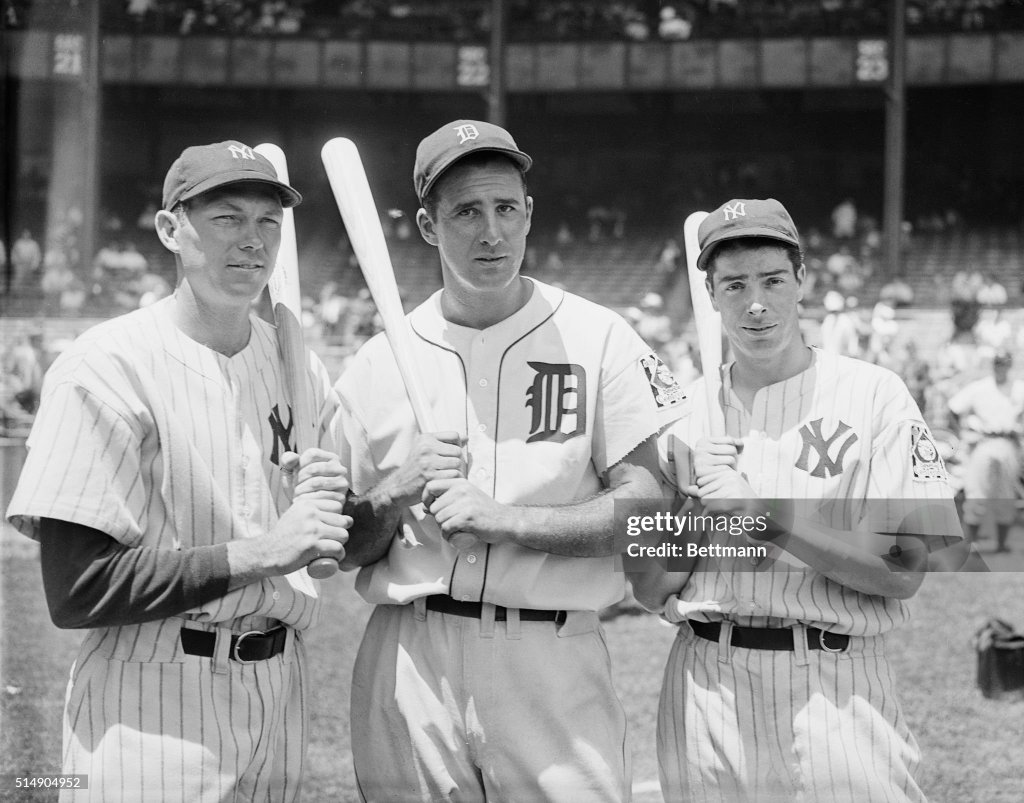
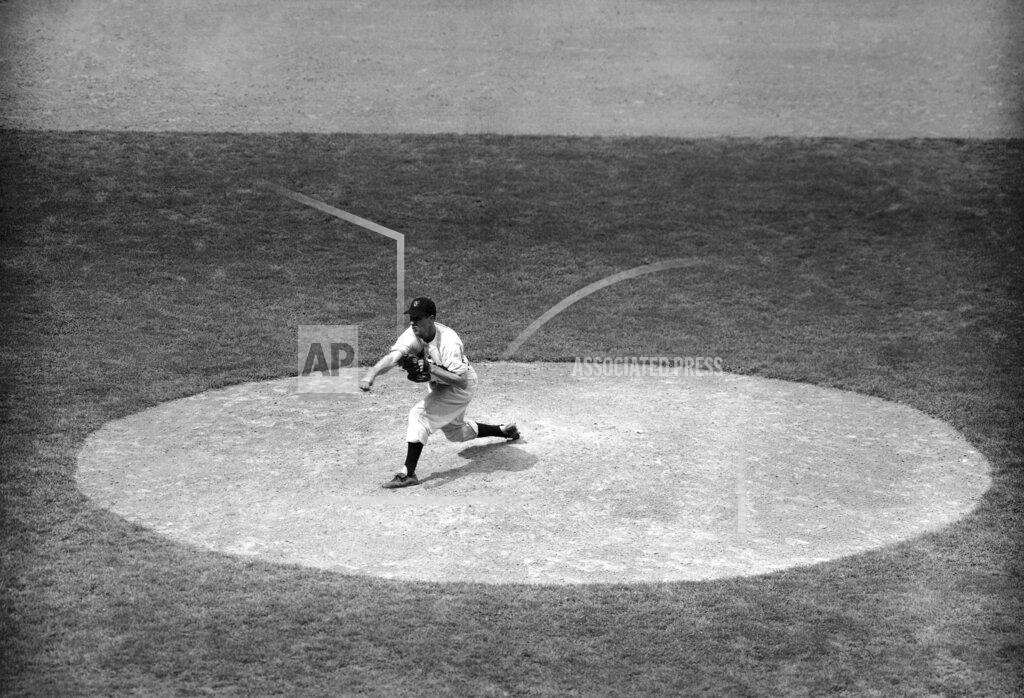
With another Yankee-dominated lineup, the American League defeats the National League 3–1 in the 7th All-Star Game, at Yankee Stadium. Joe DiMaggio excites the partisan crowd with a 5th-inning homer. Cincinnati outfielder Ival Goodman fractures his shoulder diving for a ball. 20-year-old Cleveland Indians fireballer Bob Feller pitches two and two-thirds scoreless innings.
Archie Templeton of the Albuquerque Cardinals (Az-Texas League) strikes out 19 El Paso batters but fails to get credit as he is lifted in the 8th. A steal of home by El Paso’s Mel Berman ties the score in the 9th and when an argument ensues over the pitch, umpire Jack Rice is forced to call in the police as he tosses 3 Cardinals. Albuquerque wins in the 10th, 8–5.
Brazilians discover diamonds in river beds dried up by drought in the state of Minas Gerais.
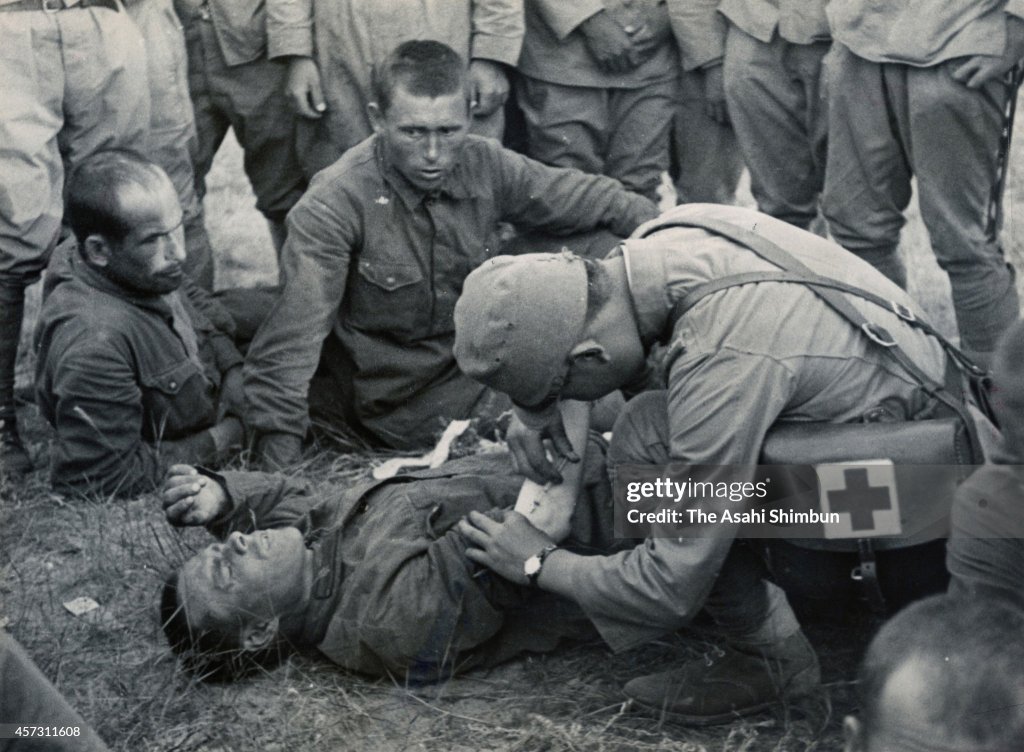
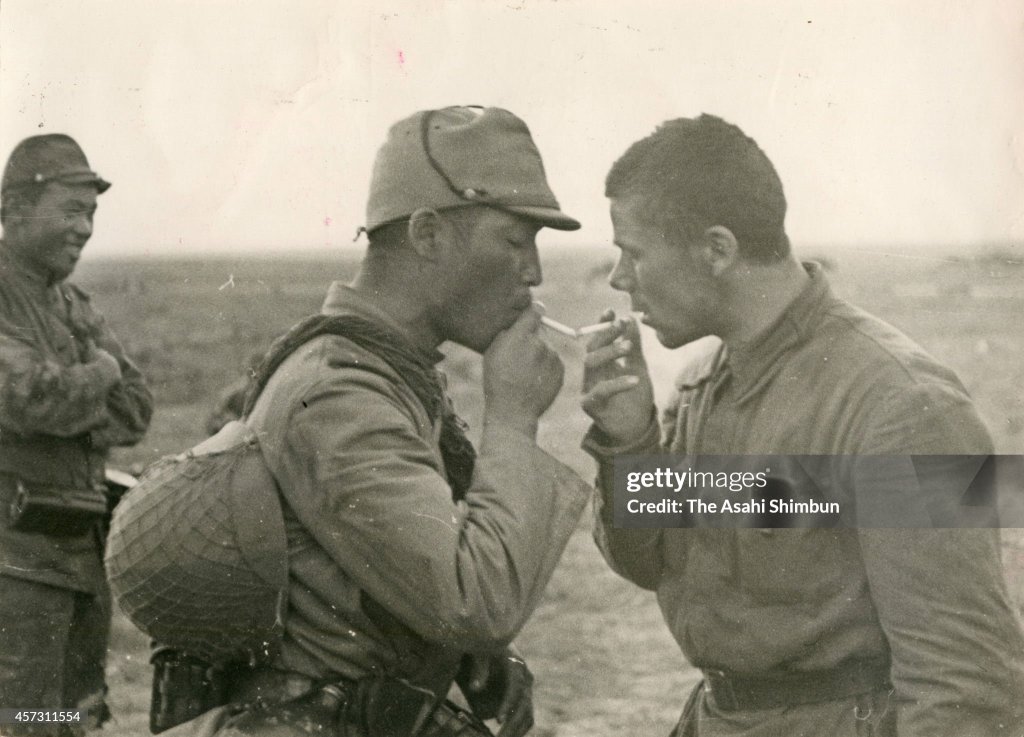
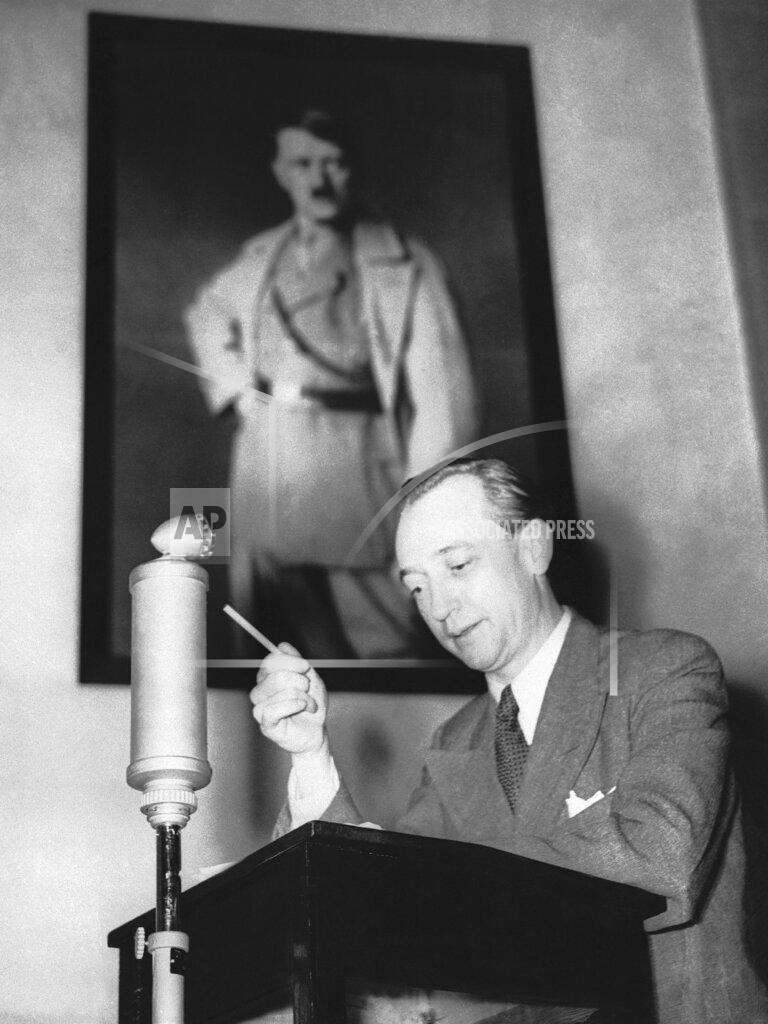
The Japanese reportedly besiege Mongolian forces. Thousands are said to attack 200 in a border attack. Press reports from the Japanese side of the front neglect to mention the Soviet counter-attack which has pushed the Japanese back, or the heavy losses in men and materiel. They instead talk about the poor quality of Soviet troops.
Japan threatens a Shanghai cordon. The blockade of British industry is said to be part of its plan.
What appears to be a series of diplomatic encounters involving Japan, Britain, and France are looming in China. Although the dispute over the blockading of the British Concession in Tientsin has largely shifted to Tokyo, searches by Japanese at the Tientsin concession barricades. continue, Britons being singled out for particular attention.
Japanese authorities in Shanghai have not replied to the British protest regarding the fixing of barbed wire around three British factories. The Japanese spokesman declared this was warning of a plan to erect barbed wire along the north bank of Soochow Creek to prevent the infiltration into occupied areas of anti-Japanese elements. The Japanese at Hankow have diplomatically clashed with the French authorities there. The French Consul General was reported to have rejected the Japanese-appointed Mayor’s protests and demands.
The trouble started when French police halted pro-Japanese collaborating Chinese demonstrators who attempted to distribute flags and handbills in the French Concession on the war anniversary. The protestors demanded an apology for interference with the “new order in East Asia,” release of a distributor allegedly detained and return of flags and handbills.
The most serious incident occurred at Tsingtao, where Japanese and Chinese demonstrators stoned the British Consulate and seven British business houses. Following an anti-British parade, the Japanese and Chinese agitators marched to the British Consulate, where stones and firecrackers were thrown through windows while the mob shouted anti-British slogans. The Japanese guards made no attempt to prevent the attack. The British Consul made a strong protest to the Japanese authorities, pointing out that he had warned the Japanese that an attack on the consulate was planned.
The British escort vessel HMS Lowestoft arrived at Tsingtao today from nearby Weihaiwei to protect British lives and properties.
27 Japanese bombers attacked Chungking, China; eight Chinese I-15bis fighters rose to intercept.
Dow Jones Industrial Average: 134.56 (+0.77).
Born:
Larry Laoretti, American golfer (U.S. Senior Open, 1992), in Mahopac, New Jersey.
Jacky Lee, AFL quarterback (AFL Champions-Oilers, 1960, 1961; Houston Oilers, Denver Broncos, Kansas City Chiefs), in Minneapolis, Minnesota (d. 2016).
Jesse Murdock, AFL halfback (Buffalo Bills, Oakland Raiders), in Oakland, California (d. 1965, in an automobile accident).
Brigadier General Clara Leach Adams-Ender, U.S. Army officer (Chief of the United States Army Nurse Corps from September 1987 to August 1991), in Willow Spring, North Carolina.
Died:
Sam D. McReynolds, 67, American politician, Rep.-D-Tennessee (1923-1939), Chairman of the House Committee on Foreign Affairs (1930-1939).
 History Diaries