
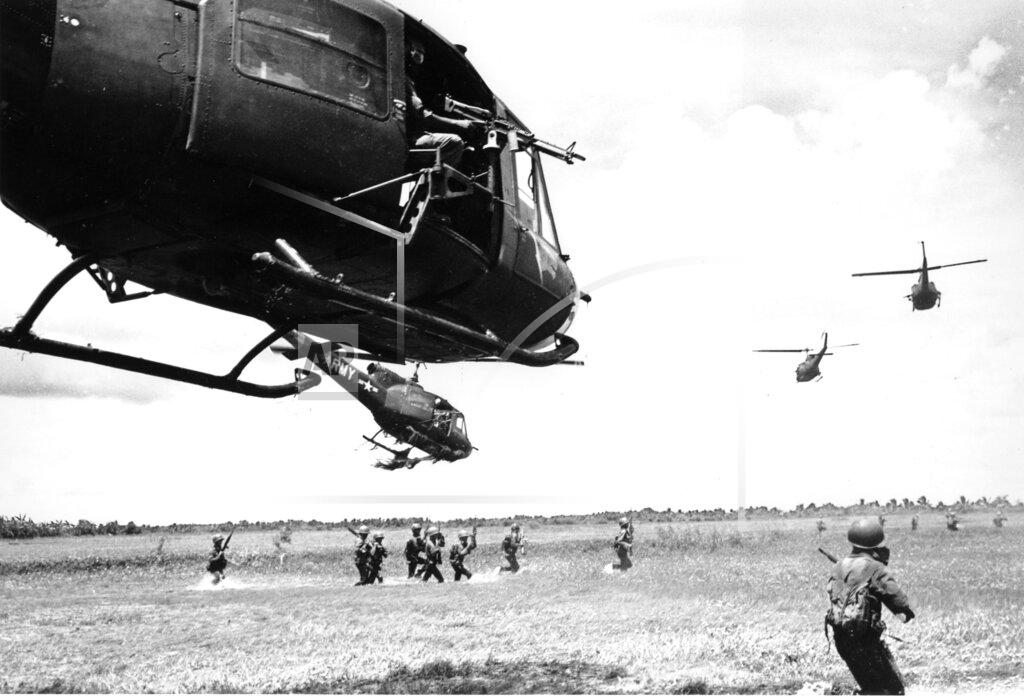
In what is regarded as the largest battle of the war to date, at least 1000 Việt Cộng troops twice attack the South Vietnamese outpost of Chương Thiện and then ambush the relief force. The Việt Cộng seize 100 weapons and 200 ARVN soldiers are killed or wounded. A massive Việt Cộng guerrilla force attacked a Vietnamese Government outpost in Chương Thiện Province last night and tonight and ambushed relief forces sent to the aid of the defenders, a United States military spokesman reported today.
The spokesman said 10 defenders were killed and 16 others wounded in the assault Friday on the outpost in the Mekong Delta Province south of here. A relief force was ambushed by the Communists and lost eight men dead, 19 missing and 59 wounded. The Việt Cộng attacked the outpost again tonight, the spokesman said. Contact with the Government troops was lost during the night. There was no report on Việt Cộng casualties. Yesterday elements of two South Vietnamese Army divisions were reported to have begun a major operation to clear Communist forces from the outskirts of Saigon in an area north of Chương Thiện. Two Americans have been killed in this fighting.
A band of Việt Cộng railroad hijackers disguised as track workers wrecked two locomotives yesterday by causing a deliberate collision, the government reported today. A communiqué said that the guerrillas flagged down a passenger train 120 miles east of Saigon and forced the passengers and crew to get out. After uncoupling the locomotive and two cars, the Việt Cộng forced an engineer to get back in and start up, with orders to leap when the locomotive had accelerated. The abandoned train sped down the track for four miles and rammed into the rear of an armored patrol locomotive. The crew of the second locomotive was warned in time and there were no casualties, but the Communists looted the trains.
The establishment of United Nations responsibility for keeping peace on the disputed border between South Vietnam and Cambodia is under consideration. It was understood that a three‐man committee of the United Nations Security Council that is investigating border clashes has been impressed with the need for some kind of United Nations presence to inhibit a repetition of incidents. The clashes have occurred as a result of military action by South Vietnam, which has maintained that Communist Việt Cộng guerrillas are using Cambodian frontier areas as a sanctuary, and also because of inadequate demarcation of the frontier.
The South Vietnam Liberation Front, political organization of the Vietcong; North Vietnam and Communist China have expressed strong opposition to any United Nations role in the region. The Soviet Union, in voting for the Security Council resolution, abstained from a clause asking the committee to go to the scene and study ways of helping to prevent new incidents. When the committee arrived in Cambodia at the end of last month, the Vietcong announced that they would refuse to recognize its mission and would not guarantee the safety of its members in “liberated areas” of South Vietnam.
The Cabinet under President Makarios met in urgent session tonight over the reported confirmation by Ankara that Turkish soldiers have clandestinely entered the island. The report was carried by the British Broadcasting Corporation. It precipitated an immediate diplomatic flurry in Greek and Turkish Cypriot and United Nations quarters. A Turkish Embassy source refused to deny the truth of the report. The Turkish Foreign Ministry in Ankara tonight said men and arms had been smuggled over in support of the Turkish Cypriot cause, United Press International reported.
Polycarpos Georgadjis, Greek Cypriot Minister of the Interior, said the Cabinet would discuss taking the issue to the United Nations Security Council. A decision is not expected before tomorrow. Earlier, a United Nations spokesman here estimated that at least 500 Turkish soldiers were in Cyprus in addition to the 650 members of the regular Turkish Army contingent based on the island. Informed sources believe that Greek soldiers from Greece have arrived in Cyprus in growing numbers. Estimates vary. The current figure given by neutral sources is 5,000 men. The Turks are believed to have come to the island in the last five or six weeks, the spokesman said.
Major General Richard M. P. Carver of the British Army, retiring deputy commander of the peace force, said the United Nations estimated that “a few hundred” men who had received military training in Turkey but were not of Cypriot birth had entered the island. He added that “it would be quite wrong to say that we think 500 Turkish military personnel have arrived on the island.” The bulk of the Turkish troops are believed to have entered the Tylliria region on the northwest coast. This coastal area is virtually the only one around the island that the Turkish Cypriots control. It has also been the main entry point for smuggled arms.
The presence of General George Grivas in Cyprus is widely considered to be the most significant development on the island since the United Nations took over the job of keeping the peace here. What effect the presence of the former terrorist commander will have in both the military and political spheres must await a clearer definition of his relationship with the Cyprus Government and his hold on the popular imagination. For the moment anyway there is a belief that the general is seeking to exert his unquestioned authority as a military disciplinarian on the sprawling and frequently unmanageable Greek Cypriot security forces. Viewed only from a military standpoint it is thus not surprising that Western officials have privately if not publicly expressed their approval of the general’s presence in Cyprus.
It is no secret that Americans even before the eruption of the Cyprus crisis last December have maintained close contact on the island with the supporters of General Grivas who throughout his career has been an implacable foe of Communism. Since the disclosure June 22 that the general already had been in Cyprus secretly for ten days, Greek Cypriots have remarked with a knowing smile that “perhaps the general came here as an agent of the United States.” American officials vehemently deny it. Nonetheless the remarks reflect the growing conviction here that the U.S. — not to speak of other countries, notably Britain and Greece — has concluded that the most valid solution for the Cyprus crisis is enosis — or union with Greece.
Official U.S. policy, it is maintained here, remains what it has been since Cyprus received its independence from Britain in 1960: Greece and Turkey, allies in the North Atlantic Treaty Organization, must not go to war over Cyprus and Cyprus must not go Communist. But as one American official remarked recently, the time was rapidly approaching when the U.S. must “fish or cut bait.” That the fishing may already have begun is strongly suggested by the recent acceleration and intensification of American diplomatic efforts over Cyprus.
The first serious challenge to the policymaking authority of Chancellor Erhard was mounted this week on the issue of West Germany’s relationship with an old enemy and present particular ally, France. The new Chancellor, who has been in office nine months, is accused of downgrading Bonn’s reconciliation with a nation that for generations was Germany’s adversary in a tragic struggle for domination of Continental Europe. The accusers are former Chancellor Adenauer, who regards his wooing and winning of France’s friendship as the historic achievement of his “era,” and like‐minded leaders in the Government coalition here. But the prime complainant is President de Gaulle himself.
The French leader has a well-defined vision of Europe’s place in the world, of France’s place in Europe and of the relationship of West Germany to France and to Europe. It is a vision shared by Dr. Adenauer, his principal foreign‐policy adviser, former Defense Minister Franz-Josef Strauss and other “Gaullists” — few in number but larger in influence — in Bonn. The Gaullist vision is not shared by Dr. Erhard, his principle foreign‐policy adviser, Foreign Minister Gerhard Schröder, or a majority of the Government Deputies.
Communist China has accused India of a “continuous serious intrusions into China’s territory and airspace in the first half of this year,” Hsinhua, the Chinese Communist press agency; said today. It is said the Chinese Foreign Ministry delivered a protest note to the Indian Embassy Tuesday. “In the first half of 1964,” the note said, there occurred 23 intrusions of China’s territory by Indian military personnel crossing the line of actual control between China and India as of November 7, 1959.”
France will open her doors to half a million or more foreign workers over the next five years, according to financial quarters. The move will be taken to meet the needs of France’s booming economy and to ease the pressure for higher salaries, these sources said. They said current plans are for the importation of 100,000 to 120,000 workers a year for the next five years. The government soon will step up recruitment of labor in neighboring countries and overseas to increase the manpower supply for the country’s labor-hungry industries. An estimated one million foreigners are working in France now—about 6 percent of the total labor force. The wives, children and parents of these workers total an additional million persons. The largest number of foreign workers in France are Italians, followed by Algerians, Spaniards, Portuguese, Moroccans and Yugoslavs.
Nine spectators were killed, and 14 more injured, while they were watching the 19th stage of the Tour de France, when a police truck crashed into them. The victims were standing along a bridge at the village of Port-de-Couze within the commune of Lalinde; three of them were children. What was “the worst disaster in the 61-year-old history of the annual classic” happened in the departement of Dordogne when the brakes failed on the truck. The driver jumped free and the vehicle plowed into the crowd. Enraged residents attempted to lynch the driver, before he was rescued by other police officers.
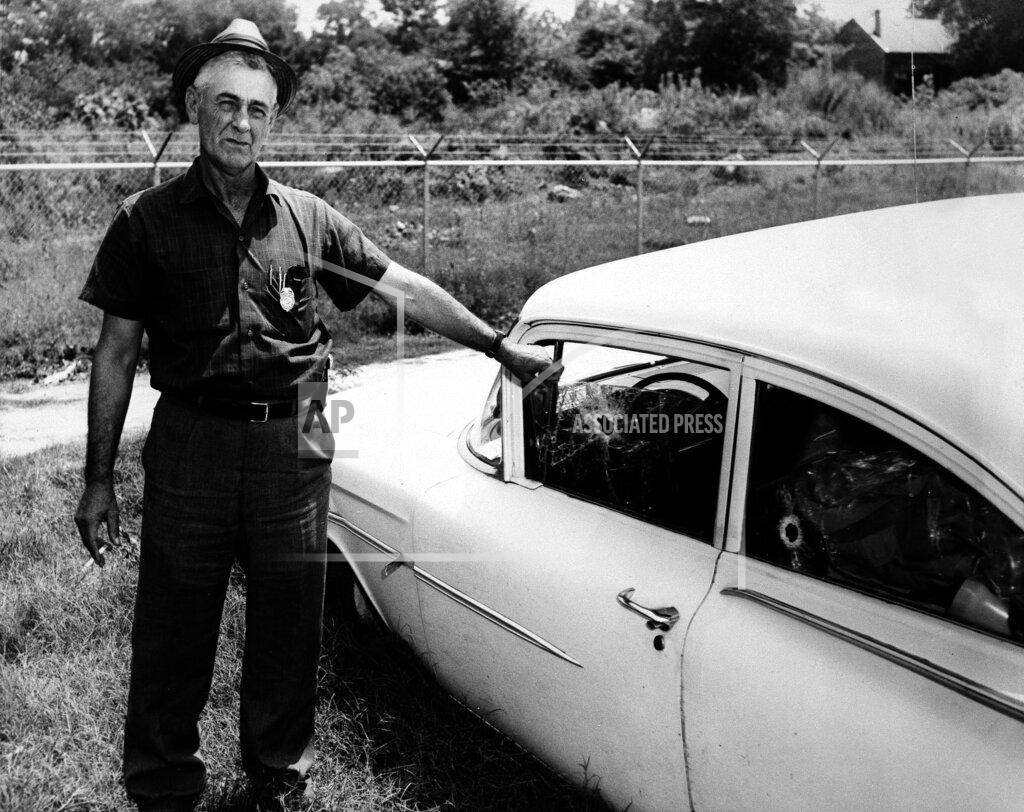
Lemuel A. Penn, an African-American who was the Assistant Superintendent of the Washington D.C. public schools and a Lieutenant Colonel in the United States Army Reserve, was shot and killed while on his way back to Washington from annual training in Fort Benning in Georgia. As his car approached Colbert, Georgia on state highway 172, Penn was shot by two Klansmen who passed his car. The two men, Howard Sims and Cecil Myers, would be acquitted of murder by an all-white jury in spite of a signed confession. In 1966, the two killers would become the first people tried in federal court under the new Civil Rights Act of 1964 for the crime of violating a person’s civil rights. Each would serve six years in prison for the killing.
The law is being frequently and effectively misused as a weapon of harassment and intimidation against participants in the Mississippi civil rights campaign, out‐of‐state lawyers say. This opinion has been expressed by a number of the lawyers, who are providing free legal aid to student volunteers, civil rights professionals and ministers in the project. The practices involved range from enacting clearly unconstitutional statutes to setting exorbitant bail for those charged with violating them, these lawyers say. They say that the police make arrests in some cases and then decide what the charge should be: in others, a lesser charge is filed and then changed to one carrying a heavier penalty; and sometimes the number of charges made against the defendant seems to be limited only by the arresting officer’s imagination.
Further, it now appears that some white Mississippi lawyers intend to deny counsel to arrested civil rights workers. Only three of the state’s four Negro lawyers handle civil rights cases, and none of the whites accepts them regularly. A little‐used state law provides that any two members of the Mississippi bar, not of the firm, may challenge the qualifications of an out‐of‐state lawyer who is not a member of the bar in this state. This law was invoked by two in Columbus last Monday to prevent George Nims Raybin, a lawyer from the Bronx, from representing a white civil rights worker in a speeding case.
This general pattern is not found in all cases or in all of state’s communities. according to the lawyers. Some incidents of suspected harassment and intimidation turn out to be legitimate cases of law violations. Robert H. Janover, a member of the New York firm of Kopple & Seham, recalled a case in which a civil rights worker was arrested on a traffic charge thought to have been groundless. The worker subsequently admitted that he had pulled onto the shoulder of the road to pass 12 cars. However, Melvin Zarr, a lawyer with the N.A.A.C.P. Legal Defense and Educational Fund, said that misuse of the law had taken place frequently enough for Mississippi to be termed a “quasi‐police state.”
National Guard troops withdrew from Cambridge, Maryland today, one year after the racial violence that brought them. Four hundred guardsmen had been rushed to the community by Governor J. Millard Tawes after a night of rioting on July 11, 1963. Today there was no fanfare as the 50 remaining guardsmen climbed aboard trucks and jeeps and rolled out of town in the quiet of early morning for the 80‐mile trip to Baltimore. None of the 12,600 townspeople turned out for the departure. One or two Guard officers will remain for several days. Also staying was Captain William Harris of Baltimore, a Black deputy marshal in civilian life, who has been working on a recreation program for Black Cambridge children.
Governor Tawes had sent troops into Cambridge first on June 14, 1963, after three nights of shootings and fire bombings. They were removed July 8, only to return the morning after the violence of July 11. On that night, roving bands Blacks and whites looked for targets and found them. Three off‐duty guardsmen were shot as they drove through the Black quarter. Three white residents living on the fringe of the Black district were shot from ambush. Carloads of whites raced down Pine Street, firing as they went. Blacks returned the fire from windows and rooftops. State policemen used dogs to disperse one mob.
The departure today ended a year of modified militia law that the troops had imposed to keep a tense racial peace. Demonstrations were banned. At times, the military control included a curfew, early closing of stores and taverns, searching of unauthorized vehicles and a prohibition of large gatherings without permission.
The most violent recent outbreak came last May, when Governor George C. Wallace of Alabama brought his campaign in the Maryland Democratic Presidential primary to Cambridge. Several hundred Blacks tried to march to the hall where Mr. Wallace had spoken. The police used gas to break up the demonstration.
The new Civil Rights Act may have ended all of that. Last Tuesday, when the Governor ordered the troop withdrawal, an integration leader, Stanley Wise, said he would wait to see “what progress Cambridge is going to make.” Since then, five Cambridge restaurants that formerly served whites only served Blacks without incident.
Representative Graham B. Purcell Jr., Democrat of Texas, urged his constituents today to obey the Civil Rights Act of 1964. Mr. Purcell, who voted against the measure, told his constituents that “disregard for the law is not the American tradition.”
Delegates swarmed into San Francisco for the opening Monday of the Republican National Convention, which seemed all set to nominate Senator Barry Goldwater for President.
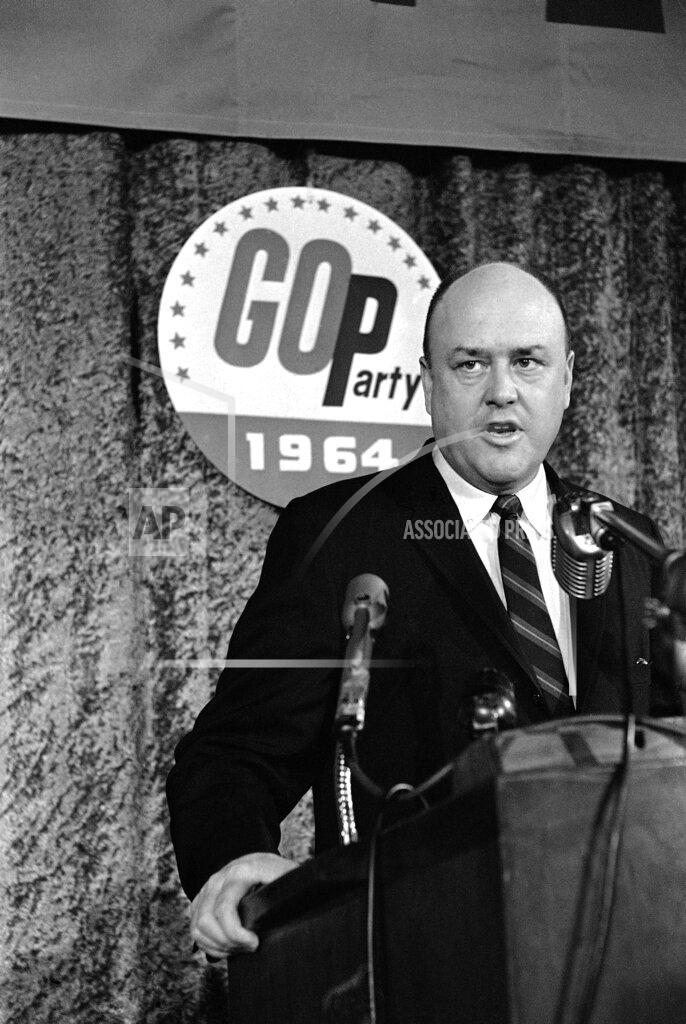
The Republican Platform Committee turned out today a document bearing the heavy stamp of Senator Barry Goldwater. It was the first half of the 1964 platform, and it rang with ideas and phrases of conservative Goldwater Republicanism. Committee moderates were crushed in efforts to write in amendments. Despite this setback and new delegates won over by the Senator, Governor William W. Scranton’s convention manager, Senator Hugh Scott of Pennsylvania, predicted that his candidate would win the Republican Presidential nomination by the fourth ballot. The 28th Republican National Convention will open here at 10 A.M. Monday.
A main theme in the first half of the platform was need for a more aggressive foreign policy and tougher military measures. The Democratic Administration was criticized for, among other things, opening the “hot line” communications system between Washington and Moscow and having “stood by” as the Berlin Wall was built. It was accused of giving insufficient weight to the views of military leaders. On the domestic side the drafters called for limitation of the Federal Government to areas of its “constitutional authority.” They attacked what they termed the retreat of freedom “under the mounting assault of expanding centralized power.”
Late today the moderates on the Platform Committee bitterly attacked the majority for refusing to write into the opening section a statement in praise of former President Dwight D. Eisenhower and his Administration. Representative Abner W. Sibal of Connecticut said the platform “turns its back on the Eisenhower Administration.” A half‐dozen other members said they were “shocked” by the omission of any reference to the Eisenhower years. A move to add an Eisenhower tribute failed in the committee late last night. At least some of those who opposed the move said that such a statement belonged in a later part of the platform.
The Scranton forces proposed amendments to the last two sections to strengthen the civil rights plank; condemn extremists; oppose a national “right‐to-work” law, which would outlaw the union shop; and endorse continued Presidential control of nuclear weapons, strengthened aid to education and liberalized immigration laws. Senator Scott said the group would fight for these and for the opening language on the Eisenhower years within the committee. If they fail there, he said, a floor fight is “likely.” But the Scranton group is not yet finally committed to a platform battle on the floor. There remained the possibility that the Goldwater majority would accept some compromises to avoid a floor debate. Senator John G. Tower of Texas, a Goldwater ally, commented that “our side has shown a singular disposition to be reasonable and write a consensus platform.”
Former President Dwight D. Eisenhower has been telling intimates in the last few days that Senator Barry Goldwater would be a better President and better for the nation than President Johnson in the next four years. “The Good of the Nation” is the theme he will spell out in his address to the Republican National Convention next Tuesday night, they said today. Until the last few days, the general, those close to him continued, has been content to say, if only privately, that “anybody would be better than what we’ve got [in the White House] now.” The former President’s use of Mr. Goldwater’s name in this same context reflects his recognition of the Arizonan’s apparent control of more than 700 convention delegates. It also means that he will place no obstacle in the way of a Goldwater nomination on the first ballot even in private talks with delegates and party leaders.
With the aid of only 1,000 Wisconsin voters, Governor George C. Wallace of Alabama could run for President there as a third-party candidate. Moreover, to the discomfort of Wisconsin politicians, he is expected to do so. A source in the segregationist Governor’s Montgomery (Alabama) office said today that it was “pretty definite” that he would tell Wisconsin supporters to circulate petitions. He believed that the job could be done in half a day. Although the governor must file 14 petitions between July 24 and September 22, each signed by 1,000 qualified voters, each signer may sign 14 papers in series. The petitions are for President, Vice President, and one each for the 12 electors. Circulation of petitions before July 24 is illegal, however.
The U.S. Government was criticized today by a National Academy of Sciences committee for plunging into such major undertakings as a moon expedition or a supersonic airplane without assessing the effects on the nation’s limited scientific and engineering manpower resources. Too often, the committee found, major decisions have been based largely on “hunches, intuition and fragmentary information” about their effects in changing the general direction of the nation’s scientific and technological efforts. There is, the committee asserted, a “pressing national need” to develop meaningful information on scientific and engineering manpower resources that will enable the government, before starting major technological ventures, to assess their effects on the deployment and utilization of scientists and engineers. The report, entitled “Toward Better Utilization of Scientific and Engineering Talent,” was made public today by President Johnson.
Judge Joseph Sam Perry declared a mistrial in the trial for bribery of U.S. Secret Service agent Abraham Bolden.
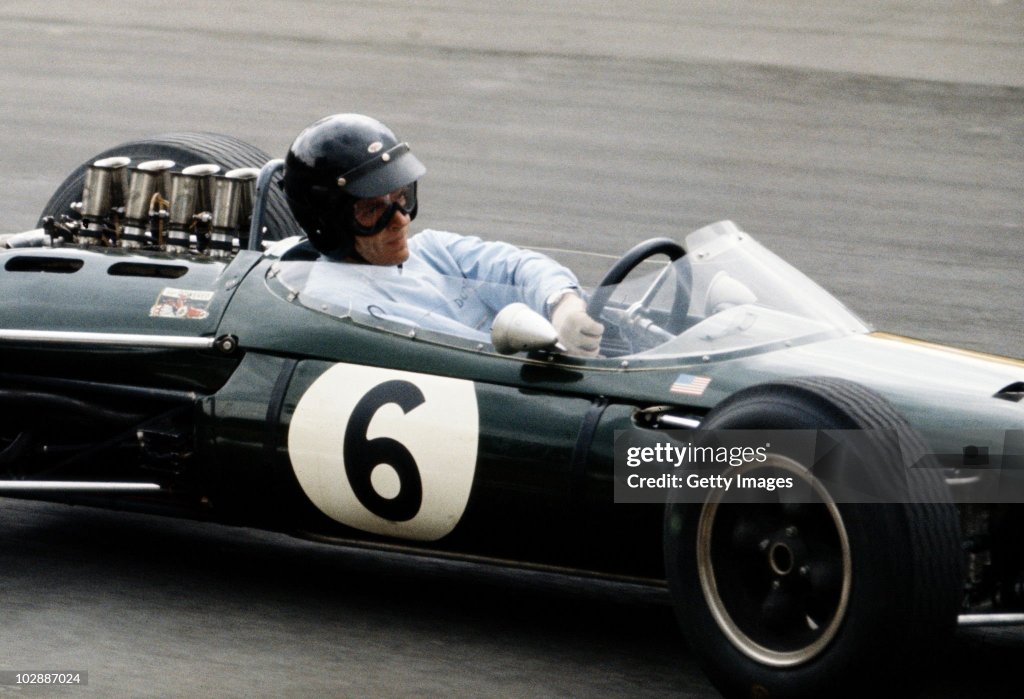
The 1964 British Grand Prix was held at Brands Hatch and was won by Jim Clark.
Vic Power of the Los Angeles Angels is fined $250 and suspended 10 days for spitting on ump Jim Honochick after a close play during a doubleheader loss to the Chicago White Sox 7–4 and 6–1 the previous day.
Joe Sparma, a rookie pitcher, gave only five hits today as the Detroit Tigers whipped the Boston Red Sox, 8–1. Sparma shut out Washington on four hits last Sunday. Bob Tillman’s homer in the eighth today was the first run off him in 22 innings. His record is 3–1. Jake Wood, Don Wert and George Thomas hit homers for the Tigers, who have won nine of their last 11 games.
Jackie Brandt and Brooks Robinson led the Baltimore Orioles to a 7–4 victory over the Cleveland Indians today. Brandt and Robinson each hit two‐run homers in the fourth to drive out Tommy John, a rookie left‐hander, and give Dave McNally all the runs he needed for the victory. Brandt, who also singled in the first, came back in the fifth with another homer, his 10th of the year, and Robinson’s single added another run in the same inning.
The Cincinnati Reds scored three runs in the sixth inning today and beat Jim Bunning and the Philadelphia Phillies, 3–1. Joe Nuxhall and Sammy Ellis held the Phils to five hits in Connie Mack Stadium. Nuxhall and Bunning hooked up in a scoreless duel until the sixth.
The surging San Francisco Giants today trounced the Chicago Cubs for the fourth straight time, 7–0, as Willie McCovey and Jesus Alou each drove in two runs. Bob Bolin blanked the Cubs, scattering seven hits and striking out 12 as he brought his record to 3–3. The Giants, leading 2–0, scored three runs in the fourth. Jose Pagan singled and was sacrificed to second. Willie Mays was walked intentionally before McCovey drove a two‐run double into the center field vines. Orlando Cepeda then drove in McCovey with a single. The victory put the Giants a half‐game in front in the National League, but the Phillies hold a one‐point margin in the percentages.
Born:
Craig Charles, English actor (Lister-“Red Dwarf”), comedian and poet, in Liverpool, England, United Kingdom.
Kyril, Prince of Preslav, son of the former Tsar Simeon II of Bulgaria; in Madrid, Spain.
Earl Jones 800m runner (Olympic bronze medal, 1984), in Inkster Michigan.
George Thomas, NFL wide receiver (Atlanta Falcons, Tampa Bay Buccaneers), in Riverside, California.
Danny Lockett, NFL linebacker (Detroit Lions), in Fort Valley, Georgia.
Jerry Reese, NFL defensive end (Pittsburgh Steelers), in Hopkinsville, Kentucky.
Tony Brown, NFL tackle (Buffalo Bills), in Stamford, Connecticut (d. 2010, of cancer).
Died:
Maurice Thorez, 64, First Secretary of the French Communist Party since 1930 and former Vice Premier of France for five months in 1947.



 History Diaries