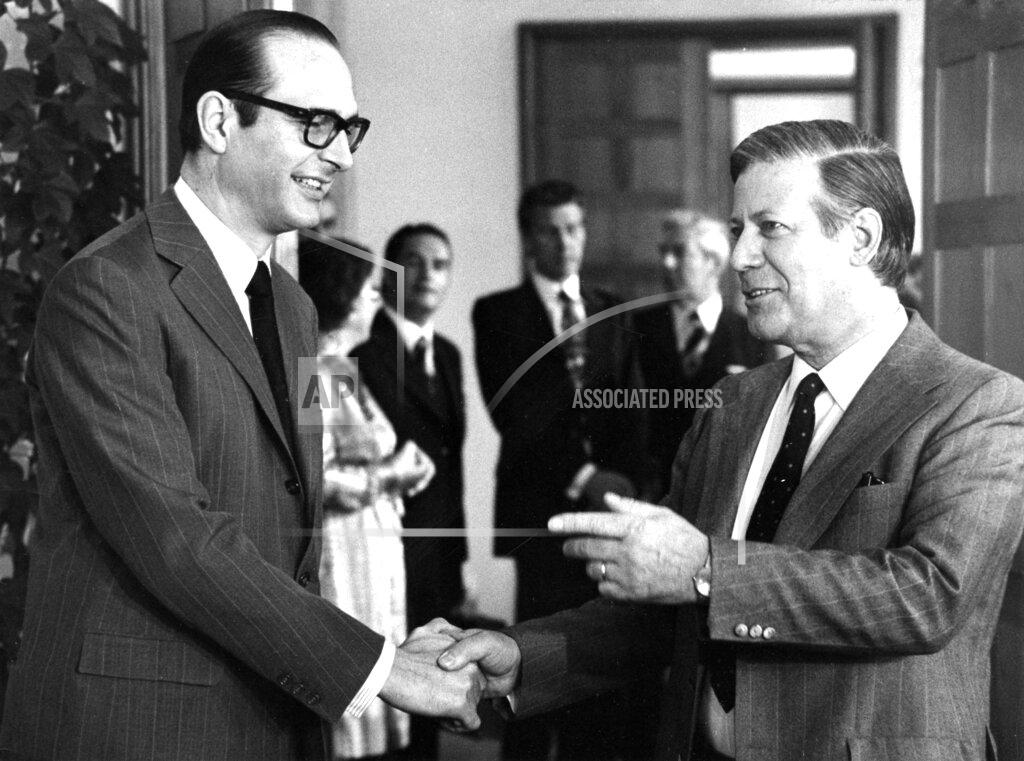
President Antonio de Spinola of Portugal dismissed the rest of the two-month-old civilian provisional cabinet as a prelude to the formation of a new cabinet that well-informed sources said would be dominated by military officers. The sources said an army officer would be named premier and other officers would get key cabinet posts. Portugal’s de Spinola dismissed his 15-member cabinet, including Prime Minister Adelino da Palma Carlos who had offered his resignation, along with four other ministers, on July 9.
The Spanish cabinet held its first meeting in 35 years Thursday without Generalissimo Francisco Franco, who is recovering from a potentially fatal circulatory ailment. Doctors said Franco continued to improve from his attack of phlebitis, the same illness that afflicted President Nixon on his Middle East tour, and the 81-year-old chief of state was permitted to leave bed for the first time Thursday for light exercises. Government officials said the cabinet meeting, chaired in Franco’s absence by Premier Carlos Arias Navarro, was routine. They said they did not expect it to produce any decisions related to Franco’s week-long illness.
The British government Thursday proposed tougher taxes and a measure of state control over the nation’s rich new offshore oilfields. But the proposals, outlined in Parliament, stopped short of any immediate sweeping takeover. Secretary of State for Energy Eric Varley said the government would insist on the right to obtain majority participation — if necessary — discovered from now on in any offshore wells.
Foreign Minister Jean Sauvagnargues of France arrived here today on two‐day visit to acquaint the Kremlin with the views of the new government of President Valery Giscard d’Estaing. Mr. Sauvagnargues, who is expected to meet tomorrow with Leonid I. Brezhnev, the Soviet leader, at the Black Sea resort of Yalta, told newsmen at Vnukovo Airport, “We are not negotiating anything, we are making contact.” The Soviet Union has been eager to cultivate its relations with the new French Government following the death last April of Mr. Brezhnev’s partner in five summit meetings, President Georges Pompidou. The Soviet press has reacted favorably to the election of Mr. Giscard d’Estaing at the expense of his Socialist opponent, Francois Mitterrand.
A Dutch defense official was quoted today as having said that the Netherlands would withdraw militarily from the North Atlantic Treaty alliance by 1979 unless it standardized its weapons systems. According to the newspaper Bild‐leitung, the threat was made by Abraham Sternerdink, State Secretary in the Dutch Defense Ministry, in an interview on reported plans to cut the Dutch armed forces by 20,000 men. Asked whether the Netherlands was; “tired of defense,” Mr. Stemerdink was quoted as having said: “Not yet. We wanted to shock NATO. By doing so, we wanted to achieve greater unification of the equipment of all NATO partners.”
The Soviet Union bowed today to the West’s insistence on a summer break at the slow‐moving European conference on security and cooperation, but only after exacting a token concession on the length of the adjournment. Officially the year‐old attempt to draft a charter for East‐West relations will be interrupted on July 26 for five weeks instead of the minimum of six sought by the West. But unofficially the conference extended its summer break for the full six weeks by the simple expedient of scheduling no important meetings during the first week following the resumption set for September 2. This was the compromise reached after negotiations in which the Russians insisted that the 35‐nation conference press on without interruption to a successful conclusion.
Arab oil states agreed Thursday to help finance the search for an alternative energy source to oil, Saudi Arabian Oil Minister Ahmed Zaki Yamani said. He did not disclose whether a specific figure was committed. Speaking to newsmen after a ministerial conference of OAPEC, the 10-nation Organization of Arab Petroleum Exporting Countries, the Harvard-educated minister said OAPEC would “continue studies” in this area. He was believed to be talking about research in solar and nuclear energy. Yamani said OAPEC would meet again on November 30 in Bahrain, when a report on the research will be presented.
The Soviet Union has offered Lebanon support and assistance to strengthen this country’s defenses against Israeli attack, diplomatic sources said today. The Soviet pledge was contained in a message from Leonid I. Brezhnev, the Soviet Communist party leader, delivered to President Suleiman. Franjieh by Sarver A. Azimov, the Soviet Ambassador to Lebanon. Lebanese Government sources said that the message had special importance at this time because of the series of Israeli attacks against Palestinian guerrilla camps, and “Lebanese villages near the Israeli border in retaliation for terrorist attacks on Israeli civilians. Soviet offers of military equipment to Lebanon have been reported before, but they have never been taken up by Beirut. Informed sources said that there was no likelihood that this policy would be changed.
But, Lebanese officials, welcome Soviet warnings to Israel, regarding them as a means of exerting diplomatic pressure against any Israeli intention of occupying southern Lebanon — a permanent concern in this small, militarily weak nation where Palestinian guerrillas are nearly as strong as the Lebanese Army. Mr. Brezhnev’s message was in reply to a letter that President Franjieh sent to both the Soviet leader and President Nixon after an attack by Israeli airplanes on camps and villages in May.
Representatives of the Soviet Union and the African nation of Somalia signed a 20-year Treaty of Friendship and Cooperation. The alliance would last for only three years, with Somalia’s President Mohammed Siad Barre breaking the agreement in 1977.
The Laotian coalition government decided last night to dissolve the country’s National Assembly, a government spokesman announced today. The decision was made at a stormy cabinet meeting after the neutralist Premier, Prince Souvanna Phouma, threatened to resign when right‐wing cabinet members tried to attach conditions to the dissolution, authoritative sources said. The threat ended the bickering and the cabinet unanimously decided to forward its decision to King Savang Vatthana, the sources said. Pro‐Communist Pathet Lao members of the coalition government formed in April argued heatedly for dissolution of the mostly right‐wing assembly. They said it was illegal because it was elected when Laos was still at war and the coalition government not yet formed. The authoritative sources said Prince Souvanna Phouma decided to act to dissolve the assembly after two members tried to stage a protest Tuesday against the continued presence of North Vietnamese forces in Laos. The two members planned to gather signatures in the assembly for a petition, but Pathet Lao police officers stopped them.
In another development, raiders believed to be Meo tribesmen attacked a bus with automatic‐rifle fire and grenades today, killing two unidentified foreigners and two Laotians on the highway from Vientiane to the royal capital of Luang Prabang, diplomatic sources said. There was no immediate explanation for the ambush.
A South Korean military court today found 21 persons guilty of having plotted student uprisings to overthrow President Chung Hee Park and sentenced seven of them to death. The sentences against To Ye Jong, head of the now defunct People’s Revolutionary party, and six of his followers were the first death sentences since January when President Park cracked down on intellectuals, politicians and student leaders. The three‐man military court sentenced eight to life imprisonment and six to 20 years in jail. The verdicts are subject to review by higher authorities, and the defendants can also appeal to an appellate court‐martial.
John Kerr, the Lieutenant-Governor of New South Wales, took office as the new Governor-General of Australia, appointed by Queen Elizabeth of Australia after being nominated by Prime Minister Gough Whitlam. n 1975, Kerr would return the favor by firing Whitlam with a power reserved for Australian governors-general.
Seventy-one American and Canadian inmates Thursday called off a three-day hunger strike at Lecumberri prison protesting alleged police brutality and extortion by prison officials, police sources said. Prison and police sources said the strike at the jail known as “The Black Palace of Mexico City” had been abandoned, but the office of Attorney General Pedro Ojeda Paullada, refused to comment. The striking prisoners were all awaiting trial, most of them on charges of smuggling narcotics into Mexico while en route to the United States, where the drugs were to be distributed. The striking prisoners said they were protesting not only their “illegal arrests” as transients and delays in their trials but also “brutality and extortion” inside Lecumberri.
The two Soviet cosmonauts Thursday approached the end of their first week aboard the orbiting laboratory, Salyut-3, amid indications that they may be brought back to earth within the next four or five days. An official Tass news agency report said the two men, Pavel Popovich and Yuri Artyukhin, had all but completed the first half of their work program. Western scientific experts in Moscow pointed out that the experimental program would only have begun once the crew had settled down, rested and checked on-board systems, which could have taken up to two days.
The House Judiciary Committee made public the voluminous evidence it has received in its impeachment inquiry into President Nixon’s role in the Watergate affair. Much of the material had been made public previously. There were no startling disclosures, but the 4,133-page record showed a pattern of concern by Mr. Nixon and his aides, going back to within two weeks from the Watergate break-in, about possible further revelations. The information released today by the House Committee consisted of eight thick volumes of factual statements and supporting documents. The committee gave no conclusions in the material, which was the first of seven installments in the planned release of virtually all of the evidence on which Congress will ultimately decide whether Mr. Nixon is fit to continue in office. One of the most important pieces of new information was a taped conversation on June 30, 1972 — barely two weeks after the Watergate burglary — in which Mr. Nixon expressed the hope that there would be no further disclosures but conceded there was such a risk.
President Nixon responded to the committee’s massive compilation of evidence against him with a defense focusing on the argument that he did not authorize hush money payments to the Watergate burglars. He told the committee in a 242-page response prepared by his lawyers exactly what he has said publicly for months: that he first learned of the Watergate cover-up on March 21, 1973; that he then tried to ascertain the facts, and that he then took steps to bring the facts to the proper authorities.
In what a member of the House Judiciary Committee said was “a real bloodletting,” James St. Clair, President Nixon’s chief defense lawyer tried to discredit John Dean before the committee. It was the first time that Mr. St. Clair or any of Mr. Nixon’s other lawyers had to cross-examine Mr. Dean, the President’s former counsel who became the chief witness against the President. While some of the President’s stanch supporters said that James D. St. Clair had opened chinks in Mr. Dean’s allegations against the President, the apparent consensus of committee members was that Mr. Dean had withstood the challenge. One of the few committee members who is believed by his colleagues to be still undecided about whether to vote for impeachment — Representative Henry P. Smith 3d, a Republican from upstate New York — said tonight that on balance Mr. Dean’s testimony had been “hurtful” to the President’s case.
President Nixon, his funds depleted by paying federal income tax assessments, will be unable to meet his share of the $600,000 payment due Sunday on his estate in San Clemente, California, said a lawyer representing him in the matter. Mr. Nixon, the lawyer said, has asked for an extension of six months.
President Nixon met privately with a group of leading business executives and economists, whom he had summoned for a discussion of the economy, and repeatedly expressed the fear that Congress would pass “silly” and “dangerous” legislation if the administration miscalculated its anti-inflation program and tipped the economy into a recession. He ruled out any tax changes for this year and said that he would make a major speech or statement on the economy within a week or 10 days.
The Senate voted 64 to 31 to repeal the controversial “no knock” provision in the federal drug laws. An amendment to strike the provision from the law was added to an $875 million authorization measure that was passed to extend the Drug Enforcement Administration for five years. The legislation must be approved by the House, where its prospects are uncertain.
Despite last‐ditch conservative opposition, Congress appears to have made a bargain with the White House that will ensure continuation of federally financed legal services for the poor by an independent government corporation. In return for a pledge that President Nixon will not veto the long‐stalled legislation, Senate sponsors of the legal services program have agreed to drop authorization for the “back‐up centers” that help organize broad‐scale lawsuits against government, business and industry. Critics of the legal services program, who had threatened to filibuster the latest compromise version, agreed today to let it reach a Senate vote next Tuesday. A final House vote should come shortly thereafter.
Farmers will harvest a record wheat crop of almost 1.93 billion bushels this year, up 2 percent from 1973 production, the Agriculture Department said Thursday. But the crop, sorely needed to replenish grain reserves drained by exports, is about 149 million bushels less than Nixon administration farm officials had counted on only three weeks ago. On June 24, based on indications then, USDA forecast the wheat crop at just over 2.07 billion bushels. And still earlier, on May 9, the department said just over 2.17 billion bushels were indicated. Officials also said corn farmers will have 67.6 million acres of corn for harvest this year, up nine per cent from 1973. Earlier, USDA forecast farmers would have 68.8 million acres for harvest.
Clarence M. Kelley, the director of the F.B.I., said today that investigators still did not know the whereabouts of Patricia Hearst and her friends in the so‐called Symbionese Liberation Army. “We do not know whether or not she is out of the country; we do not know where she is,” Mr. Kelley said of the 20‐year‐old newspaper heiress abducted from her Berkeley, California, apartment more than five months ago. He said, however, that the Federal Bureau of Investigation had no reason to believe Miss Hearst had fled the country. He told a news conference that the investigation was continuing, and “we will prevail here, too.”
He defended the investigation of the kidnapping, which was followed a few weeks later by Miss Hearst’s assertion that she had been converted to the S.L.A. cause and eventually by a fiery shootout in Los Angeles that left six S.L.A. members dead. Also at the 45‐minute‐news conference, which marked his first year as director, Mr. Kelley said that his agency had stepped up its investigation of suspected Chinese and Soviet espionage agents. He also said that during his first year, he experienced no attempt at political pressure from the White House or elsewhere in the Administration.
An undetermined number of federal prisoners seized United States marshals and lawyers at the Federal District Courthouse in Washington and reportedly threatened to kill the hostages unless they were granted safe conduct out of the country. At least two armed prisoners had overpowered four marshals and two lawyers and a female secretary in a cellblock.
A federal grand jury has subpoenaed records of a real estate and holding company secretly owned by Mayor Richard J. Daley for 17 years, the Chicago Sun-Times says. The newspaper said in its Thursday editions that the firm, Elard Realty Co., has assets of about $200,000. It also said that Daley’s ownership of the firm violated no law. Daley was notified of the story 24 hours before publication but through a spokesman declined comment, the newspaper said. The assets of Elard as of March 31, 1973, break down to about $100,000 in real estate, including the mayor’s summer home in Grand Beach, Michigan; a cash bank account of $40,056, and securities valued at $31,431, the newspaper said. A debt of about $27,000 owed to the company also was listed in records.
Swedish author Pär Lagerkvist, a recipient of the Nobel Prize for literature, died Thursday. He was 83 years old. Lagerkvist, a crusader for humanism who shunned publicity through a long literary career, had been taken to the Danderyd hospital outside Stockholm a week ago with a hemorrhage of the brain. The author was elected one of 18 lifetime members of the Swedish Academy of Letters in 1940. Eleven years later, his colleagues gave him the coveted literature prize. Lagerkvist published some 40 poems, plays, novels and essays going back to 1912.
Manager Bill Virdon spent almost the entire game tonight hoping for an insurance run that wasn’t necessary as the Yankees clung to a slim lead and won, 2–1, for a three‐game sweep of their series with the Kansas City Royals. A prime reason for the Yankees’ victory was a superb pitching performance by George Medich. The 26‐year‐old medical student parted with only seven hits in becoming the first New York pitcher to gain 10 victories. Beating Kansas City, however, just seems to come naturally for the 6‐foot‐5‐inch Medich. The victory was his third in as many starts against the Royals, although in the previous instances he needed some late relief help from Sparky Lyle.
Rick Miller and Rico Petrocelli drilled two‐run homers and knocked in three tuns apiece today in leading a 15‐hit Boston attack that gave the Red Sox a 12–3 victory over the Texas Rangers. Bill Lee, with a 10–7 won-lost record, scattered four hits. He gave up Toby Harrah’s 13th home run of the baseball season in the fifth inning and, in the eighth, allowed two runs on Jeff Sundberg’s single and Cesar Tovar’s sacrifice fly.
Larry Hisle’s two‐run double capped a four‐run seventh inning tonight that powered the Minnesota Twins to a 5–2 victory over the Cleveland Indians. Rod Carew and Steve Braun slammed successive run‐scoring singles ahead of Hisle’s double to give the Twins their fifth consecutive victory. Joe Decker (9–8) pitched his fifth complete game of the season. Fred Beene (2–2) was the loser.
Dave Concepcion scored from third on Johnny Bench’s 10th‐inning grounder to give the Cincinnati Reds a 4–3 victory today over the Chicago Cubs. Concepcion and Joe Morgan singled to start the inning and Burt Hooton wild-pitched the runners up a base. Bench then hit a roller between first and second. Second baseman Billy Grabarkewitz made a diving stop but his only play was to first and Concepcion scored.
The Padres release outfielder Matty Alou. Matty’s brother, Felipe, was released by the Brewers on April 29th. Younger brother Jesus keeps the Alou name alive in Major League baseball, playing for the A’s.
Dow Jones Industrial Average: 759.62 (-2.50, -0.33%).
Born:
Lil’ Kim, American rapper, in Bedford–Stuyvesant, Brooklyn, New York, New York.
Gary Stills, NFL defensive end (Pro Bowl, 2003; Kansas City Chiefs, Baltimore Ravens, St. Louis Rams), in Trenton, New Jersey.
Mike Maslowski, NFL linebacker (Kansas City Chiefs), in Thorp, Wisconsin.
Derek Engler, NFL center (New York Giants), in St. Paul, Minnesota.
Chris Fontenot, NFL tight end (Philadelphia Eagles), in Lafayette, Louisiana.
James Manley, NFL defensive tackle (Minnesota Vikings), in Birmingham, Alabama.
Died:
Pär Lagerkvist, 83, Swedish writer and Nobel Prize in Literature laureate.
 History Diaries