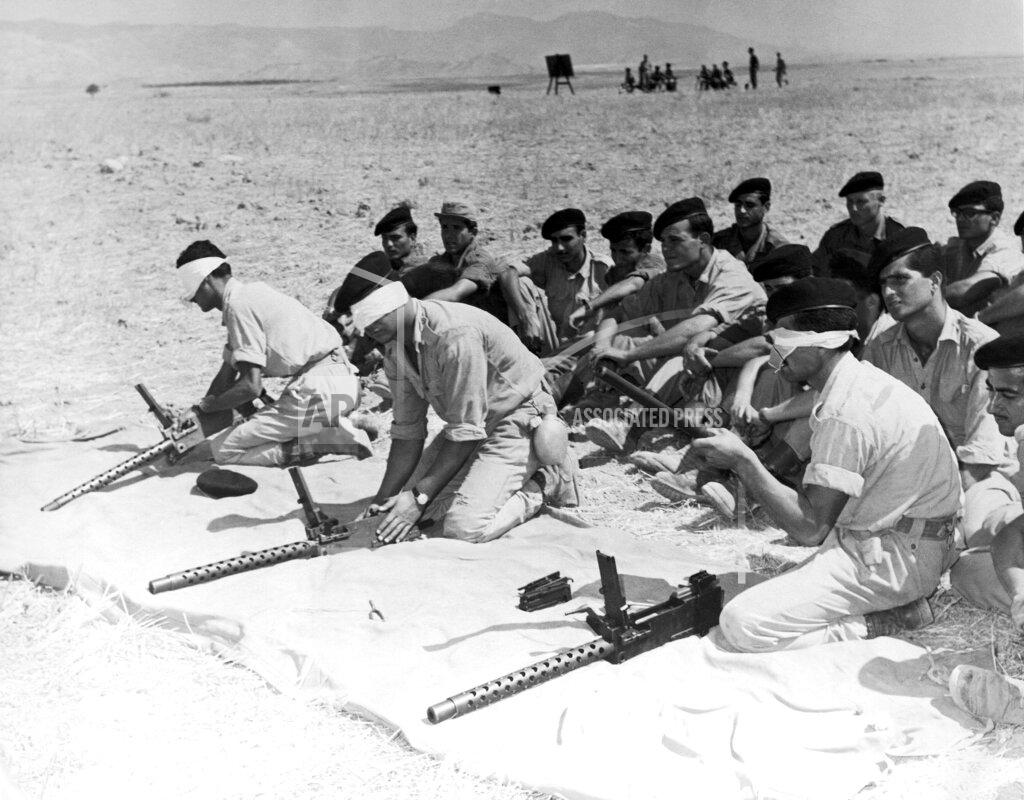
Communist guerrillas today launched their third attack in less than a week on Special Forces camps in the central highlands but were beaten off, United States sources reported. The attack came in the early morning hours at Plei Jrirang, a small forward camp in the jungles near the border of Cambodia. The defenders beat off the attack with a loss of one killed and one wounded, the United States sources said. The Communists’ casualties were not known. Plei Jrirang is 35 miles west of Pleiku, Vietnamese Army headquarters in the area. From Plei Jrirang, two mountain tribal strike companies moved out to attack the guerrillas.
The first Việt Cộng attack in the Pleiku area came Saturday. The defections of some of these mountain tribal forces allowed the guerrillas to overrun the Polei Krong Special Forces camp. That camp is near Kon Tum, 25 miles north of Pleiku. A heavy Communist attack Monday was beaten off with heavy losses on both sides at Nam Đông camp, about 130 miles north of Pleiku in the mountains.
Communist China pledges to help defend North Vietnam if that land is attacked by U.S. forces. Communist China has taken a new step toward a commitment to help defend North Vietnam if it is attacked by the United States. Peking defined such an attack as a threat to China’s peace and security and said “the Chinese people naturally cannot be expected to look on with folded arms” if it should occur. Although the statement did not say what China might do, it was the first promise to go to the aid of North Vietnam. State Department analysts read it as the strongest warning to Washington so far. They also saw it as a challenge to Moscow, whose simultaneous response to a North Vietnamese appeal for support was much less forthright. Administration leaders took note of the Chinese move but showed no special concern. Their present intention is to try to confine the war against Communist guerrillas to South Vietnam. In thinking about the possible extension of that war they have always reckoned with the risk of Chinese intervention.
At the same time, officials made clear that they had no interest in a suggestion of the United Nations Secretary General, U Thant, for a new 14-nation Geneva conference on Vietnam. A State Department spokesman said the need was not for a new political settlement but for compliance with previous accords on Indochina, reached by the same 14 nations in Geneva in 1954 and 1962. Peking’s statement on Vietnam was elicited by a message dated June 25 from North Vietnam’s Foreign Minister, Xuân Thủy, to the signatories of the 1954 Geneva accord. The message pointed to reports that the United States was considering plans to extend the war and to attack North Vietnam directly. It called on the Geneva powers to take “firm and timely action to demand that the United States Government give up its design of intensifying provocation and sabotage” against North Vietnam.
Reliable sources said today that Communist Pathet Lao soldiers shot down a chartered American helicopter Tuesday while it was on a supply mission to a right‐wing “pocket” in Samneua Province in northeast Laos. The sources said the helicopter’s two occupants — an American pilot and a Filipino mechanic — leaped from the craft just before it burst into flames. The sources said the two men were picked up this morning by a rescue helicopter after hiding 36 hours in a jungle.
They were reported to have been taken to an American base at Udon, Thailand. The men were suffering from hunger and exposure, but their general condition was said to be good. The sources declined to divulge the men’s names. The helicopter was operated by Air America, a private charter company employed by the United States aid mission to Laos. [Ed: Actually, of course, Air America is a CIA operation.]
Resolutions to punish Cuba appeared today to be assured of a majority vote when the American foreign ministers meet in Washington July 21. Although the resolutions seemed certain of at least 16 votes, a comfortable majority, a major question is whether all of the governments maintaining diplomatic and consular relations with Cuba would go through with the proposed ministerial recommendation to break the ties. Another question was whether many governments would be willing and able to enforce a planned mandatory injunction to suspend their trade with Cuba.
The principal resolution of the three to be placed before the 20‐nation parley would convict Cuba of having committed aggression against Venezuela last year. In addition to the measures on diplomatic relations and trade, it would recommend suspension of all air communications with Cuba and require suspension of sea communications.
Despite Venezuela’s insistence that all the measures to be invoked against Cuba under the provisions of the 1947 Inter-American Reciprocal Assistance Treaty, known as the Rio de Janeiro Pact, be mandates, the resolution that is now virtually in its final form proposes that the conference merely “recommend” the break in relations and the halting of air communications. This compromise, originally worked out by a five‐man ambassadorial committee here, was designed to avoid defiance by some governments that might feel it was their sovereign right to maintain diplomatic relations with any foreign country.
Only Bolivia, Chile, Mexico and Uruguay maintain diplomatic relations with Havana. It is known that the Chilean and Mexican Governments are firmly opposed to breaking them. In fact, some diplomats believed that their foreign ministers might actually vote against the whole anti‐Cuban resolution, although there were hopes that they would instead abstain. Bolivia is expected to go along with the majority and follow the recommendation on breaking relations. Uruguay’s plans were uncertain. So were those of Haiti, which has no diplomatic ties with Cuba, but often plays a maverick role in the Organization of American States.
The legislature passed a law today drastically modifying the judicial system of Cyprus. The law merged the former Supreme Constitutional Court and the High Court, abolished the post of chief neutral judge in both courts and ended communal requirements in lower courts. It was adopted by the Greek Cypriot legislators; the Turkish Cypriot members were all absent. A government spokesman said the law was passed to make it “possible for justice to continue to be administered, unhampered by the present anomalous situation.”
Under the new law the merged court will be known as the Supreme Court. The senior judge on the island, Mehmed Zekia, a Turkish Cypriot, was designated first chief judge of the new court, with his successors to be named by the President of the Republic. It was not known if Judge Zekia would accept the appointment. The Government spokesman said that the judicial system had all but been paralyzed by the absence of many Turkish Cypriote judges from the courts as a result of “political pressure from the Turkish Cypriot leadership.” The Supreme Constitutional Court was composed of a Greek Cypriot judge, a Turkish Cypriot judge and a neutral judge. The neutral judge, a West German, resigned more than a year ago.
The former High Court, the supreme appellate court, was composed of two Greek Cypriot judges, one Turkish Cypriot Judge and a neutral judge with two votes. That neutral judge, a Canadian resigned at the end of May after receiving death threats from Greek Cypriot terrorists. Without the presence of the judges of both communities in the courts and in the absence of the neutral judges the court system was not able to function properly and appeals could not be heard. The situation was further complicated, the Government spokesman observed, because the communal requirements of the courts, particularly in the case of the lower courts, required a Greek to be tried by a Greek judge, a Turk by a Turk and mixed cases by a mixed bench.
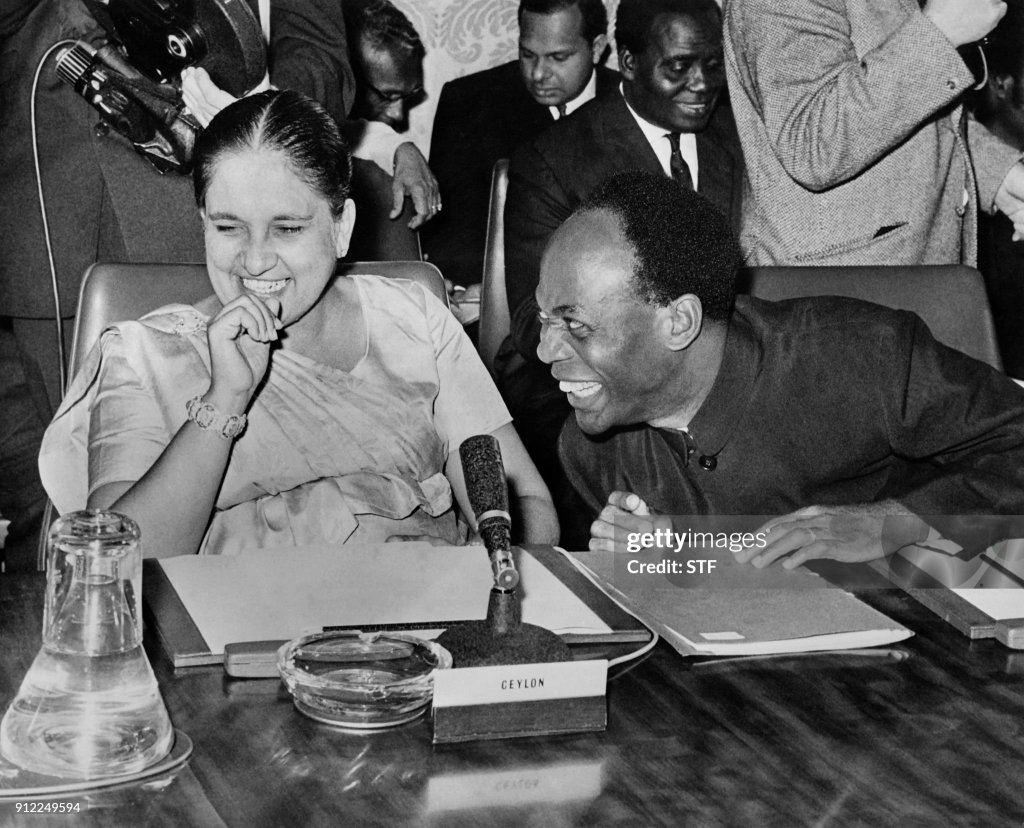
The African leaders at the Commonwealth Prime Ministers’ meeting in London jumped up from the conference table today to demonstrate their support for a showdown on racial policies in Africa. They swarmed around Prime Minister Albert Margai of Sierra Leone, thumped him on the back and offered congratulations for his denunciation of the “repulsive policies” of the South African Government. President Kwame Nkrumah of Ghana said that majority rule should be enforced not only in South Africa but in Southern Rhodesia and Cyprus as well. Current unrest in Cyprus, an independent member of the Commonwealth since 1960, stems from the determination of the Greek Cypriot majority to do away with the Turkish Cypriot minority’s veto on legislation.
Qualified sources said tonight that President Joseph Kasavubu had signed a decree naming Moïse Tshombe, former President of Katanga Province, as the Congo’s fourth Premier and appointing 12 ministers to his “transition” government. However, Cyrille Adoula, the retiring Premier, who heads a caretaker government, has so far declined to countersign the decree. It requires his signature or that of another minister to take effect. The sources said Mr. Adoula had not signed the decree because he was still insisting that a woman, preferably Mrs. Marcel Tshibamba, young wife of a Congolese doctor, be named to the Cabinet. Mr. Tshombe has agreed to include Mrs. Tshibamba as one of the two ministers from Mr. Adoula’s Rally of Congolese Democrats. However, Mr. Kasavubu refuses to have a woman in the Cabinet.
Mr. Adoula appears to be playing a shrewd political game. His insistence on a woman minister may win his party some women’s votes in the next national elections, scheduled to be held within nine months. Under the new Constitution, now being voted on in a national referendum, women do not have the right to vote. This provision has been criticized by all political parties and is almost certain to be amended before the elections. Yet Mr. Adoula is apparently looking far beyond the women’s vote. Observers believe he has seized on this issue to avoid signing the decree establishing Mr. Tshombe’s government. Observers believe he wants to avoid responsibility for the Tshombe “government of national reconciliation,” which he believes will be a failure. Mr. Tshombe is demanding that Mr. Adoula take this responsibility. Although another Minister could countersign the decree, he insists that Mr. Adoula do so.
Ahmed bin Abdullah, the Sultan of Fadhli on the Gulf of Aden, was deposed by a vote of the Supreme Council of the Federation of South Arabia for attempting to pull Fadhli out of membership in the British-protected federation. On July 11, the Federation Council would elect his brother, Nasser bin Abdullah as his successor. Three years later, Britain would withdraw from the Aden region and all of the sultanates within the South Arabian Federation would be abolished.
Premier Hayato Ikeda won endorsement today by a thin margin from his divided party to continue as head of Japan’s conservative Government. The 64‐year‐old Premier received 242 votes to 232 for a coalition of his two major rivals, Eisaku Sato and Aiichiro Fujiyama, in balloting for president of the ruling Liberal‐Democratic party. The party chief automatically serves as Premier. Mr. Ikeda’s tally was just four more than the 238‐vote majority required for victory. Premier Ikeda, a blunt-spoken financial expert who has displayed increasing political skill, promptly pledged to continue the policies that have brought Japan spectacular economic progress in his four years of rule. In a brief address after the vote, he also promised efforts to modernize the faction-ridden Liberal‐Democratic party and enhance Japan’s growing international prestige.
In Alabama, Circuit Judge James Hare issued “an injunction that almost destroyed Alabama’s civil rights movement”, prohibiting members of organizations favoring or opposing civil rights from gathering together. Specifically named in the order were the NAACP, the Student Nonviolent Coordinating Committee, the Southern Christian Leadership Conference, the Dallas County Voters League (in Selma, Alabama), as well as various Ku Klux Klan groups and the American Nazi Party. Forty-one civil rights leaders were specifically named, including Martin Luther King Jr. of the SCLC and John Lewis of the SNCC. Under the order, if three or more people from the named organizations, or the specific individuals, gathered together, they would be subject to arrest and jail for contempt of court, with enforcement at the discretion of local law enforcement. “Hare’s injunction was ruinous,” a historian would later note. “Mass meetings and rallies disappeared in Alabama and voter applications declined to their lowest number in years.”. Daniel H. Thomas, the federal judge whose district included Judge Hare’s circuit, would delay a ruling on a motion to dismiss the injunction until 1965.
“Mississippi is hell.” This was the way Dr. Eugene Reed, president of the New York State Conference of the N.A.A.C.P. branches, described a four‐day tour of the state. Dr. Reed arrived here today with six other members of a task force of the National Association for the Advancement of Colored People that had investigated conditions of Blacks in the Southern state. He charged that the Federal Government was remiss in protecting the rights of the Black citizens in Mississippi. He said: “I found no signs of federal intervention and saw every indication of police collusion with other white races in the state. I know we have problems in New York, but New York is a hell of a long way from being Mississippi.”
Dr. Reed said he had seen people walking around with guns and flashing them in the faces of the Blacks. He said he had been confronted by a county prosecutor who said he had no right in the state. Both Blacks and white people in Mississippi are afraid of the law enforcement officers, he said. Asked whether he thought there would be more violence in Mississippi and more civil rights workers disappearing, Dr. Reed replied, “Regretfully, I do.”
J. Edgar Hoover, director of Federal Bureau of Investigation, is planning to fly to Mississippi tomorrow in connection with the disappearance there of three civil rights workers. This was reliably reported here tonight, but it was not clear from the information available whether a break had developed in the case. Mr. Hoover has often appeared on the scene of difficult cases handled by his agency when major announcements were made.
One reason for the trip by Mr. Hoover is the opening of a new bureau office at Jackson, Mississippi’s capital. This office, it is understood, will be the FBI’s largest in the South, except the one at Atlanta, and will be in effect the FBI’s “civil rights bureau.” Mr. Hoover, it was learned, will open the new office tomorrow with a ceremony. The quarters occupy an entire floor of a Jackson office building. Mr. Hoover is also expected to confer with Gov. Paul BB. Johnson Jr.
It was also considered possible that the FBI chief planned to make his own spot check into the unsolved disappearance that has frustrated the search efforts of Federal and local police authorities as well as hundreds of sailors from the naval air station at Meridian, Mississippi. It was assumed that Mr. Hoover would fly to Philadelphia, Mississippi, where the three young men, two whites and a Black, were last seen June 21.
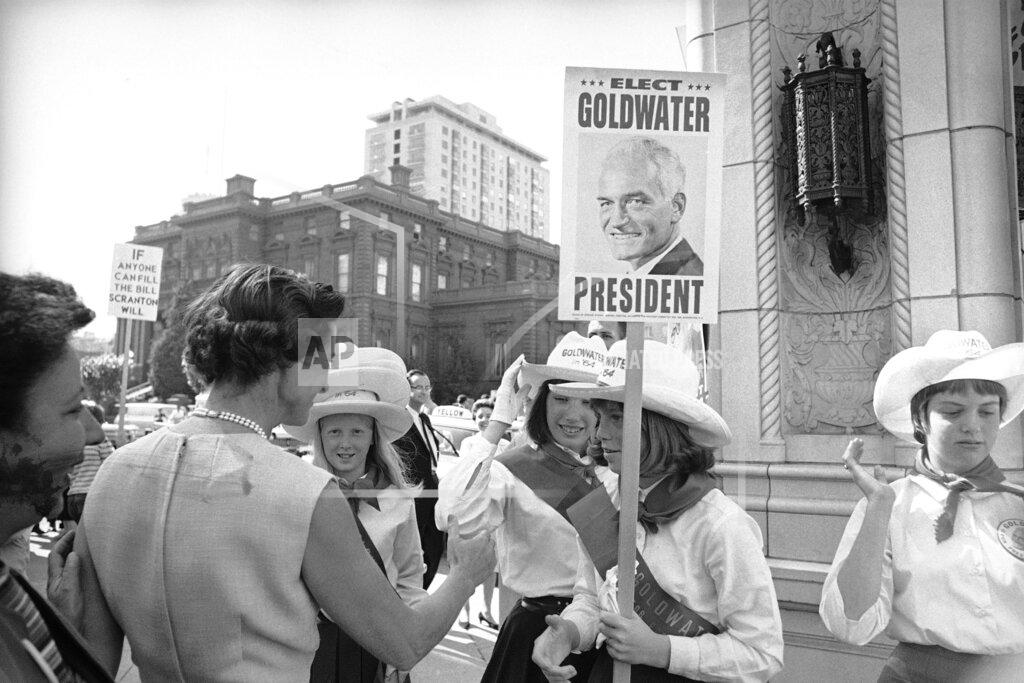
Senator Barry Goldwater swept toward almost certain victory tonight in the race for the Republican Presidential nomination. A late break from Ohio all but buried the last, desperate hopes of the anti‐Goldwater forces. Nomination on the first ballot next Wednesday is now all but assured. The Ohio break was a move to release the delegation, previously held for Governor James A. Rhodes as a favorite son. Mr. Rhodes and Ray C. Bliss, the Ohio state Republican chairman, met tonight and then announced that they would recommend to the delegation at a scheduled meeting Monday release of all the delegates on the first ballot.
Goldwater backers claimed at least 38 of the 58 Ohio votes, and some said they might now get all 58. Without counting any delegates from Ohio, The Associated Press poll gave the Arizona Senator 710 delegates, 55 more than the 655 needed for the nomination. The psychological blow of the Ohio development was as devastating as the number of delegates added to the Goldwater total. The opposition strategy had been basically to prevent a first-ballot nomination, and holding all favorite‐son votes intact was vital to the success of that course.
Senator Barry Goldwater confirmed today that if he were President, he would order a “win policy” in South Vietnam and would then tell the military commanders “That it was their problem and to get on with solving it.” Mr. Goldwater, who arrived today at the scene of the Republican National Convention in San Francisco, made the remarks at a news conference. The conservative Arizonan said that if the Platform Committee produced a platform widely at variance with his views, “I would do the honest thing — I would withdraw.” But he made it clear that he had no desire to fight with the Platform Committee, on which his interests are well protected.
Much of the news conference at the Mark Hopkins Hotel, at which Mr. Goldwater is quartered, concerned a controversial interview with Mr. Goldwater published by a German news magazine, Der Spiegel. Mr. Goldwater said he had told his interviewer that “I would first make up my mind to have a win policy” in Vietnam and that he would then “tell my Chiefs of Staff that it was their problem and to get on with solving it.” But he said, “I’ve never advocated the use of nuclear weapons any place.” He said he hoped he would never be confronted with a decision as to their employment.
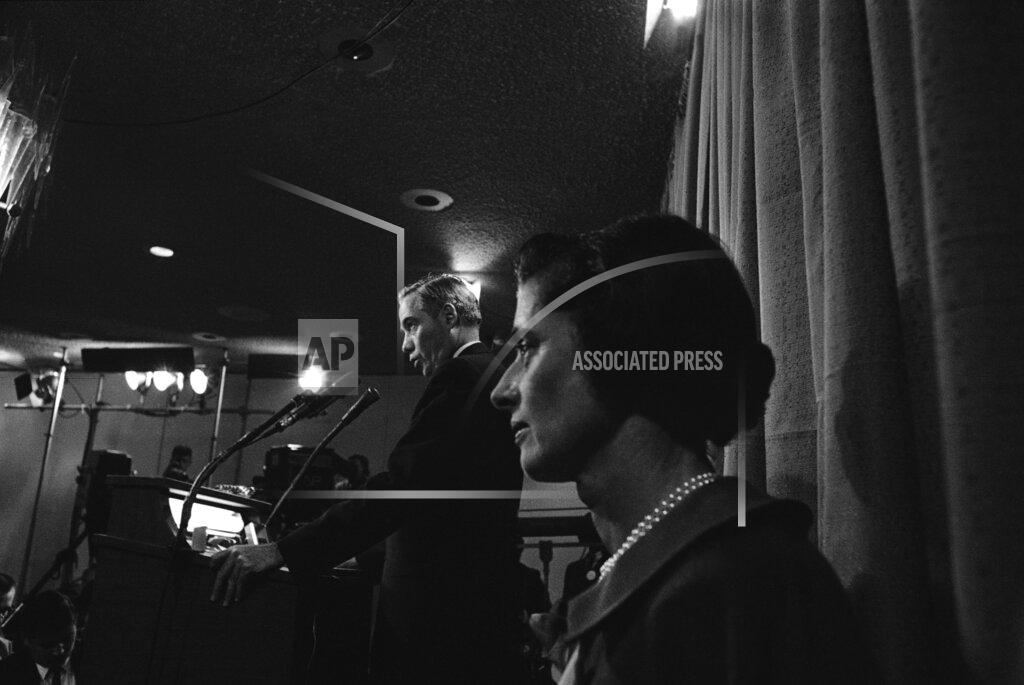
Governor William W. Scranton invited a harsh exchange with Senator Barry Goldwater today over the Arizonan’s fitness to conduct the country’s foreign affairs. In a specially called news conference, the Pennsylvania Governor pressed with new aggressiveness the charge that his opponent’s position on the use of nuclear weapons was reckless and dangerous. Mr. Scranton cited new reports of a June 30 interview published in the West German magazine, Der Spiegel, to demand that the Senator produce the full transcript and give it to the party platform committee tomorrow.
Senator Goldwater passed up the opportunity at a news conference of his own to debate the question. He shrugged off the demand for a transcript by suggesting that Mr. Scranton buy a copy of the magazine and present it to the platform committee. “I have no objection,” he remarked.
All 39 people on board United Airlines Flight 823 were killed after an uncontrollable fire broke out inside the Viscount turbo-jet, which crashed two miles northeast of Parrottsville, Tennessee. The plane had originated in Philadelphia and was on its way to a stop in Knoxville with a final destination in Huntsville, Alabama with 35 passengers and a crew of four. The fire had originated below the passenger floor and eventually entered the passenger cabin. One passenger attempted to abandon the aircraft through an escape window prior to impact but did not survive the free-fall. The fire eventually burned through the cockpit and it was likely the crew was unconscious by that time. The exact cause of the fire remains unknown; overheating of the plane’s battery or something in a passenger’s luggage were thought the most likely possibilities.
The Senate Armed Services Committee approved unanimously today a surprise 2.5 percent pay increase for all members of the fighting forces who have served more than two years. The annual cost was estimated at $202 million. This would come on top of the 14.1 percent general military raise voted by Congress last October. Its cost was put at $1.2 billion a year. At that time, it was provided that other increases could come as living costs indicated. President Johnson requested in February that an additional 3 percent for officers and a 2.4 percent raise for enlisted personnel be considered.
Francis Russell, a historian, announced that he had found 250 love letters that had been written by Warren G. Harding and said that they were the first confirmation of speculation that Harding, the 29th President of the United States, had had an extramarital affair prior to taking office. The letters and postcards, written by Harding to Carrie Fulton Phillips between 1905 and 1920, had been found in a locked closet at Mrs. Phillips’ home in Marion, Ohio, after her death in 1960. One of the last letters showed that Mrs. Phillips had demanded $5000 a year in a blackmail scheme. Harding’s heirs would sue to prevent the release of the letters, or their description in Russell’s upcoming biography of Harding. In 1971, the suit would be settled with the provision that the letters would be presented, under seal, to the Library of Congress, and not to be released until July 29, 2014.
Bo Belinsky pitched a twohitter and posted his first shutout in two seasons tonight as the Los Angeles Angels defeated the Chicago White Sox, 3–0. Belinsky, gaining his seventh victory in 11 decisions, struck out five while walking two. He also hit one batter.
The American League-leading Baltimore Orioles swept a twilight doubleheader from Cleveland tonight, defeating the Indians in the opener, 4–3, as Boog Powell slammed two two-run homers, and 2–1 on a ninth inning homer by Sam Bowens in the second game. Bowens’s seventh homer, with two out in the top of the ninth, broke a 1–1 tie.
Frank Thomas, pinch-hitting for Roy McMillan, strokes a two-out, two-run homer off Curt Simmons, giving the New York Mets a 4–3 victory over the St. Louis Cardinals at Shea Stadium. The round-tripper comes in the outfielder’s first at-bat in five weeks, due to being sidelined by a glandular infection.
The Houston Colts shock the Los Angeles Dodgers with four in the ninth for a 6–5 triumph. Nellie Fox bloops a single to plate the tying and winning runs. Earlier, Jerry Grote had belted a two-run homer off Don Drysdale.
Dow Jones Industrial Average: 845.13 (-0.32).
Born:
Courtney Love [as Courtney Michelle Harrison], American singer (Hole) and actress (“People vs Larry Flynt”), and widow of Kurt Cobain, in San Francisco, California.
Scott Verplank, American golfer (5 PGA Tour titles; Ryder Cup 2002, 2006), in Dallas, Texas.
Keith McKeller, NFL tight end and wide receiver (Buffalo Bills), in Birmingham, Alabama.
Terence Mack, NFL linebacker (St. Louis Cardinals), in Winnsboro, North Carolina.
Don Baldwin, NFL defensive end (New York Jets), in St. Charles, Missouri.
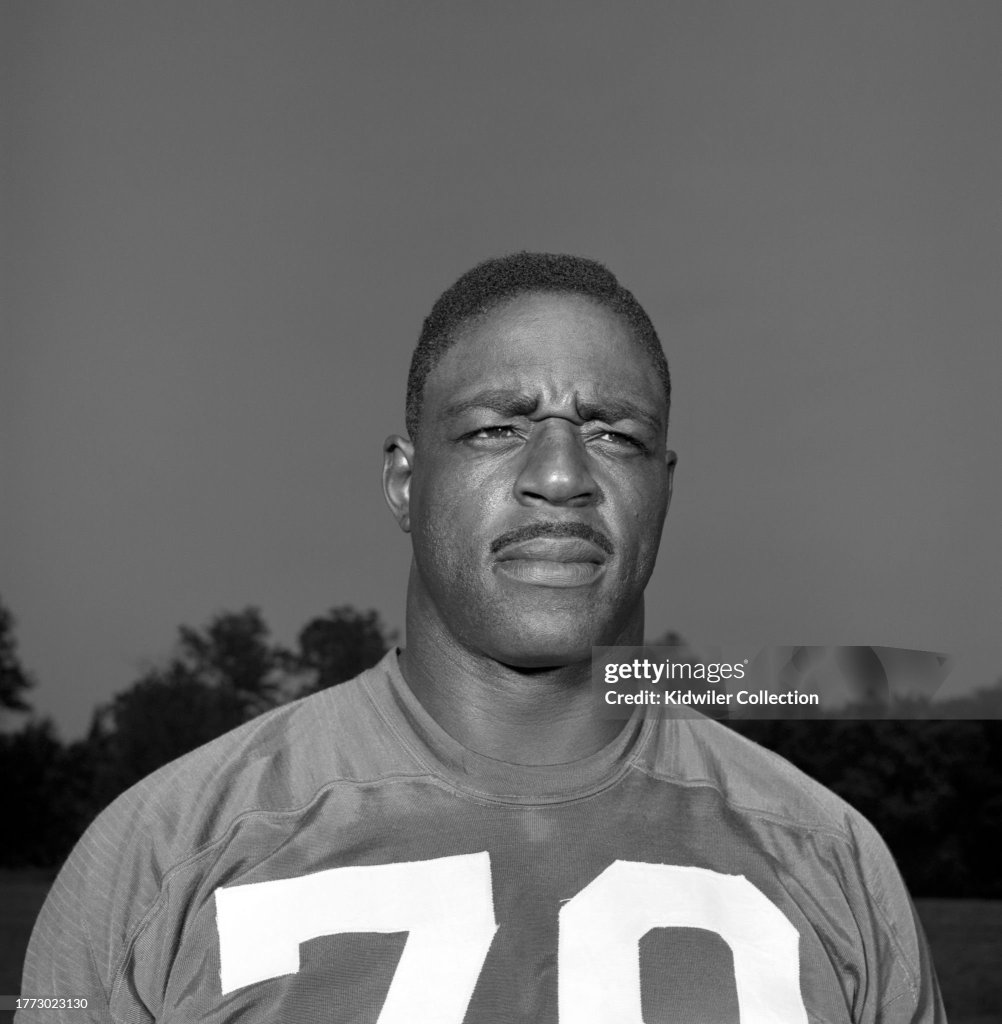
Demise Williams, NFL defensive back (Los Angeles Raiders), in Greenville, South Carolina.
Ronnie Grandison, NBA power forward (Boston Celtics, Charlotte Hornets, New York Knicks, Miami Heat, Atlanta Hawks), in Los Angeles, California.
Teresa Edwards, Team USA and WNBA guard and forward (Olympics, gold medals, 1984, 1988, 1996, 2000; bronze medal, 1992; Minnesota Lynx), in Cairo, Georgia. [She was the youngest gold medalist in women’s basketball (age 20 in 1984) and the oldest gold medalist in women’s basketball (age 36 in 2000)]

[Fun fact: Women were not allowed to ride on the outside of cable cars in San Francisco at this time. It was not a written law but the S.F. Police would arrest you anyway. Ms. Scranton was apparently considered “important” enough for SFPD to look the other way while this photo was snapped. A U.C. Berkeley student forced the police to arrest her the following year (1965), fought it in court, and won, and the prohibition on women riding on the outside of cable cars ended.]
 History Diaries