A U.S. Department of Defense spokesman announced that American casualties in Vietnam had risen to 1,387 “since American forces became fully involved in the jungle war in 1961”, a number broken down as “152 killed in action, 96 deaths not related to combat, 971 wounded in action, 151 non-battle injuries and 17 missing in action.”
Secretary General of the UN U Thant proposes that the Geneva conference that ended in 1954 be reconvened to negotiate peace in Vietnam. Mr. Thant said at a news conference that he has felt strongly for 10 years “that military methods will not bring about peace in South Vietnam.” He added that “the only sensible alternative is the political and diplomatic method of negotiation which, even at this late hour, may offer some chance of a solution.” The Secretary General said that he did not see how the United Nations could be involved in the South Vietnam situation at this stage in view of the fact, among other matters, that “more than one” of the parties concerned are not members of the United Nations “and are not. accountable to this organization.” He did not say whether he had in mind South Vietnam, North Vietnam or Communist China, which are not members. On the other hand, Mr. Thant emphasized the point that if an agreement on South Vietnam was reached at a reconvened Geneva conference, “then perhaps the United Nations may be usefully and properly involved in seeing that the terms of the agreement are observed.”
Official sources noted that the United States was still opposed to reconvening either the 1954 or the 1962 Geneva conference because Washington believes the issue involved is to carry out existing agreements, using existing machinery. United States sources add that in view of repeated violations of the existing agreements, there is no point in negotiating new ones. The Soviet Union, Communist China and France have urged that the 1962 Geneva conference, which agreed on the pacification and neutralization of Laos, be reconvened to deal with the renewed fighting in that country. Mr. Thant’s statement is believed to be the first official recommendation for reconvening the 1954 conference, at which the agreements ending the war in French Indochina were signed. This had no connection with the United Nations. Control commissions composed of representatives of India, Poland and Canada were set up to supervise compliance with the agreements, which divided Vietnam and removed Vietnamese Communist troops from Laos in addition to ending the fighting between French and Communist forces.
The others at the 1954 conference were the United States, France, Britain, the Soviet Union and Communist China. All except the United States were parties to a final declaration stating they would confer in the event of a violation of the armistice agreements. While Mr. Thant did not indicate what kind of agreement he had in mind for South Vietnam, it was understood that he would favor its neutralization, thus giving it the formal status Laos and Cambodia have. Under the Geneva accords, South Vietnam was forbidden to join any mutual defense agreement, and Laos and Cambodia were forbidden to join any contrary to the United Nations Charter. These provisions were generally interpreted as requiring all three to maintain neutrality.
In addition, the Geneva agreements called for a plebiscite in South and North Vietnam, to be held by July, 1956, to set up a united government. The plebiscite never took place as a result of opposition by South Vietnam, which has held that it is not bound by this provision because its armistice with North Vietnam was signed by a representative of the French command, not by a South Vietnamese official. Furthermore, the Southeast Asia Treaty Organization, which was established a few months after the Geneva conference, extended its protection to Laos, Cambodia and South Vietnam at the request of the United States. Since then both the Soviet Union and Communist China have accused SEATO of violations of the Geneva agreements.
General Maxwell D. Taylor urged Premier Nguyễn Khánh today to speed his government’s political and administrative reform measures of pacification in critical areas of the Vietnamese countryside. The new United States Ambassador called on the Premier 24 hours after his arrival in Saigon as successor to Henry Cabot Lodge. The meeting took place in a combination protocol and working session lasting an hour. It was the first between the two since General Taylor became Ambassador, though they conferred many times previously during the general’s frequent visits to Vietnam. Quickly getting down to specifics, General Taylor pursued the theme he presented in a public statement yesterday: a more vigorous implementation of existing programs to find and defeat Việt Cộng Communist insurgents in the countryside.
American officials have expressed some satisfaction lately over the progress of pacification in certain areas, including districts in the critical provinces around Saigon. However, there is a feeling that the central Government is being overly cautious in pushing administrative reforms that may go against entrenched sluggishness in Vietnamese officialdom. General Taylor is expected to stress the theme of political leadership in his early meetings with Premier Khánh — the feeling of Americans that the Premier should be making more of an effort to create his own political following among the people of the countryside rather than confining himself to the role of chief administrator of a complex government. General Khánh’s tours outside the capital have become less frequent recently as he has found himself more and more tied down by administrative routine.
The Philippine Congress voted tonight to appropriate a million pesos ($250,000) for economic and technical assistance to South Vietnam. Medical, community development, psychological warfare and other personnel will be sent.
Mrs. Ngô Đình Nhu charged today that the United States had neglected the Communist Việt Cộng enemy to turn against the regime of her brother‐in‐law, the late President Ngô Đình Diệm of South Vietnam. The widow of President Diệm’s brother was refused a visa by the State Department to speak at the Flushing, Queens, Conservative Club’s “truth rally” held last night. She addressed the rally by means of a tape recording. In a letter to the club made public today she charged that the United States suspended aid from May through November, 1963, while Buddhists protested against the Diệm regime. A coup toppled the regime and President Diệm and his brother Ngô Đình Nhu lost their lives.
A Communist‐led Pathet Lao and North Vietnamese military build‐up east of Salavan (Saravane) in southeastern Laos threatens the strategic Bolaven Plateau, the right‐wing commander of the Southern Military Region said today. Major General Prasouk Samly said that if the Communists could take the plateau they would be able both to protect their Hồ Chí Minh supply trail from North Vietnam to South Vietnam and to threaten Attopeu. Attopeu, the right wing’s southernmost outpost, has long been a thorn in the side of the North Vietnamese movement of men and supplies into South Vietnam. General Prasouk said planes from the North Vietnamese capital of Hanoi had been landing for the last few weeks at Xépôn (Tchepone) in east-central Laos, transporting supplies that are trucked to a depot northeast of Salavan and then carried by coolies over the South Vietnamese border. Heavy rains are slowing operations on both sides.
The United States completed today the shipment of supplies and equipment for any military forces it might send to Thailand. Pathet Lao military pressure in Laos has subsided in the last three weeks, but American officials here were watching closely for signs of a new push toward Moung Soui, a neutralist strongpoint protecting a highway leading from the Plaine des Jarres. The last shipload of matériel was unloaded at a Bangkok wharf. Similar cargoes from five small transports have reached advance depots in northeast Thailand near the border with Laos. The arrival of the sixth ship completed the stepped‐up program of replenishing equipment at these advance bases for possible use by the Army’s newly organized combat brigades.
The United States was said to be in a position to fly in what an official described as “a considerable number” of troops within 48 hours. Most of the supplies brought by the transports, which began arriving three weeks ago, consists of heavy trucks, armored personnel carriers and communications equipment. Troops brought into Thailand by air could be provided with basic transport and heavy equipment from the stockpiles.
Premier Khrushchev proclaimed today the Soviet Union’s support for the “sacred struggle” of the people of South Vietnam against what he termed United States “imperialism.” He also declared that the people of South Korea were suffering under an “American occupation” and warned that a “serious situation” was developing in Laos. Intervention there by “aggressive imperialist forces” might touch off a war, the Premier added. The Soviet leader charged that American military flights over Cuba amounted to “replacing international law with robbery” and could lead to “the most serious consequences.” Mr. Khrushchev delivered his address at a Kremlin reception for new graduates from Soviet military academies. Almost the entire leadership of the Government and party as well as the ranking officers of the armed forces and military guests from other Communist countries were present.
Premier Khrushchev hailed the transformation of the Soviet armed forces into a modern nuclear striking force. Previously, he said, the United States was able to rely on advanced foreign bases while its own territory was virtually invulnerable to attack. This American advantage, Mr. Khrushchev added, has “completely vanished” with the creation of a Soviet nuclear rocket force that “can deliver retaliatory strikes at any point of the globe.” “This is our enormous achievement, which has radically changed the balance of power,” he asserted.
The Premier also cautioned Turkey against considering any invasion of Cyprus to intervene in the hostilities of the Greek and Turkish Cypriotes. Such a move could “cause a dangerous chain reaction,” he said and repeated earlier calls for the withdrawal of British troops from the island.
Peace negotiations regarding the future of Cyprus began in Geneva, between representatives of Greece and Turkey. United Nations mediator Sakari Tuomioja, the former Prime Minister of Finland, moderated the talks, and former U.S. Secretary of State Dean Acheson served as mediator, but no representative from Cyprus was present to appear for either the Greek-speaking or Turkish-speaking Cypriots.
President Ahmed Ben Bella announced tonight the capture of Colonel Mohammed Chaabani, the rebel leader who fled into the hills at the Sahara’s northern edge a week ago. Mr. Ben Bella gave no details of Colonel Chaabani’s capture, which he called a “serious blow” to the government’s increasingly bold opposition. According to an unofficial report, Colonel Chaabani and 80 of his men surrendered without a fight in the Ouled‐Nail Mountains southwest of Bou‐Saada. They had been surrounded by a unit of the National People’s Army, the report stated. Algerian sources reported that the colonel’s arrest had resulted from betrayal by a key subordinate.
Colonel Chaabani’s refusal to surrender his eastern Sahara command and come to Algiers led to an open clash with the “Socialist” Ben Bella regime. As Colonel Chaabani withdrew into the Aurès Mountains with about 2,000 men, loyalist Government troops rapidly occupied his headquarters at Biskra, 100 miles southeast of here, and other key Sahara oases. The rebel colonel had ruled the area on a virtually autonomous basis. In his growing defiance of Mr. Ben Bella he had declared that Socialism was incompatible with Islam.
New trade links between Rumania and Communist China were announced today by the Bucharest radio. The announcement said the two nations had agreed to extend their scientific and technical cooperation in the oil, chemical and food industries and in agriculture.
Joe Gaetjens, a Haitian soccer football player who had been on the U.S. National Team in the 1950 World Cup, was arrested in Haiti by that nation’s secret police force, the Tonton Macoutes, and was never seen in public again. Gaetjens, whose family opposed the dictatorship of Francois Duvalier, was taken to the prison at Fort Dimanche, tortured and, presumably, killed.
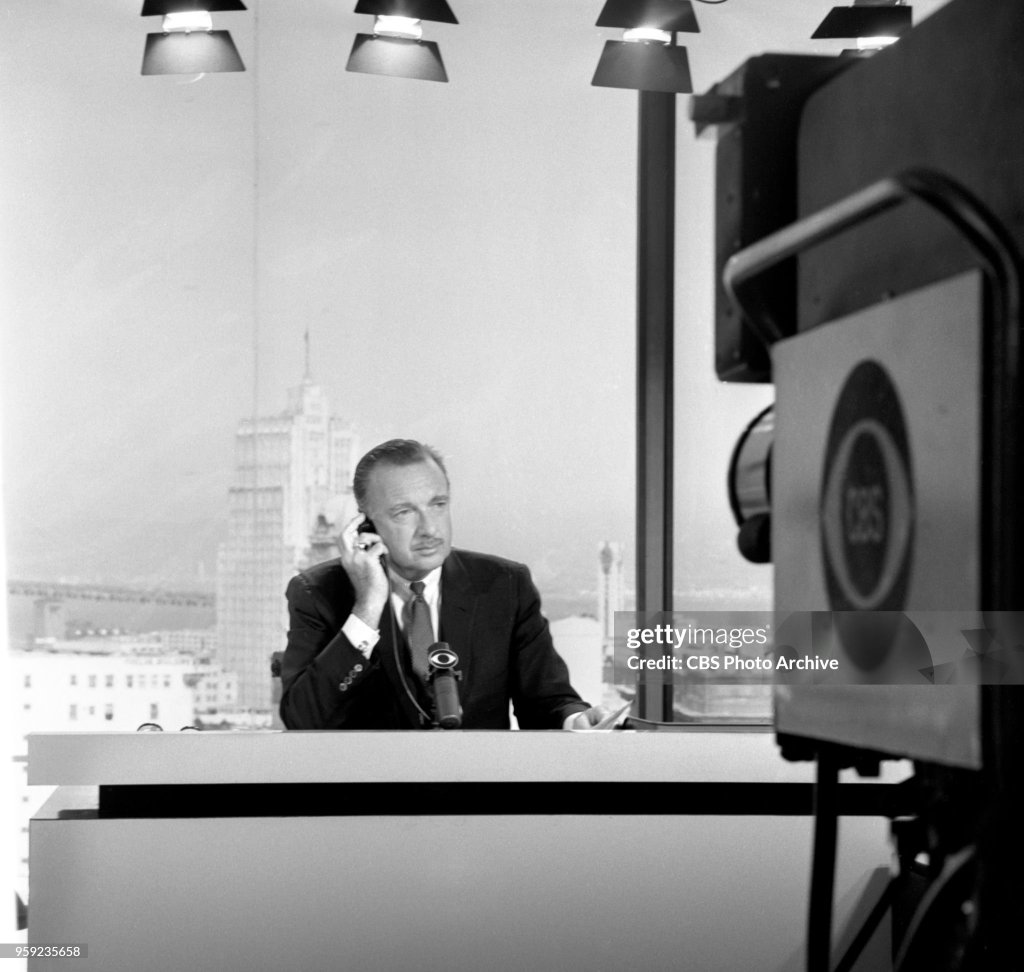
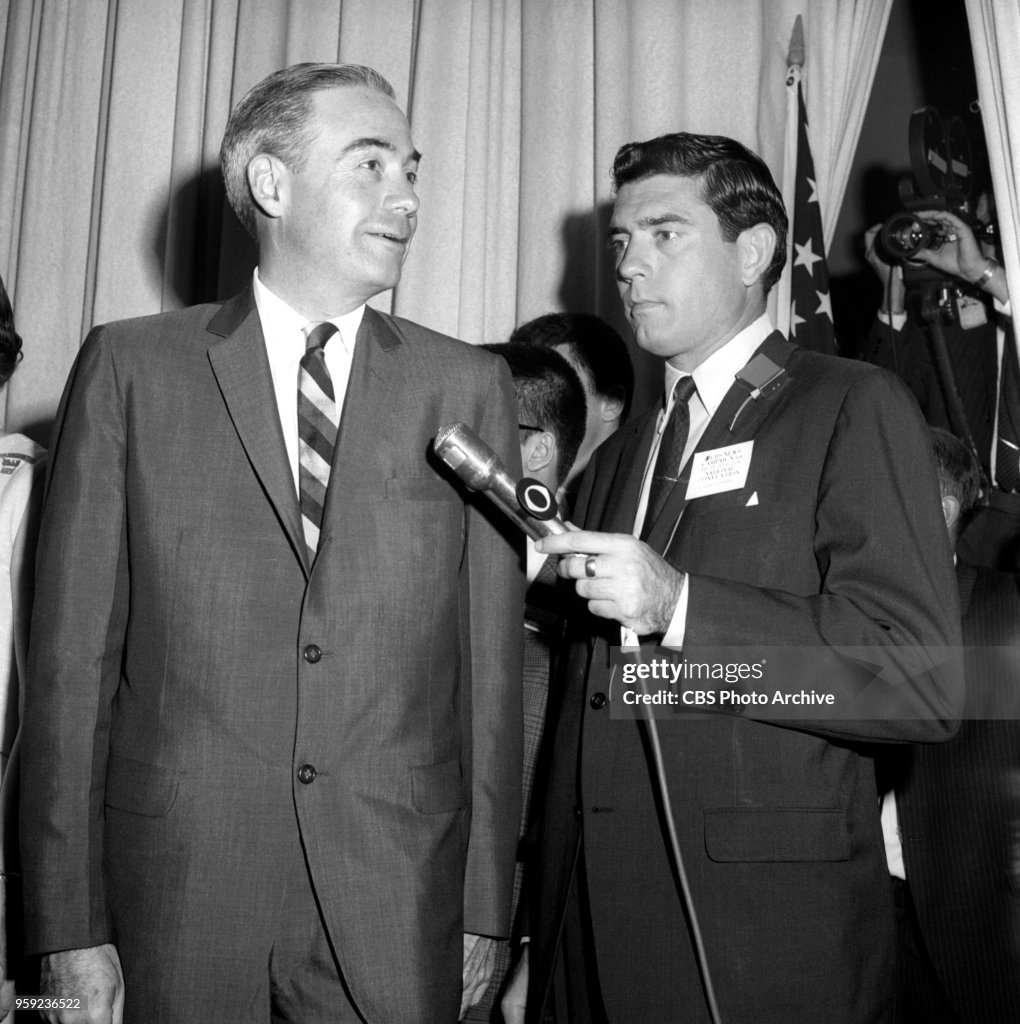
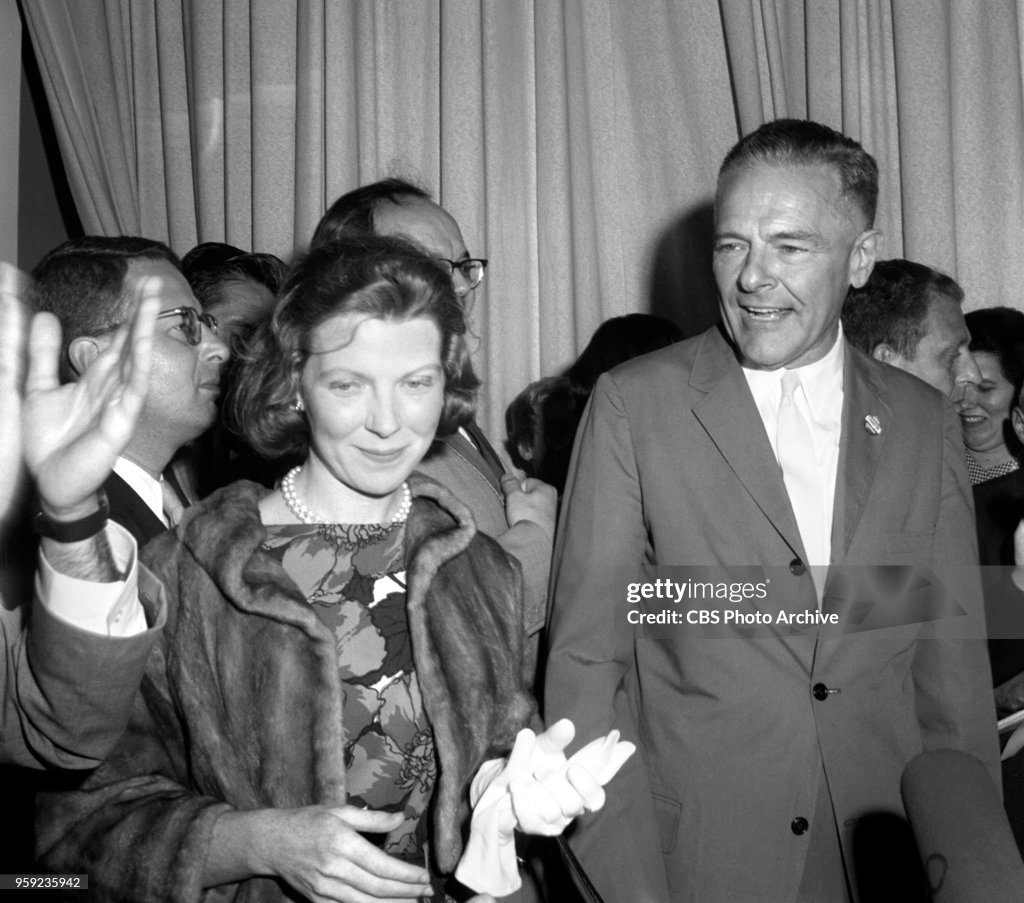
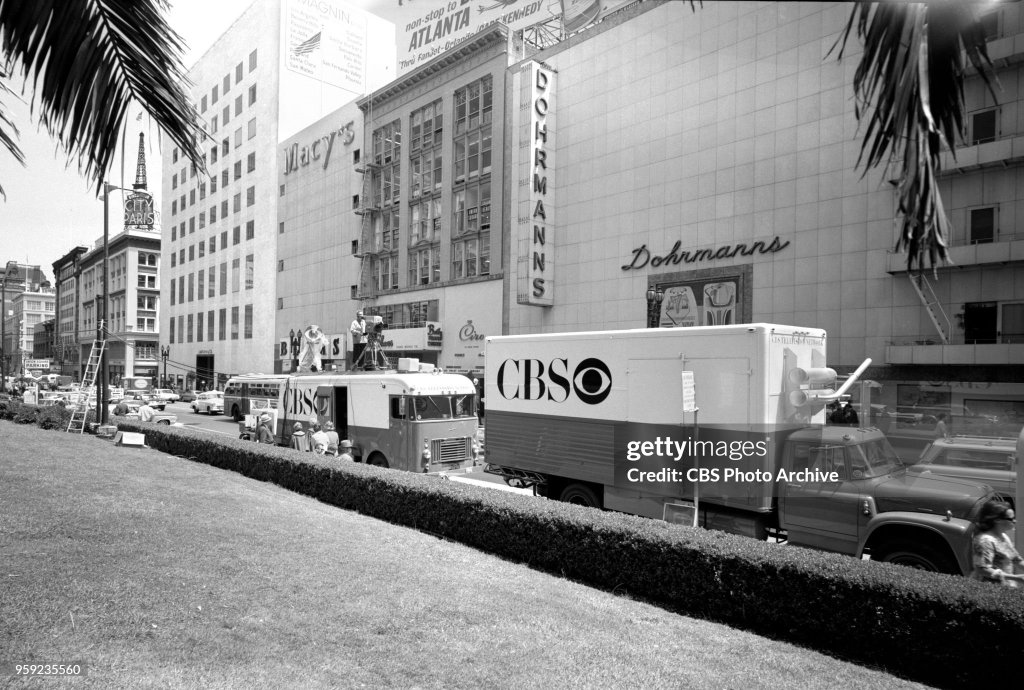
The stop-Goldwater forces pressed their attack in the Republican Platform Committee today, but they made no visible headway. The supporters of Governor William W. Scranton of Pennsylvania tried to rally moderates to their side by moving for change in the committee’s rules of procedure. The change is needed, they said, to prevent “railroading” of the platform through the committee. The stratagem did not succeed in dividing the majority on the Platform Committee, which favors Senator Barry Goldwater of Arizona for the Republican Presidential nomination. After a brief floor fight, the rules‐change issue was referred to a special committee and the decision on it put off until tomorrow.
The platform‐drafters, meeting in the St. Francis Hotel in advance of the Republican National Convention here next week, heard speeches during the day from two of the party’s major figures opposing Senator Goldwater — Governor George Romney of Michigan and former Ambassador Henry Cabot Lodge. Both called for a liberal platform. Tonight, two anti‐Goldwater members of the Platform Committee proposed planks designed to draw issue with Senator Goldwater’s views.
The first, introduced by Representative Peter H. B. Frelinghuysen of New Jersey, called on the party to affirm “the special responsibility of the President of the United States to retain personal control” over the use of nuclear weapons. This was aimed at past statements by Senator Goldwater that some military commanders in the field should be given the right to use nuclear weapons without Presidential approval. The Frelinghuysen plank said “Presidential control should extend not only to the initial use of nuclear weapons but also to their use at every stage of military operations.”
The second plank opposed any Federal “right to work” law forbidding union‐shop agreements anywhere in the country. In the past Senator Goldwater has supported national “right to‐work” proposals. This proposed plank was offered by Richard C. Van Dusen of Michigan. Like the other, it was drafted by an informal anti‐Goldwater group within the Platform Committee and was designed to try to provoke a debate in the committee that might break away some Goldwater supporters. There was no immediate sign, however, that any of today’s speeches or maneuvers would have the desired effect of beginning disaffections in the Goldwater ranks. The Scranton men were still looking for a winning issue.
Henry Cabot Lodge entered the pre‐convention maneuvering here today with the apparently firm conviction that the country’s concern over foreign policy affords a good chance of upsetting Senator Barry Goldwater’s bandwagon. The former Ambassador to South Vietnam set out to exploit that concern in testimony before the Republican Platform Committee, at a news conference and in private talks with delegates and party leaders. At the news conference, he moved closer toward openly attacking Senator Goldwater as unfit to conduct the nation’s foreign affairs than he had done in previous public statements. He accused the Arizona Senator specifically of casting slurs on United States military leadership in World War II and of encouraging the proliferation of nuclear weapons.
Governor William W. Scranton of Pennsylvania made a buoyant landing in San Francisco today, cheerfully saying he had found “tremendous momentum” in enthusiasm for his campaign for the Republican Presidential nomination. While Senator Barry Goldwater’s associates were pinpointing more than a sufficient number of delegates to make him the nominee at the convention next week, the Governor said he did not “know exactly” how many votes he had in hand.
Mr. Scranton is confident that the average Republican voter favors his nomination, and the polls tend to support him. But the average Republican voter has already chosen his delegates, and they seem to have made up their minds to support Mr. Goldwater even before the Governor announced his decision to run on June 12. The Scranton managers whipped up a sizable airport greeting for the Governor on his arrival from Chicago. Most of them appeared to be college-age students. A band, two old San Francisco cable cars on automobile wheels, and banners, placards and colorful costumes added up to a rousing welcome.
Three explosions ripped a gaping hole early today in the front wall of a McComb, Mississippi home occupied by 10 civil rights workers. Two were injured slightly. The concussion shattered the windshield of an automobile in the driveway of the white frame house and broke three windows in two homes across the street.
Federal Bureau of Investigation agents began an immediate inquiry into the bombing, third of its kind in this southwestern Mississippi city of 12,000 population since the civil rights campaign began June 21. Federal Bureau of Investigation agents, who received some assistance from the local police, state troopers and Pike County Sheriff’s deputies, arrived four hours after the blast, which came at 3:50 AM, Central standard time.
Those injured were Curtis Hayes, a 21‐year‐old McComb Black and field secretary for the Student Nonviolent Coordinating Committee, and Dennis Sweeney, 21, a white student volunteer from Portland, Oregon. Flying glass peppered the right side of Mr. Hayes, who said he had been thrown out of a bed that stood only four feet from where one of the blasts tore a hole 14 inches in diameter and six inches deep in a concrete walk. He suffered cuts on his face, chest, back, arms and legs. Mr. Sweeney received a few cuts on his face and arms.
Despite the bombing, leaders of the Mississippi Project here and in Jackson asserted that they would continue their activities in the southwestern part of the state. This area has been the scene of anti‐Black terrorism since last December. “We are all as determined as ever that we are going to stick this thing out,” said Mendy Samstein. The 25‐year‐old New Yorker, a former history instructor at Morehouse College in Atlanta, is a student committee field secretary and state coordinator of the summer project. “We’re going to show the [Black] people that we are willing to share their suffering,” Mr. Samstein, a white, said. “We hope in this way to heighten the country’s and the federal government’s sense of responsibility for breaking down this state of lawlessness.”
Three students participating in the Mississippi civil rights project were jailed in Columbus, Mississippi today on charges filed by a local service station operator, the police said. They were identified as Stephen Fraser, 18 years old, of Great Neck, Long Island, a student at the University of Wisconsin; Warren Galloway, 21, of Detroit, a student at Virginia University, and Joel Bernard, 18, New York, a student at Cornell. The police said Mr. Fraser was charged with trespassing and using profanity, and the others with trespassing. A spokesman for the Council of Federated Organizations, sponsors of the rights project, said the three were engaged in a canvass of Black homes and had stopped at the service station for soft drinks. They were arrested a few minutes after leaving the station.
Elsewhere in Mississippi, a student worker was ejected from the Circuit Clerk’s office in Sunflower County. James Dann, 23, of Venice, California, said he had gone to the Ruleville office to assist a Black woman, Mrs. Maybelle Campbell, in registering.
Blacks and whites ate in the same restaurants today as integrationists won compliance with the civil rights law in St. Augustine, Florida, where a month of racial violence ended a week ago. Nowhere were integrationists refused service outright, said a leader of the drive. He said none of the initial tests provided any basis for a lawsuit under the bill.
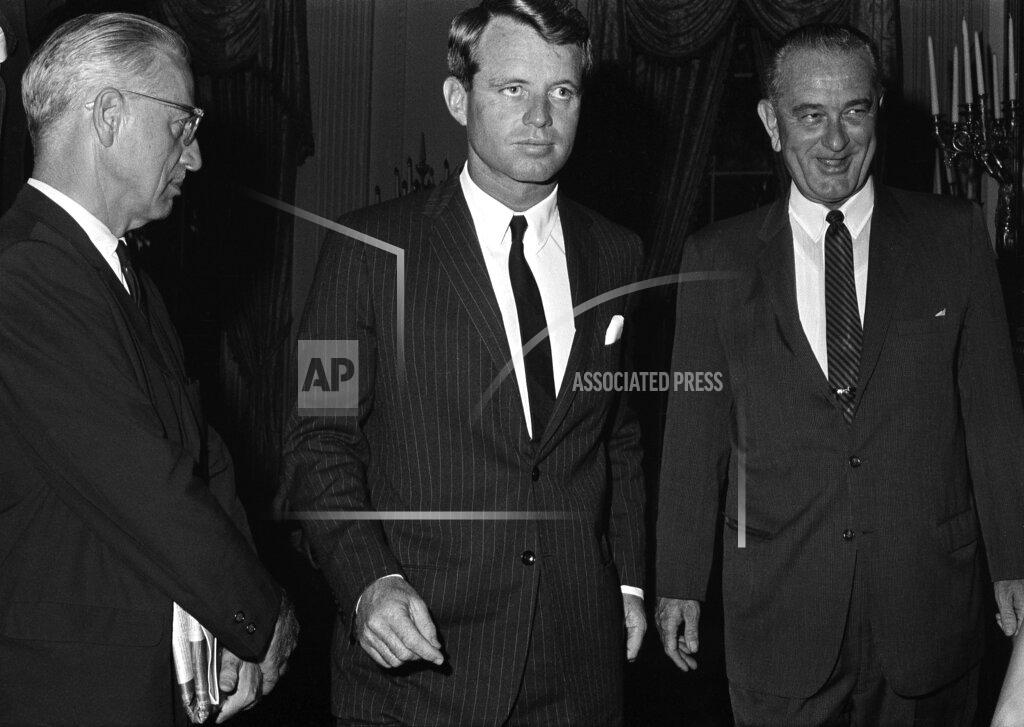
President Johnson and Attorney General Robert F. Kennedy exchanged high praise for each other today. The Attorney General said that the country was fortunate to have Mr. Johnson as President. Mr. Johnson hailed Mr. Kennedy as “our outstanding Attorney General” who he said had rendered a service to the nation in awakening the national conscience to the cause of equal justice. The occasion was a talk by the President in the East Room of the White House, where he greeted United States Attorneys, some of them with their wives and children, who were in Washington for a conference. The exchange of compliments was considered noteworthy for at least two reasons. First, there have been reports of coolness between the Attorney General and the President; second, despite such reports, there has been speculation that Mr. Johnson might ask the brother of President Kennedy to run for Vice President on the Democratic ticket this fall.
President Johnson signed today the first of the regular appropriations bills to clear Congress this year. It includes $18 million for the John F. Kennedy Center for the Performing Arts in Washington. The measure provides $1,028,277,200 for the Interior Department and related agencies for the fiscal year that began on July 1. The funds for the Kennedy Center included $2.5 million for land acquisition and $15.5 million for matching Federal contributions for construction of the center. The rest of the funds will be raised by private subscription.
After two previous failures, the much maligned and oft-troubled Athena missile was successfully launched by the United States Air Force from the Green River Launch Complex in Utah on a 475-mile shot to the White Sands Missile Range in New Mexico.
Home runs by Manny Mota and Willie Stargell paced a 12-hit barrage as the Pirates walloped the Cincinnati Reds, 9–1, tonight. Bob Veale and Al McBean held the Reds to four hits. Mota started the scoring by belting his fourth homer, with a man on in the first inning off Jim Maloney. Stargell’s homer, his 12th, also was off Maloney, with two men on in the sixth.
Willie Mays slammed a three-run homer as the San Francisco Giants ended their longest losing streak of the season at four games today by defeating the Chicago Cubs, 7–2, in the second game of a doubleheader called after seven innings because of darkness — Wrigley Field does not have lights in 1964. The Cubs won the opener, 2–0, on Bob Buhl’s four‐hit pitching before the largest crowd of the season at Wrigley Field — 30,156. The split kept the second-place Giants 1½ games back of the National League leading Philadelphia Phillies, whose game with St. Louis was rained out. Mays’s homer in the second inning of the second game gave him a league‐leading total of 24 homers and 58 runs batted in.
Dow Jones Industrial Average: 845.45 (+0.51).
Born:
Alexei Gusarov, Russian Soviet National Team and NHL defenseman (Olympic gold medal, USSR, 1988; Silver medal-Russia, 1998; NHL Champions, Stanley Cup-Avalanche, 1996; Quebec Nordiques, Colorado Avalanche, New York Rangers, St. Louis Blues), in Moscow, Russian SFSR, Soviet Union.
Bob Kipper, MLB pitcher (California Angels, Pittsburgh Pirates, Minnesota Twins)
Ken Patterson, MLB pitcher (Chicago White Sox, Chicago Cubs, California Angels), in Costa Mesa, California.
Tony Jeffery, NFL running back (Phoenix Cardinals), in Gladewater, Texas.
Maryalice Demler, American TV journalist and anchor, Miss New York (1991), born in North Tonawanda, New York.
 History Diaries