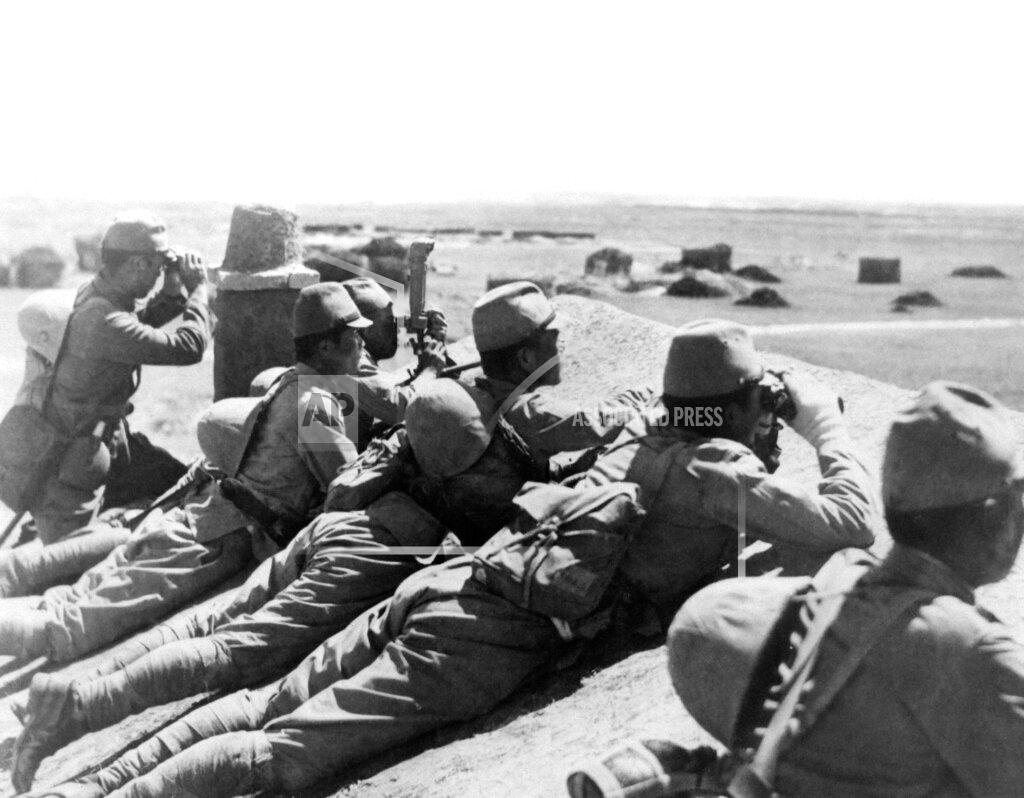
[Ed: Original caption, of course. In truth, not nearly so well-equipped as all that. Marshal Zhukov laughs across the river.]
The Reich makes Jews sign up for self-care. All are placed in one organization, with speedier migration as the stated aim. An organization embracing all Jews in Germany was created today by official decree. It is probably Nazism’s final word in the solution of the Jewish problem in Germany — its confessed purpose, in any case, is to “speed up emigration and get the last Jew out of the Reich.”
It is to be known as the Reich’s Union of Jews in Germany and the rights of a business concern have been given to it, subject to the laws of Greater Germany. It will be made up of existing or hitherto defunct Jewish organizations, particularly “Jewish cultural unions,” which will be local branches of the new organization outside Berlin. The Reich’s Union of Jews in Germany will supervise, direct and support the schooling of Jewish children as well as bear the full burden of Jewish social welfare.
The Reich now disclaims all responsibility for needy Jews, stating that they must be supported by a fund to which all Jews, rich and poor, will be forced to contribute before emigrating. This fund, it is also stated, must be sufficiently large to supply emigrating Jews with the resources required from them by the countries of destination.
The Jewish Union will be subject to the orders of the Minister of the Interior, Dr. Wilhelm Frick, who is empowered to liquidate all existing Jewish organizations or unite them with the newly created union. In case of liquidation the property of the liquidated organization will fall to the Reich; if it is joined with the new union, its property is to be absorbed by this organization. In special cases the Minister of the Interior is entitled to waive the regulations of the civil code governing liquidation.
The new Jewish Union will be responsible for the creation and maintenance of grammar schools for Jewish children and, in certain instances, of high schools and technical institutes for Jews “if these will further emigration.” Jewish teachers holding official positions in the German schools. have been retired as of April 30, 1939, and are required to accept offers of positions in the schools of the Jewish Union.
The Jewish schools will be restricted to Jews alone and Jews henceforth will be permitted to attend no other schools than those maintained by the Union. These will be regarded as private institutes. Existing Jewish private and public schools as well as all other Jewish educational Institutes and teachers’ seminaries will be dissolved if they are not taken over by the Jewish Union within a certain time limit.
The last remaining Jewish enterprises in Germany were closed.
An editorial in the Völkischer Beobachter states that the Jewish problem in Germany will be solved only when Germany is cleansed of Jews. “The union of all Jews living in Germany in a single organization enjoying the rights of a business concern places the conflict between the Reich and its undesired guests on a new and clearer basis. It shows once more to what lengths the Reich Government is willing to go to assure that the final act of parting may be accomplished with as little friction as possible. We desire once more to make ourselves perfectly clear: The aim of National Socialism remains the eviction from the Reich of these Jews to the last man. We are giving them our attention once more only in order to speed up their emigration — we think this is worth the effort. The main thing is that we get rid of them soon.”
Adolf Eichmann arrives in Prague to take charge of Jewish emigration
Britain extends credits to allies for arms. Poland is likely to get the lion’s share. To strengthen Great Britain’s smaller allies and make them more ready for war the government today introduced in Parliament a bill authorizing export credits up to £60,000,000 for the purchase of British munitions, raw materials and war supplies of all kinds. The amount provided in the bill does not include interest charges, and since some of the credits will run as long as fifteen years, the total of the transaction will be a good deal larger than appears at first sight. It will, in fact, be another sign that Britain is in earnest in building up an effective front against aggression.
Almost the whole amount has already been earmarked for various countries that have been clamoring here for economic help ever since the new alliances began to take shape in Eastern Europe. It is understood the lion’s share will go to Poland, which has plenty of trained reserves but needs British arms for them to use. Substantial sums also will be allocated to Rumania, Turkey and Egypt, all of which need British help in their rearmament efforts.
The financing of allies’ purchases on such a huge scale will be legalized by extending from £10,000,000 to £60,000,000 the total of credits that could be guaranteed under the Export Guarantees Act passed earlier this year. This act for the first time authorized the Board of Trade, with the consent of the Treasury, to give guarantees in cases where it seemed expedient, “in the national interest.”
Germany condemns British credit aid as a cold-blooded attempt to get European gains.
A new British law will extend powers to curb Irish extremists.
Poland asks the press to stay calm. The Danzig mobilization crisis is declared over. An appeal for calm and patience in the Danzig problem was made tonight to the Polish press by a government spokesman. In alarming stories from Danzig in the foreign press that have so deeply stirred opinion in London and Paris, he declared, Nazi military preparations in the Free City have been exaggerated and multiplied. He said the Polish Government had carefully studied the situation, as it wanted to know all the facts regarding Danzig’s armaments. Polish action in the form of a warning or protest will come in due time but should not be expected in the near future.
There is a tendency here in government circles to minimize the Danzig “mobilization” and not to provoke a conflict yet. The initiative now rests with the Poles, and they do not think the time has come for a showdown. Today the press states that last weekend’s crisis caused by Danzig’s military preparations is over. The Free City is expected to remain quiet until the arrival of the German cruiser Königsberg at the end of August.
“The battle of Danzig in the European ‘war of nerves’ was won by the peace-front powers,” declares the semi-official Dobry Wieczor. “The Western powers, which were on the defensive only a few months ago, have now shown determination and courage based on their growing military strength and have forced the Nazis back. Danzig was a test of the peace front’s strength. Will Berlin understand that the time of aggression and rape is gone forever?”
This article fairly accurately represents Polish opinion, which is confident that, thanks to the firmness of London and Paris and Warsaw’s determination, the danger of a grave conflict over Danzig has been averted and the summer months will not be disturbed by warlike moves in Northeastern Europe. It is felt the world will have a few weeks’ breathing space in the Danzig conflict.
Excitement was caused in Gibraltar Harbor this morning when sixteen Spaniards, a majority of whom are believed to have been former Republican militiamen, were seen swimming desperately from the direction of Algeciras toward Gibraltar. All succeeded in reaching the shore, but one of the most exhausted collapsed and died from shock while receiving treatment.
It is understood that all the men had escaped from the bullring in Ronda, which has been converted into a concentration camp. According to them, conditions in the camp are appalling and hundreds of Republican prisoners are starving. Later all the men were taken to the Gibraltar military detention barracks, in which they were temporarily interned.
Ольга Васильевна Клепикова (Olga Vasil’yevna Klepikova) flew an Antonov RF-7 glider from Tushino airport, Moscow, to Mikhaylovka, in the Stalingrad region of the Russian Soviet Federative Socialist Republic. She set two Fédération Aéronautique Internationale (FAI) World Records for Distance at 749.203 kilometers (465.533 statute miles).
President Roosevelt in Washington today signed the Monetary Bill reviving his authority for two years more to revalue the dollar and operate the $2,000,000,000 stabilization fund and fixing a new price for domestic silver.
The Senate approved bills authorizing the barter of American cotton for British rubber, providing for government insurance of farm mortgages to permit tenants to buy farms and strengthening of Panama Canal defenses, heard Senator Borah urge a policy of strict neutrality and recessed at 5:17 PM to noon tomorrow.
The Senate Finance Committee reported House-approved changes in the Social Security Act with a few amendments. The Monopoly Committee continued hearings on residential building; the Labor Committee heard opponents to National Labor Relations Act amendments; the Naval Affairs Committee approved a bill to curb subversive activities in the armed forces, and the Judiciary Committee reported constitutional amendments setting the Presidential term at six years and calling for a referendum before war is declared.
The House passed a bill providing for deportation of aliens engaged in espionage or sabotage and adjourned at 3:54 PM until noon Monday.
Its Rules Committee reported rules for consideration of the Hatch bill against WPA political activity, and for a bill regulating issuance of trust indentures as investments.
A test of sentiment in the U.S. Senate Judiciary Committee on third terms for Presidents showed that ten Senators of widely varying political beliefs were willing today to leave the door open, with two determined to close it. The test vote, while looked upon in some quarters as not necessarily a positive test of Senate views, was considered significant nevertheless, as the first ballot of a Congressional group since speculation started over whether President Roosevelt would become a candidate for a third term.
The medium was a resolution by Senator Wiley, Republican of Wisconsin, proposing a Constitutional amendment which would limit Presidents to single terms of six years each, and forbid the election of any man who heretofore has been elected President or who has held that office by succession. At the same meeting the committee voted a tie, 7 to 7, on a resolution by Senator Burke, Democrat of Nebraska, proposing an amendment to limit Presidential service to one six-year term, but raising no barrier to the election of a man who has been President prior to the effective date.
Paul V. McNutt, High Commissioner to the Philippines, whose friends have long been seeking the Democratic nomination for President in his behalf, will enter the race even if Mr. Roosevelt seeks a third term, it was learned from authoritative sources today after Mr. McNutt had conferred with Postmaster General Farley, chairman of the Democratic National Committee.
Soon after his arrival this morning, Mr. McNutt said that his candidacy was predicated on the assumption that Mr. Roosevelt would not run, but he declined to say whether he would retire from the race if the President should decide to try to break the tradition against a third term. After the interview with Mr. Farley, however, it became known through well-informed persons that the High Commissioner, whose resignation was submitted today to take effect in six weeks, would be an active candidate.
Former President Herbert Hoover proposed tonight that nations agree not to attack food ships in time of war and not to bomb civilian populations. He suggested that neutral nations be the “referees,” declaring that in the World War the losers lost “by failure to heed the public opinion of what were originally neutral nations.” In an address at the international convention of Christian Endeavor Societies, Mr. Hoover, who headed the Belgium Relief Commission and became United States Food Administrator after we entered the World War, asserted: “The emotional reaction of the American people upon a conviction of wholesale killing of women and’ children in another great war would come nearer to driving our people to intervention than all the other arguments in the world.” Mr. Hoover pointed out that “one of the impelling reasons for unceasing building of bombing planes is to prepare reprisals for blockade starving of women and children or reprisals for air attack.”
The AFL orders the strike of 30,000 WPA men in defiance of Congress. A “strike to the finish” to compel Congress to restore union wage rates on WPA was ordered yesterday by the Building and Construction Trades Council, representing 125 American Federation of Labor building unions in New York City. Angered by the necessity for working longer hours under the new Federal Relief Bill with little change in monthly pay, thousands of skilled construction workers on WPA projects in other parts of the nation joined the strike movement. Their action was taken in the face of a warning by Colonel F. C. Harrington, National Work Projects Commissioner, that all who stayed away five days would be dropped.
The announcement of Welfare Commissioner William Hodson of this city that WPA workers dismissed for refusal to accept the wages fixed by Congress would not get local home relief brought a demand for his removal from Thomas A. Murray, president of the Building and Construction Trades Council. The demand came after George Meany, president of the State Federation of Labor, had sent a letter to Mr. Hodson condemning his “zeal to cooperate with the fascist-minded Congressmen who would grind labor into the mire” and declaring that his announcement deserved “the contempt of every right-thinking American in the city of New York.”
Commissioner Hodson replied that the city could not and would not “give relief to those who choose to be unemployed.” Tho WPA wages set up by the United States Government were binding on all public officials and any departure from the city’s settled policy of denying assistance to persons who refused to work would “not only be contrary to common sense but would impose a relief burden upon the city of New York which it does not have the funds to meet,” Mr. Hodson declared.
Formal Instructions to quit work were issued to nearly 30,000 union members employed as skilled mechanics on WPA projects in New York, after a meeting of the Building and Construction Trades Council in its offices, 176 Madison Avenue. Officials of the council predicted that the walkout of skilled workers would necessitate a virtually complete suspension of work by 96,928 WPA construction employees on projects throughout the city.
In violation of agreements with Federal authorities and Mayor La Guardia, a strike of plumbers’ helpers was called. It halted all plumbing installation in Queensbridge and Red Hook and threatened to make 2,500 idle in a week.
An auto strike shuts four more plants. The United Automobile Workers of America called strikes in four more key tool and die plants in Detroit.
The U.S. Congress studies the possibility of an Antarctic colony. Aviation bases are one aim.
U.S. Coal producers seek to steady prices. They will meet to find ways to end demoralization in their markets.
James S. McDonnell incorporates the McDonnell Aircraft Corp. in St. Louis, Missouri.
With George Caster pitching two-hit ball after the second inning, the Philadelphia Athletics ended a six-game losing streak tonight by coming from behind to beat the Washington Senators, 9–3, before 8,732 at Shibe Park.
The Pittsburgh Pirates punctured the illusion of Dizzy Dean today, forcing him out in the fourth inning as they crushed the Chicago Cubs, 7–2, and climbed into fifth place in the National League.
Paul Derringer won his eleventh game tonight as the Cincinnati Reds took a free-hitting contest from the St. Louis Cardinals, 7–4. Ernie Lombardi and Johnny Mize hit homers.
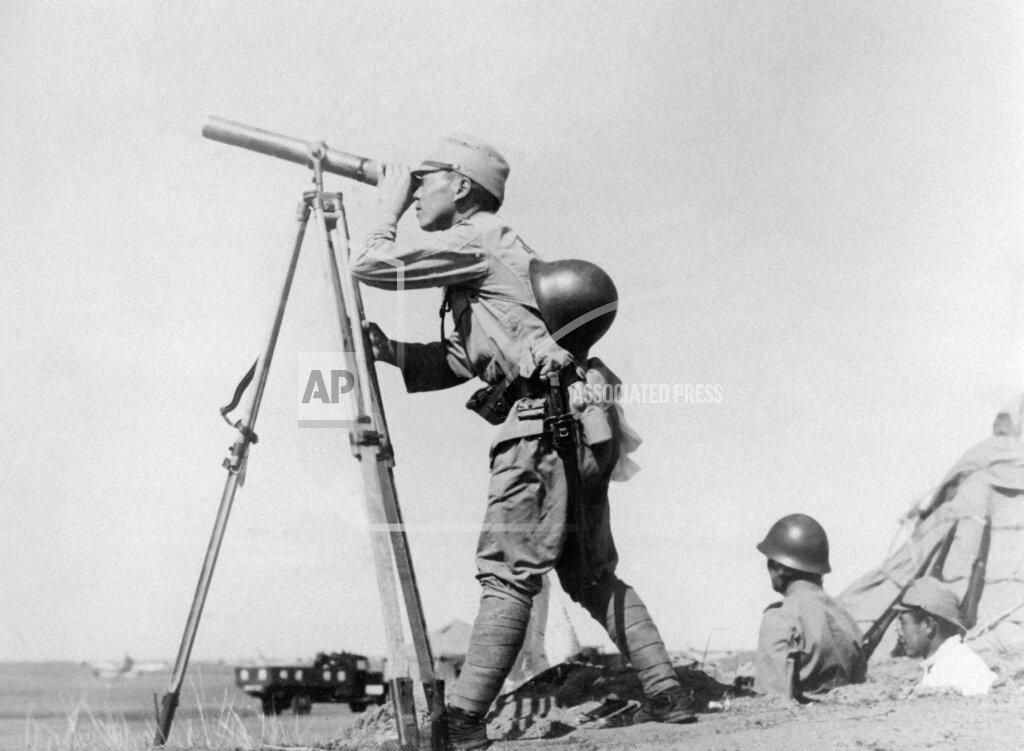
Moscow describes a big border victory. The Soviet press reports the repulse of the Japanese. Soviet Russian-Outer Mongolian forces were reported to have won a great victory over a Japanese-Manchukuoan enemy during a four-day battle on the remote Khalka River battlefront in dispatches displayed today in Moscow newspapers. The battle was said to have lasted from July 2 to 5, ending in the rout of Japanese regular army units and their allies which had crossed the river into Outer Mongolian territory. Russians said it was the largest battle yet fought in the conflict which has raged intermittently since May 11. The issue is apparently whether or not the Khalka River is the true frontier.
Amplifying a Soviet communiqué estimating Japanese-Manchukuoan losses at 800 killed and Russian-Mongol casualties at 100 killed and 200 wounded, the Moscow press described a vast encounter in which tanks, airplanes, artillery and infantry forces were engaged. Today’s reports were the first from the Outer Mongolian front to appear here since June 29, Tokyo reports of a battle since then have been ignored by the Soviet press. Japanese communiqués on July 3 reported a big battle on the Khalka in which they said the Japanese took the offensive, captured a fortified hill and thirty Soviet tanks. The Moscow version follows:
The battle began on July 2 with a heavy concentration of Japanese forces in the region of Noman-Kan-Burd-Obo [Nomonhon], southeast of Lake Bor, and a clash between opposing air forces. Early on July 3 the Japanese hurled their entire twenty-third infantry division, supported by two tank regiments and six cavalry regiments, against Mongol-Soviet positions east of the Khalka. The Soviet forces successfully resisted the attack in the region of Nomon-Kan-Burd-Obo, but northwest of that region the Japanese infantry, supported by at least sixty tanks, broke through to the western bank of the river and attempted to establish themselves there. Mongol-Soviet troops and planes, however, launched a counter-attack, and late yesterday drove the enemy back across the river with heavy losses.
During the four days of fighting the Mongol-Soviet artillery put fifty Japanese tanks out of commission and silenced eight guns, while Mongol-Soviet planes and anti-aircraft batteries shot down forty-five Japanese planes. The Mongol-Soviet forces reported they lost nine planes and that twenty-five tanks and armored cars were disabled. Thus, the press reports complete victory, but the persistence of large-scale operations in Outer Mongolia is causing Moscow to watch Far Eastern affairs more closely than ever — although Western Europe’s main preoccupation is Danzig. Soviet newspapers today published many columns of news and comment on the war in China.
Moscow’s vital interest in an ultimate Chinese victory was indicated in articles asserting that Japan’s “desperate” attempts to win an early victory in China were dictated not only by an economic strain at home but by “far reaching plans for further aggression against the USSR and the Mongolian People’s Republic.” Even the children’s newspaper, Pioneer Pradva, devoted half its space to the Chinese struggle.
Japan bombs Chungking again. An American hospital is struck, but patients escape. Most civilians are safely in dugouts. Flying under a bright moon, Japanese bombers raided Chungking shortly after midnight this morning, unloading their bombs indiscriminately on many places in the closely built-up older section of the city. Casualties from the raid are estimated at 100. Damage estimated at 5,000 Chinese dollars was caused to the institutional church of the American Northern Methodist Mission. Two bombs hit the building, which is in the heart of downtown Chungking. The woman’s ward of the mission’s downtown hospital was also damaged by a direct hit. Another bomb nearby slightly damaged the men’s ward.
No one was injured, since all the staff and patients had taken shelter in a dugout, from which, however, they had to fight their way through the smoke that poured into the refuge from blazing buildings nearby which were hit by other bombs. The hospital has recently been operating as an emergency casualty station only, and its main sections have been evacuated from Chungking. The Japanese bombs caused a number of fires in the city which, hours later, were not fully controlled. For a second time the German Embassy and consulate building was damaged by a bomb that hit nearby.
Chiang Kai-shek asks for a boycott of Japan.
Four Japanese Army Ki-27 fighters strafed ground targets at Pingliang, Gansu Province China. One of the fighters was damaged by ground fire, and its pilot safely landed on the ground and was picked up by another fighter in the group. Chinese troops quickly moved in to capture the relatively good specimen of Japanese technology. Chinese fighter pilot Arthur Chin was sent to study the aircraft; correctly determining that it was flyable, he brought the fighter to a Chinese airfield for further evaluations
Dow Jones Industrial Average: 133.58 (-0.10).
Born:
Mary Peters, English pentathlete (Olympic gold medal, born in Halewood, Lancashire, England, United Kingdom.
Glynn Gregory, NFL tight end and defensive back (Dallas Cowboys), in Paris, Texas (d. 2013).
(Terrence) “Jet” Harris, bassist (“The Shadows”), in Kingsbury, North London, England, United Kingdom (d. 2011, of throat cancer).
Naval Construction:
The Royal Navy Lake-class ASW whaler HMS Ullswater (FY 252) is laid down by the Smith’s Dock Co., Ltd. (South Bank-on-Tees, U.K.).
The Royal Navy minelayer HMS M 1 (M 19), first of her class of 8, is launched by George Philip & Sons Ltd. (Dartmouth, U.K.).
The Royal Navy Kingfisher class (Third group) patrol sloop HMS Guillemot (L 89; later K 89) is launched by William Denny & Brothers (Dumbarton, Scotland).
The Royal Navy Town-class (Edinburgh-subclass) light cruiser HMS Edinburgh (16) is commissioned. Her first commander was Captain Frederic Cyril Bradley, RN.

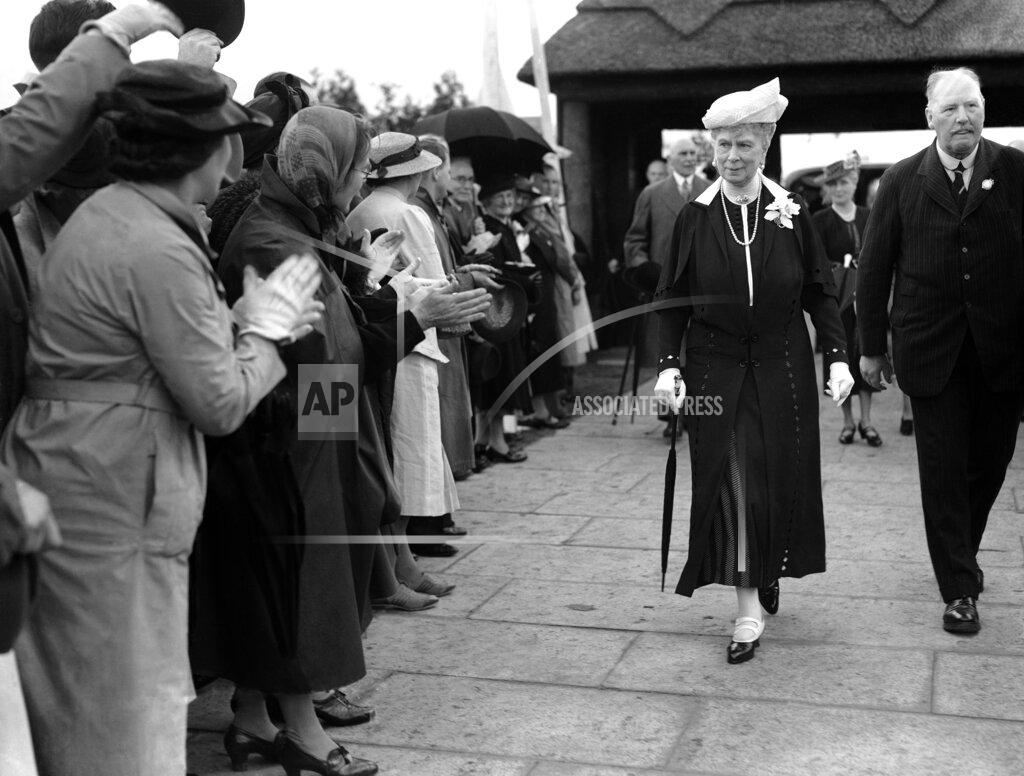
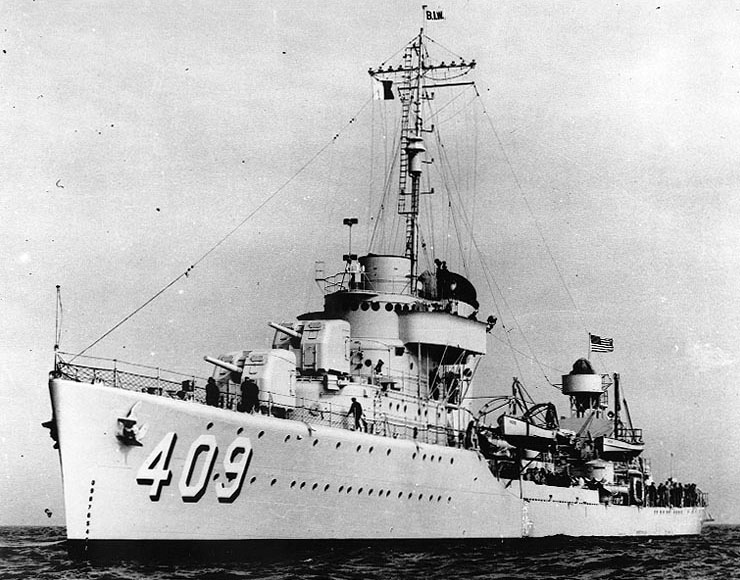
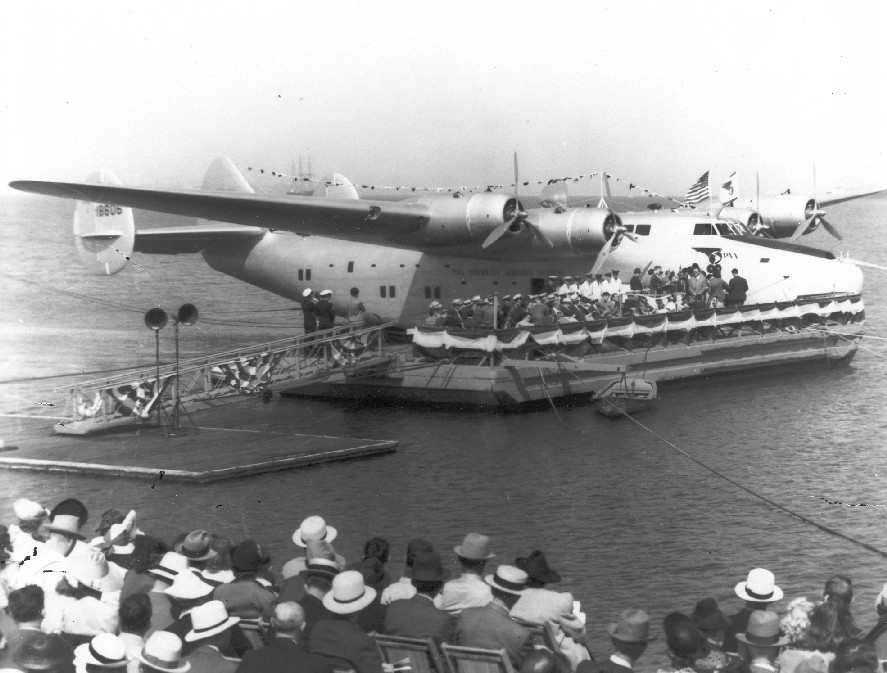
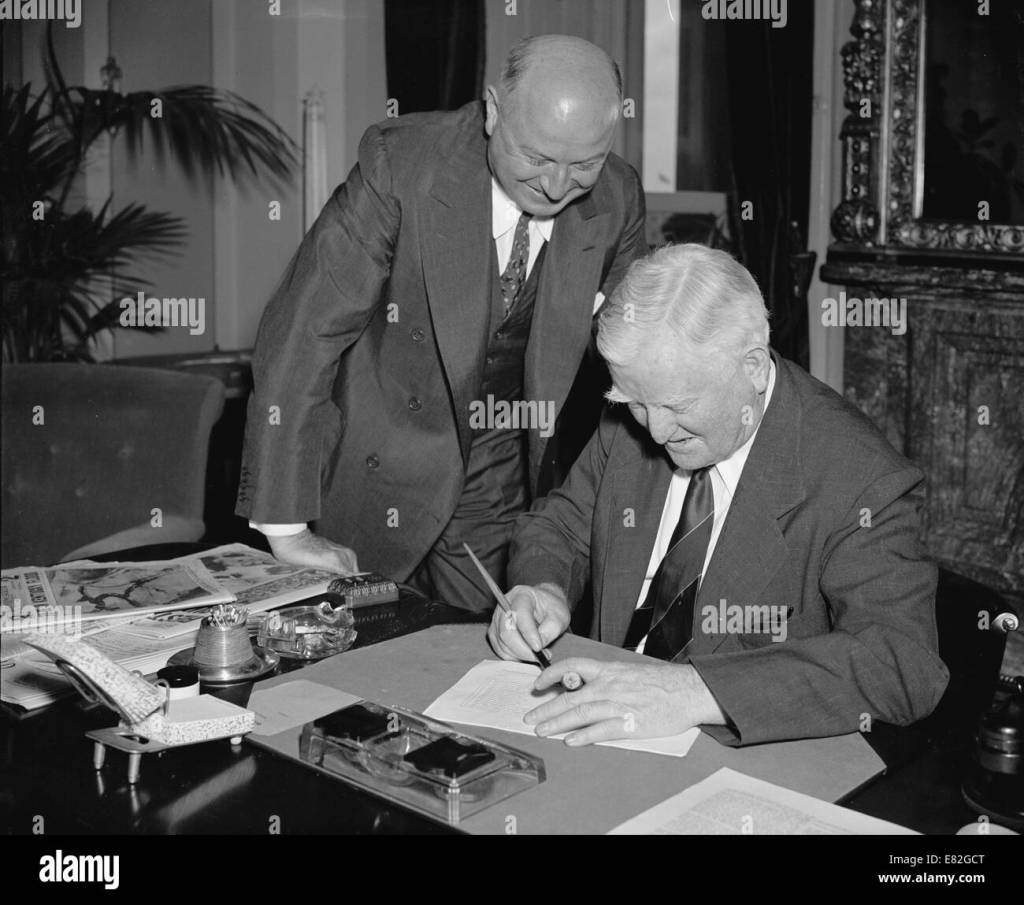
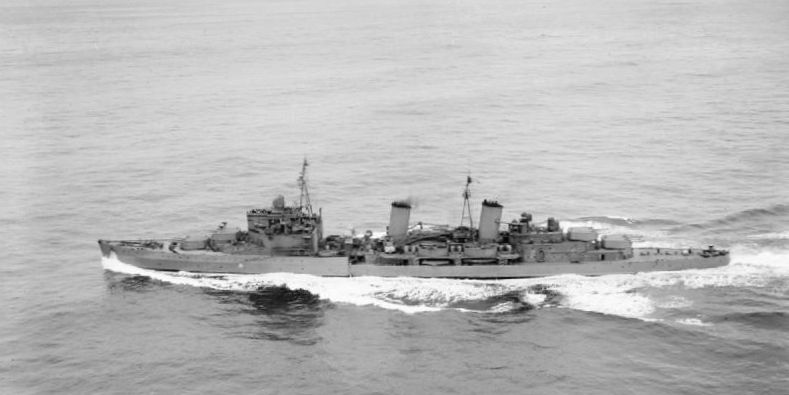
Upon commissioning in mid-1939, she was assigned to the Home Fleet of the British Royal Navy and patrolled between Iceland and the Faroe Islands. In October 1939, while in the Firth of Forth estuary in Scotland, United Kingdom, she sustained minor damage by German aircraft. On 23 October, she departed Scotland as an escort for Allied convoys to and from Narvik, Norway. In late November, she hunted for German battleship Scharnhorst which had just sank the armed merchant cruiser HMS Rawalpindi. After a lengthy refitting that took up most of 1940, she returned to active service in November 1940, escorting Allied convoy WS.4B to Freetown, British West Africa. In December 1940, she sortied to hunt for a rumored German raider in the North Atlantic. In early 1941, she escorted convoys in the Atlantic Ocean and the Mediterranean Sea, laid mines off Denmark, and supported the raid on Lofoten Islands, Norway. In early 1942, she was refitted at Tyne, England, United Kingdom once again. In March and April, she escorted convoys QP.4, PQ.13, and PQ.14 between Britain and the Soviet Union.
Lost 2 May 1942.
On 28 April 1942, HMS Edinburgh departed Murmansk, Russia as the flagship of Rear-Admiral Stuart Bonham Carter, escorting the 17-ship Allied convoy QP.11. On route, on 30 April, she was struck by a torpedo on the starboard side by German submarine U-456. She began to list heavily, but successful counter-flooding righted her. U-456 returned, however, and hit her again in the stern, heavily damaging her steering equipment. An attempt was made to tow her back to Murmansk with a light escort. German torpedo bombers shadowed her along the way, attacking occasionally.
On 2 May 1942, German destroyers Z.7 Hermann Schoemann, Z.24, and Z.25 attacked her and her escorts off Bear Island, Norway. Her tow lines were cut to allow her to sail in circles (due to the damaged steering equipment), firing at the German ships. Her second salvo straddled Z.7 Hermann Schoemann, heavily damaging the German destroyer which ultimately was scuttled. Before the other two destroyers were chased off, however, Edinburgh was hit by another torpedo on the port side. As this third hit was about the exact opposite side as the first torpedo hit of 30 April, thus her structural integrity was now in question. Deciding that it would be too risky to try to tow her to port, she was scuttled after about 840 people aboard were taken off by HMS Gossamer and HMS Harrier. It took 20 shots from HMS Harrier, depth charges, and two torpedoes from HMS Foresight to sink her.
She went to the bottom of the sea with 4,570 kilograms of Soviet gold, which was meant to be payment for Allied war supplies. Most of the 465 gold bars were recovered in the 1980s, most of which (431) were recovered during the 1981 mission by dive support vessel Stephaniturm, while a 1986 mission recovered a further 29 bars.
Battle Honours: NORWAY 1940 – BISMARCK Action 1941 – ATLANTIC 1941 – ARCTIC 1941 -42
 History Diaries