The Nam Đông CIDG camp was situated 32 miles west of Da Nang in a valley near the Laotian border. It was manned by South Vietnamese personnel with American and Australian advisers, and served as a major thorn in the side of local Việt Cộng militants. The Battle of Nam Đông took place on July 5–6 1964, when the Viet Cong and PAVN forces attacked Nam Đông in an attempt to overrun it. The Việt Cộng struck at the camp at 2:30 AM to achieve the element of surprise, and reached the outer perimeter where South Vietnamese special forces managed to hold out.
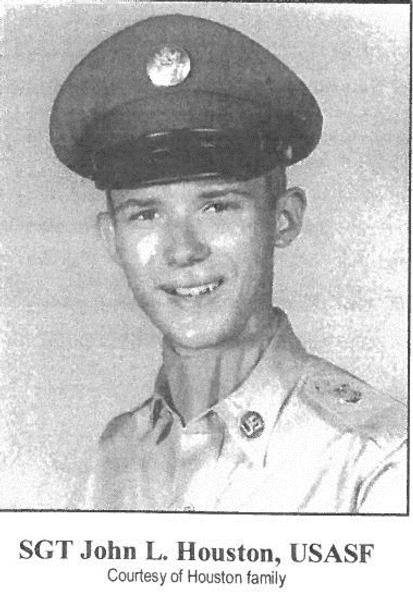
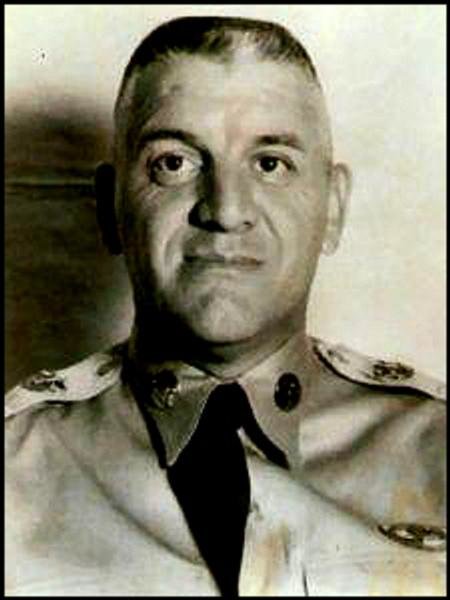
MSGT Gabriel “Pop” R. Alamo, an advisor with the 7th Special Forces Group at Nam Đông, was picking off advancing enemy soldiers with his AR-15 rifle when he was wounded by small arms. Alamo was bleeding from a shoulder wound, but he disregarded the pain to stay at his post. He had suffered burns from his earlier efforts to save supplies from the burning Command Post, but ignored the injuries to remain at his post and do his job. Beside the ammo bunkers at the camp was a deep excavation the soldiers called “the swimming pool.” From that depression in the terrain, another American, radioman Sergeant John L. Houston, hugged the dirt to rain automatic fire on the advancing enemy. He did his best to repulse the enemy’s advance at the ammo bunkers. Houston would fire at them, then move quickly, fire again, and repeat the action. His effort was an attempt to convince the enemy that there was more than one man holding them at bay from that position. He died after being hit by enemy gunfire. Alamo was also killed after sustaining multiple wounds.
Both men were posthumously awarded the Distinguished Service Cross. The battle would last for five hours when the Việt Cộng decided to abort the mission, fleeing into the jungle at sunrise. At the end of the battle, a total of 373 allies (twelve American Green Berets, 300 South Vietnamese, sixty Nung soldiers, and a single Australian military advisor) held off deadly attacks against 900 NVA and Việt Cộng.
CITATION FOR POSTHUMOUS AWARD OF THE DISTINGUISHED SERVICE CROSS
HOUSTON, JOHN LUCIUS
Sergeant, U.S. Army
Detachment A-726, 5th Special Forces Group (Airborne), 1st Special Forces
Date of Action: 6 July 1964
CITATION:
The Distinguished Service Cross is presented to John Lucius Houston, Sergeant, U.S. Army, for extraordinary heroism in connection with military operations involving conflict with an armed hostile force in the Republic of Vietnam, while serving with Detachment A-726, 5th Special Forces Group (Airborne), 1st Special Forces. Sergeant Houston distinguished himself by exceptionally valorous actions on 6 July 1964 as a Radio Operator, serving with the United States Army Special Forces Detachment A-726 at Camp Nam Đông, Sergeant Houston demonstrated fortitude, courage, and determination when a reinforced Việt Cộng battalion suddenly launched a full-scale, predawn attack on the camp. During the violent battle that ensued, lasting five hours and resulting in heavy casualties on both sides, he participated with outstanding effectiveness in defending the installation. As he was moving to his battle position, he noticed that one of his team members had been knocked down by an exploding mortar. With complete disregard for his own personal safety, he rushed through a hail of small arms fire and exploding mortars, succeeded in reaching the unconscious soldier, placed him in a covered position, and stayed with him until fully recovered before proceeding to his battle station. After he had moved only a few yards and was slightly injured by an exploding mortar, Sergeant Houston pressed on toward a large mound of dirt which afforded him excellent observation and fields of fire. From this position, he single-handedly shattered the vicious enemy assault in his sector and annihilated many of the enemy troops. As the hostile forces retaliated with an intense grenade assault on his position, he again deterred the enemy action. Although his ammunition was running out, he refused to take cover, called out to a fellow soldier to throw additional rounds to him, and reloaded the magazine while exposed to the heavy enemy gunfire. Undaunted by the overwhelming onslaught, he remained in this dangerous position for over two hours to defend the camp and displayed his valiant efforts until mortally wounded by the enemy. Sergeant Houston’s extraordinary heroism and devotion to duty, at the cost of his life, were in keeping with the highest traditions of the military service and reflect great credit upon himself, his unit, and the United States Army.
Department of the Army, General Orders No. 8 (March 9, 1965)
John is buried at the Arlington National Cemetery. He is remembered on the Wall at Panel 1E, line 57.
At Nam Đông in the South Vietnamese northern highlands, an estimated 800-man Việt Cộng force attacks an American Special Forces training camp but are forced to withdraw after a bitter five-hour battle that kills over fifty Vietnamese defenders, two Americans and one Australian military adviser and an estimated 40 Việt Cộng. The Battle of Nam Đông, the first in the Vietnam War to have numerous American casualties, began at 2:26 in the morning in South Vietnam when an 800-man contingent of the Việt Cộng began firing mortar rounds at a South Vietnamese Army (ARVN) camp at Nam Đông, near South Vietnam’s border with Laos. The outnumbered group of 311 ARVN soldiers, along with 12 members of the U.S. Army Special Forces (the Green Berets) and one Australian adviser, defended the camp for ninety minutes until air support could arrive. When the battle ended by dawn, 53 South Vietnamese, two Americans and the Australian, Kevin Conway, were dead; 65 were wounded, including U.S. Army Captain Roger Donlon, who would be awarded the Medal of Honor for annihilating an enemy demolition team, dragging wounded men to safety, and directing the defenders despite multiple shrapnel wounds.
United States officers called the defense of the camp at Nam Đông a magnificent show of courage by the Government defenders and by a platoon of women nurses, who treated the wounded under fire and crawled along the ground to strip the dead of needed first‐aid kits. Several nurses were reported wounded. The guerrillas launched the attack under cover of a barrage of white phosphorous mortar shells that set buildings ablaze. The defenders lost 60 dead and about 50 wounded. Americans at At Nam Đông reported that they had counted 49 Communist dead on the barbed wire around the camp.
Most of the defenders were Chinese Nung tribesmen, who fled into South Vietnam when the nation was divided with the Communist north in 1954. A United States adviser said the defenders hit the charging Việt Cộng with blistering mortar and 57‐mm. fire outside the camp, which is 30 miles west of the coastal city of Da Nang, site of a United States air base. Much of the five hours of fighting was hand to hand between the inner and outer perimeters of the mountain camp built 18 months ago of logs and thatching.
The two United States dead brought the toll of American combat fatalities since late 1961 to 151, with two others missing and presumed dead. Ninety‐six other Americans have died in accidents in South Vietnam. The attack was the second major assault by the Việt Cộng on Special Forces camps in three days. On Saturday the Vietcong overran a camp at Polei Krong killing 45 Vietnamese and wounding two Americans before the defenders pulled out. Polei Krong is about 225 miles south of Nam Đàm.
General Maxwell D. Taylor, the new United States Ambassador to South Vietnam, arrived here today amid stringent security precautions. A crude terrorist bomb was thrown at the American Embassy yesterday. In his arrival statement General Taylor pledged vigorous implementation in the months to come of a program to defeat the Communist insurgents. He assured the Vietnamese people of “our unstinting support in your struggle against the forces of aggression. “There is no time limit on that commitment,” he declared. The Ambassador said he had been “strengthened” in his new assignment by his predecessor, Henry Cabot Lodge.
The bomb tossed at the United States Embassy Monday failed to go off, but the man who threw it was not apprehended. Two other grenades exploded in widely separated sections of the capital. Damage was slight in both cases. Only one person, a Vietnamese policeman, was reported slightly injured. Less than an hour after the bomb was thrown at the embassy, Deputy Ambassador U. Alexis Johnson stepped outside to examine the homemade device. It was a tin can placed inside a loaf of bread. Apparently when the detonating pin was pulled out just before the bomb was thrown the entire detonating mechanism was upset.
Communist China denied today that its troops were building a new road across the border of Yunnan Province into northwestern Laos. Prince Souvanna Phouma, the Laotian Premier, had complained that the Chinese were building such a road. He said his latest information had come from two Chinese Communist soldiers captured in the Muong Sing area near the frontier. United States officials reported earlier that Peking was improving its military access to Burma and Thailand by extending the road network leading from Mengla in Yunnan through northwestern Laos.
Peking, in its denial, made its first public statement on the two Chinese prisoners whose capture was announced six weeks ago. Forces of the Laotian rightists reported that the Chinese had been taken by Meo tribesmen guerrillas and were identified as an officer and a noncommissioned officer of the 39th Division of the 13th Army. Right‐wing Laotian headquarters in Vientiane later charged that Communist troops in the Muong Sing aria had carried out reprisals against local officials. A Western military observer who was shown two Chinese prisoners was told that the officer was a captain of engineers, and that the two had been attached to a road‐building unit.
Jenmin Jih Pao, Chinese Communist party newspaper, said the two Chinese were civilian workers who had deserted from the road‐building project in Yunnan. It said rightist forces had “intimidated and cajoled them and put words into their mouths as evidence with which to vilify China.” The newspaper, which accused Prince Souvanna Phouma of slandering Communist China, said the only road built by the Chinese in Laos was the one from Mengla to Phongsaly. Prince Souvanna Phouma agreed to construction of this road in April, 1963, during a visit to Peking when he was linked in the Laotian Government with the Communist-led Pathet Lao. The neutralist leader broke with the Pathet Lao in April, 1963, after Communist‐led forces attacked neutralist troops commanded by General Kong Le.
The African nation of Malawi, formerly the British protectorate of Nyasaland, received its independence from the United Kingdom one minute after midnight. At Blantyre, the national capital, Prince Philip of the United Kingdom and representatives of other 80 other nations watched the hoisting of the new red, green and black Malawian flag after the Union Jack had been lowered a minute before midnight. Hastings Kamuzu Banda continued as Prime Minister, and the former Nyasaland governor, Sir Glyn Smallwood Jones, became the first (and last) Governor-General of Malawi. In 1966, Banda would become the first President of Malawi.
Moise Tshombe, who led the secession of Katanga Province four years ago, was named today to form a new government of national unity for the Congo. President Joseph Kasavubu asked Mr. Tshombe to set up a transitional regime. Its main task would be to end the spreading wave of rebellion and prepare for national elections. These would be held within nine months. Mr. Tshombe said he hoped to present his government to the President “within 24 hours.” He said he had a tentative list of ministers, but declined to reveal their names. The 44‐year‐old Katangese leader has been calling for “national reconciliation” through a government in which all major political factions would be represented.
Dean Acheson, President Johnson’s personal envoy, conferred today with Sakari S. Tuomioja, the United Nations mediator in the Cyprus dispute. Mr. Acheson, a former Secretary of State, is to be available for any assistance he can provide Mr. Tuomioja in the new round of consultations that the mediator has scheduled. Mr. Tuomioja, a Finnish diplomat, also held preliminary talks with the Greek and Turkish representatives at the United Nations and other international organizations in Geneva.
In a memorandum delivered to the Japanese Foreign Ministry yesterday, the Soviet Union urged members of the United Nations to make troops and facilities available for peace‐keeping actions by the Security Council. The memorandum said, however, that the five big powers holding permanent seats on the Security Council should not contribute troops. The five are the United States, the Soviet Union, Britain, France and Nationalist China. The Foreign Ministry, attaching importance to the Soviet proposal for establishing a permanent United Nations peace force, began efforts to ascertain the intentions behind the Soviet move. The Russians proposed that the countries of the Western and the Communist camps, as well as nonaligned countries, should participate in the peacekeeping United Nations force. Moscow asserted that the Security Council, not the General Assembly or other United Nations organ, was entrusted with primary responsibility for maintenance of world peace.
Premier Khrushchev returned to Moscow from Scandinavia today and was faced with urgent questions involving the Chinese-Soviet conflict and relations with the maverick Communist regime of Rumania. He is expected to travel to Warsaw in about two weeks for new consultations with foreign Communist leaders. No official confirmation of the trip could be obtained. Premier Ion Gheorghe Maurer of Rumania arrived on a surprise visit at the head of a high‐level delegation of members of the Central Committee of the Rumanian Communist party. Mr. Khrushchev, instead of taking the long vacation on the Black Sea coast about which he had wistfully spoken in Scandinavia, appeared to be headed for a new round of intense activity.
United States officials rebuffed today Premier Fidel Castro’s overture for negotiations until Cuba ended her “ties of dependency” on the Soviet Union and ceased to promote subversion in Latin America. Officials acknowledged that they knew of no major instances of Cuban‐backed subversion since last November. They declined to define precisely the dependency ties this country wanted severed.
A former aide of President Ahmed Ben Bella admitted at a news conference today that he had taken six million francs ($1.1 million) from Mr. Ben Bella’s Algerian National Liberation Front. He said he would not return it so long as Mr. Ben Bella remained in power. Mohammed Khider, a former leader of the front and head of the Political Bureau in 1962, called the news conference to state openly that he left with the money after the party congress in April, 1963. “Ben Bella is a falsifier and a usurper,” he said. “I will not give back the money until he and the F.L.N. [the front] are out of power.” He said he was prepared to give the money to the “revolutionary forces opposing Ben Bella.”
Demanihi Tepa of Tahiti was rescued alive after 155 days drifting in a boat across the South Pacific Ocean. Tepa and his friend, Natua Faioho, had set off from the island of Maupiti on February 2 on what was supposed to be a short trip to the island of Bora Bora, but the outboard motor had broken down. The boat drifted more than 1,400 miles (2,300 km) westward over the next five months. Two weeks after Faioho died, Tepa’s boat washed ashore on the island of Ta‘ū, part of American Samoa.
An early morning earthquake killed 31 people in villages in the Mexican state of Guerrero
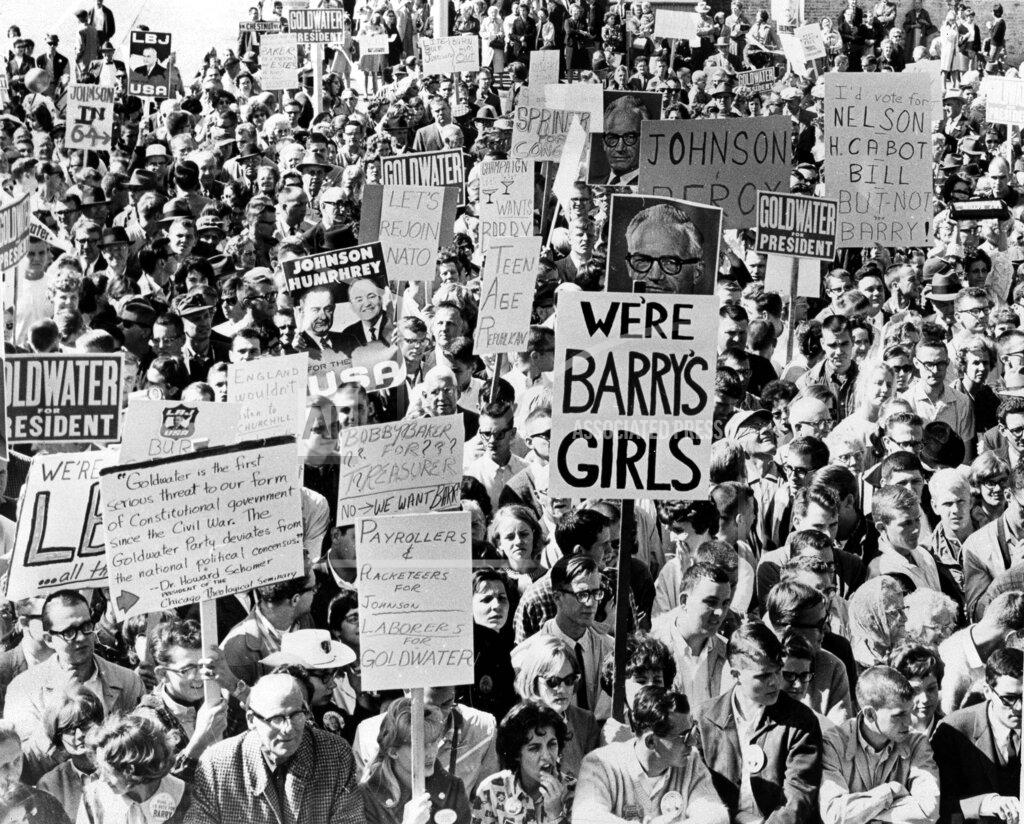
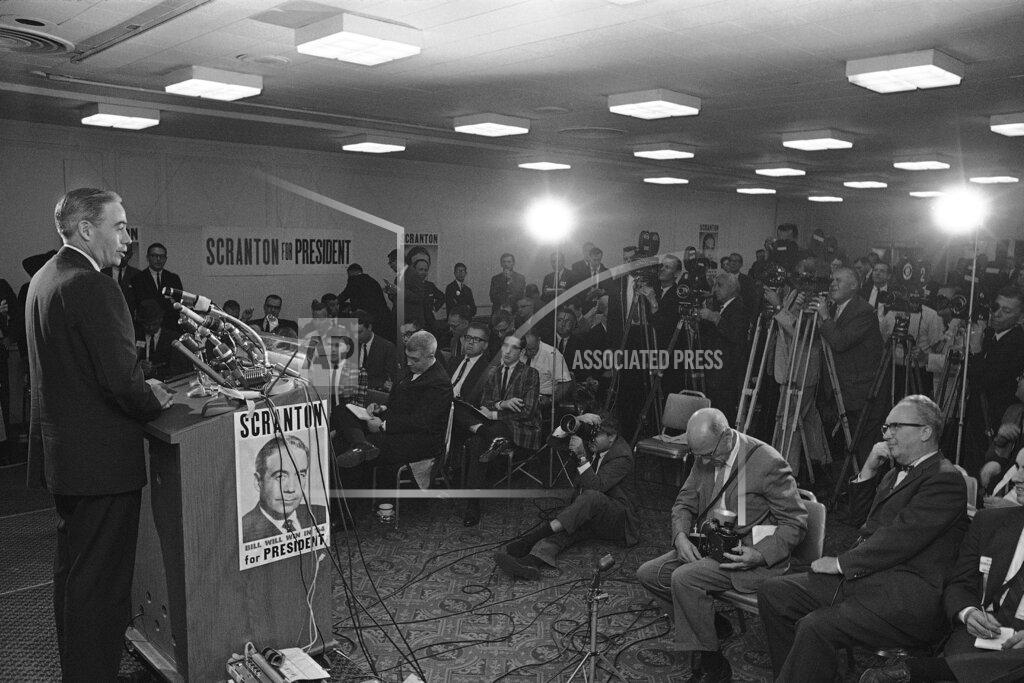
Governor William W. Scranton called on Republican platform writers today to condemn the John Birch Society and to affirm the constitutionality of the Civil Rights Act of 1964. The Pennsylvania Governor made these proposals in a letter to the platform chairman, Representative Melvin R. Laird of Wisconsin. They constituted the Governor’s expected challenge to the odds‐on favorite for the Republican nomination, Senator Barry Goldwater of Arizona.
The Scranton strategy is to force a fight in the Platform Committee on planks unacceptable to Senator Goldwater. The hope is that such a struggle will break some delegates away from the Arizonan. This afternoon in the hotel suite of Governor Scranton’s floor manager, Senator Hugh Scott of Pennsylvania, a dozen liberal and moderate members of the Platform Committee met to plan their moves. Among them were Joseph F. Carlino, Speaker of the New York State Assembly, and Representatives Abner W. Sibal of Connecticut, Peter Frelinghuysen of New Jersey and Silvio O. Conte of Massachusetts. After a three‐hour session they chose Richard Van Busen of Michigan as their “coordinator.”
Senator Scott said the group would push a number of planks in the Platform Committee, specifically the Scranton proposal on civil rights and extremist groups. Others insisted that the group was interested in pushing issues, not just advancing the Scranton candidacy. Representative Conte charged the Goldwater supporters with trying to railroad their version of a party platform through the Platform Committee. He said the Goldwater supporters were being given the key committee positions by “undemocratic” means. Mr. Conte said he had reason to believe the platform had already been drafted. He promised a fight on the floor of the convention if he could make no headway in the committee.
Governor Scranton’s letter to the platform chairman contained 14 points. They covered many of the major areas that will be treated in the platform. Only the two on civil rights and the John Birch Society seemed to be direct challenges to Goldwater views. Senator Goldwater voted against the civil rights bill, saying that it was “unconstitutional” and would lead to a “police state.” He has always refused to condemn the Birch Society, and in 1961 he said he was “impressed by the type of people in it — they are the kind we need in politics.” On civil rights, Governor Scranton told the platform chairman, “I feel that we should explicitly state our belief in the constitutionality of this law.”
{Ed: Nothing new under the sun. Shades of the Tea Party / RINO divide in the GOP in more recent years.]
Henry Cabot Lodge began a two‐state search today for Republican convention delegates willing to help stop Senator Barry Goldwater’s drive for the Presidential nomination. In Kansas, he found an acute scarcity of delegates of any description. Only three of the 20 who will go to San Francisco from this state turned up at his Broadview Hotel suite to hear him make his case for stopping the Senator and nominating Governor William W. Scranton of Pennsylvania. One of the three is a firm Goldwater supporter and is under orders from his district Republican convention to vote for the Arizona Senator. The two others are uncommitted and said they would remain so until the convention.
A source close to Senator Barry Goldwater said today that former President Dwight D. Eisenhower had twice given the Arizonan assurances that he would remain neutral at the Republican National Convention. Meantime, Mr. Goldwater’s floor manager, Senator Carl T. Curtis of Nebraska, said, “I don’t think General Eisenhower would try to get delegates to reverse a solemn promise made to their constituents.”
General Eisenhower was reported by Norman Cousins, editor of The Saturday Review, to have been irritated over “misrepresentations” by the Goldwater staff of his views on civil rights.
Governor William W. Scranton said tonight that he did not expect former President Eisenhower to endorse his bid for the Republican Presidential nomination before the convention opening next week. The Pennsylvania Governor said in an Illinois television broadcast that General Eisenhower “has been one of my biggest supporters” and “was one of those who induced me to run for Governor.” But, the Governor declared, “I do not expect former President Dwight Eisenhower to endorse me before the convention.” Earlier Mr. Scranton announced that Milton S. Eisenhower would nominate him for the Republican Presidential candidacy. In making this known, Mr. Scranton said he was “delighted” that he would be nominated by the youngest brother of the former President.
Representative William Fitts Ryan, who spent the weekend in Mississippi, asserted yesterday that a member of a sheriff’s staff “knows in general what happened” to three missing civil rights workers. He charged that there was “general collusion” between “white vigilante groups” and some local police and “I see no reason that it [the collusion] did not extend to the disappearance of these boys.” One of the missing workers who are feared to be dead, is 20‐year‐old Andrew Goodman, a Queens College student, a constituent of Mr. Ryan in Manhattan’s 20th Congressional District. Mr. Goodman and two other youths have been missing near Philadelphia, Mississippi, since June 21. Mr. Ryan and Representatives Augustus F. Hawkins, a Los Angeles Black, and Philip Burton of San Franciso, all Democrats, arrived in Mississippi Thursday night and returned home Sunday night.
Representative Ryan, at a news conference in his office, said Mississippi had “moved into a state of lawlessness and last-ditch resistance where white vigilantes do as they please and police do not enforce the law at the local level.” “Towns and villages and cities are approaching anarchy,” he said. Later he noted, that while some of the larger hotels and motels in the larger cities were admitting Blacks because of the Civil Rights Act, passed last week, “it will be a long time before local restaurants and diners accept the Black.” “Today it is obvious all over Mississippi, from Philadelphia to the Delta to McComb that unless the federal government moves decisively there is going to be further violence and bloodshed,” he said. Mr. Ryan warned that “white vigilantes are mobilized and armed.”
An Iowa volunteer in the Black voter‐registration campaign in Mississippi was found guilty of vagrancy in Municipal Court today. Marcia Ann Moore, 21, of Fort Dodge, Iowa, was given a 10‐day suspended sentence by Judge Ed Stevens. She pleaded not guilty. She had been picked up by the police in a Black section of town along with Tom Watts, 35, a school teacher from Berkeley, California. Mr. Watts was questioned and released. Both are white.
Forty-nine Blacks were arrested today in Selma, Alabama as they paraded on the steps of the Dallas County Courthouse and the Federal Building in support of a Black voter registration drive. The Student Nonviolent Coordinating Committee said the demonstration that led to the arrests had been called “to protest the fact that those who were registering were put in a back alley by the sheriff and forced to enter the courthouse by the back door.” John Lewis, chairman of the student committee, was one of those arrested. The arrests were made by special deputies of Sheriff James Clark. The men wore crash helmets and were armed with guns, night sicks and electric cattle prods.
The Blacks were marched five blocks to jail. Repeatedly jolted by the cattle prods, they responded with “freedom songs.” Sheriff Clark said the Blacks were arrested for violating city laws that prohibit demonstrating while a court is in session. The arrests marked a high point in racial tension that has been building up over the last week. On Friday, five Blacks and a white man were arrested in separate incidents as they sought, under the new Civil Rights Act, to use restaurant and theater facilities.
Last night a Black mass meeting erupted into violence, which was quelled by tear gas and night sticks. Between 400 and 500 Blacks attended the meeting, and about 50 police officers also were involved. At least two Blacks and several officers received minor injuries. The sheriff said the melee began when someone fired a gun. In another development, Sheriff Clark held a press conference today to announce the arrest of six white youths. He said they had been stopped on a county highway by sheriff’s police and found to be carrying six nightsticks, a rubber hose and a single sheet of literature from the National States’ Rights party.
The United States District Court here set July 17 today as the date for a hearing in what the Justice Department said was the first major test of the Civil Rights Act of 1964. The suit was brought here last Thursday, 2 hours and 10 minutes after President Johnson signed the measure. The court was asked by the Heart of Atlanta Motel Corporation to enjoin U.S. Attorney General Robert F. Kennedy from enforcing the public‐accommodations section of the law. Judge Frank A. Hooper today granted 11 days for the Attorney General to answer an order to show cause why the injunction should not be granted.
The Robert E. Lee, the third‐largest hotel in Jackson, Mississippi, closed rather than accept Black guests in compliance with the civil rights act. The owners of the 12story, 250‐room hotel lowered their Confederate flag, shut the restaurant and night club, and assigned a clerk to turn away guests.
The Senate approved today legislation to tighten the curbs on certain activities of agents of foreign governments and other foreign principals. Most of the agents are Americans. Such activities were held, after a year’s investigation by the Senate Committee on Foreign Relations, to be damaging to United States foreign policy and American prestige abroad. The measure was sent to the House, where the Committee on Un‐American Activities has similar legislation under consideration for expected early floor action.
Mrs. John F. Kennedy, oppressed by poignant memories of her life with the late President in Washington, announced yesterday that she would give up her Georgetown home and move to New York in early fall. The brief announcement, made in Washington through Mrs. Kennedy’s press secretary, Miss Pamela Turnure, indicated that the widow of the slain President wished to escape from the tragic recollections that assailed her in the capital.
Senator Edward M. Kennedy continues to improve, doctors said today, but it will be a day or two before a decision is made on whether to move him from the hospital in Northampton, Massachusetts, where he is recovering from injuries received in a light plane crash.
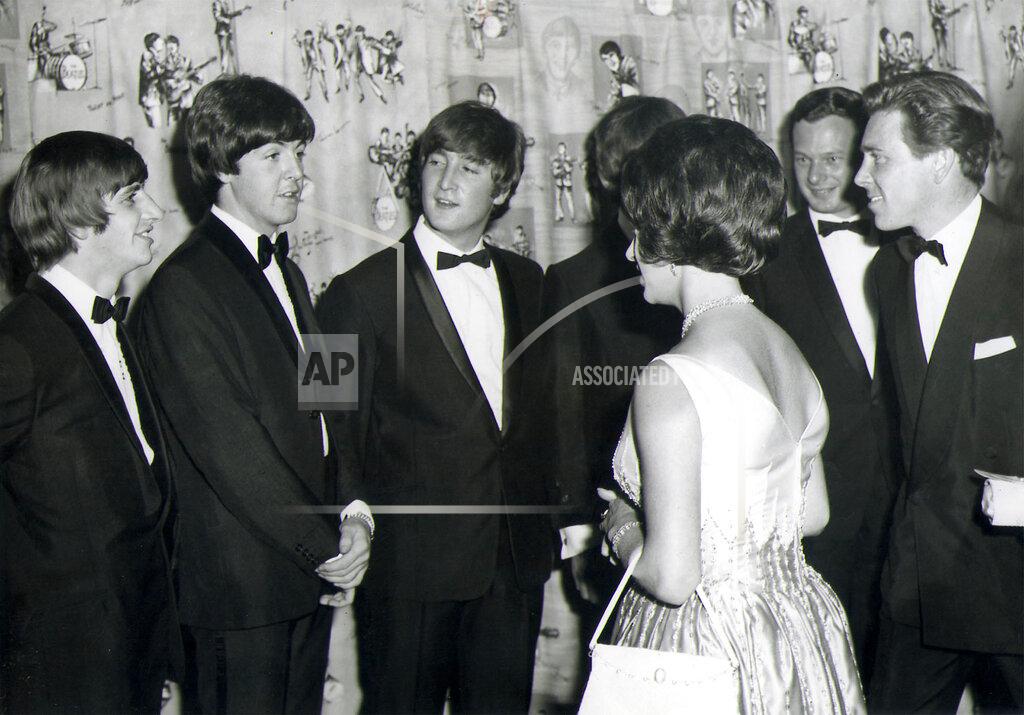
The Beatles first feature film, “A Hard Day’s Night,” premiered in the United Kingdom before 1200 ticketholders at the London Pavilion. It would be released in the United States on August 11. The movie soundtrack would be released on July 10 in the UK.
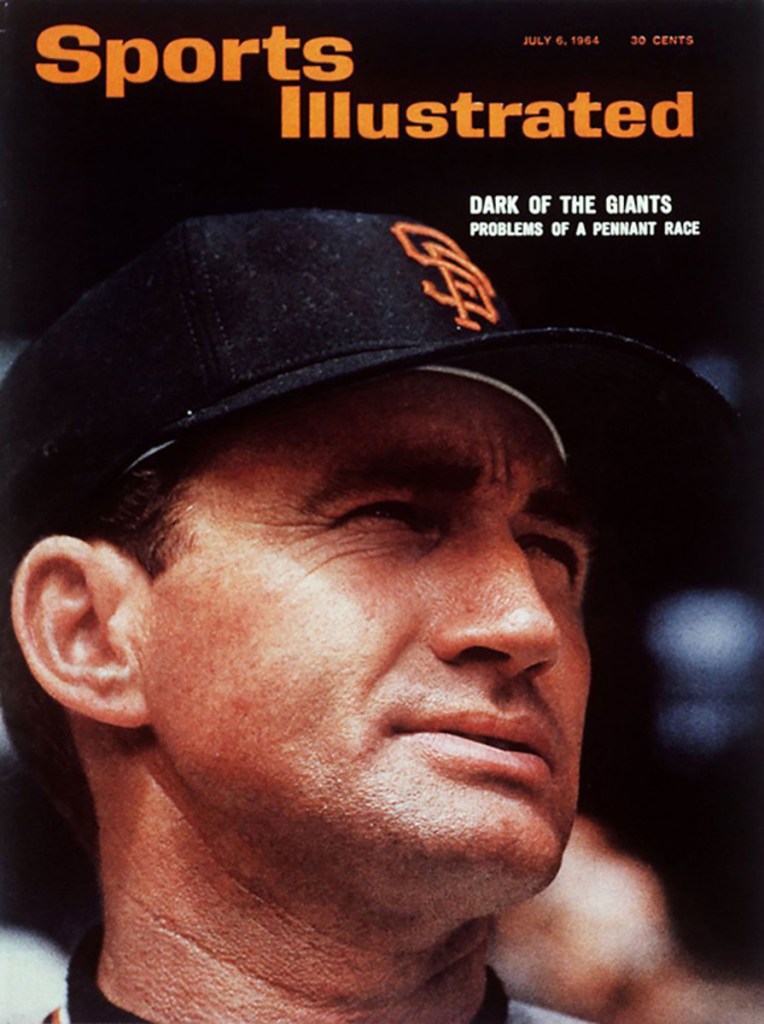
The National League and its umpires settle on a contract lasting until December 1969. The league provides increased pension and insurance payments.
Dow Jones Industrial Average: 844.24 (+2.77).
Born:
Lillie Leatherwood, American sprinter (Olympic gold medal, 4X400m relay, 1984), in Tuscaloosa, Alabama.
Kelly Stouffer, NFL quarterback (Seattle Seahawks), in Scottsbluff, Nebraska.
Erroll Tucker, NFL defensive back (Buffalo Bills, New England Patriots), in Pittsburgh, Pennsylvania.
Chris Gerhard, NFL defensive back (Philadelphia Eagles), in Allentown, Pennsylvania.
Died:
Zeng Junchen, 75, Chinese philanthropist and opium merchant
CITATION FOR POSTHUMOUS AWARD OF DISTINGUISHED SERVICE CROSS
ALAMO, GABRIEL RALPH
Master Sergeant, U.S. Army
Detachment A-726, 7th Special Forces Group (Airborne), 1st Special Forces
Date of Action: 6 July 1964
CITATION:
The Distinguished Service Cross is presented to Gabriel Ralph Alamo, Master Sergeant, U.S. Army, for extraordinary heroism in connection with military operations involving an opposing armed force in the Republic of Viet Nam on 6 July 1964. As a team Sergeant, serving with the United States Army Special Forces Detachment A-726 at Camp Nam Đông, Sergeant Alamo displayed bravery, fortitude, and perseverance when a reinforced Việt Cộng battalion suddenly launched a full scale, pre-dawn attack on the Camp. During the violent battle that ensued, lasting five hours and resulting in heavy casualties on both sides, he participated with outstanding effectiveness in defending the installation. Upon the initial onslaught, he promptly directed a radio operator to transmit a message requesting support, and then rushed into a blazing building to assist in the removal of weapons and ammunition. Ignoring the burns he received while in the burning structure, he then ran through a hail of enemy gunfire to a 60-mm. mortar position and set the weapon for firing. As he noticed the enemy attempting to breach the main gate, he again dashed through a heavy volume of automatic weapons fire to abort the hostile action. Although he sustained a serious wound in this courageous action, he demonstrated superhuman effort, reached the gate, and prevented entry of enemy troops. Despite his wound, and intense grenade attack, he reached the 60-mm. mortar pit, refused evacuation for medical treatment, and directed the fire of the 60-mm. mortar while simultaneously manning a 57-mm. recoilless rifle. Undaunted by the vicious enemy assault, he remained at his battle position and defended the camp until mortally wounded by the enemy. Sergeant Alamo’s valiant efforts and extraordinary heroic actions are in the highest traditions of the United States Army and reflect great credit upon himself and the military service.
Department of the Army, General Orders No. 8 (March 9, 1965)
Gabriel is buried at Lafayette Memorial Park, Fayetteville, North Carolina. He is remembered alongside Sergeant Houston on the Wall.
 History Diaries