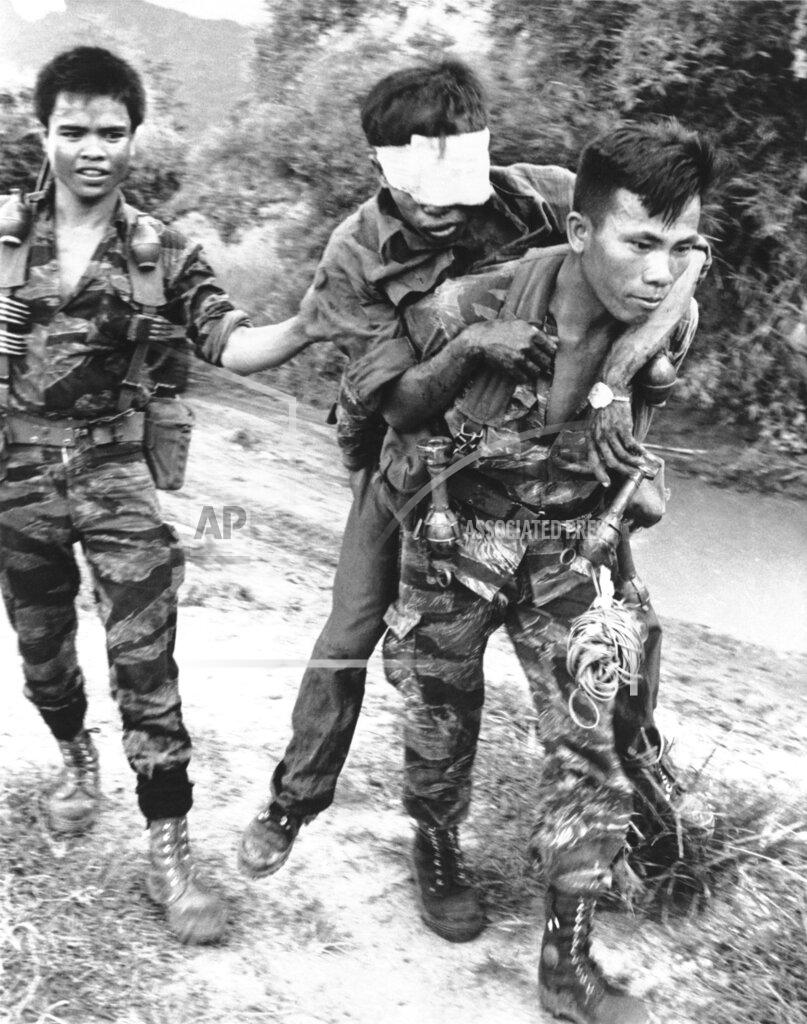
A United Nations Security Council commission arrived in Saigon tonight to examine the lingering border complaints of South Vietnam and Cambodia. The three‐man mission flew to Saigon from Phnom Penh, the Cambodian capital, where it examined a Cambodian dossier on recent border incidents that have troubled relations between the Indochinese neighbors. The Foreign Ministry here has been assembling evidence to support a South Vietnamese contention that Cambodian territory has been used as a haven by Communist guerrillas. The Cambodian Government denies collusion with Việt Cộng insurgents. The commission, composed of representatives from Brazil, the Ivory Coast and Morocco, was established by the Security Council on June 4. It has orders to submit a report by July 19.
The Việt Cộng have announced through their clandestine radio station they will not guarantee the safety of the United Nations mission should members visit border areas. The Moroccan representative, Dey Ould Sidi Baba, declined comment on the Việt Cộng statement, saying, “We have a mission to fulfill and we will fulfill it to the best of our ability.” Mr. Sidi Baba, Morocco’s deputy delegate to the United Nations, was spokesman for the group on its arrival at Saigon’s Tân Sơn Nhứt Airport. He said he believed, that both sides desired the peaceful settlement of border tensions.
Diplomats here are not optimistic on the mission’s chances of bringing about a substantial lessening in tensions, which are believed to hinge less on specific border disputes than on Cambodia’s belief that Saigon will not be able to crush the Việt Cộng. Prince Norodom Sihanouk; Cambodia’s chief of state has publicly stated on numerous occasions his belief that the present Vietnamese and American war effort is in its last gasps before a centralist or even Communist takeover in South Vietnam.
General Maxwell D. Taylor, the new United States Ambassador to South Vietnam, left Washington early today for his new post in Saigon. He plans to confer during a stop in Honolulu with Admiral U.S. Grant Sharp, the new United States Commander in Chief in the Pacific. The general left at 3:56 AM from Andrews Air Force Base aboard a jet transport. Traveling with him are several aides, including William H. Sullivan, head of the inter‐agency Vietnam task force here. Mr. Sullivan is expected to spend several months in Saigon as an informal coordinator of the new United States diplomatic and military establishment in South Vietnam. U. Alexis Johnson, former Deputy Under Secretary of State and now Deputy Ambassador to Vietnam, is already in Saigon.
General Taylor, who resigned as Chairman of the Joint Chiefs of Staff to accept the Saigon post, is believed to consider the economic and political situations in South Vietnam to be crucial in terms of strengthening the military resistance against the pressure of the Communist guerrillas. The new Ambassador and his associates are aware of the recent strengthening of the guerrilla organization. The judgment here remains that the major strategic decisions are made in Hanoi, the capital of North Vietnam, but that tactical decisions are made by Việt Cộng commanders in South Vietnam. However, the Việt Cộng are known to have developed a relatively advanced system of radio communications that allows rapid contact between Hanoi and the guerrilla forces in the south. This is considered to be one of the major recent developments in Việt Cộng operations.
Sukari S. Tuomioja, the United Nations mediator in Cyprus, conferred in Geneva today with Spyros Kyprianou, the Cypriot Foreign Minister. The two‐hour meeting, which was followed by a lunch, marked the start of a new round of talks that Mr. Tuomioja plans to hold with all the parties concerned in the fate of Cyprus. Dean Acheson, former Secretary of State, will be available as President Johnson’s personal representative to those taking part in the talks. He arrived tonight and is expected to see the United Nations mediator tomorrow for the first time.
Former anti-British guerrilla leader General George Grivas has called for a “fight to the death” by Greek Cypriots to unite Cyprus with Greece.
Premier Fidel Castro said last night that Cuba would commit herself to withhold material support from Latin‐American revolutionaries if the United States and its American allies would agree to cease their material support of subversive activity against Cuba. In the most emphatic bid he has made in recent years for easing relations with the United States, Dr. Castro said he did not exclude the use of some international means to supervise such a joint commitment, although his personal view was that this would not be necessary. During an 18‐hour interview that took place over three days, Dr. Castro gave definite form to rumors and hints that have been circulating about his desire to explore a rapprochement with the United States. He suggested that the time had come when an extensive discussion of issues between the two countries would be useful.
Cuba’s leaders, Dr. Castro said, were now more mature and the United States had given some indications — notably through the Alliance for Progress — that it was willing to accept a degree of social change in Latin America. Dr. Castro announced that, as “a contribution on our part to avoid incidents,” the Cuban guards around the Guantanamo Naval Base would be pulled back to a distance or several hundred yards from the fence at the base. At present they are stationed about 50 yards away, he said. He reported that he was happy to say that, since July 1, the provocations he charged to the United States Marine guards had dwindled from nine or ten daily to only one or two a day.
The Communists have had only limited and spotty success in winning meaningful influence in Africa in recent years despite some spectacular instances of infiltration, in the view of United States Government specialists. This was the assessment made last week by highly qualified analysts against the background of events of the last several months in such places as Zanzibar, the Congo, Burundi, Algeria, Angola and Somalia. The analysts here have not contended in their evaluation that the Communist political offensive in Africa has altogether failed. They also do not deny that either the Soviet Union or Communist China may eventually gain some victories in Africa.
In fact, they believe that, for example, the situation in Zanzibar is still touch‐and‐go and that the problems in the Congo may well lead to an increase in Communist influence. The specialists also foresee situations in which Communism may benefit from the emerging and spreading movements of young radicals impatient with the relatively moderate leadership in many of their countries in the first phase of independence. The assessment is designed principally to measure the African situation as it stands in mid‐1964, following visits to the continent by Premier Chou Enlai of Communist China and Premier Khrushchev and other occurrences in the region in the last few years.
The chief finding is that, with the possible exception of Zanzibar, the Communists have not won a firm foothold anywhere in Africa, even though they exert varying degrees of influence in many African countries and independence movements. Specifically, the experts have found that the impact of the Chinese‐Soviet split has seriously affected the effectiveness of the Communist effort in Africa, The Russians and the Chinese are viewed as directly confronting each other in Mali, Guinea and Somalia and to be working at cross‐purposes in Zanzibar and Tanganyika. The second point that appears to emerge is that the leaders in most African countries are extremely wary of unquestioning acceptance of Communist aid or influence.
Ghana and some other African members are attempting to force an open discussion on the explosive issue of Southern Rhodesia at the Commonwealth Prime Ministers’ conference, scheduled to open in London Wednesday. The foreign ministers of these countries have taken the unusual step of arranging a meeting before the conference in an attempt to formulate a common policy toward the white‐dominated colony. Southern Rhodesia, which has been self‐governing for more than 40 years, has been under increasing pressure to allow Africans, which form a majority, to vote. Among the colony’s whites, led by Prime Minister Ian D. Smith, there has been a growing demand for a unilateral declaration of independence. Such a move is strongly opposed by Africans, who contend that it would put them at the mercy of the whites. Because of the divisions Southern Rhodesia could cause at the Prime Ministers’ conference, Sir Alec Douglas‐Home, the British leader, did not give the colony its customary invitation to be represented.
The pursuit of independence and a national renaissance by the Communist leadership of Rumania appears to be developing with the precision and confidence of a well‐made symphony. The leitmotif remains the determination of the Government of President Gheorghe Gheorghiu‐Dej to expand the country’s economy on Rumanian terms, regardless of the wishes of the neighboring Soviet Union and its East European allies. Counterpoint is provided by the regime’s efforts to assert independent policies in foreign affairs and to introduce liberalizing reforms internally.
In the 1964 elections in Mexico, Gustavo Díaz Ordaz was elected President without significant opposition. Diaz, of the ruling Partido Revolucionario Institucional (PRI) received 8,368,446 votes, or 88% of those cast, while his opponent, José González Torres of the Partido Acción Nacional (PAN), got 1,034,337. In addition, the PRI won all 64 seats in the Mexican Senate, and 175 of the 210 seats in the Chamber of Deputies. PAN won 20 seats, the Popular Socialist Party 10, and the Authentic Party got five.
Algerian President Ahmed Ben Bella presided over the celebration of the second anniversary of independence, but most of the old guard who stood beside him when he won it were not there.
The Sunday Times linked mercenaries, involved in the North Yemen Civil War, to former RAF pilot Tony Boyle.
A 27-year-old male nurse was charged with murder in the strangulation death of a 11-year-old boy that had aroused all of Paris.
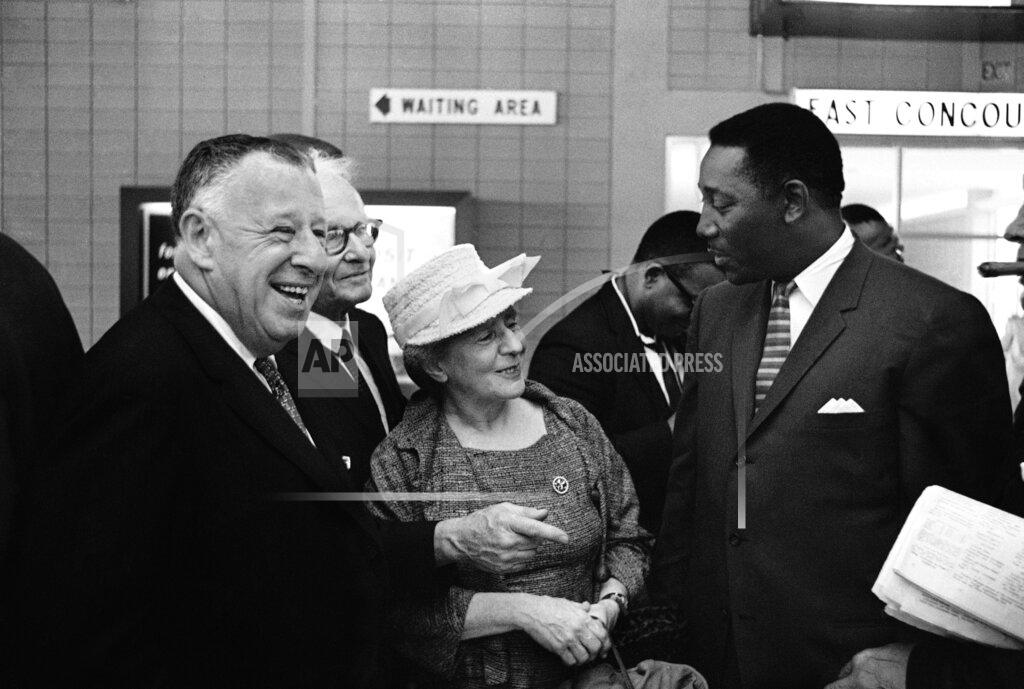
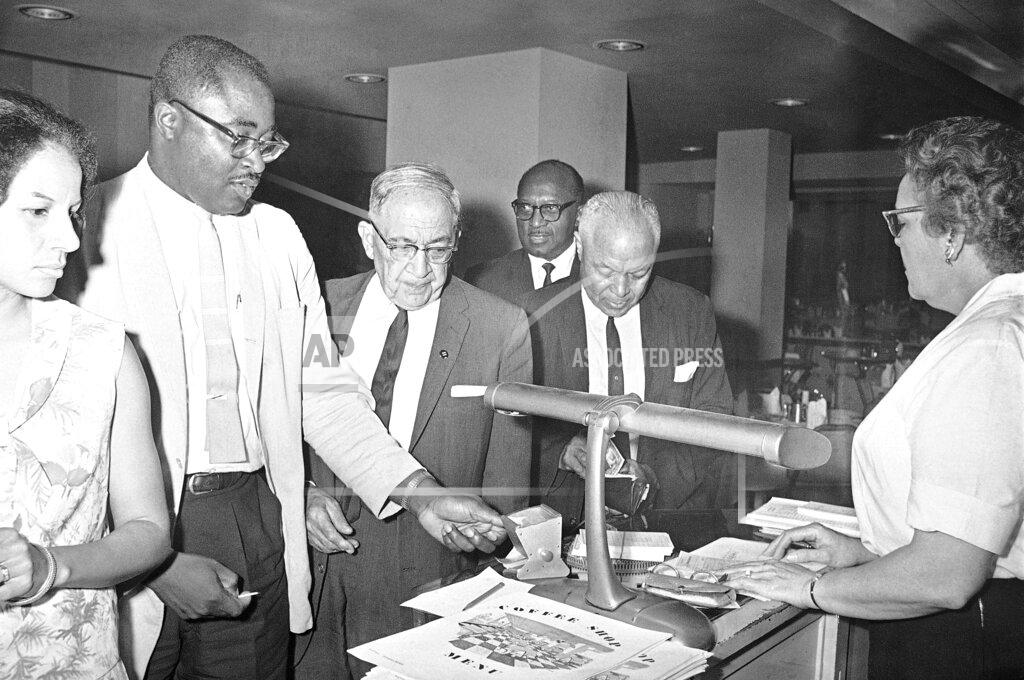
For the first time in the 20th century, hotels in Mississippi were integrated and admitted African-American guests. In the state capital at Jackson, the Heidelberg Hotel, the King Edward Hotel, and the Sun-N-Sand Motel accepted 14 members of the NAACP. Segregation ended peacefully today at a motel and two leading hotels in this stronghold of the Citizens Councils and other militant opponents of racial change. With calmness and courtesy, the three establishments accepted 12 Blacks as guests while city detectives in plain clothes stood watchfully by. There were no untoward incidents. The attitude taken by the city’s white leaders was summed up perhaps by C. A. Tibbetts, manager of the chain that operates the Sun‐N‐Sand Motel. Shortly after six of the Blacks had registered there, he told newsmen: “We are just going to abide by the law.”
The Clarion‐Ledger of Jackson and The Jackson Daily News, both militantly segregationist, did not comment. But neither did they urge defiance. A few religious leaders took part in the effort to ensure compliance with the new law. The Most Rev. Richard O. Gerow, Bishop of Natchez‐Jackson and leader of the state’s 70,000 Roman Catholics, called on them “to accept the action of Congress as loyal Americans and to make a positive contribution in our state by rejecting the spirit of rebellion and by standing for justice, love and peace.”
A group of whites attacked Blacks fishing off a bridge near St. Augustine, Florida today. The violence was the first reported at St. Augustine since a racial truce restored peace in the city last week. At least two persons were injured. The highway patrol said five Blacks, including a woman and a child, were fishing off a bridge over Matanzas Bay, about a mile out of the city. A group of seven to 12 whites, one of them carrying a bicycle chain, crept up on the Blacks, Major Lee Simmons said. The whites attacked, and the Blacks fled. The whites, Major Simmons said, “chased them to the edge of the bridge and walloped them some more.” At the end of the bridge, he said, the whites saw another Black standing on the bank and went after him. He leaped into the bay, Major Simmons said, and swam to safety. The whites fled before the police arrived. The authorities said a 20-year‐old Black youth had 40 stitches taken in a cut on his back and was treated along with the woman for bruises and cuts from a bicycle chain.
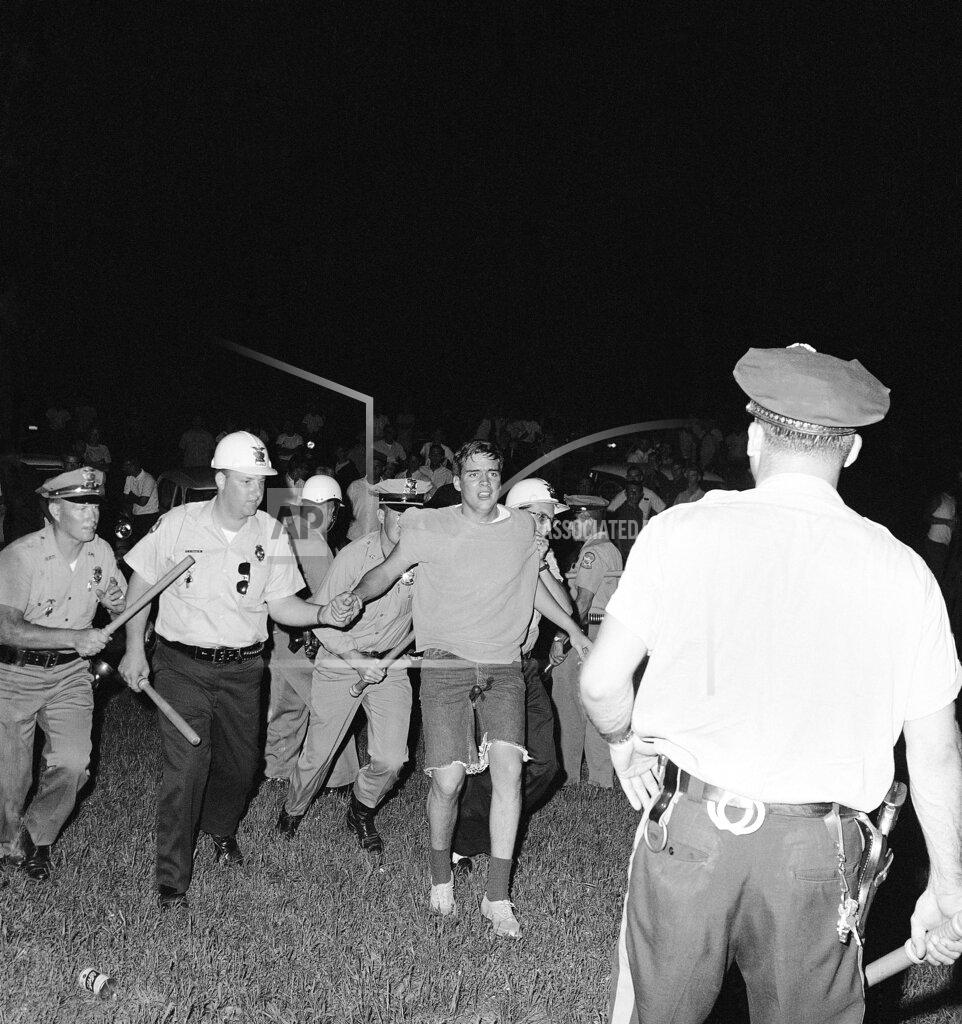
Four persons in Texarkana, Texas were wounded by gunfire today as Blacks tried to integrate a swimming beach at Lake Texarkana, five miles west of this northeast Texas City. Sixteen Blacks were arrested for investigation. Officers said 80 to 150 Blacks appeared at the beach, where 200 white persons were swimming. Cass County Sheriff Bill Dowd said the Blacks went swimming and then waded ashore singing and clapping. Words were exchanged between the Blacks and whites, the sheriff said, and soon both sides were throwing stones and cans. A 21‐year‐old white man, Lee Edward Johnson, was shot in the leg with a pistol, officers said. An unidentified white man got a shotgun from his car and shot into the group of Blacks. James Hutson, 17; Eugene Sumler, 15, and William Easter, 28, were hit. The wounded were taken to a hospital. Mr. Johnson and the Sumler youth remained in the hospital overnight. Mr. Easter and the Hutson youth were released after treatment and were among the Blacks arrested.
The Jacksonville, Florida trial of five admitted Ku Klux Klansmen charged with conspiracy in the dynamiting of a Black boy’s home ended in United States District Court today. There were no convictions. The all‐white jury of 12 men acquitted one of the defendants on two charges and a mistrial was declared against three others on the same charges. The fifth man was found innocent of interfering with a federal court order admitting the 6‐year‐old Black boy to an all‐white school. On the second charge, that of violating the child’s right to attend the school, the jury could reach no agreement.
President Johnson believes that passage of the Civil Rights Act has opened the way to a new creative period in which the Government can tackle long‐ignored domestic problems. The President, it was disclosed today, has convened a group of special committees, drawn largely from the academic community, to draft long-term recommendations for future legislative and governmental action on the domestic front. Among the broad problem areas being studied are metropolitan growth; education and health; Federal, state and local fiscal relationships, and the adaptation of governmental structures to a modern era of science and technology. Many of the recommendations of the special panels are expected to be incorporated in a legislative program that the Administration will submit to the next Congress if Mr. Johnson is elected.
The President reportedly sees new opportunities opening up for dealing with problems that have long been shunted aside, partly because of the civil rights controversy, and with new problems that have been emerging in the postwar period. The civil rights issue, he believes, has long been a disruptive force in the legislative machinery. Now that legislation has been enacted, he believes legislative and governmental energies can be concentrated on other problem areas. The President’s assessment of the domestic scene was relayed to reporters here by White House aides who declined to be identified or quoted.
On the foreign front, according to associates, Mr. Johnson sees a period of watchfulness, if not necessarily one of relative quiet. The special domestic studies, it was reported, have been under way quietly for several weeks. They were said to, number eight in all, but were described in most general terms.
[Ed: Foreign quiet? Would have been nice. But Tonkin Gulf is warming up in the bullpen.]
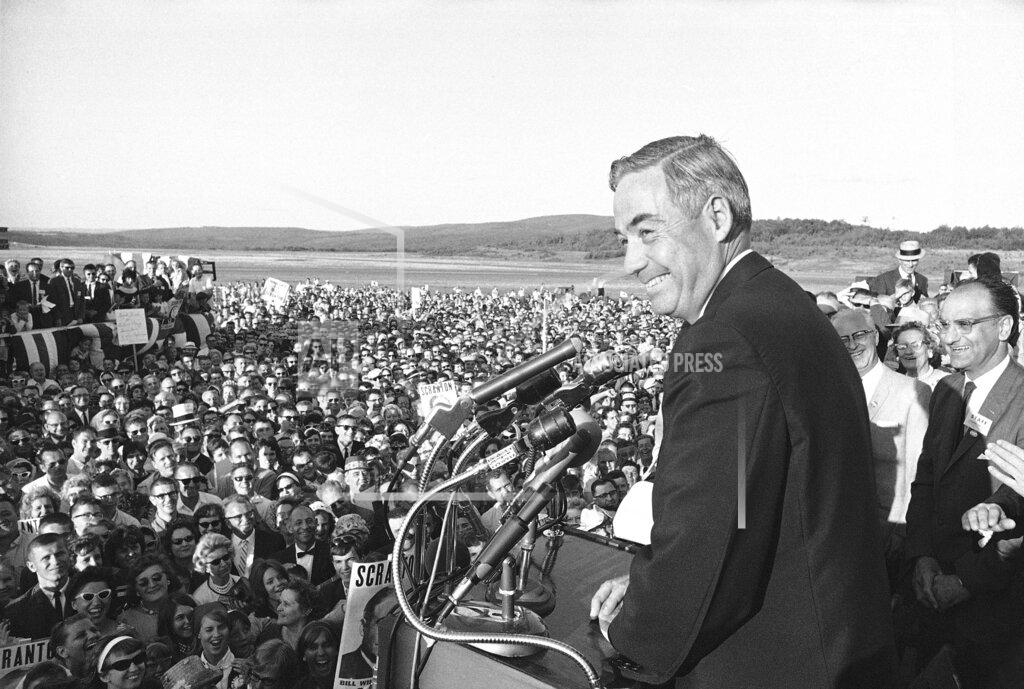
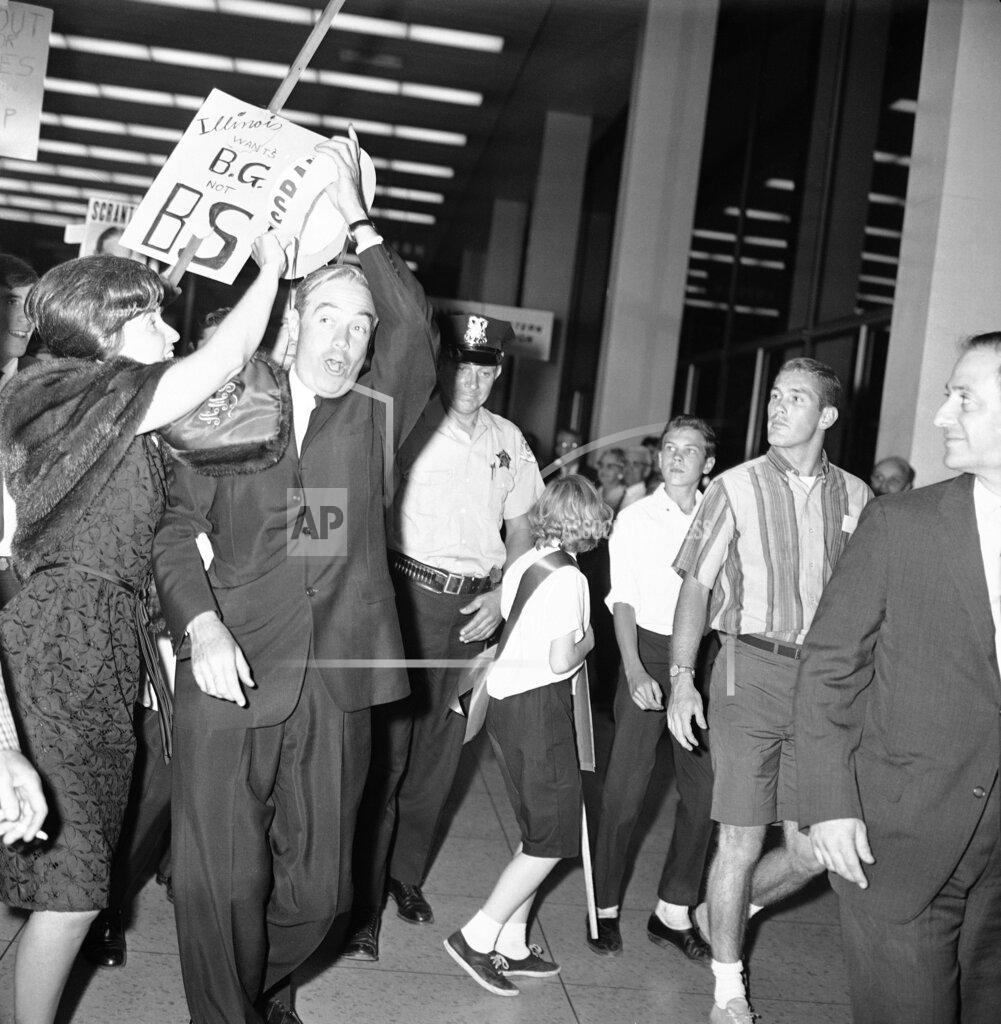
Governor William W. Scranton of Pennsylvania filled two key posts in his Republican National Convention staff today. He announced that Senator Hugh Scott, Republican of Pennsylvania, who is running for re‐election in November, would be his over‐all manager at San Francisco beginning July 13, when the convention opens. In a move obviously calculated to integrate the forces of Governor Rockefeller, who is no longer a candidate for the Republican Presidential nomination, Mr. Scranton also announced the appointment of George Hinman, the Republican National Committeeman from New York and a close Rockefeller adviser, as Senator Scott’s principal assistant.
At a joint news conference in Harrisburg, Pennsylvania with former Ambassador Henry Cabot Lodge, Mr. Scranton and Mr. Lodge both indicated that they had high hopes that former President Dwight D. Eisenhower would join his brother Milton S. Eisenhower in supporting Governor Scranton’s bid for the nomination. Governor Scranton said that Mr. Lodge would be his “special personal adviser.” Mr. Lodge appeared to have flatly ruled out any possibility of a Vice-Presidential nomination for himself. “I am non-draftable,” he declared. “I cannot be drafted.”
The forces of Senator Barry Goldwater are poised for a barrage of “he can’t win” propaganda from rivals as the race for the Republican Presidential nomination enters its final week. Aides of the Arizonan informally indicated this was now their dominant strategic consideration. But they professed unconcern, in view of Mr. Goldwater’s commanding delegate margin, along with a planned series of countermeasures.
The Senator headed back to Washington by plane tonight after a family holiday weekend in Phoenix in which he appeared to shuck off the cares and complexities of his impending critical role in the nation’s political spotlight. After a brief appearance at the Prescott centennial celebration yesterday, the Senator withdrew to the seclusion of his Camelback Mountain home with Mrs. Goldwater and his sons, Barry Jr. and Mike. Both of the sons have intensive schedules of appearances in support of the Goldwater effort at the Republican National Convention opening in San Francisco July 13.
The chairman of the Republican Platform Committee sought today to minimize the differences between Senator Barry Goldwater and those opposing him for the Presidential nomination. Representative Melvin R. Laird of Wisconsin said he could “very easily” envisage a ticket of Mr. Goldwater for President and his chief rival, Governor William W. Scranton of Pennsylvania, for Vice President. Governor Scranton has been touring the country saying that a Goldwater nomination would be a disaster. “I am sure you will find,” Mr. Laird said, “either Senator Goldwater or Governor Scranton supporting the platform and the nominee of this convention.”
The Minnesota Twins rained blows over Yankee Stadium in every inning yesterday during a 19‐hit offensive that defeated the New York Yankees, 9–2, and ended Whitey Ford’s winning streak at 10 games. The slugging continued long after Ford had left the game after four innings with the Twins leading, 4–1. It consisted of 14 singles, four doubles and Harmon Killebrew’s 30th home run of the year, and added up to the most hits made by the Twins and the most hits made against the Yankees all season.
Tony Conigliaro’s three‐run homer with two out in the eighth inning gave the Boston Red Sox a 9–6 victory over the Los Angeles Angels today. Los Angeles appeared to have put the game away in the seventh when Willie Smith’s single — his third straight hit — sent the Angels in front 6–5. But Dick Stuart, the slumping Sox slugger, who had one hit in his previous 32 times at bat, crashed his 15th homer high over the left‐field screen to tie the score.
Joe Sparma pitched a four-hitter, tripled in two runs and scored one run as the Detroit Tigers beat the Washington Senators, 3–0, today to sweep a doubleheader. The Tigers won the opener, 7–6.
At Comiskey Park, the Chicago White Sox twice shut out the Cleveland Indians, winning 2–0 behind Juan Pizarro and 5–0 behind Joel Horlen.
The New York Mets completed the first half of their third season today with little discernible variation from the first four halves of their National League campaigns. They succumbed to the Los Angeles Dodgers, 5–0, and to the pitching of Sandy Koufax, two habits they acquired early in life. Koufax has started nine games against the Mets in his career. He has won all nine.
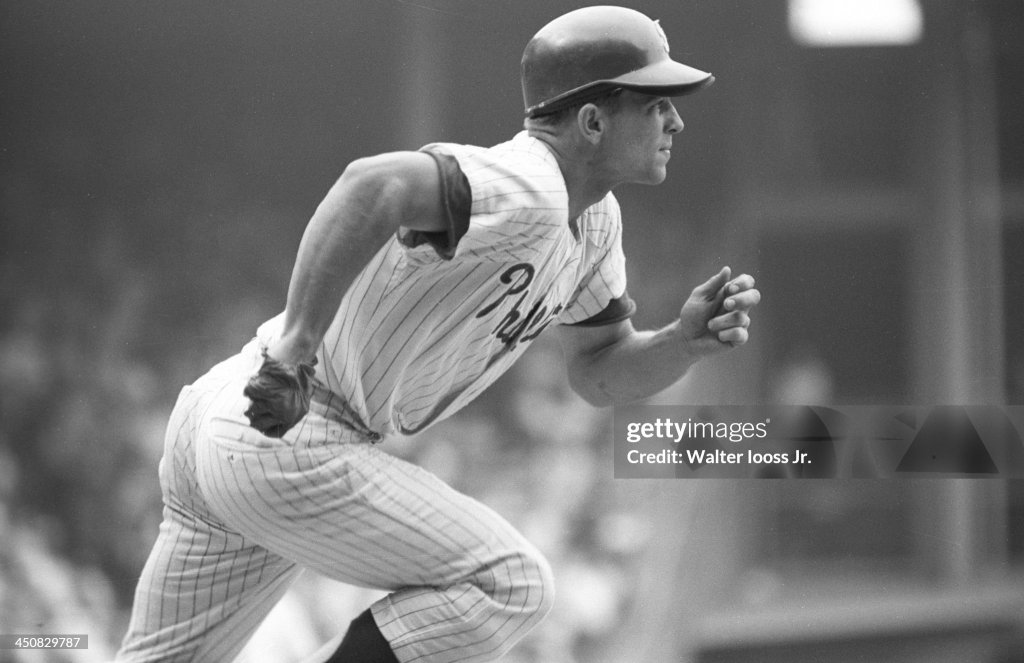
Dennis Bennett beats Juan Marichal, 2–1, to give the Philadelphia Phillies a 3-game sweep of the San Francisco Giants at Candlestick. The Phils hold a 1½ game lead at the All-Star break.
Born:
Ronald D. Moore, American screenwriter and television producer (“Battlestar Galactica”, “Outlander”, “For All Mankind”), in Chowchilla, California.
Toni Halliday, British rock singer and lyricist (Curve; Chatelaine), in Parsons Green, London, England, United Kingdom.
Died:
Turkish Army Colonel Talat Aydemir, 47, was hanged after two attempted coups d’état in 1962 and 1963. His collaborator, Fethi Gürcan, had been put to death on June 27.

 History Diaries