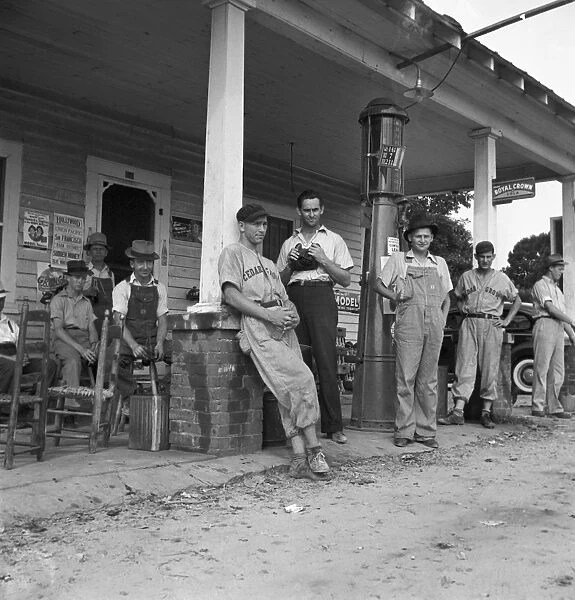
The Free City of Danzig, whose Nazi rulers proclaim its desire and determination to achieve physical reunion with Nazi Germany, is exercising its normal activities and doing its normal business just as if it were not the focus of a bitter political controversy that before long must inevitably produce a new European crisis. The tension is all elsewhere. Business is better than usual here because in the last few weeks, there have been strangers, mostly athletic young men from the Reich, who arrive in civil garb, disappear and presently are met in twos and threes strolling about in the evening in German Elite Guard or Danzig police uniforms, which are scarcely different from German military attire.
As a result, there have been some increases in food prices and a scarcity of some kinds of provisions but also great benefit to retail trade. The number of these newcomers cannot be ascertained from any responsible authority. A good guess is that Danzig, which under Versailles treaty and League of Nations guardianship was entitled to an armed police force of 800 men and no soldiers whatsoever, at present contains armed forces, fully trained or under training, of between 10,000 and 11,000 men.
The Langfuhr barracks, which before the last war housed the German Crown Prince’s regiment, the Deathhead Hussars, has been newly equipped with three-tier bunks, which appear to be filled. This barracks is reputed to contain at least 2,000 men, but these are described as “police” recruited under the recent Senate decree that established conscription in the Free City and has since authorized the calling up of various classes of the male population. Similarly, the influx of young men from Germany, many of whom wear the uniform and insignia of the Hitler Elite Bodyguard, is described as comprising former Danzigers who sought service in the Reich and now, under conscription here, prefer to return home.
The Nazi authorities put the number of these newcomers at 500. The Poles say there are 15,000. The fact is that there are probably between 1,000 and 2,000 in addition to the native conscripted Danzigers. Elite Guards in black uniforms inhabit the Wieden barracks, which also was the home of a German regiment in pre-war days and has been restored and refurbished. There would seem to be between 1,000 and 2,000 of them.
As the airplane from Berlin circles the Free City before making its landing, one can see far below that the parade grounds of these newly established barracks are filled with recruits, some in uniform and some without, doing squad drill, and that they are very busy places indeed. Similarly, as one drives in from the airport one observes, through the barred iron gates of another barracks, more men doing squad drill. It is quite obvious that Danzig is preparing for more than police duties.
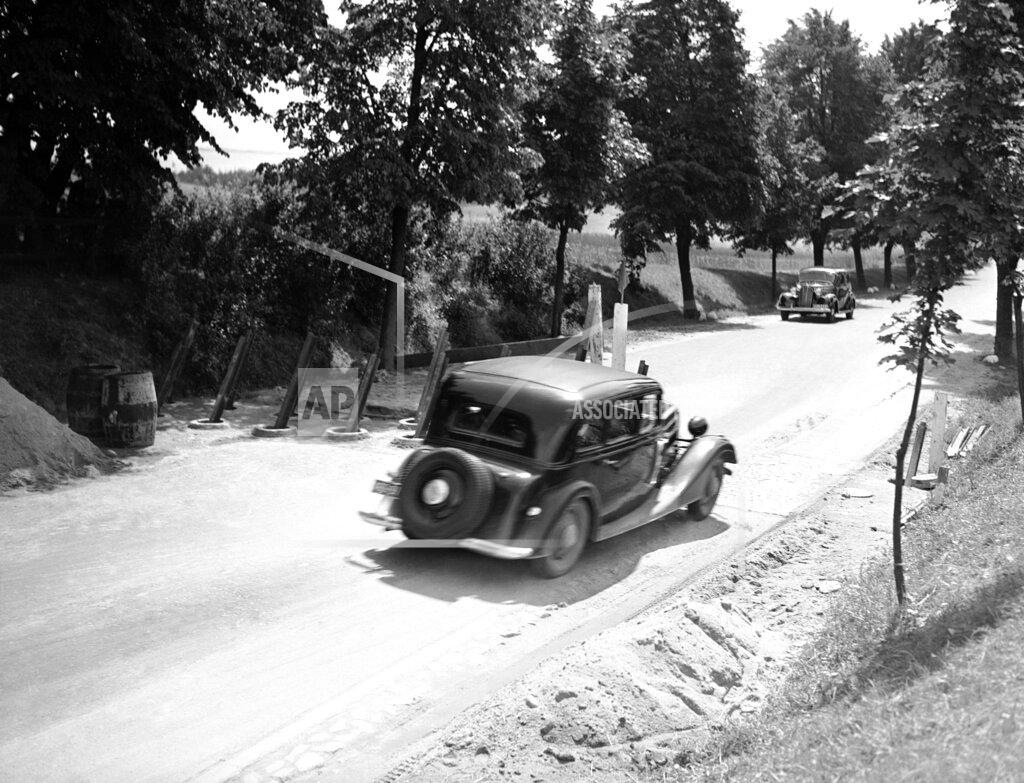
Nazis assault the Archbishop of Vienna. He is attacked with eggs and epitaphs and struck on the head with a stick. Theodor Cardinal Innitzer, Archbishop of Vienna, was brutally assaulted in Königsbrunn on Sunday following a series of Nazi demonstrations while he was making a tour of rural districts northwest of Vienna, it was learned today. He was pelted with rotten eggs and potatoes by a mob of rural Nazis, who shouted “murderer” and other epithets as he left a Königsbrunn church. His biretta (cap) was knocked off by a blow from a stick.
His chauffeur, who had been striving to defend his automobile while the Cardinal was celebrating mass in the church, managed to get his master and a chaplain and secretary inside the car and then drove straight to Vienna. Thus, the Cardinal’s tour was halted. Both the chaplain and secretary were. struck by the mob, and the chauffeur’s uniform was ripped. Cardinal Innitzer has remained in his palace since. No report of the incident has appeared in any Vienna paper. The Cardinal himself has made no statement. The news percolated into Vienna from the districts the Cardinal was visiting.
In some villages, it appears, there were such demonstrations as bands of youths marching up and down whistling outside the churches where the Cardinal was celebrating mass. At another place a man tried to spit on the prelate as he passed, while women hissed and booed. Despite these demonstrations Cardinal Innitzer continued his tour but always slept in the parish priests’ houses. At one of them a number of windows were smashed during the night. Each visit was announced in advance by a placard on a church door. In one village twelve children were to have been confirmed in front of the church, but a threatening crowd gathered and the ceremony was held within the church.
The chief Nazi grievance against Cardinal Innitzer apparently is that he declined to intervene when Planetta and Holzweber, Nazis, were sentenced to death and executed for the murder of Chancellor Engelbert Dollfuss in 1934. Nazis have been taught to believe that Cardinal Innitzer could have saved the lives of the two men, who are now regarded as national heroes, with streets named after them in Vienna and elsewhere. Since a mob stormed his palace in Vienna last October, Cardinal Innitzer’s car has ceased flying a small papal flag as was its custom. The license number also has been changed.
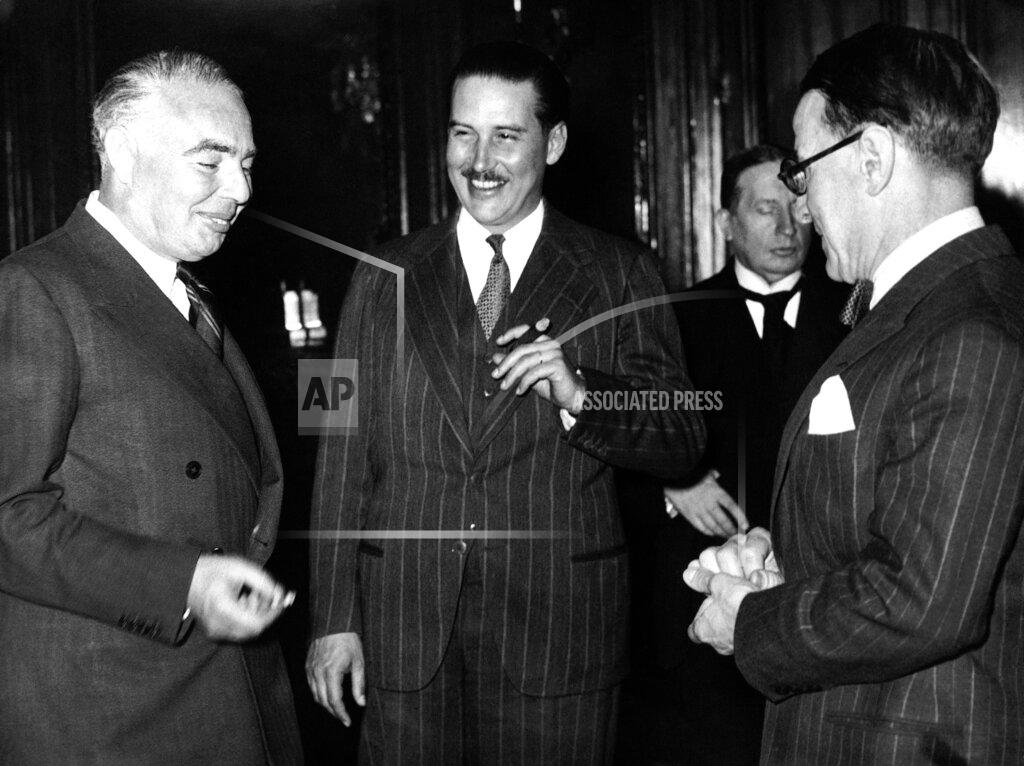
The Soviets talk with Britain and France and hit a snag as the Soviets balk at aid to small states in the west. Still another hitch in the negotiations in Moscow became apparent today just as the stock markets here and in Paris were responding joyfully to rumors that a three-power alliance between Britain, France and Russia was about to be signed at last. The rejoicings in the financial districts were promptly described with typical British understatement as “premature.” The signing of a pact is not regarded here as imminent by any means; indeed, official quarters seemed almost more depressed and discouraged over the prospects than at any time since the negotiations began there months ago.
But the British are going to try again. The Cabinet subcommittee on foreign affairs held two long meetings today to discuss the Russian objections to the latest Anglo-French proposals and it finally worked out a possible way of overcoming them. Accordingly, still further instructions will be sent tomorrow to Sir William Seeds, the British Ambassador in Moscow, and the long negotiations will drag on while the situation in Danzig continues to be serious and while the effect of the Russian pact threatens to wear off with every additional week of delay.
Official quarters in London today would not disclose the exact points of disagreement. A clue to the nature of the trouble could be found, however, in yesterday’s communiqué from The Hague protesting that the Netherlands did not want to be mentioned in any guarantee by the great powers and wanted only to remain neutral.
There is little doubt now that the British and the French asked Russia last week to promise help in the event of aggression against the Netherlands or Switzerland and thus to counterbalance the proposed Anglo-French guarantee of the Baltic States. The smaller States of the East and of the West would have been mentioned by name, but in a separate document that would not have been published.
But the Russians apparently did not take kindly to the idea of guaranteeing little States in the West. For one thing, they have no diplomatic relations with the Netherlands or Switzerland, neither of which has ever recognized the Soviet regime. The Russians took the attitude, moreover, that commitments so far outside the realm of Russian vital interests would require still more guarantees and reassurances nearer home.
The nature of Russia’s additional demands was not made known here today, but it was clear enough that the Russians had again raised their price and had raised it beyond the capacity of Britain, France and their Eastern European allies to pay. In view of the Netherland protest yesterday and of Russia’s unwillingness to guarantee the Netherlands and Switzerland, the obvious thing for the British to do now would be to say: “Let’s go back to where we were; let’s forget our suggestion about the Dutch and the Swiss.”
This may, in fact, be the line the British will take in Moscow in the next few days in the hope that the Russians will also “forget” the additional demands they have just made about Eastern Europe. For the British and the French want the alliance without further delay. They want it not only as an insurance policy in the event of war, but even more as a deterrent in the present time of so-called peace. The Times of London editorially will suggest tomorrow that “Holland and Switzerland at least should never be brought in against their will” and reaffirmed the British reluctance to press a guarantee upon the Baltic States whether they liked it or not.
The Daily Telegraph continues the campaign to give Winston Churchill a position in the British cabinet. The News Chronicle, The Yorkshire Post, The Observer and Picture Post join the campaign. Mr. Churchill and Anthony Eden, former Foreign Secretary, were said to have agreed that one will not go into the Cabinet without the other. It was said no invitation to join had been issued.
The tenth ordinance of the Reich Citizenship Act creates the Reich Association of Jews in Germany (Reichsvereinigung der Juden in Deutschland), replacing all other Jewish organizations. All German Jews are forced to become members of the new association.
British Colonial Secretary Malcolm MacDonald today promised a deputation of politicians and others interested that he would discuss with the High Commissioner for Palestine possibilities of developing a Jewish refugee settlement in the Negev area along the southwest border of Palestine.
Engineers prepare a short-wave radio to challenge the Axis for the airwaves. An increase in the power of German broadcasts had blanketed American efforts.
President Roosevelt urges the Senate to reverse the arms embargo. President Roosevelt called on the Senate today to reverse the House. action to forbid shipments of arms and munitions to nations at war, and said that he was prepared to see Congress remain in session until September, if necessary, to accomplish that result. The President departed for Washington on his special train at 11 PM (Eastern standard time). He is due to arrive in the capital at 8:30 AM. Secretary Morgenthau accompanied the President.
On the eve of the scheduled meeting of the Foreign Relations Committee to take up the neutrality issue, Mr. Roosevelt asserted that prevention of war in all parts of the world was the first policy of his Administration. In the interest of preventing war, the President emphasized repeatedly, it was up to the Foreign Relations Committee to give the executive branch a free hand to determine when and to what countries, American materials of war could be exported.
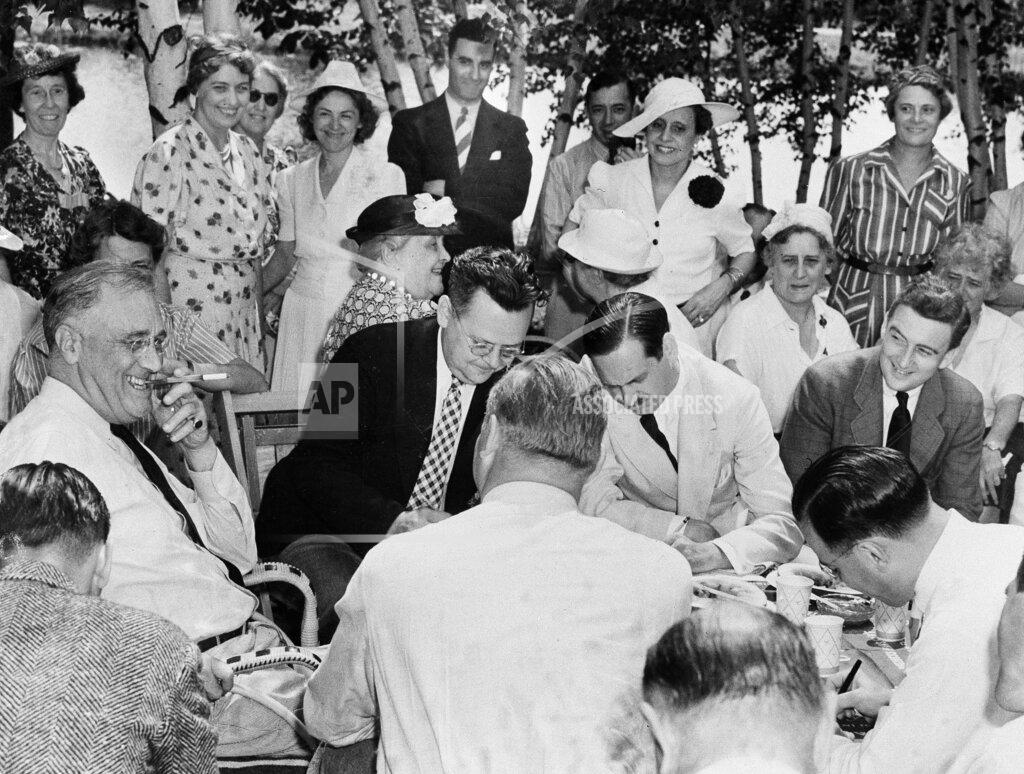
In an impromptu press conference after a lawn party this afternoon, President Roosevelt said he stood for the recommendations sent to Congress months ago by Secretary Hull, in which the Secretary of State asked that the present mandatory arms embargo, which becomes effective on a finding that a state of war existed, should be lifted.
The President’s expression of willingness to fight it out with Congress all Summer if necessary was brought out when he was told of reports that the Senate’s “isolationist group” was prepared to filibuster on the Administration’s amendments through September. That was the privilege of the Senate, Mr. Roosevelt remarked, because its members had full discretion under the rules.
In the course of his press conference remarks, Mr. Roosevelt paused to scoff at published reports that he was contemplating another campaign against reactionary Senators and that this was part of a plan to strengthen his position as a third-term candidate. The reports were typical, the President said, of most political stories written from Washington these days.
In circles close to the White House it was learned yesterday that the President viewed the House rejection of the Administration’s neutrality proposals as increasing the chances of war and as adding to his task of keeping this nation and the world at peace. This outline of his position Mr. Roosevelt authenticated today. Adopting the view attributed to him as his own, the President said he would improve on the published reports of his position in only one respect. He would have emphasized that it was the policy of the Administration to prevent an outbreak of war in all parts of the world.
He had nothing to say on the reported imminence of another European crisis, the situation to which promulgation of his views yesterday was directed. The Administration’s policy of war prevention was a good thing, the President said, because it did not raise questions which would be brought up once war started. His auditors were left to assume that he meant by the remark that as long as war was prevented the United States would be spared the task of taking sides.
Colonel Louis A. Johnson, Assistant Secretary of War, in an address delivered tonight before the University of Virginia Institute of Public Affairs, said that in defense of its freedom the United States must be prepared to prevent the seizure and occupation of any additional territory on the Western Hemisphere by a European or Asiatic power. Specifically, he told the institute, “we must be able to concentrate men, guns and planes in adequate force at any vulnerable point in the three Americas, from Point Barrow to Tierra del Fuego. “This is no light task, and none of our seeking,” he said. “Yet it was foreseen when our nation was born.”
Answering in the affirmative for the United States one of the questions posed at yesterday’s opening session, Colonel Johnson declared that free peoples can defend themselves successfully without regimentation or sacrifice of their essential liberties and cited American history in proof of his assertion. “The basis for that defense,” he went on, “is already laid; we confidently believe that the program of preparedness envisaged, and in considerable measure already executed, by the President will create for us defense forces sufficient to repel any threat to the peace of the Western Hemisphere.
“Long ago John Jay, one of the framers of the Constitution, wrote: “The safety of the people of America against dangers from a foreign force depends not only on their forbearing to give just causes of war to other nations, but also on their placing and continuing themselves in such a situation as not to invite hostility or insult.”
“Only by creating and maintaining a national defense capable of guaranteeing this security can we continue to keep our cherished democracy inviolate.”
Sixteen countries show gains in employment. The United States has more jobless than last year, and Britain sets a new low.
A judge rules that beating one’s wife in private is not punishable.
The radio show “Blondie,” based on the comic strip of the same name, premiered on CBS.
A bodybuilding contest was held in Chicago, won by Roland Essmaker. Although similar events had been around for years, the fact that all entrants had to be registered with the Amateur Athletic Union provided an air of official recognition that had previously been absent from bodybuilding. The competition became an annual event with the winner earning the title of “Mr. America”.
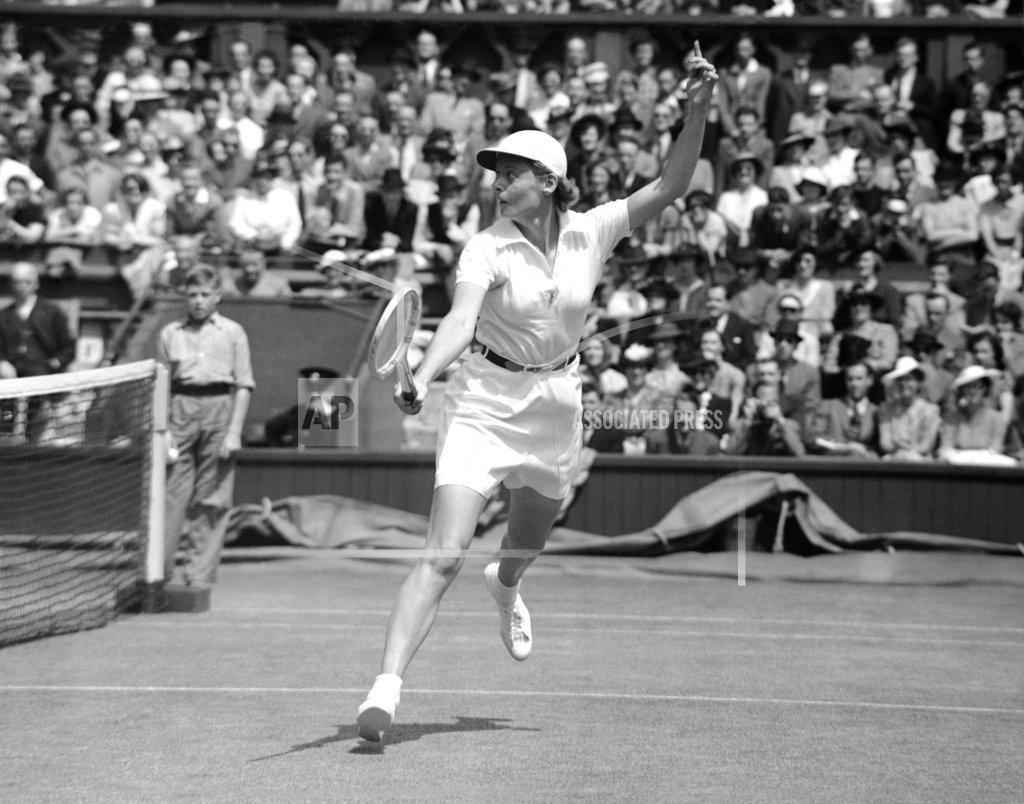
Miss Kay Stammers of England eliminated Miss Helen Jacobs of Berkeley, California, 6–2, 6–2, in the quarter-finals of the All- England women’s tennis singles championship at Wimbledon. However, Miss Alice Marble, the American champion, advanced to the semi-finals along with another entry from the United States, Mrs. Sarah Palfrey Fabyan. Miss Marble defeated Mlle. Jadwiga Jedrzejowska of Poland, 6–1, 6–4, while Mrs. Fabyan vanquished Mme. Rene Mathieu of France, 6–4, 6–2.
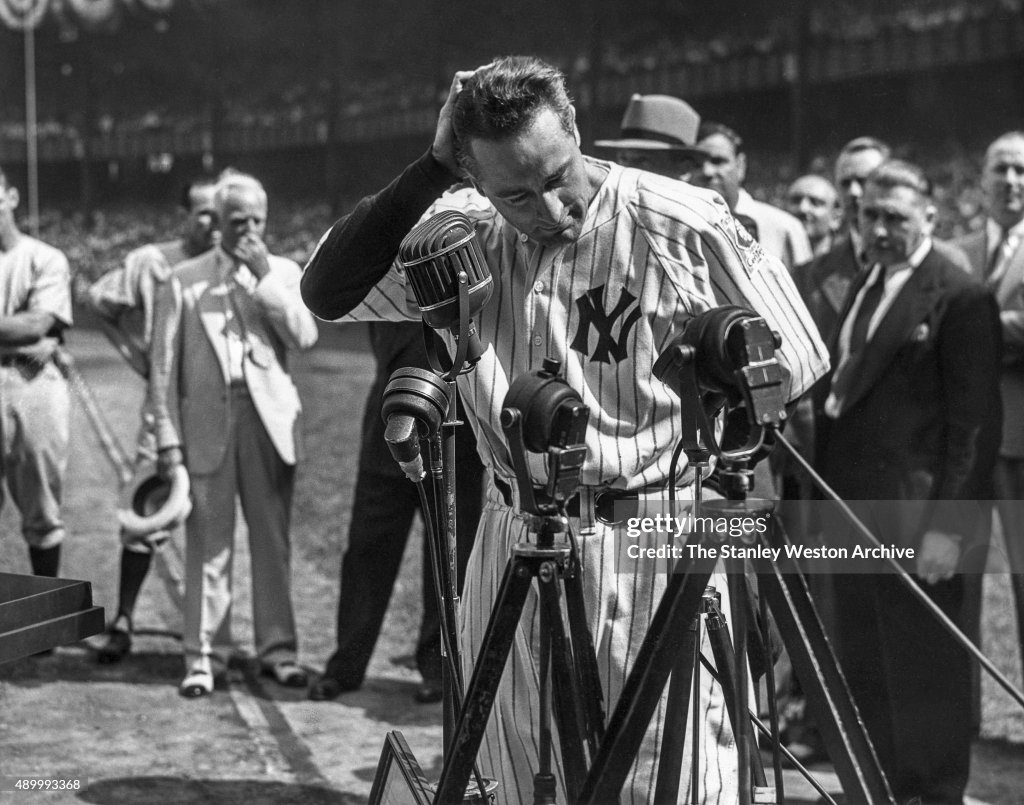
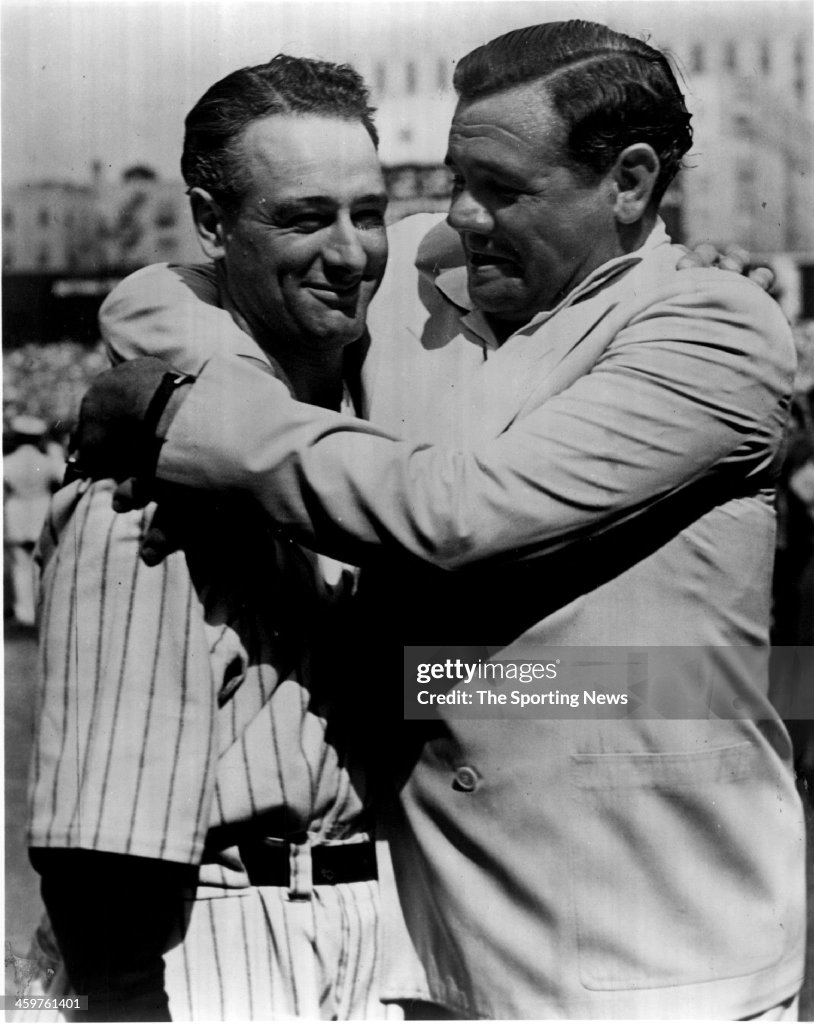
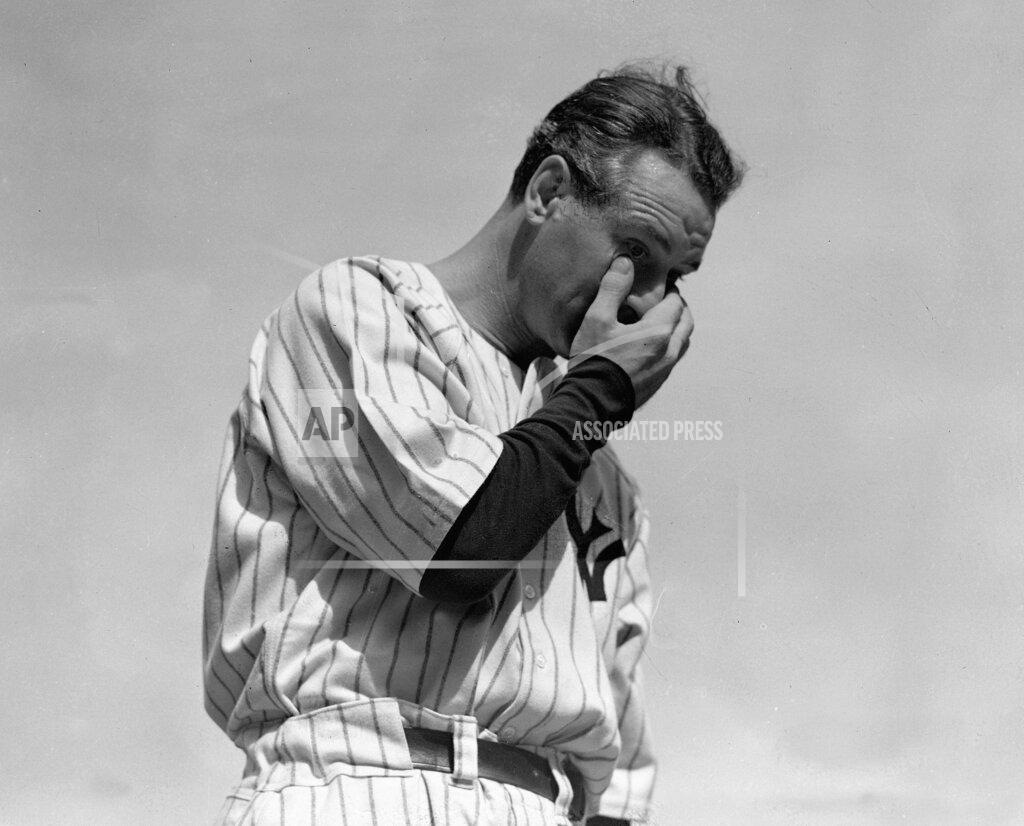
Lou Gehrig, forced to retire after being diagnosed with ALS, made a farewell speech at Yankee Stadium on a day named in his honor. Gehrig said he considered himself “the luckiest man on the face of the earth.” Gehrig’s Yankees #4 is the first team number in Major League Baseball history to be retired. ” In between games with the Senators, a tearful Lou Gehrig bids farewell to 61,808 fans at Yankee Stadium with a short and moving speech. Baseball’s “Iron Horse,” Lou Gehrig (1904-1941), said farewell to 61,808 fans honoring him with a special day at New York City’s Yankee Stadium. He was suffering from A.L.S. (amyotrophic lateral sclerosis), a neurodegenerative disorder that destroys the body’s neuromuscular system. Many now call it Lou Gehrig’s disease. He died less than two years later at the age of 37.
“Fans, for the past two weeks you have been reading about a bad break I got. Yet today I consider myself the luckiest man on the face of the earth. I have been in ballparks for seventeen years and I have never received anything but kindness and encouragement from you fans. Look at these grand men. Which of you wouldn’t consider it the highlight of his career just to associate with them for even one day? Sure, I’m lucky. Who wouldn’t consider it an honor to have known Jacob Ruppert? Also, the builder of baseball’s greatest empire, Ed Barrow? To have spent six years with that wonderful little fellow, Miller Huggins? Then to have spent the next nine years with that outstanding leader, that smart student of psychology, the best manager in baseball today, Joe McCarthy? Sure, I’m lucky. When the New York Giants, a team you would give your right arm to beat, and vice versa, sends you a gift, that’s something. When everybody down to the groundskeepers and those boys in white coats remember you with trophies, that’s something. When you have a father and mother who work all their lives so that you can have an education and build your body, it’s a blessing. When you have a wife who has been a tower of strength and shown more courage than you dreamed existed, that’s the finest I know. So I close in saying that I might have had a bad break, but I have an awful lot to live for. Thank you.”
His teammates give Gehrig a silver trophy with all their signatures on it and inscribed with the following poem by writer John Kieran:
We’ve been to the wars together;
We took our foes as they came;
And always you were the leader,
And ever you played the game.
Idol of cheering millions;
Records are yours by the sheaves;
Iron of frame they hailed you,
Decked you with laurel leaves.
But higher than that we hold you,
We who have known you best;
Knowing the way you came through
Every human test.
Let this be a silent token
Of lasting friendship’s gleam
And all that we’ve left unspoken.
— Your pals of the Yankee team
Gehrig’s uniform number 4 is then retired, the first Major League player so honored. The Yankees split, losing the opener, 3–2, to Dutch Leonard, his third win of the year over New York, and taking the nitecap, 11–1. George Selkirk homers in both games, and adds a triple and single in the nitecap. Sundra wins over Alex Carrasquel, who is also feted by a Venezuelan delegation in between games. Alex was given a radio, watch and bag and he thanked the crowd in Spanish.
Red Sox third baseman Jim Tabor hits 4 home runs as Boston sweeps Philadelphia 17–7 and 18–12 as the two teams combine for a Major League record 54 runs in the twinbill. Jimmie Foxx and Tabor lead the plating with 7 runs apiece, with Tabor scoring 5 runs in game 2. Three of Tabor’s home runs, including a record-tying two grand slams (matches Lazzeri, in 1936), come in the nightcap, the first Red Sox player to clout three in a game. He totals 19 bases and 11 RBIs in the two slugfests on an afternoon featuring 65 hits. Boston accounts for 35 of them. Joe Heving and Denny Galehouse are the Boston winners, while A’s hurlers Cotton Pippen and Chubby Dean are the losers. Making his debut in game 1 as a pinch hitter is Eddie Collins Jr., son of Sox GM Eddie Collins.
In St. Louis, the White Sox wring a pair from the Browns, winning 7–3 and 7–4. The Sox score 5 in the 9th of game 2 for the victory. In game 1, Eric McNair completes a batting streak he started yesterday of 9 straight base hits.
Chicago Cubs centerfielder Hank Lieber clouts 3 homers, but the St. Louis Cardinals win 6–4 in the first of two games at Wrigley Field. The Cubs take the nitecap, 3–2, when Gus Mancuso drives home the winning run in the 10th inning.
Sir John Simon, Chancellor of the Exchequer, said in London today that the British Government had no intention of complying with demands of Japanese spokesmen that it cease supporting Chinese currency. Replying to a question in the House of Commons, Sir John said: “I see no reason to depart from the view that the stability of Chinese currency is of great importance from the point of view of British interests and other interests which have economic and financial relations with China.”
As the Japanese military representatives from Tientsin are not expected in Tokyo before Friday, the British-Japanese conference is not likely to open before next week. Sir Robert Craigie, the British Ambassador, saw Foreign Minister Hachiro Arita last evening and discussed arrangements. The British side is ready to begin, but the Japanese have not fixed their methods of procedure.
The British Consul General in Tientsin, Edward G. Jamieson, said today that a Japanese report that he had been in contact with Chinese guerrillas was a “preposterous lie.” Domei, Japanese news agency, had quoted Japanese Army officers as saying Mr. Jamieson had advance information on guerrilla plans to attack a Belgian-owned power plant which was raided Saturday night. The dispatch quoted the officers as saying they suspected the British were giving the guerrillas arms, ammunition and information on Japanese troop movements.
Residents of the British concession resolved to get along with canned or powdered milk while it remains under the blockade Japan imposed June 14. No milk is being brought in except a small supply for the British military hospital. The supply was cut off when long waits for examinations at the barriers caused the milk to spoil. The Japanese said they were looking for bombs in the bottles. The French concession is still receiving a fair supply of milk and fresh food, but French authorities announced they were inaugurating a strict system of control to avoid profiteering.
China’s Premier H.H. Kung assails Japan as a world menace, linking China’s enemy to international gangsterism.
Born:
Ed Bernard, American actor (Joe-“Police Woman”, Jim-“White Shadow”), in Philadelphia, Pennsylvania.
Lee Folkins, NFL tight end and defensive end (NFL Champions-Packers, 1961; Pro Bowl, 1963; Green Bay Packers, Dallas Cowboys, Pittsburgh Steelers), in Wallace, Idaho.
Naval Construction:
The Royal Navy “T”-class submarine (First Group) HMS Thistle (N 24) is commissioned. Her first commander is Commander Robert W. Stirling-Hamilton.
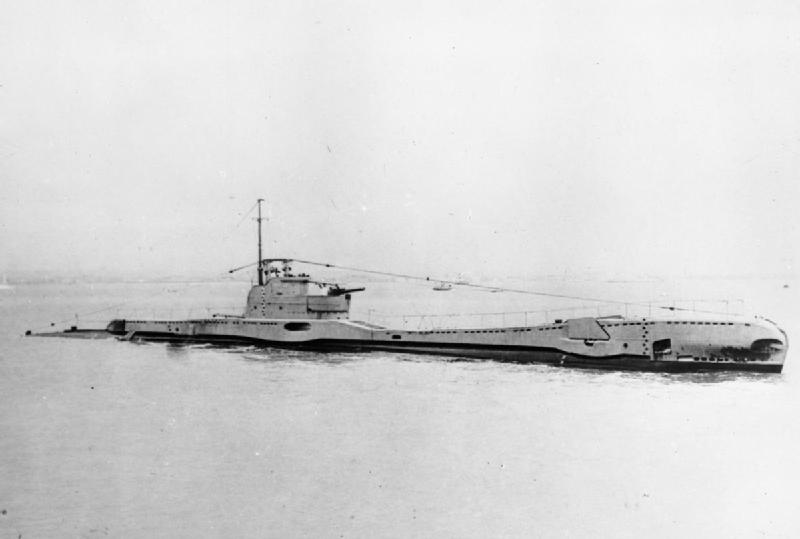
At the onset of the Second World War, Thistle was a member of the 2nd Submarine Flotilla. From 26 to 29 August 1939, the flotilla deployed to its war bases at Dundee and Blyth.
Thistle, under the command of Lt. Wilfrid Frederick Haselfoot, was ordered to patrol off Stavanger, and to sink any enemy vessel that she might spot in the harbour, since British authorities believed that a German invasion of Norway was imminent. On 10 April, Thistle signaled her intention to comply with this order and that she had two torpedoes remaining after an unsuccessful attack on a U-boat (U-4). With this in mind the Admiralty changed her orders to patrol off Skudenes. No further contact was made with Thistle.
Lost 10 April 1940.
At 0157 hours on 10 April 1940 (German time, one hour ahead of GMT), the German submarine U-4 sighted an enemy submarine in Quadrat AN 3123 (approx. 59º03’N, 05º11’E, near Skudenes). This was HMS Thistle (Lt.Cdr. Wilfrid Frederick Haselfoot, RN) apparently recharging her batteries, on course 355º, 5 knots. At 0213 hours U-4 fires a torpedo (G7a) at 400 meters but misses, a second torpedo (magnetic G7e) is fired at 250 meters and is a direct hit. Thistle blows up and sinks. There were no survivors among the crew of 53.
The wreck was discovered in 2023, at a depth of 160 meters, and confirmed to be that of HMS Thistle.
Battle Honour: NORWAY 1940
 History Diaries