Việt Cộng raid a U.S. Special Forces training camp at Polei Krong, seize the camp’s arms and ammunition and leave 41 South Vietnamese dead and two Americans wounded. The action is apparently timed to coincide with the American 4th of July holiday. A Communist Việt Cộng battalion overran and occupied a training camp of American Special Forces high in Vietnam’s central plateau early today, killing 41 civilian irregular troops and seizing the camp’s stock of arms and ammunition. By daylight, when regular military forces arrived, the Việt Cộng forces had pulled away back into the forbidding mountains with their booty.
The attack came on the 18th day of renewed Việt Cộng activity in far‐flung engagements from the Mekong Delta to the central highlands, but engagements undertaken by the insurgents have fallen far short of resounding success. The Việt Cộng had been expected to stage a widespread show of force at the start of the rainy season, now under way, but so far the psychological advantage the Communists hoped to gain by this strategy had eluded them.
Several large battles in the last two weeks have been initiated by government units, which have fought well, inflicting a heavy toll on the Việt Cộng forces, which a few months ago boldly called the tune for the Vietnamese war. If the government has shown up well in some of the larger actions, its troops and American advisers have suffered in ambushes and flash raids like today’s.
The intensity of the Việt Cộng activity in the central highlands is viewed with particular concern by American advisers here. This is the area in which Saigon and Washington first feared a large‐scale Communist attack three years ago. The attacks did not materialize though the Việt Cộng made large and largely unnoticed headway farther south in the Mekong Delta.
An American military spokesman said two Americans were wounded in today’s action at Polei Krong, a Special Forces camp in Kon Tum Province. The 41 killed and 25 wounded were Vietnamese civilians being trained by the Special Forces for a border‐surveillance mission. The Việt Cộng troops struck the isolated camp shortly after midnight and occupied the compound for several hours, then made off with a 60‐mm. mortar, four heavy machine guns, more than 100 small weapons and a stock of ammunition.
A carefully paced increase in retaliatory pressure against the Communist Việt Cộng was forecast here today as General Maxwell D. Taylor prepared to leave for his new post in Saigon. General Taylor, whose term as Chairman of the Joint Chiefs of Staff was cut short so that he could become Ambassador to South Vietnam, was scheduled to leave by air early tomorrow. He will stop off in Honolulu for a brief conference with Navy officials before proceeding to the South Vietnamese capital. U. Alexis Johnson, the new Deputy Ambassador, has already arrived in Saigon. Some distinctive military exploits by the South Vietnamese forces fighting the Communist guerrillas are expected to be undertaken for psychological purposes.
But the prospect of ultimate eradication of the Communist insurgents in South Vietnam is still long‐range, qualified sources here note. There may, however, be some air strikes against Communist supply lines outside South Vietnam, notably in Laos and plans include major retaliation against North Vietnam if the situation deteriorates more than is now foreseen. General Taylor is understood to be opposed to expansion of the war. He is among those officials who feel that any major United States extension of the war effort beyond retaliatory measures would be considered a sign of defeat in Asia.
United States policy has been based on the premise that the Communist insurgents can be quelled by South Vietnam with the assistance of United States supplies and advice but without a direct United States military involvement. General Taylor, it is said here. believes many relatively small measures can be undertaken to assist the South Vietnamese regime under Major General Nguyễn Khánh and to forestall a major Communist onslaught in Southeast Asia.
President Johnson sent new appeals to Greece and Turkey this week urging them to start a direct exchange of views about Cyprus. The messages, to Premier George Papandreou of Greece and Premier İsmet İnönü of Turkey, repeated the concern expressed by Mr. Johnson in conversations with both men here two weeks ago. Premier Papandreou said he would visit London July 21 for talks on Cyprus, according to a Reuters dispatch.
The President’s appeal was intended to give new emphasis to the unofficial mediation efforts of Dean Acheson, former Secretary of State. Mr. Acheson is flying to Geneva tomorrow to assist the United Nations mediator, Sakari S. Tuomioja, in a new round of consultations. Mr. Johnson is said to have urged Athens and Ankara to avoid the restatement of fixed positions and to begin to give some ground looking toward an acceptable form of government for Cyprus. The fear here is that in the absence of a solution Turkey will eventually claim her treaty right to intervene militarily on the island, leading to war with Greece.
The State Department formally announced today Mr. Acheson’s mission on the Geneva talks. It said he was going at the request of President Johnson to “provide assistance that may be appropriate in helping to resolve the Cyprus crisis.” President Johnson conferred in Washington on June 22 and 23 with Premier İnönü, and on June 24 with Premier Papandreou. The Turkish Premier and the President issued a communiqué saying they regarded the treaties of 1959, which have been denounced by Archbishop Makarios, President of Cyprus, as still valid. The Greek Premier said that Greece would consider intervention by Turkey, allowed under those treaties, as an act of war. Neither Premier changed his views as a result of the Washington meetings.
Secretary of State Dean Rusk called on Soviet leaders today to open their doors, “as we are willing to open ours,” to a system of arms inspection that would make possible a reduction in armaments. “We believe,” Mr. Rusk said in a speech at Independence Hall, “that the Soviet leaders recognize a common interest with us in reducing the dangers of a great war. We most earnestly hope that they will open their doors, as we are willing to open ours, to the sort of inspection which will make possible genuine progress in reducing armaments. At the same time, we heartily favor increasing contacts between our people and those of the Eastern European states and the Soviet Union. And we welcome cooperative undertakings such as the work on desalinization of water on which Soviet scientists and our own recently agreed.”
The red‐brick building where Mr. Rusk made his appeal to the Soviet Union is considered the birthplace of American independence and is the home of the Liberty Bell. In his prepared address Mr. Rusk said American foreign policy was moving simultaneously along several lines to “secure the blessings of liberty to ourselves and our posterity.” The first essential, he said, is to “repel and to do all we can to prevent aggression by whatever means.” To this end, he continued, the United States and its allies maintain “massive retaliatory forces and increasingly strong and mobile conventional forces.” Under this policy, he said, the United States is determined to assist the victims of “such aggressions as are now going on in Southeast Asia — guerrilla warfare and terrorism directed from the outside and sustained by infiltrating trained men and arms across national frontiers.”
Ambassador Foy D. Kohler of the United States, speaking in Russian on Soviet television, urged that “far more Soviet citizens” visit the United States.
Algeria’s ruling party ordered the expulsion from its ranks of five leading opponents of President Ahmed Ben Bella’s regime today as the nation, faced by a counterrevolution, prepared to mark the second anniversary of its independence. Those ordered ousted by the Central Committee of the governing Algerian National Liberation Front were Mohammed Boudiaf, Hocine Alt Ahmed, Colonel Mohammed Chaabani, Mohammed Rhider and Hassani Moussa.
While President Ben Bella mapped nationwide rallies tomorrow and new moves to counter formation of an opposition coalition, his 50,000‐man army sought to tighten the regime’s control over the longrestive Kabylia, east of here, and over the Sahara “fief” of Colonel Chaabani, former regional military commander who has openly broken with the regime. The Central Committee called on President Ben Bella to assume “extraordinary powers” to deal with the “counterrevolution.”
Norwegian Government leaders and officials said goodbye today to Premier Khrushchev on a red-carpeted Oslo pier. The Soviet leader, Foreign Minister Andrei A. Gromyko and their party sailed for home on the white liner Bashkiriva. There were smiles of deep relief, as one Cabinet Minister described them, that Mr. Khrushchev’s 19‐day Scandinavian tour was finally over. There was wide agreement among government officials and diplomatic observers here, as well as in Copenhagen and Stockholm, that the visit had proved a propaganda defeat for Mr. Khrushchev in Scandinavia. One high Norwegian official predicted today that once the full details of the Russian’s “strong arm” behavior at private meetings became public knowledge the effect would be “a political catastrophe” for Mr. Khrushchev here.
The Rhodesian Bush War, which would last more than 15 years until the white minority government of Rhodesia relinquished control of the southern African nation to the black majority, began in the first violent attack by the Zimbabwe African National Liberation Army (ZANLA) against a white target. Petrus Oberholzer, a white farmer, was ambushed and murdered near Umtali.
President de Gaulle and Chancellor Ludwig Erhard agreed today that West Germany should develop new proposals to lift the movement for European union out of the doldrums. The arrangement for Bonn to develop “constructive proposals” is viewed as a tacit acknowledgement that General de Gaulle’s concept of a continental confederal union has no prospects of acceptance by European powers. The French leader and Dr. Erhard concluded two days of regular semiannual talks in a surface atmosphere of harmony but with little to show for their efforts.
A West German spokesman, speaking for both French and West German sides, summed up their talks on European union these words: “Making full use of the French‐German treaty [of cooperation], discussions on the political cooperation of Europe will be further intensified and continued with the objective of bringing into being a united Europe and a common European policy in the political, economic and military field. To this purpose, proposals will be made from the German side.”
The French delegation, consisting of General de Gaulle and eight Ministers, came to Bonn hoping that an agreement would be reached to set up a special French‐German committee to draw up a blueprint for political union. The plan was supported by the so‐called Gaullist wing of Dr. Erhard’s Christian Democratic party. But the West German Government shied away from it because some smaller Common Market countries regarded it as a move toward French‐German hegemony in the European community. Moreover, Government officials felt that France and West Germany were too far apart to have good prospects of arriving at a joint unity program.
Senator Allen J. Ellender, a Louisiana Democrat who vigorously fought enactment of the Civil Rights Act of 1964, counseled fellow Southerners today against defiance of the new law. Any resistance, he said, “must be within the framework of the orderly processes established by law.” “Any other course,” he added, “is foolhardy and indefensible — much more indefensible and dangerous than it might have been at some other time in our nation’s past.”
Senator Ellender offered his advice in a talk recorded for broadcast by Louisiana radio stations. “The coming months will be trying ones for all of us,” he remarked, “but the difficulty must be met with calm and reason, and not with violence and emotion.” The Senator said that some civil rights advocates had wrongfully resorted to civil disobedience in demonstrations to promote their cause. “Now we have before us a law with which many of us disagree, and will find hard to obey,” he said. “But it is the law, and the doctrine of civil disobedience has no more credence now than it did before.”
In another development, the Lawyers Committee for Civil Rights Under Law called on all state and local bar associations “to assume a major responsibility” in the promotion of peaceful and voluntary compliance with the Civil Rights Act. The co‐chairmen of the 200-member committee, Harrison Tweed of New York and Bernard G. Segal of Philadelphia, issued a Fourth of July statement through the group’s headquarters. “An especially heavy responsibility rests upon lawyers and their professional organizations,” they said, “to interpret the new law to their communities and to their clients, to urge orderly compliance and to support individual lawyers who take a leading part in these efforts despite the risk of criticism or hostility.”
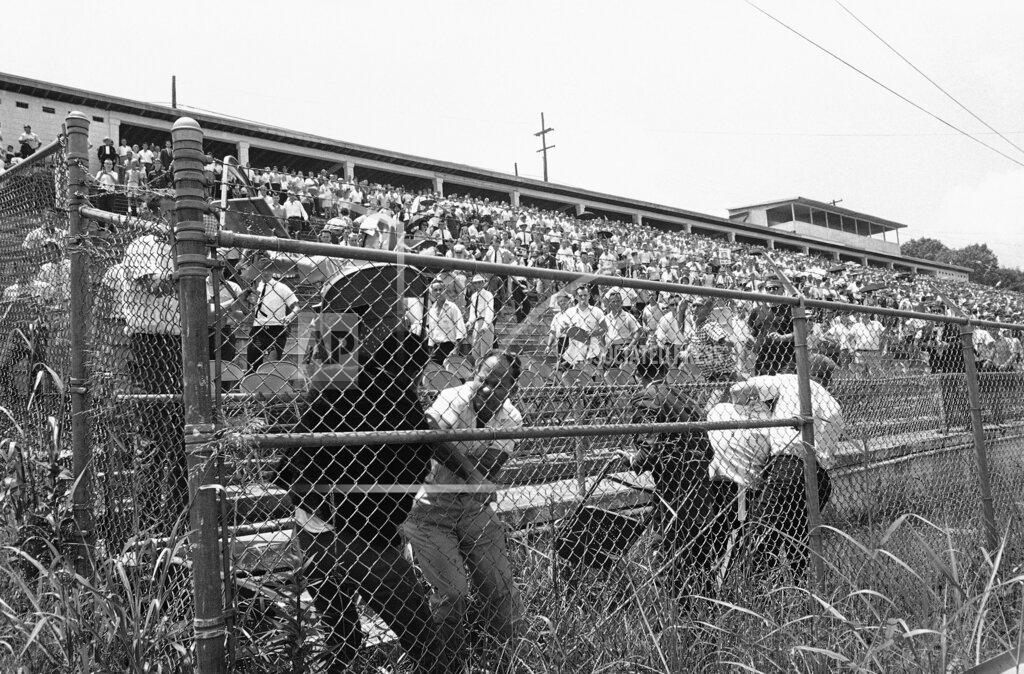
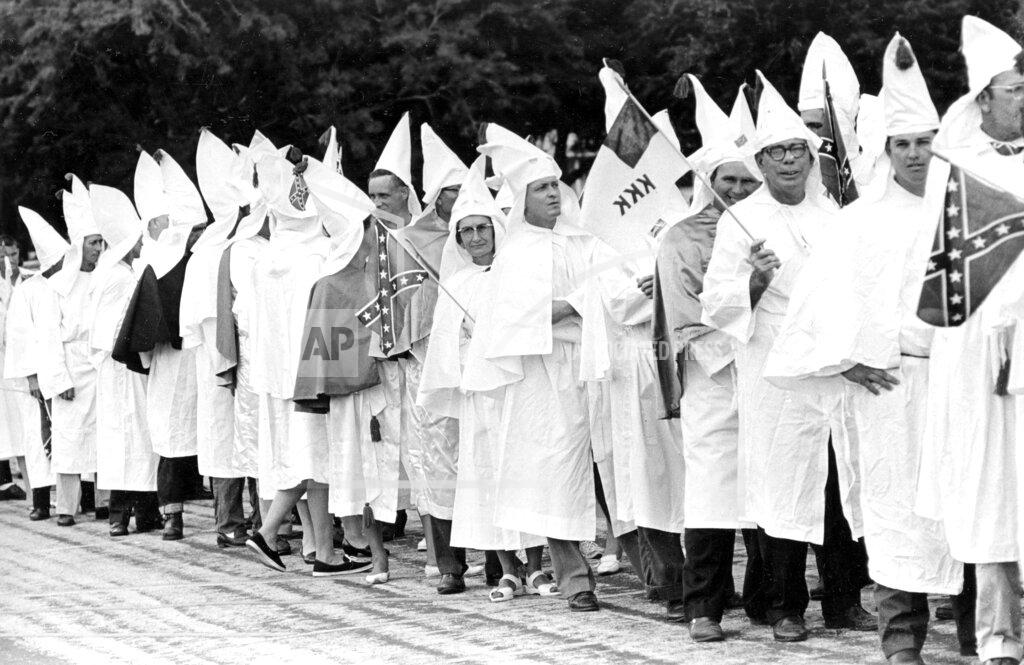
South of Atlanta, Alabama governor George Wallace gave a speech condemning the Civil Rights Act, claiming that it would threaten individual liberty, free enterprise and private property rights and adding: “The liberal left-wingers have passed it. Now let them employ some pinknik social engineers in Washington, D.C., to figure out what to do with it.” The event, coming two days after the Civil Rights Act became law, included Mississippi governor Ross Barnett, and would degenerate into violence after members of the Student Nonviolent Coordinating Committee (SNCC) began booing and were attacked by angry audience members; the negative publicity from the event was such that Wallace, who had done better than expected in northern states the 1964 presidential primaries, would withdraw from the race on July 19.
Much of the South was relatively peaceful yesterday as Blacks held back major attempts to test white reaction to the Civil Rights Act of 1964. There were exceptions, but they appeared to be scattered and unconnected. No one was reported injured in attempting to desegregate restaurants, hotels or pools. Nor was anyone reported arrested. There was brief violence at the segregationist rally in Atlanta, but it had nothing to do with Black moves to measure white resistance to the new law.
In Pine Bluff, Arkansas, a small city on the Arkansas River 40 miles from Little Rock, whites drove off a band of Blacks who were trying to integrate a cafe. A shirt was ripped off one of the seven or eight Blacks by one of the whites who stormed out of the bar when the Blacks approached. It was the first racial trouble reported in Arkansas since the civil rights bill became law.
In Jackson, Mississippi, a Black man in Bermuda shorts was served in the dining room of a leading motel. There was no disturbance and none of the white patrons left. A spokesman for the motel the policy of the establishment was to serve Blacks and rent rooms to them until the new civil rights law should be struck down. It was the first major test of the civil rights law in this state, a segregation stronghold.
It was quiet at Lester Maddox’s Restaurant in Atlanta, where the owner, Lester Maddox, drove Blacks away Friday at gunpoint. Mr. Maddox closed his place for the day so that he could join the segregationist rally in Atlanta’s Lakewood Park.
In Selma, Alabama, however, a fist fight broke out between white and Black youths last night when the latter appeared at the ticket window of a movie house that was integrated earlier in the day. No arrests were made. Four Blacks who attempted to enter a local restaurant during the day were arrested on trespassing charges.
In Laurel, Mississippi, a street fight broke out last night when seven, Blacks attempted to enter for the third time a drive‐in hamburger shop. At least two Blacks were taken to a hospital.
Elsewhere in the South, most country stores were closed. Motels and hotels were open, but Blacks were apparently putting off any drive to register in them until after the holiday.
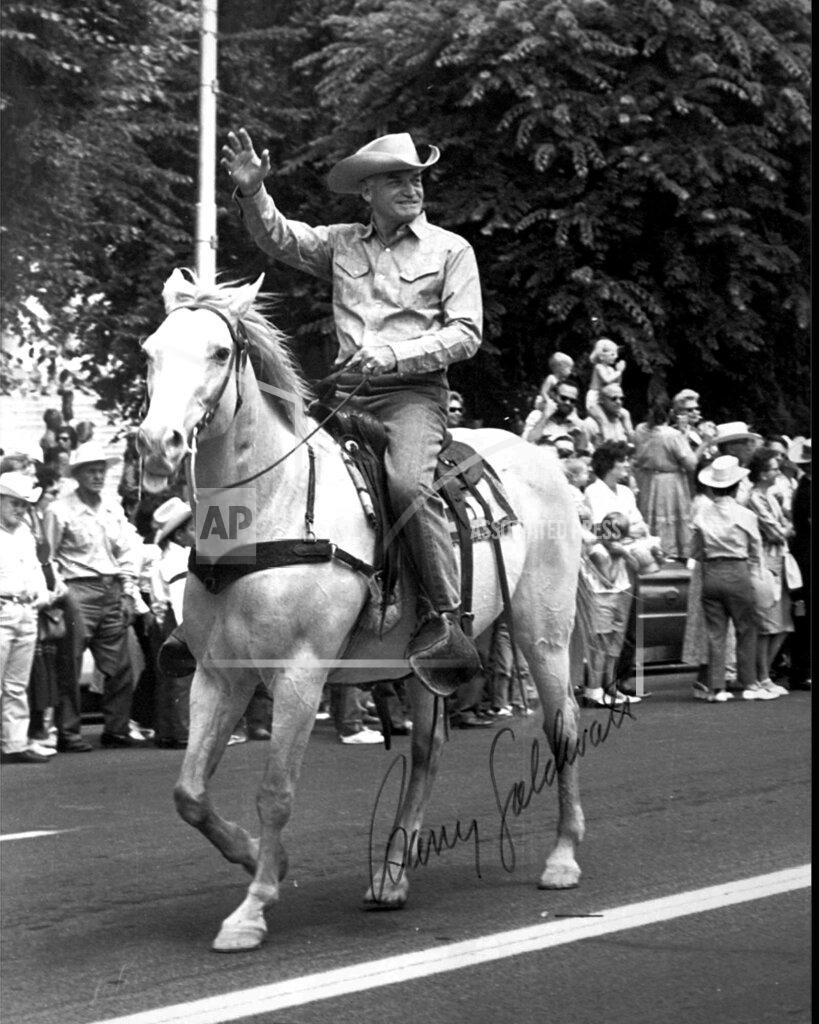
Republicans began gathering in San Francisco today for what may well be the critical test of their 1964 National Convention — the drafting of the party platform. The platform debate could provide a direct confrontation between the conservative supporters of Senator Barry Goldwater and the G.O.P. moderates, marching under the banner of Governor William W. Scranton. The moderates, at least, seem to want it that way. The reason is Senator Goldwater’s commanding lead for the Presidential nomination, apparently more than enough delegate votes to win on the, first ballot. The last best hope of those opposing him is to provoke a platform battle that will make some delegates reconsider.
Civil rights is the likely subject for the test. Senator Goldwater, breaking with the large majority of Republicans in both houses of Congress, voted against the civil rights act of 1964 on the ground that it was “unconstitutional” and would lead to a “police state.” Moderate leaders are saying that they will press for the strongest possible civil rights plank. They favor that position on the merits and, in this instance, will have the additional goal of trying to goad the Goldwater faction into a fight that would, they hope, cause some defections from his camp. The exact strategy will be worked out by Governor Scranton and such backers as Governor Rockefeller and former Ambassador Henry Cabot Lodge. At the least, they are likely to call for a ringing endorsement of the new statute’s wisdom and constitutionality.
Although Goldwater delegates will probably outnumber them on the 100-member platform committee, the moderate group will have some experienced and articulate spokesmen. Among them, for example, are Senators Hugh Scott of Pennsylvania and Joseph F. Carlino, speaker of the New York State Assembly. Southern Republicans on the platform committee are said to be almost all strong segregationists. A serious effort on their part to weaken the civil rights plank could further the chances of an all‐out fight in the committee and even on the floor.
President Johnson celebrated the Fourth of July today like many a Texas farmer by relaxing on his LBJ ranch with his family and personal friends. During the morning the President devoted some time to official duties by conferring with his staff at the ranch and in Washington about the supplemental appropriations necessary to carry out the new civil rights law. Over the weekend he and friends went boating on a cabin cruiser in Granite Shoals Lake, an artificial lake 30 miles from the LBJ ranch.
White House Press Secretary George E. Reedy said the supplemental appropriations request would be ready for presentation to the House when Congress reconvenes on July 20. Mr. Reedy declined to discuss the possible magnitude of the appropriations request on the grounds that it was still being drafted by the White House. The money will be needed to finance new activities created by the act, such as the Community Relations Service, which has been given the responsibility of attempting to achieve civil rights through conciliation rather than legal intervention.
The Universal City Tour, where paying customers were driven around the backlot of Universal Pictures movie studio in special trams, was inaugurated after a four-million-dollar renovation of the California location. The tour and its concession stands were the original features of what would become the Universal Studios Hollywood theme park.
The Beach Boys’ “I Get Around” reached number one on the Billboard charts.
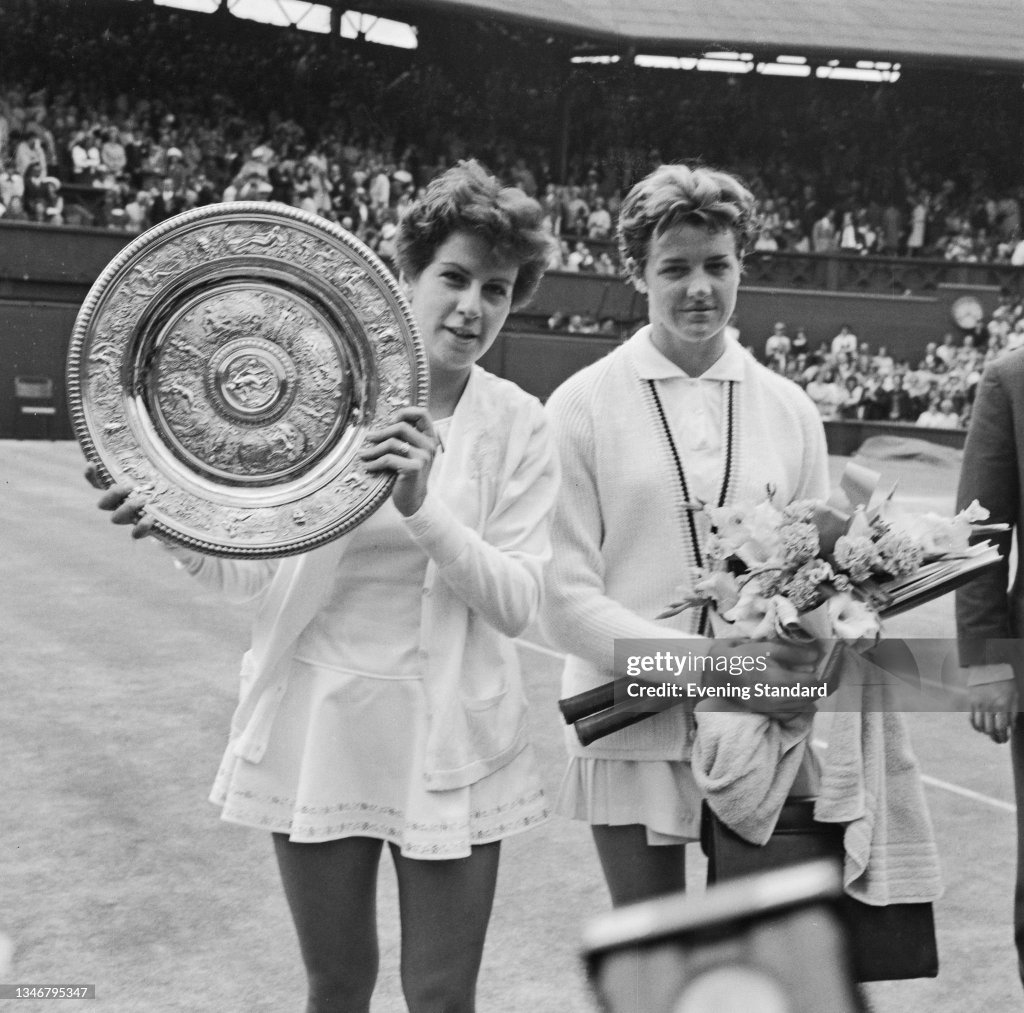
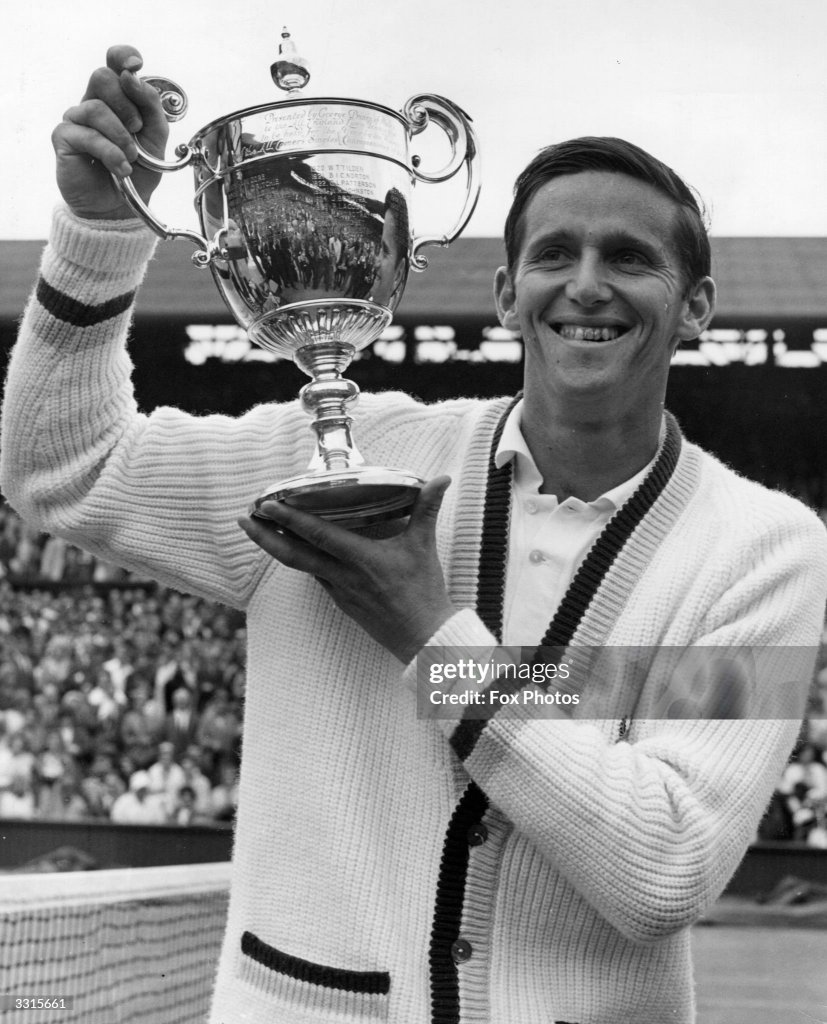
Wimbledon Women’s Tennis: Brazilian Maria Bueno earns a 3rd Wimbledon singles title with a 6-4, 7-9, 6-3 win over Margaret Smith (later Court) of Australia.
Manny Jimenez, who went the entire 1963 season without a home run, hits 3, and goes 4-for–4 for the Kansas City A’s against the Baltimore Orioles. The game ends in a 6–6 tie when halted by a special curfew so a fireworks display can take place in Baltimore.
With an 11-inning 5–2 win over the host Giants, the Phillies take over first-place from San Francisco. Jim Bunning (9–2) goes 10 innings for the win. The Giants runs come in the 1st inning on a 2-run homer by Duke Snider, the last of his career. It is #407. Fittingly, it comes on July 4. The future Hall of Famer is the all-time leader for home runs on July 4th with 9.
In New York, Minnesota is leading 5–4, when Yankees’ slugger Mickey Mantle parks a 3-run shot off Twins’ pitcher Al Worthington in the 8th to win it, 7–5. Joe Pepitone garners a walk; he won’t walk again till September 9.
The Boston Red Sox hand Earl Wilson a 9-run first and he coasts to a 13–5 victory over the visiting California Angels. Lee Thomas belts a grand slam in the opening frame to start the scoring.
Born:
Edi Rama, Prime Minister of Albania since 2013, in Tirana, Albania.
Mark Allen Slaughter, American guitarist (Slaughter-“Stick it Live”), in Las Vegas, Nevada.
Mark Whiting, American filmmaker and actor, in Birmingham, Michigan.
Stanley Blair, NFL defensive back (Phoenix Cardinals), in Pine Bluff, Arkansas.
Elie Saab, Lebanese fashion designer, in Beirut, Lebanon.
Died:
Sebastián Salazar Bondy, 40, Peruvian playwright and poet
Hank Sylvern, 56, American composer of radio theme songs

 History Diaries