The Reich derides a possible coup in Poland. Germany has no designs on Warsaw’s integrity, they say. Nazi Germany went out of its way tonight to assure the world that Chancellor Adolf Hitler had no intention of forcing the issue with Poland, and officials and the press made sport over those who had predicted a Nazi coup in Danzig yesterday. An authorized spokesman, in one of the clearest utterances any German official has given since the beginning of the latest tension over Danzig, said that “we have no desire to go against the territorial integrity of Poland.”
“If we had wanted to let the matter come to military action,” he added, “we could have done so any day.” The spokesman took exception to Prime Minister Neville Chamberlain’s statement in the British House of Commons today that Germans were entering Danzig. Ho said the Prime Minister had erred in “several statements.”
“There are no German soldiers going Into Danzig with tourist skirts on,” the spokesman declared. “At no point in Danzig’s increasing of its defense force is it breaking treaty obligations. In 1933 the police force was diminished. Now, given tension over the Free City, it is being enlarged according to treaty rights.” Asked whether Danzigers were being trained by German officers, this official replied: “I have not heard about that.”
Chancellor Hitler’s Reichstag speech of April 28, in which he denounced the German-Polish non-aggression treaty and said he would not repeat his proposal to Poland for settlement of the question of Danzig and the so-called Polish Corridor, has been “falsely interpreted abroad,” the spokesman declared. He referred to the German suggestion that Danzig come fully under the Reich’s wing with port rights for Poland and that an extraterritorial strip of land across the Corridor be given to Germany so that East Prussia would be linked with Germany proper.
“The Führer did not mean that his price the next time would be much higher,” the spokesman said. “He meant that Poland had rejected the offer and called for help from England and that he would. not again make a proposal of any sort. Any new proposals must come from Poland.” Regarding reports of a coup in Danzig, a statement issued by the official German News Bureau commented ironically on “talk in London and Paris that Hitler drew back in the face of warnings and the determination of the democracies.” The comment termed this “a new trick” and added: “That, of course, would have been enough to convince Berlin to let the plan drop.” The statement also poured scorn on reports abroad that weekend rumors might have been started by Germany herself to sound out England and France. “Now we have the solution,” the agency said. “The whole lying campaign came from us.”
Well informed Polish sources tonight reported that Poland “is preparing to meet any situation in Danzig and any action violating the present status of Danzig will be met by counter-action.” What preparations were being made remained a secret, however. and the same sources declared that there would be no announcement “in advance” of any steps taken.
The Polish Government, in close consultation with Britain and France, studied developments in the Danzig situation. Official circles expressed pleasure over Prime Minister Neville Chamberlain’s statement in the House of Commons today lauding Poland’s “calm courage and self-control in the face of grave provocation.” A more definite formulation of Poland’s attitude toward Danzig was expected tomorrow when Foreign Minister Colonel Josef Beck returns from a weekend in the country. The Polish Ambassador to London, Count Edward Raczynski, is due in Warsaw tomorrow to report to him on the British attitude.
Although British Government spokesmen have announced repeatedly in the past few days that Great Britain “means business,” Prime Minister Chamberlain was very calm and cool today in answering questions in the House of Commons about the Danzig situation. He described military activities now going on in the Free City, but was careful not to utter condemnation or warning. He praised the Polish Government for its calmness. There was a widespread report here tonight that Poland had taken matters into her own hands and intended to dispatch a strong note to Berlin, protesting German activities in Danzig. It was reported Poland would ask that whatever men and guns that had been poured into the city recently be removed.
“Reliable reports indicate that extensive measures of a military character are being carried out in the Free City,” said Mr. Chamberlain. “A large and increasing number of German nationals have recently arrived in the Free City, ostensibly as tourists, and a local defense corps is being formed under the name of Heimwehr.” He added that Poland had been notified of the visit of the German cruiser Königsberg on August 25 and would tell the Danzig Senate that there was no objection to such a visit.
“His Majesty’s Government is maintaining close contact with the Polish and French Governments regarding developments in the Danzig situation,” said Mr. Chamberlain. But he declined, in answer to another question, to say whether the present moves in Danzig were illegal. When asked to tell Chancellor Hitler personally that Britain would resist any attempt to change the status of Danzig by force, he simply said Britain’s position had been made “perfectly clear” by Viscount Halifax, the Foreign Secretary.
“Will the government,” asked Hugh Dalton, a Laborite, “cause to be conveyed to Warsaw the admiration which is felt in this country at the calm, courage and self-control being displayed by our Polish allies in the face of this gross provocation?”
“The government much appreciate the attitude of the Polish Government,” Mr. Chamberlain replied.
The Polish Ambassador to London, Count Edward Raczynski, will fly home tomorrow to consult his government and to inform it of his one-hour talk with Lord Halifax today, in which the Danzig problem was discussed in all its aspects. It was learned on the most reliable authority tonight that the Poles are not as fully satisfied with the latest British assurances on this subject as with those they have had from Paris. The British have asked for a statement of the Polish Government’s attitude on developments in Danzig and on a possible change in the Free City’s status by simple proclamation of the Danzig Senate. Count Raczynski also discussed the negotiations for a British loan. to Poland, which are now in their final stages. It is understood the Poles will get between £20,000,000 and £25,000,000 for financing their rearmament. Although they asked. for much more, they are said to be fairly well satisfied with what they have achieved.
Sir Nevile Henderson, British Ambassador to Berlin, flew to London today, but his visit is believed to have little significance. He was seriously ill several months ago and he intends to visit his physician tomorrow morning as well as to give Lord Halifax his first-hand impressions of the situation and state of mind inside Germany. In any case he is said to be anxious to leave the Berlin Embassy.
Mr. Chamberlain felt redoubled pressure today from the public and from some of his own political friends to bring Winston Churchill into the Cabinet without further delay. This pressure was all the greater because of uneasiness over the international outlook and because Mr. Chamberlain again failed to make it clear today what Britain would do in case of an internal “peaceful” change of status in Danzig. Whenever there is uncertainty over Mr. Chamberlain’s intentions in the foreign field the cry goes up from some quarters, “Bring in Churchill.” Today was no exception. Rumors about Mr. Churchill spread thick and fast at Westminster, including one that he had been invited into the Cabinet and had accepted.
The Soviet reply to the latest Anglo-French proposals designed to end the deadlock in the negotiations for a three-power anti-aggression pact was given to the British and French representatives in Moscow this afternoon. Nothing was indicated in any quarter as to the nature of the reply, but it is understood that further conversations will be held.
This time Premier Vyacheslav M. Molotov received Sir William Seeds, the British Ambassador; William Strang, special British envoy, and Paul-Emile Naggiar, the French Ambassador, at the Foreign Office. They arrived at 4 o’clock and conferred for more than an hour. A brief bulletin by Tass, Soviet news agency, that was broadcast over the official radio tonight told. of the delivery of the reply.
Press reports that the Netherlands was mentioned in the course of the Anglo-Soviet negotiations in Moscow caused surprise in Holland today, since the government hoped it had made perfectly clear its attitude in the present European situation. Public opinion here has never departed from its desire for neutrality. and hence the government cannot accept a guarantee from any power. A German offer was actually declined last year and offers by France and Britain would be declined on the same grounds. It is pointed out semi-officially that any treaties in which Russia figures as a partner would be even less acceptable since The Hague has not even recognized the Soviet Government.
Ernst Heinkel demonstrated the 500 mph Heinkel He 176 rocket plane to German Chancellor Adolf Hitler, high ranking Nazi officials and Luftwaffe Generals was to be at Rechlin, Germany. The Heinkel He 176 was the world’s first aircraft to be propelled solely by a liquid-fueled rocket.
Hungarian physicist Leo Szilard wrote to Italian physicist Enrico Fermi describing the concept (uranium lattice in carbon) for creating a chain reaction.
As Arab-Jewish terrorism in Palestine continued, a time bomb exploded this evening in an Arab cafe at Haifa, killing one Arab and injuring forty-two, eleven severely. A curfew was declared and all shops in the city were ordered to close at 7 PM daily until further notice.
Abraham Joseph Cohen, one of the few surviving members of the tiny Samaritan Jewish community of Nablus, was murdered at Haifa last night by an unidentified assailant.
Early today an Arab band attacked in fields of the Jewish settlement of Yajur, near Haifa, and wounded slightly two Jewish supernumerary policemen, who returned the fire and severely wounded one bandit. He was captured. The Jewish settlement of Tel Hayim, near Tel Aviv, was attacked tonight by Arabs. One Jewish supernumerary was killed.
A sailboat of unrevealed nationality this morning surprised the Haifa port authorities on entering the harbor flying a banner of blue and white, which are the Zionist colors. Police officials hurriedly boarded the vessel, where they found 697 Jewish illegal immigrants, including 192 women and thirty-seven children. The 697 will be deducted from the immigration quota as usual.
President Roosevelt asserts the U.S. arms embargo increases war peril. He believes it encourages Hitler to use force in pressing demands. President Roosevelt takes the position that the likelihood of war in Europe has been increased by the action of the House in forbidding “cash-and-carry” shipments of arms and munitions to non-aggressor nations in event of a conflict. By rejecting Administration-sponsored amendments to the Neutrality Act to permit such assistance, Mr. Roosevelt believes the House encourages Chancellor Hitler and Premier Mussolini to resort to force in pressing their demands on the European democracies.
Further, the President believes that the House’s action has made his own task of keeping the nation at peace more difficult. This outline of the President’s attitude was obtained in authoritative White House circles and is based on week-end diplomatic reports that news of the House reversal of Administration neutrality policy had been received with considerable jubilation in the German and Italian capitals.
What particularly concerned President Roosevelt in connection with the House refusal to lift the mandatory arms embargo provisions of the existing neutrality law was that this rebuff to the White House might be construed throughout Europe as proof that a majority of Americans do not approve the Administration’s efforts to deter further aggressive tactics on the Continent by throwing this country’s moral influence to the support of the democracies.
Because the House is traditionally more responsive to the popular will than is the Senate, Mr. Roosevelt apparently is concerned lest the European dictatorships receive the impression that the general public here is opposed to his foreign policy. However, the President is convinced that the country is overwhelmingly behind his efforts to strengthen the hands of Great Britain and France in dealing with the totalitarian States and that it favors arms and munitions exports to them in event of unprovoked aggression.
Reports that President Roosevelt was planning to make a speaking tour in a campaign against Congressional “reactionaries” were current in the capital tonight, coinciding in a measure with a strong third term appeal on the radio by Senator Guffey of Pennsylvania. These strengthened the belief, held by some observers, that the President is seriously considering the seeking of a third term. The speech of Mr. Guffey, it was said, was not opposed by the Democratic National Committee, and the latter is said to have offered some suggestions as to how Senator Burke’s recent attack on the third term proposal should be answered.
The address, following Secretary Ickes’s third-term appeal a short time back, was coupled with assertions attributed to advisers to the President that he should seek an early adjournment of Congress so that he could test the strength of the New Deal as against those who balked his legislative policies and also ascertain public feeling in regard to another term for himself.
The President’s attitude toward a third term has been strengthened, some of his advisers say, by the opposition of the conservatives on the neutrality and the monetary control bills. This latest development in Congress, some of the Administration supporters declare, has convinced the President that there is a determined effort to scuttle his policies by a group in his own party with 1940 in view.
The President is represented by his associates as seeing in this opposition plans of the conservative wing to defeat him or any candidate of his wing for the Presidential nomination in 1940. The success of the conservatives has not discouraged the third term supporters, observers report. They say that the coalition of reactionaries has solidified the liberal elements of the country and if this element is aroused to a militant pitch by the President the whole outlook in Congress would be changed. They feel that if the President should call a special session by late October or November, as many think he will do, he would have no trouble in getting his legislation passed.
Fritz Kuhn is re-elected national leader of the pro-Nazi German-American Bund, despite being under indictment in New York.
A strike move is near at General Motors. The CIO union and the company end negotiations.
Cleveland’s Ben Chapman tallies 3 triples, all consecutive, tying the Major League record, as Bob Feller notches his 13th victory 4–2, over host Detroit. The next American Leaguer with 3 triples in a game will be Bert Campaneris, in 1967.
Johnny Mize equals a National League record with 4 extra-base hits — double, triple, and 2 home runs — in the Cards’ 5–3 win over the Cubs.
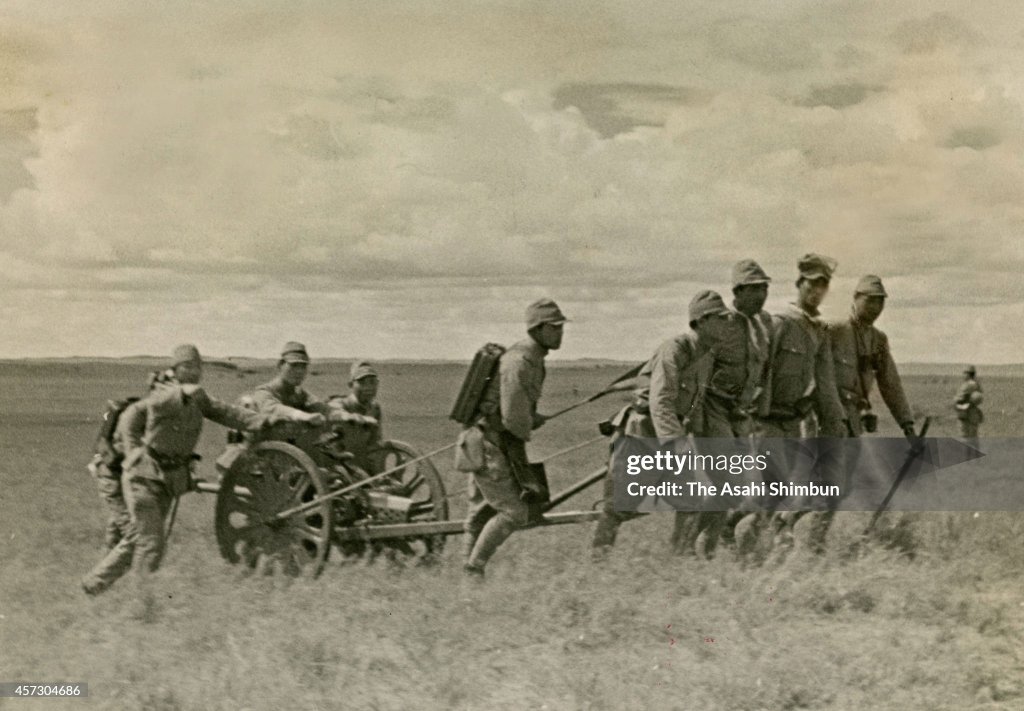
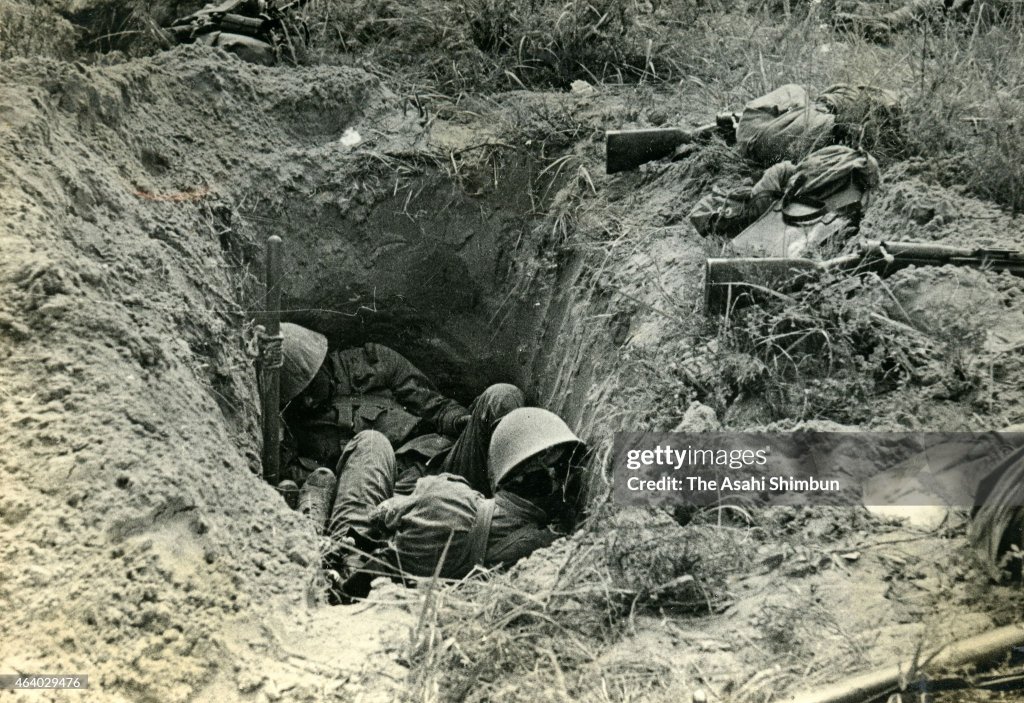
The Japanese army launches a powerful surprise attack against Soviet forces at Bain-Tsagan Mountain.
The Japanese army claims the capture of Soviet tanks and arms in a land clash on the Mongol frontier.
Japan reports that a force of Mongolian and Soviet invaders is surrounded and will be annihilated. The Japanese crossed the Khalkin River this weekend. Four thousand Mongols are said to be trapped.
[Ed: Someone is trapped. I do not think it is who you think it is, Japanese spokesmen. Comrade Zhukov has other plans.]
The Tokyo army sets a wide parley scope, saying Britain’s entire China policy must change.
The Australian Prime Minister Robert Menzies vows to stand by Britain to its last man and last shilling, even if that means war.
Dow Jones Industrial Average: 131.93 (+0.20).
Born:
Jay Tarses, American actor and writer (“Open All Night”, “Duck Factory”), in Baltimore, Maryland.
Ron Hatcher, NFL fullback (Washington Redskins), in Pittsburgh, Pennsylvania.
Naval Construction:
The Royal Navy Bar-class boom defense vessel HMS Barnstone (Z 37) is laid down by the Blyth Shipbuilding & Drydock Co. Ltd. (Blyth, U.K.).
The Koninklijke Marine (Royal Netherlands Navy) submarine HrMs (HNMS) O 19 (N 54), lead boat of her class of 2, is commissioned. Her first commanding officer is luitenant ter zee 1e klasse (Lieutenant Commander) Karel van Dongen, RNN



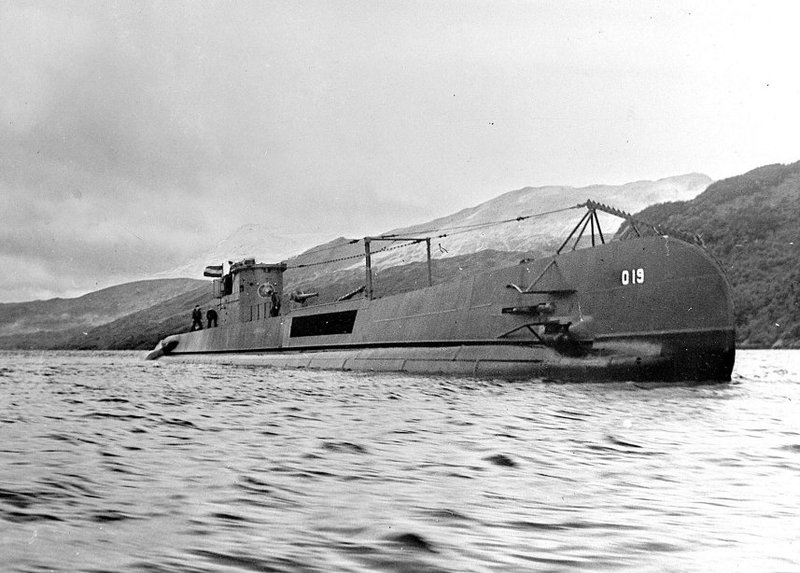
After her commissioning the HNLMS O 19 was put into service by commander Lieutenant-on-sea 1 (LTZ 1) K. van Dongen on July 3, 1939, following a short training period. Three weeks later, on 25 July 1939, the new submarine was already on its way to the Dutch East Indies via the Suez Canal where the boat arrived on 13 September.
On 10 May 1940, the day the Germans invaded the Netherlands, the entire mobilization was proclaimed in the Dutch colony. Most Dutch warships, including the O 19, were used to protect allied merchant ships and to patrol the Indonesian archipelago. The submarine performed patrols and missions in the Pacific theater, sinking several Japanese vessels, attacking convoys and laying mines. O 19, along with her sister ship O 20, were the first submarines in the world to be equipped with a submarine snorkel that allowed the submarine to run its diesel engines while submerged.
Lost 10 July 1945.
On 8 July 1945, O 19 was en route to Subic Bay in the Philippines at a speed of 16 knots (30 km/h; 18 mph) when it struck Ladd Reef in the South China Sea. Unable to pull free of the reef, the crew of O 19 were rescued by the U.S. Navy submarine USS Cod (SS-224). To prevent capture, O 19 was scuttled by both crews using explosives, torpedoes and gunfire.
 History Diaries