Việt Cộng overran an ARVN camp at Kon Tum and killed 44 ARVN soldiers, wounding 22, including three U.S. advisers. The camp at Kon Tum, near the Laotian border, about 250 miles northeast of Saigon, was manned by a Special Forces unit, a group designed to harass the Việt Cộng on their own ground. Reliable sources said the Việt Cộng broke into an armory and seized four heavy machineguns and more than 100 other weapons.
In central Vietnam, Việt Cộng wipe out the defenders of three strategic hamlets. A South Vietnamese military spokesman reported that every member of the platoon‐size defense force in one hamlet was killed or captured. The Việt Cộng attackers apparently suffered no casualties in any of the three assaults. Fifty‐one rifles and carbines and six automatic rifles and submachine guns were captured by the Communists.
The spokesman gave these details: An unknown number of guerrillas broke through the defenses of Boun Mpre and Oun Thrapo hamlets in Đắk Lắk (Darlac) Province in simultaneous attacks just before sundown yesterday. Both hamlets are inhabited by mountain tribesmen. The number of casualties was not reported, but the Communists seized 22 weapons and 13 hand grenades.
A Việt Cộng force of battalion size attacked and overran Ba An village in a daylight raid. Of the government platoon assigned to protect the hamlet, 6 men were killed and 35 were reported missing. Six were known to have been captured. Another Communist attack at Boun Yun in the same region on Tuesday killed half a company of government militiamen who threw down their weapons and fled before Việt Cộng raiders. Sixty‐seven weapons were captured. The two hamlets are situated on National Highway 14, about seven miles from the provincial capital.
Earlier, the Defense Ministry announced that the chief Communist espionage agent in coastal Quảng Ngãi Province had been hunted down and killed by government soldiers. It said the agent, Major Trường Sơn, was shot dead in a raid last month in the Mộ Đức district, 320 miles northeast of Saigon. The Communist commissar for the district was captured.
Communist broadcasts asserted today that South Vietnam had tried to infiltrate North Vietnam by sea and had parachuted 32 soldiers into southern Laos. The broadcasts, from North Vietnam and Communist China, said both operations had failed. A broadcast from Hanoi, the North Vietnamese capital, said South Vietnamese commandos landed from a naval craft June 30 on the coast of Quảng Bình Province. This would mean that they went ashore somewhere in the vicinity of the port of Đồng Hới, 40 miles north of the North Vietnamese‐South Vietnamese border. The number of commandos was not given.
As heard in Tokyo, the Hanoi radio said the commandos landed “for sabotage activities, but were intercepted and wiped out by the local police and militia forces.” It added that the coastal defenders had captured arms, ammunition and rubber landing boats. The Hanoi broadcast said a protest was lodged yesterday with the International Control Commission, set up to keep watch on the Geneva settlement on Indochina. The Peking radio reported a charge that a South Vietnamese plane on June 27 dropped 32 soldiers in the Muong Nong area of southern Laos near the border of South Vietnam.
This is the area where the pro‐Communist Pathet Lao have been pushing back Laos’s neutralist and rightist army forces to tighten a hold on the supply trails from North Vietnam to the guerrillas in South Vietnam. Laos has charged that soldiers from North Vietnam have aided the Pathet Lao in fighting in this sector. Peking quoted a broadcast from Pathet Lao headquarters in northern Laos. It said that two of the parachutists had been killed and six captured and that the Pathet Lao was “encircling the routed enemy.” The nationality of the soldiers was not given.
Military Assistance Command, Vietnam (MACV), under the command of U.S. Army General Paul D. Harkins, sent a request to Admiral U. S. Grant Sharp Jr., CINCPAC (Commander-in-Chief, Pacific) asking authorization of a patrol of the Gulf of Tonkin to get information about North Vietnam’s coastal defense. Admiral Sharp would dispatch the destroyer USS Maddox to the area, leading to the first Gulf of Tonkin incident on August 2.
Former Secretary of State Dean Acheson, at President Johnson’s request, is flying to Geneva tomorrow in an effort to help mediate the dispute between Greece and Turkey over Cyprus. Mr. Acheson has been briefed on the situation by the State Department. The United Nations mediator for Cyprus, Sakari S. Tuomioja of Finland, plans to start a new round of talks with Greek and Turkish officials in Geneva on Tuesday or Wednesday. State Department officials said today they were not prepared to announce the precise nature of Mr. Acheson’s assignment. Presumably Athens and Ankara are being consulted.
It is thought that the former Secretary of State will make himself available for discussion of possible solutions to the communal strife in Cyprus, without formally supplanting the United Nations team or making the United States the official channel of negotiation. The United Nations has tried for three months to find a solution, without success. However, the United Nations has just extended for another three months the tour of duty of its peacekeeping force on Cyprus. The hope is that this will allow time for Mr. Tuomioja, with the United States’ assistance through Mr. Acheson, to work out a solution of the island republic’s difficulties. With Greece and Turkey, the countries most directly concerned over Cyprus politically and geographically, both members of the North Atlantic Treaty Organization, Washington’s interest in seeking a settlement among these allies is considerable.
U Thant, the secretary general, replied today to Turkish Cypriot charges that his report on conditions in Cyprus was biased in favor of the Greek Cypriots. In answer to a message from Dr. Fazil Kutchuk, Turkish Cypriot vice president of the island republic, that was made public here yesterday, Mr. Thant said he had found in it “certain charges, allegations and insinuations which unmistakably impugn the objectivity, integrity and good faith of senior members of the United Nations secretariat in Cyprus.” Mr. Thant said the statements made “are groundless and inexcusable.”
For the first time since his secret arrival on the island of Cyprus three weeks ago, General George Grivas called publicly today for enosis, union with Greece. In his previous public remarks, the former EOKA terrorist chief skirted all around the word, today in Nicosia General Hospital he used it. Before a cheering audience of patients and staff, he declared that “our main aim is enosis” as the final solution to the Cyprus crisis. It was not clear whether by “our” he was including Archbishop Makarios, president of Cyprus, who has consistently favored the creation of an independent unitary state without the guarantee now exercised by Britain, Greece and Turkey.
Since his presence in Cyprus was disclosed June 22, the general has been the dominant public personality. So far, his appearances and words do not appear to have rekindled the once flaming enosis spirit. The general said “it will not be long” before enosis was achieved. He added that Cyprus would accept support “from any quarter that offers it” to attain union with Greece. His words appeared to run counter to Archbishop Makarios’s position.
West Germany politely rejected today a proposal by President de Gaulle to set up a French‐West German committee to prepare for the further unification of Europe. Chancellor Ludwig Erhard and his ministers believe that the visiting French leader’s plan, conceived as a means of restoring impetus toward European political union, would look too much like an effort to dictate terms to the smaller countries in the European Common Market — Italy, the Netherlands, Belgium and Luxembourg. European union is the central topic in the semiannual meeting of the government chiefs, which began here today. The meetings are provided for in the French‐West German treaty of cooperation signed by former Chancellor Konrad Adenauer and President de Gaulle.
General de Gaulle and eight of his Cabinet ministers flew in from Paris for a two‐day “working visit.” The two Governments chose to regard the occasion as a business affair, forgoing public pomp and ceremony almost entirely. After the meeting Chancellor Erhard announced that President de Gaulle had invited him to go to Paris in November to be received as a member of the French Academy. “We understood each other well and got many ideas for reflection,” Dr. Erhard said.
Extensive measures were in force to ensure the safety of the French President. More than 2,000 policemen were deployed in Bonn, along the 15mile road from the airport and along the 12‐mile route between the Federal Chancellery and the French Embassy residence. A helicopter cruised overhead. An anonymous telephone call reporting a plot to bomb the Soviet Embassy added to an air of tension. The embassy building fronts on a road that General de Gaulle traversed four times.
Haiti accused the Dominican Republic today of directing an armed invasion of Haiti by Haitian and Dominican elements. Haiti said the invaders landed Monday. The charge was contained in a cablegram, made public today, from Haiti’s Secretary of State for Foreign Affairs, René Chalmers, to the President of the U.N. Security Council, Ahmed Taibi Benhima of Morocco.
Bulgarian, Soviet, Polish and East German planes have been spraying Bulgaria’s wheat crop with protective chemicals to save it from a plague of insect pests. Following severe hailstorms and flooding, the pests could make this Bulgaria’s fifth successive bad crop. After last year’s harvest failure, Bulgarian bakers were required to mix cornmeal and barley flour with wheat flour for bread.
Fifteen of the 49 crewmen of the Spanish tanker MV Bonifaz were killed when their ship collided with the French ship MV Fabiola off of Cape Finisterre in a fog. The Bonfiaz caught fire and sank. Six of her 50 crew were rescued by the West German ship MV Sloman Malaga. Bonifaz was also carrying six passengers. The Dutch ship MV Setas picked up 22 crew and three passengers. Four of the crew would subsequently die of their injuries.
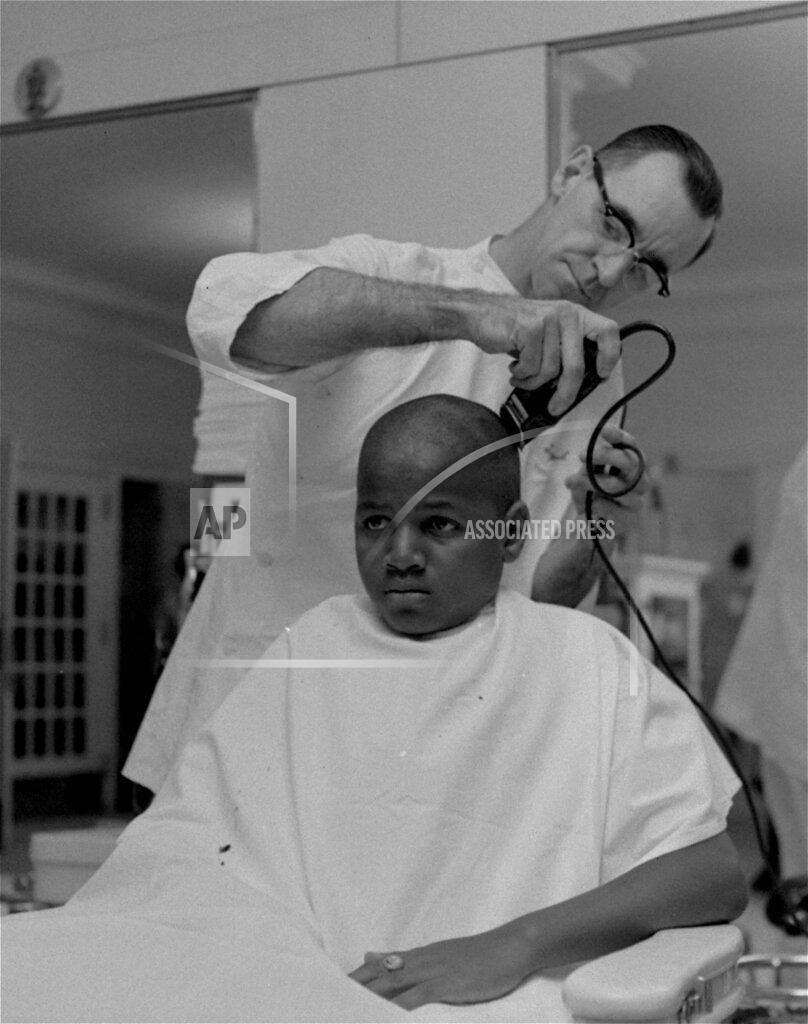
Blacks ate steak side by side with whites in a Danville, Virginia, restaurant yesterday for the first time. A Black boy got a haircut in a previously all-white hotel barbershop in Kansas City, Missouri. And Blacks went swimming in a previously segregated swimming pool in Savannah, Georgia. They were among scores of Blacks who tested the Civil Rights Act of 1964, which was signed by President Johnson Thursday. For the most part, their integration attempts were accepted quietly by communities in the South where racial trouble has often flared in the past. There was only scattered resistance.
In Jackson, Mississippi, the Chamber of Commerce urged all businessmen to adhere to the provisions of the new law. The action was considered significant because the city is the headquarters of the White Citizens Council and a center of segregationist views. Also in Jackson, there was an unsuccessful attempt to test the voter registration section of the law. Two bowling alleys in Beaumont, Texas, and some eating places in Selma, Alabama, and Valdosta, Georgia, refused to serve Blacks.
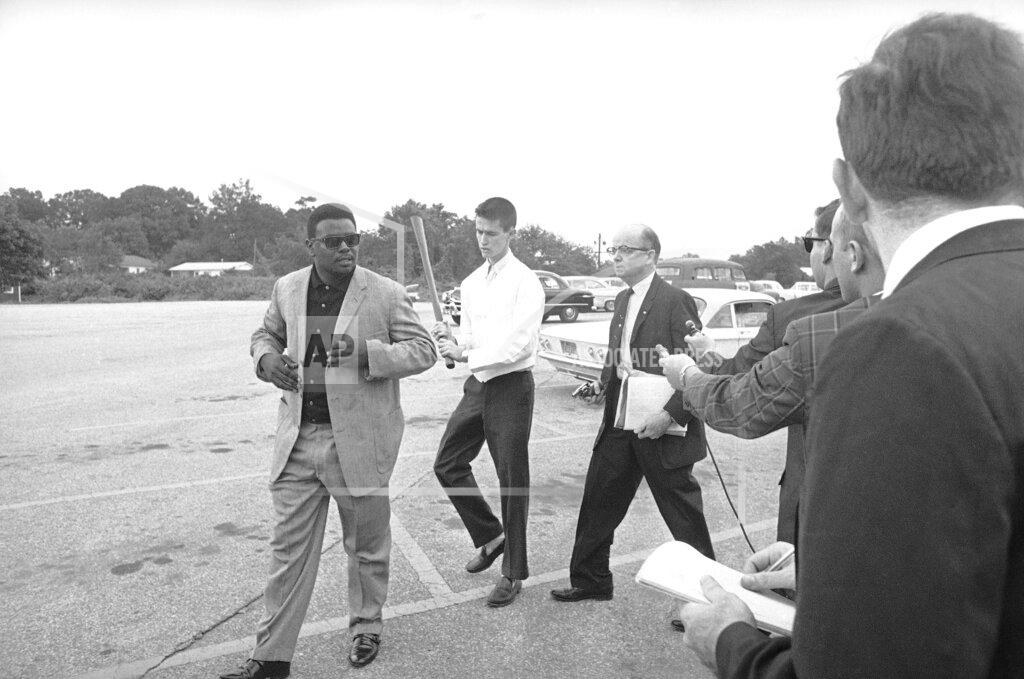
On the other hand, Georgia restauranteur and future politician Lester Maddox and a crowd of white people carrying ax handles chased three African-Americans out of Maddox’s Pickrick Restaurant in Atlanta. Maddox, waved a pistol and ordered three Blacks off his property when their car pulled into his parking lot. Mr. Maddox then kicked the side of the car, took an ax handle and struck the top of the car as it was leaving. He shouted toward his white customers: “Get some ax handles.” About two dozen white persons, including some women, took handles from a box at the front entrance of the restaurant. The Blacks said before they left that they would return. The U.S. Department of Justice would join in a lawsuit filed by the three men.
Adherence to President Johnson’s call for compliance with the law was the general rule. However, in many cities, such as racially troubled St. Augustine, Florida, there was no attempt to test the law. The Rev. Andrew Young, a Black leader there, said that he would be glad to work with restaurant owners so that tests could be peaceful. “We’re not concerned,” he said, “with forcing our rights down somebody’s throat.”
Two 12-year-old African American girls in Bogalusa, Louisiana tested the reach of the Civil Rights Act that had been passed the day before, sitting down at the lunch counter in the local Woolworth department store, which had previously been able to limit sit-down service to white people. Despite being shouted out by a group of white customers, the two children received service.
The French Quarter of New Orleans quietly integrated, along with most other public accommodations in the city with “near total compliance with the Civil Rights Act passed the previous day”.
The attitude of most restaurant owners in the South appeared to be summed up by Cy Shiap, owner of the steak house in Danville, Virginia. “Last year we fought them because they were breaking the law,” Mr. Shiap said. “This year, I’d be breaking the law if I refused to serve them. I’m a law‐abiding citizen. If the law says feed them, I feed them. While I don’t like it, I’m not going to break the law.” When four Blacks ate in his restaurant yesterday, it was the first time in the city’s modern history that whites and Blacks had dined together in a public restaurant.
In Birmingham, where there have been frequent racial clashes, at least 10 downtown restaurants were integrated quietly. The Blacks attracted little attention. Occasionally, passersby stopped to look into windows, but said nothing. City officials in Birmingham promised that the Blacks would not be bothered and that they would be provided with protection if they tested the law peacefully. The city’s hotel and motel associations announced that they would comply with the law.
The Rev. J. L. Ware, president of the Birmingham Baptist Ministerial Conference, praised the city’s businessmen for “their willingness to abide by the law of the land.” The Birmingham tests by the Blacks, like the actions elsewhere, were carefully planned by civil rights groups. Participants were told to let group leaders do all the talking. They were to seek service and, if rejected, they were to get the name of the person who rejected them and the reasons for his action. Then they were to report to their headquarters.
President Johnson found today that the initial nationwide response to the new Civil Rights Act was “wonderful and very hopeful.” The President announced that he would appoint Arthur H. Dean, a New York lawyer, who has been a disarmament negotiator, as chairman of a National Citizens Committee for Community Relations to assist in acceptance of the act. The committee of prominent citizens will serve as advisers to LeRoy Collins, who has been made director of the Community Relations Service created under the act. The service will attempt to help communities solve their civil rights problems through conciliation rather than legal intervention.
Secretary of Commerce Luther H. Hodges and LeRoy Collins, director‐designate of the Community Relations Service, will leave here the middle of next week for conferences with Southern Governors on the Civil Rights Act of 1964. In these discussions, to be held with each Governor individually in his home or office, the two will explain how the Community Relations Service may help deal with problems of voluntary compliance with the new law. President Johnson signed the bill last night before leaders of Congress, heads of civil rights groups and officials of the Justice Department.
At the Justice Department, officials expressed satisfaction today at reports coming in from cities in the Southern and border states on the extent of voluntary compliance with the law during the first 24 hours. They said that both the attitudes toward the law and the acts of compliance were not only “encouraging” but “very remarkable.”
The Council for United Civil Rights Leadership expressed hope yesterday that all Americans would comply with the Civil Rights Act of 1964 and that “neither litigation nor demonstration will become necessary in most communities.” The council, which serves as the official spokesman for seven national Black civil rights groups, said in a statement here that it looked “forward to an end to the need for protest and contest.” However, it warned that if there was a defiance of the Congressional mandate, “we will use all lawful means to eliminate it.”
Two members of Congress from California and one from New York arrived here today for an informal inquiry into the welfare of civil rights workers. All are Democrats. One of them, Representative William Fitts Ryan of Manhattan, represents the district of Andrew Goodman, a 20‐year‐old Queens College student who is one of three workers missing since June 21 and feared dead. The search for the three continued fruitlessly today near Philadelphia, Mississippi, where they were arrested and held the day of their disappearance.
The two others from Congress are Representatives Augustus F. Hawkins, a Los Angeles Black, and Philip Burton of San Francisco. Many of the 475 volunteers participating in the two‐month campaign of political action, education and cultural activities among Mississippi Blacks are from California. The three met with leaders of the Council of Federated Organizations the civil rights coalition that is conducting the drive, and then went to Greenwood.
A group of demonstrators, organized by pacifist David Dellinger, stood outside the White House and conducted the first American public protest against U.S. involvement in the Vietnam War.
Four Black Muslim inmates at Stateville Prison in Illinois began an uprising in the wake of the June 22 decision in Cooper v. Pate.
Following the successful mating of its modules, Gemini spacecraft No. 2 began the second phase of Spacecraft Systems Tests (SST) at McDonnell. SST continued through September 1964. During August and September 1964, test operations alternated with the receipt and installation of a number of flight items in the spacecraft. Vibration testing of the spacecraft and systems was successfully conducted August 20–24. No altitude chamber tests were performed on spacecraft No. 2 because the Gemini 2 mission was to be uncrewed. Phase II mated SST concluded with the Simulated Flight Test September 3–15. The spacecraft acceptance review was held September 17–18, after which it was flown to Cape Kennedy September 21.
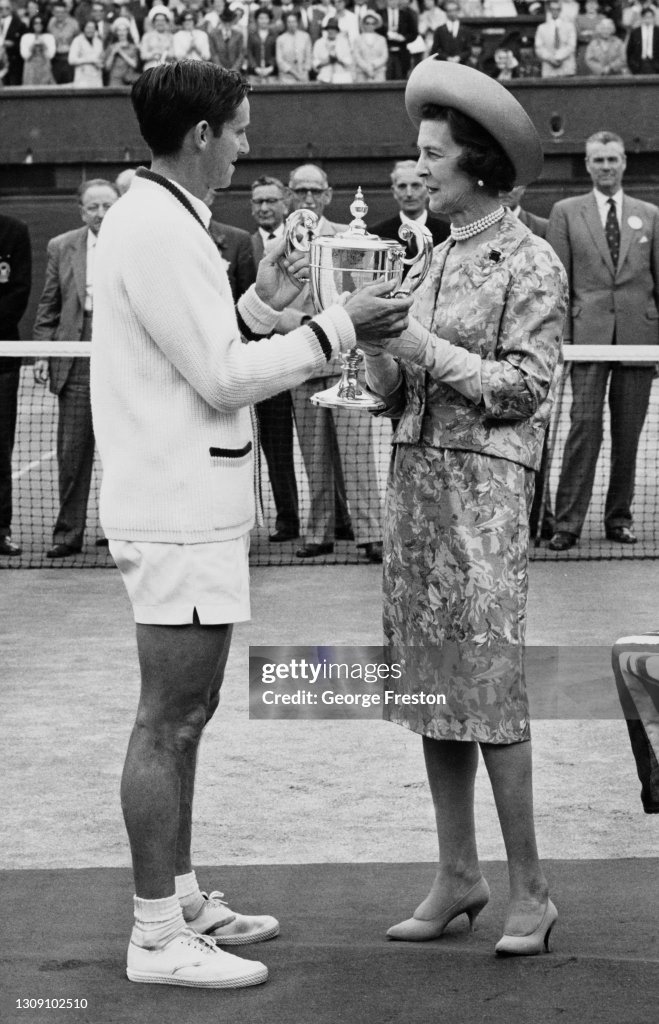
Wimbledon Men’s Tennis: In an all-Australian final Roy Emerson beats Fred Stolle 6–4, 12–10, 4–6, 6–3; Emerson’s 1st of 2 straight Wimbledon titles.
Birdie Tebbetts returns to limited duty as manager of the Cleveland Indians.
Joe Adcock and Lou Clinton hit consecutive home runs tonight off Dick Radatz in the 10th inning to give the Los Angeles Angels a 5–3 triumph over the Boston Red Sox. Adcock hit the ace reliever’s first pitch into the centerfield bleachers and Clinton connected on an 0–2 pitch. Radatz’s first pitch to the next batter, Bob Rodgers, almost hit the Angels’ catcher on the head. Radatz immediately was fined $50 by the plate umpire, Al Salerno, and Ed Hurley, third base umpire, had to restrain the other Angels from running on to the field.
Tito Francona’s triple in the 11th inning. his fourth hit, drove in the run that gave the Cleveland Indians a 2–1 victory tonight over the Chicago White Sox. The Indians’ losing streak thus ended at six games.
Vernon Law scattered six hits tonight as the Pittsburgh Pirates broke a five‐game losing streak with a 2–1 victory over the Houston Colts. Willie Stargell’s double and a triple by Smoky Burgess gave the Pirates the winning run in the eighth inning. Law needed relief help from Al McBean in the ninth when Mike White and Walt Bond singled with two out. McBean walked Joe Gaines before Rusty Staub flied out, ending the game.
The New York Mets let the poor Los Angeles Dodgers feel like world champions for a change tonight as they dutifully handed over a 6–2 victory before 42,616 spectators. They hit Don Drysdale hard in the first four innings, but, seeing that this produced only one earned run, they stopped. Jesse Gonder’s fourth home run of the season, with two out in the eighth, was the only solid blow in the last five. Drysdale struck out nine, walked two and allowed nine hits.
The Philadelphia Phillies moved to within half a game of the National League lead tonight by defeating the first-place San Francisco Giants, 5–1, behind Ray Culp’s six‐hit pitching and a three‐run rally after two out in the third inning. The Phillies added three consecutive singles to a walk and an error for the third‐inning runs off Ron Herbel in the opener of a three‐game series.
Born:
Yeardley Smith [as Martha Yeardley Smith], French-born American voice actress (Lisa Simpson- “The Simpsons”), in Paris, France.
Peyton Reed, American film director (“Yes Man”; “Ant-Man”), in Raleigh, North Carolina.
Louis Clark, NFL wide receiver (Seattle Seahawks), in Pontotoc, Mississippi.
Warren Newson, MLB outfielder and pinch hitter (Chicago White Sox, Seattle Mariners, Texas Rangers), in Newnan, Georgia.
Joanne Harris, English novelist (“Chocolat”), in Barnsley, Yorkshire, England, United Kingdom.
Gary Ryan [Moss], American rock bassist (Joan Jett & The Blackhearts), in California.




 History Diaries