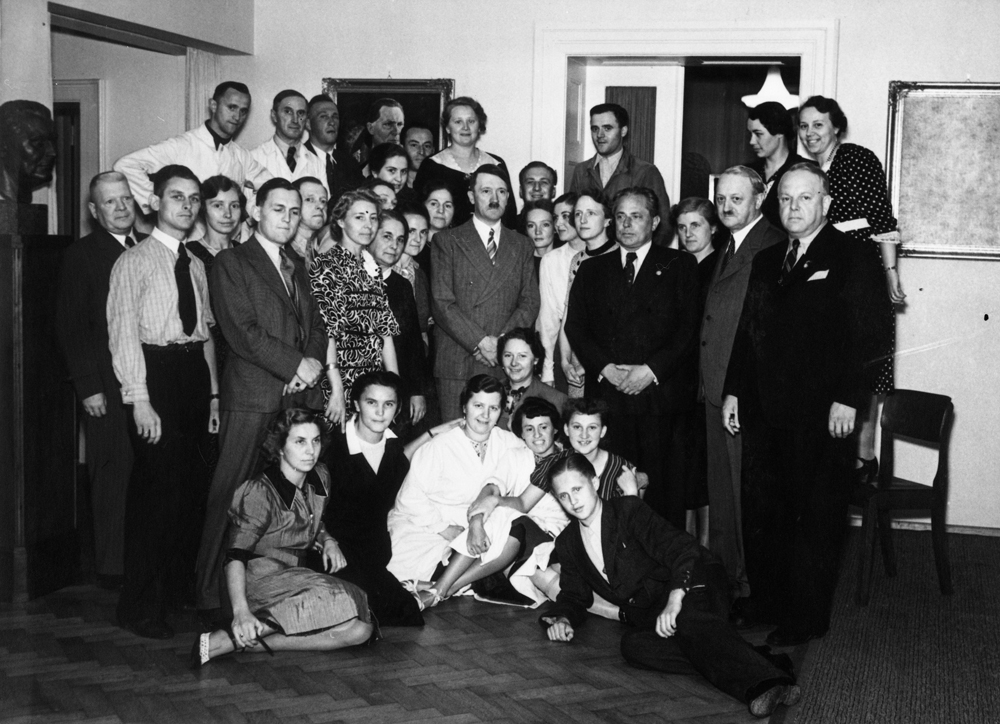
There are now two months left until war comes to Europe.
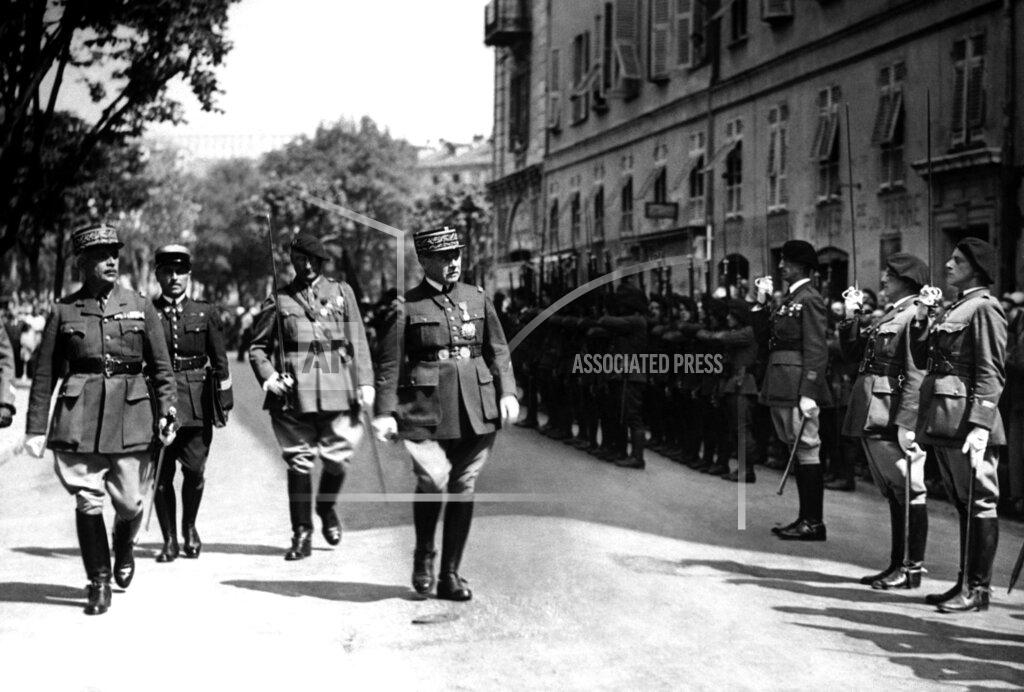
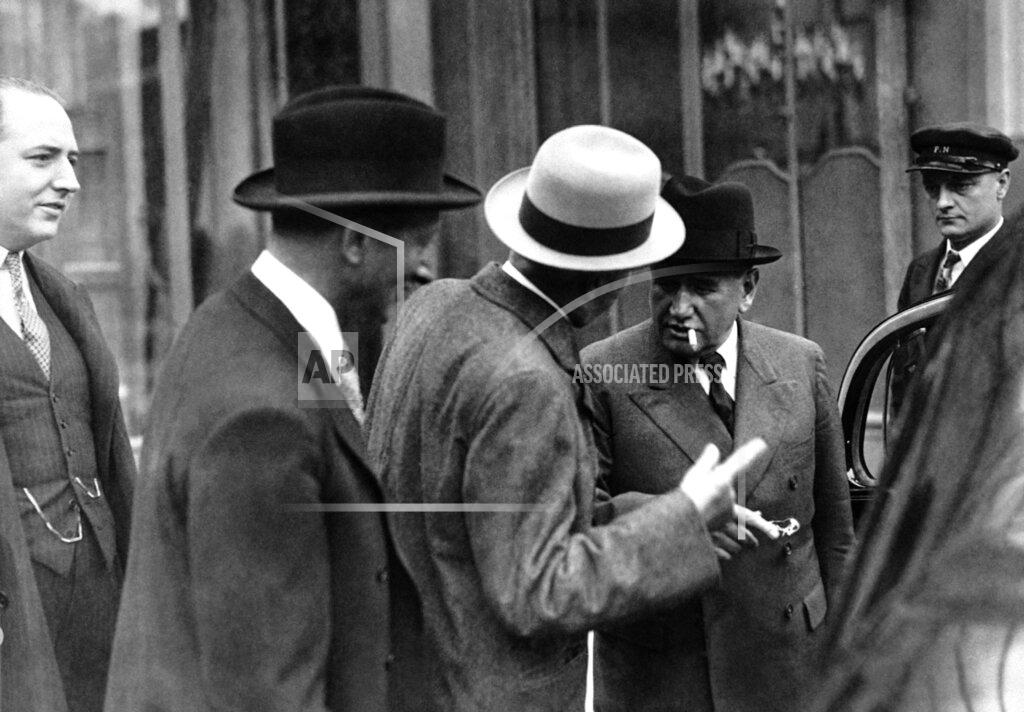
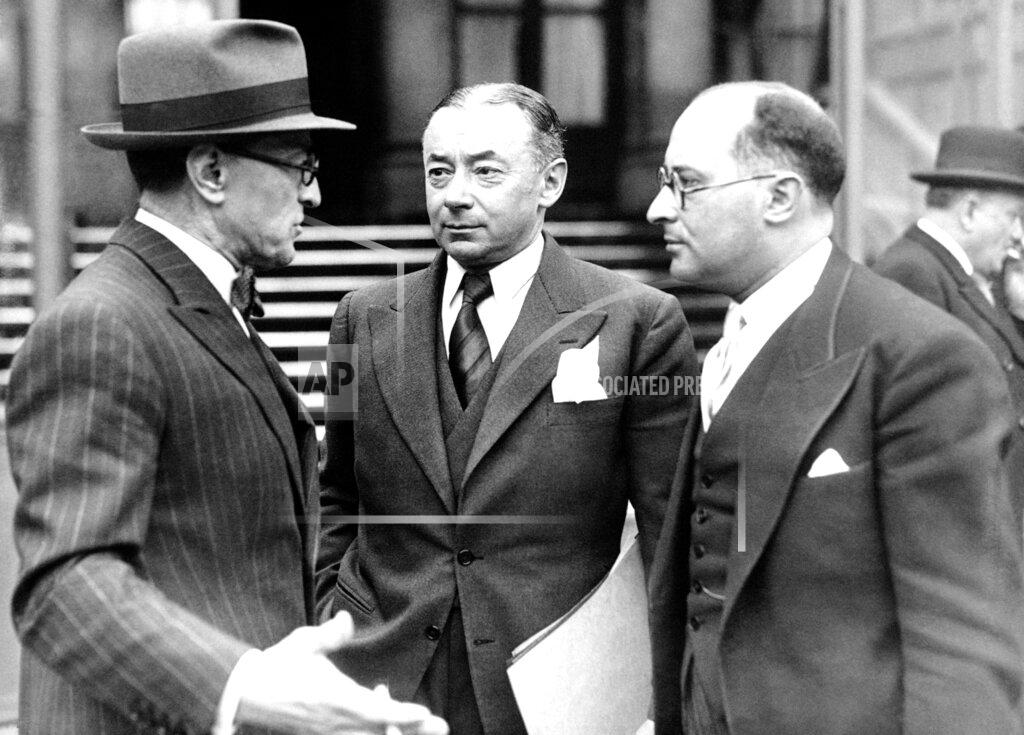
In a note given from M. Georges Bonnet, French Minister for Foreign Affairs, to Count von Welczeck, German Ambassador to France, The French government warned Germany that France fully intended to honor her promises to Poland. In the face of the fast-developing Danzig crisis, measures destined to “strengthen the action of France and to end any misconception of the firmness of her resolution” were approved by the French Cabinet today on the motion. of Premier Edouard Daladier. What these measures are has not been revealed except that they involve further credits and will not involve any immediate extension of mobilization. Foreign Minister Georges Bonnet was said to have warned the German Ambassador yesterday that France would support Poland against aggression, according to The Associated Press.
In a communiqué on the Cabinet meeting the Premier is reported to have represented the situation as “very serious.” M. Bonnet gave the Cabinet a full account of the latest reports he has had on the situation in Danzig, including those from Ambassador Leon Noel, who recently returned to Paris from Poland. M. Bonnet said that his informants’ opinion was that immediate action by Germany was unlikely and that the threatening reports had been circulated by Berlin to create a state of alarm and uncertainty in France, Britain and the rest of the world.
Ambassador Noel’s report on the situation was that the Poles, who are well informed of their danger, do not expect the beginning of the execution of the German plan for two or three weeks. Meanwhile the attitude of Poland remains as defined in the speech of Foreign Minister Josef Beck some weeks ago — that she is prepared to examine any transactional measure that will prevent war but will fight to protect her vital interests.
The current international tension is holding up the trial of Herschel Grynszpan. It was last November 7 that the young German-Polish Jew walked into the German Embassy in Paris, asked to see a secretary, pulled a pistol from his pocket and killed Ernst vom Rath — prompting a series of stern measures against Jews in Germany. Next year probably will be well along before he goes to trial — and that is slow for France. Court authorities say that with French feeling running high against Germany over the partition of Czecho-Slovakia last March, they fear that Grynszpan might not get an impartial trial before a jury now.
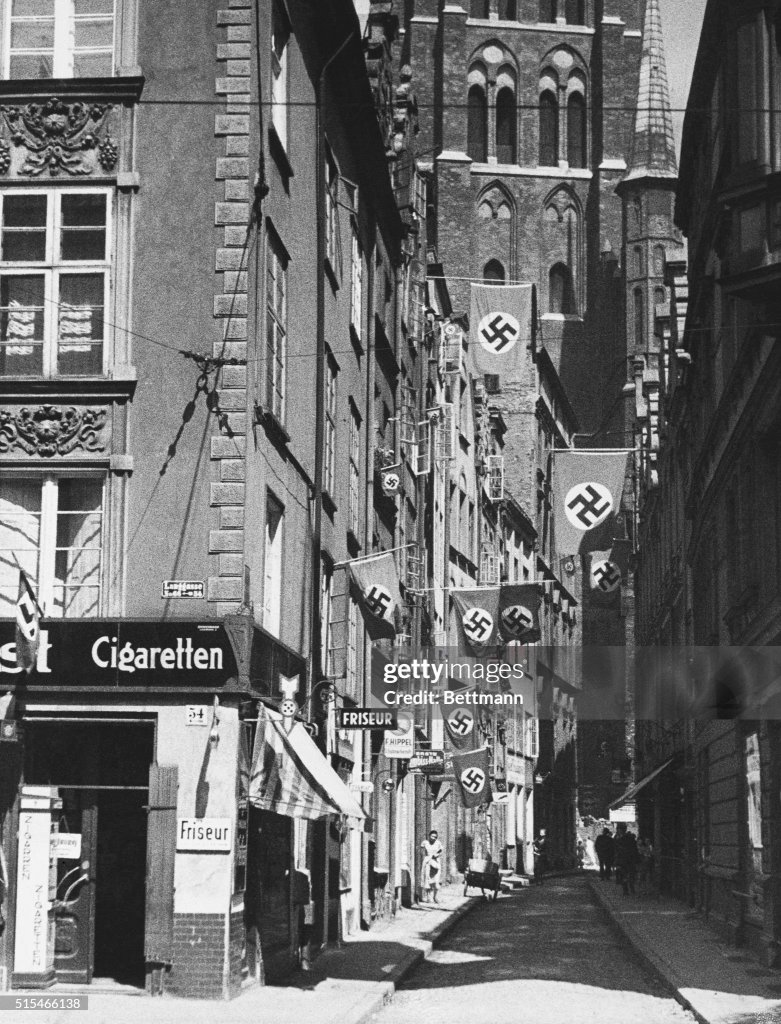
The Reich demands that the world admit Danzig belongs to Germany.
The Reich will hold Czech teachers responsible for anti-German acts of students.
A congregation of approximately 3,000 Confessional Church members gathered in the Church of St. Paul in Lichterfelde in Berlin today to commemorate the second return of the day upon which Pastor Martin Niemöller was arrested and charged with pulpit misuse. Although subsequently released by the legal authorities, Pastor Niemöller, who until his arrest was a leader in the Confessional Church struggle against restrictions imposed by National Socialism, was immediately taken into custody by the Secret Police and imprisoned in the Sachsenhausen concentration camp, where he is still held. The service today was held in the Lichterfelde Church because its seating capacity exceeds that of Pastor Niemöller’s Christ Church in Dahlem. Lay members were first informed of the service last night, and the announcement was circulated through the community by word of mouth.
Italy sounded a warning in an authoritative publication that an Anglo-French attempt to defend the status quo would inevitably lead to a major European war in which the Italians would satisfy their claims to French territory.
The British Government tonight mobilized all the resources of its newly created. Foreign Publicity Department to get a warning from British Labor through to the German people. This step, which was prompted by grave fears that the Nazis would organize an “insurrection” and take Danzig, perhaps this weekend, went far beyond anything yet attempted by this country. For the Labor manifesto virtually called on Germans to rebel against the warlike aims of their Nazi rulers.
The statement was issued by the British National Council of Labor, representing the Trades Union Congress — organized labor — and the Labor party. Not only are there. grounds for believing that it was given out at the request of Prime. Minister Neville Chamberlain — he saw the Trade Union leaders two days ago — but it was transmitted tonight on the British Broadcasting Corporation’s German language news program which, since last September, has been attempting to break through the barriers placed. around Germany by the Nazi censorship of the press.
Even more significant was the BBC home broadcast which stated openly that the Council of Labor manifesto would be circulated in Germany by underground channels, and it is understood this would include both the secret wireless stations on the Continent and the various anti-Nazi movements still operating within Germany. Hitherto, although the German programs have been presenting the British point of view with more and more vigor in recent weeks, the British Government has resolutely refused to have anything to do with any underground movements within Germany. It had been declared that this would be contrary to the standards of international good feeling.
The statement did not go so far. as openly to advocate rebellion by the German people, but the meaning of its appeal was obvious: “We beg of you to do whatever you can to make it known to your government that you want peace and not war.” Certainly, it is clear to the British that in an iron dictatorship like Germany any citizen who “makes known” his opposition to Reich policy must be prepared to suffer punishment or lead a successful rebellion.
The manifesto, like the official statement issued early this morning by the Foreign Office, went a long way toward suggesting that German aggression against Danzig would bring Britain into war on the side of Poland, but neither said so in so many words. The two documents represent twin developments of British publicity to arouse the German people’s opposition to the war policy and to convince the German Government that Britain is determined to maintain her pledges to Poland in all eventualities.
Spitfire L1007 is tested with two 20mm Hispano cannon. The drum feed system (60 rounds) is highly unreliable.
The Irish Red Cross was formally established.
While British and French envoys conferred for two hours in Moscow with Premier Molotov on their latest alliance proposals, Premier Cajander of Finland insisted that his country desired no pledge of protection from the Soviet and could not regard its effort to impose guarantees on it as well as the other Baltic lands as “a friendly act.”
Palestine deaths mount with 643 killed in the past six months. Bus lines close.
President Roosevelt was reported today to have taken a “no-surrender” position in his twin battles with a rebellious Congress over monetary and neutrality legislation. Friends said that apparently the Chief Executive had no thought of compromise on either issue. His last public word on the monetary question was an insistence that his powers be continued, and Secretary Hull, only today, reasserted the Administration’s demand for neutrality legislation of the sort which the House turned down last night.
Administration leaders had the advantage of a long holiday weekend to rally their shattered forces, in an effort to put through the Senate next Wednesday legislation to revive the President’s power to devalue the dollar and continue operation of the $2,000,000,000 stabilization fund. Both sides admitted that the result was in doubt, though Senator Minton, Democrat, of Indiana, predicted that by the time the vote was taken President Roosevelt’s friends would be able to count enough noses to assure adoption of a conference report already approved by the House. On the other hand, Senator Taft said he believed. the report might be beaten.
The prospects for neutrality legislation along the lines desired by the Administration was another question. It was clear that Administration forces would continue a fight for it, but some opponents contended that the issue was “dead” for this session. A controversy within the monetary controversy was the contention by some legislators that a favorable Senate vote Wednesday would not revive the monetary powers which expired at the stroke of midnight Friday. Senators Taft and Vandenberg, spearheads of the Republican attack on the devaluation authority, asserted today that it would be necessary for the Roosevelt forces to introduce entirely new legislation, taking it through the routine channels of Congress.
The pending legislation was so written as to extend the expiring powers. A vote on it before the midnight hour was blocked by debate by Republicans and some Democrats, which dragged out the session to 2:53 AM, Eastern Daylight Time. Before adjournment it was agreed to have a vote at 6 PM, daylight time, Wednesday. Taking issue with Senators Taft and Vandenberg, Senator Adams, Democrat, of Colorado, author of a Senate-approved amendment to the bill which would have put an end to the devaluation section, said that if the Senate approved the pending legislation there could be no question as to the President’s right to cut an additional nine cents of gold value out of the dollar any time in the next two years.
Secretary Hull and Speaker Bankhead agreed today, in commenting separately on the action of the House last night in refusing to repeal the automatic arms embargo of the Neutrality Act, that the development might have serious repercussions on the foreign situation and that it had been unwise in any event. President Roosevelt made no comment. Mr. Bankhead, in voicing his regret at the House’s action, said he feared it would cause “the troublemakers of Europe to draw the conclusion that there is not concerted action in this country between the executive and legislative branches on national policy.”
“The next few days may bear out this apprehension,” he added. The significance the Speaker attached to the Administration defeat of last night is what lay behind the long reluctance of President Roosevelt and of Secretary Hull to give official support to any of the projects for revision of the Neutrality Act which were pending in Congress. They had hoped against hope as the weeks went by that one of two things would happen: The situation in Europe would quiet down to a point reassuring to middle-of-the-road members of Congress, or a definite tide would take shape in Congress of its own force.
With no fund in the 1939-40 Relief Appropriation Act for Federal art projects of the WPA as strictly Federal projects, directors of these undertakings, faced with drastic curtailments, studied how much they will be able to salvage on August 31, when the Congressional mandate for local sponsorship takes effect.
Treasury Department officials said they had no expectation of immediate London raids on the dollar as a result of the expiration of the devaluing authority and loss of the stabilization fund. Any move by speculators was expected to be delayed until the Senate votes next Wednesday on the conference report on the Monetary Bill. Meanwhile, Treasury officials appeared calm in the face of Friday night’s defeat of the President’s power to devalue, operate a stabilization fund and proclaim the price at which domestic silver may be bought.
The Treasury Department, closing its books for the fiscal year 1939, reported government expenditures of $9,268,338,030, the largest peacetime outlay in the country’s history. The total expenditures were about $314,000,000 less than the amount. President Roosevelt had estimated.
The nation’s jobless number is under 10 million in May.
The U.S. Army creates a defense post in Puerto Rico.
National Academy of Sciences sponsored a $10,000 research program at Cal Tech Rocket Research Project for development of rockets suitable to assist Air Corps planes in takeoffs, the first U.S. rocket program.
Boxer Jack Dempsey fights post-surgery infection.
The NAACP secretary says President Roosevelt has support from African Americans for a third term.
The U.S. Lighthouse Service, founded in 1789, was incorporated into the U.S. Coast Guard service as a result of the Presidential Reorganization Plan No II.
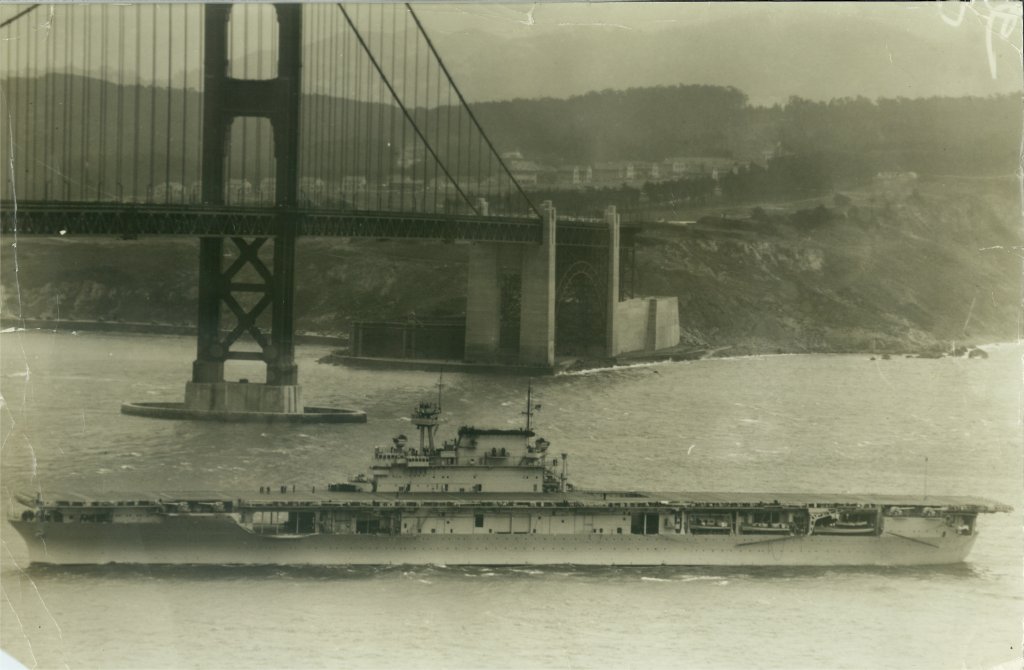
Planning of the new Essex-class carrier began at the United States Navy’s Bureau of Ships at the Washington Navy Yard.
Recording their sixteenth triumph in their last nineteen games, the New York Giants beat the Dodgers, 5–2, before 16,478 at the Polo Grounds. Harry Gumbert pitched for the Giants and accounted for his tenth victory of the campaign.
At Fenway, Joe Cronin and Bobby Doerr each drive in two runs as the Red Sox beat the Yankees, 5–3. While watching the game in the stands, the mother of pitcher Bump Hadley is injured on the shoulder when she is hit by a line drive off the bat of Doc Cramer. Earlier in the year Bob Feller’s mother was also hit by a line drive.
Connie Mack, who is ill, resigned as manager of the American League team which is to face the National League All-Stars July 11 at the Yankee Stadium. Joe McCarthy of the Yanks will take over in place of the 76-year-old pilot of the Athletics. Lou Gehrig, now out of active competition because of illness, will be on the American League squad as captain.
The United States placed three players in the men’s singles quarter-finals of the All-England championships at Wimbledon when Bobby Riggs and Elwood Cooke joined Eugene Smith in the bracket. Riggs defeated Ronald Shayes, 7–5, 6–8, 6–4, 6–3, and Cooke routed J. S. Olliff, 6–1, 6–1, 6–4. Smith, playing with an injured arm, teamed with Don McNeill to upset the Germans, Henner Henkel and Georg von Metaxa, in doubles. Miss Alice Marble and Miss Helen Jacobs were other Americans to win.
The Japanese 23rd Infantry Division, under command of Lieutenant General Komatsubara Michitaro, backed by two tank regiments, struck at the Soviets dug in east of the river. They pushed to the Khalka River, and in the night, two regiments crossed the river, seizing the Baintsagan Heights on the west bank.
The Soviet 1st Front Army was organized under the command of Lieutenant General Georgi K. Zhukov.
Zhukov launched a coordinated three-pronged counterattack by the 11th Tank Brigade, plus a motorized infantry regiment and a brigade of armored cars. The Japanese themselves launched a counter attack to try to hold onto their gains, but the Japanese anti-tank weapons were not adequate against Soviet armor. The Japanese, in desperation, resorted to suicide attacks with squads of men hurling satchel charges and Molotov cocktails, but they could not stop the Soviet assault.
The Japanese military today tightened its restrictions on the blockaded British Concession amid growing doubts in informed foreign sources that the Tokyo negotiations could achieve a settlement. Domei, the Japanese news agency, said that “regardless of the outcome of the Tokyo parleys, military authorities here are determined to intensify searching and questioning.”
The new regulations for enforcing the blockade, which the Japanese imposed June 14, included a reduction in the hours in which traffic might pass the barriers and the closing of several entrances to the British Concession, including the International Bridge connecting British, French and Japanese areas. Long delays of three British vessels between Tientsin and Tangku, at the mouth of the Hai River, indicated more severe Japanese control also of river traffic. The office of the Japanese-dominated Chinese Mayor of Tientsin distributed “final warnings” to Chinese merchants within the British Concession to leave lest it become “your common grave.”
Recovering the territory occupied by the Japanese in their eighth attempt to clean up Chinese forces in Southeast Shansi, the Chinese have reconsolidated their control and driven out Japanese troops from the Eastern Chungtiao Mountains sectors, military reports here claim. It is asserted that the Chinese are now fully re-established in the triangular area bounded by Pinglu, Yuanku and Henglingwan.
General Wei Li-huang, vice commander in the Shansi area, said that the latest Japanese drive in the Chungtiao area had resulted in the fiercest fighting of the war in Shansi. He declared that the Chinese had scored their success with the now standardized tactics of withdrawing before the initial Japanese thrust, evacuating the entire populace and all food and supplies; and later counter-attacking on terrain favorable to guerrilla warfare. General Wei asserted that Japanese officers had used machine guns on their own troops in an effort to stem their retreat.
The Chinese rely primarily on guerilla tactics. Arms flowing through Burma and Russia allow them to keep up the war.
The Japanese abandon a federal Chinese plan. Two regimes will exist.
Dow Jones Industrial Average: 131.73 (+1.10).
Born:
Karen Black, American actress (“5 Easy Pieces”, “Pyx”), in Park Ridge, Illinois (d. 2013).
Frank Parker, American actor (“Days of our Lives”, “Never Too Young”), in Darby, Pennsylvania (2018).
Delaney Bramlett, musician, in Pontotoc, Mississippi (d. 2008).
Mohammad Baqir al-Hakim, Iraqi Shia Islamic Scholar and politician, in Najaf, Iraq (d. 2003).
Charles Floyd Hatcher, American politician (Member of the U.S. House of Representatives from Georgia, 1981-1993), in Doerun, Georgia.
Died:
Louis Davids, 55, Dutch cabaretier and revue artist.
Naval Construction:
The U.S. Navy battleship USS Iowa (BB-61), lead ship of her class of 6 (4 completed), is ordered from the New York Navy Yard (New York, New York, U.S.A.).
The U.S. Navy Iowa-class battleship USS New Jersey (BB-62) is ordered from the Philadelphia Navy Yard (Philadelphia, Pennsylvania, U.S.A.).
The U.S. Navy submarine tender USS Fulton (AS-11), lead ship of her class of 7, is laid down by the Mare Island Navy Yard (Vallejo, California, U.S.A.).
The Nihon Kaigun (Imperial Japanese Navy) munition ship Kashino (樫野), sole ship of her type, is laid down by Mitsubishi Heavy Industries, Nagasaki, Japan.
The Sjøforsvaret (Royal Norwegian Navy) Vosper 60-foot-type class motor torpedo boat HNoMS No. 5 is laid down by Vosper (Portsmouth, England, U.K.).
The Kriegsmarine (German Navy) Type XB U-boats U-116 and U-117 are laid down by F. Krupp Germaniawerft AG, Kiel (werk 615 and 616).
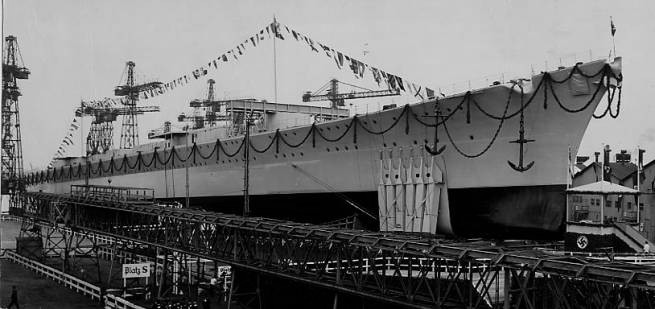
The Kriegsmarine (German Navy) Admiral Hipper-class heavy cruiser Lützow is launched by the Deschimag shipyard in Bremen, Germany. Sold to the Soviet Union before completion and sees limited Soviet Navy service as Petropavlovsk, and later as Tallinn.
 History Diaries