The New York Times reports:
Paris: Chancellor Adolf Hitler’s plans for the “peaceful” return of Danzig to the Reich have now been completed, according to information received here. With their completion, active propaganda has been begun here and probably elsewhere to the effect that the change can and will be accomplished without bloodshed if only the French and British will take “a sensible view.” The plan, it is stated, is that Herr Hitler will, on the invitation of Dr. Arthur Greiser, President of the Danzig Senate, visit the Free City during the latter part of July, probably between the 20th and 30th, to receive solemnly the diploma of a citizen of honor of the Free City. He will remain there two days, during which enormous manifestations will take place, in the course of which the city will be swamped by hordes of “tourists” from East Prussia. It is believed likely that the Danzig Senate will at that time manifest its fidelity to the Reich.
Soon after Herr Hitler’s visit, Air Marshal Hermann Göring will go there, possibly on the cruiser Königsberg. By that time, it is hoped, through the publicity given to these visits international opinion will have been prepared for the surrender of the city to the Reich, just as was done in the case of Czecho-Slovakia. It is believed not improbable that Herr Hitler will then launch an appeal to the world, asking it to judge whether this city, which is so German at heart, should not be returned to Germany, undoubtedly backing up his appeal with protestations of Germany’s desire to live in peace with all her neighbors.
These tactics have been used successfully too often both in internal advancement of the Nazi regime in Germany and in recent years in Austria and Czecho-Slovakia to be minimized. Europe has known the force of that sort of demonstration, and appeal and the division it can cause, with its mixture of terror and some vague justification, in other camps.
[As usual, the press and French are a little behind the curve. Hitler wants Danzig — but he wants war even more. There will be no settlement.]
All acts of aggression in Danzig, from within or from without, will be considered a cause of war, it was announced in official circles here tonight, a few hours after Foreign. Minister Josef Beck’s return from a short vacation at Jurata, near Gdynia. The recent statements of Viscount Halifax, the British Foreign Secretary, and of Winston Churchill have made it quite clear that Britain and France will fulfill their obligations in case of a conflict over Danzig, it was added.
“The Polish Government is closely watching military preparations in the Free City,” said the announcement. “They are meant, perhaps, to play on our nerves, to disturb our normal life. The Polish Government will not lose its nerve, will not let itself be provoked; but every action will result in a counteraction. “There are no signs of undue nervousness in this country and no new military measures are being taken despite the fact that on the other side in Germany troops are being moved in the direction of Danzig and new units mobilized.” On the whole a more serious view is taken here now of the situation in Danzig than a week ago, when the first news was received of the formation of a voluntary armed force — the Free Corps. Warsaw is puzzled by the undisguised military preparations in the Free City.
In the Sudetenland a year ago and in Austria eighteen months ago, this was done secretly. What is behind this change in tactics? Are the Nazis really preparing a Putsch in Danzig or is this yet another move in the “white war,” in the strategy of intimidation and fear? The view prevails here that the Danzig Nazis have a plan to provoke Poland to strong action by a series of anti-Polish outbreaks. Should the Poles decide on military action against the Free City they could be presented by Nazi propaganda as the aggressors and made, in the eyes of the Western nations, to look responsible for a new crisis in which the Reich would be bound. to assist the Germans in Danzig.
The real purpose of the war preparations in the Free City is to be able to retard the march of the overwhelmingly strong Polish forces now massed on the Danzig frontier, should these try to occupy the city. There will be a race against time between Polish and German troops in case of an armed conflict over Danzig. Poland is nearer and has an advantage of a few hours. The now organized Danzig Army — “Heimwehr,” as it was renamed yesterday — together with the police and Storm Troops will be able, the Nazis hope, to halt the Polish troops. at the Danzig gates for a sufficiently long time to give the Germans a chance to march in from East Prussia.
The Italian press ignores the situation in Danzig, only printing what the German press is saying.
German official quarters profess to be unimpressed by warnings from Britain and declared that Germany would continue unswervingly toward the goal set for her by Chancellor Adolf Hitler. He has made it clear, especially in his Reichstag speech of April 28, that this goal includes the recovery of war-lost Danzig and a connection of some sort between East Prussia and Germany proper across Pomorze [the Polish Corridor].
Despite yesterday’s blunt assertion by Viscount Halifax, British Foreign Secretary, that Britain was prepared to fight, Nazis still believe that when it comes to a showdown Britain will not be there. “The Danzig and Corridor questions will be settled with or without England,” said an official tonight, “and we still think that it will be done without England.”
Today is the deadline set by the Reich for emigration of all Jews in Berlin. Those remaining in Germany face concentration camps.
The Reichsbank president Walther Funk warns the Reich against gloom; the war of nerves is telling in German businessmen.
Britain sees no immediate German coup in Poland. The Cabinet will determine Polish aid to resist a “peaceful” Danzig seizure.
A warning to the Czechs that Germany’s patience is not everlasting was given last night by Konrad Henlein at the biggest German rally ever held in Prague. Less than ten months ago Herr Henlein, as leader of the Sudeten German party, was threatened with arrest by the Czecho-Slovak Government and fled to Germany. This afternoon he was met at Prague’s gates as the official representative of Chancellor Adolf Hitler. Last evening Germans rallied to Prague from all towns and villages in the Prague Nazi party district, which is part of the Sudeten Gau, of which Herr Henlein is the leader. But it was rather in his capacity as German Governor, directly appointed by Herr Hitler, that Herr Henlein addressed some 8,000 Germans in Prague’s Exhibition Hall.
Measures decreed by the Reich Protector, Baron Constantin von Neurath, to “Aryanize” the economic life of Bohemia-Moravia were sharpened further tonight by altering the definition of a “Jew.” All persons of mixed Jewish and “Aryan” parentage who were confessional Jews last March 17 were included in the measures, regardless of any subsequent change in religion. The new regulations set this date back to September 15, 1935, to include all those who have changed their religion since that time. Jewish enterprises may not be operated without written order from the Protector. Jews are forbidden to acquire a business, real estate or stocks and bonds. Their wealth must be reported to the authorities.
A fire destroys part of the Jewish district in Silal, Lithuania. Arson is suspected.
Today’s terrorism in Palestine centered in Jerusalem, where early this morning an Arab was shot dead near the Jewish quarter Mea Shearim. The military forces immediately cordoned the quarter and carried out rigorous searches. Later in the morning a bomb exploded in an Arab cafe in another part of the town, wounding eleven Arabs, five of them seriously. As punishment to the Jews the military commander ordered all Jewish cafes in Jerusalem closed at 8 o’clock every evening until further notice. Also, all Jewish traffic in and out of Jerusalem via the Jaffa Road, which is the main highway leading into the city, was stopped at noon today until 6 PM Sunday.
After the bomb explosion, Arabs began stoning Jewish cars and passers-by, but no serious casualties occurred. During last night fifty-two Revisionist Youths were arrested in the Jewish colony Rishon le Zion and five Jews were arrested at Petach Tikvah. It was near these colonies that several Arabs were shot dead yesterday. M. Seligman, Tel Aviv Jewish lawyer, was today sentenced to six months’ imprisonment for conspiracy in assisting illegal Jewish emigration to Palestine. He was acquitted of eighteen other charges, including bribery and corruption of Palestine Government officials. Seligman was released on £500 bail pending an appeal.
The supreme and unprecedented control over the dollar in its relationship to world exchange which President Roosevelt had exercised for more than five years lapsed at midnight as a result of a filibuster by a minority which prevented a final Senate vote on the Monetary Bill. President Roosevelt thus lost for the time being his power to devalue the dollar further by prescribing its gold content, and to control exchange operations by manipulation of the $2,000,000,000 stabilization fund.
Also fallen with this program went legislation proposing to fix the price of domestic silver by statute. The President’s authorization to use the stabilization fund fell, despite very little opposition, because it was inseparably linked in the pending legislation with the devaluation authority. It appeared probable that the stabilization fund would be revived in the very near future, but as the law stood early this morning it was non-existent, and its $2,000,000,000 in gold became, for the time being, only an asset on the Treasury’s books, to, be carried in the general fund.
Repeal of the Presidential authority by failure to pass the bill was the price exacted by the Republican minority for alleged “desertion” by their recent allies, the Senate silverites, who, in a conference between the House and Senate on Senate amendments to the bill, preserved one amendment fixing the price of domestic silver at 70.95 cents an ounce, but jettisoned others which would end the President’s devaluation authority and forbid further purchases of foreign silver.
The Democratic opposition to the action of the Senate conferees in receding on the devaluation amendment became immediately apparent after Senator Wagner called up the monetary bill conference report at 7:42 PM. Instead of Republicans leaping into the fight, Senator Clark of Idaho registered a sharp protest. When Senator Wagner sat down, Senator Adams, a Democrat and author of the amendment to stop further devaluation, began to deliver the first formal speech in protest.
The House, by a vote of 200 to 188, adopted just before midnight tonight a proposed revision of the Neutrality Act, but only after Republican and Democratic isolationists had combined to force into the measure practically the same automatic arms embargo which President Roosevelt and Secretary of State Hull had hoped to eliminate from the nation’s statute books. The final action came after the most exciting night session the House has witnessed in years. Galleries and the floor were crowded to their utmost capacity as issue after issue was decided by the narrowest conceivable margin, where every vote counted and where leaders on both sides of the chamber kept tally as the roll was called with as much concentration as the clerks hired to perform that duty. The Democratic whips re-formed. their shattered battalions sufficiently to stave off, by 196 to 194, the Republican effort to give all revision the final coup de grace in the form of a motion to recommit the whole proposition to the Committee on Foreign Affairs for further consideration. This proposal was advanced by Representative Tinkham of Massachusetts and would have meant the definite burial of the whole revisionist movement.
As it is, the House sent to the Senate a neutrality measure which is slightly improved, from the administration point of view, as compared to the existing law, but which contains almost the same automatic arms embargo which Mr. Roosevelt and Mr. Hull have found to be an encouragement to the aggressors of the world by assuring them in advance that their prospective victims will be cut off from American supplies. Theoretically, the Senate might take the House measure and amend it to conform to the President’s recommendations, but there has been such lack of enthusiasm in the upper chamber for substantial revision of the law that observers believed the closeness of the divisions in the House would give the Senators their clinching argument in favor of letting the matter rest where it is for the remainder of this session.
Congress sent to the White House tonight the 1940 Relief Bill carrying $1,755,600,000 to finance various phases of the relief program, and containing the composite views of the House and Senate as to how to “dress up and clean up” the Works Progress Administration. The Senate adopted the conference report without a record vote at 7:35 PM, a little more than four hours before the fiscal year deadline, which would have stopped the relief program unless new legislation was enacted.
The House adopted the conference report earlier in the day by a shouting, cheering majority of 321 to 23. It was a standing vote, the minority being unable to force a roll-call. The bill which was signed later by President Roosevelt was far from the one desired by the New Dealers, but, with the clock racing against them, they were forced to accept provisions which they had fought bitterly from the time the House Appropriations Committee reported the original measure, written from conclusions drawn from the current] investigation of the Relief Administration.
Following the death by Senate filibuster of President Roosevelt’s emergency monetary powers and a crippling blow by the House to the Administration’s neutrality policy, the Congressional leadership early this morning adjourned a tempestuous session until Wednesday, when it hopes to reform its lines and put down an effective anti-New Deal rebellion on Capitol Hill. The Senate adjourned at 1:53 AM until 11 AM Wednesday, under an agreement to vote at 5 PM that day on the monetary bill conference report. A vote was blocked until past last midnight’s deadline by a filibuster of Republicans and conservative hard-money Democrats.
The House, having adjourned earlier, will convene for a short formal session tomorrow and then take a recess until after the Fourth of July holiday. The Senate adjournment left open a disputed legal point as to whether the dollar devaluation authority and the $2,000,000,000 stabilization fund, both of which expired automatically at midnight, could be revived by the simple adoption of the pending conference report. The Administration forces were fortified by a legal opinion of Attorney General Murphy that the monetary statute could so be revived and extended, but the filibusterers expressed a distinctly opposite view.
The legal question may never be decided. At any rate, the next test will come in the vote Wednesday afternoon, when the Administration leaders will find whether they have been successful in driving a wedge between the elements of the unnatural combination which made hash Monday of the Monetary Bill. The ending of the fiscal year of 1939 was marked with two stinging defeats administered to the Administration by rebellious, self-willed groups in Congress. While the Monetary Bill was being talked to death in the Senate, the House adopted the Vorys amendment to the Neutrality Bill, carrying a form of arms embargo which the Administration sought by every means to avoid. The neutrality measure was finally passed by a narrow margin in the lower body, after a motion to recommit it to the Foreign Affairs Committee had been defeated by only two votes — 196 to 194.
The only bright spot in an otherwise unhappy day for President Roosevelt’s cause in Congress was the final passage of the $1,700,000,000 Unemployment Relief Bill, which was pried loose from the legislative jam late in the afternoon and rushed to the White House for the President’s signature. Despite the heavy adverse current which had run against them all day, and for several days before, the Administration helmsmen refused to accept the Senate’s action, or inaction, as final. Watched by the President from the White House and by crowded galleries in the halls of Congress, they were trying desperately to snatch a modicum of victory out of the confused situation.
They threatened to hold the Senate in session all night in an effort to complete action on the Money Bill. The House had approved it earlier in the day. Before the Senate met for the day a group of Republicans gathered in Senator Townsend’s office and decided definitely to talk the Monetary Bill to death. In their announcement of this determination the Republicans declined to term their intended action a “filibuster,” President Roosevelt at his press conference had declared that the public would resent a Republican filibuster.
The Federal Theatre Project ended when its funding was canceled.
The radio anthology series “Philip Morris Playhouse” premiered in CBS.
The active-duty strength of the U.S. Marine Corps was reported to be 1,380 officers and 16,052 enlisted men for a total of 19,432.
The U.S. 1st Marine Brigade was activated at Quantico, Virginia, United States, supported by the 1st Marine Aircraft Group. The 2nd Marine Brigade was activated at San Diego, California, United States, supported by the 2nd Marine Aircraft Group.
The U.S. Coast Guard takes over supervision of lighthouses, absorbing a 150-year-old service in a governmental reorganization. The U.S. Lighthouse Service, founded in 1789, was incorporated into the U.S. Coast Guard service as a result of the Presidential Reorganization Plan No II.
Former heavyweight boxing champion Jack Dempsey undergoes a rush appendectomy.
Frank Sinatra made his first appearance with the Harry James’ band.
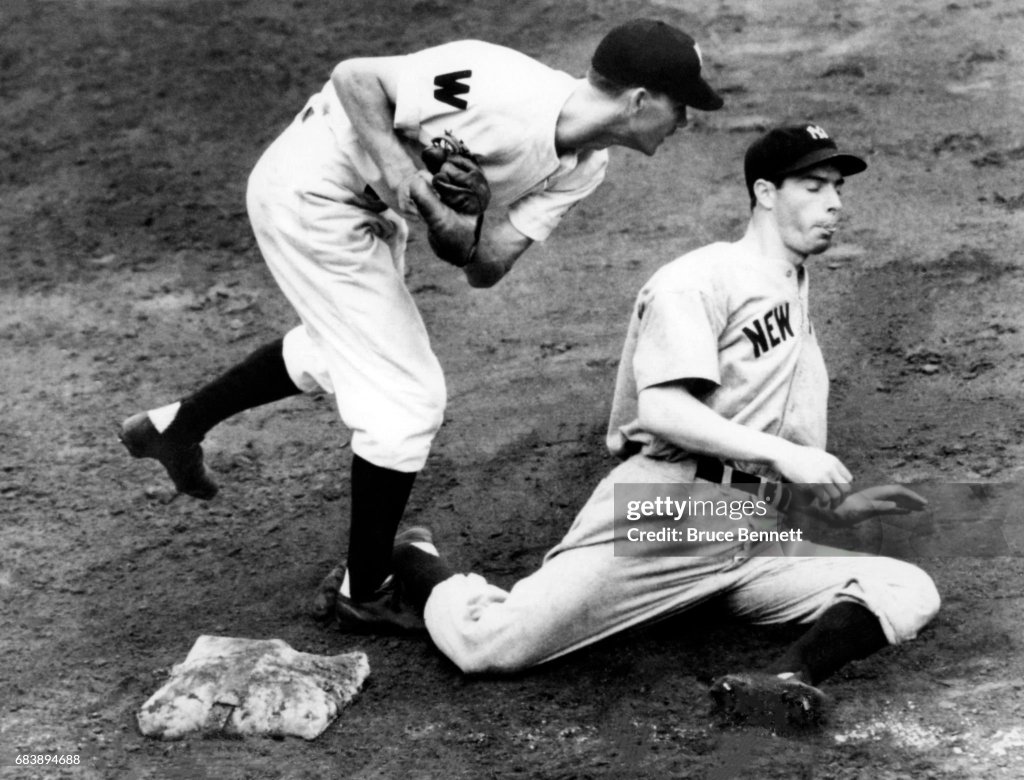
Errors by Chicago catcher Mike Tresh and shortstop Luke Appling in the first inning today cost the White Sox the opener of a four-game series with Detroit and a chance to climb past the Tigers into fourth place. The Bengals won, 3–1.
The Chicago Cubs collected only four hits, but defeated the slumping Cincinnati Reds today, 5–1, for their tenth victory in their last twelve games. The Cubs, although remaining in fourth place, climbed to within five games of the leading Reds. The winners drove in only one of their five runs with a base hit. The first two runs were forced in on four walks issued by Johnny Vander Meer and one by Whitey Moore in the second inning.
Japanese planes destroyed a plainly-marked American school near Foochow today in the opening of coastal offensives which the Chinese declared had been repulsed. The Chinese defenses of Foochow were heavily bombed. At the same time the British gunboat HMS Grasshopper landed thirty-six sailors to protect British interests in Foochow. The Japanese yesterday blockaded the ports of Foochow and Wenchow despite warnings from the United States, Great Britain and France that the invaders would be held responsible for damage to foreign interests. Damage to the American-owned Union Middle School, two miles west of Foochow, was estimated at $50,000. Two projectiles hit the building, which was a mile from any other structure of similar character. There were no casualties.
The mouth of the Min River was closed by a Japanese boom, shutting off the sea approach to Foochow, but British naval authorities here did not believe the Grasshopper would be trapped. They said her draft of less than six feet probably was shallow enough to permit crossing over the boom. Chinese dispatches telling of the defeat of a Japanese landing party at Pingtan Island, forty-five miles southeast of Foochow, were confirmed by neutral naval sources. The retreating Japanese were said to have forced 100 Chinese fishermen to accompany them, on board waiting warships. Machine-gun fire was said to have kept Japanese landing parties from gaining a foothold on the mainland near Wenchow. Japanese dispatches admitted a revival of Chinese activity north of Canton, but said all attacks had been repulsed with heavy losses.
Japanese relaxed further today their restrictions on passage into and out of the blockaded French and British Concessions, permitting Chinese to leave those areas at will. Food supplies at the French and British markets, which ran low at times after the blockade was imposed June 14, were plentiful today. American rug manufacturers and exporters in Tientsin, who normally do an annual business of $1,000,000, predicted today that their enterprises would be wiped out in six months if the Japanese trade restrictions continued. The industry has wool for six months, after which, the owners said, they would have to shut down, throwing 50,000 Chinese out of work. The Japanese Army reserves to itself the right to buy and transport wool from the interior and is prohibiting others from engaging in the trade.
Authoritative sources said today that Japan would broaden the scope of forthcoming negotiations with Britain on the Tientsin controversy to include the issue of foreign rights in China. The Japanese were said to blame the Tientsin dispute, which arose from the refusal of British authorities to surrender four Chinese accused of terrorism, on the concession situation under which Great Britain and France exercise sovereignty over stipulated areas in some treaty ports. The position of Japan was said to be that mere settlement of the Tientsin dispute as a local problem would be fruitless without correcting the causes.
Dow Jones Industrial Average: 130.63 (+0.58).
Born:
Eleanor Smeal, American cofounder of the Feminist Majority Foundation and president (National Organization for Women), in Ashtabula, Ohio.
José Emilio Pacheco, poet, in Mexico City, Mexico (d. 2014).
Naval Construction:
The Вое́нно-морско́й флот СССР (ВМФ) (Soviet Navy) Project 7-class (Gnevny-class) destroyer Razumny (Разумный, “Sensible”) is launched by Dalzavod (Vladivostok, U.S.S.R.) / Yard 202.
 History Diaries